Panda Trading Systems: Inside a Modern CRM, Trading Platform, and Trading Server Stack

Tuesday, 02/06/2026 | 07:00 GMT by Panda Trading Systems
Disclaimer
  • Panda Trading Systems offers modern, simple, and fast brokerage tech: CRM, WebTrader, & Trading Server.
Panda Trading Systems: Inside a Modern CRM, Trading Platform, and Trading Server Stack

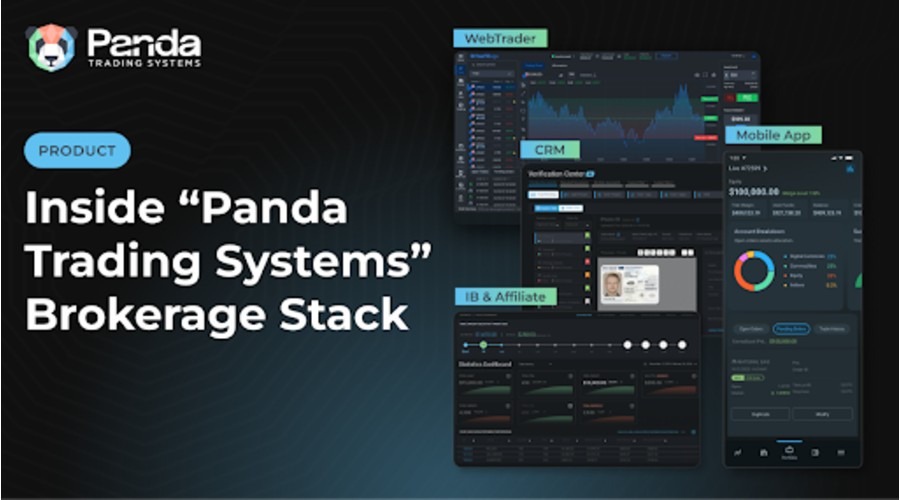
Panda Trading Systems builds its product portfolio around three pillars — the Panda CRM and Trader’s Room, the Panda WebTrader and native mobile apps, and the Panda Trading Server, each engineered to be modern, simple, and fast to deploy. As more brokers re-evaluate aging infrastructure, Panda’s product strategy is built around what they’re actually asking for.

The brokerage industry is in a quiet but persistent modernization cycle. Margin pressure, rising client acquisition costs, and the operational drag of legacy infrastructure are pushing brokers — both new entrants and established firms — to re-evaluate the systems they run their business on. Legacy CRMs slow down sales and retention teams. Recompiled white-label trading platforms make differentiation impossible. Pricing and execution infrastructure built a decade ago struggles to keep up with current market expectations.

Panda Trading Systems’ product portfolio is built around exactly these problems. Now in its 20th year as a brokerage technology provider, the company has built its strategy around three core pillars, with a broader stack of supporting components designed to fit alongside them.

Panda CRM and Trader’s Room

The Panda CRM is a brokerage-native CRM purpose-built for retail and institutional FX firms, covering the full client lifecycle from lead intake and KYC through funding, retention, reporting, and compliance workflows. It is designed for the operational realities of multi-desk, multi-jurisdiction brokerages: configurable user roles, granular permissioning, and clean integrations with the KYC vendors, payment providers, and back-office systems brokers already rely on.

Paired with the Panda Trader’s Room, it gives brokers a unified front for client onboarding, account management, funding, and support. Both can be deployed independently of any other Panda product, and both are built to integrate cleanly with whatever trading platform a broker is already using. The differentiators are practical: a modern interface, fast deployment timelines, and a roadmap shaped by an in-house team that works with brokerages every day.

Panda WebTrader and native mobile apps

The Panda WebTrader is a full-featured browser-based trading platform requiring no downloads, with charting, order management, and account tools designed for traders who expect a web-app experience comparable to the consumer fintech products they use elsewhere. Alongside it, Panda offers fully native iOS and Android trading apps, built natively rather than wrapped, for brokers whose clients increasingly trade on their phones.

Both surfaces are fully brandable, allowing brokers to ship a differentiated client experience without relying on a third-party platform’s roadmap or release cadence. They are engineered to compete on the qualities that define a modern trading experience: speed, design, reliability, and the pace at which new features ship.

Panda Trading Server

The Panda Trading Server is the high-performance execution engine underneath a broker’s book — built for the speed, reliability, and scale that production trading environments demand. It handles pricing, aggregation, and order execution with the low-latency throughput brokers need to deliver a competitive trading experience, holding up under the peak load that comes with high-volatility events and market opens. The Trading Server scales to support large client books and multi-asset offerings while giving risk teams real-time visibility into exposure across the platform.

It is offered as a standalone product to brokers running their own front-ends, or as part of a fully integrated Panda deployment.

Plus the rest of the stack

Beyond the three pillars, Panda also provides the surrounding infrastructure brokers need to operate — including the Panda IB Portal for partner and affiliate management, alongside a range of plugins, integrations, and customizations developed around its core products. Brokers can take what they need and leave the rest.

Built for the brokerages of today

“Brokers don’t have time for slow implementations or systems built for the market five years ago,” said Dragos Petrea, Head of Marketing and Commercial Operations at Panda Trading Systems. “Everything we build is designed around the same three principles — modern, simple, and fast to deploy — whether a broker wants a single product from us or the full stack. The brokerages we work with want the freedom to evolve without rebuilding their tech stack every two years, and that’s the through-line of every product we ship.”

Two decades into building technology for brokerages, Panda has accumulated something most of its newer competitors can’t claim: a sustained view of what works, what breaks, and what brokers actually need to scale. That perspective shapes product decisions — fewer half-baked features, faster implementations, and infrastructure built to evolve without forcing brokers to start over.

About Panda Trading Systems

Now marking its 20th year, Panda Trading Systems is a technology provider headquartered in Israel, with operations in Cyprus, serving retail and institutional brokerages worldwide. Its product portfolio includes the Panda CRM, Trader’s Room, WebTrader, native mobile apps, Trading Server, IB Portal, and a range of supporting plugins and integrations. For more information, visit pandats.com.

Panda Trading Systems builds its product portfolio around three pillars — the Panda CRM and Trader’s Room, the Panda WebTrader and native mobile apps, and the Panda Trading Server, each engineered to be modern, simple, and fast to deploy. As more brokers re-evaluate aging infrastructure, Panda’s product strategy is built around what they’re actually asking for.

The brokerage industry is in a quiet but persistent modernization cycle. Margin pressure, rising client acquisition costs, and the operational drag of legacy infrastructure are pushing brokers — both new entrants and established firms — to re-evaluate the systems they run their business on. Legacy CRMs slow down sales and retention teams. Recompiled white-label trading platforms make differentiation impossible. Pricing and execution infrastructure built a decade ago struggles to keep up with current market expectations.

Panda Trading Systems’ product portfolio is built around exactly these problems. Now in its 20th year as a brokerage technology provider, the company has built its strategy around three core pillars, with a broader stack of supporting components designed to fit alongside them.

Panda CRM and Trader’s Room

The Panda CRM is a brokerage-native CRM purpose-built for retail and institutional FX firms, covering the full client lifecycle from lead intake and KYC through funding, retention, reporting, and compliance workflows. It is designed for the operational realities of multi-desk, multi-jurisdiction brokerages: configurable user roles, granular permissioning, and clean integrations with the KYC vendors, payment providers, and back-office systems brokers already rely on.

Paired with the Panda Trader’s Room, it gives brokers a unified front for client onboarding, account management, funding, and support. Both can be deployed independently of any other Panda product, and both are built to integrate cleanly with whatever trading platform a broker is already using. The differentiators are practical: a modern interface, fast deployment timelines, and a roadmap shaped by an in-house team that works with brokerages every day.

Panda WebTrader and native mobile apps

The Panda WebTrader is a full-featured browser-based trading platform requiring no downloads, with charting, order management, and account tools designed for traders who expect a web-app experience comparable to the consumer fintech products they use elsewhere. Alongside it, Panda offers fully native iOS and Android trading apps, built natively rather than wrapped, for brokers whose clients increasingly trade on their phones.

Both surfaces are fully brandable, allowing brokers to ship a differentiated client experience without relying on a third-party platform’s roadmap or release cadence. They are engineered to compete on the qualities that define a modern trading experience: speed, design, reliability, and the pace at which new features ship.

Panda Trading Server

The Panda Trading Server is the high-performance execution engine underneath a broker’s book — built for the speed, reliability, and scale that production trading environments demand. It handles pricing, aggregation, and order execution with the low-latency throughput brokers need to deliver a competitive trading experience, holding up under the peak load that comes with high-volatility events and market opens. The Trading Server scales to support large client books and multi-asset offerings while giving risk teams real-time visibility into exposure across the platform.

It is offered as a standalone product to brokers running their own front-ends, or as part of a fully integrated Panda deployment.

Plus the rest of the stack

Beyond the three pillars, Panda also provides the surrounding infrastructure brokers need to operate — including the Panda IB Portal for partner and affiliate management, alongside a range of plugins, integrations, and customizations developed around its core products. Brokers can take what they need and leave the rest.

Built for the brokerages of today

“Brokers don’t have time for slow implementations or systems built for the market five years ago,” said Dragos Petrea, Head of Marketing and Commercial Operations at Panda Trading Systems. “Everything we build is designed around the same three principles — modern, simple, and fast to deploy — whether a broker wants a single product from us or the full stack. The brokerages we work with want the freedom to evolve without rebuilding their tech stack every two years, and that’s the through-line of every product we ship.”

Two decades into building technology for brokerages, Panda has accumulated something most of its newer competitors can’t claim: a sustained view of what works, what breaks, and what brokers actually need to scale. That perspective shapes product decisions — fewer half-baked features, faster implementations, and infrastructure built to evolve without forcing brokers to start over.

About Panda Trading Systems

Now marking its 20th year, Panda Trading Systems is a technology provider headquartered in Israel, with operations in Cyprus, serving retail and institutional brokerages worldwide. Its product portfolio includes the Panda CRM, Trader’s Room, WebTrader, native mobile apps, Trading Server, IB Portal, and a range of supporting plugins and integrations. For more information, visit pandats.com.

Disclaimer

Thought Leadership

!"#$%&'()*+,-./0123456789:;<=>?@ABCDEFGHIJKLMNOPQRSTUVWXYZ[\]^_`abcdefghijklmnopqrstuvwxyz{|} !"#$%&'()*+,-./0123456789:;<=>?@ABCDEFGHIJKLMNOPQRSTUVWXYZ[\]^_`abcdefghijklmnopqrstuvwxyz{|}