The industry for curated information is continuing to grow rapidly across the globe
FM
“Big data” has been gaining a lot of attention in recent years. Regardless of what industry you’re in, chances are you’ve likely heard of the importance of this new trend when analyzing consumer habits and making more informed business decisions.
But what is it, why is it growing in popularity, and what difference will it make for the real estate industry? Let’s investigate further.
What is “Big Data”
Simply put, “big data” is nothing more than a vast volume of information, both structured and unstructured, that can be analyzed to give businesses insight. Those insights can be about nearly any concern a business or organization may have.
Some common applications of big data are analyzing consumer spending habits for retail, finding ways of reducing traffic congestion for governing bodies, creating effective marketing strategies, and tackling nearly any other concern a business or organization may have.
These vast amounts of information are too much for a single analyst to personally identify trends and behavioral patterns, but with today’s technology, enormous amounts of available consumer data can be transformed into valuable insights.
The Rise of Big Data
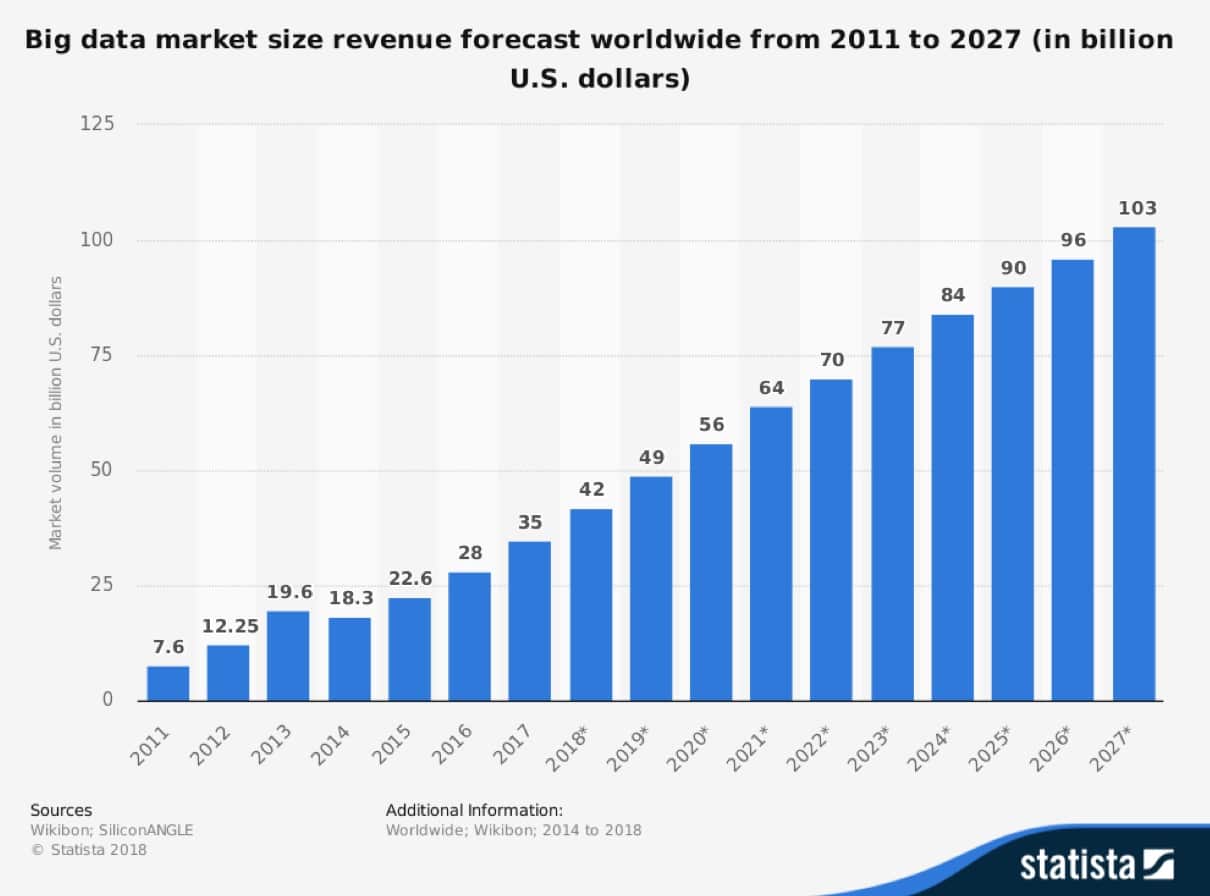
Because of the advantages big data offers businesses, the industry for curated information is continuing to grow rapidly across the globe. Market research firm Wikibon forecasts the growth of the worldwise big data market to continue with an 11.4% compound annual growth rate (CAGR) each year, resulting in big data revenue to grow to be a $103 billion industry by 2027. When comparing the $103 billion amount to just $7.6 billion in 2011, it’s not difficult to see that the information age continues to capture the attention of business.
Big data market size revenue forecast worldwide from 2011 to 2027, Statista
How Big Data Can Benefit the Real Estate Industry
One section of the economy uniquely positioned to benefit from the rise of big data is the global real estate industry. While other industries will undoubtedly continue to take advantage of big data and all that it has to offer, the world of real estate is one that’s truly data-driven.
Unlike other products available for consumers, pricing and valuation in the real estate industry is more difficult to quantify (though certainly not impossible). Because pricing and appraisals are affected by more than simply the cost of goods used to construct a property, big data plays a major role here.
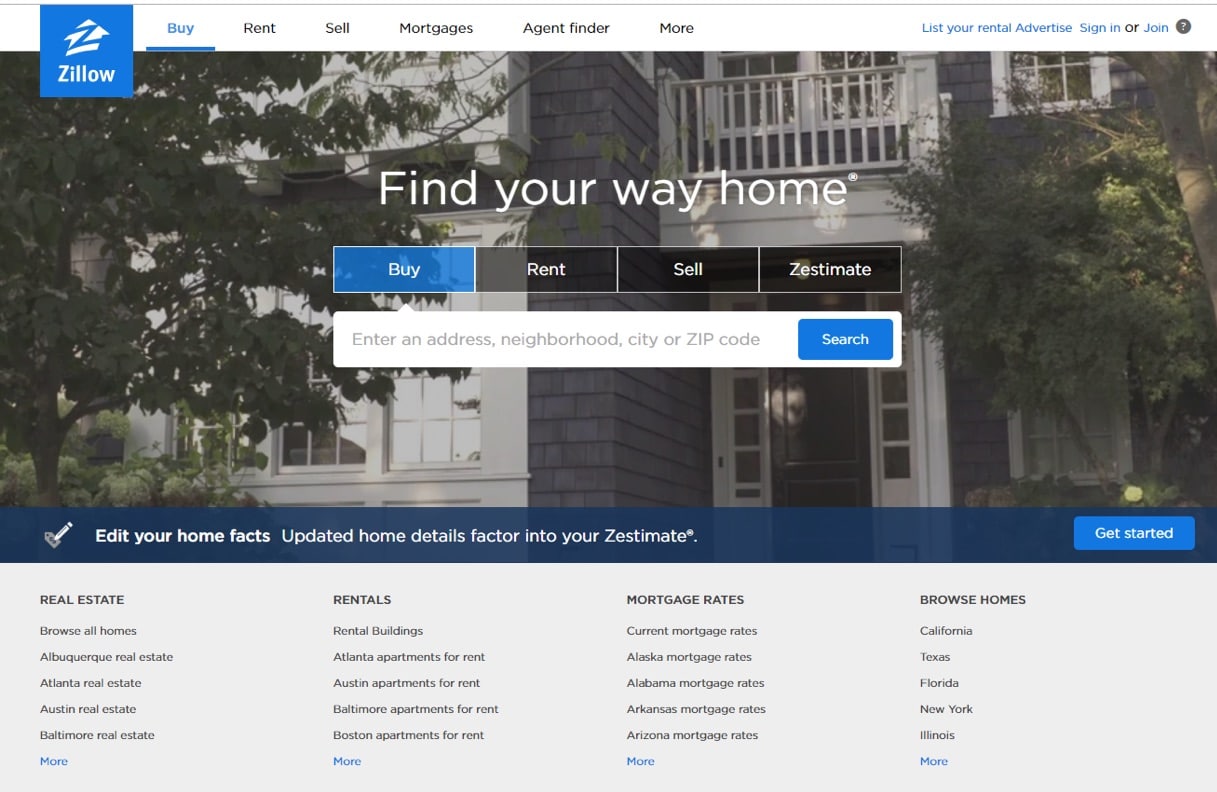
Companies like Zillow, Trulia, and Redfin have already shown the real estate industry the power of big data by acting as important disruptors. Given the information these companies are able to compile and, in many cases, collect (things like the buying and selling trends in a specific area, amount of commercial vs residential development in a given area, traffic, demographic information, consumer survey results, etc.), they’re able to offer clear insights on pricing, home-value trends, and potential value of neighborhoods.
Buyers, sellers, realtors, financial institutions, and other parties all require access to data to make informed decisions about real property.
“Realtors should educate themselves about big data and be knowledgeable of how it’s being collected through mobile devices. Buyers will increasingly use their smartphone during the search process -- often times before first talking to an agent. Realtors who adapt and embrace big data will add considerable value to their relationship with clients.”
Improving Access to Big Data
While the advantages of big data are becoming increasingly more evident to many in the real estate space, there are still barriers keeping the industry from truly leveraging big data. Of the current issues, one of the top concerns is the lack of standardization of data and ability to access data in a cost-effective manner.
“The industry is poised to take its biggest weakness -- a lack of technology -- and turn it into its biggest strength. There are thousands of MLSs, agent/firm websites, CRM systems and startups all building tools to make the transaction process more cost-effective and efficient. However, these systems are not compatible with each other.”
King isn’t the only one taking notice of the real estate industry’s pain points either. ReBloc is another blockchain-based startup that’s tackling the same problem in the space by working towards “democratizing real estate data” by allowing users to buy and sell valuable real estate data.
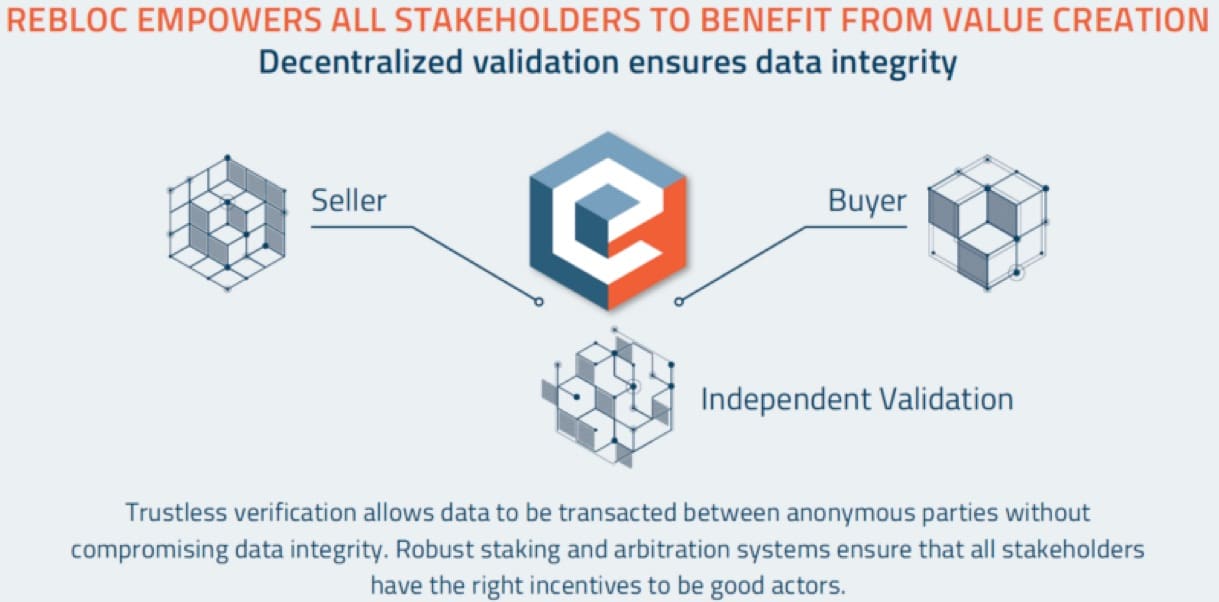
Joining others striving to solve bottlenecks in the real estate data industry, ReBloc is building a system for all parties involved in the real estate process (buyers, sellers, realtors, financial institutions, brokers, etc.) to benefit from not only using valuable data, but contributing and validating existing data for others.
The Takeaway
Big data has been growing rapidly as its own industry, but the implications of the information gathered and leveraged extend to nearly every sector of the global economy. As the trillion dollar real estate industry looks for answers and advantages in the growing field of big data, it must first develop an effective manner for organizing and accessing this valuable information.
Between all the parties involved in the process of building, buying, and selling real estate, it’s crucial that the industry accomplishes a way of allowing both individuals and large businesses to take advantage of the increasingly useful collection of big data.
Disclaimer: This is a contributed article and should not be taken as investment advice
“Big data” has been gaining a lot of attention in recent years. Regardless of what industry you’re in, chances are you’ve likely heard of the importance of this new trend when analyzing consumer habits and making more informed business decisions.
But what is it, why is it growing in popularity, and what difference will it make for the real estate industry? Let’s investigate further.
What is “Big Data”
Simply put, “big data” is nothing more than a vast volume of information, both structured and unstructured, that can be analyzed to give businesses insight. Those insights can be about nearly any concern a business or organization may have.
Some common applications of big data are analyzing consumer spending habits for retail, finding ways of reducing traffic congestion for governing bodies, creating effective marketing strategies, and tackling nearly any other concern a business or organization may have.
These vast amounts of information are too much for a single analyst to personally identify trends and behavioral patterns, but with today’s technology, enormous amounts of available consumer data can be transformed into valuable insights.
The Rise of Big Data
Because of the advantages big data offers businesses, the industry for curated information is continuing to grow rapidly across the globe. Market research firm Wikibon forecasts the growth of the worldwise big data market to continue with an 11.4% compound annual growth rate (CAGR) each year, resulting in big data revenue to grow to be a $103 billion industry by 2027. When comparing the $103 billion amount to just $7.6 billion in 2011, it’s not difficult to see that the information age continues to capture the attention of business.
Big data market size revenue forecast worldwide from 2011 to 2027, Statista
How Big Data Can Benefit the Real Estate Industry
One section of the economy uniquely positioned to benefit from the rise of big data is the global real estate industry. While other industries will undoubtedly continue to take advantage of big data and all that it has to offer, the world of real estate is one that’s truly data-driven.
Unlike other products available for consumers, pricing and valuation in the real estate industry is more difficult to quantify (though certainly not impossible). Because pricing and appraisals are affected by more than simply the cost of goods used to construct a property, big data plays a major role here.
Companies like Zillow, Trulia, and Redfin have already shown the real estate industry the power of big data by acting as important disruptors. Given the information these companies are able to compile and, in many cases, collect (things like the buying and selling trends in a specific area, amount of commercial vs residential development in a given area, traffic, demographic information, consumer survey results, etc.), they’re able to offer clear insights on pricing, home-value trends, and potential value of neighborhoods.
Buyers, sellers, realtors, financial institutions, and other parties all require access to data to make informed decisions about real property.
“Realtors should educate themselves about big data and be knowledgeable of how it’s being collected through mobile devices. Buyers will increasingly use their smartphone during the search process -- often times before first talking to an agent. Realtors who adapt and embrace big data will add considerable value to their relationship with clients.”
Improving Access to Big Data
While the advantages of big data are becoming increasingly more evident to many in the real estate space, there are still barriers keeping the industry from truly leveraging big data. Of the current issues, one of the top concerns is the lack of standardization of data and ability to access data in a cost-effective manner.
“The industry is poised to take its biggest weakness -- a lack of technology -- and turn it into its biggest strength. There are thousands of MLSs, agent/firm websites, CRM systems and startups all building tools to make the transaction process more cost-effective and efficient. However, these systems are not compatible with each other.”
King isn’t the only one taking notice of the real estate industry’s pain points either. ReBloc is another blockchain-based startup that’s tackling the same problem in the space by working towards “democratizing real estate data” by allowing users to buy and sell valuable real estate data.
Joining others striving to solve bottlenecks in the real estate data industry, ReBloc is building a system for all parties involved in the real estate process (buyers, sellers, realtors, financial institutions, brokers, etc.) to benefit from not only using valuable data, but contributing and validating existing data for others.
The Takeaway
Big data has been growing rapidly as its own industry, but the implications of the information gathered and leveraged extend to nearly every sector of the global economy. As the trillion dollar real estate industry looks for answers and advantages in the growing field of big data, it must first develop an effective manner for organizing and accessing this valuable information.
Between all the parties involved in the process of building, buying, and selling real estate, it’s crucial that the industry accomplishes a way of allowing both individuals and large businesses to take advantage of the increasingly useful collection of big data.
Disclaimer: This is a contributed article and should not be taken as investment advice
Engineered Trust – A Conversation with Adam Phillips, CEO of FXT
Featured Videos
CMC Markets’ Artur Delijergijevs on Metals Demand, Volatility, & Stable Execution
CMC Markets’ Artur Delijergijevs on Metals Demand, Volatility, & Stable Execution
CMC Markets’ Artur Delijergijevs on Metals Demand, Volatility, & Stable Execution
CMC Markets’ Artur Delijergijevs on Metals Demand, Volatility, & Stable Execution
In this exclusive Executive Interview, Finance Magnates speaks with Artur Delijergijevs, Head of Systematic Market Making at CMC Markets, about the current state of metals demand and market volatility.
Delijergijevs offers a desk-level view on:
- Metals Demand: Why metals are seeing the strongest demand from both retail and institutional clients right now.
- The Safe-Haven Debate: Questioning whether gold still fits the classic safe-haven definition given large daily price movements.
- Volatile Market Prep: How a market-making desk prepares its systems and pricing for stressed market conditions and high-impact economic events.
- Hybrid Execution: Why the best execution model combines electronic speed with human relationship support, especially during volatility.
- AI in Workflow: Where CMC Markets is integrating machine learning for risk management and pricing, and the limitations of AI during stressed markets.
- Dubai's Role: The strategic importance of Dubai’s location for covering global trading sessions across Asia, Europe, and the US.
Watch to understand how CMC Markets maintains stable pricing and reliable execution quality in high-volatility environments.
#CMCmarkets #forex #metals #gold #trading #volatility #MarketMaking #iFXDubai #FinanceMagnates #Finance #Fintech #Execution #AlgorithmicTrading #RiskManagement
In this exclusive Executive Interview, Finance Magnates speaks with Artur Delijergijevs, Head of Systematic Market Making at CMC Markets, about the current state of metals demand and market volatility.
Delijergijevs offers a desk-level view on:
- Metals Demand: Why metals are seeing the strongest demand from both retail and institutional clients right now.
- The Safe-Haven Debate: Questioning whether gold still fits the classic safe-haven definition given large daily price movements.
- Volatile Market Prep: How a market-making desk prepares its systems and pricing for stressed market conditions and high-impact economic events.
- Hybrid Execution: Why the best execution model combines electronic speed with human relationship support, especially during volatility.
- AI in Workflow: Where CMC Markets is integrating machine learning for risk management and pricing, and the limitations of AI during stressed markets.
- Dubai's Role: The strategic importance of Dubai’s location for covering global trading sessions across Asia, Europe, and the US.
Watch to understand how CMC Markets maintains stable pricing and reliable execution quality in high-volatility environments.
#CMCmarkets #forex #metals #gold #trading #volatility #MarketMaking #iFXDubai #FinanceMagnates #Finance #Fintech #Execution #AlgorithmicTrading #RiskManagement
In this exclusive Executive Interview, Finance Magnates speaks with Artur Delijergijevs, Head of Systematic Market Making at CMC Markets, about the current state of metals demand and market volatility.
Delijergijevs offers a desk-level view on:
- Metals Demand: Why metals are seeing the strongest demand from both retail and institutional clients right now.
- The Safe-Haven Debate: Questioning whether gold still fits the classic safe-haven definition given large daily price movements.
- Volatile Market Prep: How a market-making desk prepares its systems and pricing for stressed market conditions and high-impact economic events.
- Hybrid Execution: Why the best execution model combines electronic speed with human relationship support, especially during volatility.
- AI in Workflow: Where CMC Markets is integrating machine learning for risk management and pricing, and the limitations of AI during stressed markets.
- Dubai's Role: The strategic importance of Dubai’s location for covering global trading sessions across Asia, Europe, and the US.
Watch to understand how CMC Markets maintains stable pricing and reliable execution quality in high-volatility environments.
#CMCmarkets #forex #metals #gold #trading #volatility #MarketMaking #iFXDubai #FinanceMagnates #Finance #Fintech #Execution #AlgorithmicTrading #RiskManagement
In this exclusive Executive Interview, Finance Magnates speaks with Artur Delijergijevs, Head of Systematic Market Making at CMC Markets, about the current state of metals demand and market volatility.
Delijergijevs offers a desk-level view on:
- Metals Demand: Why metals are seeing the strongest demand from both retail and institutional clients right now.
- The Safe-Haven Debate: Questioning whether gold still fits the classic safe-haven definition given large daily price movements.
- Volatile Market Prep: How a market-making desk prepares its systems and pricing for stressed market conditions and high-impact economic events.
- Hybrid Execution: Why the best execution model combines electronic speed with human relationship support, especially during volatility.
- AI in Workflow: Where CMC Markets is integrating machine learning for risk management and pricing, and the limitations of AI during stressed markets.
- Dubai's Role: The strategic importance of Dubai’s location for covering global trading sessions across Asia, Europe, and the US.
Watch to understand how CMC Markets maintains stable pricing and reliable execution quality in high-volatility environments.
#CMCmarkets #forex #metals #gold #trading #volatility #MarketMaking #iFXDubai #FinanceMagnates #Finance #Fintech #Execution #AlgorithmicTrading #RiskManagement
Finance Magnates Awards 2026 – Nominations Now Open
Finance Magnates Awards 2026 – Nominations Now Open
Finance Magnates Awards 2026 – Nominations Now Open
Finance Magnates Awards 2026 – Nominations Now Open
Finance Magnates Awards 2026 – Nominations Now Open
Finance Magnates Awards 2026 – Nominations Now Open
The Finance Magnates Awards 2026 nominations are now open. 🏆
From fintech innovators to leading brokers, this is where the finance industry celebrates its biggest achievements.
Winners will be announced at the Cyprus Gala Dinner on November 6, 2026.
Nominate your brand now.
https://awards.financemagnates.com/?utm_source=linkedin&utm_medium=video&utm_campaign=nominations-open
#FMAwards #FinanceMagnates #FintechAwards #Fintech #FinanceIndustry
The Finance Magnates Awards 2026 nominations are now open. 🏆
From fintech innovators to leading brokers, this is where the finance industry celebrates its biggest achievements.
Winners will be announced at the Cyprus Gala Dinner on November 6, 2026.
Nominate your brand now.
https://awards.financemagnates.com/?utm_source=linkedin&utm_medium=video&utm_campaign=nominations-open
#FMAwards #FinanceMagnates #FintechAwards #Fintech #FinanceIndustry
The Finance Magnates Awards 2026 nominations are now open. 🏆
From fintech innovators to leading brokers, this is where the finance industry celebrates its biggest achievements.
Winners will be announced at the Cyprus Gala Dinner on November 6, 2026.
Nominate your brand now.
https://awards.financemagnates.com/?utm_source=linkedin&utm_medium=video&utm_campaign=nominations-open
#FMAwards #FinanceMagnates #FintechAwards #Fintech #FinanceIndustry
The Finance Magnates Awards 2026 nominations are now open. 🏆
From fintech innovators to leading brokers, this is where the finance industry celebrates its biggest achievements.
Winners will be announced at the Cyprus Gala Dinner on November 6, 2026.
Nominate your brand now.
https://awards.financemagnates.com/?utm_source=linkedin&utm_medium=video&utm_campaign=nominations-open
#FMAwards #FinanceMagnates #FintechAwards #Fintech #FinanceIndustry
The Finance Magnates Awards 2026 nominations are now open. 🏆
From fintech innovators to leading brokers, this is where the finance industry celebrates its biggest achievements.
Winners will be announced at the Cyprus Gala Dinner on November 6, 2026.
Nominate your brand now.
https://awards.financemagnates.com/?utm_source=linkedin&utm_medium=video&utm_campaign=nominations-open
#FMAwards #FinanceMagnates #FintechAwards #Fintech #FinanceIndustry
The Finance Magnates Awards 2026 nominations are now open. 🏆
From fintech innovators to leading brokers, this is where the finance industry celebrates its biggest achievements.
Winners will be announced at the Cyprus Gala Dinner on November 6, 2026.
Nominate your brand now.
https://awards.financemagnates.com/?utm_source=linkedin&utm_medium=video&utm_campaign=nominations-open
#FMAwards #FinanceMagnates #FintechAwards #Fintech #FinanceIndustry
Finance Magnates Awards 2026 | Nominations Now Open 🏆#Fintech #FMAwards #TradingIndustry
Finance Magnates Awards 2026 | Nominations Now Open 🏆#Fintech #FMAwards #TradingIndustry
Finance Magnates Awards 2026 | Nominations Now Open 🏆#Fintech #FMAwards #TradingIndustry
Finance Magnates Awards 2026 | Nominations Now Open 🏆#Fintech #FMAwards #TradingIndustry
Finance Magnates Awards 2026 | Nominations Now Open 🏆#Fintech #FMAwards #TradingIndustry
Finance Magnates Awards 2026 | Nominations Now Open 🏆#Fintech #FMAwards #TradingIndustry
Lights on. Cameras ready. 🎬
Finance Magnates Awards 2026 nominations are now open. 🏆
#FMAwards #FinanceMagnates #FintechAwards #Fintech
Lights on. Cameras ready. 🎬
Finance Magnates Awards 2026 nominations are now open. 🏆
#FMAwards #FinanceMagnates #FintechAwards #Fintech
Lights on. Cameras ready. 🎬
Finance Magnates Awards 2026 nominations are now open. 🏆
#FMAwards #FinanceMagnates #FintechAwards #Fintech
Lights on. Cameras ready. 🎬
Finance Magnates Awards 2026 nominations are now open. 🏆
#FMAwards #FinanceMagnates #FintechAwards #Fintech
Lights on. Cameras ready. 🎬
Finance Magnates Awards 2026 nominations are now open. 🏆
#FMAwards #FinanceMagnates #FintechAwards #Fintech
Lights on. Cameras ready. 🎬
Finance Magnates Awards 2026 nominations are now open. 🏆
#FMAwards #FinanceMagnates #FintechAwards #Fintech
Exness sees trust as the key theme for growth in MENA Trading Growth for 2026
Exness sees trust as the key theme for growth in MENA Trading Growth for 2026
Exness sees trust as the key theme for growth in MENA Trading Growth for 2026
Exness sees trust as the key theme for growth in MENA Trading Growth for 2026
Exness sees trust as the key theme for growth in MENA Trading Growth for 2026
Exness sees trust as the key theme for growth in MENA Trading Growth for 2026
Mohammad Amer, Regional Commercial Director at Exness, sits down to discuss the booming MENA financial trading market. Find out why Dubai is key to the company's growth strategy, how a mobile-first generation is changing expectations, and why trust will be the defining theme for traders in 2026.
In this interview, you'll learn:
* Why Dubai and the MENA region are critical growth markets for fintech and online trading.
* How Exness is addressing the demands of mobile-first, younger traders through engineering, platform stability, and transparent conditions.
* The essential role local talent plays in providing a culturally relevant and compliant user experience.
* Mohammad Amer's outlook on the future of the online trading industry and why stronger controls and systems are necessary.
* Why "trust" isn't just a brand value, but has commercial value—and why he predicts 2026 will be the "Year of Trust."
Key Takeaways:
➡️ The MENA region is rapidly shaping global financial markets.
➡️ New traders expect stability, precise execution, and transparency.
➡️ Local expertise is key to regulatory compliance and user experience.
➡️ Future success belongs to firms capable of meeting rising standards across regulation and platform consistency.
Read the full article at: https://www.financemagnates.com/thought-leadership/exness-sees-trust-as-the-key-theme-for-growth-in-mena-trading-growth-for-2026/
#Exness #MENA #Trading #FinTech #Dubai #OnlineTrading #FinanceMagnates #MohammadAmer #Trust #MobileTrading
Mohammad Amer, Regional Commercial Director at Exness, sits down to discuss the booming MENA financial trading market. Find out why Dubai is key to the company's growth strategy, how a mobile-first generation is changing expectations, and why trust will be the defining theme for traders in 2026.
In this interview, you'll learn:
* Why Dubai and the MENA region are critical growth markets for fintech and online trading.
* How Exness is addressing the demands of mobile-first, younger traders through engineering, platform stability, and transparent conditions.
* The essential role local talent plays in providing a culturally relevant and compliant user experience.
* Mohammad Amer's outlook on the future of the online trading industry and why stronger controls and systems are necessary.
* Why "trust" isn't just a brand value, but has commercial value—and why he predicts 2026 will be the "Year of Trust."
Key Takeaways:
➡️ The MENA region is rapidly shaping global financial markets.
➡️ New traders expect stability, precise execution, and transparency.
➡️ Local expertise is key to regulatory compliance and user experience.
➡️ Future success belongs to firms capable of meeting rising standards across regulation and platform consistency.
Read the full article at: https://www.financemagnates.com/thought-leadership/exness-sees-trust-as-the-key-theme-for-growth-in-mena-trading-growth-for-2026/
#Exness #MENA #Trading #FinTech #Dubai #OnlineTrading #FinanceMagnates #MohammadAmer #Trust #MobileTrading
Mohammad Amer, Regional Commercial Director at Exness, sits down to discuss the booming MENA financial trading market. Find out why Dubai is key to the company's growth strategy, how a mobile-first generation is changing expectations, and why trust will be the defining theme for traders in 2026.
In this interview, you'll learn:
* Why Dubai and the MENA region are critical growth markets for fintech and online trading.
* How Exness is addressing the demands of mobile-first, younger traders through engineering, platform stability, and transparent conditions.
* The essential role local talent plays in providing a culturally relevant and compliant user experience.
* Mohammad Amer's outlook on the future of the online trading industry and why stronger controls and systems are necessary.
* Why "trust" isn't just a brand value, but has commercial value—and why he predicts 2026 will be the "Year of Trust."
Key Takeaways:
➡️ The MENA region is rapidly shaping global financial markets.
➡️ New traders expect stability, precise execution, and transparency.
➡️ Local expertise is key to regulatory compliance and user experience.
➡️ Future success belongs to firms capable of meeting rising standards across regulation and platform consistency.
Read the full article at: https://www.financemagnates.com/thought-leadership/exness-sees-trust-as-the-key-theme-for-growth-in-mena-trading-growth-for-2026/
#Exness #MENA #Trading #FinTech #Dubai #OnlineTrading #FinanceMagnates #MohammadAmer #Trust #MobileTrading
Mohammad Amer, Regional Commercial Director at Exness, sits down to discuss the booming MENA financial trading market. Find out why Dubai is key to the company's growth strategy, how a mobile-first generation is changing expectations, and why trust will be the defining theme for traders in 2026.
In this interview, you'll learn:
* Why Dubai and the MENA region are critical growth markets for fintech and online trading.
* How Exness is addressing the demands of mobile-first, younger traders through engineering, platform stability, and transparent conditions.
* The essential role local talent plays in providing a culturally relevant and compliant user experience.
* Mohammad Amer's outlook on the future of the online trading industry and why stronger controls and systems are necessary.
* Why "trust" isn't just a brand value, but has commercial value—and why he predicts 2026 will be the "Year of Trust."
Key Takeaways:
➡️ The MENA region is rapidly shaping global financial markets.
➡️ New traders expect stability, precise execution, and transparency.
➡️ Local expertise is key to regulatory compliance and user experience.
➡️ Future success belongs to firms capable of meeting rising standards across regulation and platform consistency.
Read the full article at: https://www.financemagnates.com/thought-leadership/exness-sees-trust-as-the-key-theme-for-growth-in-mena-trading-growth-for-2026/
#Exness #MENA #Trading #FinTech #Dubai #OnlineTrading #FinanceMagnates #MohammadAmer #Trust #MobileTrading
Mohammad Amer, Regional Commercial Director at Exness, sits down to discuss the booming MENA financial trading market. Find out why Dubai is key to the company's growth strategy, how a mobile-first generation is changing expectations, and why trust will be the defining theme for traders in 2026.
In this interview, you'll learn:
* Why Dubai and the MENA region are critical growth markets for fintech and online trading.
* How Exness is addressing the demands of mobile-first, younger traders through engineering, platform stability, and transparent conditions.
* The essential role local talent plays in providing a culturally relevant and compliant user experience.
* Mohammad Amer's outlook on the future of the online trading industry and why stronger controls and systems are necessary.
* Why "trust" isn't just a brand value, but has commercial value—and why he predicts 2026 will be the "Year of Trust."
Key Takeaways:
➡️ The MENA region is rapidly shaping global financial markets.
➡️ New traders expect stability, precise execution, and transparency.
➡️ Local expertise is key to regulatory compliance and user experience.
➡️ Future success belongs to firms capable of meeting rising standards across regulation and platform consistency.
Read the full article at: https://www.financemagnates.com/thought-leadership/exness-sees-trust-as-the-key-theme-for-growth-in-mena-trading-growth-for-2026/
#Exness #MENA #Trading #FinTech #Dubai #OnlineTrading #FinanceMagnates #MohammadAmer #Trust #MobileTrading
Mohammad Amer, Regional Commercial Director at Exness, sits down to discuss the booming MENA financial trading market. Find out why Dubai is key to the company's growth strategy, how a mobile-first generation is changing expectations, and why trust will be the defining theme for traders in 2026.
In this interview, you'll learn:
* Why Dubai and the MENA region are critical growth markets for fintech and online trading.
* How Exness is addressing the demands of mobile-first, younger traders through engineering, platform stability, and transparent conditions.
* The essential role local talent plays in providing a culturally relevant and compliant user experience.
* Mohammad Amer's outlook on the future of the online trading industry and why stronger controls and systems are necessary.
* Why "trust" isn't just a brand value, but has commercial value—and why he predicts 2026 will be the "Year of Trust."
Key Takeaways:
➡️ The MENA region is rapidly shaping global financial markets.
➡️ New traders expect stability, precise execution, and transparency.
➡️ Local expertise is key to regulatory compliance and user experience.
➡️ Future success belongs to firms capable of meeting rising standards across regulation and platform consistency.
Read the full article at: https://www.financemagnates.com/thought-leadership/exness-sees-trust-as-the-key-theme-for-growth-in-mena-trading-growth-for-2026/
#Exness #MENA #Trading #FinTech #Dubai #OnlineTrading #FinanceMagnates #MohammadAmer #Trust #MobileTrading
Paytiko CEO Razi Salih on Why Payment Orchestration is a MUST-HAVE for Brokers in 2026
Paytiko CEO Razi Salih on Why Payment Orchestration is a MUST-HAVE for Brokers in 2026
Paytiko CEO Razi Salih on Why Payment Orchestration is a MUST-HAVE for Brokers in 2026
Paytiko CEO Razi Salih on Why Payment Orchestration is a MUST-HAVE for Brokers in 2026
Paytiko CEO Razi Salih on Why Payment Orchestration is a MUST-HAVE for Brokers in 2026
Paytiko CEO Razi Salih on Why Payment Orchestration is a MUST-HAVE for Brokers in 2026
At iFX Expo Dubai, Finance Magnates spoke with Razi Salih, CEO at Paytiko, about the evolution of the payments ecosystem and why payment orchestration has shifted from an option to a necessity for brokers, prop firms, and exchanges.
Mr. Salih explains how global expansion, the need for deep localisation, and the sheer number of new payment methods, from instant banking to stablecoins, are driving this critical infrastructure shift.
#PaymentOrchestration #Fintech #Brokerage #TradingPayments #RaziSalih #Paytiko #iFXExpoDubai #Stablecoins #AIinFintech
At iFX Expo Dubai, Finance Magnates spoke with Razi Salih, CEO at Paytiko, about the evolution of the payments ecosystem and why payment orchestration has shifted from an option to a necessity for brokers, prop firms, and exchanges.
Mr. Salih explains how global expansion, the need for deep localisation, and the sheer number of new payment methods, from instant banking to stablecoins, are driving this critical infrastructure shift.
#PaymentOrchestration #Fintech #Brokerage #TradingPayments #RaziSalih #Paytiko #iFXExpoDubai #Stablecoins #AIinFintech
At iFX Expo Dubai, Finance Magnates spoke with Razi Salih, CEO at Paytiko, about the evolution of the payments ecosystem and why payment orchestration has shifted from an option to a necessity for brokers, prop firms, and exchanges.
Mr. Salih explains how global expansion, the need for deep localisation, and the sheer number of new payment methods, from instant banking to stablecoins, are driving this critical infrastructure shift.
#PaymentOrchestration #Fintech #Brokerage #TradingPayments #RaziSalih #Paytiko #iFXExpoDubai #Stablecoins #AIinFintech
At iFX Expo Dubai, Finance Magnates spoke with Razi Salih, CEO at Paytiko, about the evolution of the payments ecosystem and why payment orchestration has shifted from an option to a necessity for brokers, prop firms, and exchanges.
Mr. Salih explains how global expansion, the need for deep localisation, and the sheer number of new payment methods, from instant banking to stablecoins, are driving this critical infrastructure shift.
#PaymentOrchestration #Fintech #Brokerage #TradingPayments #RaziSalih #Paytiko #iFXExpoDubai #Stablecoins #AIinFintech
At iFX Expo Dubai, Finance Magnates spoke with Razi Salih, CEO at Paytiko, about the evolution of the payments ecosystem and why payment orchestration has shifted from an option to a necessity for brokers, prop firms, and exchanges.
Mr. Salih explains how global expansion, the need for deep localisation, and the sheer number of new payment methods, from instant banking to stablecoins, are driving this critical infrastructure shift.
#PaymentOrchestration #Fintech #Brokerage #TradingPayments #RaziSalih #Paytiko #iFXExpoDubai #Stablecoins #AIinFintech
At iFX Expo Dubai, Finance Magnates spoke with Razi Salih, CEO at Paytiko, about the evolution of the payments ecosystem and why payment orchestration has shifted from an option to a necessity for brokers, prop firms, and exchanges.
Mr. Salih explains how global expansion, the need for deep localisation, and the sheer number of new payment methods, from instant banking to stablecoins, are driving this critical infrastructure shift.
#PaymentOrchestration #Fintech #Brokerage #TradingPayments #RaziSalih #Paytiko #iFXExpoDubai #Stablecoins #AIinFintech