>
Gold Rush: The Precious Metal Reaches Unseen Territory
Disclaimer
Gold Rush: The Precious Metal Reaches Unseen Territory
Wednesday,06/03/2024|08:52GMTby
FM
Disclaimer
A closer look at what’s driving the price surge of gold and if the rally is can continue.
Nikkei, S&P 500, Nasdaq, Bitcoin, and Gold - What do they have in common? They all reached all-time highs this week! As investors are wondering how much further the stock markets can go, some are accumulating Gold to diversify their portfolios with safe-haven assets. Let’s have a closer look at what’s driving the price surge of the precious metal and if the rally is likely to continue.
With recent inflation figures indicating that it is moving towards the Fed’s 2% target, numerous FOMC officials interventions, and Powell’s testimony in front of the Congress, market participants are increasingly betting on the first rate-cut happening in June, which has pushed prices of Gold higher. The conflicts in the Middle East have also supported the demand for Gold (prices have been up $300 per ounce since the beginning of the conflict between Israel and Hamas for instance) and central banks purchases are still rising.
Ricardo Evangelista, senior analyst at the CFD regulated ActivTrades, added that: “concerns surrounding global economic prospects, [and] geopolitical tensions [...] have fuelled increased demand for the precious metal, leading to its upward price trajectory.” Bloomberg also highlighted that Gold prices could be rising due to the risk of a correction on the stock markets, especially as some major indices have reached new highs like the Nikkei, the S&P 500 and the Nasdaq, driven by tech and AI-related stocks.
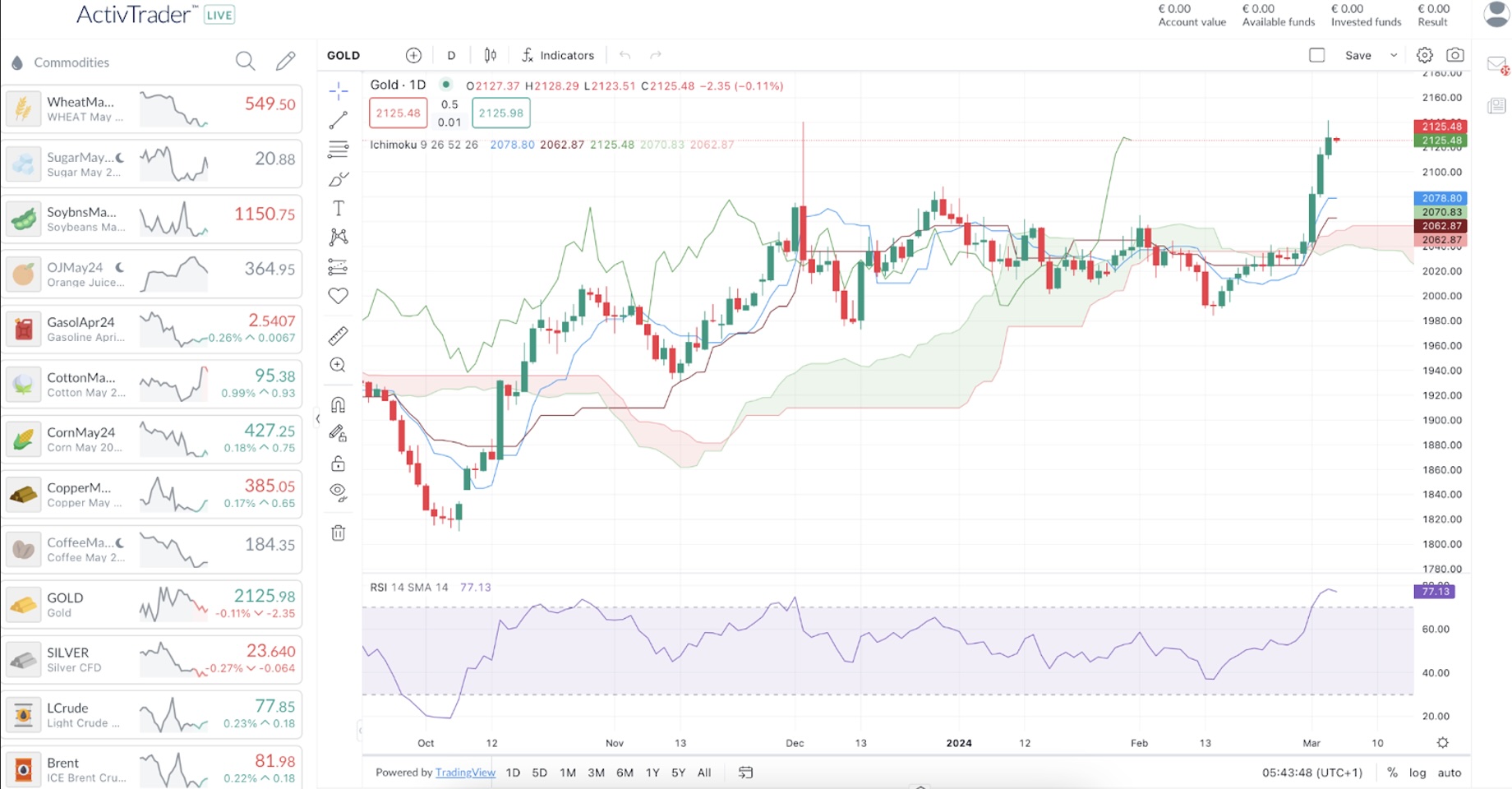
On the 5th of March, Gold reached a fresh all-time high (ATH) of $2,141.70 following a five-day winning streak. Over the period from February 28th to March 5th, prices surged nearly 5%. Currently, Gold has pulled back from its ATH, trading around the $2,125 level and is winning a bit more than 3% so far since the beginning of the year (after a strong performance of +14% in 2023).
Despite this retreat, the overall technical outlook remains bullish for the precious metal. However, it's worth noting that the Relative Strength Index (RSI) has entered overbought territory over the last three days. This could potentially prompt a pause in Gold's rise, particularly as traders may seek to lock in profits following such a significant rally.
How far can the price of Gold go?
Now that Gold has reached new highs, traders and investors are wondering how far it could go. Let's explore insights from industry professionals regarding their expectations for Gold's future movement.
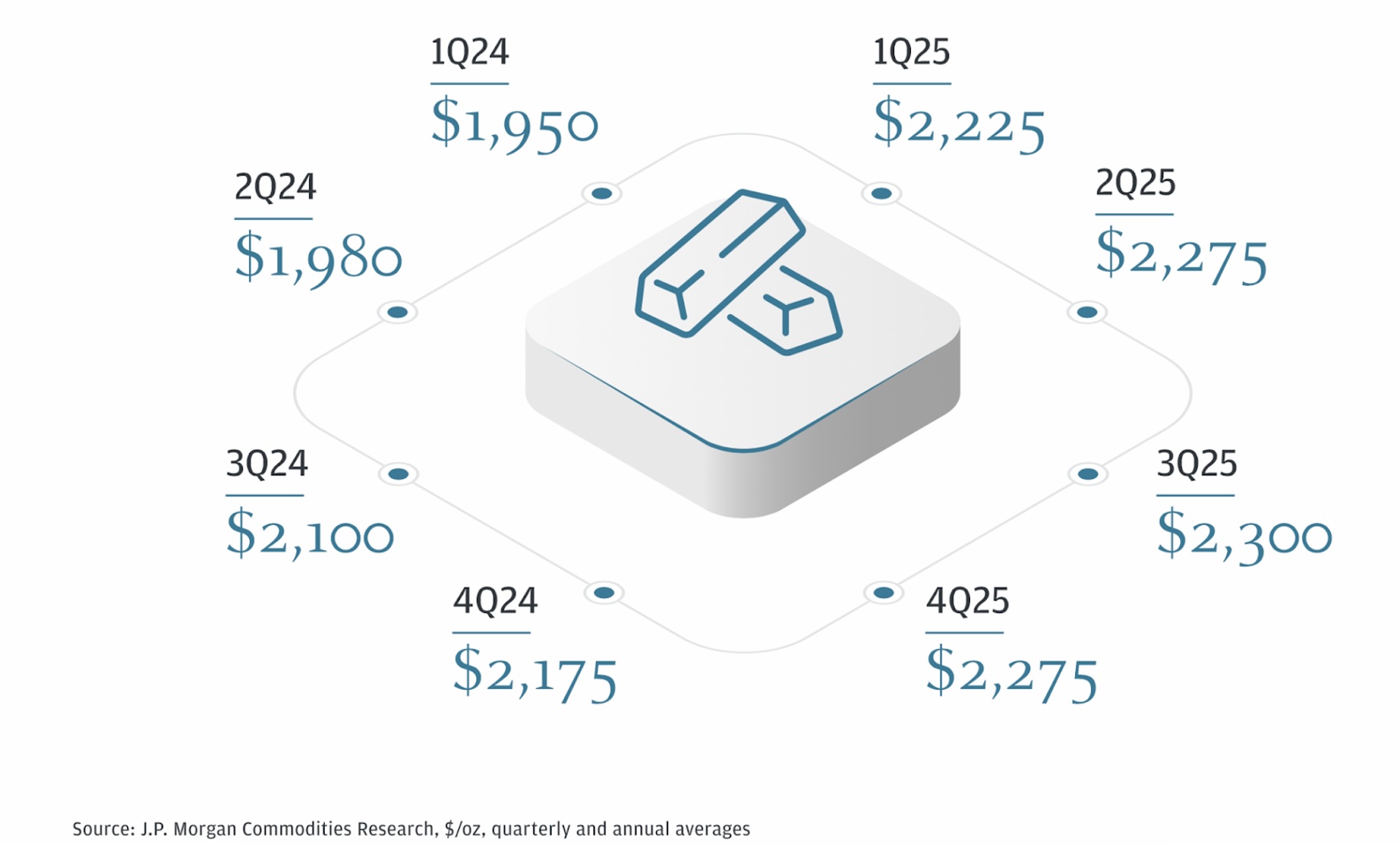
In January, J. P. Morgan Research forecasted that Gold prices could potentially rise to $2,175 per ounce by the end of 2024, and as high as $2,300 per ounce in 2025. This projection is contingent upon the Federal Reserve approving a 125 basis points rate cut over the second half of 2024, which is subject to the behaviour of inflation towards the 2% target. The bank anticipates that Gold prices would benefit from the decrease in real yields that occurs during a rate-cutting cycle, as there is an inverse relationship (negative correlation) between Gold and yields.
UBS also forecast Gold price to rise in 2024 as long as the Fed starts cutting interest rates, as it is likely to lower the value of the American Dollar (USD) and boost Gold’s attractiveness as a low-risk investment compared to similar financial products, such as bonds. As Gold is priced in USD, every time the greenback weakens against its peers, it becomes more affordable to buy Gold for those holding other currencies, which tends to increase the demand of the precious metal. Moreover, the bank underlines the macro uncertainty and geopolitical tensions that could arise in 2024 such as the results of many important elections (as half the world is expected to vote this year in more than 50 countries). In February, UBS expected Gold prices to reach $2,200 per ounce by the end of 2024.
For Wisdom Tree’s experts, geopolitical stress has been supporting Gold prices and will continue to do so in 2024, especially with tensions in the Red Sea and a packed election year that are likely to push demand from retail traders and investors high if the geopolitical and economic risk intensifies. The Exchange-Traded Products (ETP) provider expects Gold to give back a little bit of its gains if Fed officials talk down imminent rate cuts, but also expects prices to increase as soon as the Fed’s calendar is clear about its rate cuts to move to new record highs.
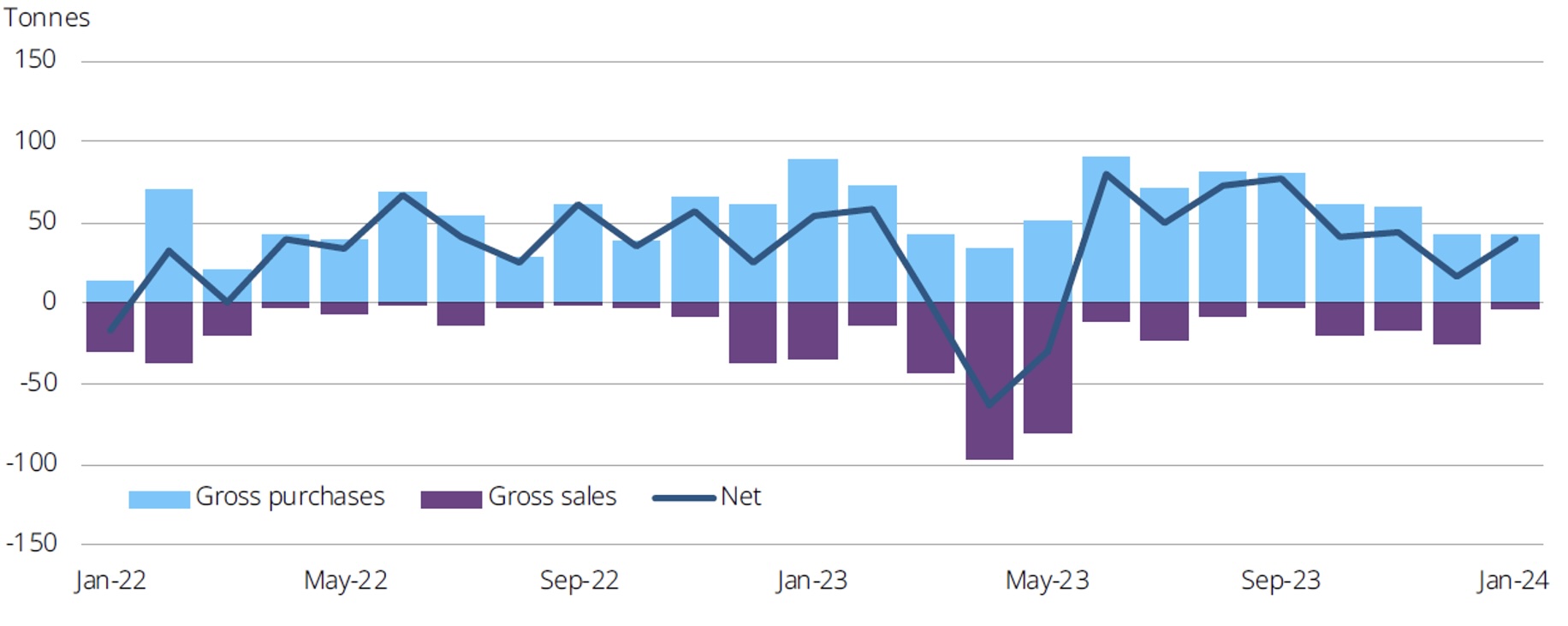
Back in February, Citi’s analysts declared that Gold prices could even reach $3,000 by mid-2025, especially as central banks Gold purchases seem to ramp up after a stellar year in 2023 of annual net purchases of 1,037t, which fell slightly short of the record in central bank gold demand reached in 2022, at 1,082t. According to the World Gold Council, central banks have bought Gold for 8 consecutive months in January 2024 - adding 39 tonnes to global gold reserves during the first month of 2024, and are likely to keep buying.
Source: IMF IFS, respective central banks, World Gold Council
What to watch out for to know if Gold will break records
As you probably know if you’ve been trading the precious metal, Gold prices are mostly influenced by American monetary policy, as it impacts the value of the USD, which often in turn influences the attractiveness of Gold for foreign currency holders.
It also changes the dynamics between Gold and interest bearing assets like bonds, as well as money market financial products that provide retail investors with opportunities to earn a return on their cash holdings while maintaining high liquidity and relatively low risk.
Therefore, the evolution of market expectations about the upcoming calendar regarding the first rate cut and the extent of the cuts in 2024 and beyond is likely to influence the Gold market this year. At the time of writing, around 70% of investors expect the Fed to cut interest rates in June, compared to around 24% in May and around 3% in March according to the CME FedWatch too.
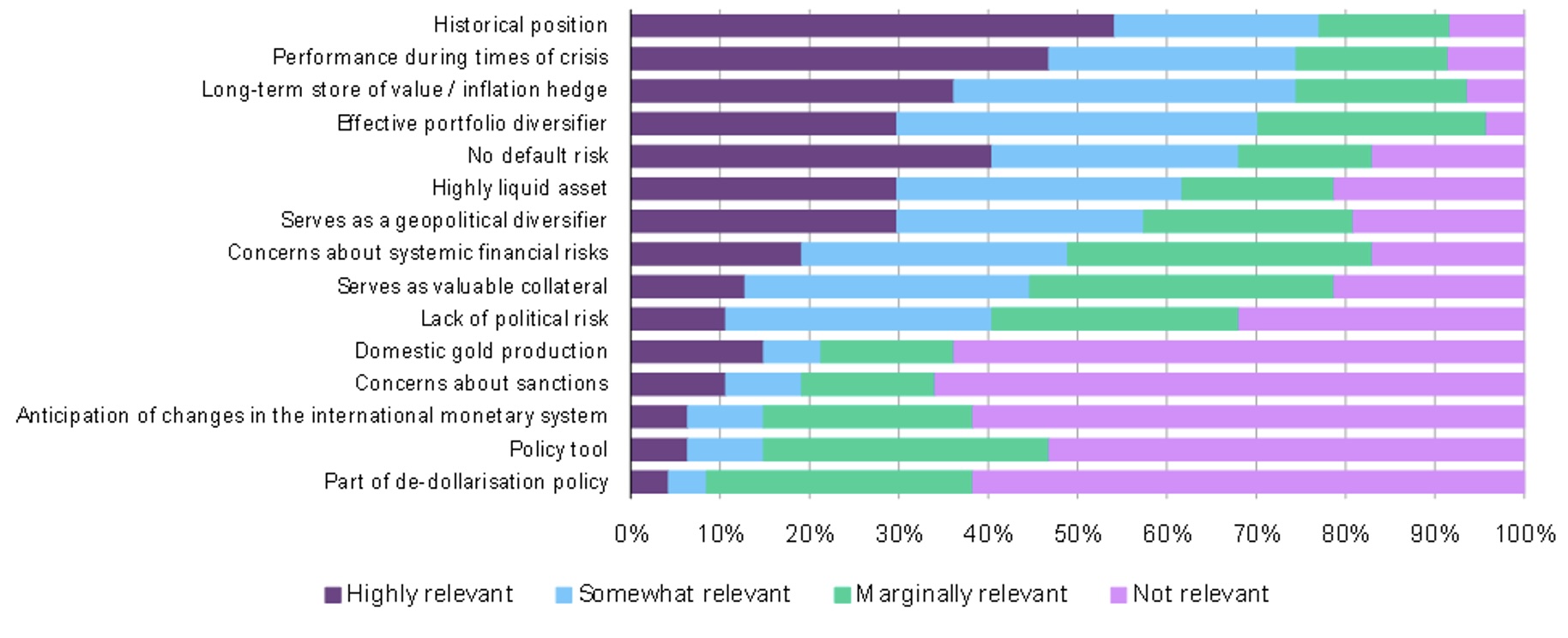
Gold central banks’ purchases should also be another important factor to monitor, as well as the reasons behind their purchase as depicted by the picture below from January’s Gold Demand Trends from the World Gold Council, as they could highlight new behaviors from these large Gold buyers.
Source: World Gold Council, YouGov
Finally, you should also keep an eye on how the most important elections will impact the macroeconomic landscapes and the evolution of geopolitical instability in the world, as it could influence the demand of Gold as a safe-haven asset in times of higher uncertainty.
The information provided does not constitute investment research. The material has not been prepared in accordance with the legal requirements designed to promote the independence of investment research and as such is to be considered to be a marketing communication.
All information has been prepared by ActivTrades (“AT”). The information does not contain a record of AT’s prices, or an offer of or solicitation for a transaction in any financial instrument. No representation or warranty is given as to the accuracy or completeness of this information.
Any material provided does not have regard to the specific investment objective and financial situation of any person who may receive it. Past performance is not a reliable indicator of future performance. AT provides an execution-only service. Consequently, any person acting on the information provided does so at their own risk.
Nikkei, S&P 500, Nasdaq, Bitcoin, and Gold - What do they have in common? They all reached all-time highs this week! As investors are wondering how much further the stock markets can go, some are accumulating Gold to diversify their portfolios with safe-haven assets. Let’s have a closer look at what’s driving the price surge of the precious metal and if the rally is likely to continue.
With recent inflation figures indicating that it is moving towards the Fed’s 2% target, numerous FOMC officials interventions, and Powell’s testimony in front of the Congress, market participants are increasingly betting on the first rate-cut happening in June, which has pushed prices of Gold higher. The conflicts in the Middle East have also supported the demand for Gold (prices have been up $300 per ounce since the beginning of the conflict between Israel and Hamas for instance) and central banks purchases are still rising.
Ricardo Evangelista, senior analyst at the CFD regulated ActivTrades, added that: “concerns surrounding global economic prospects, [and] geopolitical tensions [...] have fuelled increased demand for the precious metal, leading to its upward price trajectory.” Bloomberg also highlighted that Gold prices could be rising due to the risk of a correction on the stock markets, especially as some major indices have reached new highs like the Nikkei, the S&P 500 and the Nasdaq, driven by tech and AI-related stocks.
On the 5th of March, Gold reached a fresh all-time high (ATH) of $2,141.70 following a five-day winning streak. Over the period from February 28th to March 5th, prices surged nearly 5%. Currently, Gold has pulled back from its ATH, trading around the $2,125 level and is winning a bit more than 3% so far since the beginning of the year (after a strong performance of +14% in 2023).
Despite this retreat, the overall technical outlook remains bullish for the precious metal. However, it's worth noting that the Relative Strength Index (RSI) has entered overbought territory over the last three days. This could potentially prompt a pause in Gold's rise, particularly as traders may seek to lock in profits following such a significant rally.
How far can the price of Gold go?
Now that Gold has reached new highs, traders and investors are wondering how far it could go. Let's explore insights from industry professionals regarding their expectations for Gold's future movement.
In January, J. P. Morgan Research forecasted that Gold prices could potentially rise to $2,175 per ounce by the end of 2024, and as high as $2,300 per ounce in 2025. This projection is contingent upon the Federal Reserve approving a 125 basis points rate cut over the second half of 2024, which is subject to the behaviour of inflation towards the 2% target. The bank anticipates that Gold prices would benefit from the decrease in real yields that occurs during a rate-cutting cycle, as there is an inverse relationship (negative correlation) between Gold and yields.
UBS also forecast Gold price to rise in 2024 as long as the Fed starts cutting interest rates, as it is likely to lower the value of the American Dollar (USD) and boost Gold’s attractiveness as a low-risk investment compared to similar financial products, such as bonds. As Gold is priced in USD, every time the greenback weakens against its peers, it becomes more affordable to buy Gold for those holding other currencies, which tends to increase the demand of the precious metal. Moreover, the bank underlines the macro uncertainty and geopolitical tensions that could arise in 2024 such as the results of many important elections (as half the world is expected to vote this year in more than 50 countries). In February, UBS expected Gold prices to reach $2,200 per ounce by the end of 2024.
For Wisdom Tree’s experts, geopolitical stress has been supporting Gold prices and will continue to do so in 2024, especially with tensions in the Red Sea and a packed election year that are likely to push demand from retail traders and investors high if the geopolitical and economic risk intensifies. The Exchange-Traded Products (ETP) provider expects Gold to give back a little bit of its gains if Fed officials talk down imminent rate cuts, but also expects prices to increase as soon as the Fed’s calendar is clear about its rate cuts to move to new record highs.
Back in February, Citi’s analysts declared that Gold prices could even reach $3,000 by mid-2025, especially as central banks Gold purchases seem to ramp up after a stellar year in 2023 of annual net purchases of 1,037t, which fell slightly short of the record in central bank gold demand reached in 2022, at 1,082t. According to the World Gold Council, central banks have bought Gold for 8 consecutive months in January 2024 - adding 39 tonnes to global gold reserves during the first month of 2024, and are likely to keep buying.
Source: IMF IFS, respective central banks, World Gold Council
What to watch out for to know if Gold will break records
As you probably know if you’ve been trading the precious metal, Gold prices are mostly influenced by American monetary policy, as it impacts the value of the USD, which often in turn influences the attractiveness of Gold for foreign currency holders.
It also changes the dynamics between Gold and interest bearing assets like bonds, as well as money market financial products that provide retail investors with opportunities to earn a return on their cash holdings while maintaining high liquidity and relatively low risk.
Therefore, the evolution of market expectations about the upcoming calendar regarding the first rate cut and the extent of the cuts in 2024 and beyond is likely to influence the Gold market this year. At the time of writing, around 70% of investors expect the Fed to cut interest rates in June, compared to around 24% in May and around 3% in March according to the CME FedWatch too.
Gold central banks’ purchases should also be another important factor to monitor, as well as the reasons behind their purchase as depicted by the picture below from January’s Gold Demand Trends from the World Gold Council, as they could highlight new behaviors from these large Gold buyers.
Source: World Gold Council, YouGov
Finally, you should also keep an eye on how the most important elections will impact the macroeconomic landscapes and the evolution of geopolitical instability in the world, as it could influence the demand of Gold as a safe-haven asset in times of higher uncertainty.
The information provided does not constitute investment research. The material has not been prepared in accordance with the legal requirements designed to promote the independence of investment research and as such is to be considered to be a marketing communication.
All information has been prepared by ActivTrades (“AT”). The information does not contain a record of AT’s prices, or an offer of or solicitation for a transaction in any financial instrument. No representation or warranty is given as to the accuracy or completeness of this information.
Any material provided does not have regard to the specific investment objective and financial situation of any person who may receive it. Past performance is not a reliable indicator of future performance. AT provides an execution-only service. Consequently, any person acting on the information provided does so at their own risk.
FP Markets Winner Spotlight 🏆 | Global Broker of the Year 2025 #Trading #Broker #Innovation #Shorts
FP Markets Winner Spotlight 🏆 | Global Broker of the Year 2025 #Trading #Broker #Innovation #Shorts
FP Markets Winner Spotlight 🏆 | Global Broker of the Year 2025 #Trading #Broker #Innovation #Shorts
FP Markets Winner Spotlight 🏆 | Global Broker of the Year 2025 #Trading #Broker #Innovation #Shorts
FP Markets takes the spotlight as Global Broker of the Year 2025 at the Finance Magnates Awards.
Martin Stoilov, Head of Client Experience, shares that trust, innovation, and people played a key role in the company’s success, supported by a strong foundation of integrity and client-centricity.
Following this milestone, FP Markets continues to focus on growth, technology investment, and its core values of transparency and excellence.
👉 Be part of FM Awards 2026: https://awards.financemagnates.com/#nominate
FP Markets takes the spotlight as Global Broker of the Year 2025 at the Finance Magnates Awards.
Martin Stoilov, Head of Client Experience, shares that trust, innovation, and people played a key role in the company’s success, supported by a strong foundation of integrity and client-centricity.
Following this milestone, FP Markets continues to focus on growth, technology investment, and its core values of transparency and excellence.
👉 Be part of FM Awards 2026: https://awards.financemagnates.com/#nominate
FP Markets takes the spotlight as Global Broker of the Year 2025 at the Finance Magnates Awards.
Martin Stoilov, Head of Client Experience, shares that trust, innovation, and people played a key role in the company’s success, supported by a strong foundation of integrity and client-centricity.
Following this milestone, FP Markets continues to focus on growth, technology investment, and its core values of transparency and excellence.
👉 Be part of FM Awards 2026: https://awards.financemagnates.com/#nominate
FP Markets takes the spotlight as Global Broker of the Year 2025 at the Finance Magnates Awards.
Martin Stoilov, Head of Client Experience, shares that trust, innovation, and people played a key role in the company’s success, supported by a strong foundation of integrity and client-centricity.
Following this milestone, FP Markets continues to focus on growth, technology investment, and its core values of transparency and excellence.
👉 Be part of FM Awards 2026: https://awards.financemagnates.com/#nominate
In this video, we review @HolaPrimeMarketsOfficial, a multi-asset forex and CFDs broker offering different account types, trading platforms, and flexible trading conditions.
We cover the broker’s overall offering, including account options, trading environment, platforms like MT4 and MT5, and additional services such as managed accounts and fast withdrawals.
Watch the full video to see if Hola Prime Markets fits your trading needs.
📣 Stay up to date with the latest in finance and trading. Follow Finance Magnates for industry news, insights, and global event coverage.
Connect with us:
🔗 LinkedIn: /financemagnates
👍 Facebook: /financemagnates
📸 Instagram: https://www.instagram.com/financemagnates
🐦 X: https://x.com/financemagnates
🎥 TikTok: https://www.tiktok.com/tag/financemagnates
▶️ YouTube: /@financemagnates_official
#HolaPrime #ForexBroker #CFDTrading #FinanceMagnates #Trading #Forex #BrokerReview
In this video, we review @HolaPrimeMarketsOfficial, a multi-asset forex and CFDs broker offering different account types, trading platforms, and flexible trading conditions.
We cover the broker’s overall offering, including account options, trading environment, platforms like MT4 and MT5, and additional services such as managed accounts and fast withdrawals.
Watch the full video to see if Hola Prime Markets fits your trading needs.
📣 Stay up to date with the latest in finance and trading. Follow Finance Magnates for industry news, insights, and global event coverage.
Connect with us:
🔗 LinkedIn: /financemagnates
👍 Facebook: /financemagnates
📸 Instagram: https://www.instagram.com/financemagnates
🐦 X: https://x.com/financemagnates
🎥 TikTok: https://www.tiktok.com/tag/financemagnates
▶️ YouTube: /@financemagnates_official
#HolaPrime #ForexBroker #CFDTrading #FinanceMagnates #Trading #Forex #BrokerReview
In this video, we review @HolaPrimeMarketsOfficial, a multi-asset forex and CFDs broker offering different account types, trading platforms, and flexible trading conditions.
We cover the broker’s overall offering, including account options, trading environment, platforms like MT4 and MT5, and additional services such as managed accounts and fast withdrawals.
Watch the full video to see if Hola Prime Markets fits your trading needs.
📣 Stay up to date with the latest in finance and trading. Follow Finance Magnates for industry news, insights, and global event coverage.
Connect with us:
🔗 LinkedIn: /financemagnates
👍 Facebook: /financemagnates
📸 Instagram: https://www.instagram.com/financemagnates
🐦 X: https://x.com/financemagnates
🎥 TikTok: https://www.tiktok.com/tag/financemagnates
▶️ YouTube: /@financemagnates_official
#HolaPrime #ForexBroker #CFDTrading #FinanceMagnates #Trading #Forex #BrokerReview
In this video, we review @HolaPrimeMarketsOfficial, a multi-asset forex and CFDs broker offering different account types, trading platforms, and flexible trading conditions.
We cover the broker’s overall offering, including account options, trading environment, platforms like MT4 and MT5, and additional services such as managed accounts and fast withdrawals.
Watch the full video to see if Hola Prime Markets fits your trading needs.
📣 Stay up to date with the latest in finance and trading. Follow Finance Magnates for industry news, insights, and global event coverage.
Connect with us:
🔗 LinkedIn: /financemagnates
👍 Facebook: /financemagnates
📸 Instagram: https://www.instagram.com/financemagnates
🐦 X: https://x.com/financemagnates
🎥 TikTok: https://www.tiktok.com/tag/financemagnates
▶️ YouTube: /@financemagnates_official
#HolaPrime #ForexBroker #CFDTrading #FinanceMagnates #Trading #Forex #BrokerReview
In this video, we review @HolaPrimeMarketsOfficial, a multi-asset forex and CFDs broker offering different account types, trading platforms, and flexible trading conditions.
We cover the broker’s overall offering, including account options, trading environment, platforms like MT4 and MT5, and additional services such as managed accounts and fast withdrawals.
Watch the full video to see if Hola Prime Markets fits your trading needs.
📣 Stay up to date with the latest in finance and trading. Follow Finance Magnates for industry news, insights, and global event coverage.
Connect with us:
🔗 LinkedIn: /financemagnates
👍 Facebook: /financemagnates
📸 Instagram: https://www.instagram.com/financemagnates
🐦 X: https://x.com/financemagnates
🎥 TikTok: https://www.tiktok.com/tag/financemagnates
▶️ YouTube: /@financemagnates_official
#HolaPrime #ForexBroker #CFDTrading #FinanceMagnates #Trading #Forex #BrokerReview
In this video, we review @HolaPrimeMarketsOfficial, a multi-asset forex and CFDs broker offering different account types, trading platforms, and flexible trading conditions.
We cover the broker’s overall offering, including account options, trading environment, platforms like MT4 and MT5, and additional services such as managed accounts and fast withdrawals.
Watch the full video to see if Hola Prime Markets fits your trading needs.
📣 Stay up to date with the latest in finance and trading. Follow Finance Magnates for industry news, insights, and global event coverage.
Connect with us:
🔗 LinkedIn: /financemagnates
👍 Facebook: /financemagnates
📸 Instagram: https://www.instagram.com/financemagnates
🐦 X: https://x.com/financemagnates
🎥 TikTok: https://www.tiktok.com/tag/financemagnates
▶️ YouTube: /@financemagnates_official
#HolaPrime #ForexBroker #CFDTrading #FinanceMagnates #Trading #Forex #BrokerReview
Hola Prime Review: What You Need to Know | Full Breakdown by Finance Magnates
Hola Prime Review: What You Need to Know | Full Breakdown by Finance Magnates
Hola Prime Review: What You Need to Know | Full Breakdown by Finance Magnates
Hola Prime Review: What You Need to Know | Full Breakdown by Finance Magnates
Hola Prime Review: What You Need to Know | Full Breakdown by Finance Magnates
Hola Prime Review: What You Need to Know | Full Breakdown by Finance Magnates
In this video, we review @HolaPrime_Global, a proprietary trading firm offering evaluation programs and performance-based payouts in simulated market environments.
We cover how the challenge model works, including account types, profit splits (up to 95%), trading rules, and what it takes to reach a funded account. You’ll also learn about available platforms like MT4, MT5, cTrader, and more, along with insights into payouts, support, and trading conditions.
Watch the full video to see if Hola Prime fits your trading style.
📣 Stay up to date with the latest in finance and trading. Follow Finance Magnates for industry news, insights, and global event coverage.
Connect with us:
🔗 LinkedIn: /financemagnates
👍 Facebook: /financemagnates
📸 Instagram: https://www.instagram.com/financemagnates
🐦 X: https://x.com/financemagnates
🎥 TikTok: https://www.tiktok.com/tag/financemagnates
▶️ YouTube: /@financemagnates_official
#HolaPrime #PropFirm #Trading #FinanceMagnates #Forex #FuturesTrading #TradingReview #PropFirmReview
In this video, we review @HolaPrime_Global, a proprietary trading firm offering evaluation programs and performance-based payouts in simulated market environments.
We cover how the challenge model works, including account types, profit splits (up to 95%), trading rules, and what it takes to reach a funded account. You’ll also learn about available platforms like MT4, MT5, cTrader, and more, along with insights into payouts, support, and trading conditions.
Watch the full video to see if Hola Prime fits your trading style.
📣 Stay up to date with the latest in finance and trading. Follow Finance Magnates for industry news, insights, and global event coverage.
Connect with us:
🔗 LinkedIn: /financemagnates
👍 Facebook: /financemagnates
📸 Instagram: https://www.instagram.com/financemagnates
🐦 X: https://x.com/financemagnates
🎥 TikTok: https://www.tiktok.com/tag/financemagnates
▶️ YouTube: /@financemagnates_official
#HolaPrime #PropFirm #Trading #FinanceMagnates #Forex #FuturesTrading #TradingReview #PropFirmReview
In this video, we review @HolaPrime_Global, a proprietary trading firm offering evaluation programs and performance-based payouts in simulated market environments.
We cover how the challenge model works, including account types, profit splits (up to 95%), trading rules, and what it takes to reach a funded account. You’ll also learn about available platforms like MT4, MT5, cTrader, and more, along with insights into payouts, support, and trading conditions.
Watch the full video to see if Hola Prime fits your trading style.
📣 Stay up to date with the latest in finance and trading. Follow Finance Magnates for industry news, insights, and global event coverage.
Connect with us:
🔗 LinkedIn: /financemagnates
👍 Facebook: /financemagnates
📸 Instagram: https://www.instagram.com/financemagnates
🐦 X: https://x.com/financemagnates
🎥 TikTok: https://www.tiktok.com/tag/financemagnates
▶️ YouTube: /@financemagnates_official
#HolaPrime #PropFirm #Trading #FinanceMagnates #Forex #FuturesTrading #TradingReview #PropFirmReview
In this video, we review @HolaPrime_Global, a proprietary trading firm offering evaluation programs and performance-based payouts in simulated market environments.
We cover how the challenge model works, including account types, profit splits (up to 95%), trading rules, and what it takes to reach a funded account. You’ll also learn about available platforms like MT4, MT5, cTrader, and more, along with insights into payouts, support, and trading conditions.
Watch the full video to see if Hola Prime fits your trading style.
📣 Stay up to date with the latest in finance and trading. Follow Finance Magnates for industry news, insights, and global event coverage.
Connect with us:
🔗 LinkedIn: /financemagnates
👍 Facebook: /financemagnates
📸 Instagram: https://www.instagram.com/financemagnates
🐦 X: https://x.com/financemagnates
🎥 TikTok: https://www.tiktok.com/tag/financemagnates
▶️ YouTube: /@financemagnates_official
#HolaPrime #PropFirm #Trading #FinanceMagnates #Forex #FuturesTrading #TradingReview #PropFirmReview
In this video, we review @HolaPrime_Global, a proprietary trading firm offering evaluation programs and performance-based payouts in simulated market environments.
We cover how the challenge model works, including account types, profit splits (up to 95%), trading rules, and what it takes to reach a funded account. You’ll also learn about available platforms like MT4, MT5, cTrader, and more, along with insights into payouts, support, and trading conditions.
Watch the full video to see if Hola Prime fits your trading style.
📣 Stay up to date with the latest in finance and trading. Follow Finance Magnates for industry news, insights, and global event coverage.
Connect with us:
🔗 LinkedIn: /financemagnates
👍 Facebook: /financemagnates
📸 Instagram: https://www.instagram.com/financemagnates
🐦 X: https://x.com/financemagnates
🎥 TikTok: https://www.tiktok.com/tag/financemagnates
▶️ YouTube: /@financemagnates_official
#HolaPrime #PropFirm #Trading #FinanceMagnates #Forex #FuturesTrading #TradingReview #PropFirmReview
In this video, we review @HolaPrime_Global, a proprietary trading firm offering evaluation programs and performance-based payouts in simulated market environments.
We cover how the challenge model works, including account types, profit splits (up to 95%), trading rules, and what it takes to reach a funded account. You’ll also learn about available platforms like MT4, MT5, cTrader, and more, along with insights into payouts, support, and trading conditions.
Watch the full video to see if Hola Prime fits your trading style.
📣 Stay up to date with the latest in finance and trading. Follow Finance Magnates for industry news, insights, and global event coverage.
Connect with us:
🔗 LinkedIn: /financemagnates
👍 Facebook: /financemagnates
📸 Instagram: https://www.instagram.com/financemagnates
🐦 X: https://x.com/financemagnates
🎥 TikTok: https://www.tiktok.com/tag/financemagnates
▶️ YouTube: /@financemagnates_official
#HolaPrime #PropFirm #Trading #FinanceMagnates #Forex #FuturesTrading #TradingReview #PropFirmReview
Axi Winner Spotlight 🏆 | Global Most Innovative Broker 2025 #Innovation #Trading #Fintech #Broker
Axi Winner Spotlight 🏆 | Global Most Innovative Broker 2025 #Innovation #Trading #Fintech #Broker
Axi Winner Spotlight 🏆 | Global Most Innovative Broker 2025 #Innovation #Trading #Fintech #Broker
Axi Winner Spotlight 🏆 | Global Most Innovative Broker 2025 #Innovation #Trading #Fintech #Broker
Axi Winner Spotlight 🏆 | Global Most Innovative Broker 2025 #Innovation #Trading #Fintech #Broker
Axi Winner Spotlight 🏆 | Global Most Innovative Broker 2025 #Innovation #Trading #Fintech #Broker
Axi takes the spotlight at the Finance Magnates Awards, winning Global Most Innovative Broker 2025.
Olivia Xenofontos and Ivanna Openko share how the team will feel: proud, motivated, and ready to keep delivering.
They also describe the night as well-organized, focused, and enjoyable for all.
👉 Be part of FM Awards 2026.
Axi takes the spotlight at the Finance Magnates Awards, winning Global Most Innovative Broker 2025.
Olivia Xenofontos and Ivanna Openko share how the team will feel: proud, motivated, and ready to keep delivering.
They also describe the night as well-organized, focused, and enjoyable for all.
👉 Be part of FM Awards 2026.
Axi takes the spotlight at the Finance Magnates Awards, winning Global Most Innovative Broker 2025.
Olivia Xenofontos and Ivanna Openko share how the team will feel: proud, motivated, and ready to keep delivering.
They also describe the night as well-organized, focused, and enjoyable for all.
👉 Be part of FM Awards 2026.
Axi takes the spotlight at the Finance Magnates Awards, winning Global Most Innovative Broker 2025.
Olivia Xenofontos and Ivanna Openko share how the team will feel: proud, motivated, and ready to keep delivering.
They also describe the night as well-organized, focused, and enjoyable for all.
👉 Be part of FM Awards 2026.
Axi takes the spotlight at the Finance Magnates Awards, winning Global Most Innovative Broker 2025.
Olivia Xenofontos and Ivanna Openko share how the team will feel: proud, motivated, and ready to keep delivering.
They also describe the night as well-organized, focused, and enjoyable for all.
👉 Be part of FM Awards 2026.
Axi takes the spotlight at the Finance Magnates Awards, winning Global Most Innovative Broker 2025.
Olivia Xenofontos and Ivanna Openko share how the team will feel: proud, motivated, and ready to keep delivering.
They also describe the night as well-organized, focused, and enjoyable for all.
👉 Be part of FM Awards 2026.
Recognition that matters.
Built on transparency.
Driven by the industry.
The Finance Magnates Awards 2026.
Nominations are now open.
🔗 https://awards.financemagnates.com/?utm_source=SM&utm_medium=social&utm_campaign=recognition-matters
Recognition that matters.
Built on transparency.
Driven by the industry.
The Finance Magnates Awards 2026.
Nominations are now open.
🔗 https://awards.financemagnates.com/?utm_source=SM&utm_medium=social&utm_campaign=recognition-matters
Recognition that matters.
Built on transparency.
Driven by the industry.
The Finance Magnates Awards 2026.
Nominations are now open.
🔗 https://awards.financemagnates.com/?utm_source=SM&utm_medium=social&utm_campaign=recognition-matters
Recognition that matters.
Built on transparency.
Driven by the industry.
The Finance Magnates Awards 2026.
Nominations are now open.
🔗 https://awards.financemagnates.com/?utm_source=SM&utm_medium=social&utm_campaign=recognition-matters
Recognition that matters.
Built on transparency.
Driven by the industry.
The Finance Magnates Awards 2026.
Nominations are now open.
🔗 https://awards.financemagnates.com/?utm_source=SM&utm_medium=social&utm_campaign=recognition-matters
Recognition that matters.
Built on transparency.
Driven by the industry.
The Finance Magnates Awards 2026.
Nominations are now open.
🔗 https://awards.financemagnates.com/?utm_source=SM&utm_medium=social&utm_campaign=recognition-matters