The pace of market evolution has been truly phenomenal with FXCM witnessing first-hand since its inception 20 years ago.
FXCM
Foreign exchange (FX) trading has come a long way since FXCM’s inception twenty years ago. Changing market structure and technology has lowered barriers to entry and made trading accessible to a diverse range of institutions.
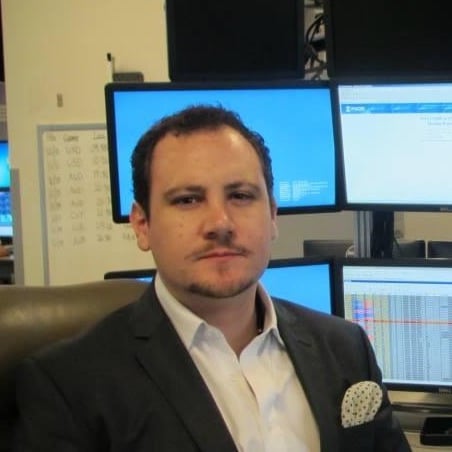
Positioning for the new era of market changes is key to future success for FX brokers, writes Mario Sanchez, Managing Director and Global Head of Sales at FXCM Pro.
Mario Sanchez, Managing Director and Global Head of Sales at FXCM Pro
This growth has primarily been attributed to the rise of new proprietary and high-speed trading firms, an increase in FX swaps activity and more demand for emerging market currencies.
The total figure for banks trading with ‘other financial institutions’, which the BIS defines as non-reporting banks, hedge funds, proprietary trading firms, institutional investors and official sector financial institutions, grew significantly to USD 3.6 trillion, accounting for 55 per cent of the global total.
Evolution and adaption – revamping an institutional offering
This highlights the changing nature of the FX market and the types of institutions that are actively trading currencies today. It's a change that FXCM has witnessed first-hand since its inception twenty years ago.
The pace of market evolution has been truly phenomenal. Very few of the first-generation of brokers exist today, emphasising why it is vital to stay attuned to changing customer and market behaviour.
This is a big reason why FXCM has remained in business for twenty years.
The company’s focus on providing tailored and flexible customer service to all clients has stood the test of time and proven to be a key pillar underpinning its success over the past two decades.
FXCM’s institutional business, FXCM Pro, serves a range of retail brokers, small hedge funds, family offices, high and medium frequency funds and emerging market bank clients in all global regions.
The needs of these clients are very different and non-cyclical. The goal, therefore, is to provide tailored and differentiated liquidity and broking solutions to meet their requirements.
To ensure the company continues to be aligned to our clients’ objectives, FXCM revamped its institutional business over the past year.
This included a fresh, objective look at internal structures and operations, strengthening and enhancing the teams’ skillsets and knowledge, investing in proprietary technology and partnerships, and finding new niches and opportunities to service clients effectively.
FXCM is also one of the few prime-of-primes to offer a ‘pure’ prime brokerage service. In effect, the company offers a service akin to that of a tier-one prime broker, albeit with much faster on-boarding times and a lower cost of entry.
There remains a degree of confusion as to what constitutes a ‘real’ prime-of-prime. The litmus test for this is if a prime-of-prime broker starts talking about their fill rates, spreads and latency times.
A real prime-of-prime never get involved in those discussions; all it does is facilitate direct market access and execution.
Technology innovation
The past two decades have been marked by significant advancements and innovation in trading technology.
As a result, there has been a steep rise in the level of sophistication and trading tools required, such as real-time analytics, to stay on top of market changes and assess potential risks.
FXCM Pro has adapted its strategy in line with market evolution through a combination of investment in proprietary technology and strategic vendor partnerships.
Artificial intelligence, algorithmic trading, big data and real-time analytics already underpin its business.
This is demonstrated by the integration of Flextrade’s MaxxTrader, a high-performance execution and order management system.
MaxxTrader supplements FXCM’s existing liquidity and execution solutions, and gives a significant edge in areas such as bank and non-bank liquidity customisation, connectivity between market makers and takers, reporting and measuring best execution.
This partnership also increases operational efficiency and enables institutional FX clients in all global regions to access FXCM’s institutional services through global data centres, including NY4, LD4 and TY3.
Navigating a fragmented market with accurate market data
FX trading is no longer restricted to the small selection of venues – trading institutions now have access to a proliferation of innovative platforms that meet the diverse needs of participants.
A major benefit of this fragmentation has been improvements in the tools available to measure market impact, in particular transaction cost analysis (TCA).
This means market participants are now better equipped to measure execution quality.
In addition, the popularity of aggregators rather than single-venue screens means there is now less pressure on desktop space.
Traders can view quotes and orders across multiple trading venues without having to commit themselves to a single broker or platform.
With so many execution methods and venues available, brokers often fall into the trap of thinking that on-boarding more and more providers leads to tighter spreads.
While that may be true in the short term, it is not a strategy that will make for long-term, consistent, high quality execution. Typically, spreads will eventually widen, or execution quality will deteriorate.
Rather, the ability to gain deep insights into market activity, identify the optimal pricing and execution strategy and improve the customer trading experience is critical.
This is a fast-growing component of FXCM’s business and the company has worked internally and with third-party institutions to optimise its data effectively and develop a suite of unique products.
FXCM offers twenty years of aggregated trading data from its global pool of customers to provide powerful market insights and transparency. Simply put, the data provided by FXCM cannot be sourced anywhere else.
Just as electronic trading heralded an entirely new era for the FX markets almost three decades ago, sophisticated data analysis tools and expertise will have a similar impact over the next few years.
Understanding this is the critical foundation for a successful modern FX brokerage business.
Mario Sanchez is Managing Director and Global Head of Sales at FXCM Pro.
Disclaimer: The content of this article was provided by the company, and does not represent the opinions of Finance Magnates. This information is intended for institutional and professional clients only. Trading on margin carries risk as losses can exceed deposits.
Foreign exchange (FX) trading has come a long way since FXCM’s inception twenty years ago. Changing market structure and technology has lowered barriers to entry and made trading accessible to a diverse range of institutions.
Positioning for the new era of market changes is key to future success for FX brokers, writes Mario Sanchez, Managing Director and Global Head of Sales at FXCM Pro.
Mario Sanchez, Managing Director and Global Head of Sales at FXCM Pro
This growth has primarily been attributed to the rise of new proprietary and high-speed trading firms, an increase in FX swaps activity and more demand for emerging market currencies.
The total figure for banks trading with ‘other financial institutions’, which the BIS defines as non-reporting banks, hedge funds, proprietary trading firms, institutional investors and official sector financial institutions, grew significantly to USD 3.6 trillion, accounting for 55 per cent of the global total.
Evolution and adaption – revamping an institutional offering
This highlights the changing nature of the FX market and the types of institutions that are actively trading currencies today. It's a change that FXCM has witnessed first-hand since its inception twenty years ago.
The pace of market evolution has been truly phenomenal. Very few of the first-generation of brokers exist today, emphasising why it is vital to stay attuned to changing customer and market behaviour.
This is a big reason why FXCM has remained in business for twenty years.
The company’s focus on providing tailored and flexible customer service to all clients has stood the test of time and proven to be a key pillar underpinning its success over the past two decades.
FXCM’s institutional business, FXCM Pro, serves a range of retail brokers, small hedge funds, family offices, high and medium frequency funds and emerging market bank clients in all global regions.
The needs of these clients are very different and non-cyclical. The goal, therefore, is to provide tailored and differentiated liquidity and broking solutions to meet their requirements.
To ensure the company continues to be aligned to our clients’ objectives, FXCM revamped its institutional business over the past year.
This included a fresh, objective look at internal structures and operations, strengthening and enhancing the teams’ skillsets and knowledge, investing in proprietary technology and partnerships, and finding new niches and opportunities to service clients effectively.
FXCM is also one of the few prime-of-primes to offer a ‘pure’ prime brokerage service. In effect, the company offers a service akin to that of a tier-one prime broker, albeit with much faster on-boarding times and a lower cost of entry.
There remains a degree of confusion as to what constitutes a ‘real’ prime-of-prime. The litmus test for this is if a prime-of-prime broker starts talking about their fill rates, spreads and latency times.
A real prime-of-prime never get involved in those discussions; all it does is facilitate direct market access and execution.
Technology innovation
The past two decades have been marked by significant advancements and innovation in trading technology.
As a result, there has been a steep rise in the level of sophistication and trading tools required, such as real-time analytics, to stay on top of market changes and assess potential risks.
FXCM Pro has adapted its strategy in line with market evolution through a combination of investment in proprietary technology and strategic vendor partnerships.
Artificial intelligence, algorithmic trading, big data and real-time analytics already underpin its business.
This is demonstrated by the integration of Flextrade’s MaxxTrader, a high-performance execution and order management system.
MaxxTrader supplements FXCM’s existing liquidity and execution solutions, and gives a significant edge in areas such as bank and non-bank liquidity customisation, connectivity between market makers and takers, reporting and measuring best execution.
This partnership also increases operational efficiency and enables institutional FX clients in all global regions to access FXCM’s institutional services through global data centres, including NY4, LD4 and TY3.
Navigating a fragmented market with accurate market data
FX trading is no longer restricted to the small selection of venues – trading institutions now have access to a proliferation of innovative platforms that meet the diverse needs of participants.
A major benefit of this fragmentation has been improvements in the tools available to measure market impact, in particular transaction cost analysis (TCA).
This means market participants are now better equipped to measure execution quality.
In addition, the popularity of aggregators rather than single-venue screens means there is now less pressure on desktop space.
Traders can view quotes and orders across multiple trading venues without having to commit themselves to a single broker or platform.
With so many execution methods and venues available, brokers often fall into the trap of thinking that on-boarding more and more providers leads to tighter spreads.
While that may be true in the short term, it is not a strategy that will make for long-term, consistent, high quality execution. Typically, spreads will eventually widen, or execution quality will deteriorate.
Rather, the ability to gain deep insights into market activity, identify the optimal pricing and execution strategy and improve the customer trading experience is critical.
This is a fast-growing component of FXCM’s business and the company has worked internally and with third-party institutions to optimise its data effectively and develop a suite of unique products.
FXCM offers twenty years of aggregated trading data from its global pool of customers to provide powerful market insights and transparency. Simply put, the data provided by FXCM cannot be sourced anywhere else.
Just as electronic trading heralded an entirely new era for the FX markets almost three decades ago, sophisticated data analysis tools and expertise will have a similar impact over the next few years.
Understanding this is the critical foundation for a successful modern FX brokerage business.
Mario Sanchez is Managing Director and Global Head of Sales at FXCM Pro.
Disclaimer: The content of this article was provided by the company, and does not represent the opinions of Finance Magnates. This information is intended for institutional and professional clients only. Trading on margin carries risk as losses can exceed deposits.
FP Markets Winner Spotlight 🏆 | Global Broker of the Year 2025 #Trading #Broker #Innovation #Shorts
FP Markets Winner Spotlight 🏆 | Global Broker of the Year 2025 #Trading #Broker #Innovation #Shorts
FP Markets Winner Spotlight 🏆 | Global Broker of the Year 2025 #Trading #Broker #Innovation #Shorts
FP Markets Winner Spotlight 🏆 | Global Broker of the Year 2025 #Trading #Broker #Innovation #Shorts
FP Markets takes the spotlight as Global Broker of the Year 2025 at the Finance Magnates Awards.
Martin Stoilov, Head of Client Experience, shares that trust, innovation, and people played a key role in the company’s success, supported by a strong foundation of integrity and client-centricity.
Following this milestone, FP Markets continues to focus on growth, technology investment, and its core values of transparency and excellence.
👉 Be part of FM Awards 2026: https://awards.financemagnates.com/#nominate
FP Markets takes the spotlight as Global Broker of the Year 2025 at the Finance Magnates Awards.
Martin Stoilov, Head of Client Experience, shares that trust, innovation, and people played a key role in the company’s success, supported by a strong foundation of integrity and client-centricity.
Following this milestone, FP Markets continues to focus on growth, technology investment, and its core values of transparency and excellence.
👉 Be part of FM Awards 2026: https://awards.financemagnates.com/#nominate
FP Markets takes the spotlight as Global Broker of the Year 2025 at the Finance Magnates Awards.
Martin Stoilov, Head of Client Experience, shares that trust, innovation, and people played a key role in the company’s success, supported by a strong foundation of integrity and client-centricity.
Following this milestone, FP Markets continues to focus on growth, technology investment, and its core values of transparency and excellence.
👉 Be part of FM Awards 2026: https://awards.financemagnates.com/#nominate
FP Markets takes the spotlight as Global Broker of the Year 2025 at the Finance Magnates Awards.
Martin Stoilov, Head of Client Experience, shares that trust, innovation, and people played a key role in the company’s success, supported by a strong foundation of integrity and client-centricity.
Following this milestone, FP Markets continues to focus on growth, technology investment, and its core values of transparency and excellence.
👉 Be part of FM Awards 2026: https://awards.financemagnates.com/#nominate
In this video, we review @HolaPrimeMarketsOfficial, a multi-asset forex and CFDs broker offering different account types, trading platforms, and flexible trading conditions.
We cover the broker’s overall offering, including account options, trading environment, platforms like MT4 and MT5, and additional services such as managed accounts and fast withdrawals.
Watch the full video to see if Hola Prime Markets fits your trading needs.
📣 Stay up to date with the latest in finance and trading. Follow Finance Magnates for industry news, insights, and global event coverage.
Connect with us:
🔗 LinkedIn: /financemagnates
👍 Facebook: /financemagnates
📸 Instagram: https://www.instagram.com/financemagnates
🐦 X: https://x.com/financemagnates
🎥 TikTok: https://www.tiktok.com/tag/financemagnates
▶️ YouTube: /@financemagnates_official
#HolaPrime #ForexBroker #CFDTrading #FinanceMagnates #Trading #Forex #BrokerReview
In this video, we review @HolaPrimeMarketsOfficial, a multi-asset forex and CFDs broker offering different account types, trading platforms, and flexible trading conditions.
We cover the broker’s overall offering, including account options, trading environment, platforms like MT4 and MT5, and additional services such as managed accounts and fast withdrawals.
Watch the full video to see if Hola Prime Markets fits your trading needs.
📣 Stay up to date with the latest in finance and trading. Follow Finance Magnates for industry news, insights, and global event coverage.
Connect with us:
🔗 LinkedIn: /financemagnates
👍 Facebook: /financemagnates
📸 Instagram: https://www.instagram.com/financemagnates
🐦 X: https://x.com/financemagnates
🎥 TikTok: https://www.tiktok.com/tag/financemagnates
▶️ YouTube: /@financemagnates_official
#HolaPrime #ForexBroker #CFDTrading #FinanceMagnates #Trading #Forex #BrokerReview
In this video, we review @HolaPrimeMarketsOfficial, a multi-asset forex and CFDs broker offering different account types, trading platforms, and flexible trading conditions.
We cover the broker’s overall offering, including account options, trading environment, platforms like MT4 and MT5, and additional services such as managed accounts and fast withdrawals.
Watch the full video to see if Hola Prime Markets fits your trading needs.
📣 Stay up to date with the latest in finance and trading. Follow Finance Magnates for industry news, insights, and global event coverage.
Connect with us:
🔗 LinkedIn: /financemagnates
👍 Facebook: /financemagnates
📸 Instagram: https://www.instagram.com/financemagnates
🐦 X: https://x.com/financemagnates
🎥 TikTok: https://www.tiktok.com/tag/financemagnates
▶️ YouTube: /@financemagnates_official
#HolaPrime #ForexBroker #CFDTrading #FinanceMagnates #Trading #Forex #BrokerReview
In this video, we review @HolaPrimeMarketsOfficial, a multi-asset forex and CFDs broker offering different account types, trading platforms, and flexible trading conditions.
We cover the broker’s overall offering, including account options, trading environment, platforms like MT4 and MT5, and additional services such as managed accounts and fast withdrawals.
Watch the full video to see if Hola Prime Markets fits your trading needs.
📣 Stay up to date with the latest in finance and trading. Follow Finance Magnates for industry news, insights, and global event coverage.
Connect with us:
🔗 LinkedIn: /financemagnates
👍 Facebook: /financemagnates
📸 Instagram: https://www.instagram.com/financemagnates
🐦 X: https://x.com/financemagnates
🎥 TikTok: https://www.tiktok.com/tag/financemagnates
▶️ YouTube: /@financemagnates_official
#HolaPrime #ForexBroker #CFDTrading #FinanceMagnates #Trading #Forex #BrokerReview
In this video, we review @HolaPrimeMarketsOfficial, a multi-asset forex and CFDs broker offering different account types, trading platforms, and flexible trading conditions.
We cover the broker’s overall offering, including account options, trading environment, platforms like MT4 and MT5, and additional services such as managed accounts and fast withdrawals.
Watch the full video to see if Hola Prime Markets fits your trading needs.
📣 Stay up to date with the latest in finance and trading. Follow Finance Magnates for industry news, insights, and global event coverage.
Connect with us:
🔗 LinkedIn: /financemagnates
👍 Facebook: /financemagnates
📸 Instagram: https://www.instagram.com/financemagnates
🐦 X: https://x.com/financemagnates
🎥 TikTok: https://www.tiktok.com/tag/financemagnates
▶️ YouTube: /@financemagnates_official
#HolaPrime #ForexBroker #CFDTrading #FinanceMagnates #Trading #Forex #BrokerReview
In this video, we review @HolaPrimeMarketsOfficial, a multi-asset forex and CFDs broker offering different account types, trading platforms, and flexible trading conditions.
We cover the broker’s overall offering, including account options, trading environment, platforms like MT4 and MT5, and additional services such as managed accounts and fast withdrawals.
Watch the full video to see if Hola Prime Markets fits your trading needs.
📣 Stay up to date with the latest in finance and trading. Follow Finance Magnates for industry news, insights, and global event coverage.
Connect with us:
🔗 LinkedIn: /financemagnates
👍 Facebook: /financemagnates
📸 Instagram: https://www.instagram.com/financemagnates
🐦 X: https://x.com/financemagnates
🎥 TikTok: https://www.tiktok.com/tag/financemagnates
▶️ YouTube: /@financemagnates_official
#HolaPrime #ForexBroker #CFDTrading #FinanceMagnates #Trading #Forex #BrokerReview
Hola Prime Review: What You Need to Know | Full Breakdown by Finance Magnates
Hola Prime Review: What You Need to Know | Full Breakdown by Finance Magnates
Hola Prime Review: What You Need to Know | Full Breakdown by Finance Magnates
Hola Prime Review: What You Need to Know | Full Breakdown by Finance Magnates
Hola Prime Review: What You Need to Know | Full Breakdown by Finance Magnates
Hola Prime Review: What You Need to Know | Full Breakdown by Finance Magnates
In this video, we review @HolaPrime_Global, a proprietary trading firm offering evaluation programs and performance-based payouts in simulated market environments.
We cover how the challenge model works, including account types, profit splits (up to 95%), trading rules, and what it takes to reach a funded account. You’ll also learn about available platforms like MT4, MT5, cTrader, and more, along with insights into payouts, support, and trading conditions.
Watch the full video to see if Hola Prime fits your trading style.
📣 Stay up to date with the latest in finance and trading. Follow Finance Magnates for industry news, insights, and global event coverage.
Connect with us:
🔗 LinkedIn: /financemagnates
👍 Facebook: /financemagnates
📸 Instagram: https://www.instagram.com/financemagnates
🐦 X: https://x.com/financemagnates
🎥 TikTok: https://www.tiktok.com/tag/financemagnates
▶️ YouTube: /@financemagnates_official
#HolaPrime #PropFirm #Trading #FinanceMagnates #Forex #FuturesTrading #TradingReview #PropFirmReview
In this video, we review @HolaPrime_Global, a proprietary trading firm offering evaluation programs and performance-based payouts in simulated market environments.
We cover how the challenge model works, including account types, profit splits (up to 95%), trading rules, and what it takes to reach a funded account. You’ll also learn about available platforms like MT4, MT5, cTrader, and more, along with insights into payouts, support, and trading conditions.
Watch the full video to see if Hola Prime fits your trading style.
📣 Stay up to date with the latest in finance and trading. Follow Finance Magnates for industry news, insights, and global event coverage.
Connect with us:
🔗 LinkedIn: /financemagnates
👍 Facebook: /financemagnates
📸 Instagram: https://www.instagram.com/financemagnates
🐦 X: https://x.com/financemagnates
🎥 TikTok: https://www.tiktok.com/tag/financemagnates
▶️ YouTube: /@financemagnates_official
#HolaPrime #PropFirm #Trading #FinanceMagnates #Forex #FuturesTrading #TradingReview #PropFirmReview
In this video, we review @HolaPrime_Global, a proprietary trading firm offering evaluation programs and performance-based payouts in simulated market environments.
We cover how the challenge model works, including account types, profit splits (up to 95%), trading rules, and what it takes to reach a funded account. You’ll also learn about available platforms like MT4, MT5, cTrader, and more, along with insights into payouts, support, and trading conditions.
Watch the full video to see if Hola Prime fits your trading style.
📣 Stay up to date with the latest in finance and trading. Follow Finance Magnates for industry news, insights, and global event coverage.
Connect with us:
🔗 LinkedIn: /financemagnates
👍 Facebook: /financemagnates
📸 Instagram: https://www.instagram.com/financemagnates
🐦 X: https://x.com/financemagnates
🎥 TikTok: https://www.tiktok.com/tag/financemagnates
▶️ YouTube: /@financemagnates_official
#HolaPrime #PropFirm #Trading #FinanceMagnates #Forex #FuturesTrading #TradingReview #PropFirmReview
In this video, we review @HolaPrime_Global, a proprietary trading firm offering evaluation programs and performance-based payouts in simulated market environments.
We cover how the challenge model works, including account types, profit splits (up to 95%), trading rules, and what it takes to reach a funded account. You’ll also learn about available platforms like MT4, MT5, cTrader, and more, along with insights into payouts, support, and trading conditions.
Watch the full video to see if Hola Prime fits your trading style.
📣 Stay up to date with the latest in finance and trading. Follow Finance Magnates for industry news, insights, and global event coverage.
Connect with us:
🔗 LinkedIn: /financemagnates
👍 Facebook: /financemagnates
📸 Instagram: https://www.instagram.com/financemagnates
🐦 X: https://x.com/financemagnates
🎥 TikTok: https://www.tiktok.com/tag/financemagnates
▶️ YouTube: /@financemagnates_official
#HolaPrime #PropFirm #Trading #FinanceMagnates #Forex #FuturesTrading #TradingReview #PropFirmReview
In this video, we review @HolaPrime_Global, a proprietary trading firm offering evaluation programs and performance-based payouts in simulated market environments.
We cover how the challenge model works, including account types, profit splits (up to 95%), trading rules, and what it takes to reach a funded account. You’ll also learn about available platforms like MT4, MT5, cTrader, and more, along with insights into payouts, support, and trading conditions.
Watch the full video to see if Hola Prime fits your trading style.
📣 Stay up to date with the latest in finance and trading. Follow Finance Magnates for industry news, insights, and global event coverage.
Connect with us:
🔗 LinkedIn: /financemagnates
👍 Facebook: /financemagnates
📸 Instagram: https://www.instagram.com/financemagnates
🐦 X: https://x.com/financemagnates
🎥 TikTok: https://www.tiktok.com/tag/financemagnates
▶️ YouTube: /@financemagnates_official
#HolaPrime #PropFirm #Trading #FinanceMagnates #Forex #FuturesTrading #TradingReview #PropFirmReview
In this video, we review @HolaPrime_Global, a proprietary trading firm offering evaluation programs and performance-based payouts in simulated market environments.
We cover how the challenge model works, including account types, profit splits (up to 95%), trading rules, and what it takes to reach a funded account. You’ll also learn about available platforms like MT4, MT5, cTrader, and more, along with insights into payouts, support, and trading conditions.
Watch the full video to see if Hola Prime fits your trading style.
📣 Stay up to date with the latest in finance and trading. Follow Finance Magnates for industry news, insights, and global event coverage.
Connect with us:
🔗 LinkedIn: /financemagnates
👍 Facebook: /financemagnates
📸 Instagram: https://www.instagram.com/financemagnates
🐦 X: https://x.com/financemagnates
🎥 TikTok: https://www.tiktok.com/tag/financemagnates
▶️ YouTube: /@financemagnates_official
#HolaPrime #PropFirm #Trading #FinanceMagnates #Forex #FuturesTrading #TradingReview #PropFirmReview
Axi Winner Spotlight 🏆 | Global Most Innovative Broker 2025 #Innovation #Trading #Fintech #Broker
Axi Winner Spotlight 🏆 | Global Most Innovative Broker 2025 #Innovation #Trading #Fintech #Broker
Axi Winner Spotlight 🏆 | Global Most Innovative Broker 2025 #Innovation #Trading #Fintech #Broker
Axi Winner Spotlight 🏆 | Global Most Innovative Broker 2025 #Innovation #Trading #Fintech #Broker
Axi Winner Spotlight 🏆 | Global Most Innovative Broker 2025 #Innovation #Trading #Fintech #Broker
Axi Winner Spotlight 🏆 | Global Most Innovative Broker 2025 #Innovation #Trading #Fintech #Broker
Axi takes the spotlight at the Finance Magnates Awards, winning Global Most Innovative Broker 2025.
Olivia Xenofontos and Ivanna Openko share how the team will feel: proud, motivated, and ready to keep delivering.
They also describe the night as well-organized, focused, and enjoyable for all.
👉 Be part of FM Awards 2026.
Axi takes the spotlight at the Finance Magnates Awards, winning Global Most Innovative Broker 2025.
Olivia Xenofontos and Ivanna Openko share how the team will feel: proud, motivated, and ready to keep delivering.
They also describe the night as well-organized, focused, and enjoyable for all.
👉 Be part of FM Awards 2026.
Axi takes the spotlight at the Finance Magnates Awards, winning Global Most Innovative Broker 2025.
Olivia Xenofontos and Ivanna Openko share how the team will feel: proud, motivated, and ready to keep delivering.
They also describe the night as well-organized, focused, and enjoyable for all.
👉 Be part of FM Awards 2026.
Axi takes the spotlight at the Finance Magnates Awards, winning Global Most Innovative Broker 2025.
Olivia Xenofontos and Ivanna Openko share how the team will feel: proud, motivated, and ready to keep delivering.
They also describe the night as well-organized, focused, and enjoyable for all.
👉 Be part of FM Awards 2026.
Axi takes the spotlight at the Finance Magnates Awards, winning Global Most Innovative Broker 2025.
Olivia Xenofontos and Ivanna Openko share how the team will feel: proud, motivated, and ready to keep delivering.
They also describe the night as well-organized, focused, and enjoyable for all.
👉 Be part of FM Awards 2026.
Axi takes the spotlight at the Finance Magnates Awards, winning Global Most Innovative Broker 2025.
Olivia Xenofontos and Ivanna Openko share how the team will feel: proud, motivated, and ready to keep delivering.
They also describe the night as well-organized, focused, and enjoyable for all.
👉 Be part of FM Awards 2026.
Recognition that matters.
Built on transparency.
Driven by the industry.
The Finance Magnates Awards 2026.
Nominations are now open.
🔗 https://awards.financemagnates.com/?utm_source=SM&utm_medium=social&utm_campaign=recognition-matters
Recognition that matters.
Built on transparency.
Driven by the industry.
The Finance Magnates Awards 2026.
Nominations are now open.
🔗 https://awards.financemagnates.com/?utm_source=SM&utm_medium=social&utm_campaign=recognition-matters
Recognition that matters.
Built on transparency.
Driven by the industry.
The Finance Magnates Awards 2026.
Nominations are now open.
🔗 https://awards.financemagnates.com/?utm_source=SM&utm_medium=social&utm_campaign=recognition-matters
Recognition that matters.
Built on transparency.
Driven by the industry.
The Finance Magnates Awards 2026.
Nominations are now open.
🔗 https://awards.financemagnates.com/?utm_source=SM&utm_medium=social&utm_campaign=recognition-matters
Recognition that matters.
Built on transparency.
Driven by the industry.
The Finance Magnates Awards 2026.
Nominations are now open.
🔗 https://awards.financemagnates.com/?utm_source=SM&utm_medium=social&utm_campaign=recognition-matters
Recognition that matters.
Built on transparency.
Driven by the industry.
The Finance Magnates Awards 2026.
Nominations are now open.
🔗 https://awards.financemagnates.com/?utm_source=SM&utm_medium=social&utm_campaign=recognition-matters