>
Everyone’s Buying the Highs — but August–September is Already Executing the Reset
Disclaimer
Everyone’s Buying the Highs — but August–September is Already Executing the Reset
Tuesday,19/08/2025|09:37GMTby
FM
Disclaimer
While retail still treats this rally like an open barrier, the planned reset is underway.
Did you really forget what August–September does? The kill zone — August baits, September traps, and you might be running out of time. This isn’t superstition or “seasonal weakness.” It’s a scheduled, mechanical portfolio reset — one that’s already in motion, and it ends with a September hit.
This isn’t random seasonality — it’s a planned portfolio reset built into the calendar.
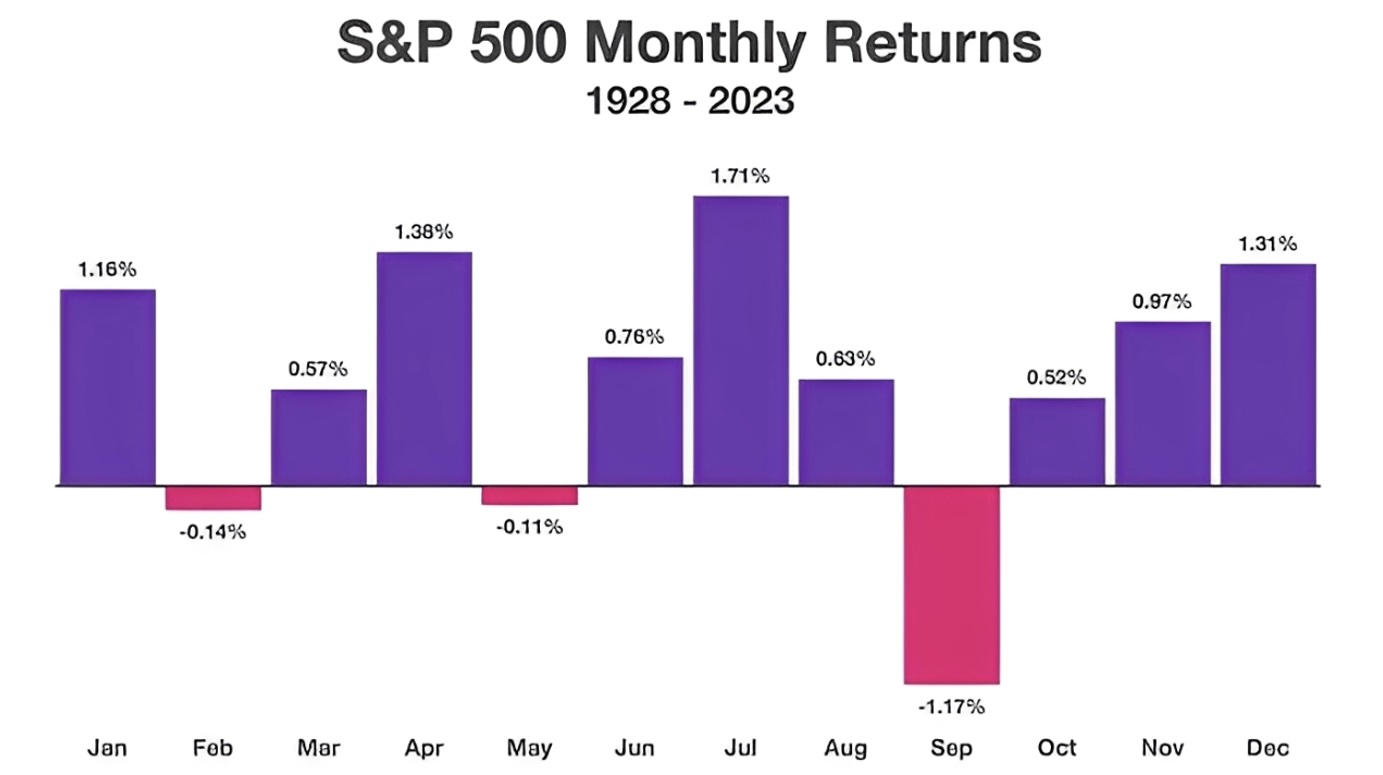
September is the S&P 500’s weakest month, averaging –1.17% over the past two decades — and August often lays the trap.
Average S&P500 Monthly Returns 1928-2023
In 2021, the market had been grinding higher for months. VIX pinned to the floor, volumes dead — summer silence. A couple of hawkish Fed headlines, and September didn’t just cool the rally — it cut through it, sparking forced selling and panic exits.
August 2023 was pure euphoria. AI mania peaking, Nvidia at fresh highs, Nasdaq screaming. While retail chased headlines, funds were already unloading — not reacting, but executing the plan. Two weeks into September, it was gone — Nvidia and Nasdaq back to their starting point, as if the rally never happened.
Different years, different triggers — same playbook. The August–September drop is never a random reaction — it’s the planned reset playing out on schedule. August loads the gun — September pulls the trigger.
Earnings Season: The Most Strategic Reports of the Year
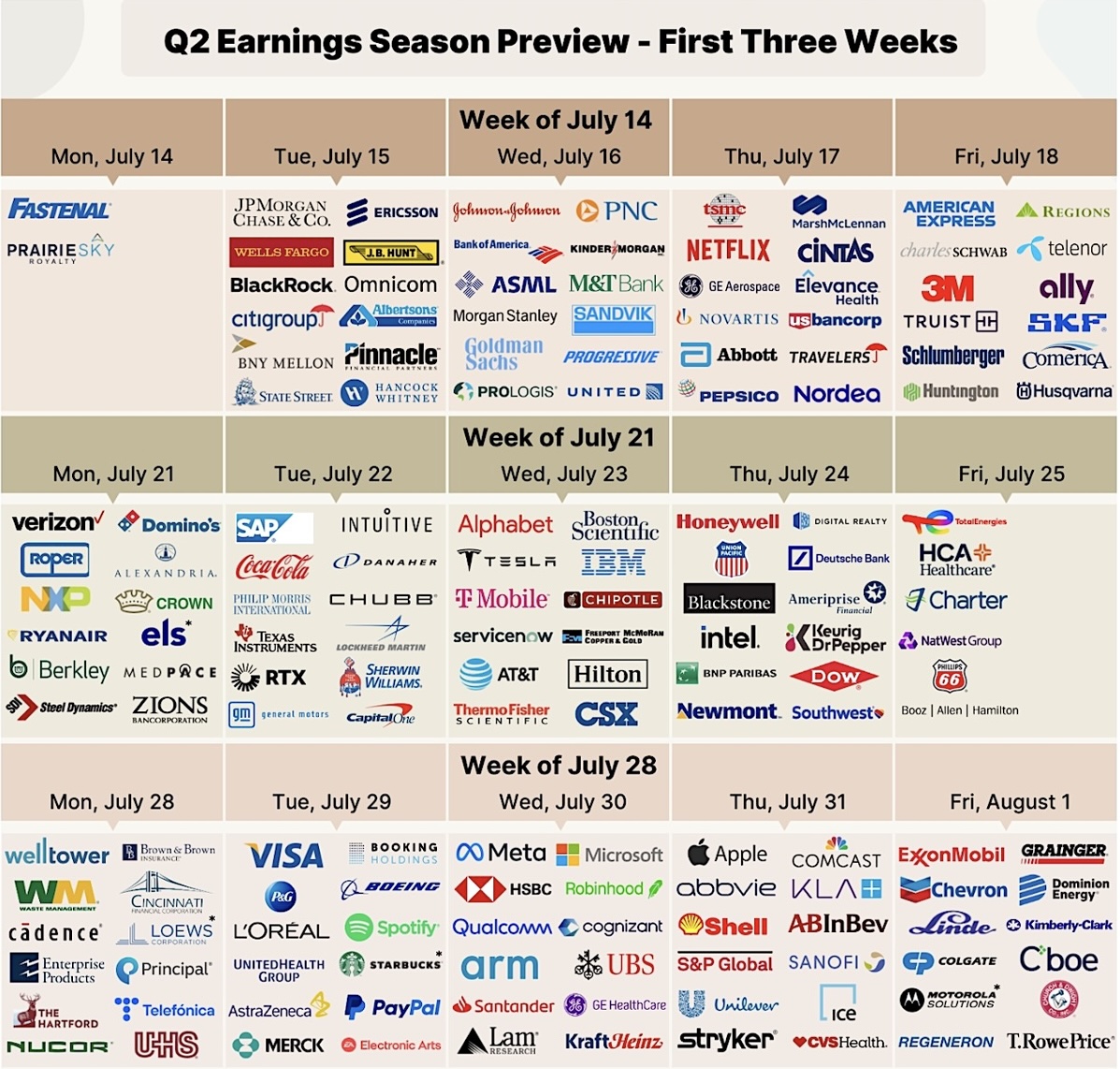
The timing of Q2 earnings — late July through mid-August — isn’t a coincidence. It’s the cover phase of the reset. With books closed on June 30, companies drop their reports right as institutions start reshaping portfolios for the final fiscal stretch. The tactic is simple: use strong reports as cover to unload.
Q2 Earnings Season preview 2025
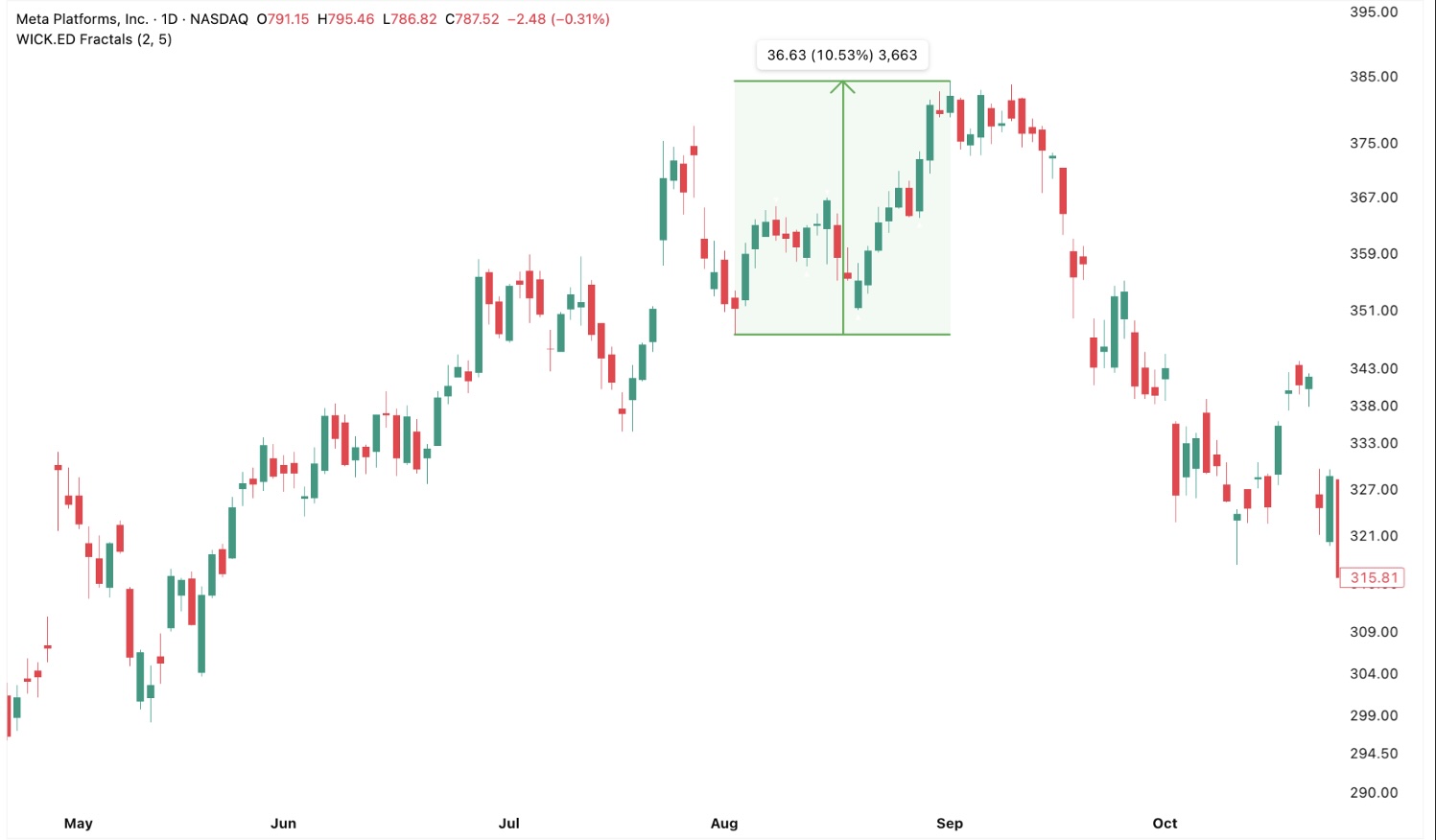
For example, on July 28, 2021, Meta smashed expectations — revenue $29.08B, +56% YoY, net income doubled, earnings per share (EPS) crushed forecasts and stock popped 10% to a fresh ATH at $385.
Meta’s stocks price 2021
And then — the reversal. By September 30, Meta was down nearly 13% from that peak. Not because the report was bad — it was too good. The fundamentals didn’t change. The positioning did — the reset was underway. Peak sentiment, max retail FOMO, and an open door to sell without tanking your own PnL. Strong beats become exit windows — and every one of them is just another brick in the calendar-driven repositioning foundation that September will finish building.
Why it happens
Every summer, the S&P 500 sinks into a local liquidity drought. Fifteen years of data say the same thing: volumes dry up, order books thin, and even modest trades are hitting hard. Thin books + low volume aren’t an accident — they’re the perfect cover for the stealth phase of the reset.
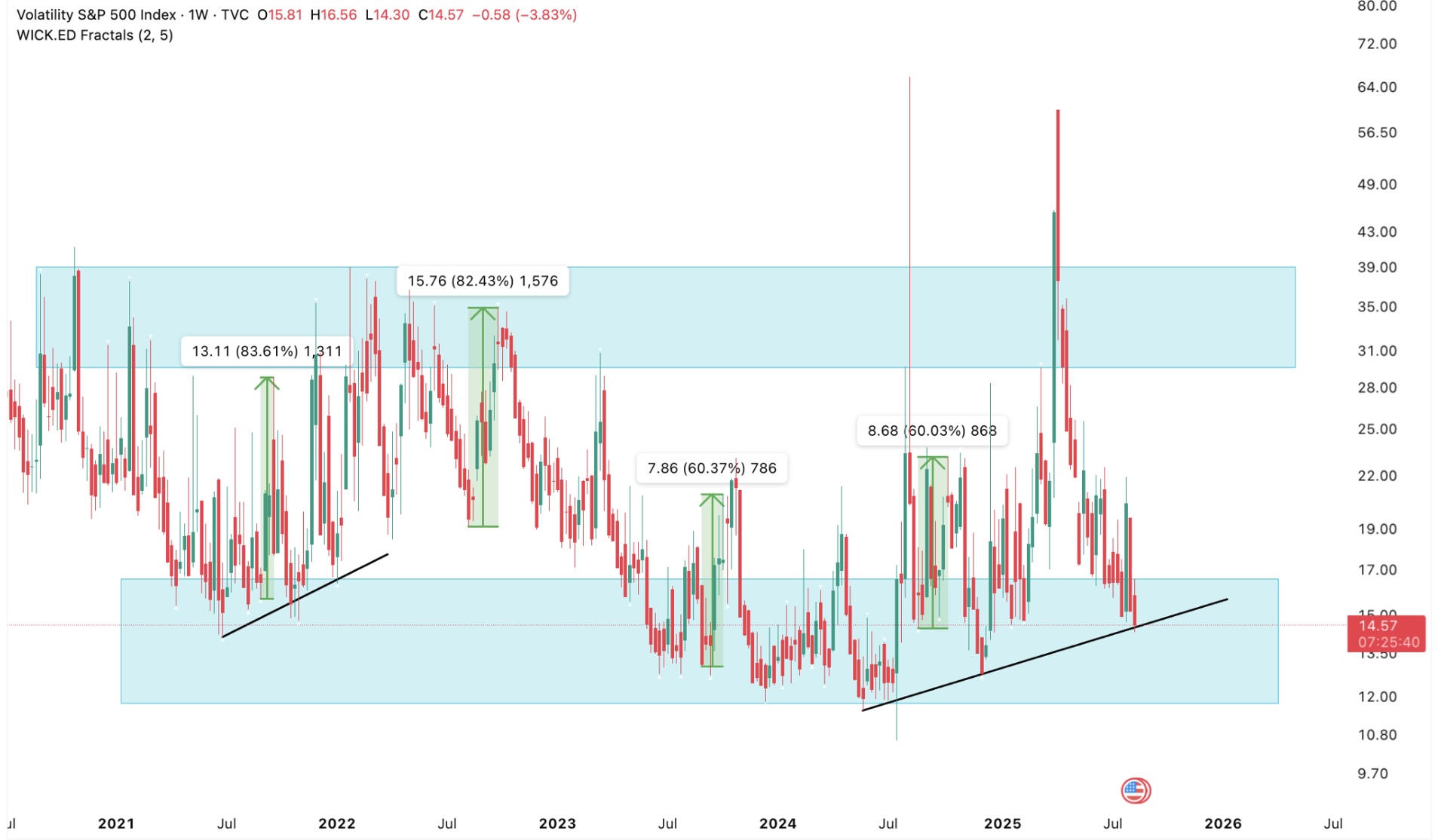
The VIX sits low here, peddling the illusion of safety — but that calm is a lie. Over the past four years, volatility has exploded an average of +71% from August’s quiet lows to late-September’s chaos – right on schedule. That spike isn’t panic — it’s the trigger point of the quarter-end unwind, when the stealth phase flips into open execution.
S&P500 Volatility Index 2021-2025
August — The Setup Isn’t Breaking. It’s Peaking.
August is when institutional desks start their moves. They exit positions while prices are still near the highs, locking in profits to book them in the current quarter. The mission isn’t just to make money — it’s to make the quarter-end snapshot look perfect before the storm they know they’ll help trigger.
SPX futures liquidity runs 20–30% below average this month. Desks are half-staffed, risk managers are on the beach, and it only takes one real sell order to start a slide. With VIX near the floor, no one’s hedged — which is exactly how pros like it. They sell into strength while retail is still reading “resilient market” headlines, and they’re gone before the first crack shows on the chart.
That’s why August rarely implodes. It leaks — quietly. By the time September starts, the stealth phase of the reset is no longer preparation — it’s already in full motion.
September Hits Harder
By September, the reset became deliberate and aggressive. For many US funds and corporations, it’s not just quarter-end — it’s the fiscal year-end. Portfolios aren’t being “adjusted,” they’re cleared for reporting purposes. Profits get locked in, losers get cut, and risks are being reduced, so balance sheets look bulletproof heading into Q4.
What looks like “random selling” is nothing of the sort — it’s mandated portfolio resets tied to the calendar. The final phase of the cycle is about appearance as much as performance: managers want to print strong returns, hide drawdowns, and walk into year-end with portfolios that look unshakable on paper. When thousands of funds do this simultaneously, it amplifies every other September stressor — thin liquidity, buyback blackouts, and macro bombs waiting on the calendar.
September: The Perfect Storm Window
The Mechanical Squeeze
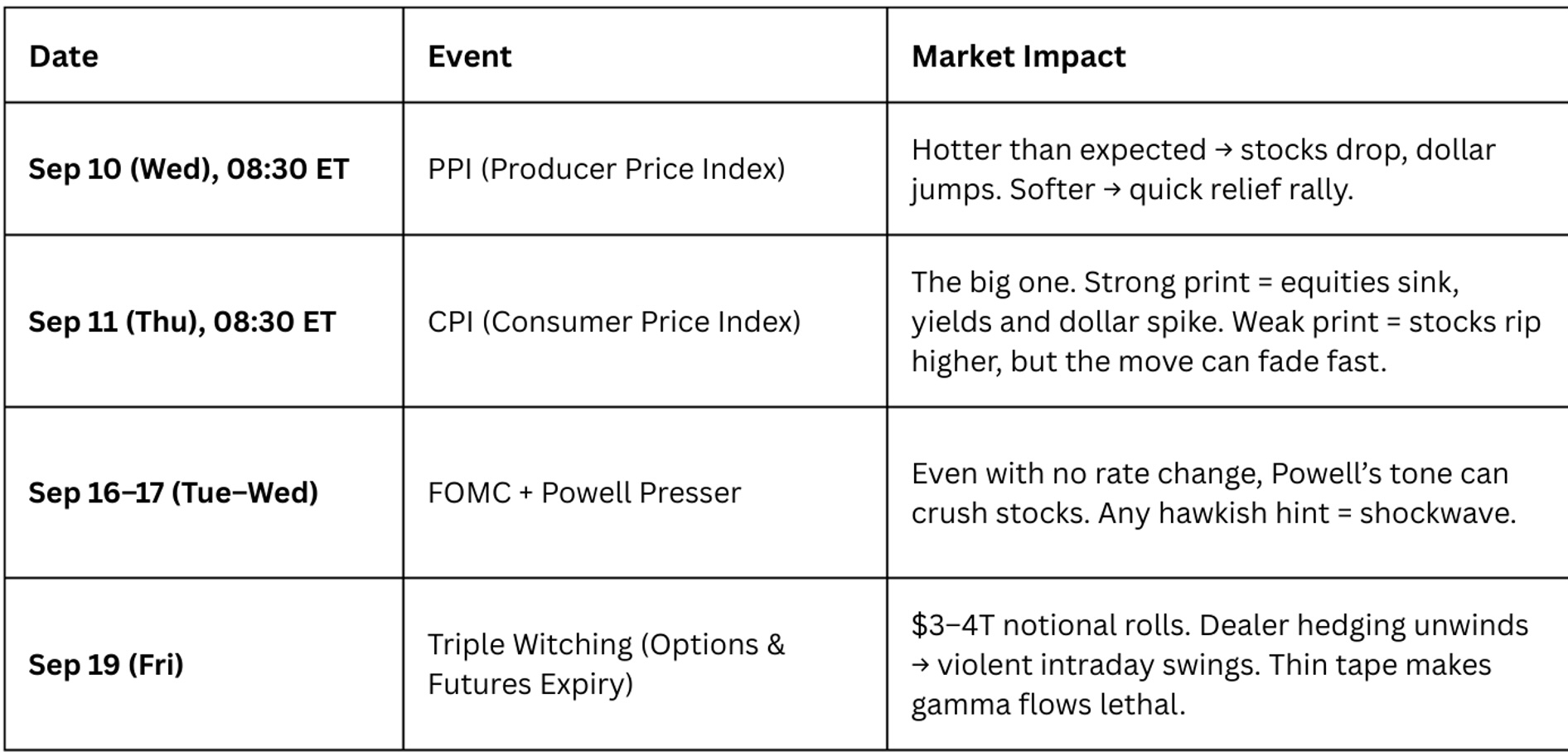
September isn’t just the weakest month for equities — it’s when the market’s plumbing turns hostile. First, the buyback blackout kills one of the most reliable daily demand engines. Without corporate bids soaking up supply, every sell order hits harder. Then triple witching slams in, forcing billions in options and futures flows through an order book already running on fumes. These are not market “events” — they’re pre-scheduled shocks baked into the reset.
Look at September’s calendar — it isn’t random. The witching, CPI/PPI, FOMC: stack them up and you don’t see events, you see a firing sequence.
September 2025 — Economic Event Calendar
The Macro Detonators
While the mechanical stress is still rippling, the calendar drops its macro payload: CPI and PPI in the same week, a full FOMC meeting with Powell’s presser, and major index rebalances that shove megacap weights around like cargo in a storm. In this tape, even neutral Fed language can land like a hawkish bomb. History is brutal here — in 2022, a single CPI beat erased $3 trillion in market cap within three weeks. But 2025 is set up to be even harsher. This time, the entire market is leaning on one assumption — that Powell will finally pivot, that rate cuts are coming to save the tape. If that relief doesn’t arrive, the faith holding this rally together cracks
When you stack macro bombs, mechanical flows, and no liquidity, you don’t get a dip — you get a hit that doesn’t pause for you to react. If you think you’ll have time to adjust when it starts, you’re already too late.
How it looks in real time
The tells aren’t hidden — they’re screaming if you know where to look.
● Strong earnings, falling prices: A company crushes EPS and revenue, and the stock sells off anyway. That’s not a miss — that’s pros using your bid to exit.
● Weak names rallying: Laggards suddenly lead, not because fundamentals flipped, but because funds are rebalancing without chasing stretched leaders.
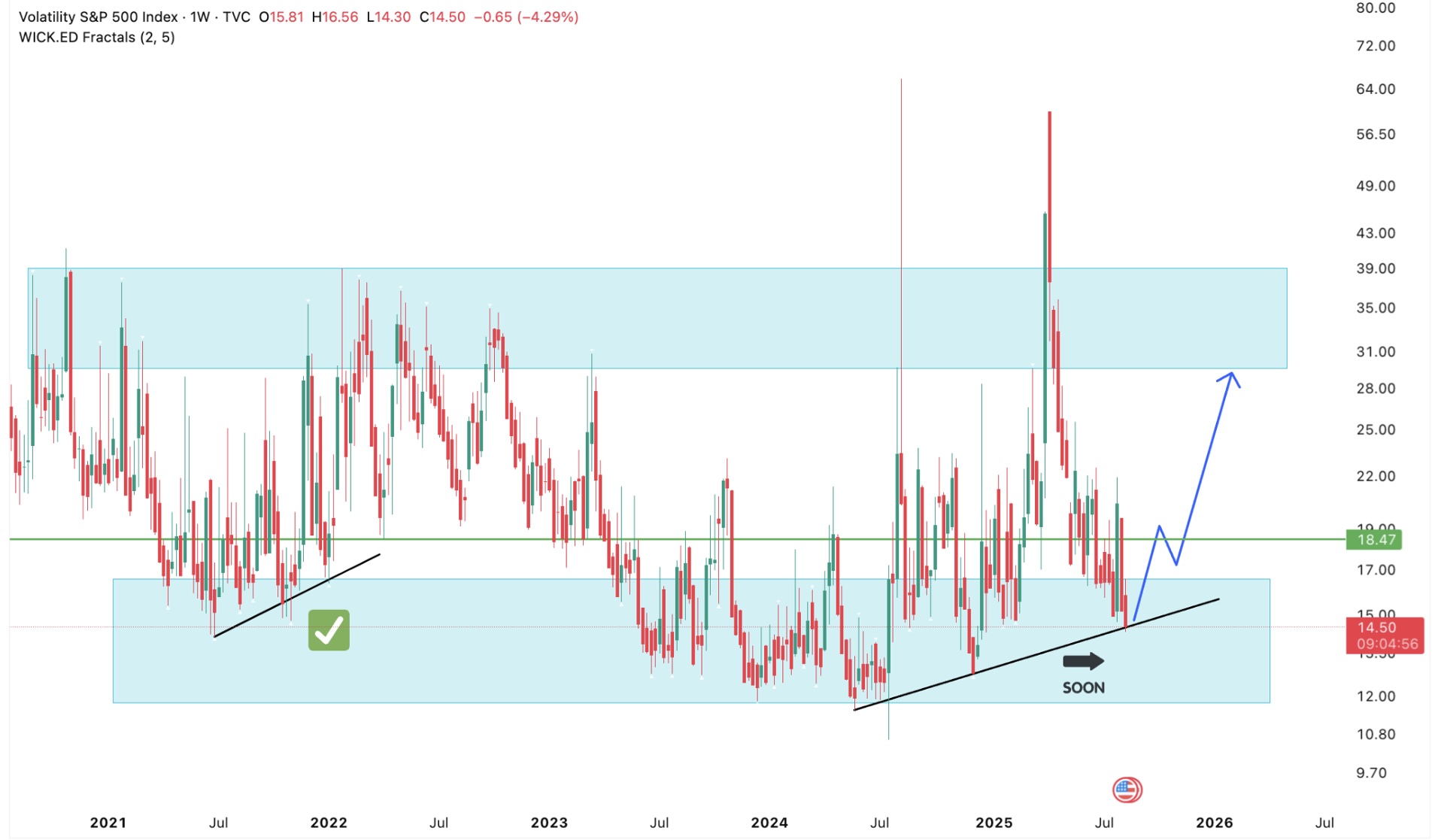
VIX creeping up: The tape looks calm in the mid-teens (14–15), but fake breakouts and stop runs multiply. First push through 16.5? That’s your early warning. Weekly close above 18.5? That’s regime change — “buy the dip” flips to “sell the rip.”
S&P500 Volatility Index 2021-2025
In 2020, Tesla surged 74% into late August ahead of S&P inclusion, then dumped 34% in three weeks. In 2015, after China’s devaluation, the S&P fell 11% in ten days. The trigger headlines change. The reset mechanics don’t.
August–September: the setup is visible on the tape
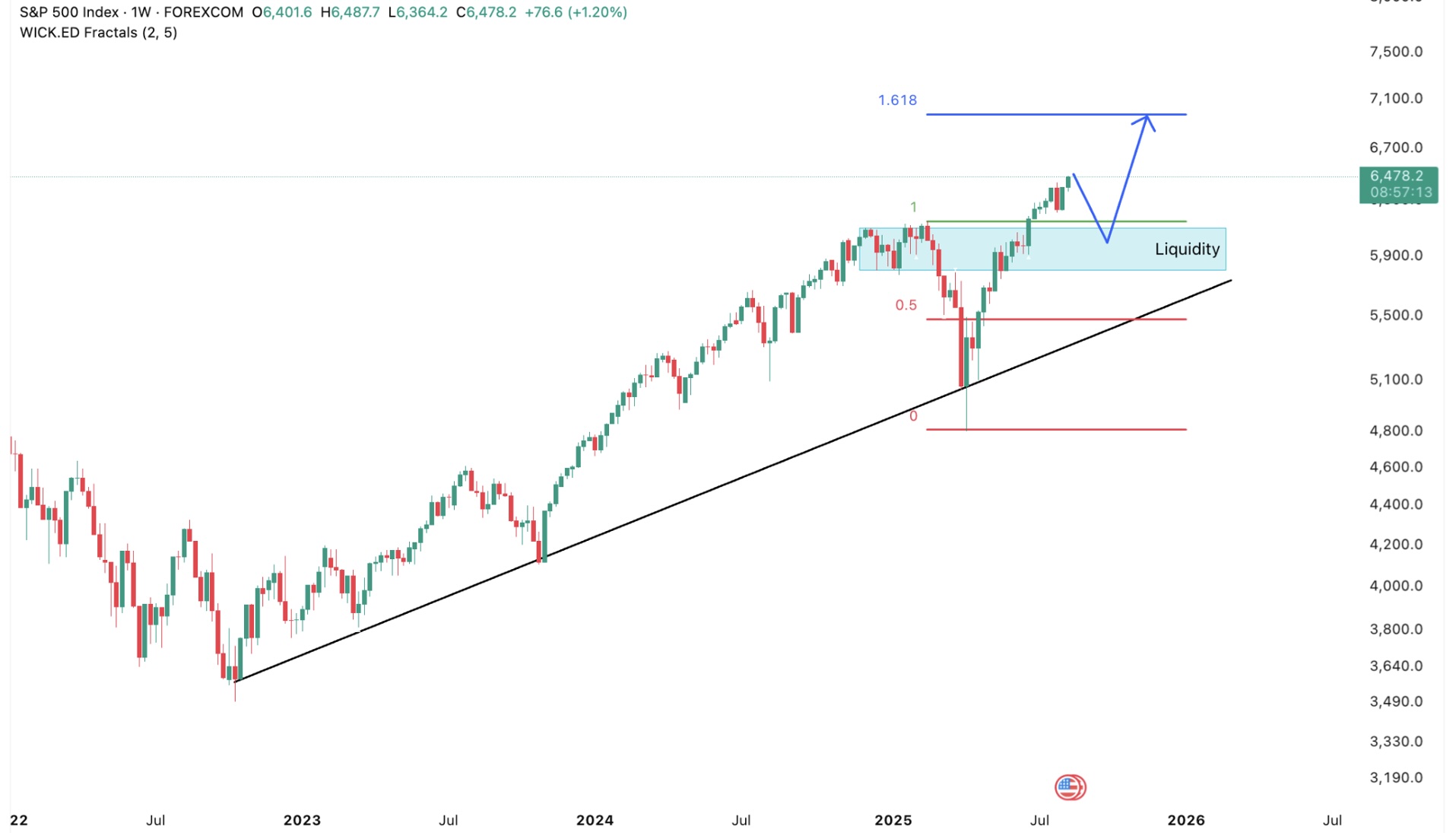
While feeds are still cheering new highs, the chart tells a cleaner story. Price is stalling beneath 6,480–6,500 after a 16% run. The tape is stretched, VIX is creeping off the floor, and the liquidity under you is paper-thin. The map is already drawn: First — a September flush into the highlighted liquidity band at 5,900–6,000 as VIX pushes from 14–15 through 16.5 and toward 18.5–20. Then — a reversal drive toward the 1.618 extension near 7,100. This isn’t a random correction — it’s the market’s quarterly reset playing out on schedule.
S&P500 Forecast
If the index breaks 6400 and closes the week under 6350 with VIX >16.5 (ideally ≥18.5), the wash opens straight to 6150 → 6000–5900. That’s the shakeout. If, after that sweep, price reclaims 6150–6300 while VIX drops back under 16, the runway to 6600 and 7100 is clear.
Invalidation is simple: a clean hold above 6500 with VIX ≤15 skips the wash and squeezes toward 6600 — but the base case into September is flush first, extension later.
Conclusion
While retail still treats this rally like an open barrier, the planned reset is already in progress. The calm you see isn’t stability — it’s the pause before the blade drops. And when it does, it won’t miss.
If you’re still long without a plan, you’re not trading — you’re volunteering as someone’s exit liquidity.
Did you really forget what August–September does? The kill zone — August baits, September traps, and you might be running out of time. This isn’t superstition or “seasonal weakness.” It’s a scheduled, mechanical portfolio reset — one that’s already in motion, and it ends with a September hit.
This isn’t random seasonality — it’s a planned portfolio reset built into the calendar.
September is the S&P 500’s weakest month, averaging –1.17% over the past two decades — and August often lays the trap.
Average S&P500 Monthly Returns 1928-2023
In 2021, the market had been grinding higher for months. VIX pinned to the floor, volumes dead — summer silence. A couple of hawkish Fed headlines, and September didn’t just cool the rally — it cut through it, sparking forced selling and panic exits.
August 2023 was pure euphoria. AI mania peaking, Nvidia at fresh highs, Nasdaq screaming. While retail chased headlines, funds were already unloading — not reacting, but executing the plan. Two weeks into September, it was gone — Nvidia and Nasdaq back to their starting point, as if the rally never happened.
Different years, different triggers — same playbook. The August–September drop is never a random reaction — it’s the planned reset playing out on schedule. August loads the gun — September pulls the trigger.
Earnings Season: The Most Strategic Reports of the Year
The timing of Q2 earnings — late July through mid-August — isn’t a coincidence. It’s the cover phase of the reset. With books closed on June 30, companies drop their reports right as institutions start reshaping portfolios for the final fiscal stretch. The tactic is simple: use strong reports as cover to unload.
Q2 Earnings Season preview 2025
For example, on July 28, 2021, Meta smashed expectations — revenue $29.08B, +56% YoY, net income doubled, earnings per share (EPS) crushed forecasts and stock popped 10% to a fresh ATH at $385.
Meta’s stocks price 2021
And then — the reversal. By September 30, Meta was down nearly 13% from that peak. Not because the report was bad — it was too good. The fundamentals didn’t change. The positioning did — the reset was underway. Peak sentiment, max retail FOMO, and an open door to sell without tanking your own PnL. Strong beats become exit windows — and every one of them is just another brick in the calendar-driven repositioning foundation that September will finish building.
Why it happens
Every summer, the S&P 500 sinks into a local liquidity drought. Fifteen years of data say the same thing: volumes dry up, order books thin, and even modest trades are hitting hard. Thin books + low volume aren’t an accident — they’re the perfect cover for the stealth phase of the reset.
The VIX sits low here, peddling the illusion of safety — but that calm is a lie. Over the past four years, volatility has exploded an average of +71% from August’s quiet lows to late-September’s chaos – right on schedule. That spike isn’t panic — it’s the trigger point of the quarter-end unwind, when the stealth phase flips into open execution.
S&P500 Volatility Index 2021-2025
August — The Setup Isn’t Breaking. It’s Peaking.
August is when institutional desks start their moves. They exit positions while prices are still near the highs, locking in profits to book them in the current quarter. The mission isn’t just to make money — it’s to make the quarter-end snapshot look perfect before the storm they know they’ll help trigger.
SPX futures liquidity runs 20–30% below average this month. Desks are half-staffed, risk managers are on the beach, and it only takes one real sell order to start a slide. With VIX near the floor, no one’s hedged — which is exactly how pros like it. They sell into strength while retail is still reading “resilient market” headlines, and they’re gone before the first crack shows on the chart.
That’s why August rarely implodes. It leaks — quietly. By the time September starts, the stealth phase of the reset is no longer preparation — it’s already in full motion.
September Hits Harder
By September, the reset became deliberate and aggressive. For many US funds and corporations, it’s not just quarter-end — it’s the fiscal year-end. Portfolios aren’t being “adjusted,” they’re cleared for reporting purposes. Profits get locked in, losers get cut, and risks are being reduced, so balance sheets look bulletproof heading into Q4.
What looks like “random selling” is nothing of the sort — it’s mandated portfolio resets tied to the calendar. The final phase of the cycle is about appearance as much as performance: managers want to print strong returns, hide drawdowns, and walk into year-end with portfolios that look unshakable on paper. When thousands of funds do this simultaneously, it amplifies every other September stressor — thin liquidity, buyback blackouts, and macro bombs waiting on the calendar.
September: The Perfect Storm Window
The Mechanical Squeeze
September isn’t just the weakest month for equities — it’s when the market’s plumbing turns hostile. First, the buyback blackout kills one of the most reliable daily demand engines. Without corporate bids soaking up supply, every sell order hits harder. Then triple witching slams in, forcing billions in options and futures flows through an order book already running on fumes. These are not market “events” — they’re pre-scheduled shocks baked into the reset.
Look at September’s calendar — it isn’t random. The witching, CPI/PPI, FOMC: stack them up and you don’t see events, you see a firing sequence.
September 2025 — Economic Event Calendar
The Macro Detonators
While the mechanical stress is still rippling, the calendar drops its macro payload: CPI and PPI in the same week, a full FOMC meeting with Powell’s presser, and major index rebalances that shove megacap weights around like cargo in a storm. In this tape, even neutral Fed language can land like a hawkish bomb. History is brutal here — in 2022, a single CPI beat erased $3 trillion in market cap within three weeks. But 2025 is set up to be even harsher. This time, the entire market is leaning on one assumption — that Powell will finally pivot, that rate cuts are coming to save the tape. If that relief doesn’t arrive, the faith holding this rally together cracks
When you stack macro bombs, mechanical flows, and no liquidity, you don’t get a dip — you get a hit that doesn’t pause for you to react. If you think you’ll have time to adjust when it starts, you’re already too late.
How it looks in real time
The tells aren’t hidden — they’re screaming if you know where to look.
● Strong earnings, falling prices: A company crushes EPS and revenue, and the stock sells off anyway. That’s not a miss — that’s pros using your bid to exit.
● Weak names rallying: Laggards suddenly lead, not because fundamentals flipped, but because funds are rebalancing without chasing stretched leaders.
VIX creeping up: The tape looks calm in the mid-teens (14–15), but fake breakouts and stop runs multiply. First push through 16.5? That’s your early warning. Weekly close above 18.5? That’s regime change — “buy the dip” flips to “sell the rip.”
S&P500 Volatility Index 2021-2025
In 2020, Tesla surged 74% into late August ahead of S&P inclusion, then dumped 34% in three weeks. In 2015, after China’s devaluation, the S&P fell 11% in ten days. The trigger headlines change. The reset mechanics don’t.
August–September: the setup is visible on the tape
While feeds are still cheering new highs, the chart tells a cleaner story. Price is stalling beneath 6,480–6,500 after a 16% run. The tape is stretched, VIX is creeping off the floor, and the liquidity under you is paper-thin. The map is already drawn: First — a September flush into the highlighted liquidity band at 5,900–6,000 as VIX pushes from 14–15 through 16.5 and toward 18.5–20. Then — a reversal drive toward the 1.618 extension near 7,100. This isn’t a random correction — it’s the market’s quarterly reset playing out on schedule.
S&P500 Forecast
If the index breaks 6400 and closes the week under 6350 with VIX >16.5 (ideally ≥18.5), the wash opens straight to 6150 → 6000–5900. That’s the shakeout. If, after that sweep, price reclaims 6150–6300 while VIX drops back under 16, the runway to 6600 and 7100 is clear.
Invalidation is simple: a clean hold above 6500 with VIX ≤15 skips the wash and squeezes toward 6600 — but the base case into September is flush first, extension later.
Conclusion
While retail still treats this rally like an open barrier, the planned reset is already in progress. The calm you see isn’t stability — it’s the pause before the blade drops. And when it does, it won’t miss.
If you’re still long without a plan, you’re not trading — you’re volunteering as someone’s exit liquidity.
FP Markets Winner Spotlight 🏆 | Global Broker of the Year 2025 #Trading #Broker #Innovation #Shorts
FP Markets Winner Spotlight 🏆 | Global Broker of the Year 2025 #Trading #Broker #Innovation #Shorts
FP Markets Winner Spotlight 🏆 | Global Broker of the Year 2025 #Trading #Broker #Innovation #Shorts
FP Markets Winner Spotlight 🏆 | Global Broker of the Year 2025 #Trading #Broker #Innovation #Shorts
FP Markets takes the spotlight as Global Broker of the Year 2025 at the Finance Magnates Awards.
Martin Stoilov, Head of Client Experience, shares that trust, innovation, and people played a key role in the company’s success, supported by a strong foundation of integrity and client-centricity.
Following this milestone, FP Markets continues to focus on growth, technology investment, and its core values of transparency and excellence.
👉 Be part of FM Awards 2026: https://awards.financemagnates.com/#nominate
FP Markets takes the spotlight as Global Broker of the Year 2025 at the Finance Magnates Awards.
Martin Stoilov, Head of Client Experience, shares that trust, innovation, and people played a key role in the company’s success, supported by a strong foundation of integrity and client-centricity.
Following this milestone, FP Markets continues to focus on growth, technology investment, and its core values of transparency and excellence.
👉 Be part of FM Awards 2026: https://awards.financemagnates.com/#nominate
FP Markets takes the spotlight as Global Broker of the Year 2025 at the Finance Magnates Awards.
Martin Stoilov, Head of Client Experience, shares that trust, innovation, and people played a key role in the company’s success, supported by a strong foundation of integrity and client-centricity.
Following this milestone, FP Markets continues to focus on growth, technology investment, and its core values of transparency and excellence.
👉 Be part of FM Awards 2026: https://awards.financemagnates.com/#nominate
FP Markets takes the spotlight as Global Broker of the Year 2025 at the Finance Magnates Awards.
Martin Stoilov, Head of Client Experience, shares that trust, innovation, and people played a key role in the company’s success, supported by a strong foundation of integrity and client-centricity.
Following this milestone, FP Markets continues to focus on growth, technology investment, and its core values of transparency and excellence.
👉 Be part of FM Awards 2026: https://awards.financemagnates.com/#nominate
In this video, we review @HolaPrimeMarketsOfficial, a multi-asset forex and CFDs broker offering different account types, trading platforms, and flexible trading conditions.
We cover the broker’s overall offering, including account options, trading environment, platforms like MT4 and MT5, and additional services such as managed accounts and fast withdrawals.
Watch the full video to see if Hola Prime Markets fits your trading needs.
📣 Stay up to date with the latest in finance and trading. Follow Finance Magnates for industry news, insights, and global event coverage.
Connect with us:
🔗 LinkedIn: /financemagnates
👍 Facebook: /financemagnates
📸 Instagram: https://www.instagram.com/financemagnates
🐦 X: https://x.com/financemagnates
🎥 TikTok: https://www.tiktok.com/tag/financemagnates
▶️ YouTube: /@financemagnates_official
#HolaPrime #ForexBroker #CFDTrading #FinanceMagnates #Trading #Forex #BrokerReview
In this video, we review @HolaPrimeMarketsOfficial, a multi-asset forex and CFDs broker offering different account types, trading platforms, and flexible trading conditions.
We cover the broker’s overall offering, including account options, trading environment, platforms like MT4 and MT5, and additional services such as managed accounts and fast withdrawals.
Watch the full video to see if Hola Prime Markets fits your trading needs.
📣 Stay up to date with the latest in finance and trading. Follow Finance Magnates for industry news, insights, and global event coverage.
Connect with us:
🔗 LinkedIn: /financemagnates
👍 Facebook: /financemagnates
📸 Instagram: https://www.instagram.com/financemagnates
🐦 X: https://x.com/financemagnates
🎥 TikTok: https://www.tiktok.com/tag/financemagnates
▶️ YouTube: /@financemagnates_official
#HolaPrime #ForexBroker #CFDTrading #FinanceMagnates #Trading #Forex #BrokerReview
In this video, we review @HolaPrimeMarketsOfficial, a multi-asset forex and CFDs broker offering different account types, trading platforms, and flexible trading conditions.
We cover the broker’s overall offering, including account options, trading environment, platforms like MT4 and MT5, and additional services such as managed accounts and fast withdrawals.
Watch the full video to see if Hola Prime Markets fits your trading needs.
📣 Stay up to date with the latest in finance and trading. Follow Finance Magnates for industry news, insights, and global event coverage.
Connect with us:
🔗 LinkedIn: /financemagnates
👍 Facebook: /financemagnates
📸 Instagram: https://www.instagram.com/financemagnates
🐦 X: https://x.com/financemagnates
🎥 TikTok: https://www.tiktok.com/tag/financemagnates
▶️ YouTube: /@financemagnates_official
#HolaPrime #ForexBroker #CFDTrading #FinanceMagnates #Trading #Forex #BrokerReview
In this video, we review @HolaPrimeMarketsOfficial, a multi-asset forex and CFDs broker offering different account types, trading platforms, and flexible trading conditions.
We cover the broker’s overall offering, including account options, trading environment, platforms like MT4 and MT5, and additional services such as managed accounts and fast withdrawals.
Watch the full video to see if Hola Prime Markets fits your trading needs.
📣 Stay up to date with the latest in finance and trading. Follow Finance Magnates for industry news, insights, and global event coverage.
Connect with us:
🔗 LinkedIn: /financemagnates
👍 Facebook: /financemagnates
📸 Instagram: https://www.instagram.com/financemagnates
🐦 X: https://x.com/financemagnates
🎥 TikTok: https://www.tiktok.com/tag/financemagnates
▶️ YouTube: /@financemagnates_official
#HolaPrime #ForexBroker #CFDTrading #FinanceMagnates #Trading #Forex #BrokerReview
In this video, we review @HolaPrimeMarketsOfficial, a multi-asset forex and CFDs broker offering different account types, trading platforms, and flexible trading conditions.
We cover the broker’s overall offering, including account options, trading environment, platforms like MT4 and MT5, and additional services such as managed accounts and fast withdrawals.
Watch the full video to see if Hola Prime Markets fits your trading needs.
📣 Stay up to date with the latest in finance and trading. Follow Finance Magnates for industry news, insights, and global event coverage.
Connect with us:
🔗 LinkedIn: /financemagnates
👍 Facebook: /financemagnates
📸 Instagram: https://www.instagram.com/financemagnates
🐦 X: https://x.com/financemagnates
🎥 TikTok: https://www.tiktok.com/tag/financemagnates
▶️ YouTube: /@financemagnates_official
#HolaPrime #ForexBroker #CFDTrading #FinanceMagnates #Trading #Forex #BrokerReview
In this video, we review @HolaPrimeMarketsOfficial, a multi-asset forex and CFDs broker offering different account types, trading platforms, and flexible trading conditions.
We cover the broker’s overall offering, including account options, trading environment, platforms like MT4 and MT5, and additional services such as managed accounts and fast withdrawals.
Watch the full video to see if Hola Prime Markets fits your trading needs.
📣 Stay up to date with the latest in finance and trading. Follow Finance Magnates for industry news, insights, and global event coverage.
Connect with us:
🔗 LinkedIn: /financemagnates
👍 Facebook: /financemagnates
📸 Instagram: https://www.instagram.com/financemagnates
🐦 X: https://x.com/financemagnates
🎥 TikTok: https://www.tiktok.com/tag/financemagnates
▶️ YouTube: /@financemagnates_official
#HolaPrime #ForexBroker #CFDTrading #FinanceMagnates #Trading #Forex #BrokerReview
Hola Prime Review: What You Need to Know | Full Breakdown by Finance Magnates
Hola Prime Review: What You Need to Know | Full Breakdown by Finance Magnates
Hola Prime Review: What You Need to Know | Full Breakdown by Finance Magnates
Hola Prime Review: What You Need to Know | Full Breakdown by Finance Magnates
Hola Prime Review: What You Need to Know | Full Breakdown by Finance Magnates
Hola Prime Review: What You Need to Know | Full Breakdown by Finance Magnates
In this video, we review @HolaPrime_Global, a proprietary trading firm offering evaluation programs and performance-based payouts in simulated market environments.
We cover how the challenge model works, including account types, profit splits (up to 95%), trading rules, and what it takes to reach a funded account. You’ll also learn about available platforms like MT4, MT5, cTrader, and more, along with insights into payouts, support, and trading conditions.
Watch the full video to see if Hola Prime fits your trading style.
📣 Stay up to date with the latest in finance and trading. Follow Finance Magnates for industry news, insights, and global event coverage.
Connect with us:
🔗 LinkedIn: /financemagnates
👍 Facebook: /financemagnates
📸 Instagram: https://www.instagram.com/financemagnates
🐦 X: https://x.com/financemagnates
🎥 TikTok: https://www.tiktok.com/tag/financemagnates
▶️ YouTube: /@financemagnates_official
#HolaPrime #PropFirm #Trading #FinanceMagnates #Forex #FuturesTrading #TradingReview #PropFirmReview
In this video, we review @HolaPrime_Global, a proprietary trading firm offering evaluation programs and performance-based payouts in simulated market environments.
We cover how the challenge model works, including account types, profit splits (up to 95%), trading rules, and what it takes to reach a funded account. You’ll also learn about available platforms like MT4, MT5, cTrader, and more, along with insights into payouts, support, and trading conditions.
Watch the full video to see if Hola Prime fits your trading style.
📣 Stay up to date with the latest in finance and trading. Follow Finance Magnates for industry news, insights, and global event coverage.
Connect with us:
🔗 LinkedIn: /financemagnates
👍 Facebook: /financemagnates
📸 Instagram: https://www.instagram.com/financemagnates
🐦 X: https://x.com/financemagnates
🎥 TikTok: https://www.tiktok.com/tag/financemagnates
▶️ YouTube: /@financemagnates_official
#HolaPrime #PropFirm #Trading #FinanceMagnates #Forex #FuturesTrading #TradingReview #PropFirmReview
In this video, we review @HolaPrime_Global, a proprietary trading firm offering evaluation programs and performance-based payouts in simulated market environments.
We cover how the challenge model works, including account types, profit splits (up to 95%), trading rules, and what it takes to reach a funded account. You’ll also learn about available platforms like MT4, MT5, cTrader, and more, along with insights into payouts, support, and trading conditions.
Watch the full video to see if Hola Prime fits your trading style.
📣 Stay up to date with the latest in finance and trading. Follow Finance Magnates for industry news, insights, and global event coverage.
Connect with us:
🔗 LinkedIn: /financemagnates
👍 Facebook: /financemagnates
📸 Instagram: https://www.instagram.com/financemagnates
🐦 X: https://x.com/financemagnates
🎥 TikTok: https://www.tiktok.com/tag/financemagnates
▶️ YouTube: /@financemagnates_official
#HolaPrime #PropFirm #Trading #FinanceMagnates #Forex #FuturesTrading #TradingReview #PropFirmReview
In this video, we review @HolaPrime_Global, a proprietary trading firm offering evaluation programs and performance-based payouts in simulated market environments.
We cover how the challenge model works, including account types, profit splits (up to 95%), trading rules, and what it takes to reach a funded account. You’ll also learn about available platforms like MT4, MT5, cTrader, and more, along with insights into payouts, support, and trading conditions.
Watch the full video to see if Hola Prime fits your trading style.
📣 Stay up to date with the latest in finance and trading. Follow Finance Magnates for industry news, insights, and global event coverage.
Connect with us:
🔗 LinkedIn: /financemagnates
👍 Facebook: /financemagnates
📸 Instagram: https://www.instagram.com/financemagnates
🐦 X: https://x.com/financemagnates
🎥 TikTok: https://www.tiktok.com/tag/financemagnates
▶️ YouTube: /@financemagnates_official
#HolaPrime #PropFirm #Trading #FinanceMagnates #Forex #FuturesTrading #TradingReview #PropFirmReview
In this video, we review @HolaPrime_Global, a proprietary trading firm offering evaluation programs and performance-based payouts in simulated market environments.
We cover how the challenge model works, including account types, profit splits (up to 95%), trading rules, and what it takes to reach a funded account. You’ll also learn about available platforms like MT4, MT5, cTrader, and more, along with insights into payouts, support, and trading conditions.
Watch the full video to see if Hola Prime fits your trading style.
📣 Stay up to date with the latest in finance and trading. Follow Finance Magnates for industry news, insights, and global event coverage.
Connect with us:
🔗 LinkedIn: /financemagnates
👍 Facebook: /financemagnates
📸 Instagram: https://www.instagram.com/financemagnates
🐦 X: https://x.com/financemagnates
🎥 TikTok: https://www.tiktok.com/tag/financemagnates
▶️ YouTube: /@financemagnates_official
#HolaPrime #PropFirm #Trading #FinanceMagnates #Forex #FuturesTrading #TradingReview #PropFirmReview
In this video, we review @HolaPrime_Global, a proprietary trading firm offering evaluation programs and performance-based payouts in simulated market environments.
We cover how the challenge model works, including account types, profit splits (up to 95%), trading rules, and what it takes to reach a funded account. You’ll also learn about available platforms like MT4, MT5, cTrader, and more, along with insights into payouts, support, and trading conditions.
Watch the full video to see if Hola Prime fits your trading style.
📣 Stay up to date with the latest in finance and trading. Follow Finance Magnates for industry news, insights, and global event coverage.
Connect with us:
🔗 LinkedIn: /financemagnates
👍 Facebook: /financemagnates
📸 Instagram: https://www.instagram.com/financemagnates
🐦 X: https://x.com/financemagnates
🎥 TikTok: https://www.tiktok.com/tag/financemagnates
▶️ YouTube: /@financemagnates_official
#HolaPrime #PropFirm #Trading #FinanceMagnates #Forex #FuturesTrading #TradingReview #PropFirmReview
Axi Winner Spotlight 🏆 | Global Most Innovative Broker 2025 #Innovation #Trading #Fintech #Broker
Axi Winner Spotlight 🏆 | Global Most Innovative Broker 2025 #Innovation #Trading #Fintech #Broker
Axi Winner Spotlight 🏆 | Global Most Innovative Broker 2025 #Innovation #Trading #Fintech #Broker
Axi Winner Spotlight 🏆 | Global Most Innovative Broker 2025 #Innovation #Trading #Fintech #Broker
Axi Winner Spotlight 🏆 | Global Most Innovative Broker 2025 #Innovation #Trading #Fintech #Broker
Axi Winner Spotlight 🏆 | Global Most Innovative Broker 2025 #Innovation #Trading #Fintech #Broker
Axi takes the spotlight at the Finance Magnates Awards, winning Global Most Innovative Broker 2025.
Olivia Xenofontos and Ivanna Openko share how the team will feel: proud, motivated, and ready to keep delivering.
They also describe the night as well-organized, focused, and enjoyable for all.
👉 Be part of FM Awards 2026.
Axi takes the spotlight at the Finance Magnates Awards, winning Global Most Innovative Broker 2025.
Olivia Xenofontos and Ivanna Openko share how the team will feel: proud, motivated, and ready to keep delivering.
They also describe the night as well-organized, focused, and enjoyable for all.
👉 Be part of FM Awards 2026.
Axi takes the spotlight at the Finance Magnates Awards, winning Global Most Innovative Broker 2025.
Olivia Xenofontos and Ivanna Openko share how the team will feel: proud, motivated, and ready to keep delivering.
They also describe the night as well-organized, focused, and enjoyable for all.
👉 Be part of FM Awards 2026.
Axi takes the spotlight at the Finance Magnates Awards, winning Global Most Innovative Broker 2025.
Olivia Xenofontos and Ivanna Openko share how the team will feel: proud, motivated, and ready to keep delivering.
They also describe the night as well-organized, focused, and enjoyable for all.
👉 Be part of FM Awards 2026.
Axi takes the spotlight at the Finance Magnates Awards, winning Global Most Innovative Broker 2025.
Olivia Xenofontos and Ivanna Openko share how the team will feel: proud, motivated, and ready to keep delivering.
They also describe the night as well-organized, focused, and enjoyable for all.
👉 Be part of FM Awards 2026.
Axi takes the spotlight at the Finance Magnates Awards, winning Global Most Innovative Broker 2025.
Olivia Xenofontos and Ivanna Openko share how the team will feel: proud, motivated, and ready to keep delivering.
They also describe the night as well-organized, focused, and enjoyable for all.
👉 Be part of FM Awards 2026.
Recognition that matters.
Built on transparency.
Driven by the industry.
The Finance Magnates Awards 2026.
Nominations are now open.
🔗 https://awards.financemagnates.com/?utm_source=SM&utm_medium=social&utm_campaign=recognition-matters
Recognition that matters.
Built on transparency.
Driven by the industry.
The Finance Magnates Awards 2026.
Nominations are now open.
🔗 https://awards.financemagnates.com/?utm_source=SM&utm_medium=social&utm_campaign=recognition-matters
Recognition that matters.
Built on transparency.
Driven by the industry.
The Finance Magnates Awards 2026.
Nominations are now open.
🔗 https://awards.financemagnates.com/?utm_source=SM&utm_medium=social&utm_campaign=recognition-matters
Recognition that matters.
Built on transparency.
Driven by the industry.
The Finance Magnates Awards 2026.
Nominations are now open.
🔗 https://awards.financemagnates.com/?utm_source=SM&utm_medium=social&utm_campaign=recognition-matters
Recognition that matters.
Built on transparency.
Driven by the industry.
The Finance Magnates Awards 2026.
Nominations are now open.
🔗 https://awards.financemagnates.com/?utm_source=SM&utm_medium=social&utm_campaign=recognition-matters
Recognition that matters.
Built on transparency.
Driven by the industry.
The Finance Magnates Awards 2026.
Nominations are now open.
🔗 https://awards.financemagnates.com/?utm_source=SM&utm_medium=social&utm_campaign=recognition-matters