BDSwiss Group is preparing for the unexpected through strategic risk management and transparent governance.
BDSwiss
The world of fintech is complex, competitive and fast-paced, which means that risk mitigation is more vital than ever.
The ultimate test of resilience for a fintech company is whether it can withstand a perfect storm, and especially one brought about by a rare combination of unprecedented events.
Never has this been more true than today, a time of emergency lockdowns and banking crises. Therefore, internal controls are critically important to the sound operations and strategic sustainability of fintech companies.
BDSwiss, a group of CFD and forex investment companies, knows that an effective Enterprise Risk Management (ERM) programme is a crucial foundation for any fintech business because it helps to mitigate risks while continuously improving measures to protect its clients and business operations from unnecessary and avoidable harm.
Dealing with Unforeseen Risks
With COVID-19 still gripping the world and posing enormous health and financial risks, fintech businesses across the globe continue to deal with significant challenges resulting from the pandemic and the stringent containment measures being put in place.
Many fintechs have gone into overdrive to respond to the crisis - shoring up their capital and funding from investors and implementing cost-saving measures, including workforce reductions.
Cases of malpractice in traditional finance and fintech have also been plaguing the industry, with the most recent one being the Wirecard $2 billion missing funds scandal, which led the company to file for insolvency on 25 June 2020.
With many online trading brokers using Wirecard as their primary - or even sole - payment processor for client deposits and withdrawals, the Wirecard debacle sent shockwaves through the markets, freezing thousands of client accounts.
However, the Wirecard case was far from the first of its kind. In 2016, the Deutsche Bank Panama Papers scandal revealed the bank had been helping customers funnel hundreds of millions of euros into offshore tax havens.
More recently, the UK’s FCA fined Commerzbank AG $47 Million for failing to put adequate anti-money laundering (AML) systems and controls in place.
Recent pandemic and economic scandals demonstrate that no matter the positive reputation of an institution, poor governance can lead to devastating consequences in turn for companies doing business with them.
So how can fintech companies ensure they have robust ERM strategies in place to help them mitigate risks and to avoid costly disruptions in their operations?
In 2020, with over 200 employees and multiple country offices, the BDSwiss Group has been able to showcase its operational resilience.
It has adapted to a series of challenges brought about by mostly unforeseen risks, such as the pandemic and even banking failures.
BDSwiss quickly pivoted to a work from home environment, prioritising its employees’ health and safety.
It was also quick to address clients’ concerns when it came to payment processing, and it responded to increased volumes effectively while maintaining operational resilience.
According to BDSwiss’ Chief Risk Officer, Gregory Papagregoriou, a comprehensive ERM programme is vital to ensure business continuity and to reduce the impact and severity of harmful events:
“The fintech revolution has pushed regulators to venture into uncharted territory, and no matter how stringent the oversight, financial misconduct is possible, and it starts internally. Fintech companies must learn how to use systematic and strong risk management processes to enable a culture of transparency and accountability throughout their operations and to act proactively to minimise risk.”
When Insight is Better Than Oversight
While obtaining the regulatory oversight and auditing controls can help ensure compliance and transparency within an organisation, stringent regulations won’t work by themselves.
In fact, it’s the company’s culture and behaviours that are the main drivers of a firm’s risk management framework. As Gregory goes on to explain:
“Our ERM programme goes beyond mere compliance with our global regulators. We ensure our risk management processes are seamlessly integrated throughout all our departments and operations. Where needed, we also diversify potential concentrations of risks, while also remaining highly agile to handle force majeure events as well as those we can anticipate, such as cyber risks.”
An Exemplary ERM Model
BDSwiss’ implementation of its transparent governance and risk culture starts at the top of the organisation and is applied throughout it.
It begins with the Group’s senior management, Risk Committee and Compliance team. Establishing seamless cross-departmental collaboration has enabled the Group to align its teams across Finance, Risk, Compliance, IT and Payment Solutions.
Together they’re able to respond effectively and efficiently to mitigate risks and to navigate unprecedented situations including cyber attacks and failing payment processors.
The Group’s dedicated Risk Management Committee is responsible for monitoring the day-to-day risk exposure of the Group, using internal tools designed to calculate capital adequacy and perform regular stress tests.
Ensuring digital resiliency both in terms of strategy and framework is another crucial component of BDSwiss’ successful ERM model.
Employing the latest security protocols, the broker safeguards its clients’ data from unlawful or unauthorised use and ensures an optimal trading experience at all times.
Ensuring Business Sustainability
BDSwiss operates in the best interests of all stakeholders, including its employees, investors, and communities.
Through its ERM, the company has been able to weather the storms it encounters, while maintaining organisational resilience through transparent risk governance.
As a result, its efforts have led to greater trust being placed in it by its employees, clients, partners and others.
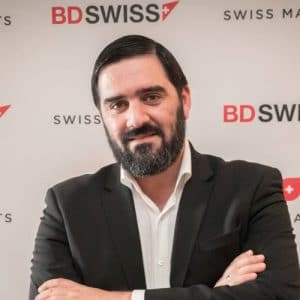
Katalina Michael, Executive Director at BDSwiss
Executive Director at BDSwiss, Katalina Michael highlights the goals and benefits of BDSwiss’ approach, “As a fintech company, we seek to give our clients more than just quality trading conditions and market-leading platforms. We want to ensure they have peace of mind knowing they’re trading with a multi-regulated and transparent broker that not only complies with regulatory requirements, but also safeguards its clients’ best interests and offers continuous support, security, and stability. It is not just the efficient procedures or enhanced technology in place that determine this, but simply the mind-set and culture that the Board of Directors has built here at BDSwiss.
“Dedicated to going beyond industry standards, at BDSwiss we’ve made risk management and transparent governance an integral part of our business strategy. In doing so, we’ve been able to mitigate risks, ensure operational continuity, provide a stable working environment for our employees, and make confident business decisions that have helped us guarantee a great trading experience for our clients.”
BDSwiss Group is a leading financial group of companies, offering Forex and CFD investment services to more than a million clients worldwide.
Since its inception back in 2012, BDSwiss has been providing top-class products, a wide range of platforms, competitive pricing and fast execution on more than 250 underlying CFD instruments. BDSwiss Group complies with a strict regulatory framework and operates its services on a global scale under different entities.
With over 200 personnel, BDSwiss Group maintains operating offices in Europe and Asia.
Disclaimer: The content of this article is sponsored and does not represent the opinions of Finance Magnates.
The world of fintech is complex, competitive and fast-paced, which means that risk mitigation is more vital than ever.
The ultimate test of resilience for a fintech company is whether it can withstand a perfect storm, and especially one brought about by a rare combination of unprecedented events.
Never has this been more true than today, a time of emergency lockdowns and banking crises. Therefore, internal controls are critically important to the sound operations and strategic sustainability of fintech companies.
BDSwiss, a group of CFD and forex investment companies, knows that an effective Enterprise Risk Management (ERM) programme is a crucial foundation for any fintech business because it helps to mitigate risks while continuously improving measures to protect its clients and business operations from unnecessary and avoidable harm.
Dealing with Unforeseen Risks
With COVID-19 still gripping the world and posing enormous health and financial risks, fintech businesses across the globe continue to deal with significant challenges resulting from the pandemic and the stringent containment measures being put in place.
Many fintechs have gone into overdrive to respond to the crisis - shoring up their capital and funding from investors and implementing cost-saving measures, including workforce reductions.
Cases of malpractice in traditional finance and fintech have also been plaguing the industry, with the most recent one being the Wirecard $2 billion missing funds scandal, which led the company to file for insolvency on 25 June 2020.
With many online trading brokers using Wirecard as their primary - or even sole - payment processor for client deposits and withdrawals, the Wirecard debacle sent shockwaves through the markets, freezing thousands of client accounts.
However, the Wirecard case was far from the first of its kind. In 2016, the Deutsche Bank Panama Papers scandal revealed the bank had been helping customers funnel hundreds of millions of euros into offshore tax havens.
More recently, the UK’s FCA fined Commerzbank AG $47 Million for failing to put adequate anti-money laundering (AML) systems and controls in place.
Recent pandemic and economic scandals demonstrate that no matter the positive reputation of an institution, poor governance can lead to devastating consequences in turn for companies doing business with them.
So how can fintech companies ensure they have robust ERM strategies in place to help them mitigate risks and to avoid costly disruptions in their operations?
In 2020, with over 200 employees and multiple country offices, the BDSwiss Group has been able to showcase its operational resilience.
It has adapted to a series of challenges brought about by mostly unforeseen risks, such as the pandemic and even banking failures.
BDSwiss quickly pivoted to a work from home environment, prioritising its employees’ health and safety.
It was also quick to address clients’ concerns when it came to payment processing, and it responded to increased volumes effectively while maintaining operational resilience.
According to BDSwiss’ Chief Risk Officer, Gregory Papagregoriou, a comprehensive ERM programme is vital to ensure business continuity and to reduce the impact and severity of harmful events:
“The fintech revolution has pushed regulators to venture into uncharted territory, and no matter how stringent the oversight, financial misconduct is possible, and it starts internally. Fintech companies must learn how to use systematic and strong risk management processes to enable a culture of transparency and accountability throughout their operations and to act proactively to minimise risk.”
When Insight is Better Than Oversight
While obtaining the regulatory oversight and auditing controls can help ensure compliance and transparency within an organisation, stringent regulations won’t work by themselves.
In fact, it’s the company’s culture and behaviours that are the main drivers of a firm’s risk management framework. As Gregory goes on to explain:
“Our ERM programme goes beyond mere compliance with our global regulators. We ensure our risk management processes are seamlessly integrated throughout all our departments and operations. Where needed, we also diversify potential concentrations of risks, while also remaining highly agile to handle force majeure events as well as those we can anticipate, such as cyber risks.”
An Exemplary ERM Model
BDSwiss’ implementation of its transparent governance and risk culture starts at the top of the organisation and is applied throughout it.
It begins with the Group’s senior management, Risk Committee and Compliance team. Establishing seamless cross-departmental collaboration has enabled the Group to align its teams across Finance, Risk, Compliance, IT and Payment Solutions.
Together they’re able to respond effectively and efficiently to mitigate risks and to navigate unprecedented situations including cyber attacks and failing payment processors.
The Group’s dedicated Risk Management Committee is responsible for monitoring the day-to-day risk exposure of the Group, using internal tools designed to calculate capital adequacy and perform regular stress tests.
Ensuring digital resiliency both in terms of strategy and framework is another crucial component of BDSwiss’ successful ERM model.
Employing the latest security protocols, the broker safeguards its clients’ data from unlawful or unauthorised use and ensures an optimal trading experience at all times.
Ensuring Business Sustainability
BDSwiss operates in the best interests of all stakeholders, including its employees, investors, and communities.
Through its ERM, the company has been able to weather the storms it encounters, while maintaining organisational resilience through transparent risk governance.
As a result, its efforts have led to greater trust being placed in it by its employees, clients, partners and others.
Katalina Michael, Executive Director at BDSwiss
Executive Director at BDSwiss, Katalina Michael highlights the goals and benefits of BDSwiss’ approach, “As a fintech company, we seek to give our clients more than just quality trading conditions and market-leading platforms. We want to ensure they have peace of mind knowing they’re trading with a multi-regulated and transparent broker that not only complies with regulatory requirements, but also safeguards its clients’ best interests and offers continuous support, security, and stability. It is not just the efficient procedures or enhanced technology in place that determine this, but simply the mind-set and culture that the Board of Directors has built here at BDSwiss.
“Dedicated to going beyond industry standards, at BDSwiss we’ve made risk management and transparent governance an integral part of our business strategy. In doing so, we’ve been able to mitigate risks, ensure operational continuity, provide a stable working environment for our employees, and make confident business decisions that have helped us guarantee a great trading experience for our clients.”
BDSwiss Group is a leading financial group of companies, offering Forex and CFD investment services to more than a million clients worldwide.
Since its inception back in 2012, BDSwiss has been providing top-class products, a wide range of platforms, competitive pricing and fast execution on more than 250 underlying CFD instruments. BDSwiss Group complies with a strict regulatory framework and operates its services on a global scale under different entities.
With over 200 personnel, BDSwiss Group maintains operating offices in Europe and Asia.
Disclaimer: The content of this article is sponsored and does not represent the opinions of Finance Magnates.
FP Markets Winner Spotlight 🏆 | Global Broker of the Year 2025 #Trading #Broker #Innovation #Shorts
FP Markets Winner Spotlight 🏆 | Global Broker of the Year 2025 #Trading #Broker #Innovation #Shorts
FP Markets Winner Spotlight 🏆 | Global Broker of the Year 2025 #Trading #Broker #Innovation #Shorts
FP Markets Winner Spotlight 🏆 | Global Broker of the Year 2025 #Trading #Broker #Innovation #Shorts
FP Markets takes the spotlight as Global Broker of the Year 2025 at the Finance Magnates Awards.
Martin Stoilov, Head of Client Experience, shares that trust, innovation, and people played a key role in the company’s success, supported by a strong foundation of integrity and client-centricity.
Following this milestone, FP Markets continues to focus on growth, technology investment, and its core values of transparency and excellence.
👉 Be part of FM Awards 2026: https://awards.financemagnates.com/#nominate
FP Markets takes the spotlight as Global Broker of the Year 2025 at the Finance Magnates Awards.
Martin Stoilov, Head of Client Experience, shares that trust, innovation, and people played a key role in the company’s success, supported by a strong foundation of integrity and client-centricity.
Following this milestone, FP Markets continues to focus on growth, technology investment, and its core values of transparency and excellence.
👉 Be part of FM Awards 2026: https://awards.financemagnates.com/#nominate
FP Markets takes the spotlight as Global Broker of the Year 2025 at the Finance Magnates Awards.
Martin Stoilov, Head of Client Experience, shares that trust, innovation, and people played a key role in the company’s success, supported by a strong foundation of integrity and client-centricity.
Following this milestone, FP Markets continues to focus on growth, technology investment, and its core values of transparency and excellence.
👉 Be part of FM Awards 2026: https://awards.financemagnates.com/#nominate
FP Markets takes the spotlight as Global Broker of the Year 2025 at the Finance Magnates Awards.
Martin Stoilov, Head of Client Experience, shares that trust, innovation, and people played a key role in the company’s success, supported by a strong foundation of integrity and client-centricity.
Following this milestone, FP Markets continues to focus on growth, technology investment, and its core values of transparency and excellence.
👉 Be part of FM Awards 2026: https://awards.financemagnates.com/#nominate
In this video, we review @HolaPrimeMarketsOfficial, a multi-asset forex and CFDs broker offering different account types, trading platforms, and flexible trading conditions.
We cover the broker’s overall offering, including account options, trading environment, platforms like MT4 and MT5, and additional services such as managed accounts and fast withdrawals.
Watch the full video to see if Hola Prime Markets fits your trading needs.
📣 Stay up to date with the latest in finance and trading. Follow Finance Magnates for industry news, insights, and global event coverage.
Connect with us:
🔗 LinkedIn: /financemagnates
👍 Facebook: /financemagnates
📸 Instagram: https://www.instagram.com/financemagnates
🐦 X: https://x.com/financemagnates
🎥 TikTok: https://www.tiktok.com/tag/financemagnates
▶️ YouTube: /@financemagnates_official
#HolaPrime #ForexBroker #CFDTrading #FinanceMagnates #Trading #Forex #BrokerReview
In this video, we review @HolaPrimeMarketsOfficial, a multi-asset forex and CFDs broker offering different account types, trading platforms, and flexible trading conditions.
We cover the broker’s overall offering, including account options, trading environment, platforms like MT4 and MT5, and additional services such as managed accounts and fast withdrawals.
Watch the full video to see if Hola Prime Markets fits your trading needs.
📣 Stay up to date with the latest in finance and trading. Follow Finance Magnates for industry news, insights, and global event coverage.
Connect with us:
🔗 LinkedIn: /financemagnates
👍 Facebook: /financemagnates
📸 Instagram: https://www.instagram.com/financemagnates
🐦 X: https://x.com/financemagnates
🎥 TikTok: https://www.tiktok.com/tag/financemagnates
▶️ YouTube: /@financemagnates_official
#HolaPrime #ForexBroker #CFDTrading #FinanceMagnates #Trading #Forex #BrokerReview
In this video, we review @HolaPrimeMarketsOfficial, a multi-asset forex and CFDs broker offering different account types, trading platforms, and flexible trading conditions.
We cover the broker’s overall offering, including account options, trading environment, platforms like MT4 and MT5, and additional services such as managed accounts and fast withdrawals.
Watch the full video to see if Hola Prime Markets fits your trading needs.
📣 Stay up to date with the latest in finance and trading. Follow Finance Magnates for industry news, insights, and global event coverage.
Connect with us:
🔗 LinkedIn: /financemagnates
👍 Facebook: /financemagnates
📸 Instagram: https://www.instagram.com/financemagnates
🐦 X: https://x.com/financemagnates
🎥 TikTok: https://www.tiktok.com/tag/financemagnates
▶️ YouTube: /@financemagnates_official
#HolaPrime #ForexBroker #CFDTrading #FinanceMagnates #Trading #Forex #BrokerReview
In this video, we review @HolaPrimeMarketsOfficial, a multi-asset forex and CFDs broker offering different account types, trading platforms, and flexible trading conditions.
We cover the broker’s overall offering, including account options, trading environment, platforms like MT4 and MT5, and additional services such as managed accounts and fast withdrawals.
Watch the full video to see if Hola Prime Markets fits your trading needs.
📣 Stay up to date with the latest in finance and trading. Follow Finance Magnates for industry news, insights, and global event coverage.
Connect with us:
🔗 LinkedIn: /financemagnates
👍 Facebook: /financemagnates
📸 Instagram: https://www.instagram.com/financemagnates
🐦 X: https://x.com/financemagnates
🎥 TikTok: https://www.tiktok.com/tag/financemagnates
▶️ YouTube: /@financemagnates_official
#HolaPrime #ForexBroker #CFDTrading #FinanceMagnates #Trading #Forex #BrokerReview
In this video, we review @HolaPrimeMarketsOfficial, a multi-asset forex and CFDs broker offering different account types, trading platforms, and flexible trading conditions.
We cover the broker’s overall offering, including account options, trading environment, platforms like MT4 and MT5, and additional services such as managed accounts and fast withdrawals.
Watch the full video to see if Hola Prime Markets fits your trading needs.
📣 Stay up to date with the latest in finance and trading. Follow Finance Magnates for industry news, insights, and global event coverage.
Connect with us:
🔗 LinkedIn: /financemagnates
👍 Facebook: /financemagnates
📸 Instagram: https://www.instagram.com/financemagnates
🐦 X: https://x.com/financemagnates
🎥 TikTok: https://www.tiktok.com/tag/financemagnates
▶️ YouTube: /@financemagnates_official
#HolaPrime #ForexBroker #CFDTrading #FinanceMagnates #Trading #Forex #BrokerReview
In this video, we review @HolaPrimeMarketsOfficial, a multi-asset forex and CFDs broker offering different account types, trading platforms, and flexible trading conditions.
We cover the broker’s overall offering, including account options, trading environment, platforms like MT4 and MT5, and additional services such as managed accounts and fast withdrawals.
Watch the full video to see if Hola Prime Markets fits your trading needs.
📣 Stay up to date with the latest in finance and trading. Follow Finance Magnates for industry news, insights, and global event coverage.
Connect with us:
🔗 LinkedIn: /financemagnates
👍 Facebook: /financemagnates
📸 Instagram: https://www.instagram.com/financemagnates
🐦 X: https://x.com/financemagnates
🎥 TikTok: https://www.tiktok.com/tag/financemagnates
▶️ YouTube: /@financemagnates_official
#HolaPrime #ForexBroker #CFDTrading #FinanceMagnates #Trading #Forex #BrokerReview
Hola Prime Review: What You Need to Know | Full Breakdown by Finance Magnates
Hola Prime Review: What You Need to Know | Full Breakdown by Finance Magnates
Hola Prime Review: What You Need to Know | Full Breakdown by Finance Magnates
Hola Prime Review: What You Need to Know | Full Breakdown by Finance Magnates
Hola Prime Review: What You Need to Know | Full Breakdown by Finance Magnates
Hola Prime Review: What You Need to Know | Full Breakdown by Finance Magnates
In this video, we review @HolaPrime_Global, a proprietary trading firm offering evaluation programs and performance-based payouts in simulated market environments.
We cover how the challenge model works, including account types, profit splits (up to 95%), trading rules, and what it takes to reach a funded account. You’ll also learn about available platforms like MT4, MT5, cTrader, and more, along with insights into payouts, support, and trading conditions.
Watch the full video to see if Hola Prime fits your trading style.
📣 Stay up to date with the latest in finance and trading. Follow Finance Magnates for industry news, insights, and global event coverage.
Connect with us:
🔗 LinkedIn: /financemagnates
👍 Facebook: /financemagnates
📸 Instagram: https://www.instagram.com/financemagnates
🐦 X: https://x.com/financemagnates
🎥 TikTok: https://www.tiktok.com/tag/financemagnates
▶️ YouTube: /@financemagnates_official
#HolaPrime #PropFirm #Trading #FinanceMagnates #Forex #FuturesTrading #TradingReview #PropFirmReview
In this video, we review @HolaPrime_Global, a proprietary trading firm offering evaluation programs and performance-based payouts in simulated market environments.
We cover how the challenge model works, including account types, profit splits (up to 95%), trading rules, and what it takes to reach a funded account. You’ll also learn about available platforms like MT4, MT5, cTrader, and more, along with insights into payouts, support, and trading conditions.
Watch the full video to see if Hola Prime fits your trading style.
📣 Stay up to date with the latest in finance and trading. Follow Finance Magnates for industry news, insights, and global event coverage.
Connect with us:
🔗 LinkedIn: /financemagnates
👍 Facebook: /financemagnates
📸 Instagram: https://www.instagram.com/financemagnates
🐦 X: https://x.com/financemagnates
🎥 TikTok: https://www.tiktok.com/tag/financemagnates
▶️ YouTube: /@financemagnates_official
#HolaPrime #PropFirm #Trading #FinanceMagnates #Forex #FuturesTrading #TradingReview #PropFirmReview
In this video, we review @HolaPrime_Global, a proprietary trading firm offering evaluation programs and performance-based payouts in simulated market environments.
We cover how the challenge model works, including account types, profit splits (up to 95%), trading rules, and what it takes to reach a funded account. You’ll also learn about available platforms like MT4, MT5, cTrader, and more, along with insights into payouts, support, and trading conditions.
Watch the full video to see if Hola Prime fits your trading style.
📣 Stay up to date with the latest in finance and trading. Follow Finance Magnates for industry news, insights, and global event coverage.
Connect with us:
🔗 LinkedIn: /financemagnates
👍 Facebook: /financemagnates
📸 Instagram: https://www.instagram.com/financemagnates
🐦 X: https://x.com/financemagnates
🎥 TikTok: https://www.tiktok.com/tag/financemagnates
▶️ YouTube: /@financemagnates_official
#HolaPrime #PropFirm #Trading #FinanceMagnates #Forex #FuturesTrading #TradingReview #PropFirmReview
In this video, we review @HolaPrime_Global, a proprietary trading firm offering evaluation programs and performance-based payouts in simulated market environments.
We cover how the challenge model works, including account types, profit splits (up to 95%), trading rules, and what it takes to reach a funded account. You’ll also learn about available platforms like MT4, MT5, cTrader, and more, along with insights into payouts, support, and trading conditions.
Watch the full video to see if Hola Prime fits your trading style.
📣 Stay up to date with the latest in finance and trading. Follow Finance Magnates for industry news, insights, and global event coverage.
Connect with us:
🔗 LinkedIn: /financemagnates
👍 Facebook: /financemagnates
📸 Instagram: https://www.instagram.com/financemagnates
🐦 X: https://x.com/financemagnates
🎥 TikTok: https://www.tiktok.com/tag/financemagnates
▶️ YouTube: /@financemagnates_official
#HolaPrime #PropFirm #Trading #FinanceMagnates #Forex #FuturesTrading #TradingReview #PropFirmReview
In this video, we review @HolaPrime_Global, a proprietary trading firm offering evaluation programs and performance-based payouts in simulated market environments.
We cover how the challenge model works, including account types, profit splits (up to 95%), trading rules, and what it takes to reach a funded account. You’ll also learn about available platforms like MT4, MT5, cTrader, and more, along with insights into payouts, support, and trading conditions.
Watch the full video to see if Hola Prime fits your trading style.
📣 Stay up to date with the latest in finance and trading. Follow Finance Magnates for industry news, insights, and global event coverage.
Connect with us:
🔗 LinkedIn: /financemagnates
👍 Facebook: /financemagnates
📸 Instagram: https://www.instagram.com/financemagnates
🐦 X: https://x.com/financemagnates
🎥 TikTok: https://www.tiktok.com/tag/financemagnates
▶️ YouTube: /@financemagnates_official
#HolaPrime #PropFirm #Trading #FinanceMagnates #Forex #FuturesTrading #TradingReview #PropFirmReview
In this video, we review @HolaPrime_Global, a proprietary trading firm offering evaluation programs and performance-based payouts in simulated market environments.
We cover how the challenge model works, including account types, profit splits (up to 95%), trading rules, and what it takes to reach a funded account. You’ll also learn about available platforms like MT4, MT5, cTrader, and more, along with insights into payouts, support, and trading conditions.
Watch the full video to see if Hola Prime fits your trading style.
📣 Stay up to date with the latest in finance and trading. Follow Finance Magnates for industry news, insights, and global event coverage.
Connect with us:
🔗 LinkedIn: /financemagnates
👍 Facebook: /financemagnates
📸 Instagram: https://www.instagram.com/financemagnates
🐦 X: https://x.com/financemagnates
🎥 TikTok: https://www.tiktok.com/tag/financemagnates
▶️ YouTube: /@financemagnates_official
#HolaPrime #PropFirm #Trading #FinanceMagnates #Forex #FuturesTrading #TradingReview #PropFirmReview
Axi Winner Spotlight 🏆 | Global Most Innovative Broker 2025 #Innovation #Trading #Fintech #Broker
Axi Winner Spotlight 🏆 | Global Most Innovative Broker 2025 #Innovation #Trading #Fintech #Broker
Axi Winner Spotlight 🏆 | Global Most Innovative Broker 2025 #Innovation #Trading #Fintech #Broker
Axi Winner Spotlight 🏆 | Global Most Innovative Broker 2025 #Innovation #Trading #Fintech #Broker
Axi Winner Spotlight 🏆 | Global Most Innovative Broker 2025 #Innovation #Trading #Fintech #Broker
Axi Winner Spotlight 🏆 | Global Most Innovative Broker 2025 #Innovation #Trading #Fintech #Broker
Axi takes the spotlight at the Finance Magnates Awards, winning Global Most Innovative Broker 2025.
Olivia Xenofontos and Ivanna Openko share how the team will feel: proud, motivated, and ready to keep delivering.
They also describe the night as well-organized, focused, and enjoyable for all.
👉 Be part of FM Awards 2026.
Axi takes the spotlight at the Finance Magnates Awards, winning Global Most Innovative Broker 2025.
Olivia Xenofontos and Ivanna Openko share how the team will feel: proud, motivated, and ready to keep delivering.
They also describe the night as well-organized, focused, and enjoyable for all.
👉 Be part of FM Awards 2026.
Axi takes the spotlight at the Finance Magnates Awards, winning Global Most Innovative Broker 2025.
Olivia Xenofontos and Ivanna Openko share how the team will feel: proud, motivated, and ready to keep delivering.
They also describe the night as well-organized, focused, and enjoyable for all.
👉 Be part of FM Awards 2026.
Axi takes the spotlight at the Finance Magnates Awards, winning Global Most Innovative Broker 2025.
Olivia Xenofontos and Ivanna Openko share how the team will feel: proud, motivated, and ready to keep delivering.
They also describe the night as well-organized, focused, and enjoyable for all.
👉 Be part of FM Awards 2026.
Axi takes the spotlight at the Finance Magnates Awards, winning Global Most Innovative Broker 2025.
Olivia Xenofontos and Ivanna Openko share how the team will feel: proud, motivated, and ready to keep delivering.
They also describe the night as well-organized, focused, and enjoyable for all.
👉 Be part of FM Awards 2026.
Axi takes the spotlight at the Finance Magnates Awards, winning Global Most Innovative Broker 2025.
Olivia Xenofontos and Ivanna Openko share how the team will feel: proud, motivated, and ready to keep delivering.
They also describe the night as well-organized, focused, and enjoyable for all.
👉 Be part of FM Awards 2026.
Recognition that matters.
Built on transparency.
Driven by the industry.
The Finance Magnates Awards 2026.
Nominations are now open.
🔗 https://awards.financemagnates.com/?utm_source=SM&utm_medium=social&utm_campaign=recognition-matters
Recognition that matters.
Built on transparency.
Driven by the industry.
The Finance Magnates Awards 2026.
Nominations are now open.
🔗 https://awards.financemagnates.com/?utm_source=SM&utm_medium=social&utm_campaign=recognition-matters
Recognition that matters.
Built on transparency.
Driven by the industry.
The Finance Magnates Awards 2026.
Nominations are now open.
🔗 https://awards.financemagnates.com/?utm_source=SM&utm_medium=social&utm_campaign=recognition-matters
Recognition that matters.
Built on transparency.
Driven by the industry.
The Finance Magnates Awards 2026.
Nominations are now open.
🔗 https://awards.financemagnates.com/?utm_source=SM&utm_medium=social&utm_campaign=recognition-matters
Recognition that matters.
Built on transparency.
Driven by the industry.
The Finance Magnates Awards 2026.
Nominations are now open.
🔗 https://awards.financemagnates.com/?utm_source=SM&utm_medium=social&utm_campaign=recognition-matters
Recognition that matters.
Built on transparency.
Driven by the industry.
The Finance Magnates Awards 2026.
Nominations are now open.
🔗 https://awards.financemagnates.com/?utm_source=SM&utm_medium=social&utm_campaign=recognition-matters