Have we finally reached the point of an efficient and united cryptotrading platform atmosphere?
Reuters
This passing year has been quite eventful for the cryptocurrency market. The main currencies’ prices have bounced, with Bitcoin futures having finally launched. In addition, the traditional market came closer and investors started to show their interest – all of this has created the perfect ground for fostering an efficient, united cryptotrading platform atmosphere.
Consequently, Tokenbox has developed a quiz for successful cryptotraders in order to find out what they expected from such platforms, how they minimized the risks, and what was the best way to track the value of a cryptocurrency portfolio. The quiz features commentary from three leading crypto specialists including the following:
Under what conditions do traders and investors of the traditional finance market ready to enter the cryptocurrency market nowadays?
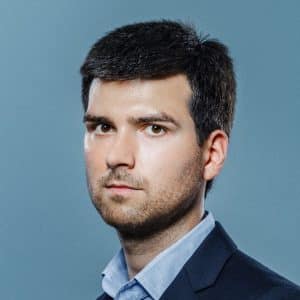
Viktor Shpakovskiy, the Token Fund and Tokenbox co-Founder & Managing Partner
Viktor Shpakovskiy: Traders and investors from traditional markets are so ready to enter the cryptomarket. They have two options – the first one is to trade Bitcoin futures, while the second option is to get an account at legal exchanges and trade.
Pavel Salas: For a professional investor, the cryptomarket still lacks trust. In order to enter the market, you have to buy some cryptocurrency first, which is still not that easy. Second - when entering with a bank deposit, one will have to go through quite a long KYC procedure.
Third - there is still an issue with storing the cryptocurrency, with hot and cold wallets, the question still arises - should I trust this service or not. Besides, there’s not enough liquidity. That’s why traders often perceive the cryptomarket as a young one; they look at it with caution and still prefer to trade with familiar assets.
Name four essential features and advantages of an efficient platform for cryptotrading.
Viktor Shpakovskiy: It should be fast, stable, and user friendly.
Alexey Markov: Fault tolerance during a large workload; well-functioning desktop and a mobile version; essential functionality, including filters for coin search and tool listing; hot keys for order sending.
Pavel Salas: It should be easy to use and also easily, intuitively understood. What’s really important: easy order and market execution, ability to observe the volumes, trading in this particular exchange.
Ideally there should be a tool to aggregate several exchanges simultaneously, to see both individual and total volumes. And, of course, a technical analysis and news feed.
What makes an essential cryptotrader’s toolkit? Which services do you personally use in your work?
Viktor Shpakovskiy: It’s all very individual. There’s no special toolkit. What you need is a trading account, and then it all depends on a particular trader’s strategy.
Alexey Markov: I usually use a terminal and a news aggregator. So far it’s been only Twitter.
Pavel Salas: Basic technical analysis tools. News feed monitoring tools – it’s basically Twitter and Telegram. However, I would definitely like to be able to observe trading volumes on different exchanges, as well as the total volume, and also put various tools to my graphic and monitor cryptocurrencies’ interdependence.
Despite its vast growth, the cryptocurrency market is still extremely volatile. How do traders usually minimize the risks in this situation?
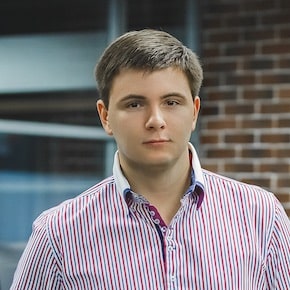
Pavel Salas, blockchain consult founder
Viktor Shpakovskiy: The application of classical strategies of risk management. And definitely it’s better not to trade against the market. Also, try not to use a margin trading without unless necessary.
Alexey Markov: We don’t. Volatility always means risk. Of course, there’s still such thing as a risk management, but with overall weak technical complexity and exchange failures, a force majeure is a price that is to be paid for big possibilities. From our traditional methods, I would name a diversification, both for assets and their storage.
Pavel Salas: The market is volatile because it doesn’t have that much liquidity. And in order to minimize the risks you have to follow the first rule: only invest what you can afford to lose. Then, it is better to diversify and create a portfolio, and not to concentrate on just one cryptocurrency. Take the top 10 and switch wisely. Once a month you should do the portfolio analysis, and balance according to the latest news.
Considering the fact that relations with the regulators are still quite fragile, what would you name as the main criteria of transparency for the cryptotrading services?
Alexey Markov, United Traders' leading trader
Viktor Shpakovskiy: All these services should be, first of all, legal.
Alexey Markov: A licensed platform for trading with a licensed clearing - that would be the main criteria. A broker and a counterpart should perform as a tax agent and take all the workflow.
Pavel Salas: Needless to say that there should be a KYC procedure for a client - there’s no space for anonymity on the platform. There should also be an AML procedure - anti money laundering. These criteria are not new, and any regulator would definitely demand them.
If we’re talking about a platform for creating your own cryptofunds, which would be very convenient, to make it transparent they will have to segregate the assets, with a manager managing them, but not being able to take them out. The funds transparency, their openness, full stats, inner platform rating – all this would be of interest for investors.
In which currency do you think it is better to track the value of a cryptocurrency portfolio – Bitcoin or US dollar?
Viktor Shpakovskiy: It depends on how you count your yield. If in dollars, value it in dollars. If Bitcoin - let it be Bitcoin then.
Alexey Markov: US dollar, I think. Anyway, this is an initial currency, which everyone used to trade for crypto assets. Plus, we all see that the Bitcoin volatility is out of control. Getting attached to it I honestly consider wrong, and it also twists the numbers.
Pavel Salas: I would just give people a choice. For example, trading, balance and margin funds would be in US dollars. If we’re talking about the newest cryptonomics, people usually prefer the Bitcoin balance. Although many are still okay with counting their balances and seeing the results related to US dollar. Everyone shall choose just what suits him best, and work with it.
This passing year has been quite eventful for the cryptocurrency market. The main currencies’ prices have bounced, with Bitcoin futures having finally launched. In addition, the traditional market came closer and investors started to show their interest – all of this has created the perfect ground for fostering an efficient, united cryptotrading platform atmosphere.
Consequently, Tokenbox has developed a quiz for successful cryptotraders in order to find out what they expected from such platforms, how they minimized the risks, and what was the best way to track the value of a cryptocurrency portfolio. The quiz features commentary from three leading crypto specialists including the following:
Under what conditions do traders and investors of the traditional finance market ready to enter the cryptocurrency market nowadays?
Viktor Shpakovskiy, the Token Fund and Tokenbox co-Founder & Managing Partner
Viktor Shpakovskiy: Traders and investors from traditional markets are so ready to enter the cryptomarket. They have two options – the first one is to trade Bitcoin futures, while the second option is to get an account at legal exchanges and trade.
Pavel Salas: For a professional investor, the cryptomarket still lacks trust. In order to enter the market, you have to buy some cryptocurrency first, which is still not that easy. Second - when entering with a bank deposit, one will have to go through quite a long KYC procedure.
Third - there is still an issue with storing the cryptocurrency, with hot and cold wallets, the question still arises - should I trust this service or not. Besides, there’s not enough liquidity. That’s why traders often perceive the cryptomarket as a young one; they look at it with caution and still prefer to trade with familiar assets.
Name four essential features and advantages of an efficient platform for cryptotrading.
Viktor Shpakovskiy: It should be fast, stable, and user friendly.
Alexey Markov: Fault tolerance during a large workload; well-functioning desktop and a mobile version; essential functionality, including filters for coin search and tool listing; hot keys for order sending.
Pavel Salas: It should be easy to use and also easily, intuitively understood. What’s really important: easy order and market execution, ability to observe the volumes, trading in this particular exchange.
Ideally there should be a tool to aggregate several exchanges simultaneously, to see both individual and total volumes. And, of course, a technical analysis and news feed.
What makes an essential cryptotrader’s toolkit? Which services do you personally use in your work?
Viktor Shpakovskiy: It’s all very individual. There’s no special toolkit. What you need is a trading account, and then it all depends on a particular trader’s strategy.
Alexey Markov: I usually use a terminal and a news aggregator. So far it’s been only Twitter.
Pavel Salas: Basic technical analysis tools. News feed monitoring tools – it’s basically Twitter and Telegram. However, I would definitely like to be able to observe trading volumes on different exchanges, as well as the total volume, and also put various tools to my graphic and monitor cryptocurrencies’ interdependence.
Despite its vast growth, the cryptocurrency market is still extremely volatile. How do traders usually minimize the risks in this situation?
Pavel Salas, blockchain consult founder
Viktor Shpakovskiy: The application of classical strategies of risk management. And definitely it’s better not to trade against the market. Also, try not to use a margin trading without unless necessary.
Alexey Markov: We don’t. Volatility always means risk. Of course, there’s still such thing as a risk management, but with overall weak technical complexity and exchange failures, a force majeure is a price that is to be paid for big possibilities. From our traditional methods, I would name a diversification, both for assets and their storage.
Pavel Salas: The market is volatile because it doesn’t have that much liquidity. And in order to minimize the risks you have to follow the first rule: only invest what you can afford to lose. Then, it is better to diversify and create a portfolio, and not to concentrate on just one cryptocurrency. Take the top 10 and switch wisely. Once a month you should do the portfolio analysis, and balance according to the latest news.
Considering the fact that relations with the regulators are still quite fragile, what would you name as the main criteria of transparency for the cryptotrading services?
Alexey Markov, United Traders' leading trader
Viktor Shpakovskiy: All these services should be, first of all, legal.
Alexey Markov: A licensed platform for trading with a licensed clearing - that would be the main criteria. A broker and a counterpart should perform as a tax agent and take all the workflow.
Pavel Salas: Needless to say that there should be a KYC procedure for a client - there’s no space for anonymity on the platform. There should also be an AML procedure - anti money laundering. These criteria are not new, and any regulator would definitely demand them.
If we’re talking about a platform for creating your own cryptofunds, which would be very convenient, to make it transparent they will have to segregate the assets, with a manager managing them, but not being able to take them out. The funds transparency, their openness, full stats, inner platform rating – all this would be of interest for investors.
In which currency do you think it is better to track the value of a cryptocurrency portfolio – Bitcoin or US dollar?
Viktor Shpakovskiy: It depends on how you count your yield. If in dollars, value it in dollars. If Bitcoin - let it be Bitcoin then.
Alexey Markov: US dollar, I think. Anyway, this is an initial currency, which everyone used to trade for crypto assets. Plus, we all see that the Bitcoin volatility is out of control. Getting attached to it I honestly consider wrong, and it also twists the numbers.
Pavel Salas: I would just give people a choice. For example, trading, balance and margin funds would be in US dollars. If we’re talking about the newest cryptonomics, people usually prefer the Bitcoin balance. Although many are still okay with counting their balances and seeing the results related to US dollar. Everyone shall choose just what suits him best, and work with it.
FP Markets Winner Spotlight 🏆 | Global Broker of the Year 2025 #Trading #Broker #Innovation #Shorts
FP Markets Winner Spotlight 🏆 | Global Broker of the Year 2025 #Trading #Broker #Innovation #Shorts
FP Markets Winner Spotlight 🏆 | Global Broker of the Year 2025 #Trading #Broker #Innovation #Shorts
FP Markets Winner Spotlight 🏆 | Global Broker of the Year 2025 #Trading #Broker #Innovation #Shorts
FP Markets takes the spotlight as Global Broker of the Year 2025 at the Finance Magnates Awards.
Martin Stoilov, Head of Client Experience, shares that trust, innovation, and people played a key role in the company’s success, supported by a strong foundation of integrity and client-centricity.
Following this milestone, FP Markets continues to focus on growth, technology investment, and its core values of transparency and excellence.
👉 Be part of FM Awards 2026: https://awards.financemagnates.com/#nominate
FP Markets takes the spotlight as Global Broker of the Year 2025 at the Finance Magnates Awards.
Martin Stoilov, Head of Client Experience, shares that trust, innovation, and people played a key role in the company’s success, supported by a strong foundation of integrity and client-centricity.
Following this milestone, FP Markets continues to focus on growth, technology investment, and its core values of transparency and excellence.
👉 Be part of FM Awards 2026: https://awards.financemagnates.com/#nominate
FP Markets takes the spotlight as Global Broker of the Year 2025 at the Finance Magnates Awards.
Martin Stoilov, Head of Client Experience, shares that trust, innovation, and people played a key role in the company’s success, supported by a strong foundation of integrity and client-centricity.
Following this milestone, FP Markets continues to focus on growth, technology investment, and its core values of transparency and excellence.
👉 Be part of FM Awards 2026: https://awards.financemagnates.com/#nominate
FP Markets takes the spotlight as Global Broker of the Year 2025 at the Finance Magnates Awards.
Martin Stoilov, Head of Client Experience, shares that trust, innovation, and people played a key role in the company’s success, supported by a strong foundation of integrity and client-centricity.
Following this milestone, FP Markets continues to focus on growth, technology investment, and its core values of transparency and excellence.
👉 Be part of FM Awards 2026: https://awards.financemagnates.com/#nominate
In this video, we review @HolaPrimeMarketsOfficial, a multi-asset forex and CFDs broker offering different account types, trading platforms, and flexible trading conditions.
We cover the broker’s overall offering, including account options, trading environment, platforms like MT4 and MT5, and additional services such as managed accounts and fast withdrawals.
Watch the full video to see if Hola Prime Markets fits your trading needs.
📣 Stay up to date with the latest in finance and trading. Follow Finance Magnates for industry news, insights, and global event coverage.
Connect with us:
🔗 LinkedIn: /financemagnates
👍 Facebook: /financemagnates
📸 Instagram: https://www.instagram.com/financemagnates
🐦 X: https://x.com/financemagnates
🎥 TikTok: https://www.tiktok.com/tag/financemagnates
▶️ YouTube: /@financemagnates_official
#HolaPrime #ForexBroker #CFDTrading #FinanceMagnates #Trading #Forex #BrokerReview
In this video, we review @HolaPrimeMarketsOfficial, a multi-asset forex and CFDs broker offering different account types, trading platforms, and flexible trading conditions.
We cover the broker’s overall offering, including account options, trading environment, platforms like MT4 and MT5, and additional services such as managed accounts and fast withdrawals.
Watch the full video to see if Hola Prime Markets fits your trading needs.
📣 Stay up to date with the latest in finance and trading. Follow Finance Magnates for industry news, insights, and global event coverage.
Connect with us:
🔗 LinkedIn: /financemagnates
👍 Facebook: /financemagnates
📸 Instagram: https://www.instagram.com/financemagnates
🐦 X: https://x.com/financemagnates
🎥 TikTok: https://www.tiktok.com/tag/financemagnates
▶️ YouTube: /@financemagnates_official
#HolaPrime #ForexBroker #CFDTrading #FinanceMagnates #Trading #Forex #BrokerReview
In this video, we review @HolaPrimeMarketsOfficial, a multi-asset forex and CFDs broker offering different account types, trading platforms, and flexible trading conditions.
We cover the broker’s overall offering, including account options, trading environment, platforms like MT4 and MT5, and additional services such as managed accounts and fast withdrawals.
Watch the full video to see if Hola Prime Markets fits your trading needs.
📣 Stay up to date with the latest in finance and trading. Follow Finance Magnates for industry news, insights, and global event coverage.
Connect with us:
🔗 LinkedIn: /financemagnates
👍 Facebook: /financemagnates
📸 Instagram: https://www.instagram.com/financemagnates
🐦 X: https://x.com/financemagnates
🎥 TikTok: https://www.tiktok.com/tag/financemagnates
▶️ YouTube: /@financemagnates_official
#HolaPrime #ForexBroker #CFDTrading #FinanceMagnates #Trading #Forex #BrokerReview
In this video, we review @HolaPrimeMarketsOfficial, a multi-asset forex and CFDs broker offering different account types, trading platforms, and flexible trading conditions.
We cover the broker’s overall offering, including account options, trading environment, platforms like MT4 and MT5, and additional services such as managed accounts and fast withdrawals.
Watch the full video to see if Hola Prime Markets fits your trading needs.
📣 Stay up to date with the latest in finance and trading. Follow Finance Magnates for industry news, insights, and global event coverage.
Connect with us:
🔗 LinkedIn: /financemagnates
👍 Facebook: /financemagnates
📸 Instagram: https://www.instagram.com/financemagnates
🐦 X: https://x.com/financemagnates
🎥 TikTok: https://www.tiktok.com/tag/financemagnates
▶️ YouTube: /@financemagnates_official
#HolaPrime #ForexBroker #CFDTrading #FinanceMagnates #Trading #Forex #BrokerReview
In this video, we review @HolaPrimeMarketsOfficial, a multi-asset forex and CFDs broker offering different account types, trading platforms, and flexible trading conditions.
We cover the broker’s overall offering, including account options, trading environment, platforms like MT4 and MT5, and additional services such as managed accounts and fast withdrawals.
Watch the full video to see if Hola Prime Markets fits your trading needs.
📣 Stay up to date with the latest in finance and trading. Follow Finance Magnates for industry news, insights, and global event coverage.
Connect with us:
🔗 LinkedIn: /financemagnates
👍 Facebook: /financemagnates
📸 Instagram: https://www.instagram.com/financemagnates
🐦 X: https://x.com/financemagnates
🎥 TikTok: https://www.tiktok.com/tag/financemagnates
▶️ YouTube: /@financemagnates_official
#HolaPrime #ForexBroker #CFDTrading #FinanceMagnates #Trading #Forex #BrokerReview
In this video, we review @HolaPrimeMarketsOfficial, a multi-asset forex and CFDs broker offering different account types, trading platforms, and flexible trading conditions.
We cover the broker’s overall offering, including account options, trading environment, platforms like MT4 and MT5, and additional services such as managed accounts and fast withdrawals.
Watch the full video to see if Hola Prime Markets fits your trading needs.
📣 Stay up to date with the latest in finance and trading. Follow Finance Magnates for industry news, insights, and global event coverage.
Connect with us:
🔗 LinkedIn: /financemagnates
👍 Facebook: /financemagnates
📸 Instagram: https://www.instagram.com/financemagnates
🐦 X: https://x.com/financemagnates
🎥 TikTok: https://www.tiktok.com/tag/financemagnates
▶️ YouTube: /@financemagnates_official
#HolaPrime #ForexBroker #CFDTrading #FinanceMagnates #Trading #Forex #BrokerReview
Hola Prime Review: What You Need to Know | Full Breakdown by Finance Magnates
Hola Prime Review: What You Need to Know | Full Breakdown by Finance Magnates
Hola Prime Review: What You Need to Know | Full Breakdown by Finance Magnates
Hola Prime Review: What You Need to Know | Full Breakdown by Finance Magnates
Hola Prime Review: What You Need to Know | Full Breakdown by Finance Magnates
Hola Prime Review: What You Need to Know | Full Breakdown by Finance Magnates
In this video, we review @HolaPrime_Global, a proprietary trading firm offering evaluation programs and performance-based payouts in simulated market environments.
We cover how the challenge model works, including account types, profit splits (up to 95%), trading rules, and what it takes to reach a funded account. You’ll also learn about available platforms like MT4, MT5, cTrader, and more, along with insights into payouts, support, and trading conditions.
Watch the full video to see if Hola Prime fits your trading style.
📣 Stay up to date with the latest in finance and trading. Follow Finance Magnates for industry news, insights, and global event coverage.
Connect with us:
🔗 LinkedIn: /financemagnates
👍 Facebook: /financemagnates
📸 Instagram: https://www.instagram.com/financemagnates
🐦 X: https://x.com/financemagnates
🎥 TikTok: https://www.tiktok.com/tag/financemagnates
▶️ YouTube: /@financemagnates_official
#HolaPrime #PropFirm #Trading #FinanceMagnates #Forex #FuturesTrading #TradingReview #PropFirmReview
In this video, we review @HolaPrime_Global, a proprietary trading firm offering evaluation programs and performance-based payouts in simulated market environments.
We cover how the challenge model works, including account types, profit splits (up to 95%), trading rules, and what it takes to reach a funded account. You’ll also learn about available platforms like MT4, MT5, cTrader, and more, along with insights into payouts, support, and trading conditions.
Watch the full video to see if Hola Prime fits your trading style.
📣 Stay up to date with the latest in finance and trading. Follow Finance Magnates for industry news, insights, and global event coverage.
Connect with us:
🔗 LinkedIn: /financemagnates
👍 Facebook: /financemagnates
📸 Instagram: https://www.instagram.com/financemagnates
🐦 X: https://x.com/financemagnates
🎥 TikTok: https://www.tiktok.com/tag/financemagnates
▶️ YouTube: /@financemagnates_official
#HolaPrime #PropFirm #Trading #FinanceMagnates #Forex #FuturesTrading #TradingReview #PropFirmReview
In this video, we review @HolaPrime_Global, a proprietary trading firm offering evaluation programs and performance-based payouts in simulated market environments.
We cover how the challenge model works, including account types, profit splits (up to 95%), trading rules, and what it takes to reach a funded account. You’ll also learn about available platforms like MT4, MT5, cTrader, and more, along with insights into payouts, support, and trading conditions.
Watch the full video to see if Hola Prime fits your trading style.
📣 Stay up to date with the latest in finance and trading. Follow Finance Magnates for industry news, insights, and global event coverage.
Connect with us:
🔗 LinkedIn: /financemagnates
👍 Facebook: /financemagnates
📸 Instagram: https://www.instagram.com/financemagnates
🐦 X: https://x.com/financemagnates
🎥 TikTok: https://www.tiktok.com/tag/financemagnates
▶️ YouTube: /@financemagnates_official
#HolaPrime #PropFirm #Trading #FinanceMagnates #Forex #FuturesTrading #TradingReview #PropFirmReview
In this video, we review @HolaPrime_Global, a proprietary trading firm offering evaluation programs and performance-based payouts in simulated market environments.
We cover how the challenge model works, including account types, profit splits (up to 95%), trading rules, and what it takes to reach a funded account. You’ll also learn about available platforms like MT4, MT5, cTrader, and more, along with insights into payouts, support, and trading conditions.
Watch the full video to see if Hola Prime fits your trading style.
📣 Stay up to date with the latest in finance and trading. Follow Finance Magnates for industry news, insights, and global event coverage.
Connect with us:
🔗 LinkedIn: /financemagnates
👍 Facebook: /financemagnates
📸 Instagram: https://www.instagram.com/financemagnates
🐦 X: https://x.com/financemagnates
🎥 TikTok: https://www.tiktok.com/tag/financemagnates
▶️ YouTube: /@financemagnates_official
#HolaPrime #PropFirm #Trading #FinanceMagnates #Forex #FuturesTrading #TradingReview #PropFirmReview
In this video, we review @HolaPrime_Global, a proprietary trading firm offering evaluation programs and performance-based payouts in simulated market environments.
We cover how the challenge model works, including account types, profit splits (up to 95%), trading rules, and what it takes to reach a funded account. You’ll also learn about available platforms like MT4, MT5, cTrader, and more, along with insights into payouts, support, and trading conditions.
Watch the full video to see if Hola Prime fits your trading style.
📣 Stay up to date with the latest in finance and trading. Follow Finance Magnates for industry news, insights, and global event coverage.
Connect with us:
🔗 LinkedIn: /financemagnates
👍 Facebook: /financemagnates
📸 Instagram: https://www.instagram.com/financemagnates
🐦 X: https://x.com/financemagnates
🎥 TikTok: https://www.tiktok.com/tag/financemagnates
▶️ YouTube: /@financemagnates_official
#HolaPrime #PropFirm #Trading #FinanceMagnates #Forex #FuturesTrading #TradingReview #PropFirmReview
In this video, we review @HolaPrime_Global, a proprietary trading firm offering evaluation programs and performance-based payouts in simulated market environments.
We cover how the challenge model works, including account types, profit splits (up to 95%), trading rules, and what it takes to reach a funded account. You’ll also learn about available platforms like MT4, MT5, cTrader, and more, along with insights into payouts, support, and trading conditions.
Watch the full video to see if Hola Prime fits your trading style.
📣 Stay up to date with the latest in finance and trading. Follow Finance Magnates for industry news, insights, and global event coverage.
Connect with us:
🔗 LinkedIn: /financemagnates
👍 Facebook: /financemagnates
📸 Instagram: https://www.instagram.com/financemagnates
🐦 X: https://x.com/financemagnates
🎥 TikTok: https://www.tiktok.com/tag/financemagnates
▶️ YouTube: /@financemagnates_official
#HolaPrime #PropFirm #Trading #FinanceMagnates #Forex #FuturesTrading #TradingReview #PropFirmReview
Axi Winner Spotlight 🏆 | Global Most Innovative Broker 2025 #Innovation #Trading #Fintech #Broker
Axi Winner Spotlight 🏆 | Global Most Innovative Broker 2025 #Innovation #Trading #Fintech #Broker
Axi Winner Spotlight 🏆 | Global Most Innovative Broker 2025 #Innovation #Trading #Fintech #Broker
Axi Winner Spotlight 🏆 | Global Most Innovative Broker 2025 #Innovation #Trading #Fintech #Broker
Axi Winner Spotlight 🏆 | Global Most Innovative Broker 2025 #Innovation #Trading #Fintech #Broker
Axi Winner Spotlight 🏆 | Global Most Innovative Broker 2025 #Innovation #Trading #Fintech #Broker
Axi takes the spotlight at the Finance Magnates Awards, winning Global Most Innovative Broker 2025.
Olivia Xenofontos and Ivanna Openko share how the team will feel: proud, motivated, and ready to keep delivering.
They also describe the night as well-organized, focused, and enjoyable for all.
👉 Be part of FM Awards 2026.
Axi takes the spotlight at the Finance Magnates Awards, winning Global Most Innovative Broker 2025.
Olivia Xenofontos and Ivanna Openko share how the team will feel: proud, motivated, and ready to keep delivering.
They also describe the night as well-organized, focused, and enjoyable for all.
👉 Be part of FM Awards 2026.
Axi takes the spotlight at the Finance Magnates Awards, winning Global Most Innovative Broker 2025.
Olivia Xenofontos and Ivanna Openko share how the team will feel: proud, motivated, and ready to keep delivering.
They also describe the night as well-organized, focused, and enjoyable for all.
👉 Be part of FM Awards 2026.
Axi takes the spotlight at the Finance Magnates Awards, winning Global Most Innovative Broker 2025.
Olivia Xenofontos and Ivanna Openko share how the team will feel: proud, motivated, and ready to keep delivering.
They also describe the night as well-organized, focused, and enjoyable for all.
👉 Be part of FM Awards 2026.
Axi takes the spotlight at the Finance Magnates Awards, winning Global Most Innovative Broker 2025.
Olivia Xenofontos and Ivanna Openko share how the team will feel: proud, motivated, and ready to keep delivering.
They also describe the night as well-organized, focused, and enjoyable for all.
👉 Be part of FM Awards 2026.
Axi takes the spotlight at the Finance Magnates Awards, winning Global Most Innovative Broker 2025.
Olivia Xenofontos and Ivanna Openko share how the team will feel: proud, motivated, and ready to keep delivering.
They also describe the night as well-organized, focused, and enjoyable for all.
👉 Be part of FM Awards 2026.
Recognition that matters.
Built on transparency.
Driven by the industry.
The Finance Magnates Awards 2026.
Nominations are now open.
🔗 https://awards.financemagnates.com/?utm_source=SM&utm_medium=social&utm_campaign=recognition-matters
Recognition that matters.
Built on transparency.
Driven by the industry.
The Finance Magnates Awards 2026.
Nominations are now open.
🔗 https://awards.financemagnates.com/?utm_source=SM&utm_medium=social&utm_campaign=recognition-matters
Recognition that matters.
Built on transparency.
Driven by the industry.
The Finance Magnates Awards 2026.
Nominations are now open.
🔗 https://awards.financemagnates.com/?utm_source=SM&utm_medium=social&utm_campaign=recognition-matters
Recognition that matters.
Built on transparency.
Driven by the industry.
The Finance Magnates Awards 2026.
Nominations are now open.
🔗 https://awards.financemagnates.com/?utm_source=SM&utm_medium=social&utm_campaign=recognition-matters
Recognition that matters.
Built on transparency.
Driven by the industry.
The Finance Magnates Awards 2026.
Nominations are now open.
🔗 https://awards.financemagnates.com/?utm_source=SM&utm_medium=social&utm_campaign=recognition-matters
Recognition that matters.
Built on transparency.
Driven by the industry.
The Finance Magnates Awards 2026.
Nominations are now open.
🔗 https://awards.financemagnates.com/?utm_source=SM&utm_medium=social&utm_campaign=recognition-matters