
The Strait of Hormuz is a critical chokepoint in global oil supply.
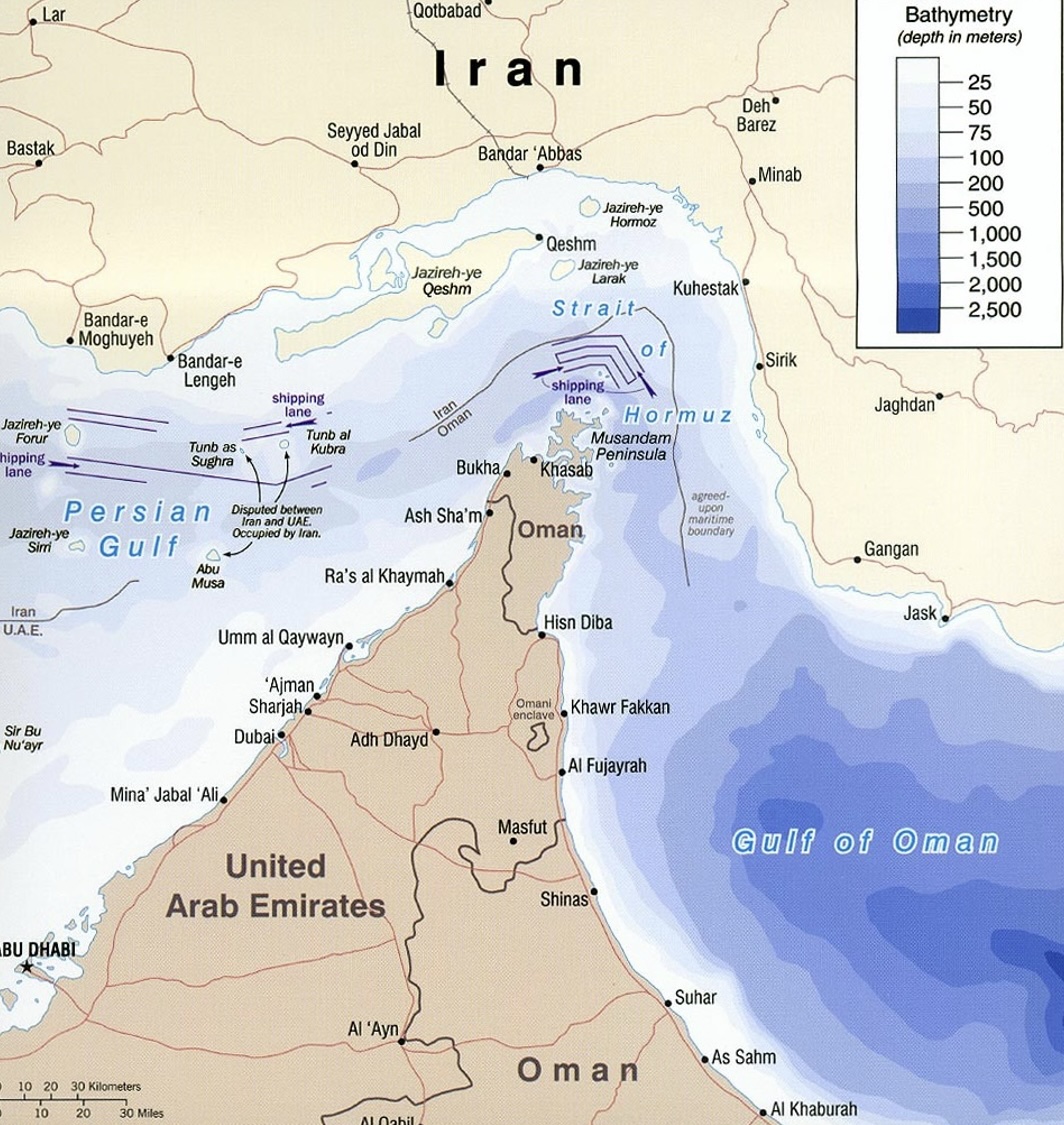
This narrow sea lane in the Gulf region is a route through which a fifth of the world's oil and liquefied natural gas (LNG) flows, feeding a large part of the global economy. The northern side is controlled by Iran.
As of 2023, 20% of the world's liquefied natural gas and 25% of seaborne oil trade passes through the Strait, making it a highly important location for trade. It has been so for centuries; its vast hinterlands were rich in luxury trade goods with no easy access to lucrative trading ports. After the US struck Iran's nuclear facilities and uranium enrichment facilities on June 22, 2025, the Islamic Consultative Assembly officially closed the strait with a decision.
What does it mean for global oil prices?
The Strait of Hormuz is of vital importance to gas and oil exporters in the Gulf region, as it is the only route through which large volumes of oil and gas produced by the region's oil-rich countries can be exported by sea. Located between Oman and Iran, this narrow passage connects the Persian Gulf to the Gulf of Oman and the Sea of Oman. Two supertankers with a capacity to carry around 2 million barrels of crude oil have turned back in the Strait of Hormuz after the US airstrikes on Iran, as well as the risk of retaliation that could affect commercial shipping in the region, increased. The tankers, Coswisdom Lake and South Loyalty, entered the strait on Sunday and suddenly changed course. Goldman Sachs has drawn attention to the fact that risks to global energy supply have increased due to a possible disruption in the Strait of Hormuz. The bank stated that this situation could lead to serious increases in oil and natural gas prices. The bank predicts that the price of a barrel of Brent crude could rise to $110 for a short time.
Is the Strait of Hormuz completely under Iranian control?
In the 1980s, Iran began to threaten the Strait of Hormuz. The Gulf Cooperation Countries (Saudi Arabia, Bahrain, Qatar, Kuwait, Oman, United Arab Emirates) signed a defense pact against the Iranian threat in 2000. Similar to NATO, the rule of 'an attack on one member state is considered an attack on all' was accepted. The US made various defense agreements with the Gulf countries and established military bases.
So, Iran is actually capable of seriously disrupting or blocking the Strait of Hormuz. Probably yes. Iran could attempt to lay mines across the Strait, which is 34 km (21 miles) wide at its narrowest point. The country's army or the paramilitary Islamic Revolutionary Guard Corps (IRGC) could also try to strike or seize vessels in the Gulf.
Importance for the European Union
According to Eurostat data, for the energy products analysed in this article, the following figure shows their share in total EU imports in 2021-2024 and in the first quarters of 2024 and 2025. The share of energy products in total EU imports showed significant fluctuations due to strong volatility in their prices and reached 22.8% of total EU imports in 2022. This was followed by a significant decrease to 17.8% in 2023 and again to 15.4% in 2024. In addition, in the first quarter of 2025, there was a decrease of 1.7 percentage points (pp) compared to the same quarter of 2024. The distribution by products shows that the shares of liquefied natural gas (+0.6 pp) and gaseous natural gas (+0.2 pp) increased between the first quarter of 2024 and 2025, while the shares of petroleum oils (-2.3 pp) and coal (-0.2 pp) decreased.
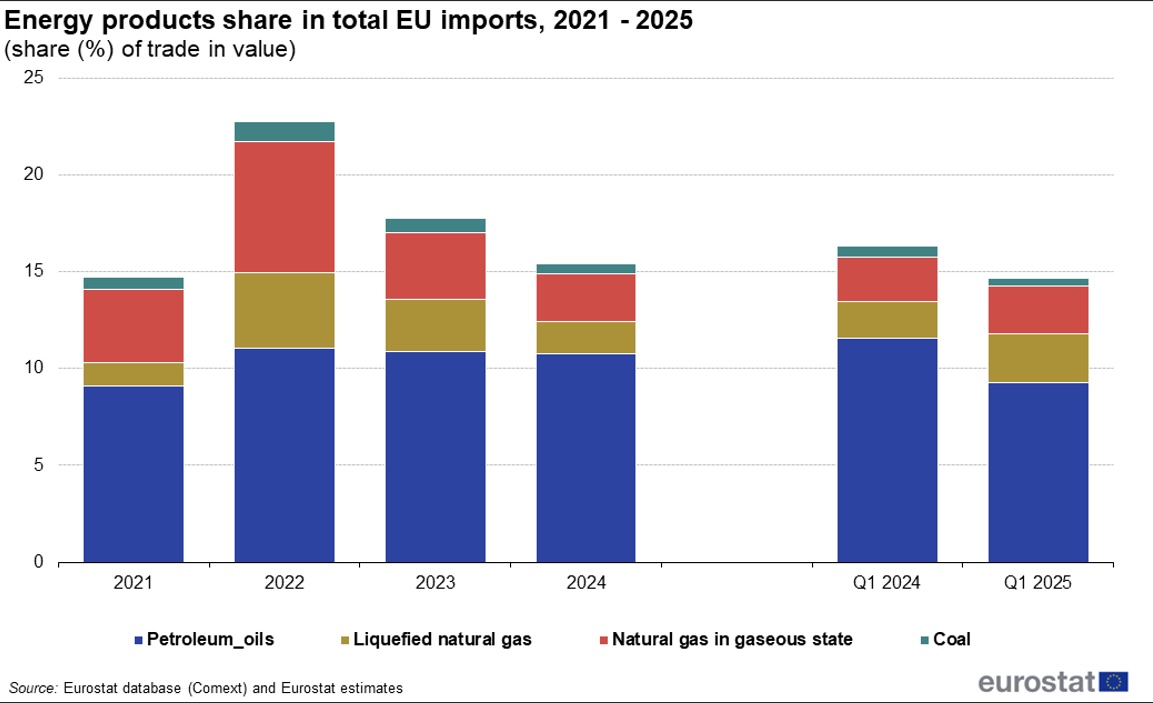
Although Middle Eastern countries are not the largest oil and gas importers to Europe, these countries have a large share. After the closure of the Strait of Hormuz, energy prices pose a great danger not only to the European Union countries but also to the general national economy.
Forex Markets
XBRUSD, Weekly
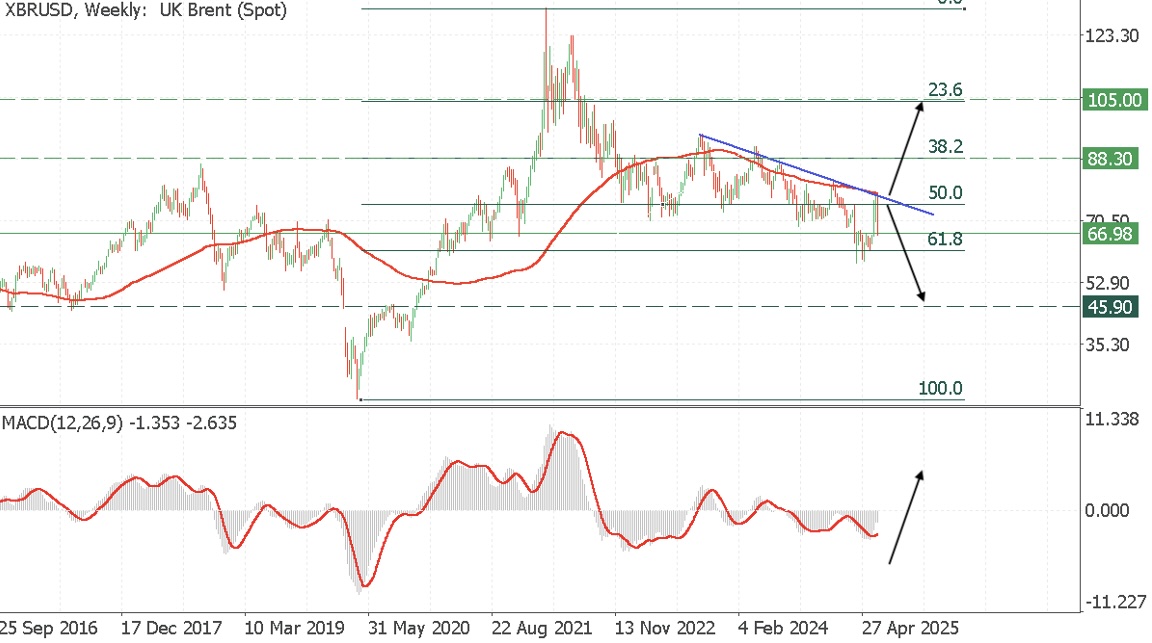
Oil prices rose to their highest since January after the weekend U.S. attack on Iran’s nuclear facilities raised supply concerns. Brent rose 2.49 percent to $78.93 a barrel, while U.S. crude gained 2.56 percent to $75.73. If the conflict between Iran and Israel were to start again and the Strait of Hormuz were to be closed, oil prices could accelerate their rise again.
In technical analysis, we can see that the price has returned from the resistance level in the weekly time series. Despite this, MACD continues to give bullish signals. In the event that military action does not occur, price declines may continue. Otherwise, strong price increases will only be a matter of time. The target will be 88.30$.
XNGUSD, Weekly
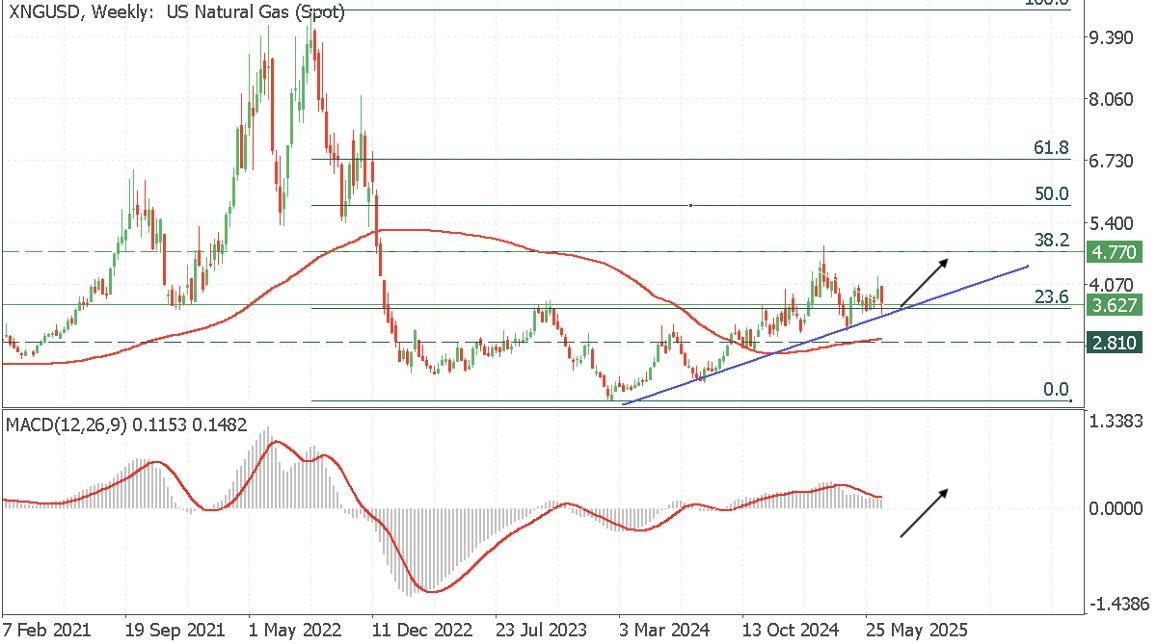
We can see the same effect in natural gas prices. In technical analysis, the price is testing the support level instantly. At this tested level, the Fibonacci 23.6% level maintains its strong support level position. MACD continues to give bullish signals. If the price rises from the support level again, the target will be 4,770.
Conclusion
The Strait of Hormuz is a critical chokepoint in global oil supply, with about 20% of the world’s energy passing through it. The geopolitical tensions between Iran, Israel, and the wider Middle East have the potential to disrupt this vital shipping route, which would have a dramatic effect on global oil prices. Analysts have warned that if the Strait is closed, oil prices could soar above $110 per barrel, exacerbating an already volatile global market.
This narrow sea lane in the Gulf region is a route through which a fifth of the world's oil and liquefied natural gas (LNG) flows, feeding a large part of the global economy. The northern side is controlled by Iran.
As of 2023, 20% of the world's liquefied natural gas and 25% of seaborne oil trade passes through the Strait, making it a highly important location for trade. It has been so for centuries; its vast hinterlands were rich in luxury trade goods with no easy access to lucrative trading ports. After the US struck Iran's nuclear facilities and uranium enrichment facilities on June 22, 2025, the Islamic Consultative Assembly officially closed the strait with a decision.
What does it mean for global oil prices?
The Strait of Hormuz is of vital importance to gas and oil exporters in the Gulf region, as it is the only route through which large volumes of oil and gas produced by the region's oil-rich countries can be exported by sea. Located between Oman and Iran, this narrow passage connects the Persian Gulf to the Gulf of Oman and the Sea of Oman. Two supertankers with a capacity to carry around 2 million barrels of crude oil have turned back in the Strait of Hormuz after the US airstrikes on Iran, as well as the risk of retaliation that could affect commercial shipping in the region, increased. The tankers, Coswisdom Lake and South Loyalty, entered the strait on Sunday and suddenly changed course. Goldman Sachs has drawn attention to the fact that risks to global energy supply have increased due to a possible disruption in the Strait of Hormuz. The bank stated that this situation could lead to serious increases in oil and natural gas prices. The bank predicts that the price of a barrel of Brent crude could rise to $110 for a short time.
Is the Strait of Hormuz completely under Iranian control?
In the 1980s, Iran began to threaten the Strait of Hormuz. The Gulf Cooperation Countries (Saudi Arabia, Bahrain, Qatar, Kuwait, Oman, United Arab Emirates) signed a defense pact against the Iranian threat in 2000. Similar to NATO, the rule of 'an attack on one member state is considered an attack on all' was accepted. The US made various defense agreements with the Gulf countries and established military bases.
So, Iran is actually capable of seriously disrupting or blocking the Strait of Hormuz. Probably yes. Iran could attempt to lay mines across the Strait, which is 34 km (21 miles) wide at its narrowest point. The country's army or the paramilitary Islamic Revolutionary Guard Corps (IRGC) could also try to strike or seize vessels in the Gulf.
Importance for the European Union
According to Eurostat data, for the energy products analysed in this article, the following figure shows their share in total EU imports in 2021-2024 and in the first quarters of 2024 and 2025. The share of energy products in total EU imports showed significant fluctuations due to strong volatility in their prices and reached 22.8% of total EU imports in 2022. This was followed by a significant decrease to 17.8% in 2023 and again to 15.4% in 2024. In addition, in the first quarter of 2025, there was a decrease of 1.7 percentage points (pp) compared to the same quarter of 2024. The distribution by products shows that the shares of liquefied natural gas (+0.6 pp) and gaseous natural gas (+0.2 pp) increased between the first quarter of 2024 and 2025, while the shares of petroleum oils (-2.3 pp) and coal (-0.2 pp) decreased.
Although Middle Eastern countries are not the largest oil and gas importers to Europe, these countries have a large share. After the closure of the Strait of Hormuz, energy prices pose a great danger not only to the European Union countries but also to the general national economy.
Forex Markets
XBRUSD, Weekly
Oil prices rose to their highest since January after the weekend U.S. attack on Iran’s nuclear facilities raised supply concerns. Brent rose 2.49 percent to $78.93 a barrel, while U.S. crude gained 2.56 percent to $75.73. If the conflict between Iran and Israel were to start again and the Strait of Hormuz were to be closed, oil prices could accelerate their rise again.
In technical analysis, we can see that the price has returned from the resistance level in the weekly time series. Despite this, MACD continues to give bullish signals. In the event that military action does not occur, price declines may continue. Otherwise, strong price increases will only be a matter of time. The target will be 88.30$.
XNGUSD, Weekly
We can see the same effect in natural gas prices. In technical analysis, the price is testing the support level instantly. At this tested level, the Fibonacci 23.6% level maintains its strong support level position. MACD continues to give bullish signals. If the price rises from the support level again, the target will be 4,770.
Conclusion
The Strait of Hormuz is a critical chokepoint in global oil supply, with about 20% of the world’s energy passing through it. The geopolitical tensions between Iran, Israel, and the wider Middle East have the potential to disrupt this vital shipping route, which would have a dramatic effect on global oil prices. Analysts have warned that if the Strait is closed, oil prices could soar above $110 per barrel, exacerbating an already volatile global market.
SMX's 1900% Surge Since November Is Not a Momentum Trade; It's Based on Transformative and Deliverable Techology
Featured Videos
Executive Interview | Charlotte Bullock | Chief Product Officer, Bank of London | FMLS:25
In this interview, we sat down with Charlotte Bullock, Head of Product at The Bank of London, previously at SAP and now shaping product at one of the sector’s most ambitious new banking players.
Charlotte reflects on the Summit so far and talks about the culture inside fintech banks today. We look at the pressures that come with scaling, and how firms can hold onto the nimble approach that made them stand out early on.
We also cover the state of payments ahead of her appearance on the payments roundtable: the blockages financial firms face, the areas that still need fixing, and what a realistic solution looks like in 2026.
In this interview, we sat down with Charlotte Bullock, Head of Product at The Bank of London, previously at SAP and now shaping product at one of the sector’s most ambitious new banking players.
Charlotte reflects on the Summit so far and talks about the culture inside fintech banks today. We look at the pressures that come with scaling, and how firms can hold onto the nimble approach that made them stand out early on.
We also cover the state of payments ahead of her appearance on the payments roundtable: the blockages financial firms face, the areas that still need fixing, and what a realistic solution looks like in 2026.
In this interview, we sat down with Charlotte Bullock, Head of Product at The Bank of London, previously at SAP and now shaping product at one of the sector’s most ambitious new banking players.
Charlotte reflects on the Summit so far and talks about the culture inside fintech banks today. We look at the pressures that come with scaling, and how firms can hold onto the nimble approach that made them stand out early on.
We also cover the state of payments ahead of her appearance on the payments roundtable: the blockages financial firms face, the areas that still need fixing, and what a realistic solution looks like in 2026.
In this interview, we sat down with Charlotte Bullock, Head of Product at The Bank of London, previously at SAP and now shaping product at one of the sector’s most ambitious new banking players.
Charlotte reflects on the Summit so far and talks about the culture inside fintech banks today. We look at the pressures that come with scaling, and how firms can hold onto the nimble approach that made them stand out early on.
We also cover the state of payments ahead of her appearance on the payments roundtable: the blockages financial firms face, the areas that still need fixing, and what a realistic solution looks like in 2026.
In this conversation, we sit down with Drew Niv, CSO at ATFX Connect and one of the most influential figures in modern FX.
We speak about market structure, the institutional view on liquidity, and the sharp rise of prop trading, a sector Drew has been commenting on in recent months. Drew explains why he once dismissed prop trading, why his view changed, and what he now thinks the model means for brokers, clients and risk managers.
We explore subscription-fee dependency, the high reneging rate, and the long-term challenge: how brokers can build a more stable and honest version of the model. Drew also talks about the traffic advantage standalone prop firms have built and why brokers may still win in the long run if they take the right approach.
In this conversation, we sit down with Drew Niv, CSO at ATFX Connect and one of the most influential figures in modern FX.
We speak about market structure, the institutional view on liquidity, and the sharp rise of prop trading, a sector Drew has been commenting on in recent months. Drew explains why he once dismissed prop trading, why his view changed, and what he now thinks the model means for brokers, clients and risk managers.
We explore subscription-fee dependency, the high reneging rate, and the long-term challenge: how brokers can build a more stable and honest version of the model. Drew also talks about the traffic advantage standalone prop firms have built and why brokers may still win in the long run if they take the right approach.
In this conversation, we sit down with Drew Niv, CSO at ATFX Connect and one of the most influential figures in modern FX.
We speak about market structure, the institutional view on liquidity, and the sharp rise of prop trading, a sector Drew has been commenting on in recent months. Drew explains why he once dismissed prop trading, why his view changed, and what he now thinks the model means for brokers, clients and risk managers.
We explore subscription-fee dependency, the high reneging rate, and the long-term challenge: how brokers can build a more stable and honest version of the model. Drew also talks about the traffic advantage standalone prop firms have built and why brokers may still win in the long run if they take the right approach.
In this conversation, we sit down with Drew Niv, CSO at ATFX Connect and one of the most influential figures in modern FX.
We speak about market structure, the institutional view on liquidity, and the sharp rise of prop trading, a sector Drew has been commenting on in recent months. Drew explains why he once dismissed prop trading, why his view changed, and what he now thinks the model means for brokers, clients and risk managers.
We explore subscription-fee dependency, the high reneging rate, and the long-term challenge: how brokers can build a more stable and honest version of the model. Drew also talks about the traffic advantage standalone prop firms have built and why brokers may still win in the long run if they take the right approach.
In this conversation, we sit down with Drew Niv, CSO at ATFX Connect and one of the most influential figures in modern FX.
We speak about market structure, the institutional view on liquidity, and the sharp rise of prop trading, a sector Drew has been commenting on in recent months. Drew explains why he once dismissed prop trading, why his view changed, and what he now thinks the model means for brokers, clients and risk managers.
We explore subscription-fee dependency, the high reneging rate, and the long-term challenge: how brokers can build a more stable and honest version of the model. Drew also talks about the traffic advantage standalone prop firms have built and why brokers may still win in the long run if they take the right approach.
In this conversation, we sit down with Drew Niv, CSO at ATFX Connect and one of the most influential figures in modern FX.
We speak about market structure, the institutional view on liquidity, and the sharp rise of prop trading, a sector Drew has been commenting on in recent months. Drew explains why he once dismissed prop trading, why his view changed, and what he now thinks the model means for brokers, clients and risk managers.
We explore subscription-fee dependency, the high reneging rate, and the long-term challenge: how brokers can build a more stable and honest version of the model. Drew also talks about the traffic advantage standalone prop firms have built and why brokers may still win in the long run if they take the right approach.
Executive Interview | Remonda Z. Kirketerp Møller| CEO & Founder Muinmos | FMLS:25
In this interview, Remonda Z. Kirketerp Møller, founder of Muinmos, breaks down the state of AI in regtech and what responsible adoption really looks like for brokers. We talk about rising fragmentation, the pressures around compliance accuracy, and why most firms are still in the early stages of AI maturity.
Ramanda also shares insights on regulator sandboxes, shifting expectations around accountability, and the current reality of MiCA licensing and passporting in Europe.
A concise look at where compliance, onboarding, and AI-driven processes are heading next.
In this interview, Remonda Z. Kirketerp Møller, founder of Muinmos, breaks down the state of AI in regtech and what responsible adoption really looks like for brokers. We talk about rising fragmentation, the pressures around compliance accuracy, and why most firms are still in the early stages of AI maturity.
Ramanda also shares insights on regulator sandboxes, shifting expectations around accountability, and the current reality of MiCA licensing and passporting in Europe.
A concise look at where compliance, onboarding, and AI-driven processes are heading next.
In this interview, Remonda Z. Kirketerp Møller, founder of Muinmos, breaks down the state of AI in regtech and what responsible adoption really looks like for brokers. We talk about rising fragmentation, the pressures around compliance accuracy, and why most firms are still in the early stages of AI maturity.
Ramanda also shares insights on regulator sandboxes, shifting expectations around accountability, and the current reality of MiCA licensing and passporting in Europe.
A concise look at where compliance, onboarding, and AI-driven processes are heading next.
In this interview, Remonda Z. Kirketerp Møller, founder of Muinmos, breaks down the state of AI in regtech and what responsible adoption really looks like for brokers. We talk about rising fragmentation, the pressures around compliance accuracy, and why most firms are still in the early stages of AI maturity.
Ramanda also shares insights on regulator sandboxes, shifting expectations around accountability, and the current reality of MiCA licensing and passporting in Europe.
A concise look at where compliance, onboarding, and AI-driven processes are heading next.
In this interview, Remonda Z. Kirketerp Møller, founder of Muinmos, breaks down the state of AI in regtech and what responsible adoption really looks like for brokers. We talk about rising fragmentation, the pressures around compliance accuracy, and why most firms are still in the early stages of AI maturity.
Ramanda also shares insights on regulator sandboxes, shifting expectations around accountability, and the current reality of MiCA licensing and passporting in Europe.
A concise look at where compliance, onboarding, and AI-driven processes are heading next.
In this interview, Remonda Z. Kirketerp Møller, founder of Muinmos, breaks down the state of AI in regtech and what responsible adoption really looks like for brokers. We talk about rising fragmentation, the pressures around compliance accuracy, and why most firms are still in the early stages of AI maturity.
Ramanda also shares insights on regulator sandboxes, shifting expectations around accountability, and the current reality of MiCA licensing and passporting in Europe.
A concise look at where compliance, onboarding, and AI-driven processes are heading next.
In this conversation, we speak with Aydin Bonabi, CEO and co-founder of Surveill, a firm focused on fraud detection and AI-driven compliance tools for financial institutions.
We start with Aydin’s view of the Summit and the challenges brokers face as fraud tactics grow more complex. He explains how firms can stay ahead through real-time signals, data patterns, and early-stage detection.
We also talk about AI training and why compliance teams often struggle to keep models accurate, fair, and aligned with regulatory expectations. Aydin breaks down what “good” AI training looks like inside a financial environment, including the importance of clean data, domain expertise, and human oversight.
He closes with a clear message: fraud is scaling, and so must the tools that stop it.
In this conversation, we speak with Aydin Bonabi, CEO and co-founder of Surveill, a firm focused on fraud detection and AI-driven compliance tools for financial institutions.
We start with Aydin’s view of the Summit and the challenges brokers face as fraud tactics grow more complex. He explains how firms can stay ahead through real-time signals, data patterns, and early-stage detection.
We also talk about AI training and why compliance teams often struggle to keep models accurate, fair, and aligned with regulatory expectations. Aydin breaks down what “good” AI training looks like inside a financial environment, including the importance of clean data, domain expertise, and human oversight.
He closes with a clear message: fraud is scaling, and so must the tools that stop it.
In this conversation, we speak with Aydin Bonabi, CEO and co-founder of Surveill, a firm focused on fraud detection and AI-driven compliance tools for financial institutions.
We start with Aydin’s view of the Summit and the challenges brokers face as fraud tactics grow more complex. He explains how firms can stay ahead through real-time signals, data patterns, and early-stage detection.
We also talk about AI training and why compliance teams often struggle to keep models accurate, fair, and aligned with regulatory expectations. Aydin breaks down what “good” AI training looks like inside a financial environment, including the importance of clean data, domain expertise, and human oversight.
He closes with a clear message: fraud is scaling, and so must the tools that stop it.
In this conversation, we speak with Aydin Bonabi, CEO and co-founder of Surveill, a firm focused on fraud detection and AI-driven compliance tools for financial institutions.
We start with Aydin’s view of the Summit and the challenges brokers face as fraud tactics grow more complex. He explains how firms can stay ahead through real-time signals, data patterns, and early-stage detection.
We also talk about AI training and why compliance teams often struggle to keep models accurate, fair, and aligned with regulatory expectations. Aydin breaks down what “good” AI training looks like inside a financial environment, including the importance of clean data, domain expertise, and human oversight.
He closes with a clear message: fraud is scaling, and so must the tools that stop it.
In this conversation, we speak with Aydin Bonabi, CEO and co-founder of Surveill, a firm focused on fraud detection and AI-driven compliance tools for financial institutions.
We start with Aydin’s view of the Summit and the challenges brokers face as fraud tactics grow more complex. He explains how firms can stay ahead through real-time signals, data patterns, and early-stage detection.
We also talk about AI training and why compliance teams often struggle to keep models accurate, fair, and aligned with regulatory expectations. Aydin breaks down what “good” AI training looks like inside a financial environment, including the importance of clean data, domain expertise, and human oversight.
He closes with a clear message: fraud is scaling, and so must the tools that stop it.
In this conversation, we speak with Aydin Bonabi, CEO and co-founder of Surveill, a firm focused on fraud detection and AI-driven compliance tools for financial institutions.
We start with Aydin’s view of the Summit and the challenges brokers face as fraud tactics grow more complex. He explains how firms can stay ahead through real-time signals, data patterns, and early-stage detection.
We also talk about AI training and why compliance teams often struggle to keep models accurate, fair, and aligned with regulatory expectations. Aydin breaks down what “good” AI training looks like inside a financial environment, including the importance of clean data, domain expertise, and human oversight.
He closes with a clear message: fraud is scaling, and so must the tools that stop it.
Exness expands its presence in Africa: Inside our interview with Paul Margarites in Cape Town
Finance Magnates met with Paul Margarites, Exness regional commercial director for Sub-Saharan Africa, during a visit to the firm’s office opening in Cape Town. In this talk, led by Andrea Badiola Mateos, Co-CEO at Finance Magnates, Paul shares views on the South African trading space, local user behavior, mobile trends, regulation, team growth, and how Exness plans to grow in more markets across the region. @Exness
Read the article at: https://www.financemagnates.com/thought-leadership/exness-expands-its-presence-in-africa-inside-our-interview-with-paul-margarites/
#exness #financemagnates #exnesstrading #CFDtrading #tradeonline #africanews #capetown
Finance Magnates met with Paul Margarites, Exness regional commercial director for Sub-Saharan Africa, during a visit to the firm’s office opening in Cape Town. In this talk, led by Andrea Badiola Mateos, Co-CEO at Finance Magnates, Paul shares views on the South African trading space, local user behavior, mobile trends, regulation, team growth, and how Exness plans to grow in more markets across the region. @Exness
Read the article at: https://www.financemagnates.com/thought-leadership/exness-expands-its-presence-in-africa-inside-our-interview-with-paul-margarites/
#exness #financemagnates #exnesstrading #CFDtrading #tradeonline #africanews #capetown
Finance Magnates met with Paul Margarites, Exness regional commercial director for Sub-Saharan Africa, during a visit to the firm’s office opening in Cape Town. In this talk, led by Andrea Badiola Mateos, Co-CEO at Finance Magnates, Paul shares views on the South African trading space, local user behavior, mobile trends, regulation, team growth, and how Exness plans to grow in more markets across the region. @Exness
Read the article at: https://www.financemagnates.com/thought-leadership/exness-expands-its-presence-in-africa-inside-our-interview-with-paul-margarites/
#exness #financemagnates #exnesstrading #CFDtrading #tradeonline #africanews #capetown
Finance Magnates met with Paul Margarites, Exness regional commercial director for Sub-Saharan Africa, during a visit to the firm’s office opening in Cape Town. In this talk, led by Andrea Badiola Mateos, Co-CEO at Finance Magnates, Paul shares views on the South African trading space, local user behavior, mobile trends, regulation, team growth, and how Exness plans to grow in more markets across the region. @Exness
Read the article at: https://www.financemagnates.com/thought-leadership/exness-expands-its-presence-in-africa-inside-our-interview-with-paul-margarites/
#exness #financemagnates #exnesstrading #CFDtrading #tradeonline #africanews #capetown
Finance Magnates met with Paul Margarites, Exness regional commercial director for Sub-Saharan Africa, during a visit to the firm’s office opening in Cape Town. In this talk, led by Andrea Badiola Mateos, Co-CEO at Finance Magnates, Paul shares views on the South African trading space, local user behavior, mobile trends, regulation, team growth, and how Exness plans to grow in more markets across the region. @Exness
Read the article at: https://www.financemagnates.com/thought-leadership/exness-expands-its-presence-in-africa-inside-our-interview-with-paul-margarites/
#exness #financemagnates #exnesstrading #CFDtrading #tradeonline #africanews #capetown
Finance Magnates met with Paul Margarites, Exness regional commercial director for Sub-Saharan Africa, during a visit to the firm’s office opening in Cape Town. In this talk, led by Andrea Badiola Mateos, Co-CEO at Finance Magnates, Paul shares views on the South African trading space, local user behavior, mobile trends, regulation, team growth, and how Exness plans to grow in more markets across the region. @Exness
Read the article at: https://www.financemagnates.com/thought-leadership/exness-expands-its-presence-in-africa-inside-our-interview-with-paul-margarites/
#exness #financemagnates #exnesstrading #CFDtrading #tradeonline #africanews #capetown