
Blockchain can aid the healthcare industry by streamlining prescription writing into a single platform.
Reuters
More companies are going green each year. Yes it’s trendy. Yes it works as a marketing campaign. And yes it truly does help this earth which we call our home. However, there’s another reason why it’s advantageous for a company to ditch the paper and go digital – money.
Companies can save a lot of money by going green. For example, green companies can get legal and tax advantages. These breaks exist at both the state and federal level for green companies. Companies can also save money by reducing waste. It’s a chain reaction. And the first domino that needs to fall is often the hardest one – paper.
Is going green risky?
Every company uses paper. Some use it more than others, while reducing paper use can dramatically cut operating cost. Obviously, less paper means less money spent on paper. But it also means less ink, which is the real money saver – less ink also means less ink cartridges. And less ink cartridges means less waste and plastic. Oh and don’t forget about toner and toner cartridges.
One industry that has yet to embrace going green are pharmacies. While it may come as a surprise to the healthy, pharmacies go through a lot of paper each year. One of the main causes of high paper volume in pharmacies is due to the sheer number of drug sheets that are printed with each prescription issued. Think also of the volume of paper prescriptions that are turned into pharmacies each year.
Many in the pharmaceutical industry have been unwilling to shift to a digital system because of the potential risk of fraud and forgery. Particularly with the opioid epidemic in the US, companies are seeking ways to secure pharmaceuticals and prescriptions, and digitizing them may seem risky.

Pixabay
Forgery and Fraud
However, the reality is that digitized prescriptions can accomplish both goals for pharmaceutical companies, and particularly regarding medicine abuse. Medicine abuse is a widespread issue in the United States.
One of the chief causes of medicine abuse is directly linked to paper prescriptions. Paper prescriptions are easily altered, tempting patients to forge prescription amounts. This results in more prescription painkillers being sold on the black market, driving up the cost of the pill.
But are these problems even solvable? Aren’t drug sheets and prescriptions the most vital parts of the prescription process next to the medicine itself? The answer is a resounding yes on both fronts.
As time goes on, ways to use blockchain other than simply as money have emerged. It’s already helped other industries like finance and electronic security And the latest industry it can help is healthcare.
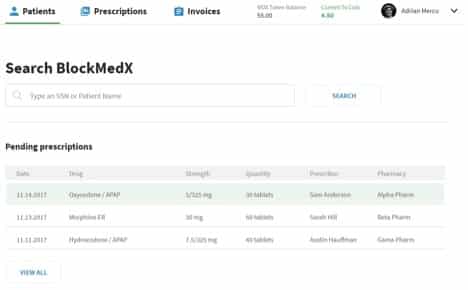
Blockchain streamlining and digitizing the entire prescription process
One of the ways blockchain can aid the healthcare industry is by streamlining prescription writing into a single platform. By pairing prescription writing with blockchain, every aspect of the process will be completely digital. Doctors will digitally submit prescriptions. No more paper.
One company, BlockMedx, is creating a blockchain-based prescription tracking system that will completely digitize the prescription process, providing both substantial reduction in loss, and increase in security.
Using digital prescriptions over paper prescriptions is advantageous for a number of reasons. The first is the amount of paper waste that is being reduced. Drug sheets will be sent electronically, saving pharmacies money on paper, ink, and supplies.
The second reason is because a digital prescription sent over a blockchain paired with a token is impossible to forge or alter. While paper prescriptions can easily be altered, copied or forged entirely, digital prescriptions sent over a blockchain cannot be altered.
Blockchain is so secure that it wouldn’t even be possible for hackers to go in and change the prescription quantity. Other digital prescription programs that aren’t blockchain based can’t make the same claim. By digitizing prescriptions through blockchain technology, pharmacies can help substantially diminish the amount of medicine abuse in our country.
In order for a pharmacy to go green, it needs to figure out how to provide patients with the vital information contained within the drug sheet, but without paper. Blockchain can handle this problem as well.
As is the case with almost all new blockchains, it should have a user friendly mobile app that allows patients to view all of the details of their prescriptions in a single location. This solves the drug sheet, the cause of the majority of the paper waste.
With the entire process streamlined through blockchain, pharmacies and hospitals can work together to help the healthcare industry become less wasteful as a whole while at the same time providing security to counteract the opioid epidemic.
Companies like BlockMedx can save pharmacies money by not buying and printing paper. Hospitals also benefit because the prescriptions they write and send through the blockchain will be more secure than traditional paper prescriptions. Lastly, the patients benefit because less waste is being produced and dumped into the earth, and with less waste, prescription costs will reduce.
Disclaimer: The content of this article was provided by the company, and does not represent the opinions of Finance Magnates. Finance Magnates does not endorse and is not liable for any content presented on this page.
More companies are going green each year. Yes it’s trendy. Yes it works as a marketing campaign. And yes it truly does help this earth which we call our home. However, there’s another reason why it’s advantageous for a company to ditch the paper and go digital – money.
Companies can save a lot of money by going green. For example, green companies can get legal and tax advantages. These breaks exist at both the state and federal level for green companies. Companies can also save money by reducing waste. It’s a chain reaction. And the first domino that needs to fall is often the hardest one – paper.
Is going green risky?
Every company uses paper. Some use it more than others, while reducing paper use can dramatically cut operating cost. Obviously, less paper means less money spent on paper. But it also means less ink, which is the real money saver – less ink also means less ink cartridges. And less ink cartridges means less waste and plastic. Oh and don’t forget about toner and toner cartridges.
One industry that has yet to embrace going green are pharmacies. While it may come as a surprise to the healthy, pharmacies go through a lot of paper each year. One of the main causes of high paper volume in pharmacies is due to the sheer number of drug sheets that are printed with each prescription issued. Think also of the volume of paper prescriptions that are turned into pharmacies each year.
Many in the pharmaceutical industry have been unwilling to shift to a digital system because of the potential risk of fraud and forgery. Particularly with the opioid epidemic in the US, companies are seeking ways to secure pharmaceuticals and prescriptions, and digitizing them may seem risky.
Pixabay
Forgery and Fraud
However, the reality is that digitized prescriptions can accomplish both goals for pharmaceutical companies, and particularly regarding medicine abuse. Medicine abuse is a widespread issue in the United States.
One of the chief causes of medicine abuse is directly linked to paper prescriptions. Paper prescriptions are easily altered, tempting patients to forge prescription amounts. This results in more prescription painkillers being sold on the black market, driving up the cost of the pill.
But are these problems even solvable? Aren’t drug sheets and prescriptions the most vital parts of the prescription process next to the medicine itself? The answer is a resounding yes on both fronts.
As time goes on, ways to use blockchain other than simply as money have emerged. It’s already helped other industries like finance and electronic security And the latest industry it can help is healthcare.
Blockchain streamlining and digitizing the entire prescription process
One of the ways blockchain can aid the healthcare industry is by streamlining prescription writing into a single platform. By pairing prescription writing with blockchain, every aspect of the process will be completely digital. Doctors will digitally submit prescriptions. No more paper.
One company, BlockMedx, is creating a blockchain-based prescription tracking system that will completely digitize the prescription process, providing both substantial reduction in loss, and increase in security.
Using digital prescriptions over paper prescriptions is advantageous for a number of reasons. The first is the amount of paper waste that is being reduced. Drug sheets will be sent electronically, saving pharmacies money on paper, ink, and supplies.
The second reason is because a digital prescription sent over a blockchain paired with a token is impossible to forge or alter. While paper prescriptions can easily be altered, copied or forged entirely, digital prescriptions sent over a blockchain cannot be altered.
Blockchain is so secure that it wouldn’t even be possible for hackers to go in and change the prescription quantity. Other digital prescription programs that aren’t blockchain based can’t make the same claim. By digitizing prescriptions through blockchain technology, pharmacies can help substantially diminish the amount of medicine abuse in our country.
In order for a pharmacy to go green, it needs to figure out how to provide patients with the vital information contained within the drug sheet, but without paper. Blockchain can handle this problem as well.
As is the case with almost all new blockchains, it should have a user friendly mobile app that allows patients to view all of the details of their prescriptions in a single location. This solves the drug sheet, the cause of the majority of the paper waste.
With the entire process streamlined through blockchain, pharmacies and hospitals can work together to help the healthcare industry become less wasteful as a whole while at the same time providing security to counteract the opioid epidemic.
Companies like BlockMedx can save pharmacies money by not buying and printing paper. Hospitals also benefit because the prescriptions they write and send through the blockchain will be more secure than traditional paper prescriptions. Lastly, the patients benefit because less waste is being produced and dumped into the earth, and with less waste, prescription costs will reduce.
Disclaimer: The content of this article was provided by the company, and does not represent the opinions of Finance Magnates. Finance Magnates does not endorse and is not liable for any content presented on this page.
SMX's 1900% Surge Since November Is Not a Momentum Trade; It's Based on Transformative and Deliverable Techology
Featured Videos
Executive Interview | Charlotte Bullock | Chief Product Officer, Bank of London | FMLS:25
In this interview, we sat down with Charlotte Bullock, Head of Product at The Bank of London, previously at SAP and now shaping product at one of the sector’s most ambitious new banking players.
Charlotte reflects on the Summit so far and talks about the culture inside fintech banks today. We look at the pressures that come with scaling, and how firms can hold onto the nimble approach that made them stand out early on.
We also cover the state of payments ahead of her appearance on the payments roundtable: the blockages financial firms face, the areas that still need fixing, and what a realistic solution looks like in 2026.
In this interview, we sat down with Charlotte Bullock, Head of Product at The Bank of London, previously at SAP and now shaping product at one of the sector’s most ambitious new banking players.
Charlotte reflects on the Summit so far and talks about the culture inside fintech banks today. We look at the pressures that come with scaling, and how firms can hold onto the nimble approach that made them stand out early on.
We also cover the state of payments ahead of her appearance on the payments roundtable: the blockages financial firms face, the areas that still need fixing, and what a realistic solution looks like in 2026.
In this interview, we sat down with Charlotte Bullock, Head of Product at The Bank of London, previously at SAP and now shaping product at one of the sector’s most ambitious new banking players.
Charlotte reflects on the Summit so far and talks about the culture inside fintech banks today. We look at the pressures that come with scaling, and how firms can hold onto the nimble approach that made them stand out early on.
We also cover the state of payments ahead of her appearance on the payments roundtable: the blockages financial firms face, the areas that still need fixing, and what a realistic solution looks like in 2026.
In this interview, we sat down with Charlotte Bullock, Head of Product at The Bank of London, previously at SAP and now shaping product at one of the sector’s most ambitious new banking players.
Charlotte reflects on the Summit so far and talks about the culture inside fintech banks today. We look at the pressures that come with scaling, and how firms can hold onto the nimble approach that made them stand out early on.
We also cover the state of payments ahead of her appearance on the payments roundtable: the blockages financial firms face, the areas that still need fixing, and what a realistic solution looks like in 2026.
In this conversation, we sit down with Drew Niv, CSO at ATFX Connect and one of the most influential figures in modern FX.
We speak about market structure, the institutional view on liquidity, and the sharp rise of prop trading, a sector Drew has been commenting on in recent months. Drew explains why he once dismissed prop trading, why his view changed, and what he now thinks the model means for brokers, clients and risk managers.
We explore subscription-fee dependency, the high reneging rate, and the long-term challenge: how brokers can build a more stable and honest version of the model. Drew also talks about the traffic advantage standalone prop firms have built and why brokers may still win in the long run if they take the right approach.
In this conversation, we sit down with Drew Niv, CSO at ATFX Connect and one of the most influential figures in modern FX.
We speak about market structure, the institutional view on liquidity, and the sharp rise of prop trading, a sector Drew has been commenting on in recent months. Drew explains why he once dismissed prop trading, why his view changed, and what he now thinks the model means for brokers, clients and risk managers.
We explore subscription-fee dependency, the high reneging rate, and the long-term challenge: how brokers can build a more stable and honest version of the model. Drew also talks about the traffic advantage standalone prop firms have built and why brokers may still win in the long run if they take the right approach.
In this conversation, we sit down with Drew Niv, CSO at ATFX Connect and one of the most influential figures in modern FX.
We speak about market structure, the institutional view on liquidity, and the sharp rise of prop trading, a sector Drew has been commenting on in recent months. Drew explains why he once dismissed prop trading, why his view changed, and what he now thinks the model means for brokers, clients and risk managers.
We explore subscription-fee dependency, the high reneging rate, and the long-term challenge: how brokers can build a more stable and honest version of the model. Drew also talks about the traffic advantage standalone prop firms have built and why brokers may still win in the long run if they take the right approach.
In this conversation, we sit down with Drew Niv, CSO at ATFX Connect and one of the most influential figures in modern FX.
We speak about market structure, the institutional view on liquidity, and the sharp rise of prop trading, a sector Drew has been commenting on in recent months. Drew explains why he once dismissed prop trading, why his view changed, and what he now thinks the model means for brokers, clients and risk managers.
We explore subscription-fee dependency, the high reneging rate, and the long-term challenge: how brokers can build a more stable and honest version of the model. Drew also talks about the traffic advantage standalone prop firms have built and why brokers may still win in the long run if they take the right approach.
In this conversation, we sit down with Drew Niv, CSO at ATFX Connect and one of the most influential figures in modern FX.
We speak about market structure, the institutional view on liquidity, and the sharp rise of prop trading, a sector Drew has been commenting on in recent months. Drew explains why he once dismissed prop trading, why his view changed, and what he now thinks the model means for brokers, clients and risk managers.
We explore subscription-fee dependency, the high reneging rate, and the long-term challenge: how brokers can build a more stable and honest version of the model. Drew also talks about the traffic advantage standalone prop firms have built and why brokers may still win in the long run if they take the right approach.
In this conversation, we sit down with Drew Niv, CSO at ATFX Connect and one of the most influential figures in modern FX.
We speak about market structure, the institutional view on liquidity, and the sharp rise of prop trading, a sector Drew has been commenting on in recent months. Drew explains why he once dismissed prop trading, why his view changed, and what he now thinks the model means for brokers, clients and risk managers.
We explore subscription-fee dependency, the high reneging rate, and the long-term challenge: how brokers can build a more stable and honest version of the model. Drew also talks about the traffic advantage standalone prop firms have built and why brokers may still win in the long run if they take the right approach.
Executive Interview | Remonda Z. Kirketerp Møller| CEO & Founder Muinmos | FMLS:25
In this interview, Remonda Z. Kirketerp Møller, founder of Muinmos, breaks down the state of AI in regtech and what responsible adoption really looks like for brokers. We talk about rising fragmentation, the pressures around compliance accuracy, and why most firms are still in the early stages of AI maturity.
Ramanda also shares insights on regulator sandboxes, shifting expectations around accountability, and the current reality of MiCA licensing and passporting in Europe.
A concise look at where compliance, onboarding, and AI-driven processes are heading next.
In this interview, Remonda Z. Kirketerp Møller, founder of Muinmos, breaks down the state of AI in regtech and what responsible adoption really looks like for brokers. We talk about rising fragmentation, the pressures around compliance accuracy, and why most firms are still in the early stages of AI maturity.
Ramanda also shares insights on regulator sandboxes, shifting expectations around accountability, and the current reality of MiCA licensing and passporting in Europe.
A concise look at where compliance, onboarding, and AI-driven processes are heading next.
In this interview, Remonda Z. Kirketerp Møller, founder of Muinmos, breaks down the state of AI in regtech and what responsible adoption really looks like for brokers. We talk about rising fragmentation, the pressures around compliance accuracy, and why most firms are still in the early stages of AI maturity.
Ramanda also shares insights on regulator sandboxes, shifting expectations around accountability, and the current reality of MiCA licensing and passporting in Europe.
A concise look at where compliance, onboarding, and AI-driven processes are heading next.
In this interview, Remonda Z. Kirketerp Møller, founder of Muinmos, breaks down the state of AI in regtech and what responsible adoption really looks like for brokers. We talk about rising fragmentation, the pressures around compliance accuracy, and why most firms are still in the early stages of AI maturity.
Ramanda also shares insights on regulator sandboxes, shifting expectations around accountability, and the current reality of MiCA licensing and passporting in Europe.
A concise look at where compliance, onboarding, and AI-driven processes are heading next.
In this interview, Remonda Z. Kirketerp Møller, founder of Muinmos, breaks down the state of AI in regtech and what responsible adoption really looks like for brokers. We talk about rising fragmentation, the pressures around compliance accuracy, and why most firms are still in the early stages of AI maturity.
Ramanda also shares insights on regulator sandboxes, shifting expectations around accountability, and the current reality of MiCA licensing and passporting in Europe.
A concise look at where compliance, onboarding, and AI-driven processes are heading next.
In this interview, Remonda Z. Kirketerp Møller, founder of Muinmos, breaks down the state of AI in regtech and what responsible adoption really looks like for brokers. We talk about rising fragmentation, the pressures around compliance accuracy, and why most firms are still in the early stages of AI maturity.
Ramanda also shares insights on regulator sandboxes, shifting expectations around accountability, and the current reality of MiCA licensing and passporting in Europe.
A concise look at where compliance, onboarding, and AI-driven processes are heading next.
In this conversation, we speak with Aydin Bonabi, CEO and co-founder of Surveill, a firm focused on fraud detection and AI-driven compliance tools for financial institutions.
We start with Aydin’s view of the Summit and the challenges brokers face as fraud tactics grow more complex. He explains how firms can stay ahead through real-time signals, data patterns, and early-stage detection.
We also talk about AI training and why compliance teams often struggle to keep models accurate, fair, and aligned with regulatory expectations. Aydin breaks down what “good” AI training looks like inside a financial environment, including the importance of clean data, domain expertise, and human oversight.
He closes with a clear message: fraud is scaling, and so must the tools that stop it.
In this conversation, we speak with Aydin Bonabi, CEO and co-founder of Surveill, a firm focused on fraud detection and AI-driven compliance tools for financial institutions.
We start with Aydin’s view of the Summit and the challenges brokers face as fraud tactics grow more complex. He explains how firms can stay ahead through real-time signals, data patterns, and early-stage detection.
We also talk about AI training and why compliance teams often struggle to keep models accurate, fair, and aligned with regulatory expectations. Aydin breaks down what “good” AI training looks like inside a financial environment, including the importance of clean data, domain expertise, and human oversight.
He closes with a clear message: fraud is scaling, and so must the tools that stop it.
In this conversation, we speak with Aydin Bonabi, CEO and co-founder of Surveill, a firm focused on fraud detection and AI-driven compliance tools for financial institutions.
We start with Aydin’s view of the Summit and the challenges brokers face as fraud tactics grow more complex. He explains how firms can stay ahead through real-time signals, data patterns, and early-stage detection.
We also talk about AI training and why compliance teams often struggle to keep models accurate, fair, and aligned with regulatory expectations. Aydin breaks down what “good” AI training looks like inside a financial environment, including the importance of clean data, domain expertise, and human oversight.
He closes with a clear message: fraud is scaling, and so must the tools that stop it.
In this conversation, we speak with Aydin Bonabi, CEO and co-founder of Surveill, a firm focused on fraud detection and AI-driven compliance tools for financial institutions.
We start with Aydin’s view of the Summit and the challenges brokers face as fraud tactics grow more complex. He explains how firms can stay ahead through real-time signals, data patterns, and early-stage detection.
We also talk about AI training and why compliance teams often struggle to keep models accurate, fair, and aligned with regulatory expectations. Aydin breaks down what “good” AI training looks like inside a financial environment, including the importance of clean data, domain expertise, and human oversight.
He closes with a clear message: fraud is scaling, and so must the tools that stop it.
In this conversation, we speak with Aydin Bonabi, CEO and co-founder of Surveill, a firm focused on fraud detection and AI-driven compliance tools for financial institutions.
We start with Aydin’s view of the Summit and the challenges brokers face as fraud tactics grow more complex. He explains how firms can stay ahead through real-time signals, data patterns, and early-stage detection.
We also talk about AI training and why compliance teams often struggle to keep models accurate, fair, and aligned with regulatory expectations. Aydin breaks down what “good” AI training looks like inside a financial environment, including the importance of clean data, domain expertise, and human oversight.
He closes with a clear message: fraud is scaling, and so must the tools that stop it.
In this conversation, we speak with Aydin Bonabi, CEO and co-founder of Surveill, a firm focused on fraud detection and AI-driven compliance tools for financial institutions.
We start with Aydin’s view of the Summit and the challenges brokers face as fraud tactics grow more complex. He explains how firms can stay ahead through real-time signals, data patterns, and early-stage detection.
We also talk about AI training and why compliance teams often struggle to keep models accurate, fair, and aligned with regulatory expectations. Aydin breaks down what “good” AI training looks like inside a financial environment, including the importance of clean data, domain expertise, and human oversight.
He closes with a clear message: fraud is scaling, and so must the tools that stop it.
Exness expands its presence in Africa: Inside our interview with Paul Margarites in Cape Town
Finance Magnates met with Paul Margarites, Exness regional commercial director for Sub-Saharan Africa, during a visit to the firm’s office opening in Cape Town. In this talk, led by Andrea Badiola Mateos, Co-CEO at Finance Magnates, Paul shares views on the South African trading space, local user behavior, mobile trends, regulation, team growth, and how Exness plans to grow in more markets across the region. @Exness
Read the article at: https://www.financemagnates.com/thought-leadership/exness-expands-its-presence-in-africa-inside-our-interview-with-paul-margarites/
#exness #financemagnates #exnesstrading #CFDtrading #tradeonline #africanews #capetown
Finance Magnates met with Paul Margarites, Exness regional commercial director for Sub-Saharan Africa, during a visit to the firm’s office opening in Cape Town. In this talk, led by Andrea Badiola Mateos, Co-CEO at Finance Magnates, Paul shares views on the South African trading space, local user behavior, mobile trends, regulation, team growth, and how Exness plans to grow in more markets across the region. @Exness
Read the article at: https://www.financemagnates.com/thought-leadership/exness-expands-its-presence-in-africa-inside-our-interview-with-paul-margarites/
#exness #financemagnates #exnesstrading #CFDtrading #tradeonline #africanews #capetown
Finance Magnates met with Paul Margarites, Exness regional commercial director for Sub-Saharan Africa, during a visit to the firm’s office opening in Cape Town. In this talk, led by Andrea Badiola Mateos, Co-CEO at Finance Magnates, Paul shares views on the South African trading space, local user behavior, mobile trends, regulation, team growth, and how Exness plans to grow in more markets across the region. @Exness
Read the article at: https://www.financemagnates.com/thought-leadership/exness-expands-its-presence-in-africa-inside-our-interview-with-paul-margarites/
#exness #financemagnates #exnesstrading #CFDtrading #tradeonline #africanews #capetown
Finance Magnates met with Paul Margarites, Exness regional commercial director for Sub-Saharan Africa, during a visit to the firm’s office opening in Cape Town. In this talk, led by Andrea Badiola Mateos, Co-CEO at Finance Magnates, Paul shares views on the South African trading space, local user behavior, mobile trends, regulation, team growth, and how Exness plans to grow in more markets across the region. @Exness
Read the article at: https://www.financemagnates.com/thought-leadership/exness-expands-its-presence-in-africa-inside-our-interview-with-paul-margarites/
#exness #financemagnates #exnesstrading #CFDtrading #tradeonline #africanews #capetown
Finance Magnates met with Paul Margarites, Exness regional commercial director for Sub-Saharan Africa, during a visit to the firm’s office opening in Cape Town. In this talk, led by Andrea Badiola Mateos, Co-CEO at Finance Magnates, Paul shares views on the South African trading space, local user behavior, mobile trends, regulation, team growth, and how Exness plans to grow in more markets across the region. @Exness
Read the article at: https://www.financemagnates.com/thought-leadership/exness-expands-its-presence-in-africa-inside-our-interview-with-paul-margarites/
#exness #financemagnates #exnesstrading #CFDtrading #tradeonline #africanews #capetown
Finance Magnates met with Paul Margarites, Exness regional commercial director for Sub-Saharan Africa, during a visit to the firm’s office opening in Cape Town. In this talk, led by Andrea Badiola Mateos, Co-CEO at Finance Magnates, Paul shares views on the South African trading space, local user behavior, mobile trends, regulation, team growth, and how Exness plans to grow in more markets across the region. @Exness
Read the article at: https://www.financemagnates.com/thought-leadership/exness-expands-its-presence-in-africa-inside-our-interview-with-paul-margarites/
#exness #financemagnates #exnesstrading #CFDtrading #tradeonline #africanews #capetown