Keeping a lid on emotions is crucial for traders seeking to maximise their investment potential.
Photo: Bloomberg
One of the most important components for investing is having a game plan to set the rules that guide the open and exit for a trade. The hallmark of a professional trader is the ability to behave as machine-like as possible when they make crucial decisions.
While it may seem simple in theory, in practice, decision-making is subject to many psychological pitfalls that can negatively impact our judgment, or worse yet, harm our investing returns.
Managing your emotions while maintaining a disciplined and balanced psychological state is a difficult process. However, mastering your own mindfulness will not only help you discover the keys to sustainable investing success, but also help you weather the emotional ups and downs of trading.
Why Your Psychology is Important
Trading is exciting but it can be equally nerve racking.
For anyone who has ever made a trade, you are probably familiar with the accompanying physical effects. Individuals who are newer to trading feel the rush of adrenaline and also an accelerated heart rate.
Trading is exciting, but it can be equally nerve racking. Besides just the physical manifestations of trading are the psychological attributes that complement them.
Oftentimes, our emotions while trading can be categorized by a rollercoaster of happy, sad, stressed, elated, and even angry. When we make winning or losing trades, our psychology can shift swiftly, making normally easy decisions more agonizing.
The more we let our emotions take control of our investing strategy, the more likely we are to wind up on the wrong side of a trade.
Effectively Managing The Ups and Downs
Just like a car staying static, with the gear placed in neutral, trading psychology must be similarly balanced. By coming to the table emotionally, either happy or sad, we can find ourselves making decisions with an emotional tilt, or bias.
The second the game plan changes the risk of making an error rises exponentially.
The result is a cascade of emotions that can create confusion and result in deviating from a trading game plan. As mentioned above, effective investing decision-making comes from being as machine-like as possible in your approach, meaning no departing from the prevailing trading strategy.
The second the game plan changes, the risk of making an error rises exponentially. By approaching each trade with a firm game plan, a neutral psychology, and an objective mindset, you are best able to conquer challenging circumstances and make the best decision to further your objectives.
Creating a rules based system to guide your investing strategy
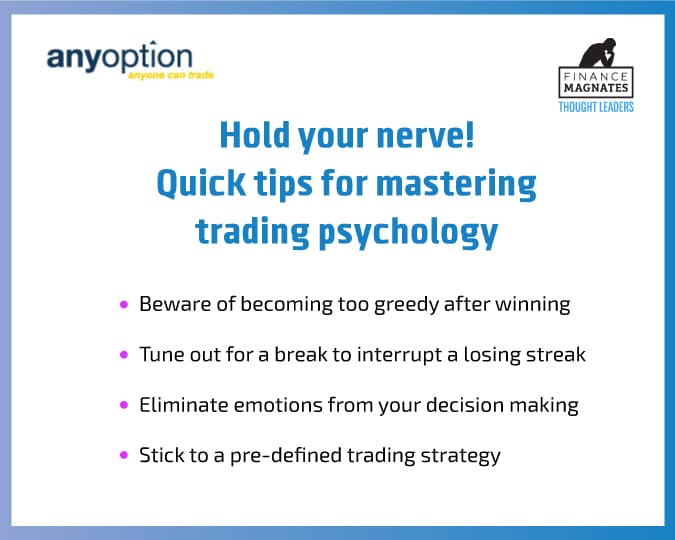
One of the best ways to enforce a neutral psychology is by building a set of written rules to keep your trading mechanized and avoid the emotional pitfalls that are waiting for you at every turn. This rules sheet will help guide your trading strategy, but also create a rigorous set of guidelines to prevent emotion from infiltrating your psychology and impacting your investment returns.
One popular rule is to step away from the platform and turn it off after a set number of losing trades. We often find ourselves “chasing,” or trying to “make money back.”
This is a negative mindset which can cause future trades to spiral, making it necessary to walk away, rebalance, and then come back to trading with a more neutral mindset that prevents emotion decisions that can cause losses to snowball.
By the same token, it might be just as important to take a break after a winning trade. The result of success might be a feeling of elation, another factor that can impact your decision-making.
It can give you the sense that because you were correct in your last pick, you will be assuredly correct in future picks, destroying your sensibility when it comes to closing out winning trades or cutting losing trades.
The Key Takeaways
The key to being successful as an investor comes with the discipline to have a plan and stick with it.
One of the biggest pitfalls traders commonly run into is turning winning trades into losing trades by way of being greedy or turning losing trades into bigger, more magnified losses by hoping, wishing, and praying that it will eventually turn around.
As was mentioned, the key to being successful as an investor comes with the discipline to have a plan and stick with it. The more mechanized the strategy becomes, the more successful it can be.
Having the mental wherewithal to stay neutral and follow your own rules is easier said than done. Nevertheless, by learning and practicing the principles of a neutral psychological approach, avoiding the emotional tilt will become easier with time.
By removing emotion from the game altogether, you open the potential for endless opportunities for a fruitful, long-term investing strategy.
One of the most important components for investing is having a game plan to set the rules that guide the open and exit for a trade. The hallmark of a professional trader is the ability to behave as machine-like as possible when they make crucial decisions.
While it may seem simple in theory, in practice, decision-making is subject to many psychological pitfalls that can negatively impact our judgment, or worse yet, harm our investing returns.
Managing your emotions while maintaining a disciplined and balanced psychological state is a difficult process. However, mastering your own mindfulness will not only help you discover the keys to sustainable investing success, but also help you weather the emotional ups and downs of trading.
Why Your Psychology is Important
Trading is exciting but it can be equally nerve racking.
For anyone who has ever made a trade, you are probably familiar with the accompanying physical effects. Individuals who are newer to trading feel the rush of adrenaline and also an accelerated heart rate.
Trading is exciting, but it can be equally nerve racking. Besides just the physical manifestations of trading are the psychological attributes that complement them.
Oftentimes, our emotions while trading can be categorized by a rollercoaster of happy, sad, stressed, elated, and even angry. When we make winning or losing trades, our psychology can shift swiftly, making normally easy decisions more agonizing.
The more we let our emotions take control of our investing strategy, the more likely we are to wind up on the wrong side of a trade.
Effectively Managing The Ups and Downs
Just like a car staying static, with the gear placed in neutral, trading psychology must be similarly balanced. By coming to the table emotionally, either happy or sad, we can find ourselves making decisions with an emotional tilt, or bias.
The second the game plan changes the risk of making an error rises exponentially.
The result is a cascade of emotions that can create confusion and result in deviating from a trading game plan. As mentioned above, effective investing decision-making comes from being as machine-like as possible in your approach, meaning no departing from the prevailing trading strategy.
The second the game plan changes, the risk of making an error rises exponentially. By approaching each trade with a firm game plan, a neutral psychology, and an objective mindset, you are best able to conquer challenging circumstances and make the best decision to further your objectives.
Creating a rules based system to guide your investing strategy
One of the best ways to enforce a neutral psychology is by building a set of written rules to keep your trading mechanized and avoid the emotional pitfalls that are waiting for you at every turn. This rules sheet will help guide your trading strategy, but also create a rigorous set of guidelines to prevent emotion from infiltrating your psychology and impacting your investment returns.
One popular rule is to step away from the platform and turn it off after a set number of losing trades. We often find ourselves “chasing,” or trying to “make money back.”
This is a negative mindset which can cause future trades to spiral, making it necessary to walk away, rebalance, and then come back to trading with a more neutral mindset that prevents emotion decisions that can cause losses to snowball.
By the same token, it might be just as important to take a break after a winning trade. The result of success might be a feeling of elation, another factor that can impact your decision-making.
It can give you the sense that because you were correct in your last pick, you will be assuredly correct in future picks, destroying your sensibility when it comes to closing out winning trades or cutting losing trades.
The Key Takeaways
The key to being successful as an investor comes with the discipline to have a plan and stick with it.
One of the biggest pitfalls traders commonly run into is turning winning trades into losing trades by way of being greedy or turning losing trades into bigger, more magnified losses by hoping, wishing, and praying that it will eventually turn around.
As was mentioned, the key to being successful as an investor comes with the discipline to have a plan and stick with it. The more mechanized the strategy becomes, the more successful it can be.
Having the mental wherewithal to stay neutral and follow your own rules is easier said than done. Nevertheless, by learning and practicing the principles of a neutral psychological approach, avoiding the emotional tilt will become easier with time.
By removing emotion from the game altogether, you open the potential for endless opportunities for a fruitful, long-term investing strategy.
Idan is the VP trading for anyoption.com. He is a seasoned professional with years of experience trading and has a vast knowledge of the financial markets. An expert in the binary options hedging field - Idan provides insights, guidance and coordination in business planning, risk management and technology strategies. He holds a BA in Economics Management and is now busy finishing his MBA in Finance. Idan is the VP trading for anyoption.com. He is a seasoned professional with years of experience and a vast knowledge of the financial markets. An expert in the binary options hedging field - Idan provides insights, guidance and coordination in business planning, risk management and technology strategies. He holds a BA in Economics Management and is now busy finishing his MBA in Finance.
TradingPRO Wins Best Customer Support – APAC 2026 at the UF Awards
Featured Videos
AvaTrade to Acquire Most of FXCM; NAGA Raises $8M
AvaTrade to Acquire Most of FXCM; NAGA Raises $8M
AvaTrade to Acquire Most of FXCM; NAGA Raises $8M
AvaTrade to Acquire Most of FXCM; NAGA Raises $8M
Today’s financial news recap covers AvaTrade agrees to acquire most of FXCM, NAGA secures eight million dollars in new financing, and Wise seeks a tax settlement in the UK.
Finance Magnates Daily Recap brings you the latest news from forex and CFD brokers, fintech, payments, cryptocurrency, digital assets, trading platforms, financial regulation and global markets.
Get the key company news, executive moves, deals, regulatory updates and market developments of the day, in just a few minutes. New episodes published every weekday.
Read more: https://www.financemagnates.com
#FinanceMagnates #ForexNews #FintechNews
Today’s financial news recap covers AvaTrade agrees to acquire most of FXCM, NAGA secures eight million dollars in new financing, and Wise seeks a tax settlement in the UK.
Finance Magnates Daily Recap brings you the latest news from forex and CFD brokers, fintech, payments, cryptocurrency, digital assets, trading platforms, financial regulation and global markets.
Get the key company news, executive moves, deals, regulatory updates and market developments of the day, in just a few minutes. New episodes published every weekday.
Read more: https://www.financemagnates.com
#FinanceMagnates #ForexNews #FintechNews
Today’s financial news recap covers AvaTrade agrees to acquire most of FXCM, NAGA secures eight million dollars in new financing, and Wise seeks a tax settlement in the UK.
Finance Magnates Daily Recap brings you the latest news from forex and CFD brokers, fintech, payments, cryptocurrency, digital assets, trading platforms, financial regulation and global markets.
Get the key company news, executive moves, deals, regulatory updates and market developments of the day, in just a few minutes. New episodes published every weekday.
Read more: https://www.financemagnates.com
#FinanceMagnates #ForexNews #FintechNews
Today’s financial news recap covers AvaTrade agrees to acquire most of FXCM, NAGA secures eight million dollars in new financing, and Wise seeks a tax settlement in the UK.
Finance Magnates Daily Recap brings you the latest news from forex and CFD brokers, fintech, payments, cryptocurrency, digital assets, trading platforms, financial regulation and global markets.
Get the key company news, executive moves, deals, regulatory updates and market developments of the day, in just a few minutes. New episodes published every weekday.
Read more: https://www.financemagnates.com
#FinanceMagnates #ForexNews #FintechNews
XTB Adds Overnight US Stock Trading; Nasdaq Ventures Invests in One Trading
XTB Adds Overnight US Stock Trading; Nasdaq Ventures Invests in One Trading
XTB Adds Overnight US Stock Trading; Nasdaq Ventures Invests in One Trading
XTB Adds Overnight US Stock Trading; Nasdaq Ventures Invests in One Trading
XTB Adds Overnight US Stock Trading; Nasdaq Ventures Invests in One Trading
XTB Adds Overnight US Stock Trading; Nasdaq Ventures Invests in One Trading
Today’s financial news recap covers XTB expands overnight US stock trading, Fortrade reports higher revenue, Nasdaq backs One Trading, and Vest Labs raises 13 million dollars.
Finance Magnates Daily Recap brings you the latest news from forex and CFD brokers, fintech, payments, cryptocurrency, digital assets, trading platforms, financial regulation and global markets.
Get the key company news, executive moves, deals, regulatory updates and market developments of the day, in just a few minutes. New episodes published every weekday.
Read more: https://www.financemagnates.com
#FinanceMagnates #ForexNews #FintechNews
Today’s financial news recap covers XTB expands overnight US stock trading, Fortrade reports higher revenue, Nasdaq backs One Trading, and Vest Labs raises 13 million dollars.
Finance Magnates Daily Recap brings you the latest news from forex and CFD brokers, fintech, payments, cryptocurrency, digital assets, trading platforms, financial regulation and global markets.
Get the key company news, executive moves, deals, regulatory updates and market developments of the day, in just a few minutes. New episodes published every weekday.
Read more: https://www.financemagnates.com
#FinanceMagnates #ForexNews #FintechNews
Today’s financial news recap covers XTB expands overnight US stock trading, Fortrade reports higher revenue, Nasdaq backs One Trading, and Vest Labs raises 13 million dollars.
Finance Magnates Daily Recap brings you the latest news from forex and CFD brokers, fintech, payments, cryptocurrency, digital assets, trading platforms, financial regulation and global markets.
Get the key company news, executive moves, deals, regulatory updates and market developments of the day, in just a few minutes. New episodes published every weekday.
Read more: https://www.financemagnates.com
#FinanceMagnates #ForexNews #FintechNews
Today’s financial news recap covers XTB expands overnight US stock trading, Fortrade reports higher revenue, Nasdaq backs One Trading, and Vest Labs raises 13 million dollars.
Finance Magnates Daily Recap brings you the latest news from forex and CFD brokers, fintech, payments, cryptocurrency, digital assets, trading platforms, financial regulation and global markets.
Get the key company news, executive moves, deals, regulatory updates and market developments of the day, in just a few minutes. New episodes published every weekday.
Read more: https://www.financemagnates.com
#FinanceMagnates #ForexNews #FintechNews
Today’s financial news recap covers XTB expands overnight US stock trading, Fortrade reports higher revenue, Nasdaq backs One Trading, and Vest Labs raises 13 million dollars.
Finance Magnates Daily Recap brings you the latest news from forex and CFD brokers, fintech, payments, cryptocurrency, digital assets, trading platforms, financial regulation and global markets.
Get the key company news, executive moves, deals, regulatory updates and market developments of the day, in just a few minutes. New episodes published every weekday.
Read more: https://www.financemagnates.com
#FinanceMagnates #ForexNews #FintechNews
Today’s financial news recap covers XTB expands overnight US stock trading, Fortrade reports higher revenue, Nasdaq backs One Trading, and Vest Labs raises 13 million dollars.
Finance Magnates Daily Recap brings you the latest news from forex and CFD brokers, fintech, payments, cryptocurrency, digital assets, trading platforms, financial regulation and global markets.
Get the key company news, executive moves, deals, regulatory updates and market developments of the day, in just a few minutes. New episodes published every weekday.
Read more: https://www.financemagnates.com
#FinanceMagnates #ForexNews #FintechNews
CMC Founder Downplays Volatility Hit; Devexperts Names CEO
CMC Founder Downplays Volatility Hit; Devexperts Names CEO
CMC Founder Downplays Volatility Hit; Devexperts Names CEO
CMC Founder Downplays Volatility Hit; Devexperts Names CEO
CMC Founder Downplays Volatility Hit; Devexperts Names CEO
CMC Founder Downplays Volatility Hit; Devexperts Names CEO
Today’s financial news recap covers low volatility pressures brokers, Devexperts names a new CEO, Saxo cuts onboarding time, and OKX reaches a 25 billion dollar valuation.
Finance Magnates Daily Recap brings you the latest news from forex and CFD brokers, fintech, payments, cryptocurrency, digital assets, trading platforms, financial regulation and global markets.
Get the key company news, executive moves, deals, regulatory updates and market developments of the day, in just a few minutes. New episodes published every weekday.
Read more: https://www.financemagnates.com
#FinanceMagnates #ForexNews #FintechNews
Today’s financial news recap covers low volatility pressures brokers, Devexperts names a new CEO, Saxo cuts onboarding time, and OKX reaches a 25 billion dollar valuation.
Finance Magnates Daily Recap brings you the latest news from forex and CFD brokers, fintech, payments, cryptocurrency, digital assets, trading platforms, financial regulation and global markets.
Get the key company news, executive moves, deals, regulatory updates and market developments of the day, in just a few minutes. New episodes published every weekday.
Read more: https://www.financemagnates.com
#FinanceMagnates #ForexNews #FintechNews
Today’s financial news recap covers low volatility pressures brokers, Devexperts names a new CEO, Saxo cuts onboarding time, and OKX reaches a 25 billion dollar valuation.
Finance Magnates Daily Recap brings you the latest news from forex and CFD brokers, fintech, payments, cryptocurrency, digital assets, trading platforms, financial regulation and global markets.
Get the key company news, executive moves, deals, regulatory updates and market developments of the day, in just a few minutes. New episodes published every weekday.
Read more: https://www.financemagnates.com
#FinanceMagnates #ForexNews #FintechNews
Today’s financial news recap covers low volatility pressures brokers, Devexperts names a new CEO, Saxo cuts onboarding time, and OKX reaches a 25 billion dollar valuation.
Finance Magnates Daily Recap brings you the latest news from forex and CFD brokers, fintech, payments, cryptocurrency, digital assets, trading platforms, financial regulation and global markets.
Get the key company news, executive moves, deals, regulatory updates and market developments of the day, in just a few minutes. New episodes published every weekday.
Read more: https://www.financemagnates.com
#FinanceMagnates #ForexNews #FintechNews
Today’s financial news recap covers low volatility pressures brokers, Devexperts names a new CEO, Saxo cuts onboarding time, and OKX reaches a 25 billion dollar valuation.
Finance Magnates Daily Recap brings you the latest news from forex and CFD brokers, fintech, payments, cryptocurrency, digital assets, trading platforms, financial regulation and global markets.
Get the key company news, executive moves, deals, regulatory updates and market developments of the day, in just a few minutes. New episodes published every weekday.
Read more: https://www.financemagnates.com
#FinanceMagnates #ForexNews #FintechNews
Today’s financial news recap covers low volatility pressures brokers, Devexperts names a new CEO, Saxo cuts onboarding time, and OKX reaches a 25 billion dollar valuation.
Finance Magnates Daily Recap brings you the latest news from forex and CFD brokers, fintech, payments, cryptocurrency, digital assets, trading platforms, financial regulation and global markets.
Get the key company news, executive moves, deals, regulatory updates and market developments of the day, in just a few minutes. New episodes published every weekday.
Read more: https://www.financemagnates.com
#FinanceMagnates #ForexNews #FintechNews
Today’s financial news recap covers Trade Nation buys FXCM's UK client book, Trading 212 reports higher revenue, the CFTC's move to allow perpetual index futures.
Finance Magnates Daily Recap brings you the latest news from forex and CFD brokers, fintech, payments, cryptocurrency, digital assets, trading platforms, financial regulation and global markets.
Get the key company news, executive moves, deals, regulatory updates and market developments of the day, in just a few minutes. New episodes published every weekday.
Read more: https://www.financemagnates.com
#FinanceMagnates #ForexNews #FintechNews
Today’s financial news recap covers Trade Nation buys FXCM's UK client book, Trading 212 reports higher revenue, the CFTC's move to allow perpetual index futures.
Finance Magnates Daily Recap brings you the latest news from forex and CFD brokers, fintech, payments, cryptocurrency, digital assets, trading platforms, financial regulation and global markets.
Get the key company news, executive moves, deals, regulatory updates and market developments of the day, in just a few minutes. New episodes published every weekday.
Read more: https://www.financemagnates.com
#FinanceMagnates #ForexNews #FintechNews
Today’s financial news recap covers Trade Nation buys FXCM's UK client book, Trading 212 reports higher revenue, the CFTC's move to allow perpetual index futures.
Finance Magnates Daily Recap brings you the latest news from forex and CFD brokers, fintech, payments, cryptocurrency, digital assets, trading platforms, financial regulation and global markets.
Get the key company news, executive moves, deals, regulatory updates and market developments of the day, in just a few minutes. New episodes published every weekday.
Read more: https://www.financemagnates.com
#FinanceMagnates #ForexNews #FintechNews
Today’s financial news recap covers Trade Nation buys FXCM's UK client book, Trading 212 reports higher revenue, the CFTC's move to allow perpetual index futures.
Finance Magnates Daily Recap brings you the latest news from forex and CFD brokers, fintech, payments, cryptocurrency, digital assets, trading platforms, financial regulation and global markets.
Get the key company news, executive moves, deals, regulatory updates and market developments of the day, in just a few minutes. New episodes published every weekday.
Read more: https://www.financemagnates.com
#FinanceMagnates #ForexNews #FintechNews
Today’s financial news recap covers Trade Nation buys FXCM's UK client book, Trading 212 reports higher revenue, the CFTC's move to allow perpetual index futures.
Finance Magnates Daily Recap brings you the latest news from forex and CFD brokers, fintech, payments, cryptocurrency, digital assets, trading platforms, financial regulation and global markets.
Get the key company news, executive moves, deals, regulatory updates and market developments of the day, in just a few minutes. New episodes published every weekday.
Read more: https://www.financemagnates.com
#FinanceMagnates #ForexNews #FintechNews
Today’s financial news recap covers Trade Nation buys FXCM's UK client book, Trading 212 reports higher revenue, the CFTC's move to allow perpetual index futures.
Finance Magnates Daily Recap brings you the latest news from forex and CFD brokers, fintech, payments, cryptocurrency, digital assets, trading platforms, financial regulation and global markets.
Get the key company news, executive moves, deals, regulatory updates and market developments of the day, in just a few minutes. New episodes published every weekday.
Read more: https://www.financemagnates.com
#FinanceMagnates #ForexNews #FintechNews
Your career isn’t a linear path.
Your career isn’t a linear path.
Your career isn’t a linear path.
Your career isn’t a linear path.
Your career isn’t a linear path.
Your career isn’t a linear path.
Roles change. Career goals change. Sometimes you want a completely new challenge.
But the skills and knowledge you build along the way can stay with you and give you something to build on.
For Jeff Patterson, that continued growth is key to long-term career development.
You bring the skills. FM Academy helps you build the knowledge.
#FMAcademy #FinanceMagnates #FinanceCareers #ProfessionalDevelopment #Fintech
Roles change. Career goals change. Sometimes you want a completely new challenge.
But the skills and knowledge you build along the way can stay with you and give you something to build on.
For Jeff Patterson, that continued growth is key to long-term career development.
You bring the skills. FM Academy helps you build the knowledge.
#FMAcademy #FinanceMagnates #FinanceCareers #ProfessionalDevelopment #Fintech
Roles change. Career goals change. Sometimes you want a completely new challenge.
But the skills and knowledge you build along the way can stay with you and give you something to build on.
For Jeff Patterson, that continued growth is key to long-term career development.
You bring the skills. FM Academy helps you build the knowledge.
#FMAcademy #FinanceMagnates #FinanceCareers #ProfessionalDevelopment #Fintech
Roles change. Career goals change. Sometimes you want a completely new challenge.
But the skills and knowledge you build along the way can stay with you and give you something to build on.
For Jeff Patterson, that continued growth is key to long-term career development.
You bring the skills. FM Academy helps you build the knowledge.
#FMAcademy #FinanceMagnates #FinanceCareers #ProfessionalDevelopment #Fintech
Roles change. Career goals change. Sometimes you want a completely new challenge.
But the skills and knowledge you build along the way can stay with you and give you something to build on.
For Jeff Patterson, that continued growth is key to long-term career development.
You bring the skills. FM Academy helps you build the knowledge.
#FMAcademy #FinanceMagnates #FinanceCareers #ProfessionalDevelopment #Fintech
Roles change. Career goals change. Sometimes you want a completely new challenge.
But the skills and knowledge you build along the way can stay with you and give you something to build on.
For Jeff Patterson, that continued growth is key to long-term career development.
You bring the skills. FM Academy helps you build the knowledge.
#FMAcademy #FinanceMagnates #FinanceCareers #ProfessionalDevelopment #Fintech