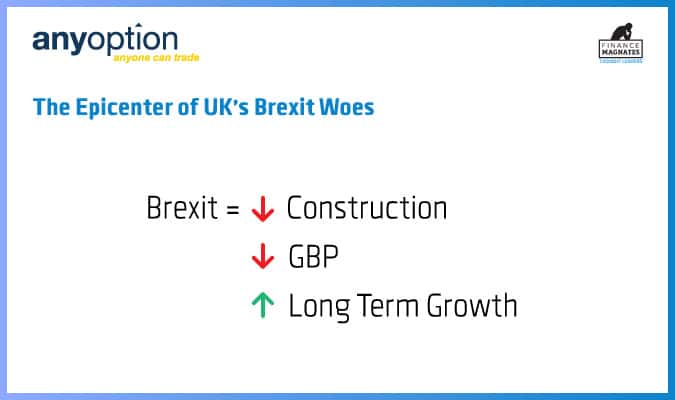
Whilst a fall in construction fundamentals has raised concerns, the recent Pound devaluation points towards a brighter outlook.
Finance Magnates
With the Bank of England set to deliver its latest monetary policy decision on Thursday, speculation of an imminent rate cut is high, corroborated in large part by the steep decline in economic fundamentals across the United Kingdom in the weeks that have followed the referendum.
Domestic confidence in the outlook has taken a notable turn.
Although the investment climate was very tepid in the lead up to the vote as evidenced by languishing business confidence and weaker consumer spending, recent data on construction, manufacturing, and services serve as further confirmation of the far-reaching impact of the decision.
Aside from foreign companies holding off on investment in the nation, domestic confidence in the outlook has taken a notable turn. Chief among the evidence of a protracted tapering in economic activity is the most recent data from the construction sector, which provides significant support to the idea of the UK gradually slipping into a recession.
Construction Boom Turns to Bust
Over the last several years, substantial growth in economic activity was supported in large part by burgeoning construction across the United Kingdom. Surging housing demand and rising prices created a perfect environment for building construction to thrive.
Across London, signs of the boom times remain evident, despite investment capital drying up and luxury home prices tumbling
Finance Magnates
precipitously as homeowners prepare for a new set of realities. Even though former UK Chancellor of the Exchequer George Osborne was keen on adding to affordable housing amid signs of a serious housing shortage, the government might be forced to reduce investment in this sector amid a downturn in the economy.
Looking at the latest data, construction figures released earlier in the session point towards an ongoing contraction that is expected to persist for months. The construction purchasing managers’ index released by Markit Economics showed another decline on a monthly basis, falling to 45.9 in July from the 46.0 reported during June.
The sharp decline marks the worst performance in the indicator since June of 2009, with the harshest impact felt in the commercial building sector. Although much of the focus of the downturn in property has focused on residential real estate, commercial real estate has also faced problems, with several property related investment funds forced to prevent customer withdrawals amid the tumble in real estate values.
However, the silver-lining has been the steep decline in UK Pound, which has turned a market that was widely viewed as overheating into a significant bargain compared to level witnessed just months ago.
Pound Slide Benefits UK Outlook
Although the sharp deterioration in fundamentals, specifically construction, manufacturing, and even services have contributed to the thesis that the UK economy is headed for a recession, the one positive byproduct of the “leave” decision has been the substantial losses in the Pound.
The GBPUSD pair, which has fallen from above 1.5000 before the referendum vote to briefly below 1.3000, has given the UK a particularly big boost by making exporters more competitive in the international trade arena. While not enough to necessarily reverse the ongoing trade deficit of the last decade, it has made investing in the UK more attractive.
Even though property funds faced massive redemption requests in the wake of the Brexit decision, the Pound devaluation has since made them more attractive, especially for foreign investors viewing the funds as trading at a considerable discount relative to net asset value.
Any additional Pound devaluation will put the country on a more sustainable growth path.
Now that the Bank of England is expected to once again accommodate monetary policy with its first interest rate cut since the last financial crisis, the stage is set for further losses in the Pound. While the pickup in inflation may be cause for some worry amongst policymakers, especially against the backdrop of stronger than anticipated second quarter growth, the severity of the drop in other fundamentals does merit looser lending conditions.
Furthermore, any additional Pound devaluation will put the country on a more sustainable growth path over the medium-term as economy adapts to a changing relationship with its single largest trading partner.
Mixed Outlook
While most factors continue to point towards further weakness in the Pound over the medium-term, on a longer-term basis, the multi-decade lows reached by the GBPUSD pair over the previous few weeks will help restore the UK’s place amongst the stronger advanced economies.
Besides the obvious advantages of better competitiveness and less regulation with respect to trade with the European Union, extricating itself from annual membership dues that benefit the EU members will help the government allocate more funds to fiscal stimulus and balance the budget.
Although falling construction fundamentals give cause for concern over the short-term, potentially leading the economy towards a recession, the added competitiveness of the recent Pound devaluation will put the UK on a steadier path towards a sustainable longer-term recovery.
Idan Levitov is the VP trading of anyoption.com. He is a seasoned professional with years of experience in trading and expertise in the binary options hedging field.
With the Bank of England set to deliver its latest monetary policy decision on Thursday, speculation of an imminent rate cut is high, corroborated in large part by the steep decline in economic fundamentals across the United Kingdom in the weeks that have followed the referendum.
Domestic confidence in the outlook has taken a notable turn.
Although the investment climate was very tepid in the lead up to the vote as evidenced by languishing business confidence and weaker consumer spending, recent data on construction, manufacturing, and services serve as further confirmation of the far-reaching impact of the decision.
Aside from foreign companies holding off on investment in the nation, domestic confidence in the outlook has taken a notable turn. Chief among the evidence of a protracted tapering in economic activity is the most recent data from the construction sector, which provides significant support to the idea of the UK gradually slipping into a recession.
Construction Boom Turns to Bust
Over the last several years, substantial growth in economic activity was supported in large part by burgeoning construction across the United Kingdom. Surging housing demand and rising prices created a perfect environment for building construction to thrive.
Across London, signs of the boom times remain evident, despite investment capital drying up and luxury home prices tumbling
Finance Magnates
precipitously as homeowners prepare for a new set of realities. Even though former UK Chancellor of the Exchequer George Osborne was keen on adding to affordable housing amid signs of a serious housing shortage, the government might be forced to reduce investment in this sector amid a downturn in the economy.
Looking at the latest data, construction figures released earlier in the session point towards an ongoing contraction that is expected to persist for months. The construction purchasing managers’ index released by Markit Economics showed another decline on a monthly basis, falling to 45.9 in July from the 46.0 reported during June.
The sharp decline marks the worst performance in the indicator since June of 2009, with the harshest impact felt in the commercial building sector. Although much of the focus of the downturn in property has focused on residential real estate, commercial real estate has also faced problems, with several property related investment funds forced to prevent customer withdrawals amid the tumble in real estate values.
However, the silver-lining has been the steep decline in UK Pound, which has turned a market that was widely viewed as overheating into a significant bargain compared to level witnessed just months ago.
Pound Slide Benefits UK Outlook
Although the sharp deterioration in fundamentals, specifically construction, manufacturing, and even services have contributed to the thesis that the UK economy is headed for a recession, the one positive byproduct of the “leave” decision has been the substantial losses in the Pound.
The GBPUSD pair, which has fallen from above 1.5000 before the referendum vote to briefly below 1.3000, has given the UK a particularly big boost by making exporters more competitive in the international trade arena. While not enough to necessarily reverse the ongoing trade deficit of the last decade, it has made investing in the UK more attractive.
Even though property funds faced massive redemption requests in the wake of the Brexit decision, the Pound devaluation has since made them more attractive, especially for foreign investors viewing the funds as trading at a considerable discount relative to net asset value.
Any additional Pound devaluation will put the country on a more sustainable growth path.
Now that the Bank of England is expected to once again accommodate monetary policy with its first interest rate cut since the last financial crisis, the stage is set for further losses in the Pound. While the pickup in inflation may be cause for some worry amongst policymakers, especially against the backdrop of stronger than anticipated second quarter growth, the severity of the drop in other fundamentals does merit looser lending conditions.
Furthermore, any additional Pound devaluation will put the country on a more sustainable growth path over the medium-term as economy adapts to a changing relationship with its single largest trading partner.
Mixed Outlook
While most factors continue to point towards further weakness in the Pound over the medium-term, on a longer-term basis, the multi-decade lows reached by the GBPUSD pair over the previous few weeks will help restore the UK’s place amongst the stronger advanced economies.
Besides the obvious advantages of better competitiveness and less regulation with respect to trade with the European Union, extricating itself from annual membership dues that benefit the EU members will help the government allocate more funds to fiscal stimulus and balance the budget.
Although falling construction fundamentals give cause for concern over the short-term, potentially leading the economy towards a recession, the added competitiveness of the recent Pound devaluation will put the UK on a steadier path towards a sustainable longer-term recovery.
Idan Levitov is the VP trading of anyoption.com. He is a seasoned professional with years of experience in trading and expertise in the binary options hedging field.
Idan is the VP trading for anyoption.com. He is a seasoned professional with years of experience trading and has a vast knowledge of the financial markets. An expert in the binary options hedging field - Idan provides insights, guidance and coordination in business planning, risk management and technology strategies. He holds a BA in Economics Management and is now busy finishing his MBA in Finance. Idan is the VP trading for anyoption.com. He is a seasoned professional with years of experience and a vast knowledge of the financial markets. An expert in the binary options hedging field - Idan provides insights, guidance and coordination in business planning, risk management and technology strategies. He holds a BA in Economics Management and is now busy finishing his MBA in Finance.
USA₮ Turns Times Square Green With St. Patrick’s Day Brand Activation Introducing Digital Dollar Payments
Featured Videos
Finance Magnates Awards 2026 – Nominations Now Open
Finance Magnates Awards 2026 – Nominations Now Open
Finance Magnates Awards 2026 – Nominations Now Open
Finance Magnates Awards 2026 – Nominations Now Open
The Finance Magnates Awards 2026 nominations are now open. 🏆
From fintech innovators to leading brokers, this is where the finance industry celebrates its biggest achievements.
Winners will be announced at the Cyprus Gala Dinner on November 6, 2026.
Nominate your brand now.
https://awards.financemagnates.com/?utm_source=linkedin&utm_medium=video&utm_campaign=nominations-open
#FMAwards #FinanceMagnates #FintechAwards #Fintech #FinanceIndustry
The Finance Magnates Awards 2026 nominations are now open. 🏆
From fintech innovators to leading brokers, this is where the finance industry celebrates its biggest achievements.
Winners will be announced at the Cyprus Gala Dinner on November 6, 2026.
Nominate your brand now.
https://awards.financemagnates.com/?utm_source=linkedin&utm_medium=video&utm_campaign=nominations-open
#FMAwards #FinanceMagnates #FintechAwards #Fintech #FinanceIndustry
The Finance Magnates Awards 2026 nominations are now open. 🏆
From fintech innovators to leading brokers, this is where the finance industry celebrates its biggest achievements.
Winners will be announced at the Cyprus Gala Dinner on November 6, 2026.
Nominate your brand now.
https://awards.financemagnates.com/?utm_source=linkedin&utm_medium=video&utm_campaign=nominations-open
#FMAwards #FinanceMagnates #FintechAwards #Fintech #FinanceIndustry
The Finance Magnates Awards 2026 nominations are now open. 🏆
From fintech innovators to leading brokers, this is where the finance industry celebrates its biggest achievements.
Winners will be announced at the Cyprus Gala Dinner on November 6, 2026.
Nominate your brand now.
https://awards.financemagnates.com/?utm_source=linkedin&utm_medium=video&utm_campaign=nominations-open
#FMAwards #FinanceMagnates #FintechAwards #Fintech #FinanceIndustry
Finance Magnates Awards 2026 | Nominations Now Open 🏆#Fintech #FMAwards #TradingIndustry
Finance Magnates Awards 2026 | Nominations Now Open 🏆#Fintech #FMAwards #TradingIndustry
Finance Magnates Awards 2026 | Nominations Now Open 🏆#Fintech #FMAwards #TradingIndustry
Finance Magnates Awards 2026 | Nominations Now Open 🏆#Fintech #FMAwards #TradingIndustry
Finance Magnates Awards 2026 | Nominations Now Open 🏆#Fintech #FMAwards #TradingIndustry
Finance Magnates Awards 2026 | Nominations Now Open 🏆#Fintech #FMAwards #TradingIndustry
Lights on. Cameras ready. 🎬
Finance Magnates Awards 2026 nominations are now open. 🏆
#FMAwards #FinanceMagnates #FintechAwards #Fintech
Lights on. Cameras ready. 🎬
Finance Magnates Awards 2026 nominations are now open. 🏆
#FMAwards #FinanceMagnates #FintechAwards #Fintech
Lights on. Cameras ready. 🎬
Finance Magnates Awards 2026 nominations are now open. 🏆
#FMAwards #FinanceMagnates #FintechAwards #Fintech
Lights on. Cameras ready. 🎬
Finance Magnates Awards 2026 nominations are now open. 🏆
#FMAwards #FinanceMagnates #FintechAwards #Fintech
Lights on. Cameras ready. 🎬
Finance Magnates Awards 2026 nominations are now open. 🏆
#FMAwards #FinanceMagnates #FintechAwards #Fintech
Lights on. Cameras ready. 🎬
Finance Magnates Awards 2026 nominations are now open. 🏆
#FMAwards #FinanceMagnates #FintechAwards #Fintech
Exness sees trust as the key theme for growth in MENA Trading Growth for 2026
Exness sees trust as the key theme for growth in MENA Trading Growth for 2026
Exness sees trust as the key theme for growth in MENA Trading Growth for 2026
Exness sees trust as the key theme for growth in MENA Trading Growth for 2026
Exness sees trust as the key theme for growth in MENA Trading Growth for 2026
Exness sees trust as the key theme for growth in MENA Trading Growth for 2026
Mohammad Amer, Regional Commercial Director at Exness, sits down to discuss the booming MENA financial trading market. Find out why Dubai is key to the company's growth strategy, how a mobile-first generation is changing expectations, and why trust will be the defining theme for traders in 2026.
In this interview, you'll learn:
* Why Dubai and the MENA region are critical growth markets for fintech and online trading.
* How Exness is addressing the demands of mobile-first, younger traders through engineering, platform stability, and transparent conditions.
* The essential role local talent plays in providing a culturally relevant and compliant user experience.
* Mohammad Amer's outlook on the future of the online trading industry and why stronger controls and systems are necessary.
* Why "trust" isn't just a brand value, but has commercial value—and why he predicts 2026 will be the "Year of Trust."
Key Takeaways:
➡️ The MENA region is rapidly shaping global financial markets.
➡️ New traders expect stability, precise execution, and transparency.
➡️ Local expertise is key to regulatory compliance and user experience.
➡️ Future success belongs to firms capable of meeting rising standards across regulation and platform consistency.
Read the full article at: https://www.financemagnates.com/thought-leadership/exness-sees-trust-as-the-key-theme-for-growth-in-mena-trading-growth-for-2026/
#Exness #MENA #Trading #FinTech #Dubai #OnlineTrading #FinanceMagnates #MohammadAmer #Trust #MobileTrading
Mohammad Amer, Regional Commercial Director at Exness, sits down to discuss the booming MENA financial trading market. Find out why Dubai is key to the company's growth strategy, how a mobile-first generation is changing expectations, and why trust will be the defining theme for traders in 2026.
In this interview, you'll learn:
* Why Dubai and the MENA region are critical growth markets for fintech and online trading.
* How Exness is addressing the demands of mobile-first, younger traders through engineering, platform stability, and transparent conditions.
* The essential role local talent plays in providing a culturally relevant and compliant user experience.
* Mohammad Amer's outlook on the future of the online trading industry and why stronger controls and systems are necessary.
* Why "trust" isn't just a brand value, but has commercial value—and why he predicts 2026 will be the "Year of Trust."
Key Takeaways:
➡️ The MENA region is rapidly shaping global financial markets.
➡️ New traders expect stability, precise execution, and transparency.
➡️ Local expertise is key to regulatory compliance and user experience.
➡️ Future success belongs to firms capable of meeting rising standards across regulation and platform consistency.
Read the full article at: https://www.financemagnates.com/thought-leadership/exness-sees-trust-as-the-key-theme-for-growth-in-mena-trading-growth-for-2026/
#Exness #MENA #Trading #FinTech #Dubai #OnlineTrading #FinanceMagnates #MohammadAmer #Trust #MobileTrading
Mohammad Amer, Regional Commercial Director at Exness, sits down to discuss the booming MENA financial trading market. Find out why Dubai is key to the company's growth strategy, how a mobile-first generation is changing expectations, and why trust will be the defining theme for traders in 2026.
In this interview, you'll learn:
* Why Dubai and the MENA region are critical growth markets for fintech and online trading.
* How Exness is addressing the demands of mobile-first, younger traders through engineering, platform stability, and transparent conditions.
* The essential role local talent plays in providing a culturally relevant and compliant user experience.
* Mohammad Amer's outlook on the future of the online trading industry and why stronger controls and systems are necessary.
* Why "trust" isn't just a brand value, but has commercial value—and why he predicts 2026 will be the "Year of Trust."
Key Takeaways:
➡️ The MENA region is rapidly shaping global financial markets.
➡️ New traders expect stability, precise execution, and transparency.
➡️ Local expertise is key to regulatory compliance and user experience.
➡️ Future success belongs to firms capable of meeting rising standards across regulation and platform consistency.
Read the full article at: https://www.financemagnates.com/thought-leadership/exness-sees-trust-as-the-key-theme-for-growth-in-mena-trading-growth-for-2026/
#Exness #MENA #Trading #FinTech #Dubai #OnlineTrading #FinanceMagnates #MohammadAmer #Trust #MobileTrading
Mohammad Amer, Regional Commercial Director at Exness, sits down to discuss the booming MENA financial trading market. Find out why Dubai is key to the company's growth strategy, how a mobile-first generation is changing expectations, and why trust will be the defining theme for traders in 2026.
In this interview, you'll learn:
* Why Dubai and the MENA region are critical growth markets for fintech and online trading.
* How Exness is addressing the demands of mobile-first, younger traders through engineering, platform stability, and transparent conditions.
* The essential role local talent plays in providing a culturally relevant and compliant user experience.
* Mohammad Amer's outlook on the future of the online trading industry and why stronger controls and systems are necessary.
* Why "trust" isn't just a brand value, but has commercial value—and why he predicts 2026 will be the "Year of Trust."
Key Takeaways:
➡️ The MENA region is rapidly shaping global financial markets.
➡️ New traders expect stability, precise execution, and transparency.
➡️ Local expertise is key to regulatory compliance and user experience.
➡️ Future success belongs to firms capable of meeting rising standards across regulation and platform consistency.
Read the full article at: https://www.financemagnates.com/thought-leadership/exness-sees-trust-as-the-key-theme-for-growth-in-mena-trading-growth-for-2026/
#Exness #MENA #Trading #FinTech #Dubai #OnlineTrading #FinanceMagnates #MohammadAmer #Trust #MobileTrading
Mohammad Amer, Regional Commercial Director at Exness, sits down to discuss the booming MENA financial trading market. Find out why Dubai is key to the company's growth strategy, how a mobile-first generation is changing expectations, and why trust will be the defining theme for traders in 2026.
In this interview, you'll learn:
* Why Dubai and the MENA region are critical growth markets for fintech and online trading.
* How Exness is addressing the demands of mobile-first, younger traders through engineering, platform stability, and transparent conditions.
* The essential role local talent plays in providing a culturally relevant and compliant user experience.
* Mohammad Amer's outlook on the future of the online trading industry and why stronger controls and systems are necessary.
* Why "trust" isn't just a brand value, but has commercial value—and why he predicts 2026 will be the "Year of Trust."
Key Takeaways:
➡️ The MENA region is rapidly shaping global financial markets.
➡️ New traders expect stability, precise execution, and transparency.
➡️ Local expertise is key to regulatory compliance and user experience.
➡️ Future success belongs to firms capable of meeting rising standards across regulation and platform consistency.
Read the full article at: https://www.financemagnates.com/thought-leadership/exness-sees-trust-as-the-key-theme-for-growth-in-mena-trading-growth-for-2026/
#Exness #MENA #Trading #FinTech #Dubai #OnlineTrading #FinanceMagnates #MohammadAmer #Trust #MobileTrading
Mohammad Amer, Regional Commercial Director at Exness, sits down to discuss the booming MENA financial trading market. Find out why Dubai is key to the company's growth strategy, how a mobile-first generation is changing expectations, and why trust will be the defining theme for traders in 2026.
In this interview, you'll learn:
* Why Dubai and the MENA region are critical growth markets for fintech and online trading.
* How Exness is addressing the demands of mobile-first, younger traders through engineering, platform stability, and transparent conditions.
* The essential role local talent plays in providing a culturally relevant and compliant user experience.
* Mohammad Amer's outlook on the future of the online trading industry and why stronger controls and systems are necessary.
* Why "trust" isn't just a brand value, but has commercial value—and why he predicts 2026 will be the "Year of Trust."
Key Takeaways:
➡️ The MENA region is rapidly shaping global financial markets.
➡️ New traders expect stability, precise execution, and transparency.
➡️ Local expertise is key to regulatory compliance and user experience.
➡️ Future success belongs to firms capable of meeting rising standards across regulation and platform consistency.
Read the full article at: https://www.financemagnates.com/thought-leadership/exness-sees-trust-as-the-key-theme-for-growth-in-mena-trading-growth-for-2026/
#Exness #MENA #Trading #FinTech #Dubai #OnlineTrading #FinanceMagnates #MohammadAmer #Trust #MobileTrading
Paytiko CEO Razi Salih on Why Payment Orchestration is a MUST-HAVE for Brokers in 2026
Paytiko CEO Razi Salih on Why Payment Orchestration is a MUST-HAVE for Brokers in 2026
Paytiko CEO Razi Salih on Why Payment Orchestration is a MUST-HAVE for Brokers in 2026
Paytiko CEO Razi Salih on Why Payment Orchestration is a MUST-HAVE for Brokers in 2026
Paytiko CEO Razi Salih on Why Payment Orchestration is a MUST-HAVE for Brokers in 2026
Paytiko CEO Razi Salih on Why Payment Orchestration is a MUST-HAVE for Brokers in 2026
At iFX Expo Dubai, Finance Magnates spoke with Razi Salih, CEO at Paytiko, about the evolution of the payments ecosystem and why payment orchestration has shifted from an option to a necessity for brokers, prop firms, and exchanges.
Mr. Salih explains how global expansion, the need for deep localisation, and the sheer number of new payment methods, from instant banking to stablecoins, are driving this critical infrastructure shift.
#PaymentOrchestration #Fintech #Brokerage #TradingPayments #RaziSalih #Paytiko #iFXExpoDubai #Stablecoins #AIinFintech
At iFX Expo Dubai, Finance Magnates spoke with Razi Salih, CEO at Paytiko, about the evolution of the payments ecosystem and why payment orchestration has shifted from an option to a necessity for brokers, prop firms, and exchanges.
Mr. Salih explains how global expansion, the need for deep localisation, and the sheer number of new payment methods, from instant banking to stablecoins, are driving this critical infrastructure shift.
#PaymentOrchestration #Fintech #Brokerage #TradingPayments #RaziSalih #Paytiko #iFXExpoDubai #Stablecoins #AIinFintech
At iFX Expo Dubai, Finance Magnates spoke with Razi Salih, CEO at Paytiko, about the evolution of the payments ecosystem and why payment orchestration has shifted from an option to a necessity for brokers, prop firms, and exchanges.
Mr. Salih explains how global expansion, the need for deep localisation, and the sheer number of new payment methods, from instant banking to stablecoins, are driving this critical infrastructure shift.
#PaymentOrchestration #Fintech #Brokerage #TradingPayments #RaziSalih #Paytiko #iFXExpoDubai #Stablecoins #AIinFintech
At iFX Expo Dubai, Finance Magnates spoke with Razi Salih, CEO at Paytiko, about the evolution of the payments ecosystem and why payment orchestration has shifted from an option to a necessity for brokers, prop firms, and exchanges.
Mr. Salih explains how global expansion, the need for deep localisation, and the sheer number of new payment methods, from instant banking to stablecoins, are driving this critical infrastructure shift.
#PaymentOrchestration #Fintech #Brokerage #TradingPayments #RaziSalih #Paytiko #iFXExpoDubai #Stablecoins #AIinFintech
At iFX Expo Dubai, Finance Magnates spoke with Razi Salih, CEO at Paytiko, about the evolution of the payments ecosystem and why payment orchestration has shifted from an option to a necessity for brokers, prop firms, and exchanges.
Mr. Salih explains how global expansion, the need for deep localisation, and the sheer number of new payment methods, from instant banking to stablecoins, are driving this critical infrastructure shift.
#PaymentOrchestration #Fintech #Brokerage #TradingPayments #RaziSalih #Paytiko #iFXExpoDubai #Stablecoins #AIinFintech
At iFX Expo Dubai, Finance Magnates spoke with Razi Salih, CEO at Paytiko, about the evolution of the payments ecosystem and why payment orchestration has shifted from an option to a necessity for brokers, prop firms, and exchanges.
Mr. Salih explains how global expansion, the need for deep localisation, and the sheer number of new payment methods, from instant banking to stablecoins, are driving this critical infrastructure shift.
#PaymentOrchestration #Fintech #Brokerage #TradingPayments #RaziSalih #Paytiko #iFXExpoDubai #Stablecoins #AIinFintech
Altima CTO Sunil Jadhav: Solving Data Fragmentation & Lag for Brokers & Prop Firms
Altima CTO Sunil Jadhav: Solving Data Fragmentation & Lag for Brokers & Prop Firms
Altima CTO Sunil Jadhav: Solving Data Fragmentation & Lag for Brokers & Prop Firms
Altima CTO Sunil Jadhav: Solving Data Fragmentation & Lag for Brokers & Prop Firms
Altima CTO Sunil Jadhav: Solving Data Fragmentation & Lag for Brokers & Prop Firms
Altima CTO Sunil Jadhav: Solving Data Fragmentation & Lag for Brokers & Prop Firms
Altima CTO Sunil Jadhav sits down with Finance Magnates to discuss the core technology challenges facing CFD brokers and proprietary trading firms today.
Jadhav explains how the industry's reliance on batch processing and fragmented systems (where CRMs, risk tools, and trading platforms operate with separate 'sources of truth') leads to delayed data and inconsistent operational decisions. He argues that real-time event processing is essential for managing fast-moving trading activity and risk.
Learn how Altima's unified, event-driven architecture, connecting Altima CRM, Altima Prop, IB systems, and risk management through a single backbone, is designed to provide synchronous data and better operational coordination for modern brokerage and prop firm stacks.
Key Topics:
- Broker and Prop Firm Data Challenges
- The problem of delayed data processing (batch processing vs. real-time events)
- Fragmented systems and conflicting data sources
- Altima's unified, event-driven solution architecture
- The concept of a "risk-aware CRM"
- Built-in risk management in Altima Prop
#Altima #financemagnates #iFXDubai #FinTech #BrokerTech #PropFirm #CFDBroker #TradingTechnology #RealTimeData #RiskManagement #CRM #FinancialMarkets #EventDrivenArchitecture
Altima CTO Sunil Jadhav sits down with Finance Magnates to discuss the core technology challenges facing CFD brokers and proprietary trading firms today.
Jadhav explains how the industry's reliance on batch processing and fragmented systems (where CRMs, risk tools, and trading platforms operate with separate 'sources of truth') leads to delayed data and inconsistent operational decisions. He argues that real-time event processing is essential for managing fast-moving trading activity and risk.
Learn how Altima's unified, event-driven architecture, connecting Altima CRM, Altima Prop, IB systems, and risk management through a single backbone, is designed to provide synchronous data and better operational coordination for modern brokerage and prop firm stacks.
Key Topics:
- Broker and Prop Firm Data Challenges
- The problem of delayed data processing (batch processing vs. real-time events)
- Fragmented systems and conflicting data sources
- Altima's unified, event-driven solution architecture
- The concept of a "risk-aware CRM"
- Built-in risk management in Altima Prop
#Altima #financemagnates #iFXDubai #FinTech #BrokerTech #PropFirm #CFDBroker #TradingTechnology #RealTimeData #RiskManagement #CRM #FinancialMarkets #EventDrivenArchitecture
Altima CTO Sunil Jadhav sits down with Finance Magnates to discuss the core technology challenges facing CFD brokers and proprietary trading firms today.
Jadhav explains how the industry's reliance on batch processing and fragmented systems (where CRMs, risk tools, and trading platforms operate with separate 'sources of truth') leads to delayed data and inconsistent operational decisions. He argues that real-time event processing is essential for managing fast-moving trading activity and risk.
Learn how Altima's unified, event-driven architecture, connecting Altima CRM, Altima Prop, IB systems, and risk management through a single backbone, is designed to provide synchronous data and better operational coordination for modern brokerage and prop firm stacks.
Key Topics:
- Broker and Prop Firm Data Challenges
- The problem of delayed data processing (batch processing vs. real-time events)
- Fragmented systems and conflicting data sources
- Altima's unified, event-driven solution architecture
- The concept of a "risk-aware CRM"
- Built-in risk management in Altima Prop
#Altima #financemagnates #iFXDubai #FinTech #BrokerTech #PropFirm #CFDBroker #TradingTechnology #RealTimeData #RiskManagement #CRM #FinancialMarkets #EventDrivenArchitecture
Altima CTO Sunil Jadhav sits down with Finance Magnates to discuss the core technology challenges facing CFD brokers and proprietary trading firms today.
Jadhav explains how the industry's reliance on batch processing and fragmented systems (where CRMs, risk tools, and trading platforms operate with separate 'sources of truth') leads to delayed data and inconsistent operational decisions. He argues that real-time event processing is essential for managing fast-moving trading activity and risk.
Learn how Altima's unified, event-driven architecture, connecting Altima CRM, Altima Prop, IB systems, and risk management through a single backbone, is designed to provide synchronous data and better operational coordination for modern brokerage and prop firm stacks.
Key Topics:
- Broker and Prop Firm Data Challenges
- The problem of delayed data processing (batch processing vs. real-time events)
- Fragmented systems and conflicting data sources
- Altima's unified, event-driven solution architecture
- The concept of a "risk-aware CRM"
- Built-in risk management in Altima Prop
#Altima #financemagnates #iFXDubai #FinTech #BrokerTech #PropFirm #CFDBroker #TradingTechnology #RealTimeData #RiskManagement #CRM #FinancialMarkets #EventDrivenArchitecture
Altima CTO Sunil Jadhav sits down with Finance Magnates to discuss the core technology challenges facing CFD brokers and proprietary trading firms today.
Jadhav explains how the industry's reliance on batch processing and fragmented systems (where CRMs, risk tools, and trading platforms operate with separate 'sources of truth') leads to delayed data and inconsistent operational decisions. He argues that real-time event processing is essential for managing fast-moving trading activity and risk.
Learn how Altima's unified, event-driven architecture, connecting Altima CRM, Altima Prop, IB systems, and risk management through a single backbone, is designed to provide synchronous data and better operational coordination for modern brokerage and prop firm stacks.
Key Topics:
- Broker and Prop Firm Data Challenges
- The problem of delayed data processing (batch processing vs. real-time events)
- Fragmented systems and conflicting data sources
- Altima's unified, event-driven solution architecture
- The concept of a "risk-aware CRM"
- Built-in risk management in Altima Prop
#Altima #financemagnates #iFXDubai #FinTech #BrokerTech #PropFirm #CFDBroker #TradingTechnology #RealTimeData #RiskManagement #CRM #FinancialMarkets #EventDrivenArchitecture
Altima CTO Sunil Jadhav sits down with Finance Magnates to discuss the core technology challenges facing CFD brokers and proprietary trading firms today.
Jadhav explains how the industry's reliance on batch processing and fragmented systems (where CRMs, risk tools, and trading platforms operate with separate 'sources of truth') leads to delayed data and inconsistent operational decisions. He argues that real-time event processing is essential for managing fast-moving trading activity and risk.
Learn how Altima's unified, event-driven architecture, connecting Altima CRM, Altima Prop, IB systems, and risk management through a single backbone, is designed to provide synchronous data and better operational coordination for modern brokerage and prop firm stacks.
Key Topics:
- Broker and Prop Firm Data Challenges
- The problem of delayed data processing (batch processing vs. real-time events)
- Fragmented systems and conflicting data sources
- Altima's unified, event-driven solution architecture
- The concept of a "risk-aware CRM"
- Built-in risk management in Altima Prop
#Altima #financemagnates #iFXDubai #FinTech #BrokerTech #PropFirm #CFDBroker #TradingTechnology #RealTimeData #RiskManagement #CRM #FinancialMarkets #EventDrivenArchitecture