Poor translation can set you back a fortune in damage control and instantly undermine your brand.
Pangea
From a restaurant serving “Stir-fried Wikipedia” to a sign cautioning “Beware of missing foot!”, there’s nothing like a good translation fail to put a smile on our faces! We often assume these hilarious and amateurish gaffes are far removed from our own businesses and products, but in truth, it can happen to the best of us.
Whether it is street food vendors to global institutions, we all need to watch out for the perils of bad translation. Just ask HSBC...
In 2009, the financial giant renowned as “the world’s local bank” had to cancel its 5-year advertising campaign and spend $10 million on rebranding, after their slogan "Assume Nothing" was mistranslated into "Do Nothing” in many countries.
How to avoid problems before they start
Poor translation can set you back a fortune in damage control and instantly undermine your brand. Accurately translated and localized content, on the other hand, can propel your message to massive new audiences and solidify engagement with clients who would otherwise have turned to more familiar options.
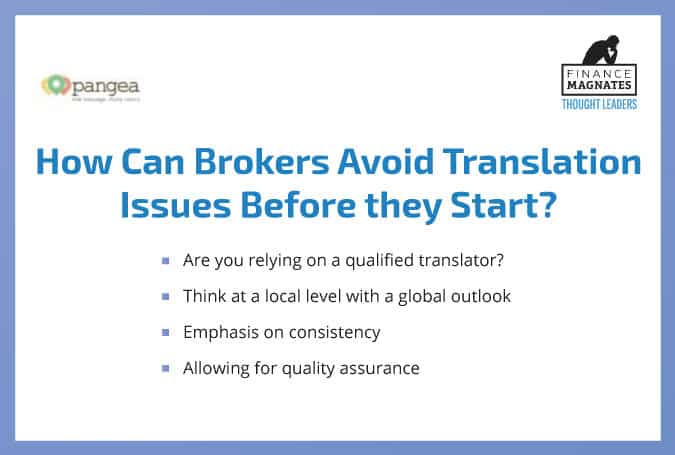
High-quality translation is a powerful tool – you can maximize its potential for your company with these four foolproof tips:
Hire a competent translator
The convenience of computer-assisted translation to provide the general meaning of any text in a flash is indisputable. However, the gist will not help you break into a new market, get your brand in the spotlight or win you new clients.
Your (human) translator should have extensive experience in both your field and target language, and preferably be based in the target country. The value they bring to your business should be reflected in their compensation; always be suspicious of bargain-basement rates and invest in highly qualified translators.
This will pay off, not only in terms of avoiding PR disasters, but also in respect of opportunities to expand and position your company in new markets.
Think local – act global
Localization should be managed like any other high-stakes operation. Imagine the nightmare of discovering last-minute factual errors in a stock market report, after it has been sent out for translation into five languages.
Is your translator aware that “bullish” and “bearish” are simply terms used to characterize market trends? You don’t want to read a translation that has been localized incorrectly – bulls in china shops come to mind! Your translator must be fully conversant with local idioms, slang, values and taboos.
Immerse your translator in your company’s style, tone and culture, highlight the branding guidelines they should adhere to, set clear timelines, use consistent terminology, and provide your text in a digital format that is accessible and convenient for them to work with. In short, anticipate and proactively facilitate what your translator needs to successfully localize your content.
Maintain Consistency
Establish a comprehensive glossary of your industry’s frequently used terms, to help standardize wording with multiple possible translations. Add these to a centralized translation memory (TM) database, which stores text for every task, so that common terms and sentences can be readily redeployed in future projects.
This is particularly useful in the trading industry, since words like “spread”, “pips” and “lot” have multiple meanings in English. Glossaries and TMs not only minimize the costs and time associated with translating from scratch, but also ensure continuity with past work, in case you change translators.
Carry Out Quality Assurance
Quality Assurance (QA) is part and parcel of the localization process, not an optional extra. Skimping on content review, proofreading and validation can undermine the quality or even obscure the content of your final product.
Take the incident described by professional translator Nataly Kelly in her 2012 book, “Found In Translation”. A China News Service article containing casual, speculative analysis of certain financial reports was poorly translated into English as concrete reality, implying that China was going to revalue its currency (i.e. unpeg it from the U.S. dollar).
As the English version spread online, the foreign exchange market descended into panic, leading to a rapid drop in the price of the U.S. dollar.
If only an extra set of eyes had checked the English translation for accuracy and context before releasing it to one of the most reactive and information-sensitive markets on the planet.
Whether you’re translating for your staff, partners or customers, it’s vital to get it right the first time. Cheap translation is costly; qualified translators are strategic investments in the future of your business.
From a restaurant serving “Stir-fried Wikipedia” to a sign cautioning “Beware of missing foot!”, there’s nothing like a good translation fail to put a smile on our faces! We often assume these hilarious and amateurish gaffes are far removed from our own businesses and products, but in truth, it can happen to the best of us.
Whether it is street food vendors to global institutions, we all need to watch out for the perils of bad translation. Just ask HSBC...
In 2009, the financial giant renowned as “the world’s local bank” had to cancel its 5-year advertising campaign and spend $10 million on rebranding, after their slogan "Assume Nothing" was mistranslated into "Do Nothing” in many countries.
How to avoid problems before they start
Poor translation can set you back a fortune in damage control and instantly undermine your brand. Accurately translated and localized content, on the other hand, can propel your message to massive new audiences and solidify engagement with clients who would otherwise have turned to more familiar options.
High-quality translation is a powerful tool – you can maximize its potential for your company with these four foolproof tips:
Hire a competent translator
The convenience of computer-assisted translation to provide the general meaning of any text in a flash is indisputable. However, the gist will not help you break into a new market, get your brand in the spotlight or win you new clients.
Your (human) translator should have extensive experience in both your field and target language, and preferably be based in the target country. The value they bring to your business should be reflected in their compensation; always be suspicious of bargain-basement rates and invest in highly qualified translators.
This will pay off, not only in terms of avoiding PR disasters, but also in respect of opportunities to expand and position your company in new markets.
Think local – act global
Localization should be managed like any other high-stakes operation. Imagine the nightmare of discovering last-minute factual errors in a stock market report, after it has been sent out for translation into five languages.
Is your translator aware that “bullish” and “bearish” are simply terms used to characterize market trends? You don’t want to read a translation that has been localized incorrectly – bulls in china shops come to mind! Your translator must be fully conversant with local idioms, slang, values and taboos.
Immerse your translator in your company’s style, tone and culture, highlight the branding guidelines they should adhere to, set clear timelines, use consistent terminology, and provide your text in a digital format that is accessible and convenient for them to work with. In short, anticipate and proactively facilitate what your translator needs to successfully localize your content.
Maintain Consistency
Establish a comprehensive glossary of your industry’s frequently used terms, to help standardize wording with multiple possible translations. Add these to a centralized translation memory (TM) database, which stores text for every task, so that common terms and sentences can be readily redeployed in future projects.
This is particularly useful in the trading industry, since words like “spread”, “pips” and “lot” have multiple meanings in English. Glossaries and TMs not only minimize the costs and time associated with translating from scratch, but also ensure continuity with past work, in case you change translators.
Carry Out Quality Assurance
Quality Assurance (QA) is part and parcel of the localization process, not an optional extra. Skimping on content review, proofreading and validation can undermine the quality or even obscure the content of your final product.
Take the incident described by professional translator Nataly Kelly in her 2012 book, “Found In Translation”. A China News Service article containing casual, speculative analysis of certain financial reports was poorly translated into English as concrete reality, implying that China was going to revalue its currency (i.e. unpeg it from the U.S. dollar).
As the English version spread online, the foreign exchange market descended into panic, leading to a rapid drop in the price of the U.S. dollar.
If only an extra set of eyes had checked the English translation for accuracy and context before releasing it to one of the most reactive and information-sensitive markets on the planet.
Whether you’re translating for your staff, partners or customers, it’s vital to get it right the first time. Cheap translation is costly; qualified translators are strategic investments in the future of your business.
Hantec Financial Nominated for Most Trusted Broker at UF AWARDS APAC 2026
Featured Videos
AvaTrade to Acquire Most of FXCM; NAGA Raises $8M
AvaTrade to Acquire Most of FXCM; NAGA Raises $8M
AvaTrade to Acquire Most of FXCM; NAGA Raises $8M
AvaTrade to Acquire Most of FXCM; NAGA Raises $8M
Today’s financial news recap covers AvaTrade agrees to acquire most of FXCM, NAGA secures eight million dollars in new financing, and Wise seeks a tax settlement in the UK.
Finance Magnates Daily Recap brings you the latest news from forex and CFD brokers, fintech, payments, cryptocurrency, digital assets, trading platforms, financial regulation and global markets.
Get the key company news, executive moves, deals, regulatory updates and market developments of the day, in just a few minutes. New episodes published every weekday.
Read more: https://www.financemagnates.com
#FinanceMagnates #ForexNews #FintechNews
Today’s financial news recap covers AvaTrade agrees to acquire most of FXCM, NAGA secures eight million dollars in new financing, and Wise seeks a tax settlement in the UK.
Finance Magnates Daily Recap brings you the latest news from forex and CFD brokers, fintech, payments, cryptocurrency, digital assets, trading platforms, financial regulation and global markets.
Get the key company news, executive moves, deals, regulatory updates and market developments of the day, in just a few minutes. New episodes published every weekday.
Read more: https://www.financemagnates.com
#FinanceMagnates #ForexNews #FintechNews
Today’s financial news recap covers AvaTrade agrees to acquire most of FXCM, NAGA secures eight million dollars in new financing, and Wise seeks a tax settlement in the UK.
Finance Magnates Daily Recap brings you the latest news from forex and CFD brokers, fintech, payments, cryptocurrency, digital assets, trading platforms, financial regulation and global markets.
Get the key company news, executive moves, deals, regulatory updates and market developments of the day, in just a few minutes. New episodes published every weekday.
Read more: https://www.financemagnates.com
#FinanceMagnates #ForexNews #FintechNews
Today’s financial news recap covers AvaTrade agrees to acquire most of FXCM, NAGA secures eight million dollars in new financing, and Wise seeks a tax settlement in the UK.
Finance Magnates Daily Recap brings you the latest news from forex and CFD brokers, fintech, payments, cryptocurrency, digital assets, trading platforms, financial regulation and global markets.
Get the key company news, executive moves, deals, regulatory updates and market developments of the day, in just a few minutes. New episodes published every weekday.
Read more: https://www.financemagnates.com
#FinanceMagnates #ForexNews #FintechNews
XTB Adds Overnight US Stock Trading; Nasdaq Ventures Invests in One Trading
XTB Adds Overnight US Stock Trading; Nasdaq Ventures Invests in One Trading
XTB Adds Overnight US Stock Trading; Nasdaq Ventures Invests in One Trading
XTB Adds Overnight US Stock Trading; Nasdaq Ventures Invests in One Trading
XTB Adds Overnight US Stock Trading; Nasdaq Ventures Invests in One Trading
XTB Adds Overnight US Stock Trading; Nasdaq Ventures Invests in One Trading
Today’s financial news recap covers XTB expands overnight US stock trading, Fortrade reports higher revenue, Nasdaq backs One Trading, and Vest Labs raises 13 million dollars.
Finance Magnates Daily Recap brings you the latest news from forex and CFD brokers, fintech, payments, cryptocurrency, digital assets, trading platforms, financial regulation and global markets.
Get the key company news, executive moves, deals, regulatory updates and market developments of the day, in just a few minutes. New episodes published every weekday.
Read more: https://www.financemagnates.com
#FinanceMagnates #ForexNews #FintechNews
Today’s financial news recap covers XTB expands overnight US stock trading, Fortrade reports higher revenue, Nasdaq backs One Trading, and Vest Labs raises 13 million dollars.
Finance Magnates Daily Recap brings you the latest news from forex and CFD brokers, fintech, payments, cryptocurrency, digital assets, trading platforms, financial regulation and global markets.
Get the key company news, executive moves, deals, regulatory updates and market developments of the day, in just a few minutes. New episodes published every weekday.
Read more: https://www.financemagnates.com
#FinanceMagnates #ForexNews #FintechNews
Today’s financial news recap covers XTB expands overnight US stock trading, Fortrade reports higher revenue, Nasdaq backs One Trading, and Vest Labs raises 13 million dollars.
Finance Magnates Daily Recap brings you the latest news from forex and CFD brokers, fintech, payments, cryptocurrency, digital assets, trading platforms, financial regulation and global markets.
Get the key company news, executive moves, deals, regulatory updates and market developments of the day, in just a few minutes. New episodes published every weekday.
Read more: https://www.financemagnates.com
#FinanceMagnates #ForexNews #FintechNews
Today’s financial news recap covers XTB expands overnight US stock trading, Fortrade reports higher revenue, Nasdaq backs One Trading, and Vest Labs raises 13 million dollars.
Finance Magnates Daily Recap brings you the latest news from forex and CFD brokers, fintech, payments, cryptocurrency, digital assets, trading platforms, financial regulation and global markets.
Get the key company news, executive moves, deals, regulatory updates and market developments of the day, in just a few minutes. New episodes published every weekday.
Read more: https://www.financemagnates.com
#FinanceMagnates #ForexNews #FintechNews
Today’s financial news recap covers XTB expands overnight US stock trading, Fortrade reports higher revenue, Nasdaq backs One Trading, and Vest Labs raises 13 million dollars.
Finance Magnates Daily Recap brings you the latest news from forex and CFD brokers, fintech, payments, cryptocurrency, digital assets, trading platforms, financial regulation and global markets.
Get the key company news, executive moves, deals, regulatory updates and market developments of the day, in just a few minutes. New episodes published every weekday.
Read more: https://www.financemagnates.com
#FinanceMagnates #ForexNews #FintechNews
Today’s financial news recap covers XTB expands overnight US stock trading, Fortrade reports higher revenue, Nasdaq backs One Trading, and Vest Labs raises 13 million dollars.
Finance Magnates Daily Recap brings you the latest news from forex and CFD brokers, fintech, payments, cryptocurrency, digital assets, trading platforms, financial regulation and global markets.
Get the key company news, executive moves, deals, regulatory updates and market developments of the day, in just a few minutes. New episodes published every weekday.
Read more: https://www.financemagnates.com
#FinanceMagnates #ForexNews #FintechNews
CMC Founder Downplays Volatility Hit; Devexperts Names CEO
CMC Founder Downplays Volatility Hit; Devexperts Names CEO
CMC Founder Downplays Volatility Hit; Devexperts Names CEO
CMC Founder Downplays Volatility Hit; Devexperts Names CEO
CMC Founder Downplays Volatility Hit; Devexperts Names CEO
CMC Founder Downplays Volatility Hit; Devexperts Names CEO
Today’s financial news recap covers low volatility pressures brokers, Devexperts names a new CEO, Saxo cuts onboarding time, and OKX reaches a 25 billion dollar valuation.
Finance Magnates Daily Recap brings you the latest news from forex and CFD brokers, fintech, payments, cryptocurrency, digital assets, trading platforms, financial regulation and global markets.
Get the key company news, executive moves, deals, regulatory updates and market developments of the day, in just a few minutes. New episodes published every weekday.
Read more: https://www.financemagnates.com
#FinanceMagnates #ForexNews #FintechNews
Today’s financial news recap covers low volatility pressures brokers, Devexperts names a new CEO, Saxo cuts onboarding time, and OKX reaches a 25 billion dollar valuation.
Finance Magnates Daily Recap brings you the latest news from forex and CFD brokers, fintech, payments, cryptocurrency, digital assets, trading platforms, financial regulation and global markets.
Get the key company news, executive moves, deals, regulatory updates and market developments of the day, in just a few minutes. New episodes published every weekday.
Read more: https://www.financemagnates.com
#FinanceMagnates #ForexNews #FintechNews
Today’s financial news recap covers low volatility pressures brokers, Devexperts names a new CEO, Saxo cuts onboarding time, and OKX reaches a 25 billion dollar valuation.
Finance Magnates Daily Recap brings you the latest news from forex and CFD brokers, fintech, payments, cryptocurrency, digital assets, trading platforms, financial regulation and global markets.
Get the key company news, executive moves, deals, regulatory updates and market developments of the day, in just a few minutes. New episodes published every weekday.
Read more: https://www.financemagnates.com
#FinanceMagnates #ForexNews #FintechNews
Today’s financial news recap covers low volatility pressures brokers, Devexperts names a new CEO, Saxo cuts onboarding time, and OKX reaches a 25 billion dollar valuation.
Finance Magnates Daily Recap brings you the latest news from forex and CFD brokers, fintech, payments, cryptocurrency, digital assets, trading platforms, financial regulation and global markets.
Get the key company news, executive moves, deals, regulatory updates and market developments of the day, in just a few minutes. New episodes published every weekday.
Read more: https://www.financemagnates.com
#FinanceMagnates #ForexNews #FintechNews
Today’s financial news recap covers low volatility pressures brokers, Devexperts names a new CEO, Saxo cuts onboarding time, and OKX reaches a 25 billion dollar valuation.
Finance Magnates Daily Recap brings you the latest news from forex and CFD brokers, fintech, payments, cryptocurrency, digital assets, trading platforms, financial regulation and global markets.
Get the key company news, executive moves, deals, regulatory updates and market developments of the day, in just a few minutes. New episodes published every weekday.
Read more: https://www.financemagnates.com
#FinanceMagnates #ForexNews #FintechNews
Today’s financial news recap covers low volatility pressures brokers, Devexperts names a new CEO, Saxo cuts onboarding time, and OKX reaches a 25 billion dollar valuation.
Finance Magnates Daily Recap brings you the latest news from forex and CFD brokers, fintech, payments, cryptocurrency, digital assets, trading platforms, financial regulation and global markets.
Get the key company news, executive moves, deals, regulatory updates and market developments of the day, in just a few minutes. New episodes published every weekday.
Read more: https://www.financemagnates.com
#FinanceMagnates #ForexNews #FintechNews
Today’s financial news recap covers Trade Nation buys FXCM's UK client book, Trading 212 reports higher revenue, the CFTC's move to allow perpetual index futures.
Finance Magnates Daily Recap brings you the latest news from forex and CFD brokers, fintech, payments, cryptocurrency, digital assets, trading platforms, financial regulation and global markets.
Get the key company news, executive moves, deals, regulatory updates and market developments of the day, in just a few minutes. New episodes published every weekday.
Read more: https://www.financemagnates.com
#FinanceMagnates #ForexNews #FintechNews
Today’s financial news recap covers Trade Nation buys FXCM's UK client book, Trading 212 reports higher revenue, the CFTC's move to allow perpetual index futures.
Finance Magnates Daily Recap brings you the latest news from forex and CFD brokers, fintech, payments, cryptocurrency, digital assets, trading platforms, financial regulation and global markets.
Get the key company news, executive moves, deals, regulatory updates and market developments of the day, in just a few minutes. New episodes published every weekday.
Read more: https://www.financemagnates.com
#FinanceMagnates #ForexNews #FintechNews
Today’s financial news recap covers Trade Nation buys FXCM's UK client book, Trading 212 reports higher revenue, the CFTC's move to allow perpetual index futures.
Finance Magnates Daily Recap brings you the latest news from forex and CFD brokers, fintech, payments, cryptocurrency, digital assets, trading platforms, financial regulation and global markets.
Get the key company news, executive moves, deals, regulatory updates and market developments of the day, in just a few minutes. New episodes published every weekday.
Read more: https://www.financemagnates.com
#FinanceMagnates #ForexNews #FintechNews
Today’s financial news recap covers Trade Nation buys FXCM's UK client book, Trading 212 reports higher revenue, the CFTC's move to allow perpetual index futures.
Finance Magnates Daily Recap brings you the latest news from forex and CFD brokers, fintech, payments, cryptocurrency, digital assets, trading platforms, financial regulation and global markets.
Get the key company news, executive moves, deals, regulatory updates and market developments of the day, in just a few minutes. New episodes published every weekday.
Read more: https://www.financemagnates.com
#FinanceMagnates #ForexNews #FintechNews
Today’s financial news recap covers Trade Nation buys FXCM's UK client book, Trading 212 reports higher revenue, the CFTC's move to allow perpetual index futures.
Finance Magnates Daily Recap brings you the latest news from forex and CFD brokers, fintech, payments, cryptocurrency, digital assets, trading platforms, financial regulation and global markets.
Get the key company news, executive moves, deals, regulatory updates and market developments of the day, in just a few minutes. New episodes published every weekday.
Read more: https://www.financemagnates.com
#FinanceMagnates #ForexNews #FintechNews
Today’s financial news recap covers Trade Nation buys FXCM's UK client book, Trading 212 reports higher revenue, the CFTC's move to allow perpetual index futures.
Finance Magnates Daily Recap brings you the latest news from forex and CFD brokers, fintech, payments, cryptocurrency, digital assets, trading platforms, financial regulation and global markets.
Get the key company news, executive moves, deals, regulatory updates and market developments of the day, in just a few minutes. New episodes published every weekday.
Read more: https://www.financemagnates.com
#FinanceMagnates #ForexNews #FintechNews
Your career isn’t a linear path.
Your career isn’t a linear path.
Your career isn’t a linear path.
Your career isn’t a linear path.
Your career isn’t a linear path.
Your career isn’t a linear path.
Roles change. Career goals change. Sometimes you want a completely new challenge.
But the skills and knowledge you build along the way can stay with you and give you something to build on.
For Jeff Patterson, that continued growth is key to long-term career development.
You bring the skills. FM Academy helps you build the knowledge.
#FMAcademy #FinanceMagnates #FinanceCareers #ProfessionalDevelopment #Fintech
Roles change. Career goals change. Sometimes you want a completely new challenge.
But the skills and knowledge you build along the way can stay with you and give you something to build on.
For Jeff Patterson, that continued growth is key to long-term career development.
You bring the skills. FM Academy helps you build the knowledge.
#FMAcademy #FinanceMagnates #FinanceCareers #ProfessionalDevelopment #Fintech
Roles change. Career goals change. Sometimes you want a completely new challenge.
But the skills and knowledge you build along the way can stay with you and give you something to build on.
For Jeff Patterson, that continued growth is key to long-term career development.
You bring the skills. FM Academy helps you build the knowledge.
#FMAcademy #FinanceMagnates #FinanceCareers #ProfessionalDevelopment #Fintech
Roles change. Career goals change. Sometimes you want a completely new challenge.
But the skills and knowledge you build along the way can stay with you and give you something to build on.
For Jeff Patterson, that continued growth is key to long-term career development.
You bring the skills. FM Academy helps you build the knowledge.
#FMAcademy #FinanceMagnates #FinanceCareers #ProfessionalDevelopment #Fintech
Roles change. Career goals change. Sometimes you want a completely new challenge.
But the skills and knowledge you build along the way can stay with you and give you something to build on.
For Jeff Patterson, that continued growth is key to long-term career development.
You bring the skills. FM Academy helps you build the knowledge.
#FMAcademy #FinanceMagnates #FinanceCareers #ProfessionalDevelopment #Fintech
Roles change. Career goals change. Sometimes you want a completely new challenge.
But the skills and knowledge you build along the way can stay with you and give you something to build on.
For Jeff Patterson, that continued growth is key to long-term career development.
You bring the skills. FM Academy helps you build the knowledge.
#FMAcademy #FinanceMagnates #FinanceCareers #ProfessionalDevelopment #Fintech