>
The Flash Boys Lawsuit- The End of the Beginning?
The Flash Boys Lawsuit- The End of the Beginning?
Monday,21/12/2015|12:46GMTby
Haim Bodek
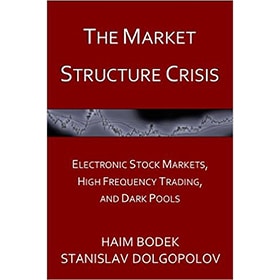
An excerpt from Bodek and Dolgopolov's book "Market Structure Crisis: Electronic Stock Markets, High Frequency Trading, and Dark Pools"
The dismissal of the City of Providence v. BATS class action lawsuit[1] serves as a landmark in the market structure conundrum. After all, this lawsuit targeted almost every securities exchange in the equities space, contained grave allegations of securities fraud, and demanded radical structural changes for the architecture of securities markets. While the lawsuit’s dismissal is currently being appealed and similar allegations may still be reanimated or repackaged in some form, the federal district court’s decision is seen as a big win for securities exchanges and HFTs. If this decision stands on appeal, it would look like a decisive victory for these constituencies on the legal issues of the immunity shield afforded to securities exchanges and the lack of demonstrated harm to investors stemming from a range of widespread practices. At the same time, the securities industry may just find itself fighting in Round Two.
successful lawsuits are likely to focus on deficient disclosure rather than the essence of “unfair” practices, with the latter being more appropriate for market reform rather than liability
The initial version of this lawsuit was filed just weeks after the release of Flash Boys by Michael Lewis in March of 2014.[2] Although a lawsuit with very similar allegations could have been brought on the basis of a variety of public sources well before the book’s release, the publicity surrounding Flash Boys certainly served as a catalyst. Not surprisingly, the term “Flash Boys Lawsuit” entered into the narrative of the market structure debate, and the initial complaint did in fact rely heavily on the book, quoting various passages and utilizing the taxonomy of alleged abuses, such as “electronic front-running,” “rebate arbitrage,” and “slow-market arbitrage.”[3] The complaint was subsequently amended, limiting the broad scope of its initial allegations and zeroing in on the leading equities exchanges and Barclays’ dark pool.[4] Furthermore, the amended complaint expanded its coverage of the so-called “order type controversy,” frequently citing the arguments developed by Mr. Bodek in his critique of HFT order types.
Judge Jesse M. Furman dismissed the Flash Boys Lawsuit in its entirety on August 26, 2015, while bundling it with an additional lawsuit against Barclays based on state law claims. Overall, the court held that the securities exchanges were protected from private lawsuits by the doctrine of regulatory immunity afforded to these trading venues under the Securities Exchange Act of 1934, which the court applied to private data feeds and complex order types. Even more importantly, the court essentially ruled on the merits from the standpoint of investor harm, concluding that that no valid claim had been articulated. At the same time, the ruling left room for the continuing public debate about the phenomenon of HFT as a market reform issue: “[T]he Court’s task in deciding the present motions was not to wade into the larger public debate about HFT that was sparked by Michael Lewis’s book Flash Boys. Lewis and the critics of HFT may be right in arguing that it serves no productive purpose and merely allows certain traders to exploit technological inefficiencies in the markets at the expense of other traders.”[5]
even unsuccessful lawsuits may end up being a vehicle of market reform in terms of regulatory scrutiny and commercial pressure
Haim Bodek, co-author of "Market Structure Crisis: Electronic Stock Markets, High Frequency Trading, and Dark Pools"
While the Flash Boys Lawsuit’s dismissal surely looks like a setback for private litigants in the market structure space, it is only the end of the beginning. Some private lawsuits in this space will result in ever increasing awards or settlements, reputational damage, and career-ending outcomes for some executives. Moreover, even unsuccessful lawsuits may end up being a vehicle of market reform in terms of regulatory scrutiny and commercial pressure. Overall, for a lawsuit to be successful, it is critical to frame the underlying harm, fit it within the existing doctrinal boundaries of securities law, and quantify its magnitude with a practical model for assessing damages. Accordingly, it would be prudent to reinforce even early-stage filings—just to keep such claims alive—with proprietary models that replicate the processes through which defendants monetize wrongful practices.
Stanislav Dolgopolov co -author of Market Structure Crisis: Electronic Stock Markets, High Frequency Trading, and Dark Pools
In our assessment, successful lawsuits are likely to focus on deficient disclosure rather than the essence of “unfair” practices, with the latter being more appropriate for market reform rather than liability. Despite the complexity of disclosure relating to the modern electronic marketplace and the persistent problem of having to demonstrate investor reliance, it is hard to deny the materiality, that is, profitability, of a range of practices attributed to deficient disclosure. The corresponding harm to investors is quite tangible when one examines the details of asymmetries currently operational in the modern electronic marketplace. Shining some sunlight on practices that harm investors, as exemplified by the wave of order type-related disclosures and filings mandated by the regulators in 2014, is still a reliable disinfectant, as well as a restraint on profits. Moreover, lawsuits brought by a target’s shareholders rather than market participants in general may be in a more advantageous position of demonstrating harm. For the former, such harm could be proxied by market reaction to corrective disclosures, while the latter are burdened with the more difficult task of demonstrating the mechanics of the abuse in question and quantifying their own economic exposure.
The dismissal of the City of Providence v. BATS class action lawsuit serves as a landmark in the market structure conundrum.
Finally, one has to be mindful of the continuing pileup of enforcement actions in the market structure space, as well as pros and cons of “front-running” the regulators. Not uncommonly, successful private lawsuits piggyback on enforcement actions, and the regulators’ activity in this space is an enormous litigation risk by itself.[7] On the other hand, that factor failed to work either way in the Flash Boys Lawsuit. More specifically, the court dismissed the claims against Barclays largely based on the lawsuit brought by the New York Attorney General.[8] Likewise, the SEC’s enforcement action against Direct Edge,[9] though it came too late to be referenced in the final version of the complaint, would not have provided sufficient firepower to pass the high hurdle of regulatory immunity in connection with order type-related practices.
This material is adopted from a recent book authored by Haim Bodek and Stanislav Dolgopolov, The Market Structure Crisis: Electronic Stock Markets, High Frequency Trading, and Dark Pools, which is available on Amazon.
[2]See Michael Lewis, Flash Boys: A Wall Street Revolt (2014).
[3] Complaint for Violation of the Federal Securities Laws, City of Providence, R.I. v. BATS Global Mkts., Inc., No. 1:14-cv-2811 para 6, at 3 (S.D.N.Y. Apr. 18, 2014).
[4]See Second Consolidated Amended Complaint for Violation of the Federal Securities Laws, City of Providence, R.I. v. BATS Global Mkts., Inc., No. 1:14-cv-02811-JMF (Nov. 24, 2014).
[5]In reBarclays Liquidity Cross & High Frequency Trading, 2015 U.S. Dist. LEXIS 113323, at *82.
[6]See Amended Class Action Complaint for Violations of Federal Securities Laws, Klein v. TD Ameritrade Holding Corp., No. 8:14-cv-00396-JFB-TDT (Apr. 14, 2015). The empirical study in question is Robert Battalio et al., Can Brokers Have It All? On the Relation Between Make-Take Fees and Limit Order Execution Quality (Mar. 31, 2015) (unpublished manuscript), available athttps://ssrn.com/abstract=2367462.
[7] As an illustration, the recent market structure-related settlement between the SEC and Latour Trading, which addressed, among other things, improper use of post-only intermarket sweep orders, contained the provision that the respondent would not be allowed to offset the civil penalty in any related private lawsuit. See Latour Trading LLC, Exchange Act Release No. 76,029, at 16-17 (Sept. 30, 2015), https://www.sec.gov/litigation/admin/2015/34-76029.pdf.
[8] Complaint, New York v. Barclays Capital, Inc., No. 451391/2014 (N.Y. Sup. Ct. June 25, 2014).
The dismissal of the City of Providence v. BATS class action lawsuit[1] serves as a landmark in the market structure conundrum. After all, this lawsuit targeted almost every securities exchange in the equities space, contained grave allegations of securities fraud, and demanded radical structural changes for the architecture of securities markets. While the lawsuit’s dismissal is currently being appealed and similar allegations may still be reanimated or repackaged in some form, the federal district court’s decision is seen as a big win for securities exchanges and HFTs. If this decision stands on appeal, it would look like a decisive victory for these constituencies on the legal issues of the immunity shield afforded to securities exchanges and the lack of demonstrated harm to investors stemming from a range of widespread practices. At the same time, the securities industry may just find itself fighting in Round Two.
successful lawsuits are likely to focus on deficient disclosure rather than the essence of “unfair” practices, with the latter being more appropriate for market reform rather than liability
The initial version of this lawsuit was filed just weeks after the release of Flash Boys by Michael Lewis in March of 2014.[2] Although a lawsuit with very similar allegations could have been brought on the basis of a variety of public sources well before the book’s release, the publicity surrounding Flash Boys certainly served as a catalyst. Not surprisingly, the term “Flash Boys Lawsuit” entered into the narrative of the market structure debate, and the initial complaint did in fact rely heavily on the book, quoting various passages and utilizing the taxonomy of alleged abuses, such as “electronic front-running,” “rebate arbitrage,” and “slow-market arbitrage.”[3] The complaint was subsequently amended, limiting the broad scope of its initial allegations and zeroing in on the leading equities exchanges and Barclays’ dark pool.[4] Furthermore, the amended complaint expanded its coverage of the so-called “order type controversy,” frequently citing the arguments developed by Mr. Bodek in his critique of HFT order types.
Judge Jesse M. Furman dismissed the Flash Boys Lawsuit in its entirety on August 26, 2015, while bundling it with an additional lawsuit against Barclays based on state law claims. Overall, the court held that the securities exchanges were protected from private lawsuits by the doctrine of regulatory immunity afforded to these trading venues under the Securities Exchange Act of 1934, which the court applied to private data feeds and complex order types. Even more importantly, the court essentially ruled on the merits from the standpoint of investor harm, concluding that that no valid claim had been articulated. At the same time, the ruling left room for the continuing public debate about the phenomenon of HFT as a market reform issue: “[T]he Court’s task in deciding the present motions was not to wade into the larger public debate about HFT that was sparked by Michael Lewis’s book Flash Boys. Lewis and the critics of HFT may be right in arguing that it serves no productive purpose and merely allows certain traders to exploit technological inefficiencies in the markets at the expense of other traders.”[5]
even unsuccessful lawsuits may end up being a vehicle of market reform in terms of regulatory scrutiny and commercial pressure
Haim Bodek, co-author of "Market Structure Crisis: Electronic Stock Markets, High Frequency Trading, and Dark Pools"
While the Flash Boys Lawsuit’s dismissal surely looks like a setback for private litigants in the market structure space, it is only the end of the beginning. Some private lawsuits in this space will result in ever increasing awards or settlements, reputational damage, and career-ending outcomes for some executives. Moreover, even unsuccessful lawsuits may end up being a vehicle of market reform in terms of regulatory scrutiny and commercial pressure. Overall, for a lawsuit to be successful, it is critical to frame the underlying harm, fit it within the existing doctrinal boundaries of securities law, and quantify its magnitude with a practical model for assessing damages. Accordingly, it would be prudent to reinforce even early-stage filings—just to keep such claims alive—with proprietary models that replicate the processes through which defendants monetize wrongful practices.
Stanislav Dolgopolov co -author of Market Structure Crisis: Electronic Stock Markets, High Frequency Trading, and Dark Pools
In our assessment, successful lawsuits are likely to focus on deficient disclosure rather than the essence of “unfair” practices, with the latter being more appropriate for market reform rather than liability. Despite the complexity of disclosure relating to the modern electronic marketplace and the persistent problem of having to demonstrate investor reliance, it is hard to deny the materiality, that is, profitability, of a range of practices attributed to deficient disclosure. The corresponding harm to investors is quite tangible when one examines the details of asymmetries currently operational in the modern electronic marketplace. Shining some sunlight on practices that harm investors, as exemplified by the wave of order type-related disclosures and filings mandated by the regulators in 2014, is still a reliable disinfectant, as well as a restraint on profits. Moreover, lawsuits brought by a target’s shareholders rather than market participants in general may be in a more advantageous position of demonstrating harm. For the former, such harm could be proxied by market reaction to corrective disclosures, while the latter are burdened with the more difficult task of demonstrating the mechanics of the abuse in question and quantifying their own economic exposure.
The dismissal of the City of Providence v. BATS class action lawsuit serves as a landmark in the market structure conundrum.
Finally, one has to be mindful of the continuing pileup of enforcement actions in the market structure space, as well as pros and cons of “front-running” the regulators. Not uncommonly, successful private lawsuits piggyback on enforcement actions, and the regulators’ activity in this space is an enormous litigation risk by itself.[7] On the other hand, that factor failed to work either way in the Flash Boys Lawsuit. More specifically, the court dismissed the claims against Barclays largely based on the lawsuit brought by the New York Attorney General.[8] Likewise, the SEC’s enforcement action against Direct Edge,[9] though it came too late to be referenced in the final version of the complaint, would not have provided sufficient firepower to pass the high hurdle of regulatory immunity in connection with order type-related practices.
This material is adopted from a recent book authored by Haim Bodek and Stanislav Dolgopolov, The Market Structure Crisis: Electronic Stock Markets, High Frequency Trading, and Dark Pools, which is available on Amazon.
[2]See Michael Lewis, Flash Boys: A Wall Street Revolt (2014).
[3] Complaint for Violation of the Federal Securities Laws, City of Providence, R.I. v. BATS Global Mkts., Inc., No. 1:14-cv-2811 para 6, at 3 (S.D.N.Y. Apr. 18, 2014).
[4]See Second Consolidated Amended Complaint for Violation of the Federal Securities Laws, City of Providence, R.I. v. BATS Global Mkts., Inc., No. 1:14-cv-02811-JMF (Nov. 24, 2014).
[5]In reBarclays Liquidity Cross & High Frequency Trading, 2015 U.S. Dist. LEXIS 113323, at *82.
[6]See Amended Class Action Complaint for Violations of Federal Securities Laws, Klein v. TD Ameritrade Holding Corp., No. 8:14-cv-00396-JFB-TDT (Apr. 14, 2015). The empirical study in question is Robert Battalio et al., Can Brokers Have It All? On the Relation Between Make-Take Fees and Limit Order Execution Quality (Mar. 31, 2015) (unpublished manuscript), available athttps://ssrn.com/abstract=2367462.
[7] As an illustration, the recent market structure-related settlement between the SEC and Latour Trading, which addressed, among other things, improper use of post-only intermarket sweep orders, contained the provision that the respondent would not be allowed to offset the civil penalty in any related private lawsuit. See Latour Trading LLC, Exchange Act Release No. 76,029, at 16-17 (Sept. 30, 2015), https://www.sec.gov/litigation/admin/2015/34-76029.pdf.
[8] Complaint, New York v. Barclays Capital, Inc., No. 451391/2014 (N.Y. Sup. Ct. June 25, 2014).
Singapore Independent Wealth Sector Has Less Than 10% Market Share, but Vast Room for Growth
Featured Videos
FP Markets Winner Spotlight 🏆 | Global Broker of the Year 2025 #Trading #Broker #Innovation #Shorts
FP Markets Winner Spotlight 🏆 | Global Broker of the Year 2025 #Trading #Broker #Innovation #Shorts
FP Markets Winner Spotlight 🏆 | Global Broker of the Year 2025 #Trading #Broker #Innovation #Shorts
FP Markets Winner Spotlight 🏆 | Global Broker of the Year 2025 #Trading #Broker #Innovation #Shorts
FP Markets takes the spotlight as Global Broker of the Year 2025 at the Finance Magnates Awards.
Martin Stoilov, Head of Client Experience, shares that trust, innovation, and people played a key role in the company’s success, supported by a strong foundation of integrity and client-centricity.
Following this milestone, FP Markets continues to focus on growth, technology investment, and its core values of transparency and excellence.
👉 Be part of FM Awards 2026: https://awards.financemagnates.com/#nominate
FP Markets takes the spotlight as Global Broker of the Year 2025 at the Finance Magnates Awards.
Martin Stoilov, Head of Client Experience, shares that trust, innovation, and people played a key role in the company’s success, supported by a strong foundation of integrity and client-centricity.
Following this milestone, FP Markets continues to focus on growth, technology investment, and its core values of transparency and excellence.
👉 Be part of FM Awards 2026: https://awards.financemagnates.com/#nominate
FP Markets takes the spotlight as Global Broker of the Year 2025 at the Finance Magnates Awards.
Martin Stoilov, Head of Client Experience, shares that trust, innovation, and people played a key role in the company’s success, supported by a strong foundation of integrity and client-centricity.
Following this milestone, FP Markets continues to focus on growth, technology investment, and its core values of transparency and excellence.
👉 Be part of FM Awards 2026: https://awards.financemagnates.com/#nominate
FP Markets takes the spotlight as Global Broker of the Year 2025 at the Finance Magnates Awards.
Martin Stoilov, Head of Client Experience, shares that trust, innovation, and people played a key role in the company’s success, supported by a strong foundation of integrity and client-centricity.
Following this milestone, FP Markets continues to focus on growth, technology investment, and its core values of transparency and excellence.
👉 Be part of FM Awards 2026: https://awards.financemagnates.com/#nominate
In this video, we review @HolaPrimeMarketsOfficial, a multi-asset forex and CFDs broker offering different account types, trading platforms, and flexible trading conditions.
We cover the broker’s overall offering, including account options, trading environment, platforms like MT4 and MT5, and additional services such as managed accounts and fast withdrawals.
Watch the full video to see if Hola Prime Markets fits your trading needs.
📣 Stay up to date with the latest in finance and trading. Follow Finance Magnates for industry news, insights, and global event coverage.
Connect with us:
🔗 LinkedIn: /financemagnates
👍 Facebook: /financemagnates
📸 Instagram: https://www.instagram.com/financemagnates
🐦 X: https://x.com/financemagnates
🎥 TikTok: https://www.tiktok.com/tag/financemagnates
▶️ YouTube: /@financemagnates_official
#HolaPrime #ForexBroker #CFDTrading #FinanceMagnates #Trading #Forex #BrokerReview
In this video, we review @HolaPrimeMarketsOfficial, a multi-asset forex and CFDs broker offering different account types, trading platforms, and flexible trading conditions.
We cover the broker’s overall offering, including account options, trading environment, platforms like MT4 and MT5, and additional services such as managed accounts and fast withdrawals.
Watch the full video to see if Hola Prime Markets fits your trading needs.
📣 Stay up to date with the latest in finance and trading. Follow Finance Magnates for industry news, insights, and global event coverage.
Connect with us:
🔗 LinkedIn: /financemagnates
👍 Facebook: /financemagnates
📸 Instagram: https://www.instagram.com/financemagnates
🐦 X: https://x.com/financemagnates
🎥 TikTok: https://www.tiktok.com/tag/financemagnates
▶️ YouTube: /@financemagnates_official
#HolaPrime #ForexBroker #CFDTrading #FinanceMagnates #Trading #Forex #BrokerReview
In this video, we review @HolaPrimeMarketsOfficial, a multi-asset forex and CFDs broker offering different account types, trading platforms, and flexible trading conditions.
We cover the broker’s overall offering, including account options, trading environment, platforms like MT4 and MT5, and additional services such as managed accounts and fast withdrawals.
Watch the full video to see if Hola Prime Markets fits your trading needs.
📣 Stay up to date with the latest in finance and trading. Follow Finance Magnates for industry news, insights, and global event coverage.
Connect with us:
🔗 LinkedIn: /financemagnates
👍 Facebook: /financemagnates
📸 Instagram: https://www.instagram.com/financemagnates
🐦 X: https://x.com/financemagnates
🎥 TikTok: https://www.tiktok.com/tag/financemagnates
▶️ YouTube: /@financemagnates_official
#HolaPrime #ForexBroker #CFDTrading #FinanceMagnates #Trading #Forex #BrokerReview
In this video, we review @HolaPrimeMarketsOfficial, a multi-asset forex and CFDs broker offering different account types, trading platforms, and flexible trading conditions.
We cover the broker’s overall offering, including account options, trading environment, platforms like MT4 and MT5, and additional services such as managed accounts and fast withdrawals.
Watch the full video to see if Hola Prime Markets fits your trading needs.
📣 Stay up to date with the latest in finance and trading. Follow Finance Magnates for industry news, insights, and global event coverage.
Connect with us:
🔗 LinkedIn: /financemagnates
👍 Facebook: /financemagnates
📸 Instagram: https://www.instagram.com/financemagnates
🐦 X: https://x.com/financemagnates
🎥 TikTok: https://www.tiktok.com/tag/financemagnates
▶️ YouTube: /@financemagnates_official
#HolaPrime #ForexBroker #CFDTrading #FinanceMagnates #Trading #Forex #BrokerReview
In this video, we review @HolaPrimeMarketsOfficial, a multi-asset forex and CFDs broker offering different account types, trading platforms, and flexible trading conditions.
We cover the broker’s overall offering, including account options, trading environment, platforms like MT4 and MT5, and additional services such as managed accounts and fast withdrawals.
Watch the full video to see if Hola Prime Markets fits your trading needs.
📣 Stay up to date with the latest in finance and trading. Follow Finance Magnates for industry news, insights, and global event coverage.
Connect with us:
🔗 LinkedIn: /financemagnates
👍 Facebook: /financemagnates
📸 Instagram: https://www.instagram.com/financemagnates
🐦 X: https://x.com/financemagnates
🎥 TikTok: https://www.tiktok.com/tag/financemagnates
▶️ YouTube: /@financemagnates_official
#HolaPrime #ForexBroker #CFDTrading #FinanceMagnates #Trading #Forex #BrokerReview
In this video, we review @HolaPrimeMarketsOfficial, a multi-asset forex and CFDs broker offering different account types, trading platforms, and flexible trading conditions.
We cover the broker’s overall offering, including account options, trading environment, platforms like MT4 and MT5, and additional services such as managed accounts and fast withdrawals.
Watch the full video to see if Hola Prime Markets fits your trading needs.
📣 Stay up to date with the latest in finance and trading. Follow Finance Magnates for industry news, insights, and global event coverage.
Connect with us:
🔗 LinkedIn: /financemagnates
👍 Facebook: /financemagnates
📸 Instagram: https://www.instagram.com/financemagnates
🐦 X: https://x.com/financemagnates
🎥 TikTok: https://www.tiktok.com/tag/financemagnates
▶️ YouTube: /@financemagnates_official
#HolaPrime #ForexBroker #CFDTrading #FinanceMagnates #Trading #Forex #BrokerReview
Hola Prime Review: What You Need to Know | Full Breakdown by Finance Magnates
Hola Prime Review: What You Need to Know | Full Breakdown by Finance Magnates
Hola Prime Review: What You Need to Know | Full Breakdown by Finance Magnates
Hola Prime Review: What You Need to Know | Full Breakdown by Finance Magnates
Hola Prime Review: What You Need to Know | Full Breakdown by Finance Magnates
Hola Prime Review: What You Need to Know | Full Breakdown by Finance Magnates
In this video, we review @HolaPrime_Global, a proprietary trading firm offering evaluation programs and performance-based payouts in simulated market environments.
We cover how the challenge model works, including account types, profit splits (up to 95%), trading rules, and what it takes to reach a funded account. You’ll also learn about available platforms like MT4, MT5, cTrader, and more, along with insights into payouts, support, and trading conditions.
Watch the full video to see if Hola Prime fits your trading style.
📣 Stay up to date with the latest in finance and trading. Follow Finance Magnates for industry news, insights, and global event coverage.
Connect with us:
🔗 LinkedIn: /financemagnates
👍 Facebook: /financemagnates
📸 Instagram: https://www.instagram.com/financemagnates
🐦 X: https://x.com/financemagnates
🎥 TikTok: https://www.tiktok.com/tag/financemagnates
▶️ YouTube: /@financemagnates_official
#HolaPrime #PropFirm #Trading #FinanceMagnates #Forex #FuturesTrading #TradingReview #PropFirmReview
In this video, we review @HolaPrime_Global, a proprietary trading firm offering evaluation programs and performance-based payouts in simulated market environments.
We cover how the challenge model works, including account types, profit splits (up to 95%), trading rules, and what it takes to reach a funded account. You’ll also learn about available platforms like MT4, MT5, cTrader, and more, along with insights into payouts, support, and trading conditions.
Watch the full video to see if Hola Prime fits your trading style.
📣 Stay up to date with the latest in finance and trading. Follow Finance Magnates for industry news, insights, and global event coverage.
Connect with us:
🔗 LinkedIn: /financemagnates
👍 Facebook: /financemagnates
📸 Instagram: https://www.instagram.com/financemagnates
🐦 X: https://x.com/financemagnates
🎥 TikTok: https://www.tiktok.com/tag/financemagnates
▶️ YouTube: /@financemagnates_official
#HolaPrime #PropFirm #Trading #FinanceMagnates #Forex #FuturesTrading #TradingReview #PropFirmReview
In this video, we review @HolaPrime_Global, a proprietary trading firm offering evaluation programs and performance-based payouts in simulated market environments.
We cover how the challenge model works, including account types, profit splits (up to 95%), trading rules, and what it takes to reach a funded account. You’ll also learn about available platforms like MT4, MT5, cTrader, and more, along with insights into payouts, support, and trading conditions.
Watch the full video to see if Hola Prime fits your trading style.
📣 Stay up to date with the latest in finance and trading. Follow Finance Magnates for industry news, insights, and global event coverage.
Connect with us:
🔗 LinkedIn: /financemagnates
👍 Facebook: /financemagnates
📸 Instagram: https://www.instagram.com/financemagnates
🐦 X: https://x.com/financemagnates
🎥 TikTok: https://www.tiktok.com/tag/financemagnates
▶️ YouTube: /@financemagnates_official
#HolaPrime #PropFirm #Trading #FinanceMagnates #Forex #FuturesTrading #TradingReview #PropFirmReview
In this video, we review @HolaPrime_Global, a proprietary trading firm offering evaluation programs and performance-based payouts in simulated market environments.
We cover how the challenge model works, including account types, profit splits (up to 95%), trading rules, and what it takes to reach a funded account. You’ll also learn about available platforms like MT4, MT5, cTrader, and more, along with insights into payouts, support, and trading conditions.
Watch the full video to see if Hola Prime fits your trading style.
📣 Stay up to date with the latest in finance and trading. Follow Finance Magnates for industry news, insights, and global event coverage.
Connect with us:
🔗 LinkedIn: /financemagnates
👍 Facebook: /financemagnates
📸 Instagram: https://www.instagram.com/financemagnates
🐦 X: https://x.com/financemagnates
🎥 TikTok: https://www.tiktok.com/tag/financemagnates
▶️ YouTube: /@financemagnates_official
#HolaPrime #PropFirm #Trading #FinanceMagnates #Forex #FuturesTrading #TradingReview #PropFirmReview
In this video, we review @HolaPrime_Global, a proprietary trading firm offering evaluation programs and performance-based payouts in simulated market environments.
We cover how the challenge model works, including account types, profit splits (up to 95%), trading rules, and what it takes to reach a funded account. You’ll also learn about available platforms like MT4, MT5, cTrader, and more, along with insights into payouts, support, and trading conditions.
Watch the full video to see if Hola Prime fits your trading style.
📣 Stay up to date with the latest in finance and trading. Follow Finance Magnates for industry news, insights, and global event coverage.
Connect with us:
🔗 LinkedIn: /financemagnates
👍 Facebook: /financemagnates
📸 Instagram: https://www.instagram.com/financemagnates
🐦 X: https://x.com/financemagnates
🎥 TikTok: https://www.tiktok.com/tag/financemagnates
▶️ YouTube: /@financemagnates_official
#HolaPrime #PropFirm #Trading #FinanceMagnates #Forex #FuturesTrading #TradingReview #PropFirmReview
In this video, we review @HolaPrime_Global, a proprietary trading firm offering evaluation programs and performance-based payouts in simulated market environments.
We cover how the challenge model works, including account types, profit splits (up to 95%), trading rules, and what it takes to reach a funded account. You’ll also learn about available platforms like MT4, MT5, cTrader, and more, along with insights into payouts, support, and trading conditions.
Watch the full video to see if Hola Prime fits your trading style.
📣 Stay up to date with the latest in finance and trading. Follow Finance Magnates for industry news, insights, and global event coverage.
Connect with us:
🔗 LinkedIn: /financemagnates
👍 Facebook: /financemagnates
📸 Instagram: https://www.instagram.com/financemagnates
🐦 X: https://x.com/financemagnates
🎥 TikTok: https://www.tiktok.com/tag/financemagnates
▶️ YouTube: /@financemagnates_official
#HolaPrime #PropFirm #Trading #FinanceMagnates #Forex #FuturesTrading #TradingReview #PropFirmReview
Axi Winner Spotlight 🏆 | Global Most Innovative Broker 2025 #Innovation #Trading #Fintech #Broker
Axi Winner Spotlight 🏆 | Global Most Innovative Broker 2025 #Innovation #Trading #Fintech #Broker
Axi Winner Spotlight 🏆 | Global Most Innovative Broker 2025 #Innovation #Trading #Fintech #Broker
Axi Winner Spotlight 🏆 | Global Most Innovative Broker 2025 #Innovation #Trading #Fintech #Broker
Axi Winner Spotlight 🏆 | Global Most Innovative Broker 2025 #Innovation #Trading #Fintech #Broker
Axi Winner Spotlight 🏆 | Global Most Innovative Broker 2025 #Innovation #Trading #Fintech #Broker
Axi takes the spotlight at the Finance Magnates Awards, winning Global Most Innovative Broker 2025.
Olivia Xenofontos and Ivanna Openko share how the team will feel: proud, motivated, and ready to keep delivering.
They also describe the night as well-organized, focused, and enjoyable for all.
👉 Be part of FM Awards 2026.
Axi takes the spotlight at the Finance Magnates Awards, winning Global Most Innovative Broker 2025.
Olivia Xenofontos and Ivanna Openko share how the team will feel: proud, motivated, and ready to keep delivering.
They also describe the night as well-organized, focused, and enjoyable for all.
👉 Be part of FM Awards 2026.
Axi takes the spotlight at the Finance Magnates Awards, winning Global Most Innovative Broker 2025.
Olivia Xenofontos and Ivanna Openko share how the team will feel: proud, motivated, and ready to keep delivering.
They also describe the night as well-organized, focused, and enjoyable for all.
👉 Be part of FM Awards 2026.
Axi takes the spotlight at the Finance Magnates Awards, winning Global Most Innovative Broker 2025.
Olivia Xenofontos and Ivanna Openko share how the team will feel: proud, motivated, and ready to keep delivering.
They also describe the night as well-organized, focused, and enjoyable for all.
👉 Be part of FM Awards 2026.
Axi takes the spotlight at the Finance Magnates Awards, winning Global Most Innovative Broker 2025.
Olivia Xenofontos and Ivanna Openko share how the team will feel: proud, motivated, and ready to keep delivering.
They also describe the night as well-organized, focused, and enjoyable for all.
👉 Be part of FM Awards 2026.
Axi takes the spotlight at the Finance Magnates Awards, winning Global Most Innovative Broker 2025.
Olivia Xenofontos and Ivanna Openko share how the team will feel: proud, motivated, and ready to keep delivering.
They also describe the night as well-organized, focused, and enjoyable for all.
👉 Be part of FM Awards 2026.
Recognition that matters.
Built on transparency.
Driven by the industry.
The Finance Magnates Awards 2026.
Nominations are now open.
🔗 https://awards.financemagnates.com/?utm_source=SM&utm_medium=social&utm_campaign=recognition-matters
Recognition that matters.
Built on transparency.
Driven by the industry.
The Finance Magnates Awards 2026.
Nominations are now open.
🔗 https://awards.financemagnates.com/?utm_source=SM&utm_medium=social&utm_campaign=recognition-matters
Recognition that matters.
Built on transparency.
Driven by the industry.
The Finance Magnates Awards 2026.
Nominations are now open.
🔗 https://awards.financemagnates.com/?utm_source=SM&utm_medium=social&utm_campaign=recognition-matters
Recognition that matters.
Built on transparency.
Driven by the industry.
The Finance Magnates Awards 2026.
Nominations are now open.
🔗 https://awards.financemagnates.com/?utm_source=SM&utm_medium=social&utm_campaign=recognition-matters
Recognition that matters.
Built on transparency.
Driven by the industry.
The Finance Magnates Awards 2026.
Nominations are now open.
🔗 https://awards.financemagnates.com/?utm_source=SM&utm_medium=social&utm_campaign=recognition-matters
Recognition that matters.
Built on transparency.
Driven by the industry.
The Finance Magnates Awards 2026.
Nominations are now open.
🔗 https://awards.financemagnates.com/?utm_source=SM&utm_medium=social&utm_campaign=recognition-matters