We spoke with Richard Leighton about expansion plans, onboarding and his firm's relationship with its owners
Bloomberg
Last week DeepWell announced it had hired seven new employees to spread its global reach. With former Morgan Stanley, Credit Suisse and Deutsche Bank employees in the mix, the agency broker to the buy-side now looks set to take the buy-side world by storm.
To get an idea of what the firm has been up to, Finance Magnates spoke to the firm’s CEO, Richard Leighton. Having spent time heading FX, commodities and options divisions at JP Morgan, Chase and Standard Chartered, Leighton founded another agency broker, Mirexa Capital, in 2014.
Having spent three years at the helm of the firm, he left to found DeepWell last year. We spoke about how he views DeepWell’s success so far, discussed the firm’s plans for the future and got an insight into what those seven new employees are going to be doing.
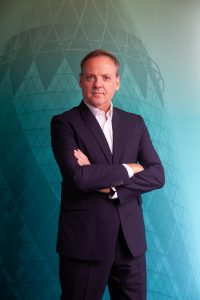
DeepWell CEO Richard Leighton (Picture by James Clarke)
You previously founded Mirexa Capital, another agency broker similar to DeepWell, what drove you to start afresh and found DeepWell?
The agency model has grown in popularity in recent years as it offers various benefits when compared to the principal model. Unlike banks, agency brokers do not take positions, and so there is no conflict of interest. Their role is to purely to match buyers and sellers, removing any doubts around trading behavior and offering a transparent and trusted execution model.
DeepWell is owned by the Swiss interdealer broker, Tradition. How did you work with them on setting up the business and what is your relationship with them?
You’ve only been operating for about a year, how would you quantify your success thus far?
We are extremely pleased with the progress we have made to date and are looking forward to continuing to build on it with our newly expanded team. Financial markets are constantly evolving in response to regulatory and other changes; traditional participants are modifying their businesses, relationships with, and their ability to service customers.
The industry is also entering a period of extensive market evolution, with regulation such as MiFID II bedding in, a revamping of Dodd-Frank taking place in the US, and principles-based rules such as the FX Global Code all having a profound impact on trading and market behavior.
The significant demand we have seen for our services has enabled us to hire first-class senior executives, and we now employ a team of 15 across Europe, Americas and Asia Pacific. Now that we have the right people in place, we are focusing on growing our market share in FX, our overall client base and expanding into other assets.
Thus far you have confined yourself to the FX arena, what plans do you have to expand beyond that market?
We currently offer a full range of FX products – spot, forward, non-deliverable forward, FX options and exotic FX options – across all major and emerging market currencies.
To date, we have been focused on the FX market, but we now have the expertise and resources in place to enable us to grow our client base and serve institutions and investors operating in other markets, with a particular focus on fixed income products.
We expect to see continued strategic additions across Europe, Americas, and Asia Pacific throughout 2018. We plan to roll out cleared interest rate swaps and government bonds by the end of this year and will look to add additional products as dictated by customer demand.
DeepWell recently went on something of a hiring spree as you announced the appointment of 7 very experienced members to your team. What do you hope to achieve with those new staff members?
We were very pleased to be in the position to add seven senior executives to our team. Each brings a wealth of experience and have worked for some of the biggest banks and financial institutions in the world including Credit Suisse, Deutsche Bank, Morgan Stanley, RBS and Standard Chartered. We are very pleased to welcome them onboard, and even at this early stage they are each having a very positive impact on the business.
These additions will allow us to continue meeting the demand we are experiencing for our services and will help us to grow our market share in FX. Growing our capacity also enables us to service more institutions and investors and look at expanding other markets and products.
Along with those new hires, you have opened offices in Singapore and the US. Taking into account your European offices, in which region do you see the greatest potential to grow DeepWell’s business?
While we are headquartered in London, we have experienced significant demand from all over the globe, and this is why we have staff in London, Switzerland, Spain, Singapore and New York.
We took the strategic decision to set up offices in three of the biggest FX hubs in the world as we believe these have the greatest growth potential. We expect to grow our team at each of these locations as we continue to increase our market share in FX and expand into new asset classes.
Last week DeepWell announced it had hired seven new employees to spread its global reach. With former Morgan Stanley, Credit Suisse and Deutsche Bank employees in the mix, the agency broker to the buy-side now looks set to take the buy-side world by storm.
To get an idea of what the firm has been up to, Finance Magnates spoke to the firm’s CEO, Richard Leighton. Having spent time heading FX, commodities and options divisions at JP Morgan, Chase and Standard Chartered, Leighton founded another agency broker, Mirexa Capital, in 2014.
Having spent three years at the helm of the firm, he left to found DeepWell last year. We spoke about how he views DeepWell’s success so far, discussed the firm’s plans for the future and got an insight into what those seven new employees are going to be doing.
DeepWell CEO Richard Leighton (Picture by James Clarke)
You previously founded Mirexa Capital, another agency broker similar to DeepWell, what drove you to start afresh and found DeepWell?
The agency model has grown in popularity in recent years as it offers various benefits when compared to the principal model. Unlike banks, agency brokers do not take positions, and so there is no conflict of interest. Their role is to purely to match buyers and sellers, removing any doubts around trading behavior and offering a transparent and trusted execution model.
DeepWell is owned by the Swiss interdealer broker, Tradition. How did you work with them on setting up the business and what is your relationship with them?
You’ve only been operating for about a year, how would you quantify your success thus far?
We are extremely pleased with the progress we have made to date and are looking forward to continuing to build on it with our newly expanded team. Financial markets are constantly evolving in response to regulatory and other changes; traditional participants are modifying their businesses, relationships with, and their ability to service customers.
The industry is also entering a period of extensive market evolution, with regulation such as MiFID II bedding in, a revamping of Dodd-Frank taking place in the US, and principles-based rules such as the FX Global Code all having a profound impact on trading and market behavior.
The significant demand we have seen for our services has enabled us to hire first-class senior executives, and we now employ a team of 15 across Europe, Americas and Asia Pacific. Now that we have the right people in place, we are focusing on growing our market share in FX, our overall client base and expanding into other assets.
Thus far you have confined yourself to the FX arena, what plans do you have to expand beyond that market?
We currently offer a full range of FX products – spot, forward, non-deliverable forward, FX options and exotic FX options – across all major and emerging market currencies.
To date, we have been focused on the FX market, but we now have the expertise and resources in place to enable us to grow our client base and serve institutions and investors operating in other markets, with a particular focus on fixed income products.
We expect to see continued strategic additions across Europe, Americas, and Asia Pacific throughout 2018. We plan to roll out cleared interest rate swaps and government bonds by the end of this year and will look to add additional products as dictated by customer demand.
DeepWell recently went on something of a hiring spree as you announced the appointment of 7 very experienced members to your team. What do you hope to achieve with those new staff members?
We were very pleased to be in the position to add seven senior executives to our team. Each brings a wealth of experience and have worked for some of the biggest banks and financial institutions in the world including Credit Suisse, Deutsche Bank, Morgan Stanley, RBS and Standard Chartered. We are very pleased to welcome them onboard, and even at this early stage they are each having a very positive impact on the business.
These additions will allow us to continue meeting the demand we are experiencing for our services and will help us to grow our market share in FX. Growing our capacity also enables us to service more institutions and investors and look at expanding other markets and products.
Along with those new hires, you have opened offices in Singapore and the US. Taking into account your European offices, in which region do you see the greatest potential to grow DeepWell’s business?
While we are headquartered in London, we have experienced significant demand from all over the globe, and this is why we have staff in London, Switzerland, Spain, Singapore and New York.
We took the strategic decision to set up offices in three of the biggest FX hubs in the world as we believe these have the greatest growth potential. We expect to grow our team at each of these locations as we continue to increase our market share in FX and expand into new asset classes.
GCEX Secures MiCA Licence in Denmark as EU Crypto Regulation Takes Shape
Featured Videos
How FYNXT is Transforming Brokerages with Modular Tech | Executive Interview with Stephen Miles
Join us for an exclusive interview with Stephen Miles, Chief Revenue Officer at FYNXT, recorded live at FMLS:25. In this conversation, Stephen breaks down how modular brokerage technology is driving growth, retention, and efficiency across the brokerage industry.
Learn how FYNXT's unified yet modular platform is giving brokers a competitive edge—powering faster onboarding, increased trading volumes, and dramatically improved IB performance.
🔑 What You'll Learn in This Video:
- The biggest challenges brokerages face going into 2026
- Why FYNXT’s modular platform is outperforming in-house builds
- How automation is transforming IB channels
- The real ROI: 11x LTV increases and reduced acquisition costs
👉 Don’t forget to like, comment, and subscribe.
#FYNXT #StephenMiles #FMLS2025 #BrokerageTechnology #ModularTech #FintechInterview #DigitalTransformation #FinancialMarkets #CROInterview #FintechInnovation #TradingTechnology #IndependentBrokers #FinanceLeaders
Join us for an exclusive interview with Stephen Miles, Chief Revenue Officer at FYNXT, recorded live at FMLS:25. In this conversation, Stephen breaks down how modular brokerage technology is driving growth, retention, and efficiency across the brokerage industry.
Learn how FYNXT's unified yet modular platform is giving brokers a competitive edge—powering faster onboarding, increased trading volumes, and dramatically improved IB performance.
🔑 What You'll Learn in This Video:
- The biggest challenges brokerages face going into 2026
- Why FYNXT’s modular platform is outperforming in-house builds
- How automation is transforming IB channels
- The real ROI: 11x LTV increases and reduced acquisition costs
👉 Don’t forget to like, comment, and subscribe.
#FYNXT #StephenMiles #FMLS2025 #BrokerageTechnology #ModularTech #FintechInterview #DigitalTransformation #FinancialMarkets #CROInterview #FintechInnovation #TradingTechnology #IndependentBrokers #FinanceLeaders
Join us for an exclusive interview with Stephen Miles, Chief Revenue Officer at FYNXT, recorded live at FMLS:25. In this conversation, Stephen breaks down how modular brokerage technology is driving growth, retention, and efficiency across the brokerage industry.
Learn how FYNXT's unified yet modular platform is giving brokers a competitive edge—powering faster onboarding, increased trading volumes, and dramatically improved IB performance.
🔑 What You'll Learn in This Video:
- The biggest challenges brokerages face going into 2026
- Why FYNXT’s modular platform is outperforming in-house builds
- How automation is transforming IB channels
- The real ROI: 11x LTV increases and reduced acquisition costs
👉 Don’t forget to like, comment, and subscribe.
#FYNXT #StephenMiles #FMLS2025 #BrokerageTechnology #ModularTech #FintechInterview #DigitalTransformation #FinancialMarkets #CROInterview #FintechInnovation #TradingTechnology #IndependentBrokers #FinanceLeaders
Join us for an exclusive interview with Stephen Miles, Chief Revenue Officer at FYNXT, recorded live at FMLS:25. In this conversation, Stephen breaks down how modular brokerage technology is driving growth, retention, and efficiency across the brokerage industry.
Learn how FYNXT's unified yet modular platform is giving brokers a competitive edge—powering faster onboarding, increased trading volumes, and dramatically improved IB performance.
🔑 What You'll Learn in This Video:
- The biggest challenges brokerages face going into 2026
- Why FYNXT’s modular platform is outperforming in-house builds
- How automation is transforming IB channels
- The real ROI: 11x LTV increases and reduced acquisition costs
👉 Don’t forget to like, comment, and subscribe.
#FYNXT #StephenMiles #FMLS2025 #BrokerageTechnology #ModularTech #FintechInterview #DigitalTransformation #FinancialMarkets #CROInterview #FintechInnovation #TradingTechnology #IndependentBrokers #FinanceLeaders
Executive Interview | Charlotte Bullock | Chief Product Officer, Bank of London | FMLS:25
In this interview, we sat down with Charlotte Bullock, Head of Product at The Bank of London, previously at SAP and now shaping product at one of the sector’s most ambitious new banking players.
Charlotte reflects on the Summit so far and talks about the culture inside fintech banks today. We look at the pressures that come with scaling, and how firms can hold onto the nimble approach that made them stand out early on.
We also cover the state of payments ahead of her appearance on the payments roundtable: the blockages financial firms face, the areas that still need fixing, and what a realistic solution looks like in 2026.
In this interview, we sat down with Charlotte Bullock, Head of Product at The Bank of London, previously at SAP and now shaping product at one of the sector’s most ambitious new banking players.
Charlotte reflects on the Summit so far and talks about the culture inside fintech banks today. We look at the pressures that come with scaling, and how firms can hold onto the nimble approach that made them stand out early on.
We also cover the state of payments ahead of her appearance on the payments roundtable: the blockages financial firms face, the areas that still need fixing, and what a realistic solution looks like in 2026.
In this interview, we sat down with Charlotte Bullock, Head of Product at The Bank of London, previously at SAP and now shaping product at one of the sector’s most ambitious new banking players.
Charlotte reflects on the Summit so far and talks about the culture inside fintech banks today. We look at the pressures that come with scaling, and how firms can hold onto the nimble approach that made them stand out early on.
We also cover the state of payments ahead of her appearance on the payments roundtable: the blockages financial firms face, the areas that still need fixing, and what a realistic solution looks like in 2026.
In this interview, we sat down with Charlotte Bullock, Head of Product at The Bank of London, previously at SAP and now shaping product at one of the sector’s most ambitious new banking players.
Charlotte reflects on the Summit so far and talks about the culture inside fintech banks today. We look at the pressures that come with scaling, and how firms can hold onto the nimble approach that made them stand out early on.
We also cover the state of payments ahead of her appearance on the payments roundtable: the blockages financial firms face, the areas that still need fixing, and what a realistic solution looks like in 2026.
In this interview, we sat down with Charlotte Bullock, Head of Product at The Bank of London, previously at SAP and now shaping product at one of the sector’s most ambitious new banking players.
Charlotte reflects on the Summit so far and talks about the culture inside fintech banks today. We look at the pressures that come with scaling, and how firms can hold onto the nimble approach that made them stand out early on.
We also cover the state of payments ahead of her appearance on the payments roundtable: the blockages financial firms face, the areas that still need fixing, and what a realistic solution looks like in 2026.
In this interview, we sat down with Charlotte Bullock, Head of Product at The Bank of London, previously at SAP and now shaping product at one of the sector’s most ambitious new banking players.
Charlotte reflects on the Summit so far and talks about the culture inside fintech banks today. We look at the pressures that come with scaling, and how firms can hold onto the nimble approach that made them stand out early on.
We also cover the state of payments ahead of her appearance on the payments roundtable: the blockages financial firms face, the areas that still need fixing, and what a realistic solution looks like in 2026.
In this conversation, we sit down with Drew Niv, CSO at ATFX Connect and one of the most influential figures in modern FX.
We speak about market structure, the institutional view on liquidity, and the sharp rise of prop trading, a sector Drew has been commenting on in recent months. Drew explains why he once dismissed prop trading, why his view changed, and what he now thinks the model means for brokers, clients and risk managers.
We explore subscription-fee dependency, the high reneging rate, and the long-term challenge: how brokers can build a more stable and honest version of the model. Drew also talks about the traffic advantage standalone prop firms have built and why brokers may still win in the long run if they take the right approach.
In this conversation, we sit down with Drew Niv, CSO at ATFX Connect and one of the most influential figures in modern FX.
We speak about market structure, the institutional view on liquidity, and the sharp rise of prop trading, a sector Drew has been commenting on in recent months. Drew explains why he once dismissed prop trading, why his view changed, and what he now thinks the model means for brokers, clients and risk managers.
We explore subscription-fee dependency, the high reneging rate, and the long-term challenge: how brokers can build a more stable and honest version of the model. Drew also talks about the traffic advantage standalone prop firms have built and why brokers may still win in the long run if they take the right approach.
In this conversation, we sit down with Drew Niv, CSO at ATFX Connect and one of the most influential figures in modern FX.
We speak about market structure, the institutional view on liquidity, and the sharp rise of prop trading, a sector Drew has been commenting on in recent months. Drew explains why he once dismissed prop trading, why his view changed, and what he now thinks the model means for brokers, clients and risk managers.
We explore subscription-fee dependency, the high reneging rate, and the long-term challenge: how brokers can build a more stable and honest version of the model. Drew also talks about the traffic advantage standalone prop firms have built and why brokers may still win in the long run if they take the right approach.
In this conversation, we sit down with Drew Niv, CSO at ATFX Connect and one of the most influential figures in modern FX.
We speak about market structure, the institutional view on liquidity, and the sharp rise of prop trading, a sector Drew has been commenting on in recent months. Drew explains why he once dismissed prop trading, why his view changed, and what he now thinks the model means for brokers, clients and risk managers.
We explore subscription-fee dependency, the high reneging rate, and the long-term challenge: how brokers can build a more stable and honest version of the model. Drew also talks about the traffic advantage standalone prop firms have built and why brokers may still win in the long run if they take the right approach.
In this conversation, we sit down with Drew Niv, CSO at ATFX Connect and one of the most influential figures in modern FX.
We speak about market structure, the institutional view on liquidity, and the sharp rise of prop trading, a sector Drew has been commenting on in recent months. Drew explains why he once dismissed prop trading, why his view changed, and what he now thinks the model means for brokers, clients and risk managers.
We explore subscription-fee dependency, the high reneging rate, and the long-term challenge: how brokers can build a more stable and honest version of the model. Drew also talks about the traffic advantage standalone prop firms have built and why brokers may still win in the long run if they take the right approach.
In this conversation, we sit down with Drew Niv, CSO at ATFX Connect and one of the most influential figures in modern FX.
We speak about market structure, the institutional view on liquidity, and the sharp rise of prop trading, a sector Drew has been commenting on in recent months. Drew explains why he once dismissed prop trading, why his view changed, and what he now thinks the model means for brokers, clients and risk managers.
We explore subscription-fee dependency, the high reneging rate, and the long-term challenge: how brokers can build a more stable and honest version of the model. Drew also talks about the traffic advantage standalone prop firms have built and why brokers may still win in the long run if they take the right approach.
Executive Interview | Remonda Z. Kirketerp Møller| CEO & Founder Muinmos | FMLS:25
In this interview, Remonda Z. Kirketerp Møller, founder of Muinmos, breaks down the state of AI in regtech and what responsible adoption really looks like for brokers. We talk about rising fragmentation, the pressures around compliance accuracy, and why most firms are still in the early stages of AI maturity.
Ramanda also shares insights on regulator sandboxes, shifting expectations around accountability, and the current reality of MiCA licensing and passporting in Europe.
A concise look at where compliance, onboarding, and AI-driven processes are heading next.
In this interview, Remonda Z. Kirketerp Møller, founder of Muinmos, breaks down the state of AI in regtech and what responsible adoption really looks like for brokers. We talk about rising fragmentation, the pressures around compliance accuracy, and why most firms are still in the early stages of AI maturity.
Ramanda also shares insights on regulator sandboxes, shifting expectations around accountability, and the current reality of MiCA licensing and passporting in Europe.
A concise look at where compliance, onboarding, and AI-driven processes are heading next.
In this interview, Remonda Z. Kirketerp Møller, founder of Muinmos, breaks down the state of AI in regtech and what responsible adoption really looks like for brokers. We talk about rising fragmentation, the pressures around compliance accuracy, and why most firms are still in the early stages of AI maturity.
Ramanda also shares insights on regulator sandboxes, shifting expectations around accountability, and the current reality of MiCA licensing and passporting in Europe.
A concise look at where compliance, onboarding, and AI-driven processes are heading next.
In this interview, Remonda Z. Kirketerp Møller, founder of Muinmos, breaks down the state of AI in regtech and what responsible adoption really looks like for brokers. We talk about rising fragmentation, the pressures around compliance accuracy, and why most firms are still in the early stages of AI maturity.
Ramanda also shares insights on regulator sandboxes, shifting expectations around accountability, and the current reality of MiCA licensing and passporting in Europe.
A concise look at where compliance, onboarding, and AI-driven processes are heading next.
In this interview, Remonda Z. Kirketerp Møller, founder of Muinmos, breaks down the state of AI in regtech and what responsible adoption really looks like for brokers. We talk about rising fragmentation, the pressures around compliance accuracy, and why most firms are still in the early stages of AI maturity.
Ramanda also shares insights on regulator sandboxes, shifting expectations around accountability, and the current reality of MiCA licensing and passporting in Europe.
A concise look at where compliance, onboarding, and AI-driven processes are heading next.
In this interview, Remonda Z. Kirketerp Møller, founder of Muinmos, breaks down the state of AI in regtech and what responsible adoption really looks like for brokers. We talk about rising fragmentation, the pressures around compliance accuracy, and why most firms are still in the early stages of AI maturity.
Ramanda also shares insights on regulator sandboxes, shifting expectations around accountability, and the current reality of MiCA licensing and passporting in Europe.
A concise look at where compliance, onboarding, and AI-driven processes are heading next.
In this conversation, we speak with Aydin Bonabi, CEO and co-founder of Surveill, a firm focused on fraud detection and AI-driven compliance tools for financial institutions.
We start with Aydin’s view of the Summit and the challenges brokers face as fraud tactics grow more complex. He explains how firms can stay ahead through real-time signals, data patterns, and early-stage detection.
We also talk about AI training and why compliance teams often struggle to keep models accurate, fair, and aligned with regulatory expectations. Aydin breaks down what “good” AI training looks like inside a financial environment, including the importance of clean data, domain expertise, and human oversight.
He closes with a clear message: fraud is scaling, and so must the tools that stop it.
In this conversation, we speak with Aydin Bonabi, CEO and co-founder of Surveill, a firm focused on fraud detection and AI-driven compliance tools for financial institutions.
We start with Aydin’s view of the Summit and the challenges brokers face as fraud tactics grow more complex. He explains how firms can stay ahead through real-time signals, data patterns, and early-stage detection.
We also talk about AI training and why compliance teams often struggle to keep models accurate, fair, and aligned with regulatory expectations. Aydin breaks down what “good” AI training looks like inside a financial environment, including the importance of clean data, domain expertise, and human oversight.
He closes with a clear message: fraud is scaling, and so must the tools that stop it.
In this conversation, we speak with Aydin Bonabi, CEO and co-founder of Surveill, a firm focused on fraud detection and AI-driven compliance tools for financial institutions.
We start with Aydin’s view of the Summit and the challenges brokers face as fraud tactics grow more complex. He explains how firms can stay ahead through real-time signals, data patterns, and early-stage detection.
We also talk about AI training and why compliance teams often struggle to keep models accurate, fair, and aligned with regulatory expectations. Aydin breaks down what “good” AI training looks like inside a financial environment, including the importance of clean data, domain expertise, and human oversight.
He closes with a clear message: fraud is scaling, and so must the tools that stop it.
In this conversation, we speak with Aydin Bonabi, CEO and co-founder of Surveill, a firm focused on fraud detection and AI-driven compliance tools for financial institutions.
We start with Aydin’s view of the Summit and the challenges brokers face as fraud tactics grow more complex. He explains how firms can stay ahead through real-time signals, data patterns, and early-stage detection.
We also talk about AI training and why compliance teams often struggle to keep models accurate, fair, and aligned with regulatory expectations. Aydin breaks down what “good” AI training looks like inside a financial environment, including the importance of clean data, domain expertise, and human oversight.
He closes with a clear message: fraud is scaling, and so must the tools that stop it.
In this conversation, we speak with Aydin Bonabi, CEO and co-founder of Surveill, a firm focused on fraud detection and AI-driven compliance tools for financial institutions.
We start with Aydin’s view of the Summit and the challenges brokers face as fraud tactics grow more complex. He explains how firms can stay ahead through real-time signals, data patterns, and early-stage detection.
We also talk about AI training and why compliance teams often struggle to keep models accurate, fair, and aligned with regulatory expectations. Aydin breaks down what “good” AI training looks like inside a financial environment, including the importance of clean data, domain expertise, and human oversight.
He closes with a clear message: fraud is scaling, and so must the tools that stop it.
In this conversation, we speak with Aydin Bonabi, CEO and co-founder of Surveill, a firm focused on fraud detection and AI-driven compliance tools for financial institutions.
We start with Aydin’s view of the Summit and the challenges brokers face as fraud tactics grow more complex. He explains how firms can stay ahead through real-time signals, data patterns, and early-stage detection.
We also talk about AI training and why compliance teams often struggle to keep models accurate, fair, and aligned with regulatory expectations. Aydin breaks down what “good” AI training looks like inside a financial environment, including the importance of clean data, domain expertise, and human oversight.
He closes with a clear message: fraud is scaling, and so must the tools that stop it.