Which is Better for Block Trading: an ECN or a True Prime of Prime?
Thursday,09/06/2016|09:00GMTby
Richard Perona
When executing larger market orders, ticket size does matter and the trade venue’s price stream makes all the difference.
FM, ECN
This article was written by Richard Perona, VP of Institutional FX at Advanced Markets and Fortex.
I should start by saying that this article may not be applicable to many market participants, but hopefully the information will be useful for anyone looking to execute large market orders.
If you are an institutional trader, a fund manager, a bank or perhaps a brokerage hedging positions, then you will almost certainly know that the job of executing a 20, 50 or 100 million trade can be a costly and frustrating experience if not done in the proper liquidity setting. Let’s begin by taking a look at the two most popular venues that clients in the non-bank environment would use to transact a large FX market order, the electronic communication network (ECN) platform or an individual prime of prime (PoP).
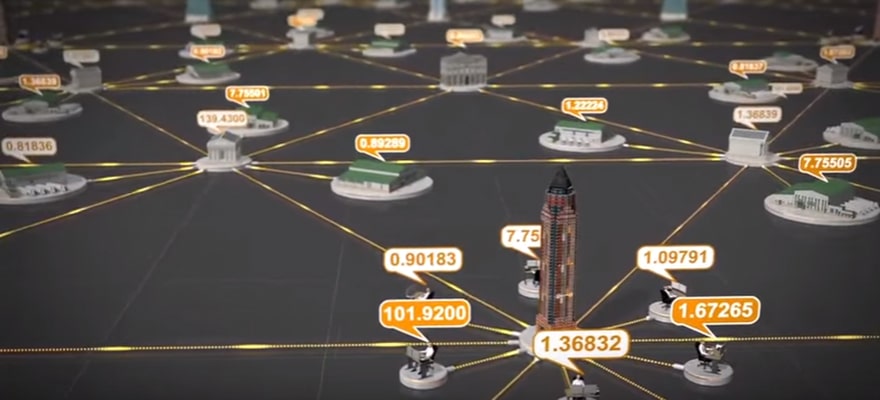
An ECN is a technology-based venue incorporating numerous Liquidity Providers (LPs), both bank and non-bank, who continuously stream their pricing (market interest) to the ECN. The ECN will, in turn, aggregate the pricing. When viewing the entire depth of the aggregated price feed of an ECN, you will notice that it has many levels of liquidity. LPs prefer to stream smaller ticket size pricing to the ECNs due to the fact that this allows them to provide tighter spreads knowing that they aren’t at risk of getting hit with large tickets on those spreads. The LPs are also aware that, by pricing competitively, they have a chance of being 'Top of Book' (ToB) and can win business from competitors in the space. The end result is a very tight ToB.
In general, LPs will not price the ECNs in their larger amounts, that type of pricing is normally reserved for their own, 'known' direct API/GUI clients.
Aggregation
A PoP is a specialized broker which leverages its own credit lines at global banks, through a top tiered prime broker (PB), and passes all client trades straight through for execution. By aggregating multiple bank price feeds, the PoP creates a single stream of liquidity on which the institutional client can trade. These large, institutional bank LPs tend to stream pricing that is more suited to larger ticket sizes thus creating a very deep Depth of Market (DoM). That being said, the ToB pricing may not be quite as tight as that seen on an ECN given the absence of small-ticket price streams.
Now that we have looked at several venues that are capable of handling a large market order, let’s review exactly how a large order is facilitated and absorbed by the market. When the order is triggered the first layer of pricing hit will be always be the ToB followed by the descending layers of quotes in the aggregator stream until the order is completely filled. Depending on the size of the trade and market conditions, multiple transactions (legs) may be required to fill the order ultimately impacting execution times. The longer it takes to fill an order, the more the market is aware of its existence and the more time the LPs have to adjust their pricing. This could potentially result in slippage where a really large order is involved.
Execution
Execution for larger market orders, realistically, depends on the liquidity available in the aggregated price pool.
The aggregated price stream on an ECN may show tighter spreads on the ToB than that seen on a PoP, possibly due to small ticket quotes. These smaller tickets may look nice on the surface, but they can act as a hurdle to the larger order as it tries to execute. The resulting small ticket transactions will create extra legs on the order and potentially add significant time to execution.
A different experience can possibly be achieved by executing an equivalent large order with a real PoP. Although the ToB pricing may be slightly wider than with an ECN, the order can experience a different outcome. A real PoP focusing on institutional clients, would be using large, international banks in their aggregated liquidity feed with pre-agreed price streams, directly related to ticket size. It would not be unrealistic to see quotes for 5, 10 or 20 million in a real PoP's aggregation but beware, not all PoPs are created equal. There are firms out there marketing themselves as PoPs, that, amongst other things, will allow small ticket pricing and broker liquidity into their aggregation resulting in multiple transactions and potential delays in execution.
Conclusion
In conclusion, trying to execute a very large market order through an ECN, or a 'non-pure' PoP, would be comparable to mowing your lawn with a weed-wacker. It can be done, but it will take forever and give uneven results. When executing the larger-type market orders, ticket size does matter and the trade venue’s price stream will make all the difference. A real PoP will be able to create a stream of liquidity conducive to your trade size in order to maximum efficiency of execution.
This article was written by Richard Perona, VP of Institutional FX at Advanced Markets and Fortex.
I should start by saying that this article may not be applicable to many market participants, but hopefully the information will be useful for anyone looking to execute large market orders.
If you are an institutional trader, a fund manager, a bank or perhaps a brokerage hedging positions, then you will almost certainly know that the job of executing a 20, 50 or 100 million trade can be a costly and frustrating experience if not done in the proper liquidity setting. Let’s begin by taking a look at the two most popular venues that clients in the non-bank environment would use to transact a large FX market order, the electronic communication network (ECN) platform or an individual prime of prime (PoP).
An ECN is a technology-based venue incorporating numerous Liquidity Providers (LPs), both bank and non-bank, who continuously stream their pricing (market interest) to the ECN. The ECN will, in turn, aggregate the pricing. When viewing the entire depth of the aggregated price feed of an ECN, you will notice that it has many levels of liquidity. LPs prefer to stream smaller ticket size pricing to the ECNs due to the fact that this allows them to provide tighter spreads knowing that they aren’t at risk of getting hit with large tickets on those spreads. The LPs are also aware that, by pricing competitively, they have a chance of being 'Top of Book' (ToB) and can win business from competitors in the space. The end result is a very tight ToB.
In general, LPs will not price the ECNs in their larger amounts, that type of pricing is normally reserved for their own, 'known' direct API/GUI clients.
Aggregation
A PoP is a specialized broker which leverages its own credit lines at global banks, through a top tiered prime broker (PB), and passes all client trades straight through for execution. By aggregating multiple bank price feeds, the PoP creates a single stream of liquidity on which the institutional client can trade. These large, institutional bank LPs tend to stream pricing that is more suited to larger ticket sizes thus creating a very deep Depth of Market (DoM). That being said, the ToB pricing may not be quite as tight as that seen on an ECN given the absence of small-ticket price streams.
Now that we have looked at several venues that are capable of handling a large market order, let’s review exactly how a large order is facilitated and absorbed by the market. When the order is triggered the first layer of pricing hit will be always be the ToB followed by the descending layers of quotes in the aggregator stream until the order is completely filled. Depending on the size of the trade and market conditions, multiple transactions (legs) may be required to fill the order ultimately impacting execution times. The longer it takes to fill an order, the more the market is aware of its existence and the more time the LPs have to adjust their pricing. This could potentially result in slippage where a really large order is involved.
Execution
Execution for larger market orders, realistically, depends on the liquidity available in the aggregated price pool.
The aggregated price stream on an ECN may show tighter spreads on the ToB than that seen on a PoP, possibly due to small ticket quotes. These smaller tickets may look nice on the surface, but they can act as a hurdle to the larger order as it tries to execute. The resulting small ticket transactions will create extra legs on the order and potentially add significant time to execution.
A different experience can possibly be achieved by executing an equivalent large order with a real PoP. Although the ToB pricing may be slightly wider than with an ECN, the order can experience a different outcome. A real PoP focusing on institutional clients, would be using large, international banks in their aggregated liquidity feed with pre-agreed price streams, directly related to ticket size. It would not be unrealistic to see quotes for 5, 10 or 20 million in a real PoP's aggregation but beware, not all PoPs are created equal. There are firms out there marketing themselves as PoPs, that, amongst other things, will allow small ticket pricing and broker liquidity into their aggregation resulting in multiple transactions and potential delays in execution.
Conclusion
In conclusion, trying to execute a very large market order through an ECN, or a 'non-pure' PoP, would be comparable to mowing your lawn with a weed-wacker. It can be done, but it will take forever and give uneven results. When executing the larger-type market orders, ticket size does matter and the trade venue’s price stream will make all the difference. A real PoP will be able to create a stream of liquidity conducive to your trade size in order to maximum efficiency of execution.
With more than 15 years of experience, Rich has been immersed in the FX market with a broad history from trading at the FX desks of major world banks to managing flow at retail FX brokers.
He has a deep understanding of the FX industry, while specializing in G20 and exotic currency trading.
Rich assists financial institutions, fund managers and individuals around the globe to integrate FX as an asset class and identify applicable markets and technologies to suit their overall strategy. Vice President of Institutional Sales at Advanced Markets
Singapore Independent Wealth Sector Has Less Than 10% Market Share, but Vast Room for Growth
FP Markets Winner Spotlight 🏆 | Global Broker of the Year 2025 #Trading #Broker #Innovation #Shorts
FP Markets Winner Spotlight 🏆 | Global Broker of the Year 2025 #Trading #Broker #Innovation #Shorts
FP Markets takes the spotlight as Global Broker of the Year 2025 at the Finance Magnates Awards.
Martin Stoilov, Head of Client Experience, shares that trust, innovation, and people played a key role in the company’s success, supported by a strong foundation of integrity and client-centricity.
Following this milestone, FP Markets continues to focus on growth, technology investment, and its core values of transparency and excellence.
👉 Be part of FM Awards 2026: https://awards.financemagnates.com/#nominate
FP Markets takes the spotlight as Global Broker of the Year 2025 at the Finance Magnates Awards.
Martin Stoilov, Head of Client Experience, shares that trust, innovation, and people played a key role in the company’s success, supported by a strong foundation of integrity and client-centricity.
Following this milestone, FP Markets continues to focus on growth, technology investment, and its core values of transparency and excellence.
👉 Be part of FM Awards 2026: https://awards.financemagnates.com/#nominate
In this video, we review @HolaPrimeMarketsOfficial, a multi-asset forex and CFDs broker offering different account types, trading platforms, and flexible trading conditions.
We cover the broker’s overall offering, including account options, trading environment, platforms like MT4 and MT5, and additional services such as managed accounts and fast withdrawals.
Watch the full video to see if Hola Prime Markets fits your trading needs.
📣 Stay up to date with the latest in finance and trading. Follow Finance Magnates for industry news, insights, and global event coverage.
Connect with us:
🔗 LinkedIn: /financemagnates
👍 Facebook: /financemagnates
📸 Instagram: https://www.instagram.com/financemagnates
🐦 X: https://x.com/financemagnates
🎥 TikTok: https://www.tiktok.com/tag/financemagnates
▶️ YouTube: /@financemagnates_official
#HolaPrime #ForexBroker #CFDTrading #FinanceMagnates #Trading #Forex #BrokerReview
In this video, we review @HolaPrimeMarketsOfficial, a multi-asset forex and CFDs broker offering different account types, trading platforms, and flexible trading conditions.
We cover the broker’s overall offering, including account options, trading environment, platforms like MT4 and MT5, and additional services such as managed accounts and fast withdrawals.
Watch the full video to see if Hola Prime Markets fits your trading needs.
📣 Stay up to date with the latest in finance and trading. Follow Finance Magnates for industry news, insights, and global event coverage.
Connect with us:
🔗 LinkedIn: /financemagnates
👍 Facebook: /financemagnates
📸 Instagram: https://www.instagram.com/financemagnates
🐦 X: https://x.com/financemagnates
🎥 TikTok: https://www.tiktok.com/tag/financemagnates
▶️ YouTube: /@financemagnates_official
#HolaPrime #ForexBroker #CFDTrading #FinanceMagnates #Trading #Forex #BrokerReview
Hola Prime Review: What You Need to Know | Full Breakdown by Finance Magnates
Hola Prime Review: What You Need to Know | Full Breakdown by Finance Magnates
In this video, we review @HolaPrime_Global, a proprietary trading firm offering evaluation programs and performance-based payouts in simulated market environments.
We cover how the challenge model works, including account types, profit splits (up to 95%), trading rules, and what it takes to reach a funded account. You’ll also learn about available platforms like MT4, MT5, cTrader, and more, along with insights into payouts, support, and trading conditions.
Watch the full video to see if Hola Prime fits your trading style.
📣 Stay up to date with the latest in finance and trading. Follow Finance Magnates for industry news, insights, and global event coverage.
Connect with us:
🔗 LinkedIn: /financemagnates
👍 Facebook: /financemagnates
📸 Instagram: https://www.instagram.com/financemagnates
🐦 X: https://x.com/financemagnates
🎥 TikTok: https://www.tiktok.com/tag/financemagnates
▶️ YouTube: /@financemagnates_official
#HolaPrime #PropFirm #Trading #FinanceMagnates #Forex #FuturesTrading #TradingReview #PropFirmReview
In this video, we review @HolaPrime_Global, a proprietary trading firm offering evaluation programs and performance-based payouts in simulated market environments.
We cover how the challenge model works, including account types, profit splits (up to 95%), trading rules, and what it takes to reach a funded account. You’ll also learn about available platforms like MT4, MT5, cTrader, and more, along with insights into payouts, support, and trading conditions.
Watch the full video to see if Hola Prime fits your trading style.
📣 Stay up to date with the latest in finance and trading. Follow Finance Magnates for industry news, insights, and global event coverage.
Connect with us:
🔗 LinkedIn: /financemagnates
👍 Facebook: /financemagnates
📸 Instagram: https://www.instagram.com/financemagnates
🐦 X: https://x.com/financemagnates
🎥 TikTok: https://www.tiktok.com/tag/financemagnates
▶️ YouTube: /@financemagnates_official
#HolaPrime #PropFirm #Trading #FinanceMagnates #Forex #FuturesTrading #TradingReview #PropFirmReview
Axi Winner Spotlight 🏆 | Global Most Innovative Broker 2025 #Innovation #Trading #Fintech #Broker
Axi Winner Spotlight 🏆 | Global Most Innovative Broker 2025 #Innovation #Trading #Fintech #Broker
Axi takes the spotlight at the Finance Magnates Awards, winning Global Most Innovative Broker 2025.
Olivia Xenofontos and Ivanna Openko share how the team will feel: proud, motivated, and ready to keep delivering.
They also describe the night as well-organized, focused, and enjoyable for all.
👉 Be part of FM Awards 2026.
Axi takes the spotlight at the Finance Magnates Awards, winning Global Most Innovative Broker 2025.
Olivia Xenofontos and Ivanna Openko share how the team will feel: proud, motivated, and ready to keep delivering.
They also describe the night as well-organized, focused, and enjoyable for all.
👉 Be part of FM Awards 2026.
Recognition that matters.
Built on transparency.
Driven by the industry.
The Finance Magnates Awards 2026.
Nominations are now open.
🔗 https://awards.financemagnates.com/?utm_source=SM&utm_medium=social&utm_campaign=recognition-matters
Recognition that matters.
Built on transparency.
Driven by the industry.
The Finance Magnates Awards 2026.
Nominations are now open.
🔗 https://awards.financemagnates.com/?utm_source=SM&utm_medium=social&utm_campaign=recognition-matters