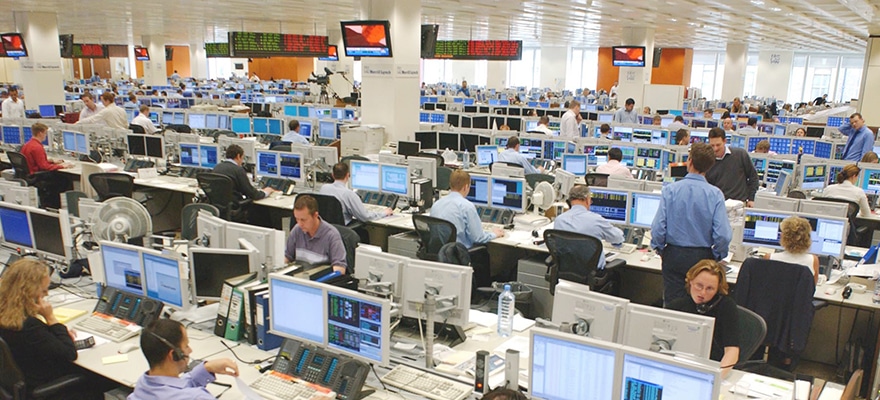
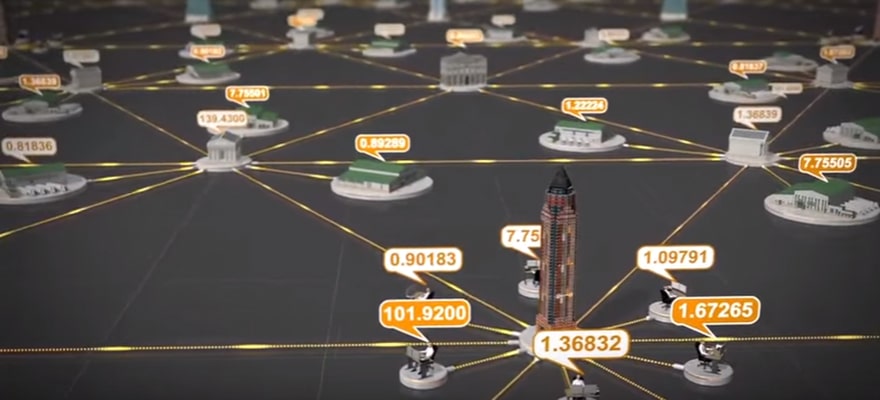
Gimmicks and sales promotions are nothing new to the FX industry and, more often than not, do not end well.
Photo: Bloomberg
I have worked in the FX industry for the past 16 years but I believe that 2015 will stand out most as the year when the market was taught a very valuable lesson. When I look back upon this year, I can’t help feeling that, by applying a simple life principle, many of 2015’s pitfalls might have been avoided.
As a young man, I was taught a very valuable lesson that holds true in situations that require planning and foresight, and that life lesson is 'Murphy’s Law'. Murphy’s Law simply states that 'anything that can go wrong will go wrong'. By keeping this life lesson in mind, a lot of tough decisions can be made by determining which solution offers the best 'plan B’ (or protection) should something go horribly wrong. It’s definitely prudent for decision makers to ask the 'what do I do if something goes wrong?' type of question when evaluating the merits of schemes that appear to be too good to be true.
Over the past 12 months, the FX industry has experienced many pivotal moments including a major dislocation due to the actions of a central bank which resulted in negative client account equity and forced many brokerage firms to shut their doors. We have also seen serious breaches in technology infrastructure security leading to disturbing network issues and, lastly, a few popular Liquidity providers who turned out to be a mirage. So how could Murphy’s Law have been applied to any of these situations?
On the 15th of January, the Swiss National Bank (SNB) took the market by surprise by suddenly announcing that it would no longer maintain, or defend, the EURCHF 'floor' at 1.2000. The value of the Swiss Franc appreciated by 30% in less than an hour, inflicting catastrophic losses on brokerages, money managers and clients alike. This event was totally unforeseen and produced negative client balances across multiple firms, particularly for anyone who happened to be holding a short Swiss Franc position. The negative client equity drastically depleted client funds at many brokerages, forcing those firms to take massive losses and resulting, in some cases, in a closure of the firm affected.
I wrote in a previous article regarding triparty Custody Accounts. The use of this type of account may counteract the Murphy’s Law principle and would allow you to avoid being part of the 'co-mingling' of funds that is prevalent at many brokerages and which could prove disastrous should a central bank surprise the market like this again in the future.
Now, let’s look at a technology scenario that may also have been somewhat preventable. In October of this year, a few major FX brokerages and technology providers suffered a concerted Distributed Denial of Service (DDoS) attack. Through no fault of their own, those on the receiving end of this attack were left with the task of undoing a serious breach (hack) of their network security, which had resulted in the disruption of their trading environment and which caused substantial system down time. Down time is viewed as one of the worst situations to affect a brokerage or a technology provider.
Just like in the central bank scenario, a brokerage or trader could have asked a few Murphy’s Law/what if type questions regarding the type of backup and redundancy that the technology provider had in place to ensure a proactive approach to a possible DDoS attack. Many of these attacks are unavoidable but it is helpful to know what plans a provider has in place to deal with such events. Given the dependence upon technology for your trading, it is critical to have an understanding as to how your technology provider has planned for these eventualities.
Purify
Finally, following this year’s SNB event, rather than reducing risk and consolidating business, a few liquidity providers launched more radical profit sharing schemes to gain market share. They advertised free money, zero spreads, higher leverage and unreliable claims from (fictitious) owners that they would make up the losses should they occur. These types of gimmicks and sales promotions are nothing new to the FX industry and, more often than not, have not ended well and definitely have not been to the client’s advantage.
If Murphy’s Law had been applied during the decision making period, then possibly a different conclusion could have been reached, such as to find reliable, trustworthy liquidity partners with purifying intentions and full transparency. I outlined some guidelines in the previous article.
So, in conclusion, if a brokerage owner, hedge fund or trader should ignore the life lesson of 'anything that can go wrong, will go wrong', then they should make themselves comfortable with another proverb: “A good intention, with a bad approach, often leads to a poor result.”
― Thomas A. Edison
I have worked in the FX industry for the past 16 years but I believe that 2015 will stand out most as the year when the market was taught a very valuable lesson. When I look back upon this year, I can’t help feeling that, by applying a simple life principle, many of 2015’s pitfalls might have been avoided.
As a young man, I was taught a very valuable lesson that holds true in situations that require planning and foresight, and that life lesson is 'Murphy’s Law'. Murphy’s Law simply states that 'anything that can go wrong will go wrong'. By keeping this life lesson in mind, a lot of tough decisions can be made by determining which solution offers the best 'plan B’ (or protection) should something go horribly wrong. It’s definitely prudent for decision makers to ask the 'what do I do if something goes wrong?' type of question when evaluating the merits of schemes that appear to be too good to be true.
Over the past 12 months, the FX industry has experienced many pivotal moments including a major dislocation due to the actions of a central bank which resulted in negative client account equity and forced many brokerage firms to shut their doors. We have also seen serious breaches in technology infrastructure security leading to disturbing network issues and, lastly, a few popular Liquidity providers who turned out to be a mirage. So how could Murphy’s Law have been applied to any of these situations?
On the 15th of January, the Swiss National Bank (SNB) took the market by surprise by suddenly announcing that it would no longer maintain, or defend, the EURCHF 'floor' at 1.2000. The value of the Swiss Franc appreciated by 30% in less than an hour, inflicting catastrophic losses on brokerages, money managers and clients alike. This event was totally unforeseen and produced negative client balances across multiple firms, particularly for anyone who happened to be holding a short Swiss Franc position. The negative client equity drastically depleted client funds at many brokerages, forcing those firms to take massive losses and resulting, in some cases, in a closure of the firm affected.
I wrote in a previous article regarding triparty Custody Accounts. The use of this type of account may counteract the Murphy’s Law principle and would allow you to avoid being part of the 'co-mingling' of funds that is prevalent at many brokerages and which could prove disastrous should a central bank surprise the market like this again in the future.
Now, let’s look at a technology scenario that may also have been somewhat preventable. In October of this year, a few major FX brokerages and technology providers suffered a concerted Distributed Denial of Service (DDoS) attack. Through no fault of their own, those on the receiving end of this attack were left with the task of undoing a serious breach (hack) of their network security, which had resulted in the disruption of their trading environment and which caused substantial system down time. Down time is viewed as one of the worst situations to affect a brokerage or a technology provider.
Just like in the central bank scenario, a brokerage or trader could have asked a few Murphy’s Law/what if type questions regarding the type of backup and redundancy that the technology provider had in place to ensure a proactive approach to a possible DDoS attack. Many of these attacks are unavoidable but it is helpful to know what plans a provider has in place to deal with such events. Given the dependence upon technology for your trading, it is critical to have an understanding as to how your technology provider has planned for these eventualities.
Purify
Finally, following this year’s SNB event, rather than reducing risk and consolidating business, a few liquidity providers launched more radical profit sharing schemes to gain market share. They advertised free money, zero spreads, higher leverage and unreliable claims from (fictitious) owners that they would make up the losses should they occur. These types of gimmicks and sales promotions are nothing new to the FX industry and, more often than not, have not ended well and definitely have not been to the client’s advantage.
If Murphy’s Law had been applied during the decision making period, then possibly a different conclusion could have been reached, such as to find reliable, trustworthy liquidity partners with purifying intentions and full transparency. I outlined some guidelines in the previous article.
So, in conclusion, if a brokerage owner, hedge fund or trader should ignore the life lesson of 'anything that can go wrong, will go wrong', then they should make themselves comfortable with another proverb: “A good intention, with a bad approach, often leads to a poor result.”
With more than 15 years of experience, Rich has been immersed in the FX market with a broad history from trading at the FX desks of major world banks to managing flow at retail FX brokers.
He has a deep understanding of the FX industry, while specializing in G20 and exotic currency trading.
Rich assists financial institutions, fund managers and individuals around the globe to integrate FX as an asset class and identify applicable markets and technologies to suit their overall strategy. Vice President of Institutional Sales at Advanced Markets
Singapore Independent Wealth Sector Has Less Than 10% Market Share, but Vast Room for Growth
FP Markets Winner Spotlight 🏆 | Global Broker of the Year 2025 #Trading #Broker #Innovation #Shorts
FP Markets Winner Spotlight 🏆 | Global Broker of the Year 2025 #Trading #Broker #Innovation #Shorts
FP Markets takes the spotlight as Global Broker of the Year 2025 at the Finance Magnates Awards.
Martin Stoilov, Head of Client Experience, shares that trust, innovation, and people played a key role in the company’s success, supported by a strong foundation of integrity and client-centricity.
Following this milestone, FP Markets continues to focus on growth, technology investment, and its core values of transparency and excellence.
👉 Be part of FM Awards 2026: https://awards.financemagnates.com/#nominate
FP Markets takes the spotlight as Global Broker of the Year 2025 at the Finance Magnates Awards.
Martin Stoilov, Head of Client Experience, shares that trust, innovation, and people played a key role in the company’s success, supported by a strong foundation of integrity and client-centricity.
Following this milestone, FP Markets continues to focus on growth, technology investment, and its core values of transparency and excellence.
👉 Be part of FM Awards 2026: https://awards.financemagnates.com/#nominate
In this video, we review @HolaPrimeMarketsOfficial, a multi-asset forex and CFDs broker offering different account types, trading platforms, and flexible trading conditions.
We cover the broker’s overall offering, including account options, trading environment, platforms like MT4 and MT5, and additional services such as managed accounts and fast withdrawals.
Watch the full video to see if Hola Prime Markets fits your trading needs.
📣 Stay up to date with the latest in finance and trading. Follow Finance Magnates for industry news, insights, and global event coverage.
Connect with us:
🔗 LinkedIn: /financemagnates
👍 Facebook: /financemagnates
📸 Instagram: https://www.instagram.com/financemagnates
🐦 X: https://x.com/financemagnates
🎥 TikTok: https://www.tiktok.com/tag/financemagnates
▶️ YouTube: /@financemagnates_official
#HolaPrime #ForexBroker #CFDTrading #FinanceMagnates #Trading #Forex #BrokerReview
In this video, we review @HolaPrimeMarketsOfficial, a multi-asset forex and CFDs broker offering different account types, trading platforms, and flexible trading conditions.
We cover the broker’s overall offering, including account options, trading environment, platforms like MT4 and MT5, and additional services such as managed accounts and fast withdrawals.
Watch the full video to see if Hola Prime Markets fits your trading needs.
📣 Stay up to date with the latest in finance and trading. Follow Finance Magnates for industry news, insights, and global event coverage.
Connect with us:
🔗 LinkedIn: /financemagnates
👍 Facebook: /financemagnates
📸 Instagram: https://www.instagram.com/financemagnates
🐦 X: https://x.com/financemagnates
🎥 TikTok: https://www.tiktok.com/tag/financemagnates
▶️ YouTube: /@financemagnates_official
#HolaPrime #ForexBroker #CFDTrading #FinanceMagnates #Trading #Forex #BrokerReview
Hola Prime Review: What You Need to Know | Full Breakdown by Finance Magnates
Hola Prime Review: What You Need to Know | Full Breakdown by Finance Magnates
In this video, we review @HolaPrime_Global, a proprietary trading firm offering evaluation programs and performance-based payouts in simulated market environments.
We cover how the challenge model works, including account types, profit splits (up to 95%), trading rules, and what it takes to reach a funded account. You’ll also learn about available platforms like MT4, MT5, cTrader, and more, along with insights into payouts, support, and trading conditions.
Watch the full video to see if Hola Prime fits your trading style.
📣 Stay up to date with the latest in finance and trading. Follow Finance Magnates for industry news, insights, and global event coverage.
Connect with us:
🔗 LinkedIn: /financemagnates
👍 Facebook: /financemagnates
📸 Instagram: https://www.instagram.com/financemagnates
🐦 X: https://x.com/financemagnates
🎥 TikTok: https://www.tiktok.com/tag/financemagnates
▶️ YouTube: /@financemagnates_official
#HolaPrime #PropFirm #Trading #FinanceMagnates #Forex #FuturesTrading #TradingReview #PropFirmReview
In this video, we review @HolaPrime_Global, a proprietary trading firm offering evaluation programs and performance-based payouts in simulated market environments.
We cover how the challenge model works, including account types, profit splits (up to 95%), trading rules, and what it takes to reach a funded account. You’ll also learn about available platforms like MT4, MT5, cTrader, and more, along with insights into payouts, support, and trading conditions.
Watch the full video to see if Hola Prime fits your trading style.
📣 Stay up to date with the latest in finance and trading. Follow Finance Magnates for industry news, insights, and global event coverage.
Connect with us:
🔗 LinkedIn: /financemagnates
👍 Facebook: /financemagnates
📸 Instagram: https://www.instagram.com/financemagnates
🐦 X: https://x.com/financemagnates
🎥 TikTok: https://www.tiktok.com/tag/financemagnates
▶️ YouTube: /@financemagnates_official
#HolaPrime #PropFirm #Trading #FinanceMagnates #Forex #FuturesTrading #TradingReview #PropFirmReview
Axi Winner Spotlight 🏆 | Global Most Innovative Broker 2025 #Innovation #Trading #Fintech #Broker
Axi Winner Spotlight 🏆 | Global Most Innovative Broker 2025 #Innovation #Trading #Fintech #Broker
Axi takes the spotlight at the Finance Magnates Awards, winning Global Most Innovative Broker 2025.
Olivia Xenofontos and Ivanna Openko share how the team will feel: proud, motivated, and ready to keep delivering.
They also describe the night as well-organized, focused, and enjoyable for all.
👉 Be part of FM Awards 2026.
Axi takes the spotlight at the Finance Magnates Awards, winning Global Most Innovative Broker 2025.
Olivia Xenofontos and Ivanna Openko share how the team will feel: proud, motivated, and ready to keep delivering.
They also describe the night as well-organized, focused, and enjoyable for all.
👉 Be part of FM Awards 2026.
Recognition that matters.
Built on transparency.
Driven by the industry.
The Finance Magnates Awards 2026.
Nominations are now open.
🔗 https://awards.financemagnates.com/?utm_source=SM&utm_medium=social&utm_campaign=recognition-matters
Recognition that matters.
Built on transparency.
Driven by the industry.
The Finance Magnates Awards 2026.
Nominations are now open.
🔗 https://awards.financemagnates.com/?utm_source=SM&utm_medium=social&utm_campaign=recognition-matters