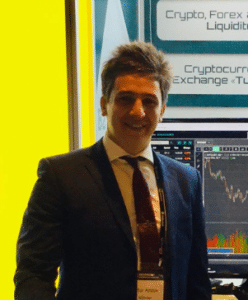
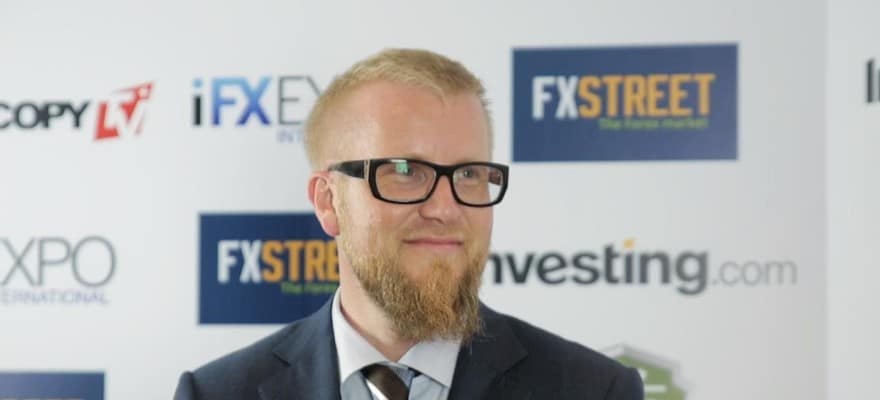
In an exclusive interview, Finance Magnates spoke to Artur Azizov about regulation, crypto payments and the future of forex
B2Broker
It’s been a busy 12 months for B2Broker. Traditionally a provider of solutions to the forex industry, the trading technology provider has shifted gears and started to focus its efforts on the cryptocurrency market.
Alongside this, the firm has opened new offices in Malaysia and Hong Kong as it looks to expand into the Asian market. It has also opened a branch in that nexus of the retail trading world, Cyprus.
In the midst of all this, Finance Magnates spoke to Artur Azizov, B2Broker's CEO,and co-founder. In a wide-ranging conversation, we discussed new products, the future of the forex industry and, shockingly, the positive side of regulation.
What changes have you seen in the retail industry over the past few years and what impact will those changes have in the future?
These days you can launch your own forex trading business with just $200,000, but because there are big players in the market with budgets running into the millions, many smaller brokers end up falling by the wayside. Most brokers, around 80 percent, have the same solutions which is why they don’t have real advantages on the market and this is why technology and services are all-important.
Brokers are basing their comparative differences on servicing customers because liquidity and technology are very similar in the markets, and at lower prices than a couple of years ago. They, therefore, need to separate their business by way of technology and growing their own businesses. It is not easy, and virtually impossible to do both and succeed at the same time. Brokers can only compete by service and licensing and ultimately, to gain their clients' trust.
What are the main problems ICO projects seeking listing on exchanges are facing?
Listing has become easier. There are so many exchanges in existence without real users which can imply wash trading and cause a negative effect or are used just for marketing purposes. This decreases the value of the exchange as a whole. You only need to check any of the websites tracking the capitalization of various cryptocurrency rankings to separate the real from the fake volumes. That’s why the price of the listing fee is going down on so many exchanges.
The second factor is trust in the ICO. There is not much trust in many ICO projects because 80% of tokens and coins so far have not realized their potential. This explains why the price of crypto is now at low levels and why many investors have lost money.
What solutions exist for these problems?
Listing should be done with great care and should show the true value, not to just pump and dump a coin which is not healthy for the market or for investors.
Ranking of exchanges as we have seen can be misrepresented so investors and exchanges should take extra measures when reviewing rankings. It is impossible for a new exchange to be created and ranked in the top 5 from the start of its listing.
With the maturing of the market, Crypto communities have been requesting to only trade with regulated exchanges or a more centralized way by trying to get a license or approval from the government and banks. All investors want to feel safe and secure.
There is still a wide disparity in different governments’ regulation of cryptocurrency. What do you think of cryptocurrency regulation and where is it heading?
Regulation is beneficial for governments. It’s a new tax, creates new employees, new companies, and a whole new economy. This is why the smarter nations are embracing regulation. I believe the future is in regulation and I have expressed my opinion positively on this aspect many times before.
Just two years ago everybody wanted everything decentralized. Now they want protection - i.e., regulation. Large companies want to conduct their business under regulation and cannot implement any blockchain technology or any blockchain financial instrument while the area is not regulated.
That’s why everybody is trying to get regulated. If you try to do unregulated business, you lose market. I believe you cannot attract clients without regulation. Remember, in this business, it’s all about trust!
Artur Azizov, CEO, B2Broker
How can cryptocurrency become a major force if the regulations that are crippling the forex industry will also apply to cryptocurrency trading?
I think in the future we’ll see a lot of the big brokers starting to implement crypto once they receive regulatory approval. The situation right now is that regulated brokers can implement crypto CFD trading- this is not a problem, and even ESMA rules have allowed for the implementation of crypto trading but with a leverage of 1:2.
The other thing for Forex brokers that implement CFD cryptos is that they are still forex brokers offering crypto trading products. If you want to be a true crypto broker, you have to open an account nominated in crypto, but that is currently impossible with respect to regulation rules. ESMA has now imposed a maximum leverage of 1:2 but I’m not sure when they will come to a decision on nominated currencies. I would guess about a year maybe.
I would also like to add that because forex brokers cannot implement a crypto like a base nominated currency, a lot of the big brokers are now opening a second brand for a crypto exchange as they cannot do so on their existing brand. Forex brokers cannot currently compete with crypto as many crypto traders prefer test trading, deliverable crypto and not CFDs. That’s why Forex brokers offering crypto trading products are unable to compete with crypto exchanges - with deliverable products. In any case, leveraged crypto trading is also a new trend with big exchanges who have also now started implementing it.
Given the high volatility and lack of regulation in the cryptocurrency industry at this moment in time, how useful can cryptocurrency really be as a payment method?
The main issue right now is the limited usage or acceptance of crypto worldwide. If all merchants, providers, brokers, etc. start accepting cryptocurrencies as a payment method fiat money will no longer be required. If you have BTC and you are able to make payments everywhere with it, what is the reason to purchase with fiat money?
Regarding volatility, yes, there is some risk, but you can reduce this by keeping, for example, 30% of it in BTC, 30% in USD and 30% in Russian ruble. If you keep all of it in a national currency, you cannot be 100% guaranteed that your money will be safe. It is always important to diversify your assets, and that is also the case with cryptocurrencies.
I believe that all crypto payment providers and existing payment providers have to implement BTC as a payment method. If all merchants, brokers, etc., start accepting cryptos, it will create huge liquidity on the market and more usage for BTC and other cryptocurrency tokens. That’s why our mission is to improve our B2BinPay service for merchants and implement our merchant crypto gateway across the world. Fiat money will no longer be required.
You offer an array of cryptocurrency related services and solutions. For which of these have you seen the greatest demand?
In terms of ICOs, it’s clear to see that the hype is less than it was due to too many fake ICOs. This is why the request for ICO platforms is also in decline. However, there is still a high demand for crypto exchange turnkey solutions and explains why B2Broker’s crypto exchange turnkey ranks first in terms of client demand. This is closely followed by liquidity since all forex brokerages are looking for liquidity and our third most popular service is our crypto brokerage solution.
It’s been a busy 12 months for B2Broker. Traditionally a provider of solutions to the forex industry, the trading technology provider has shifted gears and started to focus its efforts on the cryptocurrency market.
Alongside this, the firm has opened new offices in Malaysia and Hong Kong as it looks to expand into the Asian market. It has also opened a branch in that nexus of the retail trading world, Cyprus.
In the midst of all this, Finance Magnates spoke to Artur Azizov, B2Broker's CEO,and co-founder. In a wide-ranging conversation, we discussed new products, the future of the forex industry and, shockingly, the positive side of regulation.
What changes have you seen in the retail industry over the past few years and what impact will those changes have in the future?
These days you can launch your own forex trading business with just $200,000, but because there are big players in the market with budgets running into the millions, many smaller brokers end up falling by the wayside. Most brokers, around 80 percent, have the same solutions which is why they don’t have real advantages on the market and this is why technology and services are all-important.
Brokers are basing their comparative differences on servicing customers because liquidity and technology are very similar in the markets, and at lower prices than a couple of years ago. They, therefore, need to separate their business by way of technology and growing their own businesses. It is not easy, and virtually impossible to do both and succeed at the same time. Brokers can only compete by service and licensing and ultimately, to gain their clients' trust.
What are the main problems ICO projects seeking listing on exchanges are facing?
Listing has become easier. There are so many exchanges in existence without real users which can imply wash trading and cause a negative effect or are used just for marketing purposes. This decreases the value of the exchange as a whole. You only need to check any of the websites tracking the capitalization of various cryptocurrency rankings to separate the real from the fake volumes. That’s why the price of the listing fee is going down on so many exchanges.
The second factor is trust in the ICO. There is not much trust in many ICO projects because 80% of tokens and coins so far have not realized their potential. This explains why the price of crypto is now at low levels and why many investors have lost money.
What solutions exist for these problems?
Listing should be done with great care and should show the true value, not to just pump and dump a coin which is not healthy for the market or for investors.
Ranking of exchanges as we have seen can be misrepresented so investors and exchanges should take extra measures when reviewing rankings. It is impossible for a new exchange to be created and ranked in the top 5 from the start of its listing.
With the maturing of the market, Crypto communities have been requesting to only trade with regulated exchanges or a more centralized way by trying to get a license or approval from the government and banks. All investors want to feel safe and secure.
There is still a wide disparity in different governments’ regulation of cryptocurrency. What do you think of cryptocurrency regulation and where is it heading?
Regulation is beneficial for governments. It’s a new tax, creates new employees, new companies, and a whole new economy. This is why the smarter nations are embracing regulation. I believe the future is in regulation and I have expressed my opinion positively on this aspect many times before.
Just two years ago everybody wanted everything decentralized. Now they want protection - i.e., regulation. Large companies want to conduct their business under regulation and cannot implement any blockchain technology or any blockchain financial instrument while the area is not regulated.
That’s why everybody is trying to get regulated. If you try to do unregulated business, you lose market. I believe you cannot attract clients without regulation. Remember, in this business, it’s all about trust!
Artur Azizov, CEO, B2Broker
How can cryptocurrency become a major force if the regulations that are crippling the forex industry will also apply to cryptocurrency trading?
I think in the future we’ll see a lot of the big brokers starting to implement crypto once they receive regulatory approval. The situation right now is that regulated brokers can implement crypto CFD trading- this is not a problem, and even ESMA rules have allowed for the implementation of crypto trading but with a leverage of 1:2.
The other thing for Forex brokers that implement CFD cryptos is that they are still forex brokers offering crypto trading products. If you want to be a true crypto broker, you have to open an account nominated in crypto, but that is currently impossible with respect to regulation rules. ESMA has now imposed a maximum leverage of 1:2 but I’m not sure when they will come to a decision on nominated currencies. I would guess about a year maybe.
I would also like to add that because forex brokers cannot implement a crypto like a base nominated currency, a lot of the big brokers are now opening a second brand for a crypto exchange as they cannot do so on their existing brand. Forex brokers cannot currently compete with crypto as many crypto traders prefer test trading, deliverable crypto and not CFDs. That’s why Forex brokers offering crypto trading products are unable to compete with crypto exchanges - with deliverable products. In any case, leveraged crypto trading is also a new trend with big exchanges who have also now started implementing it.
Given the high volatility and lack of regulation in the cryptocurrency industry at this moment in time, how useful can cryptocurrency really be as a payment method?
The main issue right now is the limited usage or acceptance of crypto worldwide. If all merchants, providers, brokers, etc. start accepting cryptocurrencies as a payment method fiat money will no longer be required. If you have BTC and you are able to make payments everywhere with it, what is the reason to purchase with fiat money?
Regarding volatility, yes, there is some risk, but you can reduce this by keeping, for example, 30% of it in BTC, 30% in USD and 30% in Russian ruble. If you keep all of it in a national currency, you cannot be 100% guaranteed that your money will be safe. It is always important to diversify your assets, and that is also the case with cryptocurrencies.
I believe that all crypto payment providers and existing payment providers have to implement BTC as a payment method. If all merchants, brokers, etc., start accepting cryptos, it will create huge liquidity on the market and more usage for BTC and other cryptocurrency tokens. That’s why our mission is to improve our B2BinPay service for merchants and implement our merchant crypto gateway across the world. Fiat money will no longer be required.
You offer an array of cryptocurrency related services and solutions. For which of these have you seen the greatest demand?
In terms of ICOs, it’s clear to see that the hype is less than it was due to too many fake ICOs. This is why the request for ICO platforms is also in decline. However, there is still a high demand for crypto exchange turnkey solutions and explains why B2Broker’s crypto exchange turnkey ranks first in terms of client demand. This is closely followed by liquidity since all forex brokerages are looking for liquidity and our third most popular service is our crypto brokerage solution.
Italy’s Consob Tightens Net on AI-Fueled Scams With Fresh Website Bans
Featured Videos
FP Markets Winner Spotlight 🏆 | Global Broker of the Year 2025 #Trading #Broker #Innovation #Shorts
FP Markets Winner Spotlight 🏆 | Global Broker of the Year 2025 #Trading #Broker #Innovation #Shorts
FP Markets Winner Spotlight 🏆 | Global Broker of the Year 2025 #Trading #Broker #Innovation #Shorts
FP Markets Winner Spotlight 🏆 | Global Broker of the Year 2025 #Trading #Broker #Innovation #Shorts
FP Markets takes the spotlight as Global Broker of the Year 2025 at the Finance Magnates Awards.
Martin Stoilov, Head of Client Experience, shares that trust, innovation, and people played a key role in the company’s success, supported by a strong foundation of integrity and client-centricity.
Following this milestone, FP Markets continues to focus on growth, technology investment, and its core values of transparency and excellence.
👉 Be part of FM Awards 2026: https://awards.financemagnates.com/#nominate
FP Markets takes the spotlight as Global Broker of the Year 2025 at the Finance Magnates Awards.
Martin Stoilov, Head of Client Experience, shares that trust, innovation, and people played a key role in the company’s success, supported by a strong foundation of integrity and client-centricity.
Following this milestone, FP Markets continues to focus on growth, technology investment, and its core values of transparency and excellence.
👉 Be part of FM Awards 2026: https://awards.financemagnates.com/#nominate
FP Markets takes the spotlight as Global Broker of the Year 2025 at the Finance Magnates Awards.
Martin Stoilov, Head of Client Experience, shares that trust, innovation, and people played a key role in the company’s success, supported by a strong foundation of integrity and client-centricity.
Following this milestone, FP Markets continues to focus on growth, technology investment, and its core values of transparency and excellence.
👉 Be part of FM Awards 2026: https://awards.financemagnates.com/#nominate
FP Markets takes the spotlight as Global Broker of the Year 2025 at the Finance Magnates Awards.
Martin Stoilov, Head of Client Experience, shares that trust, innovation, and people played a key role in the company’s success, supported by a strong foundation of integrity and client-centricity.
Following this milestone, FP Markets continues to focus on growth, technology investment, and its core values of transparency and excellence.
👉 Be part of FM Awards 2026: https://awards.financemagnates.com/#nominate
In this video, we review @HolaPrimeMarketsOfficial, a multi-asset forex and CFDs broker offering different account types, trading platforms, and flexible trading conditions.
We cover the broker’s overall offering, including account options, trading environment, platforms like MT4 and MT5, and additional services such as managed accounts and fast withdrawals.
Watch the full video to see if Hola Prime Markets fits your trading needs.
📣 Stay up to date with the latest in finance and trading. Follow Finance Magnates for industry news, insights, and global event coverage.
Connect with us:
🔗 LinkedIn: /financemagnates
👍 Facebook: /financemagnates
📸 Instagram: https://www.instagram.com/financemagnates
🐦 X: https://x.com/financemagnates
🎥 TikTok: https://www.tiktok.com/tag/financemagnates
▶️ YouTube: /@financemagnates_official
#HolaPrime #ForexBroker #CFDTrading #FinanceMagnates #Trading #Forex #BrokerReview
In this video, we review @HolaPrimeMarketsOfficial, a multi-asset forex and CFDs broker offering different account types, trading platforms, and flexible trading conditions.
We cover the broker’s overall offering, including account options, trading environment, platforms like MT4 and MT5, and additional services such as managed accounts and fast withdrawals.
Watch the full video to see if Hola Prime Markets fits your trading needs.
📣 Stay up to date with the latest in finance and trading. Follow Finance Magnates for industry news, insights, and global event coverage.
Connect with us:
🔗 LinkedIn: /financemagnates
👍 Facebook: /financemagnates
📸 Instagram: https://www.instagram.com/financemagnates
🐦 X: https://x.com/financemagnates
🎥 TikTok: https://www.tiktok.com/tag/financemagnates
▶️ YouTube: /@financemagnates_official
#HolaPrime #ForexBroker #CFDTrading #FinanceMagnates #Trading #Forex #BrokerReview
In this video, we review @HolaPrimeMarketsOfficial, a multi-asset forex and CFDs broker offering different account types, trading platforms, and flexible trading conditions.
We cover the broker’s overall offering, including account options, trading environment, platforms like MT4 and MT5, and additional services such as managed accounts and fast withdrawals.
Watch the full video to see if Hola Prime Markets fits your trading needs.
📣 Stay up to date with the latest in finance and trading. Follow Finance Magnates for industry news, insights, and global event coverage.
Connect with us:
🔗 LinkedIn: /financemagnates
👍 Facebook: /financemagnates
📸 Instagram: https://www.instagram.com/financemagnates
🐦 X: https://x.com/financemagnates
🎥 TikTok: https://www.tiktok.com/tag/financemagnates
▶️ YouTube: /@financemagnates_official
#HolaPrime #ForexBroker #CFDTrading #FinanceMagnates #Trading #Forex #BrokerReview
In this video, we review @HolaPrimeMarketsOfficial, a multi-asset forex and CFDs broker offering different account types, trading platforms, and flexible trading conditions.
We cover the broker’s overall offering, including account options, trading environment, platforms like MT4 and MT5, and additional services such as managed accounts and fast withdrawals.
Watch the full video to see if Hola Prime Markets fits your trading needs.
📣 Stay up to date with the latest in finance and trading. Follow Finance Magnates for industry news, insights, and global event coverage.
Connect with us:
🔗 LinkedIn: /financemagnates
👍 Facebook: /financemagnates
📸 Instagram: https://www.instagram.com/financemagnates
🐦 X: https://x.com/financemagnates
🎥 TikTok: https://www.tiktok.com/tag/financemagnates
▶️ YouTube: /@financemagnates_official
#HolaPrime #ForexBroker #CFDTrading #FinanceMagnates #Trading #Forex #BrokerReview
In this video, we review @HolaPrimeMarketsOfficial, a multi-asset forex and CFDs broker offering different account types, trading platforms, and flexible trading conditions.
We cover the broker’s overall offering, including account options, trading environment, platforms like MT4 and MT5, and additional services such as managed accounts and fast withdrawals.
Watch the full video to see if Hola Prime Markets fits your trading needs.
📣 Stay up to date with the latest in finance and trading. Follow Finance Magnates for industry news, insights, and global event coverage.
Connect with us:
🔗 LinkedIn: /financemagnates
👍 Facebook: /financemagnates
📸 Instagram: https://www.instagram.com/financemagnates
🐦 X: https://x.com/financemagnates
🎥 TikTok: https://www.tiktok.com/tag/financemagnates
▶️ YouTube: /@financemagnates_official
#HolaPrime #ForexBroker #CFDTrading #FinanceMagnates #Trading #Forex #BrokerReview
In this video, we review @HolaPrimeMarketsOfficial, a multi-asset forex and CFDs broker offering different account types, trading platforms, and flexible trading conditions.
We cover the broker’s overall offering, including account options, trading environment, platforms like MT4 and MT5, and additional services such as managed accounts and fast withdrawals.
Watch the full video to see if Hola Prime Markets fits your trading needs.
📣 Stay up to date with the latest in finance and trading. Follow Finance Magnates for industry news, insights, and global event coverage.
Connect with us:
🔗 LinkedIn: /financemagnates
👍 Facebook: /financemagnates
📸 Instagram: https://www.instagram.com/financemagnates
🐦 X: https://x.com/financemagnates
🎥 TikTok: https://www.tiktok.com/tag/financemagnates
▶️ YouTube: /@financemagnates_official
#HolaPrime #ForexBroker #CFDTrading #FinanceMagnates #Trading #Forex #BrokerReview
Hola Prime Review: What You Need to Know | Full Breakdown by Finance Magnates
Hola Prime Review: What You Need to Know | Full Breakdown by Finance Magnates
Hola Prime Review: What You Need to Know | Full Breakdown by Finance Magnates
Hola Prime Review: What You Need to Know | Full Breakdown by Finance Magnates
Hola Prime Review: What You Need to Know | Full Breakdown by Finance Magnates
Hola Prime Review: What You Need to Know | Full Breakdown by Finance Magnates
In this video, we review @HolaPrime_Global, a proprietary trading firm offering evaluation programs and performance-based payouts in simulated market environments.
We cover how the challenge model works, including account types, profit splits (up to 95%), trading rules, and what it takes to reach a funded account. You’ll also learn about available platforms like MT4, MT5, cTrader, and more, along with insights into payouts, support, and trading conditions.
Watch the full video to see if Hola Prime fits your trading style.
📣 Stay up to date with the latest in finance and trading. Follow Finance Magnates for industry news, insights, and global event coverage.
Connect with us:
🔗 LinkedIn: /financemagnates
👍 Facebook: /financemagnates
📸 Instagram: https://www.instagram.com/financemagnates
🐦 X: https://x.com/financemagnates
🎥 TikTok: https://www.tiktok.com/tag/financemagnates
▶️ YouTube: /@financemagnates_official
#HolaPrime #PropFirm #Trading #FinanceMagnates #Forex #FuturesTrading #TradingReview #PropFirmReview
In this video, we review @HolaPrime_Global, a proprietary trading firm offering evaluation programs and performance-based payouts in simulated market environments.
We cover how the challenge model works, including account types, profit splits (up to 95%), trading rules, and what it takes to reach a funded account. You’ll also learn about available platforms like MT4, MT5, cTrader, and more, along with insights into payouts, support, and trading conditions.
Watch the full video to see if Hola Prime fits your trading style.
📣 Stay up to date with the latest in finance and trading. Follow Finance Magnates for industry news, insights, and global event coverage.
Connect with us:
🔗 LinkedIn: /financemagnates
👍 Facebook: /financemagnates
📸 Instagram: https://www.instagram.com/financemagnates
🐦 X: https://x.com/financemagnates
🎥 TikTok: https://www.tiktok.com/tag/financemagnates
▶️ YouTube: /@financemagnates_official
#HolaPrime #PropFirm #Trading #FinanceMagnates #Forex #FuturesTrading #TradingReview #PropFirmReview
In this video, we review @HolaPrime_Global, a proprietary trading firm offering evaluation programs and performance-based payouts in simulated market environments.
We cover how the challenge model works, including account types, profit splits (up to 95%), trading rules, and what it takes to reach a funded account. You’ll also learn about available platforms like MT4, MT5, cTrader, and more, along with insights into payouts, support, and trading conditions.
Watch the full video to see if Hola Prime fits your trading style.
📣 Stay up to date with the latest in finance and trading. Follow Finance Magnates for industry news, insights, and global event coverage.
Connect with us:
🔗 LinkedIn: /financemagnates
👍 Facebook: /financemagnates
📸 Instagram: https://www.instagram.com/financemagnates
🐦 X: https://x.com/financemagnates
🎥 TikTok: https://www.tiktok.com/tag/financemagnates
▶️ YouTube: /@financemagnates_official
#HolaPrime #PropFirm #Trading #FinanceMagnates #Forex #FuturesTrading #TradingReview #PropFirmReview
In this video, we review @HolaPrime_Global, a proprietary trading firm offering evaluation programs and performance-based payouts in simulated market environments.
We cover how the challenge model works, including account types, profit splits (up to 95%), trading rules, and what it takes to reach a funded account. You’ll also learn about available platforms like MT4, MT5, cTrader, and more, along with insights into payouts, support, and trading conditions.
Watch the full video to see if Hola Prime fits your trading style.
📣 Stay up to date with the latest in finance and trading. Follow Finance Magnates for industry news, insights, and global event coverage.
Connect with us:
🔗 LinkedIn: /financemagnates
👍 Facebook: /financemagnates
📸 Instagram: https://www.instagram.com/financemagnates
🐦 X: https://x.com/financemagnates
🎥 TikTok: https://www.tiktok.com/tag/financemagnates
▶️ YouTube: /@financemagnates_official
#HolaPrime #PropFirm #Trading #FinanceMagnates #Forex #FuturesTrading #TradingReview #PropFirmReview
In this video, we review @HolaPrime_Global, a proprietary trading firm offering evaluation programs and performance-based payouts in simulated market environments.
We cover how the challenge model works, including account types, profit splits (up to 95%), trading rules, and what it takes to reach a funded account. You’ll also learn about available platforms like MT4, MT5, cTrader, and more, along with insights into payouts, support, and trading conditions.
Watch the full video to see if Hola Prime fits your trading style.
📣 Stay up to date with the latest in finance and trading. Follow Finance Magnates for industry news, insights, and global event coverage.
Connect with us:
🔗 LinkedIn: /financemagnates
👍 Facebook: /financemagnates
📸 Instagram: https://www.instagram.com/financemagnates
🐦 X: https://x.com/financemagnates
🎥 TikTok: https://www.tiktok.com/tag/financemagnates
▶️ YouTube: /@financemagnates_official
#HolaPrime #PropFirm #Trading #FinanceMagnates #Forex #FuturesTrading #TradingReview #PropFirmReview
In this video, we review @HolaPrime_Global, a proprietary trading firm offering evaluation programs and performance-based payouts in simulated market environments.
We cover how the challenge model works, including account types, profit splits (up to 95%), trading rules, and what it takes to reach a funded account. You’ll also learn about available platforms like MT4, MT5, cTrader, and more, along with insights into payouts, support, and trading conditions.
Watch the full video to see if Hola Prime fits your trading style.
📣 Stay up to date with the latest in finance and trading. Follow Finance Magnates for industry news, insights, and global event coverage.
Connect with us:
🔗 LinkedIn: /financemagnates
👍 Facebook: /financemagnates
📸 Instagram: https://www.instagram.com/financemagnates
🐦 X: https://x.com/financemagnates
🎥 TikTok: https://www.tiktok.com/tag/financemagnates
▶️ YouTube: /@financemagnates_official
#HolaPrime #PropFirm #Trading #FinanceMagnates #Forex #FuturesTrading #TradingReview #PropFirmReview
Axi Winner Spotlight 🏆 | Global Most Innovative Broker 2025 #Innovation #Trading #Fintech #Broker
Axi Winner Spotlight 🏆 | Global Most Innovative Broker 2025 #Innovation #Trading #Fintech #Broker
Axi Winner Spotlight 🏆 | Global Most Innovative Broker 2025 #Innovation #Trading #Fintech #Broker
Axi Winner Spotlight 🏆 | Global Most Innovative Broker 2025 #Innovation #Trading #Fintech #Broker
Axi Winner Spotlight 🏆 | Global Most Innovative Broker 2025 #Innovation #Trading #Fintech #Broker
Axi Winner Spotlight 🏆 | Global Most Innovative Broker 2025 #Innovation #Trading #Fintech #Broker
Axi takes the spotlight at the Finance Magnates Awards, winning Global Most Innovative Broker 2025.
Olivia Xenofontos and Ivanna Openko share how the team will feel: proud, motivated, and ready to keep delivering.
They also describe the night as well-organized, focused, and enjoyable for all.
👉 Be part of FM Awards 2026.
Axi takes the spotlight at the Finance Magnates Awards, winning Global Most Innovative Broker 2025.
Olivia Xenofontos and Ivanna Openko share how the team will feel: proud, motivated, and ready to keep delivering.
They also describe the night as well-organized, focused, and enjoyable for all.
👉 Be part of FM Awards 2026.
Axi takes the spotlight at the Finance Magnates Awards, winning Global Most Innovative Broker 2025.
Olivia Xenofontos and Ivanna Openko share how the team will feel: proud, motivated, and ready to keep delivering.
They also describe the night as well-organized, focused, and enjoyable for all.
👉 Be part of FM Awards 2026.
Axi takes the spotlight at the Finance Magnates Awards, winning Global Most Innovative Broker 2025.
Olivia Xenofontos and Ivanna Openko share how the team will feel: proud, motivated, and ready to keep delivering.
They also describe the night as well-organized, focused, and enjoyable for all.
👉 Be part of FM Awards 2026.
Axi takes the spotlight at the Finance Magnates Awards, winning Global Most Innovative Broker 2025.
Olivia Xenofontos and Ivanna Openko share how the team will feel: proud, motivated, and ready to keep delivering.
They also describe the night as well-organized, focused, and enjoyable for all.
👉 Be part of FM Awards 2026.
Axi takes the spotlight at the Finance Magnates Awards, winning Global Most Innovative Broker 2025.
Olivia Xenofontos and Ivanna Openko share how the team will feel: proud, motivated, and ready to keep delivering.
They also describe the night as well-organized, focused, and enjoyable for all.
👉 Be part of FM Awards 2026.
Recognition that matters.
Built on transparency.
Driven by the industry.
The Finance Magnates Awards 2026.
Nominations are now open.
🔗 https://awards.financemagnates.com/?utm_source=SM&utm_medium=social&utm_campaign=recognition-matters
Recognition that matters.
Built on transparency.
Driven by the industry.
The Finance Magnates Awards 2026.
Nominations are now open.
🔗 https://awards.financemagnates.com/?utm_source=SM&utm_medium=social&utm_campaign=recognition-matters
Recognition that matters.
Built on transparency.
Driven by the industry.
The Finance Magnates Awards 2026.
Nominations are now open.
🔗 https://awards.financemagnates.com/?utm_source=SM&utm_medium=social&utm_campaign=recognition-matters
Recognition that matters.
Built on transparency.
Driven by the industry.
The Finance Magnates Awards 2026.
Nominations are now open.
🔗 https://awards.financemagnates.com/?utm_source=SM&utm_medium=social&utm_campaign=recognition-matters
Recognition that matters.
Built on transparency.
Driven by the industry.
The Finance Magnates Awards 2026.
Nominations are now open.
🔗 https://awards.financemagnates.com/?utm_source=SM&utm_medium=social&utm_campaign=recognition-matters
Recognition that matters.
Built on transparency.
Driven by the industry.
The Finance Magnates Awards 2026.
Nominations are now open.
🔗 https://awards.financemagnates.com/?utm_source=SM&utm_medium=social&utm_campaign=recognition-matters