With weeks before the US moves to T+1 securities settlement, the challenge of simultaneously executing equity and currency trades persists.
Market analysts are concerned that transaction funding dependent on FX settlement might not occur in time.
With just weeks to go before the US moves to the T+1 securities settlement, market participants should be carefully assessing their capacity to fund securities settlements with a related FX trade.
It has been almost a year since the FX division of the Global Financial Markets Association stated in a report entitled "FX Considerations for T+1 US Securities Settlement" that the switch to faster settlement raised the risk that transaction funding dependent on FX settlement might not occur in time based on the requirement for matching, confirmation, and payment of trades to be completed within local currency cut-off times.
The Foreign Exchange Professionals Association published guidance late last year advocating for traders to conduct a full review of the implications of the new settlement timeframe, taking into account factors such as trading relationships, credit and operational processes, and funding.
Preparing for T+1 Securities Settlement
"Institutions should automate as much of the workflow as possible and be prepared to make changes to their current workflow,” suggested Tara Taylor, the Head of North America StreetFX Pricing Services, who said simultaneous execution of equity and currency trades depends on workflow, technology, and the internal trade execution and operation function set-up.
She said workflow evaluation should consider where equity and FX execution is taking place and whether it is done through a centralized team or across multiple locations.
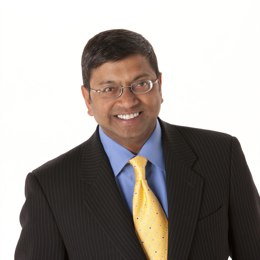
Katie Renouf, Mesirow
"An automated solution with consistent workflow for all activity allows managers to choose their execution times to allow better alignment with security execution, and because the spread is pre-negotiated, there is consistency in pricing and cost transparency," added Taylor.
Scott Gold, the Head of Sales for Americas at BidFX, agreed that clients need technology and execution management platforms that are built to handle rapid decision-making and execution. He added that automation is becoming common practice to capture favorable pricing opportunities while mitigating risk.
Managers will need to carefully think about the trade-related FX element of the investment decision because FX liquidity dries up on a Friday afternoon in USD versus all currencies, and then the dollar market closes for the US weekend. This is particularly acute - and needs careful planning - when a US public holiday falls on a Monday.
Overcoming Trade-Related FX Risks
"In our view, it is possible to address many of the risks of the trade-related FX issue, but there is no ready-made solution for sourcing FX in a closed market," said Gerard Walsh, the Global Head of Capital Markets Client Solutions at Northern Trust. "Managers will need to know and understand the sources, availability of, and cost of any liquidity solutions (overdrafts, use of derivatives, other cash-like instruments) they intend to use."
He suggested that the key to the simultaneous execution of equity and currency trades is working with as few actors as possible and only with those who have embedded high levels of automation into the full lifecycle of the trade.
Katie Renouf, the Senior Vice President of Mesirow's Global Investment Management distribution team, noted that a huge volume of trades are currently settled via CLS, but its current cut-off times will not work for the shift to T+1.
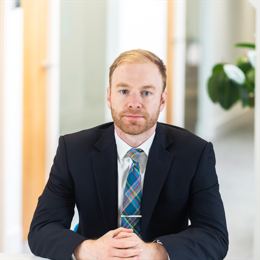
Gerard Walsh, Northern Trust
Earlier this month, CLS confirmed that it would not make any operational changes to its settlement ahead of T+1 implementation in the US.
"Settling trades outside of CLS not only heightens settlement risk but potentially has a knock-on impact on bank credit lines,” says Renouf, who says some clients are considering opening spot desks in North America.
She observed that simultaneous execution of equity and currency trades is already being done but that there is a risk of trades failing and the FX having to be reversed at the prevailing market rate.
"Furthermore, clients often don’t know the exact figure they need to fund so they are working from estimates based on screen price. My guess is that most people that are trading on estimates are buying or selling 90-95% of the target amount and will do a true-up trade once the final amounts are known."
The risk factors associated with the transition have not been sufficiently addressed at an industry-wide level, and although individual firms are taking steps to minimize the impact, they will be up against it to match their equity trades and execute the FX trade required to source dollars to settle the equity trades.
That is the view of Vikas Srivastava, the Chief Revenue Officer at Integral, who said that the optimal workflow is an automated sequential workflow of equity execution followed by equity trade confirmation, which in turn is followed by currency trade execution.
Vikas Srivastava, Integral
"The burden falls largely on asset managers buying US equities," he said. "There appears to be an opportunity for banks to play a greater supporting role for their asset management clients in navigating these challenges by connecting their FX price discovery and execution services via APIs to the asset managers’ FX order and execution management systems."
Addressing Transition Risks
There is also an expectation of increased demand for STP operational-type services after the change comes into effect, which leads Nathan Vurgest, the Director and Head of Trading at Record Financial Group to believe that the potential effects have not yet been fully addressed across the market.
"The issue around simultaneous execution of equity and currency trades isn’t that it is operationally challenging, it is more that it would be expected to increase the costs of FX trading as you would assume that the FX trade would often not be done by an independent FX trading desk with full focus, but instead either by a custodian or an automated STP workflow process at a bank on the back of (or tagged to) another asset trade," he said.
The settlement cycle mismatch between the US, the UK, and the EU is likely to last for at least three years.
Nathan Vurgest, Record Financial Group
"The UK's accelerated settlement taskforce has proposed 2027 as the earliest the UK can move," says Walsh. "The European landscape is even more complex, and it would be courageous to suggest anything earlier than later this decade is feasible given the need to coordinate multiple exchanges and currencies, at least a couple of time zones, and numerous political and regulatory organizations."
Vurgest observed that the UK is expected to be the first European country to move to T+1 and that although the EU could follow by 2027, "it could be towards 2030 given the number of jurisdictions and approvals required."
With just weeks to go before the US moves to the T+1 securities settlement, market participants should be carefully assessing their capacity to fund securities settlements with a related FX trade.
It has been almost a year since the FX division of the Global Financial Markets Association stated in a report entitled "FX Considerations for T+1 US Securities Settlement" that the switch to faster settlement raised the risk that transaction funding dependent on FX settlement might not occur in time based on the requirement for matching, confirmation, and payment of trades to be completed within local currency cut-off times.
The Foreign Exchange Professionals Association published guidance late last year advocating for traders to conduct a full review of the implications of the new settlement timeframe, taking into account factors such as trading relationships, credit and operational processes, and funding.
Preparing for T+1 Securities Settlement
"Institutions should automate as much of the workflow as possible and be prepared to make changes to their current workflow,” suggested Tara Taylor, the Head of North America StreetFX Pricing Services, who said simultaneous execution of equity and currency trades depends on workflow, technology, and the internal trade execution and operation function set-up.
She said workflow evaluation should consider where equity and FX execution is taking place and whether it is done through a centralized team or across multiple locations.
Katie Renouf, Mesirow
"An automated solution with consistent workflow for all activity allows managers to choose their execution times to allow better alignment with security execution, and because the spread is pre-negotiated, there is consistency in pricing and cost transparency," added Taylor.
Scott Gold, the Head of Sales for Americas at BidFX, agreed that clients need technology and execution management platforms that are built to handle rapid decision-making and execution. He added that automation is becoming common practice to capture favorable pricing opportunities while mitigating risk.
Managers will need to carefully think about the trade-related FX element of the investment decision because FX liquidity dries up on a Friday afternoon in USD versus all currencies, and then the dollar market closes for the US weekend. This is particularly acute - and needs careful planning - when a US public holiday falls on a Monday.
Overcoming Trade-Related FX Risks
"In our view, it is possible to address many of the risks of the trade-related FX issue, but there is no ready-made solution for sourcing FX in a closed market," said Gerard Walsh, the Global Head of Capital Markets Client Solutions at Northern Trust. "Managers will need to know and understand the sources, availability of, and cost of any liquidity solutions (overdrafts, use of derivatives, other cash-like instruments) they intend to use."
He suggested that the key to the simultaneous execution of equity and currency trades is working with as few actors as possible and only with those who have embedded high levels of automation into the full lifecycle of the trade.
Katie Renouf, the Senior Vice President of Mesirow's Global Investment Management distribution team, noted that a huge volume of trades are currently settled via CLS, but its current cut-off times will not work for the shift to T+1.
Gerard Walsh, Northern Trust
Earlier this month, CLS confirmed that it would not make any operational changes to its settlement ahead of T+1 implementation in the US.
"Settling trades outside of CLS not only heightens settlement risk but potentially has a knock-on impact on bank credit lines,” says Renouf, who says some clients are considering opening spot desks in North America.
She observed that simultaneous execution of equity and currency trades is already being done but that there is a risk of trades failing and the FX having to be reversed at the prevailing market rate.
"Furthermore, clients often don’t know the exact figure they need to fund so they are working from estimates based on screen price. My guess is that most people that are trading on estimates are buying or selling 90-95% of the target amount and will do a true-up trade once the final amounts are known."
The risk factors associated with the transition have not been sufficiently addressed at an industry-wide level, and although individual firms are taking steps to minimize the impact, they will be up against it to match their equity trades and execute the FX trade required to source dollars to settle the equity trades.
That is the view of Vikas Srivastava, the Chief Revenue Officer at Integral, who said that the optimal workflow is an automated sequential workflow of equity execution followed by equity trade confirmation, which in turn is followed by currency trade execution.
Vikas Srivastava, Integral
"The burden falls largely on asset managers buying US equities," he said. "There appears to be an opportunity for banks to play a greater supporting role for their asset management clients in navigating these challenges by connecting their FX price discovery and execution services via APIs to the asset managers’ FX order and execution management systems."
Addressing Transition Risks
There is also an expectation of increased demand for STP operational-type services after the change comes into effect, which leads Nathan Vurgest, the Director and Head of Trading at Record Financial Group to believe that the potential effects have not yet been fully addressed across the market.
"The issue around simultaneous execution of equity and currency trades isn’t that it is operationally challenging, it is more that it would be expected to increase the costs of FX trading as you would assume that the FX trade would often not be done by an independent FX trading desk with full focus, but instead either by a custodian or an automated STP workflow process at a bank on the back of (or tagged to) another asset trade," he said.
The settlement cycle mismatch between the US, the UK, and the EU is likely to last for at least three years.
Nathan Vurgest, Record Financial Group
"The UK's accelerated settlement taskforce has proposed 2027 as the earliest the UK can move," says Walsh. "The European landscape is even more complex, and it would be courageous to suggest anything earlier than later this decade is feasible given the need to coordinate multiple exchanges and currencies, at least a couple of time zones, and numerous political and regulatory organizations."
Vurgest observed that the UK is expected to be the first European country to move to T+1 and that although the EU could follow by 2027, "it could be towards 2030 given the number of jurisdictions and approvals required."
Paul Golden is an experienced freelance financial journalist with a strong institutional background. Over the past two decades, he has written for globally recognised financial publications, covering topics such as market structure, regulation, trading behaviour, and economic policy.
42% of Swiss Financial Firms Have No Digital Fraud Policy, FINMA Finds
FP Markets Winner Spotlight 🏆 | Global Broker of the Year 2025 #Trading #Broker #Innovation #Shorts
FP Markets Winner Spotlight 🏆 | Global Broker of the Year 2025 #Trading #Broker #Innovation #Shorts
FP Markets takes the spotlight as Global Broker of the Year 2025 at the Finance Magnates Awards.
Martin Stoilov, Head of Client Experience, shares that trust, innovation, and people played a key role in the company’s success, supported by a strong foundation of integrity and client-centricity.
Following this milestone, FP Markets continues to focus on growth, technology investment, and its core values of transparency and excellence.
👉 Be part of FM Awards 2026: https://awards.financemagnates.com/#nominate
FP Markets takes the spotlight as Global Broker of the Year 2025 at the Finance Magnates Awards.
Martin Stoilov, Head of Client Experience, shares that trust, innovation, and people played a key role in the company’s success, supported by a strong foundation of integrity and client-centricity.
Following this milestone, FP Markets continues to focus on growth, technology investment, and its core values of transparency and excellence.
👉 Be part of FM Awards 2026: https://awards.financemagnates.com/#nominate
In this video, we review @HolaPrimeMarketsOfficial, a multi-asset forex and CFDs broker offering different account types, trading platforms, and flexible trading conditions.
We cover the broker’s overall offering, including account options, trading environment, platforms like MT4 and MT5, and additional services such as managed accounts and fast withdrawals.
Watch the full video to see if Hola Prime Markets fits your trading needs.
📣 Stay up to date with the latest in finance and trading. Follow Finance Magnates for industry news, insights, and global event coverage.
Connect with us:
🔗 LinkedIn: /financemagnates
👍 Facebook: /financemagnates
📸 Instagram: https://www.instagram.com/financemagnates
🐦 X: https://x.com/financemagnates
🎥 TikTok: https://www.tiktok.com/tag/financemagnates
▶️ YouTube: /@financemagnates_official
#HolaPrime #ForexBroker #CFDTrading #FinanceMagnates #Trading #Forex #BrokerReview
In this video, we review @HolaPrimeMarketsOfficial, a multi-asset forex and CFDs broker offering different account types, trading platforms, and flexible trading conditions.
We cover the broker’s overall offering, including account options, trading environment, platforms like MT4 and MT5, and additional services such as managed accounts and fast withdrawals.
Watch the full video to see if Hola Prime Markets fits your trading needs.
📣 Stay up to date with the latest in finance and trading. Follow Finance Magnates for industry news, insights, and global event coverage.
Connect with us:
🔗 LinkedIn: /financemagnates
👍 Facebook: /financemagnates
📸 Instagram: https://www.instagram.com/financemagnates
🐦 X: https://x.com/financemagnates
🎥 TikTok: https://www.tiktok.com/tag/financemagnates
▶️ YouTube: /@financemagnates_official
#HolaPrime #ForexBroker #CFDTrading #FinanceMagnates #Trading #Forex #BrokerReview
Hola Prime Review: What You Need to Know | Full Breakdown by Finance Magnates
Hola Prime Review: What You Need to Know | Full Breakdown by Finance Magnates
In this video, we review @HolaPrime_Global, a proprietary trading firm offering evaluation programs and performance-based payouts in simulated market environments.
We cover how the challenge model works, including account types, profit splits (up to 95%), trading rules, and what it takes to reach a funded account. You’ll also learn about available platforms like MT4, MT5, cTrader, and more, along with insights into payouts, support, and trading conditions.
Watch the full video to see if Hola Prime fits your trading style.
📣 Stay up to date with the latest in finance and trading. Follow Finance Magnates for industry news, insights, and global event coverage.
Connect with us:
🔗 LinkedIn: /financemagnates
👍 Facebook: /financemagnates
📸 Instagram: https://www.instagram.com/financemagnates
🐦 X: https://x.com/financemagnates
🎥 TikTok: https://www.tiktok.com/tag/financemagnates
▶️ YouTube: /@financemagnates_official
#HolaPrime #PropFirm #Trading #FinanceMagnates #Forex #FuturesTrading #TradingReview #PropFirmReview
In this video, we review @HolaPrime_Global, a proprietary trading firm offering evaluation programs and performance-based payouts in simulated market environments.
We cover how the challenge model works, including account types, profit splits (up to 95%), trading rules, and what it takes to reach a funded account. You’ll also learn about available platforms like MT4, MT5, cTrader, and more, along with insights into payouts, support, and trading conditions.
Watch the full video to see if Hola Prime fits your trading style.
📣 Stay up to date with the latest in finance and trading. Follow Finance Magnates for industry news, insights, and global event coverage.
Connect with us:
🔗 LinkedIn: /financemagnates
👍 Facebook: /financemagnates
📸 Instagram: https://www.instagram.com/financemagnates
🐦 X: https://x.com/financemagnates
🎥 TikTok: https://www.tiktok.com/tag/financemagnates
▶️ YouTube: /@financemagnates_official
#HolaPrime #PropFirm #Trading #FinanceMagnates #Forex #FuturesTrading #TradingReview #PropFirmReview
Axi Winner Spotlight 🏆 | Global Most Innovative Broker 2025 #Innovation #Trading #Fintech #Broker
Axi Winner Spotlight 🏆 | Global Most Innovative Broker 2025 #Innovation #Trading #Fintech #Broker
Axi takes the spotlight at the Finance Magnates Awards, winning Global Most Innovative Broker 2025.
Olivia Xenofontos and Ivanna Openko share how the team will feel: proud, motivated, and ready to keep delivering.
They also describe the night as well-organized, focused, and enjoyable for all.
👉 Be part of FM Awards 2026.
Axi takes the spotlight at the Finance Magnates Awards, winning Global Most Innovative Broker 2025.
Olivia Xenofontos and Ivanna Openko share how the team will feel: proud, motivated, and ready to keep delivering.
They also describe the night as well-organized, focused, and enjoyable for all.
👉 Be part of FM Awards 2026.
Recognition that matters.
Built on transparency.
Driven by the industry.
The Finance Magnates Awards 2026.
Nominations are now open.
🔗 https://awards.financemagnates.com/?utm_source=SM&utm_medium=social&utm_campaign=recognition-matters
Recognition that matters.
Built on transparency.
Driven by the industry.
The Finance Magnates Awards 2026.
Nominations are now open.
🔗 https://awards.financemagnates.com/?utm_source=SM&utm_medium=social&utm_campaign=recognition-matters