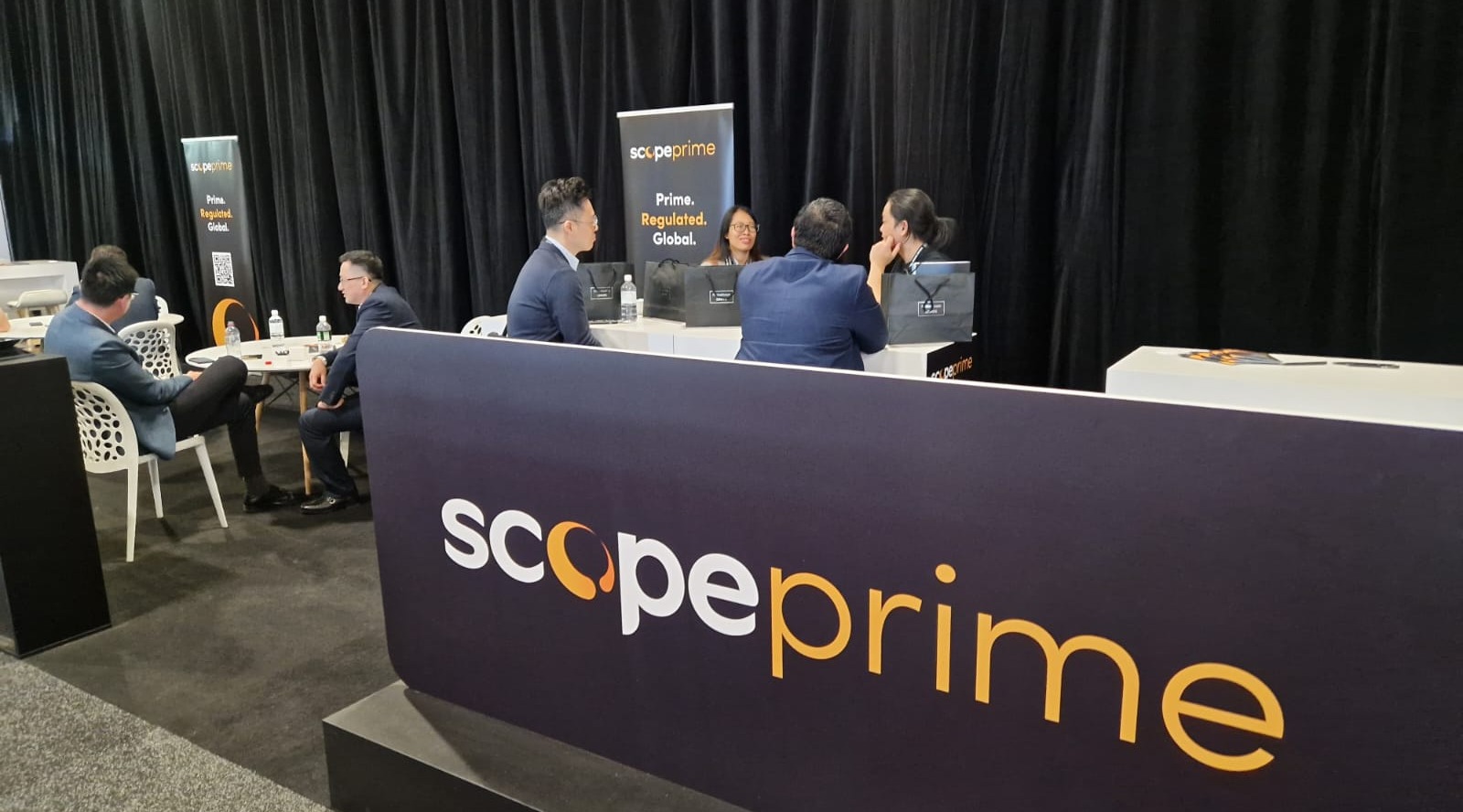
Scope Prime, the institutional liquidity brand under the Rostro Group, has expanded its offering beyond its core contracts for differences (CFDs) and launched a futures and options trading service.
Direct Access to On-Exchange Liquidity
Announced today (Thursday), the platform will now offer professional market participants direct access to on-exchange liquidity across multiple global exchanges, including the CME, Eurex, ICE, and CBOT.

“We know market participants are becoming more sensitive to execution quality, pricing transparency, and counterparty risk management,” said Saul Knapp, Managing Director, Futures & Options, at Rostro Group.
“Our futures and options offering complements our established OTC suite by providing direct market access to regulated, on-exchange liquidity, offering an alternative to traditional broker-delivered OTC execution.”
Scope Prime is offering futures and options trading through three platforms: MT5, CQG, and Trading Technologies (TT).
- Scope Prime Integrates Liquidity from Crypto Exchanges and Market Makers for CFDs
- Scope Prime Adds 77 Altcoins, Offering Round-the-Clock Crypto Liquidity
- Scope Prime Stretches the Trading Clock for Big Tech Names
Futures Is the Future?
The popularity of futures and options instruments among existing CFD brokers has been growing for several years. London-listed IG Group entered the United States after acquiring tastytrade for $1 billion in 2021. Plus500 followed a similar path, acquiring a US-based derivatives broker, and now generates a significant share of revenue from its non-OTC offerings.
Other large CFD broker brands offering futures and options include AvaTrade, XTB, and Saxo.
Although CFDs differ from futures and options, the latter reduce counterparty risk for institutional clients placing larger orders. They also remove the overnight financing fees linked to CFD trading.
“Our role is to make it accessible, commercially viable, and operationally practical for professional clients by providing access to level 2 pricing, connecting clients directly to the central limit order book, and ensuring orders are filled at the best available market price,” Knapp added.