The British regulator warns against impersonating the popular bank.
This month is another warning from the FCA about a clone firm.
Are you a
customer of Santander Bank? In that case, you should be wary of a clone
impersonating the international institution on the Internet. This week, the
UK's Financial Conduct Authority (FCA) issued a warning about the dishonest
entity, cautioning consumers against another clone in the UK market.
Beware of Santander Bank
Finance
According
to the FCA
warning published yesterday (Tuesday), an entity operating in the British
market called Santander Bank Finance offers financial and banking services
through the website santanderbank-finances.com, impersonating the
regulator-licensed and globally recognized Santander Bank.
Although
the clone company's site should immediately raise a red flag for consumers, the
FCA noted that the fake entity uses the contact details of the original
institution and may try to reach out to individuals in Great Britain and
Europe.
This is
how the clone's site, Santander Bank Finance, appears:
Source: Santander
And this
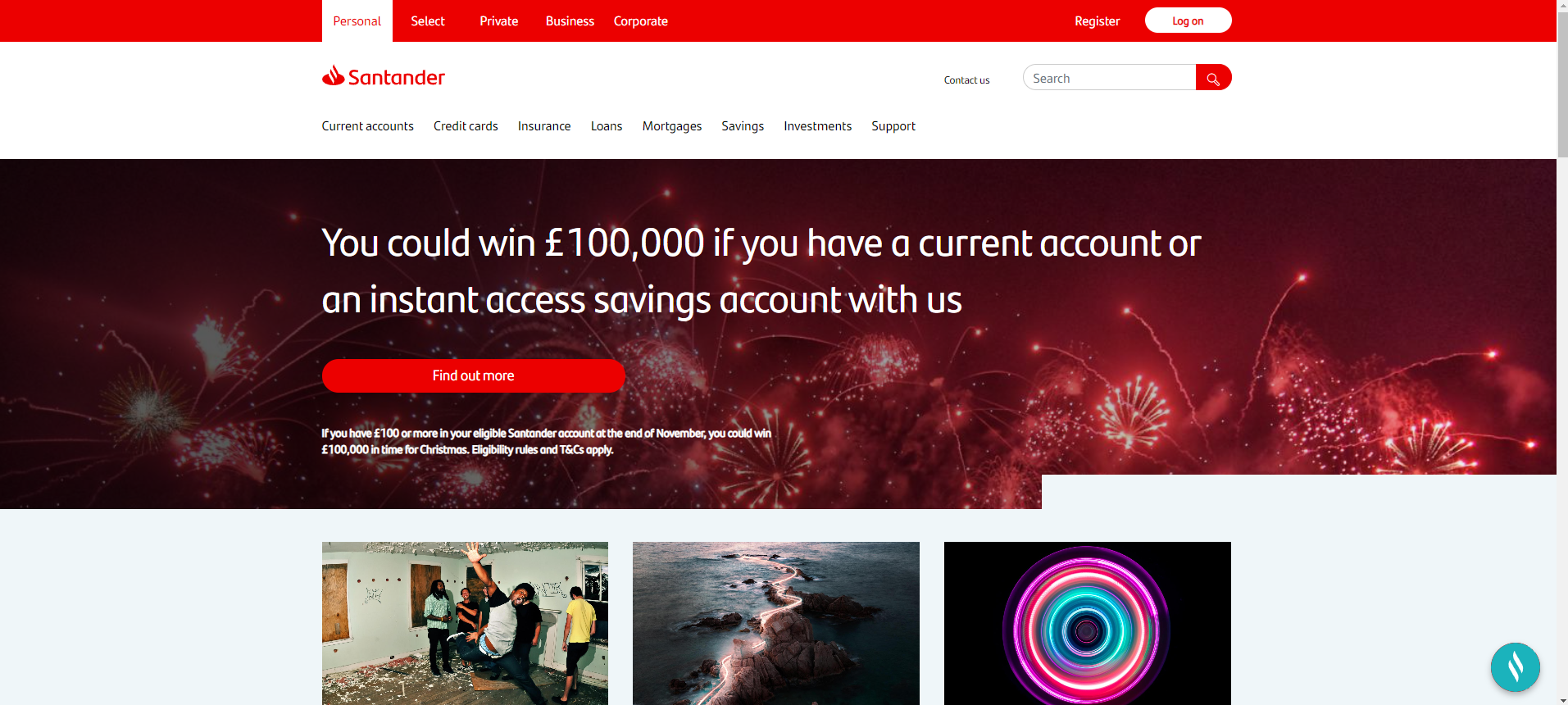
is what the original Santander Bank's UK site looks like:
Source: Fake Santander's website
"If
you deal with this firm, you won't have access to the Financial Ombudsman
Service if you have a complaint. You also won't be protected by the Financial
Services Compensation Scheme (FSCS) if things go wrong. This means it's
unlikely you'd get your money back if the firm goes out of business," the
FCA reminded in its official statement.
Below
are the contact details provided by the clone firm:
This is the
second time this month that the FCA has highlighted the activities of clone
firms. Finance Magnates reported on 1 November that the regulator had
warned about the activities of an entity impersonating Saxo Bank.
Why Clones Are Dangerous?
Clone firms
are fraudulent entities that mimic legitimate companies, often by using their
name, address, and Firm Reference Number to appear credible. They may
also copy the website design and branding of the genuine company they are
impersonating.
The danger
of clone firms lies in their deception. They exploit the public's trust in
legitimate financial institutions to defraud individuals. When dealing with
clone firms, individuals may believe they are investing in secure and
profitable financial products or services, but instead, they risk losing their
money to scams.
Additionally,
because these clone firms are not actually registered or regulated, victims
have very limited protection or recourse for the funds they may lose. This can
lead to significant financial loss. Consumers need to verify the legitimacy of
a company before engaging in any financial transactions, using official
regulatory websites or direct contact methods to ensure they are dealing with
the proper firm.
Are you a
customer of Santander Bank? In that case, you should be wary of a clone
impersonating the international institution on the Internet. This week, the
UK's Financial Conduct Authority (FCA) issued a warning about the dishonest
entity, cautioning consumers against another clone in the UK market.
Beware of Santander Bank
Finance
According
to the FCA
warning published yesterday (Tuesday), an entity operating in the British
market called Santander Bank Finance offers financial and banking services
through the website santanderbank-finances.com, impersonating the
regulator-licensed and globally recognized Santander Bank.
Although
the clone company's site should immediately raise a red flag for consumers, the
FCA noted that the fake entity uses the contact details of the original
institution and may try to reach out to individuals in Great Britain and
Europe.
This is
how the clone's site, Santander Bank Finance, appears:
Source: Santander
And this
is what the original Santander Bank's UK site looks like:
Source: Fake Santander's website
"If
you deal with this firm, you won't have access to the Financial Ombudsman
Service if you have a complaint. You also won't be protected by the Financial
Services Compensation Scheme (FSCS) if things go wrong. This means it's
unlikely you'd get your money back if the firm goes out of business," the
FCA reminded in its official statement.
Below
are the contact details provided by the clone firm:
This is the
second time this month that the FCA has highlighted the activities of clone
firms. Finance Magnates reported on 1 November that the regulator had
warned about the activities of an entity impersonating Saxo Bank.
Why Clones Are Dangerous?
Clone firms
are fraudulent entities that mimic legitimate companies, often by using their
name, address, and Firm Reference Number to appear credible. They may
also copy the website design and branding of the genuine company they are
impersonating.
The danger
of clone firms lies in their deception. They exploit the public's trust in
legitimate financial institutions to defraud individuals. When dealing with
clone firms, individuals may believe they are investing in secure and
profitable financial products or services, but instead, they risk losing their
money to scams.
Additionally,
because these clone firms are not actually registered or regulated, victims
have very limited protection or recourse for the funds they may lose. This can
lead to significant financial loss. Consumers need to verify the legitimacy of
a company before engaging in any financial transactions, using official
regulatory websites or direct contact methods to ensure they are dealing with
the proper firm.
Damian Chmiel is a Senior Analyst & Editor at Finance Magnates with more than 15 years of experience in the CFD and online trading industry. Active as both a trader and journalist since 2010, he focuses on broker coverage, fintech innovation, and regulatory developments across Europe, the Middle East, and Asia.
His work includes interviews with C-level leaders at major brokerages and fintech platforms, as well as co-authoring Finance Magnates’ quarterly industry benchmarking reports. Damian’s reporting is data-driven, market-aware, and grounded in direct industry engagement. His analysis and commentary have also been cited by external media outlets, including Investing.com, Binance, The Asset, Stockhead, and Dispatch.
Education:
MA in Finance and Accounting, Cracow University of Economics
Retail Traders Can Now Access Prediction Markets Through Binance Wallet
FP Markets Winner Spotlight 🏆 | Global Broker of the Year 2025 #Trading #Broker #Innovation #Shorts
FP Markets Winner Spotlight 🏆 | Global Broker of the Year 2025 #Trading #Broker #Innovation #Shorts
FP Markets takes the spotlight as Global Broker of the Year 2025 at the Finance Magnates Awards.
Martin Stoilov, Head of Client Experience, shares that trust, innovation, and people played a key role in the company’s success, supported by a strong foundation of integrity and client-centricity.
Following this milestone, FP Markets continues to focus on growth, technology investment, and its core values of transparency and excellence.
👉 Be part of FM Awards 2026: https://awards.financemagnates.com/#nominate
FP Markets takes the spotlight as Global Broker of the Year 2025 at the Finance Magnates Awards.
Martin Stoilov, Head of Client Experience, shares that trust, innovation, and people played a key role in the company’s success, supported by a strong foundation of integrity and client-centricity.
Following this milestone, FP Markets continues to focus on growth, technology investment, and its core values of transparency and excellence.
👉 Be part of FM Awards 2026: https://awards.financemagnates.com/#nominate
In this video, we review @HolaPrimeMarketsOfficial, a multi-asset forex and CFDs broker offering different account types, trading platforms, and flexible trading conditions.
We cover the broker’s overall offering, including account options, trading environment, platforms like MT4 and MT5, and additional services such as managed accounts and fast withdrawals.
Watch the full video to see if Hola Prime Markets fits your trading needs.
📣 Stay up to date with the latest in finance and trading. Follow Finance Magnates for industry news, insights, and global event coverage.
Connect with us:
🔗 LinkedIn: /financemagnates
👍 Facebook: /financemagnates
📸 Instagram: https://www.instagram.com/financemagnates
🐦 X: https://x.com/financemagnates
🎥 TikTok: https://www.tiktok.com/tag/financemagnates
▶️ YouTube: /@financemagnates_official
#HolaPrime #ForexBroker #CFDTrading #FinanceMagnates #Trading #Forex #BrokerReview
In this video, we review @HolaPrimeMarketsOfficial, a multi-asset forex and CFDs broker offering different account types, trading platforms, and flexible trading conditions.
We cover the broker’s overall offering, including account options, trading environment, platforms like MT4 and MT5, and additional services such as managed accounts and fast withdrawals.
Watch the full video to see if Hola Prime Markets fits your trading needs.
📣 Stay up to date with the latest in finance and trading. Follow Finance Magnates for industry news, insights, and global event coverage.
Connect with us:
🔗 LinkedIn: /financemagnates
👍 Facebook: /financemagnates
📸 Instagram: https://www.instagram.com/financemagnates
🐦 X: https://x.com/financemagnates
🎥 TikTok: https://www.tiktok.com/tag/financemagnates
▶️ YouTube: /@financemagnates_official
#HolaPrime #ForexBroker #CFDTrading #FinanceMagnates #Trading #Forex #BrokerReview
Hola Prime Review: What You Need to Know | Full Breakdown by Finance Magnates
Hola Prime Review: What You Need to Know | Full Breakdown by Finance Magnates
In this video, we review @HolaPrime_Global, a proprietary trading firm offering evaluation programs and performance-based payouts in simulated market environments.
We cover how the challenge model works, including account types, profit splits (up to 95%), trading rules, and what it takes to reach a funded account. You’ll also learn about available platforms like MT4, MT5, cTrader, and more, along with insights into payouts, support, and trading conditions.
Watch the full video to see if Hola Prime fits your trading style.
📣 Stay up to date with the latest in finance and trading. Follow Finance Magnates for industry news, insights, and global event coverage.
Connect with us:
🔗 LinkedIn: /financemagnates
👍 Facebook: /financemagnates
📸 Instagram: https://www.instagram.com/financemagnates
🐦 X: https://x.com/financemagnates
🎥 TikTok: https://www.tiktok.com/tag/financemagnates
▶️ YouTube: /@financemagnates_official
#HolaPrime #PropFirm #Trading #FinanceMagnates #Forex #FuturesTrading #TradingReview #PropFirmReview
In this video, we review @HolaPrime_Global, a proprietary trading firm offering evaluation programs and performance-based payouts in simulated market environments.
We cover how the challenge model works, including account types, profit splits (up to 95%), trading rules, and what it takes to reach a funded account. You’ll also learn about available platforms like MT4, MT5, cTrader, and more, along with insights into payouts, support, and trading conditions.
Watch the full video to see if Hola Prime fits your trading style.
📣 Stay up to date with the latest in finance and trading. Follow Finance Magnates for industry news, insights, and global event coverage.
Connect with us:
🔗 LinkedIn: /financemagnates
👍 Facebook: /financemagnates
📸 Instagram: https://www.instagram.com/financemagnates
🐦 X: https://x.com/financemagnates
🎥 TikTok: https://www.tiktok.com/tag/financemagnates
▶️ YouTube: /@financemagnates_official
#HolaPrime #PropFirm #Trading #FinanceMagnates #Forex #FuturesTrading #TradingReview #PropFirmReview
Axi Winner Spotlight 🏆 | Global Most Innovative Broker 2025 #Innovation #Trading #Fintech #Broker
Axi Winner Spotlight 🏆 | Global Most Innovative Broker 2025 #Innovation #Trading #Fintech #Broker
Axi takes the spotlight at the Finance Magnates Awards, winning Global Most Innovative Broker 2025.
Olivia Xenofontos and Ivanna Openko share how the team will feel: proud, motivated, and ready to keep delivering.
They also describe the night as well-organized, focused, and enjoyable for all.
👉 Be part of FM Awards 2026.
Axi takes the spotlight at the Finance Magnates Awards, winning Global Most Innovative Broker 2025.
Olivia Xenofontos and Ivanna Openko share how the team will feel: proud, motivated, and ready to keep delivering.
They also describe the night as well-organized, focused, and enjoyable for all.
👉 Be part of FM Awards 2026.
Recognition that matters.
Built on transparency.
Driven by the industry.
The Finance Magnates Awards 2026.
Nominations are now open.
🔗 https://awards.financemagnates.com/?utm_source=SM&utm_medium=social&utm_campaign=recognition-matters
Recognition that matters.
Built on transparency.
Driven by the industry.
The Finance Magnates Awards 2026.
Nominations are now open.
🔗 https://awards.financemagnates.com/?utm_source=SM&utm_medium=social&utm_campaign=recognition-matters