Financial and Business News

Retail Investors Get a Shot at SpaceX as Wall Street Fights Over a $75 Billion IPO

Thursday, 02/04/2026 | 09:42 GMT by Anndy Lian
  • Starlink exceeds 10M users, with projected $16B+ revenue driving SpaceX valuation.
  • Orbital data centers aim to bypass Earth’s energy and cooling limits for AI scaling.
SpaceX IPO

A seismic event is reshaping the landscape of human finance. Wall Street has erupted as every top-tier investment bank, including Goldman Sachs, Morgan Stanley, Bank of America, and UBS, competes fiercely for underwriting rights to a single project: SpaceX. This week, Elon Musk's space exploration company prepares for an initial public offering with staggering implications.

Singapore Summit: Meet the largest APAC brokers you know (and those you still don't!).

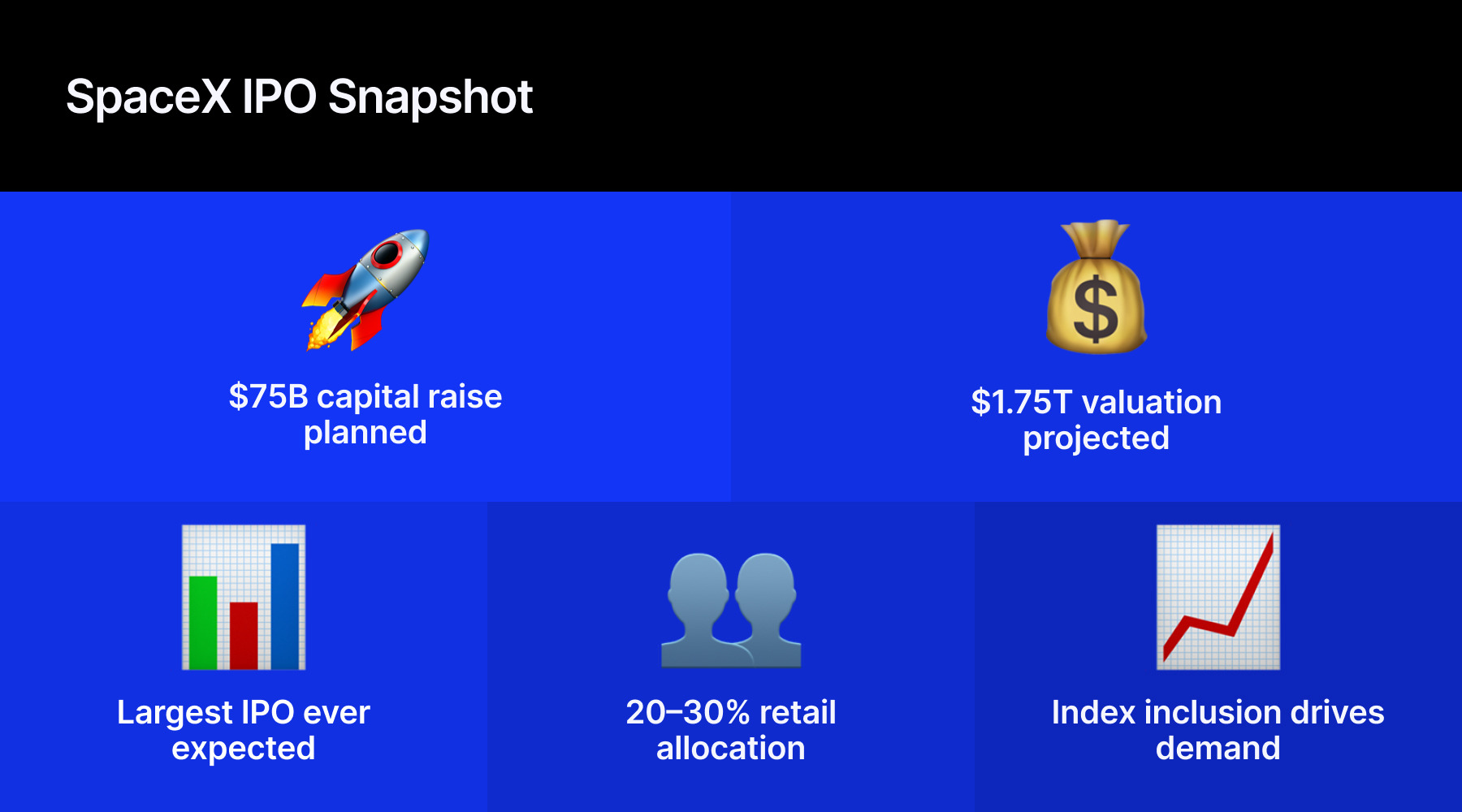
The company plans to raise $75 billion from markets, with an overall valuation projected between $1.25 trillion and $1.75 trillion. To put these figures into context, consider that Saudi Aramco's historic IPO, which shook global markets, pales in comparison. SpaceX's fundraising target is 3 times larger. This will stand as the largest IPO in capital market history, without exception.
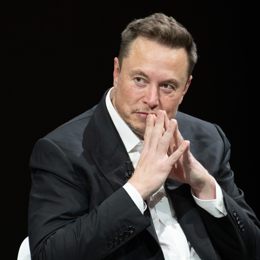
Elon Musk, founder and CEO at SpaceX

Many observers dismiss this as merely another cash-intensive venture seeking public funds. Such a view misses the epoch-defining opportunity and fails to grasp the magnitude of Musk's strategic vision.

SpaceX has grown far beyond a rocket manufacturing company. Musk is integrating Starlink, AI computing infrastructure, and global networks to establish what amounts to a franchise for cross-planetary infrastructure.

This analysis examines this through four critical lenses. The implications extend beyond technology to address how ordinary investors might position themselves for historic wealth redistribution.

Part One: A Dimensional Strike Against Traditional Market Mechanics

SpaceX's approach to capital markets represents a fundamental departure from conventional IPO strategy. Traditional public offerings require executives to conduct extensive roadshows, essentially petitioning institutional investors while facing downward pressure on valuation. SpaceX has inverted this dynamic entirely.

The company has introduced what can only be described as an assertive structural advantage. Reports indicate SpaceX is demanding “special treatment” from Nasdaq: immediate or early inclusion in core indices, specifically the Nasdaq-100, upon first-day trading.

This requirement carries profound implications. Trillions of dollars in U.S. equities are held in passive index funds and ETFs. These fund managers do not conduct active research. Their mandate requires them to replicate index composition. When a stock enters an index, these managers must purchase it immediately and unconditionally, regardless of valuation or first-day price movement.

Musk has essentially guaranteed that passive funds will absorb the offering on day one, securing the success of this massive issuance. This structure could trigger an intense short squeeze at market open, dismantling Wall Street's traditional pricing authority.
SpaceX IPO

SpaceX reportedly plans to allocate 20 to 30 percent of shares directly to retail investors, potentially without the standard 6-month lock-up period. This decision reflects a sophisticated understanding of market dynamics.

Musk experienced the power of retail investors during Tesla's battles with short sellers, where coordinated retail activity fundamentally altered market outcomes. He recognizes his influence among global retail investors.

This retail allocation provides the offering with exceptional liquidity while serving a strategic purpose. It counters institutional price suppression through grassroots enthusiasm, while index-inclusion rules compel passive funds to participate. From a capital strategy perspective, this represents a masterful integration of retail mobilization and regulatory structure.

Part Two: An Irreplaceable Revenue Architecture

Examining SpaceX's valuation through launch services alone is incomplete. The company’s primary cash flow engine and competitive moat is Starlink.

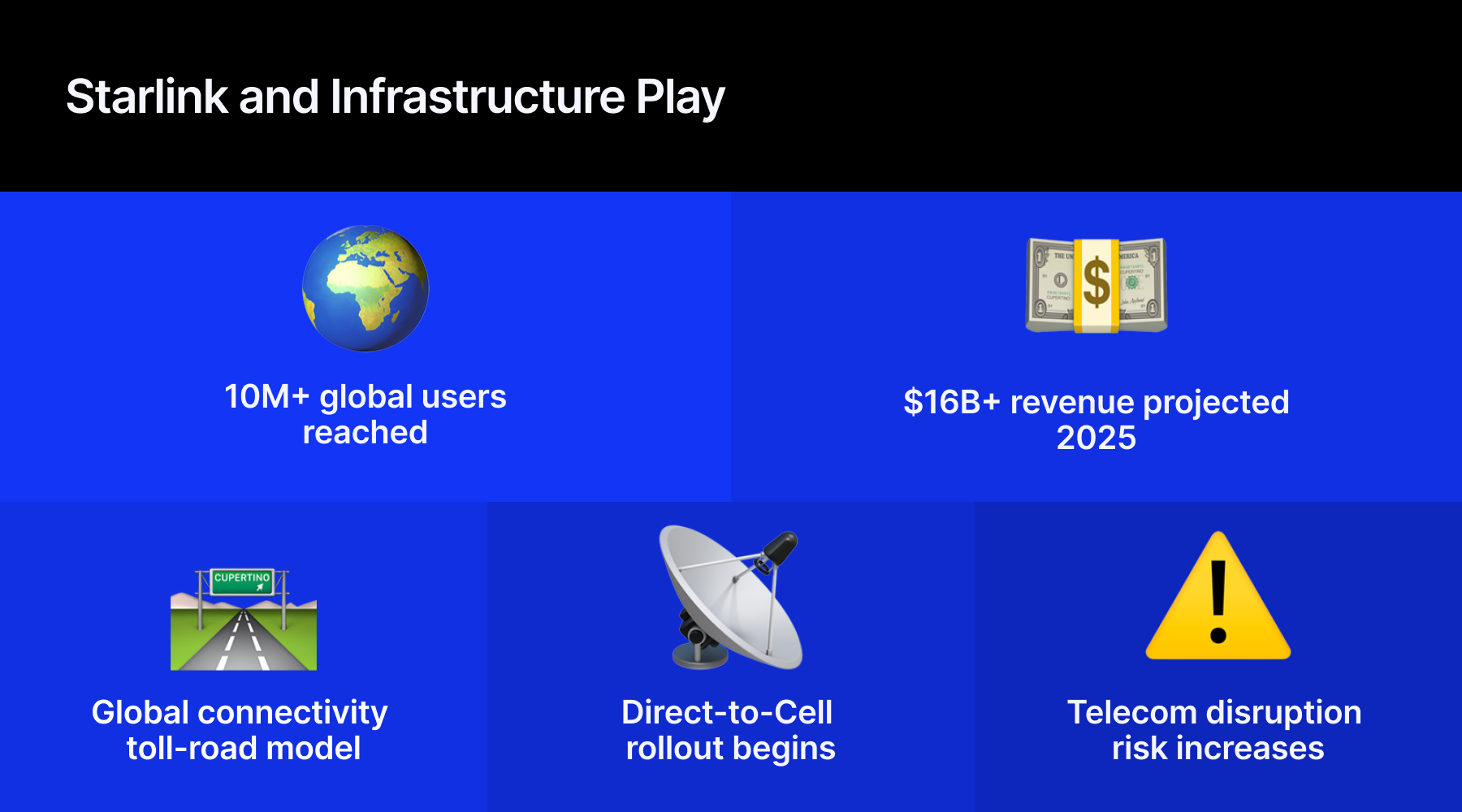
Often mischaracterized as a rural internet service, Starlink has established a de facto monopoly in low-Earth-orbit satellite communications. Projected 2025 revenue exceeds $16 billion, with over 10 million global users and continued subscriber growth.

Its model resembles a global toll-road for connectivity. As work becomes increasingly distributed, reliable internet access—not location—defines productivity. Starlink extends high-quality connectivity across remote, maritime, and in-flight environments.

The rollout of Direct-to-Cell, enabling phones to connect directly to satellites, further expands its reach. At scale, this could challenge traditional telecommunications carriers.

By controlling a global, terrain-independent communications network, Starlink positions itself as a critical access layer for next-generation connectivity, with durable, infrastructure-like cash flows.

Part Three: Space-Based Computing as a Technological Paradigm

The third pillar supporting SpaceX's valuation extends beyond current technological frameworks. Following the acquisition of xAI, Musk is constructing a space-based computing network to address fundamental constraints on artificial intelligence development.

AI progress is increasingly limited not by algorithms or chips, but by energy consumption and thermal management. As demand for advanced GPU clusters rises, Earth's power grids, land availability, and cooling water resources are approaching practical limits. Environmental and regulatory pressures further restrict expansion of large-scale data centers.

Musk's proposed solution is to relocate computing infrastructure into orbit. Space-based data centers could operate in continuous sunlight, using large solar arrays for energy, while the near-zero temperatures of space enable efficient thermal management. This removes key physical constraints facing terrestrial AI infrastructure.

The model integrates SpaceX's launch capabilities, xAI's computing needs, and Starlink's data transmission network. Together, this forms a closed-loop system linking orbital infrastructure with Earth-based users.

If viable, this approach could position SpaceX beyond aerospace logistics, creating a structural advantage over traditional data center operators reliant on terrestrial energy and cooling systems. However, execution remains uncertain.

Part Four: A Sovereignty-Transcending Infrastructure Platform

Viewed at a macro level, SpaceX represents a shift beyond traditional corporate models. Historically, large companies have depended on national infrastructure and regulatory systems. SpaceX is moving toward partial independence from these constraints.

The company combines launch capabilities, global satellite communications, and emerging space-based computing infrastructure. This positions it as a potential provider of critical digital and physical infrastructure on a global scale.

For smaller nations lacking resources to build independent space or communications systems, reliance on external providers like SpaceX may become necessary. This shifts the company’s role closer to infrastructure provider than conventional commercial enterprise.

Institutional investors are not only buying into a single business line, but into long-term exposure to communications networks, computing infrastructure, and space logistics. Traditional valuation metrics may not fully capture this scope.

While execution risks remain significant, the broader trend toward space-based infrastructure is ongoing. The key question is not whether this shift occurs, but which entities capture its economic value. SpaceX’s IPO signals a transition from concept to investable theme.

A seismic event is reshaping the landscape of human finance. Wall Street has erupted as every top-tier investment bank, including Goldman Sachs, Morgan Stanley, Bank of America, and UBS, competes fiercely for underwriting rights to a single project: SpaceX. This week, Elon Musk's space exploration company prepares for an initial public offering with staggering implications.

Singapore Summit: Meet the largest APAC brokers you know (and those you still don't!).

The company plans to raise $75 billion from markets, with an overall valuation projected between $1.25 trillion and $1.75 trillion. To put these figures into context, consider that Saudi Aramco's historic IPO, which shook global markets, pales in comparison. SpaceX's fundraising target is 3 times larger. This will stand as the largest IPO in capital market history, without exception.

Elon Musk, founder and CEO at SpaceX

Many observers dismiss this as merely another cash-intensive venture seeking public funds. Such a view misses the epoch-defining opportunity and fails to grasp the magnitude of Musk's strategic vision.

SpaceX has grown far beyond a rocket manufacturing company. Musk is integrating Starlink, AI computing infrastructure, and global networks to establish what amounts to a franchise for cross-planetary infrastructure.

This analysis examines this through four critical lenses. The implications extend beyond technology to address how ordinary investors might position themselves for historic wealth redistribution.

Part One: A Dimensional Strike Against Traditional Market Mechanics

SpaceX's approach to capital markets represents a fundamental departure from conventional IPO strategy. Traditional public offerings require executives to conduct extensive roadshows, essentially petitioning institutional investors while facing downward pressure on valuation. SpaceX has inverted this dynamic entirely.

The company has introduced what can only be described as an assertive structural advantage. Reports indicate SpaceX is demanding “special treatment” from Nasdaq: immediate or early inclusion in core indices, specifically the Nasdaq-100, upon first-day trading.

This requirement carries profound implications. Trillions of dollars in U.S. equities are held in passive index funds and ETFs. These fund managers do not conduct active research. Their mandate requires them to replicate index composition. When a stock enters an index, these managers must purchase it immediately and unconditionally, regardless of valuation or first-day price movement.

Musk has essentially guaranteed that passive funds will absorb the offering on day one, securing the success of this massive issuance. This structure could trigger an intense short squeeze at market open, dismantling Wall Street's traditional pricing authority.

SpaceX IPO

SpaceX reportedly plans to allocate 20 to 30 percent of shares directly to retail investors, potentially without the standard 6-month lock-up period. This decision reflects a sophisticated understanding of market dynamics.

Musk experienced the power of retail investors during Tesla's battles with short sellers, where coordinated retail activity fundamentally altered market outcomes. He recognizes his influence among global retail investors.

This retail allocation provides the offering with exceptional liquidity while serving a strategic purpose. It counters institutional price suppression through grassroots enthusiasm, while index-inclusion rules compel passive funds to participate. From a capital strategy perspective, this represents a masterful integration of retail mobilization and regulatory structure.

Part Two: An Irreplaceable Revenue Architecture

Examining SpaceX's valuation through launch services alone is incomplete. The company’s primary cash flow engine and competitive moat is Starlink.

Often mischaracterized as a rural internet service, Starlink has established a de facto monopoly in low-Earth-orbit satellite communications. Projected 2025 revenue exceeds $16 billion, with over 10 million global users and continued subscriber growth.

Its model resembles a global toll-road for connectivity. As work becomes increasingly distributed, reliable internet access—not location—defines productivity. Starlink extends high-quality connectivity across remote, maritime, and in-flight environments.

The rollout of Direct-to-Cell, enabling phones to connect directly to satellites, further expands its reach. At scale, this could challenge traditional telecommunications carriers.

By controlling a global, terrain-independent communications network, Starlink positions itself as a critical access layer for next-generation connectivity, with durable, infrastructure-like cash flows.

Part Three: Space-Based Computing as a Technological Paradigm

The third pillar supporting SpaceX's valuation extends beyond current technological frameworks. Following the acquisition of xAI, Musk is constructing a space-based computing network to address fundamental constraints on artificial intelligence development.

AI progress is increasingly limited not by algorithms or chips, but by energy consumption and thermal management. As demand for advanced GPU clusters rises, Earth's power grids, land availability, and cooling water resources are approaching practical limits. Environmental and regulatory pressures further restrict expansion of large-scale data centers.

Musk's proposed solution is to relocate computing infrastructure into orbit. Space-based data centers could operate in continuous sunlight, using large solar arrays for energy, while the near-zero temperatures of space enable efficient thermal management. This removes key physical constraints facing terrestrial AI infrastructure.

The model integrates SpaceX's launch capabilities, xAI's computing needs, and Starlink's data transmission network. Together, this forms a closed-loop system linking orbital infrastructure with Earth-based users.

If viable, this approach could position SpaceX beyond aerospace logistics, creating a structural advantage over traditional data center operators reliant on terrestrial energy and cooling systems. However, execution remains uncertain.

Part Four: A Sovereignty-Transcending Infrastructure Platform

Viewed at a macro level, SpaceX represents a shift beyond traditional corporate models. Historically, large companies have depended on national infrastructure and regulatory systems. SpaceX is moving toward partial independence from these constraints.

The company combines launch capabilities, global satellite communications, and emerging space-based computing infrastructure. This positions it as a potential provider of critical digital and physical infrastructure on a global scale.

For smaller nations lacking resources to build independent space or communications systems, reliance on external providers like SpaceX may become necessary. This shifts the company’s role closer to infrastructure provider than conventional commercial enterprise.

Institutional investors are not only buying into a single business line, but into long-term exposure to communications networks, computing infrastructure, and space logistics. Traditional valuation metrics may not fully capture this scope.

While execution risks remain significant, the broader trend toward space-based infrastructure is ongoing. The key question is not whether this shift occurs, but which entities capture its economic value. SpaceX’s IPO signals a transition from concept to investable theme.
About the Author: Anndy Lian
Anndy Lian
  • 26 Articles
  • 14 Followers
Anndy Lian is an all-rounded business strategist in Asia. He has provided advisory across a variety of industries for local, international, public listed companies and governments. He is an early blockchain adopter and experienced serial entrepreneur, book author, investor, board member and keynote speaker.

More from the Author

Retail FX