ISA head seems to take pride in suffocating the trading market and warns even with licensing it's not for everyone.
Bloomberg
Who ever said that a regulator needs to be objective?! The Israeli Securities Authority (ISA) hasn't exactly tried to hide its hostility to online retail brokers before with its head alluding to them being sharp-toothed predators on the hunt for innocent investors. However this type of harsh language is a step up for the body charged by lawmakers to regulate the firms long operating in the Israeli market.
Speaking at a Globes Capital Markets conference in Tel Aviv, Prof. Shmuel Hauser, Chairman of the ISA, was asked about his stance on trading arenas (as online brokers are referred to in Israel) to which he gave a resoundingly negative answer despite admitting that decisions forcing brokers to shut down should not be taken lightly.
Prof. Shmuel Hauser said: “Trading arenas, binary options arenas and the like can sometimes be used as a cover for allegedly unfair activity, which burns the money of orphans and widows, innocent investors and pensioners. This was not lost on us so we have decided that the field must be ordered once and for all.
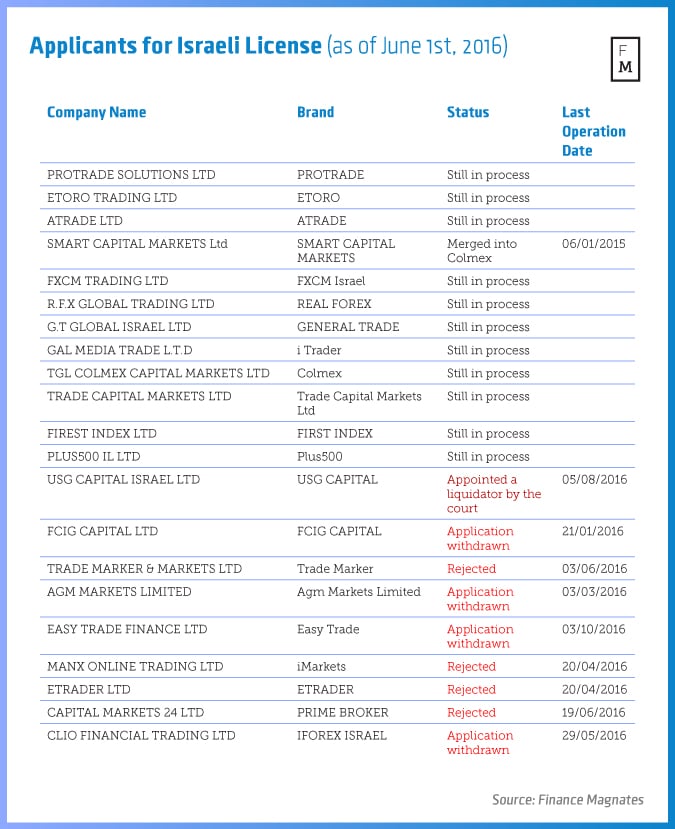
The law passed a year ago. Today, out of 21 companies that filed requests for licenses only 11 remained and the procedure is expected to end in the third quarter of 2016. We are looking at the firms, their reliability, their capital, who the people behind them are and more. The goal is that only worthy companies will be able to operate for the good of investors.
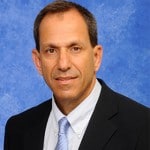
Prof. Shmuel Hauser, Chairman, ISA (Photo: ISA)
We need to make sure that a company that needs not be with us will not be here. This is a very delicate and important process – on the one hand we need to make sure that those that are not fitting will not get a license and on the other hand this is a decision whose meaning is shutting down companies and that is also not a small matter.
Still, it's important to emphasise that even when the licensing process will be completed, trading in these arenas is not suitable for anyone and it holds high risk. The companies are the counter-party to the clients’ deals and the meaning is that when the client loses the company benefits and vice-versa, thus it is different than investing in the stock market.
Additionally, last March we decided to ban offering binary options in Israel as the instrument is essentially similar to gambling and not a financial investment. I repeat and say, it is never redundant to say, be careful, don’t be tempted to invest without checking that it’s with a licensed entity and don’t be seduced by false charms of high returns with no risk.”
Under Prof. Hauser's leadership the ISA has taken its mandate from the Israeli parliament to regulate the market for the benefit of traders and used it to crack down on many aspects that made it popular to begin with. Beyond the ban on binary options the ISA drafted limitations on CFDs and FX pairs that are uniquely harsh in any relevant international comparison.
Who ever said that a regulator needs to be objective?! The Israeli Securities Authority (ISA) hasn't exactly tried to hide its hostility to online retail brokers before with its head alluding to them being sharp-toothed predators on the hunt for innocent investors. However this type of harsh language is a step up for the body charged by lawmakers to regulate the firms long operating in the Israeli market.
Speaking at a Globes Capital Markets conference in Tel Aviv, Prof. Shmuel Hauser, Chairman of the ISA, was asked about his stance on trading arenas (as online brokers are referred to in Israel) to which he gave a resoundingly negative answer despite admitting that decisions forcing brokers to shut down should not be taken lightly.
Prof. Shmuel Hauser said: “Trading arenas, binary options arenas and the like can sometimes be used as a cover for allegedly unfair activity, which burns the money of orphans and widows, innocent investors and pensioners. This was not lost on us so we have decided that the field must be ordered once and for all.
The law passed a year ago. Today, out of 21 companies that filed requests for licenses only 11 remained and the procedure is expected to end in the third quarter of 2016. We are looking at the firms, their reliability, their capital, who the people behind them are and more. The goal is that only worthy companies will be able to operate for the good of investors.
Prof. Shmuel Hauser, Chairman, ISA (Photo: ISA)
We need to make sure that a company that needs not be with us will not be here. This is a very delicate and important process – on the one hand we need to make sure that those that are not fitting will not get a license and on the other hand this is a decision whose meaning is shutting down companies and that is also not a small matter.
Still, it's important to emphasise that even when the licensing process will be completed, trading in these arenas is not suitable for anyone and it holds high risk. The companies are the counter-party to the clients’ deals and the meaning is that when the client loses the company benefits and vice-versa, thus it is different than investing in the stock market.
Additionally, last March we decided to ban offering binary options in Israel as the instrument is essentially similar to gambling and not a financial investment. I repeat and say, it is never redundant to say, be careful, don’t be tempted to invest without checking that it’s with a licensed entity and don’t be seduced by false charms of high returns with no risk.”
Under Prof. Hauser's leadership the ISA has taken its mandate from the Israeli parliament to regulate the market for the benefit of traders and used it to crack down on many aspects that made it popular to begin with. Beyond the ban on binary options the ISA drafted limitations on CFDs and FX pairs that are uniquely harsh in any relevant international comparison.
Italy’s Consob Tightens Net on AI-Fueled Scams With Fresh Website Bans
FP Markets Winner Spotlight 🏆 | Global Broker of the Year 2025 #Trading #Broker #Innovation #Shorts
FP Markets Winner Spotlight 🏆 | Global Broker of the Year 2025 #Trading #Broker #Innovation #Shorts
FP Markets takes the spotlight as Global Broker of the Year 2025 at the Finance Magnates Awards.
Martin Stoilov, Head of Client Experience, shares that trust, innovation, and people played a key role in the company’s success, supported by a strong foundation of integrity and client-centricity.
Following this milestone, FP Markets continues to focus on growth, technology investment, and its core values of transparency and excellence.
👉 Be part of FM Awards 2026: https://awards.financemagnates.com/#nominate
FP Markets takes the spotlight as Global Broker of the Year 2025 at the Finance Magnates Awards.
Martin Stoilov, Head of Client Experience, shares that trust, innovation, and people played a key role in the company’s success, supported by a strong foundation of integrity and client-centricity.
Following this milestone, FP Markets continues to focus on growth, technology investment, and its core values of transparency and excellence.
👉 Be part of FM Awards 2026: https://awards.financemagnates.com/#nominate
In this video, we review @HolaPrimeMarketsOfficial, a multi-asset forex and CFDs broker offering different account types, trading platforms, and flexible trading conditions.
We cover the broker’s overall offering, including account options, trading environment, platforms like MT4 and MT5, and additional services such as managed accounts and fast withdrawals.
Watch the full video to see if Hola Prime Markets fits your trading needs.
📣 Stay up to date with the latest in finance and trading. Follow Finance Magnates for industry news, insights, and global event coverage.
Connect with us:
🔗 LinkedIn: /financemagnates
👍 Facebook: /financemagnates
📸 Instagram: https://www.instagram.com/financemagnates
🐦 X: https://x.com/financemagnates
🎥 TikTok: https://www.tiktok.com/tag/financemagnates
▶️ YouTube: /@financemagnates_official
#HolaPrime #ForexBroker #CFDTrading #FinanceMagnates #Trading #Forex #BrokerReview
In this video, we review @HolaPrimeMarketsOfficial, a multi-asset forex and CFDs broker offering different account types, trading platforms, and flexible trading conditions.
We cover the broker’s overall offering, including account options, trading environment, platforms like MT4 and MT5, and additional services such as managed accounts and fast withdrawals.
Watch the full video to see if Hola Prime Markets fits your trading needs.
📣 Stay up to date with the latest in finance and trading. Follow Finance Magnates for industry news, insights, and global event coverage.
Connect with us:
🔗 LinkedIn: /financemagnates
👍 Facebook: /financemagnates
📸 Instagram: https://www.instagram.com/financemagnates
🐦 X: https://x.com/financemagnates
🎥 TikTok: https://www.tiktok.com/tag/financemagnates
▶️ YouTube: /@financemagnates_official
#HolaPrime #ForexBroker #CFDTrading #FinanceMagnates #Trading #Forex #BrokerReview
Hola Prime Review: What You Need to Know | Full Breakdown by Finance Magnates
Hola Prime Review: What You Need to Know | Full Breakdown by Finance Magnates
In this video, we review @HolaPrime_Global, a proprietary trading firm offering evaluation programs and performance-based payouts in simulated market environments.
We cover how the challenge model works, including account types, profit splits (up to 95%), trading rules, and what it takes to reach a funded account. You’ll also learn about available platforms like MT4, MT5, cTrader, and more, along with insights into payouts, support, and trading conditions.
Watch the full video to see if Hola Prime fits your trading style.
📣 Stay up to date with the latest in finance and trading. Follow Finance Magnates for industry news, insights, and global event coverage.
Connect with us:
🔗 LinkedIn: /financemagnates
👍 Facebook: /financemagnates
📸 Instagram: https://www.instagram.com/financemagnates
🐦 X: https://x.com/financemagnates
🎥 TikTok: https://www.tiktok.com/tag/financemagnates
▶️ YouTube: /@financemagnates_official
#HolaPrime #PropFirm #Trading #FinanceMagnates #Forex #FuturesTrading #TradingReview #PropFirmReview
In this video, we review @HolaPrime_Global, a proprietary trading firm offering evaluation programs and performance-based payouts in simulated market environments.
We cover how the challenge model works, including account types, profit splits (up to 95%), trading rules, and what it takes to reach a funded account. You’ll also learn about available platforms like MT4, MT5, cTrader, and more, along with insights into payouts, support, and trading conditions.
Watch the full video to see if Hola Prime fits your trading style.
📣 Stay up to date with the latest in finance and trading. Follow Finance Magnates for industry news, insights, and global event coverage.
Connect with us:
🔗 LinkedIn: /financemagnates
👍 Facebook: /financemagnates
📸 Instagram: https://www.instagram.com/financemagnates
🐦 X: https://x.com/financemagnates
🎥 TikTok: https://www.tiktok.com/tag/financemagnates
▶️ YouTube: /@financemagnates_official
#HolaPrime #PropFirm #Trading #FinanceMagnates #Forex #FuturesTrading #TradingReview #PropFirmReview
Axi Winner Spotlight 🏆 | Global Most Innovative Broker 2025 #Innovation #Trading #Fintech #Broker
Axi Winner Spotlight 🏆 | Global Most Innovative Broker 2025 #Innovation #Trading #Fintech #Broker
Axi takes the spotlight at the Finance Magnates Awards, winning Global Most Innovative Broker 2025.
Olivia Xenofontos and Ivanna Openko share how the team will feel: proud, motivated, and ready to keep delivering.
They also describe the night as well-organized, focused, and enjoyable for all.
👉 Be part of FM Awards 2026.
Axi takes the spotlight at the Finance Magnates Awards, winning Global Most Innovative Broker 2025.
Olivia Xenofontos and Ivanna Openko share how the team will feel: proud, motivated, and ready to keep delivering.
They also describe the night as well-organized, focused, and enjoyable for all.
👉 Be part of FM Awards 2026.
Recognition that matters.
Built on transparency.
Driven by the industry.
The Finance Magnates Awards 2026.
Nominations are now open.
🔗 https://awards.financemagnates.com/?utm_source=SM&utm_medium=social&utm_campaign=recognition-matters
Recognition that matters.
Built on transparency.
Driven by the industry.
The Finance Magnates Awards 2026.
Nominations are now open.
🔗 https://awards.financemagnates.com/?utm_source=SM&utm_medium=social&utm_campaign=recognition-matters