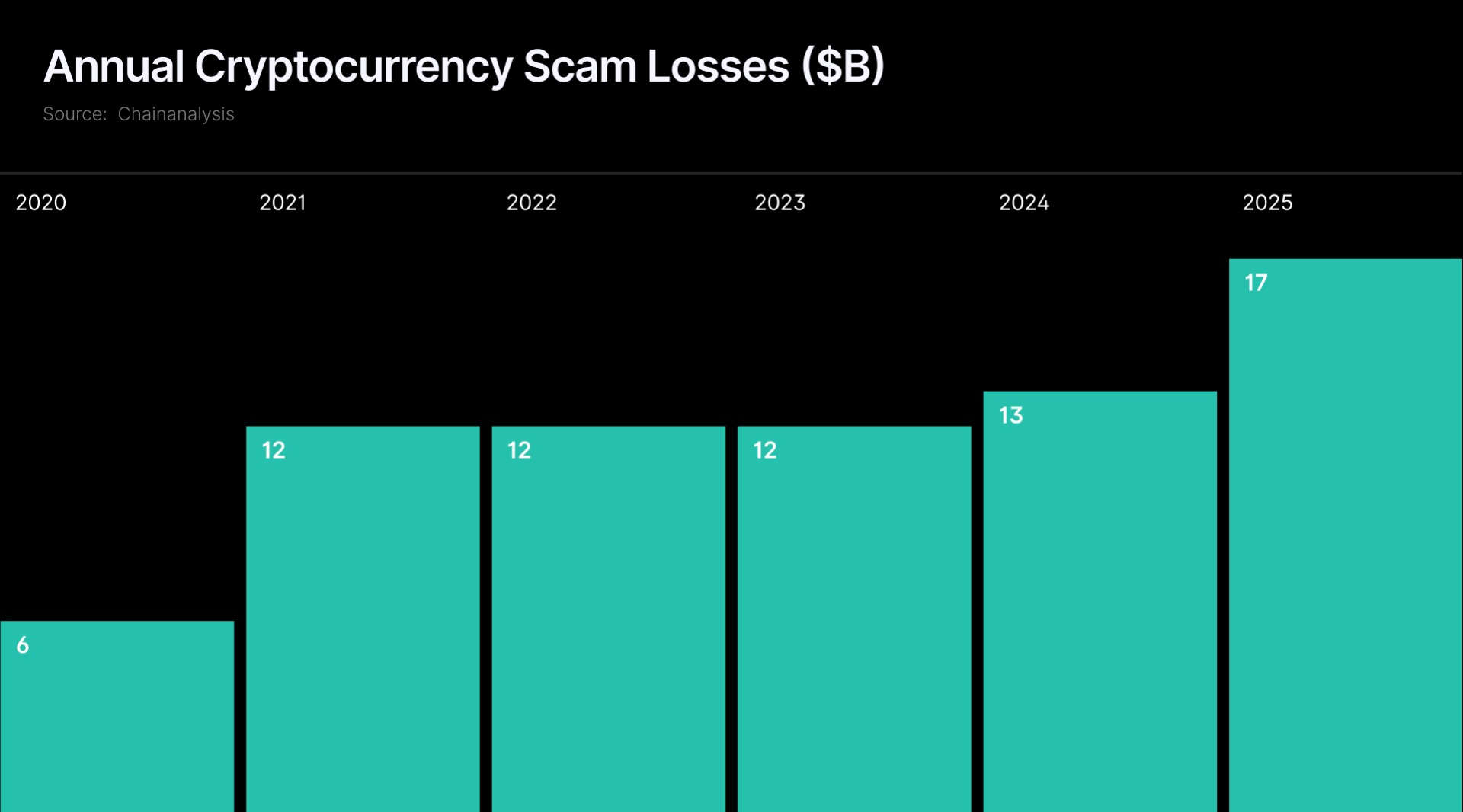
The era of the “Frankenstein Identity” has arrived, and global regulators are no longer watching from the sidelines. As AI-enabled fraud reaches a staggering $17 billion, the transition from policy debate to technological defense is now underway.
On March 2, the International Organization of Securities Commissions (IOSCO), together with the UK’s Financial Conduct Authority (FCA), launched a first-of-its-kind global TechSprint. The goal is clear: to build a high-tech shield for retail investors against a new generation of “industrialized” scams that are increasingly outpacing traditional law enforcement.
The Rise of the Synthetic Threat
The data is alarming. Research from the 2026 Chainalysis Crypto Crime Report shows that AI-driven scams are now 4.5 times more profitable than traditional fraud. Powered by large language models capable of generating highly personalised and emotionally manipulative messages, impersonation scams have surged by 1,400% year on year.
“Synthetic identity fraud has emerged as one of the most serious threats facing financial institutions today,” the report notes. These “Frankenstein” identities, assembled from fragments of stolen personal data and enhanced with deepfake video verification, now account for more than 8% of all new digital account openings in the brokerage sector.
From “Buyer Beware” to “Safety by Design”
The IOSCO TechSprint signals a shift toward real-time, technology-driven oversight. The initiative is progressing through a structured four-phase roadmap:
- Mobilisation: A global call for fintech and regtech innovators to develop solutions addressing emerging “frontier risks”.
- Incubation: Direct mentoring from the FCA and IOSCO to ensure new tools align with regulatory frameworks such as the EU AI Act and the UK Consumer Duty.
- Showcase: A global “Demo Day” in Madrid on October 8, 2026, coinciding with the 10th anniversary of World Investor Week.
The New Defensive Toolkit
The industry is increasingly adopting a “human firewall” approach. Traditional disclosures buried in lengthy PDFs are being replaced by inoculation training, where investors interact with simulated AI scams in controlled environments to develop stronger scepticism and pattern recognition.
At the institutional level, the focus is shifting toward Liveness Detection 2.0. Advanced verification systems can now analyse sub-pixel blood flow signals, known as photoplethysmography, to distinguish a real human face from a synthetic image within milliseconds.
- A New Leader in Global Compliance and RegTech
- Pairing and Matching under EMIR Refit Has Gone Live: How Shall Brokers Prepare?
- AI and Blockchain in RegTech
Want to know which specific “Trust Markers” are being adopted globally and how your firm can integrate with the I-SCAN portal before the Madrid Showcase?
Register and read the full analysis on our Intelligence Portal.
(Including a detailed breakdown of the 2026 roadmap, North American deepfake loss data, and the emergence of predictive security agents.)