Financial and Business News

Moomoo Joins the Agentic Investing Club, a Month Behind eToro

Thursday, 23/04/2026 | 13:00 GMT by Damian Chmiel
  • The Futu subsidiary lets retail clients plug personal AI agents into a brokerage backbone covering five markets.
moomoo

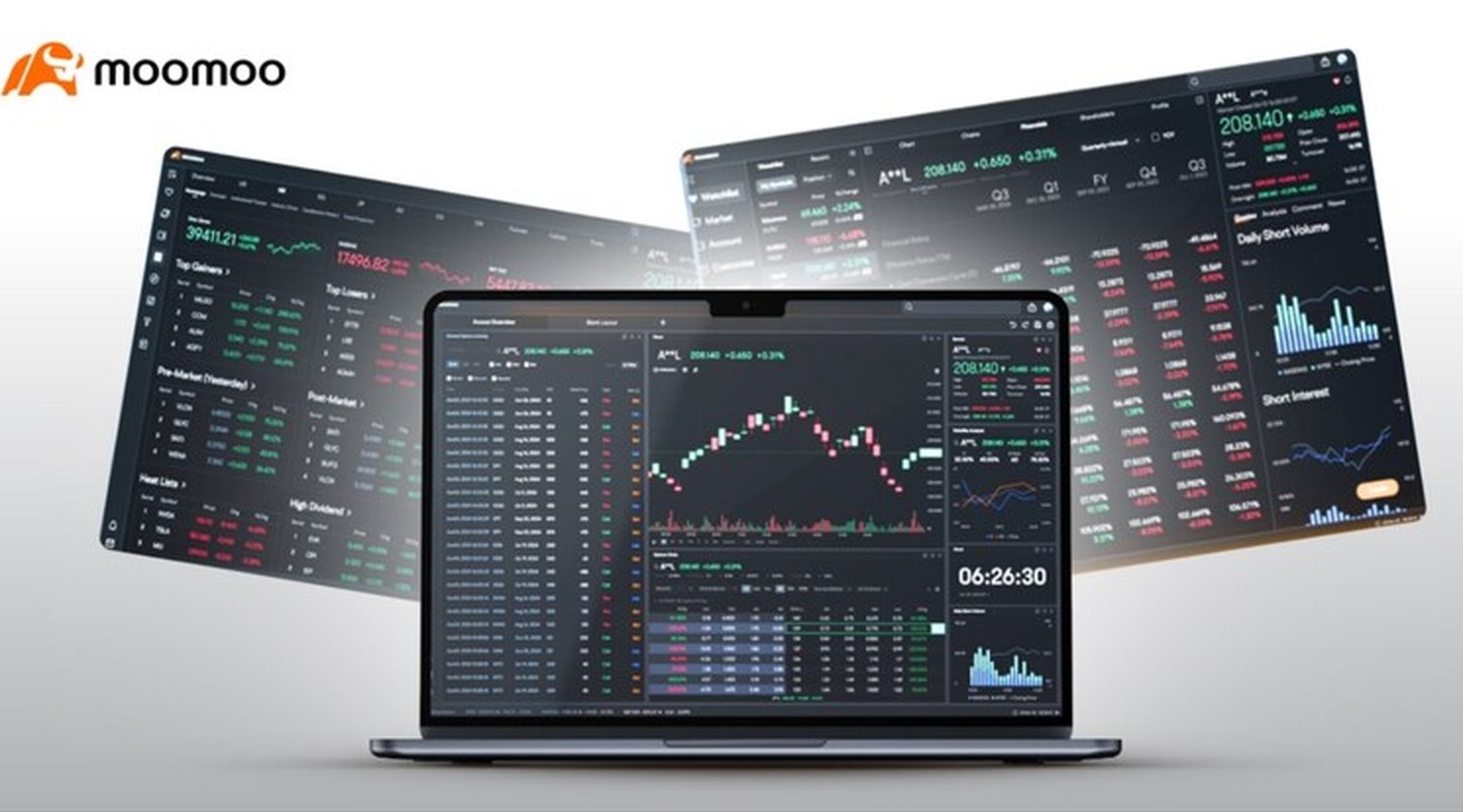
Moomoo launched a tool today (Thursday) that lets retail customers connect their own artificial intelligence agents directly to its trading platform, the Futu subsidiary said, formalizing its entry into a corner of retail brokering that eToro and Robinhood have been reshaping over the past several months.

Singapore Summit: Meet the largest APAC brokers you know (and those you still don't!)

The tool, called moomoo API Skills, converts plain-English trading intent into executable orders across U.S., Canadian, Hong Kong, Singapore and Japanese markets. Moomoo said the product is aimed at removing the coding requirement that has historically limited algorithmic trading to a smaller group of technically proficient users.

Natural Language Goes from Prompt to Trade

At the core of the product is what Moomoo calls intent-driven development, a pipeline designed to interpret English-language instructions and convert them into structured trading logic. The company said the system monitors volatility around the clock and supports backtesting against historical data before any live deployment.

Neil McDonald, Moomoo's US CEO
Neil McDonald, Moomoo's US CEO, Source: LinkedIn

"We are seeing a fundamental shift where investors are moving from simply accessing information," Neil McDonald, CEO of moomoo U.S., said in the statement.

The announcement lands about a month after eToro began letting users delegate trades to their own AI agents via sub-accounts with defined budgets and risk limits. The parallels between the two rollouts are close enough that they look like a single industry direction rather than a standalone experiment.

eToro, Robinhood and Webull Set the Tempo

The retail brokerage sector has been stacking AI features at a rapid pace since late 2025. eToro's developer App Store, rolled out on April 14, 2026, offers agent skills, a Model Context Protocol server and no-code publishing tools through a builders portal, putting the Nasdaq-listed broker ahead of Interactive Brokers, Charles Schwab and Fidelity in packaging agent-facing tooling for end clients.

Robinhood's Cortex assistant, unveiled in September 2025, introduced voice-activated order placement and AI-generated stock movement summaries. Webull followed in November with Vega, an assistant that reviews user portfolios against stated goals and accepts plain-English order instructions. Interactive Brokers has rolled out AI research coverage for the entire S&P 1500, free of charge for clients.

OpenD Architecture Keeps Credentials Out of Third-Party Hands

Security framing takes up a large share of the Moomoo announcement. The company said its proprietary OpenD technology keeps trading credentials and account data inside the user's local environment rather than routing them through third-party AI servers, a setup it describes as data sovereignty. Th
Michael Arbus, CEO of moomoo Canada

A FinanceMagnates.com panel at FMLS:25 flagged explainability and regulatory readiness as the hardest open problems for agent-driven retail trading, questions the Moomoo announcement did not directly address. The company warned in its own release that "losses can happen more quickly with quant and algorithmic trading compared to other forms of trading."

"We are reducing the technical barriers that once stood between an idea and its execution ," Michael Arbus, CEO of moomoo Canada, said.

Futu's Record Year Sets the Stage for the AI Push

Moomoo's agentic push comes off a strong 2025 for its Hong Kong-based parent. Futu Holdings reported net income of HK$11.3 billion and revenue of HK$22.8 billion for the full year, with total trading volume jumping 89.4% and funded accounts reaching 3.37 million. Total users across the platform, which spans Moomoo and Futubull, hit 29.2 million by year-end.

The commercial case for agent tooling is also visible in the industry's cost structures. Both eToro and FXCM have cited agentic AI adoption in their recent layoff announcements, pointing to automation as a lever for shrinking headcount while keeping customer workflows running.

The company launched a crypto service in the U.S. last year through a Coinbase partnership, extending the platform beyond its traditional equities focus.

The firm did not disclose pricing, beta user counts, or the specific third-party AI frameworks the tool integrates with at launch.


Moomoo launched a tool today (Thursday) that lets retail customers connect their own artificial intelligence agents directly to its trading platform, the Futu subsidiary said, formalizing its entry into a corner of retail brokering that eToro and Robinhood have been reshaping over the past several months.

Singapore Summit: Meet the largest APAC brokers you know (and those you still don't!)

The tool, called moomoo API Skills, converts plain-English trading intent into executable orders across U.S., Canadian, Hong Kong, Singapore and Japanese markets. Moomoo said the product is aimed at removing the coding requirement that has historically limited algorithmic trading to a smaller group of technically proficient users.

Natural Language Goes from Prompt to Trade

At the core of the product is what Moomoo calls intent-driven development, a pipeline designed to interpret English-language instructions and convert them into structured trading logic. The company said the system monitors volatility around the clock and supports backtesting against historical data before any live deployment.

Neil McDonald, Moomoo's US CEO
Neil McDonald, Moomoo's US CEO, Source: LinkedIn

"We are seeing a fundamental shift where investors are moving from simply accessing information," Neil McDonald, CEO of moomoo U.S., said in the statement.

The announcement lands about a month after eToro began letting users delegate trades to their own AI agents via sub-accounts with defined budgets and risk limits. The parallels between the two rollouts are close enough that they look like a single industry direction rather than a standalone experiment.

eToro, Robinhood and Webull Set the Tempo

The retail brokerage sector has been stacking AI features at a rapid pace since late 2025. eToro's developer App Store, rolled out on April 14, 2026, offers agent skills, a Model Context Protocol server and no-code publishing tools through a builders portal, putting the Nasdaq-listed broker ahead of Interactive Brokers, Charles Schwab and Fidelity in packaging agent-facing tooling for end clients.

Robinhood's Cortex assistant, unveiled in September 2025, introduced voice-activated order placement and AI-generated stock movement summaries. Webull followed in November with Vega, an assistant that reviews user portfolios against stated goals and accepts plain-English order instructions. Interactive Brokers has rolled out AI research coverage for the entire S&P 1500, free of charge for clients.

OpenD Architecture Keeps Credentials Out of Third-Party Hands

Security framing takes up a large share of the Moomoo announcement. The company said its proprietary OpenD technology keeps trading credentials and account data inside the user's local environment rather than routing them through third-party AI servers, a setup it describes as data sovereignty. Th

Michael Arbus, CEO of moomoo Canada

A FinanceMagnates.com panel at FMLS:25 flagged explainability and regulatory readiness as the hardest open problems for agent-driven retail trading, questions the Moomoo announcement did not directly address. The company warned in its own release that "losses can happen more quickly with quant and algorithmic trading compared to other forms of trading."

"We are reducing the technical barriers that once stood between an idea and its execution ," Michael Arbus, CEO of moomoo Canada, said.

Futu's Record Year Sets the Stage for the AI Push

Moomoo's agentic push comes off a strong 2025 for its Hong Kong-based parent. Futu Holdings reported net income of HK$11.3 billion and revenue of HK$22.8 billion for the full year, with total trading volume jumping 89.4% and funded accounts reaching 3.37 million. Total users across the platform, which spans Moomoo and Futubull, hit 29.2 million by year-end.

The commercial case for agent tooling is also visible in the industry's cost structures. Both eToro and FXCM have cited agentic AI adoption in their recent layoff announcements, pointing to automation as a lever for shrinking headcount while keeping customer workflows running.

The company launched a crypto service in the U.S. last year through a Coinbase partnership, extending the platform beyond its traditional equities focus.

The firm did not disclose pricing, beta user counts, or the specific third-party AI frameworks the tool integrates with at launch.

About the Author: Damian Chmiel
Damian Chmiel
  • 3477 Articles
  • 109 Followers
Damian Chmiel is a Senior Analyst & Editor at Finance Magnates with more than 15 years of experience in the CFD and online trading industry. Active as both a trader and journalist since 2010, he focuses on broker coverage, fintech innovation, and regulatory developments across Europe, the Middle East, and Asia. His work includes interviews with C-level leaders at major brokerages and fintech platforms, as well as co-authoring Finance Magnates’ quarterly industry benchmarking reports. Damian’s reporting is data-driven, market-aware, and grounded in direct industry engagement. His analysis and commentary have also been cited by external media outlets, including Investing.com, Binance, The Asset, Stockhead, and Dispatch. Education: MA in Finance and Accounting, Cracow University of Economics

More from the Author

Retail FX