This is a perfect storm: platform providers have been waiting for such turbulence and shouldn’t miss on it.
Discerning between the ethical standards of a regular FX provider and a trader-funded firm proves challenging.
To run a business, a company must buy a number
of software licenses to effectively enter the market. Granted, some of them are
more heavily ingrained into business processes than others. But, it is reckless
to think that a single provider of software licenses can not only shape your
business but influence it if you can participate in the industry at all.
Sure, there are technologies based on
substantial scientific or engineering challenges, but with all due respect to
our industry that I have been serving for 13 years, it is a stretch to call
trading platforms deeptech. I know this because I’ve assembled numerous tech
teams from scratch, including cases where team members didn’t have prior domain
experience, and they were able to roll out all kinds of trading platforms.
Yes, it is hard to make great trading platforms, but not that hard.
Fortunately, there are enough platform
providers out there for healthy competition, which benefits everyone. This
taught me some humility. No matter how much pride a platform provider takes to build a great product, there are others. It is a red ocean.
MQ has grown big enough to make the industry
dependent on their services, allowing them to dictate the rules of the CFD
business. They've evolved into a business-critical front-office part of the business, like a franchisor deciding if you are accepted as a
franchisee, controlling client-facing aspects and dictating operational strategies. The uncertainty is the
worst, as the MT licenses can be revoked at a very short notice like a rug pulled out from under one's feet. Imagine if Zendesk or Slack restricted you
to the degree that MQ does.
Anyway, this is the behavior of a company that
believes it will be undisputed forever. If a franchisor is opaque and
demonstrates unchecked arrogance towards clients, would you keep buying
franchises from them?
Evolution of Retail Trading & Evolution of Vendors
People love trading: Manual, algorithmic,
social, PAMM, cash or margin, listed or off-exchange, securities, forex,
futures, options, signals, indicators, news, fundamentals, and alternative data. There are so
many styles and possibilities!
Trading platform providers usually support a wide range of assets. When cryptos became a thing, many providers started supporting them.
Initially to different degrees, sometimes it was just fractional volumes or a
new crypto-specific widget in an iframe, sometimes it was a full-fledged limit
order book, or internal matching engines. A similar pattern emerged with binary options prior to that.
Believe me, if the NFT hype hadn't fizzled out so quickly, you'd likely find them alongside crypto pairs on trading platforms. These platforms evolve
following client demand. Any product or asset that is not short-lived
and remains in demand by the traders will be supported by the trading platform
providers.
Evgeny Sorokin, the Chief Product Officer at Devexperts
Funded trading is not a new concept. Now, it is
at an inflection point where the business model runs on competition and
evaluation more than on different profit-sharing arrangements.
Presently, we have the charges to take qualification
tests, next it could be “pro traders membership fees” or something else.
Apparently, if the industry has found a way to generate revenue outside of
financial services, provided that there is no misinformation or scam, well,
that’s the natural evolution of the industry. It is not news that companies can
benefit from other sources of revenue, not just commissions, spreads or swaps,
but from additional services or data: premium analytics, real-time level-2 market
data from the exchanges, and other digital products.
Prop trading makes sense, as do many other
models that the industry exercises.
While technology providers are free to implement
their own strategies, those reliant on brokers and
prop firms, will inevitably heed the clients' demands.
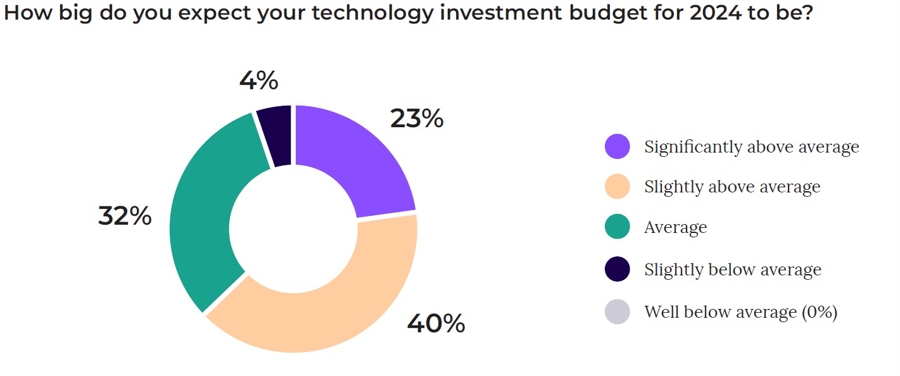
Acuiti: Traders and proprietary trading firms aim to ride the waves of volatility in 2024
Brokerage vs Prop Trading Platforms – Is There a Difference?
It is evident that the mechanics of the prop
trading business are almost identical to regular retail trading. So, there is no surprise
that all of those proprietary trading firms (props) run on “regular” trading platforms.
Sure, a few providers have introduced additional features. Meanwhile, others let the plugin developers make minor adjustments, such as calculation of the max drawdown. However, these scenarios pale in comparison to the broader spectrum of trading platform development.
Yes, sometimes you will see that it might not
quite fit. Take this Demo/Live account issue: props that are
notoriously famous in the press lately, run their businesses on trading
platforms that offer Demo/Live accounts segregation, which was originally how a
regular CFDs broker would solicit clients. They would start with a Demo, evaluate
the number of instruments and spreads, prior to opening a Live account.
The new TFB's offer for Prop Trading firms
TFB has partnered with Red Acre to create a powerful, all-encompassing offer for Prop Trading companies looking to stand out from the competition and provide an excellent experience to traders.
In the current form, props can
keep the clients on Demo accounts, so the clients trade in a synthetic/virtual
environment, which is just a fancy new name for paper money trading, or good
old Demo accounts. Whether those firms have a prop account that
hedges traders who passed the competition is a reincarnation of “are you an
A-book or B-book broker?”
The Perfect Storm for Change
The hot question is: does it make sense for the
tech providers to differentiate from what MQ is doing? MQ is dropping the
props, are you sure you want these clients?
Apprehensive that MQ might possess information
that others are not privy to, many started to speculate who (regulators,
authorities) approached whom.
However, the upheaval in the industry does not
appear to be linked to regulatory actions, as there have been no official
comments or rulings from governing bodies. The affected accounts are demo
evaluation accounts, with user trades transitioning to regulated brokers upon
completing the associated challenges. This industry-wide buzz seems to be a
result of MQ's efforts to safeguard its interests. Many prop firms are
utilizing licenses from other brokers, enabling them to operate independently
from MQ's influence.
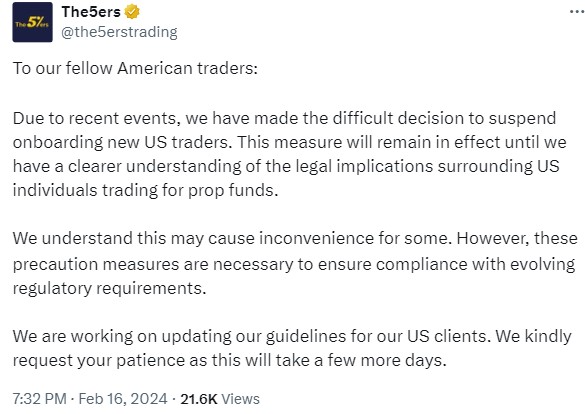
Source: X
Notably, 95% of the accounts are demo, thereby
avoiding charges associated with live MQ licenses. Moreover, MQ is wary of
potential complaints in app stores, aiming to protect their iOS app and prevent
confusion among end-users.
To Onboard or Not to Onboard?
In my view, discerning between the ethical standards of a regular FX provider and a funded trader firm proves challenging, as they represent a new breed with subtle distinctions. This ongoing struggle prompts reactions
from FTC-like organizations mandating better monitoring and compliance measures.
But people love trading, and where the demand
is, the supply will follow. Most probably, props will adapt and
become quirky, adopting more unconventional approaches diverging from their current models.
Platform providers have been waiting for such
turbulence or tectonic shifts and shouldn’t miss on this. This is a perfect
storm.
The providers, that are not dependent on MQ,
will certainly participate in the redistribution and will onboard all the MQ refugees. They will (or already have) put necessary (mainly legal, but also
technical) controls in place, enhancing KYB processes while offering services
to all the legitimate props. While opportunists may exploit the situation, this would also happen with
traditional FX/CFD trading players.
Our team is working with other brokers & bringing significant innovations that will counter these widespread industry issues within 2-3 weeks.
My refrain is the same: similarly to how
providers supported classic CFD brokers of all breeds (B-book, A-book, C-book,
etc.), they will extend similar support to props.
Did you onboard bucket shops and let the
clients do backdate changes to the trades uncontrollably? Or did you focus solely on firms compliant with reasonable regulations, who demonstrated the
signs of credible business practices? Or did you follow different paths? The principle applies universally. In
my books, it is no different with the props.
Hurray to More Competition
But, there’s more to it than that. Many predatory
providers dream of this scenario: a rare chance to push the falling one. To be
frank, we are very far from calling MQ “falling”, but it is a great chance for
many to secure better positions in terms of market share. A chance to put their
best foot forward and showcase their product and services, and finally, to
create fair competition for a better evolution of the trading industry,
perhaps, to even challenge the monopoly that's grown too comfortable in its
seat of power.
Source: LinkedIn
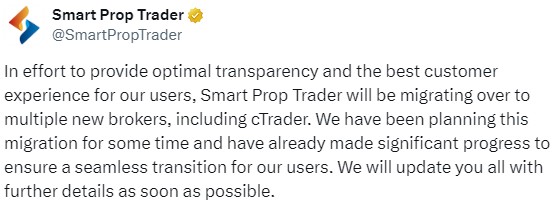
I’ll be promoting the idea of embracing multiple platforms, considering proprietary solutions, and refusing to be cowed
by the specter of MetaQuotes' monopoly. Obviously, there has to be full
disclosure that one of Devexperts’ products, DXtrade, competes with MT5. I also
worked at Spotware Systems and participated in the launch of its cTrader
suite, so I’m rooting for both cTrader and DXtrade.
Source: X
Buy vs Build (or Both)
However, I would like to reiterate an idea
that is not heard too often in the cacophony of providers names.
Commercial-off-the-shelf solutions cater to non-strategic business processes, require organizations to conform their operations to pre-packaged software.
I doubt that every broker or prop firm that
dreams big would like to conform to the rigid standards of a standardized trading
platform provider for long. We’ve seen brokers complain about how easy
users switch between brokers because the instruments and the technology are
identical and everybody ends up competing on the spreads and eating up the
profits.
This scenario mirrors the dynamics of a perfectly competitive market, where profitability diminishes.
So, some of you will want to differentiate, and
that will mean differentiating the UX, too. Then, you will need a custom trading platform, and you know where to find us.
To run a business, a company must buy a number
of software licenses to effectively enter the market. Granted, some of them are
more heavily ingrained into business processes than others. But, it is reckless
to think that a single provider of software licenses can not only shape your
business but influence it if you can participate in the industry at all.
Sure, there are technologies based on
substantial scientific or engineering challenges, but with all due respect to
our industry that I have been serving for 13 years, it is a stretch to call
trading platforms deeptech. I know this because I’ve assembled numerous tech
teams from scratch, including cases where team members didn’t have prior domain
experience, and they were able to roll out all kinds of trading platforms.
Yes, it is hard to make great trading platforms, but not that hard.
Fortunately, there are enough platform
providers out there for healthy competition, which benefits everyone. This
taught me some humility. No matter how much pride a platform provider takes to build a great product, there are others. It is a red ocean.
MQ has grown big enough to make the industry
dependent on their services, allowing them to dictate the rules of the CFD
business. They've evolved into a business-critical front-office part of the business, like a franchisor deciding if you are accepted as a
franchisee, controlling client-facing aspects and dictating operational strategies. The uncertainty is the
worst, as the MT licenses can be revoked at a very short notice like a rug pulled out from under one's feet. Imagine if Zendesk or Slack restricted you
to the degree that MQ does.
Anyway, this is the behavior of a company that
believes it will be undisputed forever. If a franchisor is opaque and
demonstrates unchecked arrogance towards clients, would you keep buying
franchises from them?
Evolution of Retail Trading & Evolution of Vendors
People love trading: Manual, algorithmic,
social, PAMM, cash or margin, listed or off-exchange, securities, forex,
futures, options, signals, indicators, news, fundamentals, and alternative data. There are so
many styles and possibilities!
Trading platform providers usually support a wide range of assets. When cryptos became a thing, many providers started supporting them.
Initially to different degrees, sometimes it was just fractional volumes or a
new crypto-specific widget in an iframe, sometimes it was a full-fledged limit
order book, or internal matching engines. A similar pattern emerged with binary options prior to that.
Believe me, if the NFT hype hadn't fizzled out so quickly, you'd likely find them alongside crypto pairs on trading platforms. These platforms evolve
following client demand. Any product or asset that is not short-lived
and remains in demand by the traders will be supported by the trading platform
providers.
Evgeny Sorokin, the Chief Product Officer at Devexperts
Funded trading is not a new concept. Now, it is
at an inflection point where the business model runs on competition and
evaluation more than on different profit-sharing arrangements.
Presently, we have the charges to take qualification
tests, next it could be “pro traders membership fees” or something else.
Apparently, if the industry has found a way to generate revenue outside of
financial services, provided that there is no misinformation or scam, well,
that’s the natural evolution of the industry. It is not news that companies can
benefit from other sources of revenue, not just commissions, spreads or swaps,
but from additional services or data: premium analytics, real-time level-2 market
data from the exchanges, and other digital products.
Prop trading makes sense, as do many other
models that the industry exercises.
While technology providers are free to implement
their own strategies, those reliant on brokers and
prop firms, will inevitably heed the clients' demands.
Acuiti: Traders and proprietary trading firms aim to ride the waves of volatility in 2024
Brokerage vs Prop Trading Platforms – Is There a Difference?
It is evident that the mechanics of the prop
trading business are almost identical to regular retail trading. So, there is no surprise
that all of those proprietary trading firms (props) run on “regular” trading platforms.
Sure, a few providers have introduced additional features. Meanwhile, others let the plugin developers make minor adjustments, such as calculation of the max drawdown. However, these scenarios pale in comparison to the broader spectrum of trading platform development.
Yes, sometimes you will see that it might not
quite fit. Take this Demo/Live account issue: props that are
notoriously famous in the press lately, run their businesses on trading
platforms that offer Demo/Live accounts segregation, which was originally how a
regular CFDs broker would solicit clients. They would start with a Demo, evaluate
the number of instruments and spreads, prior to opening a Live account.
The new TFB's offer for Prop Trading firms
TFB has partnered with Red Acre to create a powerful, all-encompassing offer for Prop Trading companies looking to stand out from the competition and provide an excellent experience to traders.
In the current form, props can
keep the clients on Demo accounts, so the clients trade in a synthetic/virtual
environment, which is just a fancy new name for paper money trading, or good
old Demo accounts. Whether those firms have a prop account that
hedges traders who passed the competition is a reincarnation of “are you an
A-book or B-book broker?”
The Perfect Storm for Change
The hot question is: does it make sense for the
tech providers to differentiate from what MQ is doing? MQ is dropping the
props, are you sure you want these clients?
Apprehensive that MQ might possess information
that others are not privy to, many started to speculate who (regulators,
authorities) approached whom.
However, the upheaval in the industry does not
appear to be linked to regulatory actions, as there have been no official
comments or rulings from governing bodies. The affected accounts are demo
evaluation accounts, with user trades transitioning to regulated brokers upon
completing the associated challenges. This industry-wide buzz seems to be a
result of MQ's efforts to safeguard its interests. Many prop firms are
utilizing licenses from other brokers, enabling them to operate independently
from MQ's influence.
Source: X
Notably, 95% of the accounts are demo, thereby
avoiding charges associated with live MQ licenses. Moreover, MQ is wary of
potential complaints in app stores, aiming to protect their iOS app and prevent
confusion among end-users.
To Onboard or Not to Onboard?
In my view, discerning between the ethical standards of a regular FX provider and a funded trader firm proves challenging, as they represent a new breed with subtle distinctions. This ongoing struggle prompts reactions
from FTC-like organizations mandating better monitoring and compliance measures.
But people love trading, and where the demand
is, the supply will follow. Most probably, props will adapt and
become quirky, adopting more unconventional approaches diverging from their current models.
Platform providers have been waiting for such
turbulence or tectonic shifts and shouldn’t miss on this. This is a perfect
storm.
The providers, that are not dependent on MQ,
will certainly participate in the redistribution and will onboard all the MQ refugees. They will (or already have) put necessary (mainly legal, but also
technical) controls in place, enhancing KYB processes while offering services
to all the legitimate props. While opportunists may exploit the situation, this would also happen with
traditional FX/CFD trading players.
Our team is working with other brokers & bringing significant innovations that will counter these widespread industry issues within 2-3 weeks.
My refrain is the same: similarly to how
providers supported classic CFD brokers of all breeds (B-book, A-book, C-book,
etc.), they will extend similar support to props.
Did you onboard bucket shops and let the
clients do backdate changes to the trades uncontrollably? Or did you focus solely on firms compliant with reasonable regulations, who demonstrated the
signs of credible business practices? Or did you follow different paths? The principle applies universally. In
my books, it is no different with the props.
Hurray to More Competition
But, there’s more to it than that. Many predatory
providers dream of this scenario: a rare chance to push the falling one. To be
frank, we are very far from calling MQ “falling”, but it is a great chance for
many to secure better positions in terms of market share. A chance to put their
best foot forward and showcase their product and services, and finally, to
create fair competition for a better evolution of the trading industry,
perhaps, to even challenge the monopoly that's grown too comfortable in its
seat of power.
Source: LinkedIn
I’ll be promoting the idea of embracing multiple platforms, considering proprietary solutions, and refusing to be cowed
by the specter of MetaQuotes' monopoly. Obviously, there has to be full
disclosure that one of Devexperts’ products, DXtrade, competes with MT5. I also
worked at Spotware Systems and participated in the launch of its cTrader
suite, so I’m rooting for both cTrader and DXtrade.
Source: X
Buy vs Build (or Both)
However, I would like to reiterate an idea
that is not heard too often in the cacophony of providers names.
Commercial-off-the-shelf solutions cater to non-strategic business processes, require organizations to conform their operations to pre-packaged software.
I doubt that every broker or prop firm that
dreams big would like to conform to the rigid standards of a standardized trading
platform provider for long. We’ve seen brokers complain about how easy
users switch between brokers because the instruments and the technology are
identical and everybody ends up competing on the spreads and eating up the
profits.
This scenario mirrors the dynamics of a perfectly competitive market, where profitability diminishes.
So, some of you will want to differentiate, and
that will mean differentiating the UX, too. Then, you will need a custom trading platform, and you know where to find us.
42% of Swiss Financial Firms Have No Digital Fraud Policy, FINMA Finds
Featured Videos
FP Markets Winner Spotlight 🏆 | Global Broker of the Year 2025 #Trading #Broker #Innovation #Shorts
FP Markets Winner Spotlight 🏆 | Global Broker of the Year 2025 #Trading #Broker #Innovation #Shorts
FP Markets Winner Spotlight 🏆 | Global Broker of the Year 2025 #Trading #Broker #Innovation #Shorts
FP Markets Winner Spotlight 🏆 | Global Broker of the Year 2025 #Trading #Broker #Innovation #Shorts
FP Markets takes the spotlight as Global Broker of the Year 2025 at the Finance Magnates Awards.
Martin Stoilov, Head of Client Experience, shares that trust, innovation, and people played a key role in the company’s success, supported by a strong foundation of integrity and client-centricity.
Following this milestone, FP Markets continues to focus on growth, technology investment, and its core values of transparency and excellence.
👉 Be part of FM Awards 2026: https://awards.financemagnates.com/#nominate
FP Markets takes the spotlight as Global Broker of the Year 2025 at the Finance Magnates Awards.
Martin Stoilov, Head of Client Experience, shares that trust, innovation, and people played a key role in the company’s success, supported by a strong foundation of integrity and client-centricity.
Following this milestone, FP Markets continues to focus on growth, technology investment, and its core values of transparency and excellence.
👉 Be part of FM Awards 2026: https://awards.financemagnates.com/#nominate
FP Markets takes the spotlight as Global Broker of the Year 2025 at the Finance Magnates Awards.
Martin Stoilov, Head of Client Experience, shares that trust, innovation, and people played a key role in the company’s success, supported by a strong foundation of integrity and client-centricity.
Following this milestone, FP Markets continues to focus on growth, technology investment, and its core values of transparency and excellence.
👉 Be part of FM Awards 2026: https://awards.financemagnates.com/#nominate
FP Markets takes the spotlight as Global Broker of the Year 2025 at the Finance Magnates Awards.
Martin Stoilov, Head of Client Experience, shares that trust, innovation, and people played a key role in the company’s success, supported by a strong foundation of integrity and client-centricity.
Following this milestone, FP Markets continues to focus on growth, technology investment, and its core values of transparency and excellence.
👉 Be part of FM Awards 2026: https://awards.financemagnates.com/#nominate
In this video, we review @HolaPrimeMarketsOfficial, a multi-asset forex and CFDs broker offering different account types, trading platforms, and flexible trading conditions.
We cover the broker’s overall offering, including account options, trading environment, platforms like MT4 and MT5, and additional services such as managed accounts and fast withdrawals.
Watch the full video to see if Hola Prime Markets fits your trading needs.
📣 Stay up to date with the latest in finance and trading. Follow Finance Magnates for industry news, insights, and global event coverage.
Connect with us:
🔗 LinkedIn: /financemagnates
👍 Facebook: /financemagnates
📸 Instagram: https://www.instagram.com/financemagnates
🐦 X: https://x.com/financemagnates
🎥 TikTok: https://www.tiktok.com/tag/financemagnates
▶️ YouTube: /@financemagnates_official
#HolaPrime #ForexBroker #CFDTrading #FinanceMagnates #Trading #Forex #BrokerReview
In this video, we review @HolaPrimeMarketsOfficial, a multi-asset forex and CFDs broker offering different account types, trading platforms, and flexible trading conditions.
We cover the broker’s overall offering, including account options, trading environment, platforms like MT4 and MT5, and additional services such as managed accounts and fast withdrawals.
Watch the full video to see if Hola Prime Markets fits your trading needs.
📣 Stay up to date with the latest in finance and trading. Follow Finance Magnates for industry news, insights, and global event coverage.
Connect with us:
🔗 LinkedIn: /financemagnates
👍 Facebook: /financemagnates
📸 Instagram: https://www.instagram.com/financemagnates
🐦 X: https://x.com/financemagnates
🎥 TikTok: https://www.tiktok.com/tag/financemagnates
▶️ YouTube: /@financemagnates_official
#HolaPrime #ForexBroker #CFDTrading #FinanceMagnates #Trading #Forex #BrokerReview
In this video, we review @HolaPrimeMarketsOfficial, a multi-asset forex and CFDs broker offering different account types, trading platforms, and flexible trading conditions.
We cover the broker’s overall offering, including account options, trading environment, platforms like MT4 and MT5, and additional services such as managed accounts and fast withdrawals.
Watch the full video to see if Hola Prime Markets fits your trading needs.
📣 Stay up to date with the latest in finance and trading. Follow Finance Magnates for industry news, insights, and global event coverage.
Connect with us:
🔗 LinkedIn: /financemagnates
👍 Facebook: /financemagnates
📸 Instagram: https://www.instagram.com/financemagnates
🐦 X: https://x.com/financemagnates
🎥 TikTok: https://www.tiktok.com/tag/financemagnates
▶️ YouTube: /@financemagnates_official
#HolaPrime #ForexBroker #CFDTrading #FinanceMagnates #Trading #Forex #BrokerReview
In this video, we review @HolaPrimeMarketsOfficial, a multi-asset forex and CFDs broker offering different account types, trading platforms, and flexible trading conditions.
We cover the broker’s overall offering, including account options, trading environment, platforms like MT4 and MT5, and additional services such as managed accounts and fast withdrawals.
Watch the full video to see if Hola Prime Markets fits your trading needs.
📣 Stay up to date with the latest in finance and trading. Follow Finance Magnates for industry news, insights, and global event coverage.
Connect with us:
🔗 LinkedIn: /financemagnates
👍 Facebook: /financemagnates
📸 Instagram: https://www.instagram.com/financemagnates
🐦 X: https://x.com/financemagnates
🎥 TikTok: https://www.tiktok.com/tag/financemagnates
▶️ YouTube: /@financemagnates_official
#HolaPrime #ForexBroker #CFDTrading #FinanceMagnates #Trading #Forex #BrokerReview
In this video, we review @HolaPrimeMarketsOfficial, a multi-asset forex and CFDs broker offering different account types, trading platforms, and flexible trading conditions.
We cover the broker’s overall offering, including account options, trading environment, platforms like MT4 and MT5, and additional services such as managed accounts and fast withdrawals.
Watch the full video to see if Hola Prime Markets fits your trading needs.
📣 Stay up to date with the latest in finance and trading. Follow Finance Magnates for industry news, insights, and global event coverage.
Connect with us:
🔗 LinkedIn: /financemagnates
👍 Facebook: /financemagnates
📸 Instagram: https://www.instagram.com/financemagnates
🐦 X: https://x.com/financemagnates
🎥 TikTok: https://www.tiktok.com/tag/financemagnates
▶️ YouTube: /@financemagnates_official
#HolaPrime #ForexBroker #CFDTrading #FinanceMagnates #Trading #Forex #BrokerReview
In this video, we review @HolaPrimeMarketsOfficial, a multi-asset forex and CFDs broker offering different account types, trading platforms, and flexible trading conditions.
We cover the broker’s overall offering, including account options, trading environment, platforms like MT4 and MT5, and additional services such as managed accounts and fast withdrawals.
Watch the full video to see if Hola Prime Markets fits your trading needs.
📣 Stay up to date with the latest in finance and trading. Follow Finance Magnates for industry news, insights, and global event coverage.
Connect with us:
🔗 LinkedIn: /financemagnates
👍 Facebook: /financemagnates
📸 Instagram: https://www.instagram.com/financemagnates
🐦 X: https://x.com/financemagnates
🎥 TikTok: https://www.tiktok.com/tag/financemagnates
▶️ YouTube: /@financemagnates_official
#HolaPrime #ForexBroker #CFDTrading #FinanceMagnates #Trading #Forex #BrokerReview
Hola Prime Review: What You Need to Know | Full Breakdown by Finance Magnates
Hola Prime Review: What You Need to Know | Full Breakdown by Finance Magnates
Hola Prime Review: What You Need to Know | Full Breakdown by Finance Magnates
Hola Prime Review: What You Need to Know | Full Breakdown by Finance Magnates
Hola Prime Review: What You Need to Know | Full Breakdown by Finance Magnates
Hola Prime Review: What You Need to Know | Full Breakdown by Finance Magnates
In this video, we review @HolaPrime_Global, a proprietary trading firm offering evaluation programs and performance-based payouts in simulated market environments.
We cover how the challenge model works, including account types, profit splits (up to 95%), trading rules, and what it takes to reach a funded account. You’ll also learn about available platforms like MT4, MT5, cTrader, and more, along with insights into payouts, support, and trading conditions.
Watch the full video to see if Hola Prime fits your trading style.
📣 Stay up to date with the latest in finance and trading. Follow Finance Magnates for industry news, insights, and global event coverage.
Connect with us:
🔗 LinkedIn: /financemagnates
👍 Facebook: /financemagnates
📸 Instagram: https://www.instagram.com/financemagnates
🐦 X: https://x.com/financemagnates
🎥 TikTok: https://www.tiktok.com/tag/financemagnates
▶️ YouTube: /@financemagnates_official
#HolaPrime #PropFirm #Trading #FinanceMagnates #Forex #FuturesTrading #TradingReview #PropFirmReview
In this video, we review @HolaPrime_Global, a proprietary trading firm offering evaluation programs and performance-based payouts in simulated market environments.
We cover how the challenge model works, including account types, profit splits (up to 95%), trading rules, and what it takes to reach a funded account. You’ll also learn about available platforms like MT4, MT5, cTrader, and more, along with insights into payouts, support, and trading conditions.
Watch the full video to see if Hola Prime fits your trading style.
📣 Stay up to date with the latest in finance and trading. Follow Finance Magnates for industry news, insights, and global event coverage.
Connect with us:
🔗 LinkedIn: /financemagnates
👍 Facebook: /financemagnates
📸 Instagram: https://www.instagram.com/financemagnates
🐦 X: https://x.com/financemagnates
🎥 TikTok: https://www.tiktok.com/tag/financemagnates
▶️ YouTube: /@financemagnates_official
#HolaPrime #PropFirm #Trading #FinanceMagnates #Forex #FuturesTrading #TradingReview #PropFirmReview
In this video, we review @HolaPrime_Global, a proprietary trading firm offering evaluation programs and performance-based payouts in simulated market environments.
We cover how the challenge model works, including account types, profit splits (up to 95%), trading rules, and what it takes to reach a funded account. You’ll also learn about available platforms like MT4, MT5, cTrader, and more, along with insights into payouts, support, and trading conditions.
Watch the full video to see if Hola Prime fits your trading style.
📣 Stay up to date with the latest in finance and trading. Follow Finance Magnates for industry news, insights, and global event coverage.
Connect with us:
🔗 LinkedIn: /financemagnates
👍 Facebook: /financemagnates
📸 Instagram: https://www.instagram.com/financemagnates
🐦 X: https://x.com/financemagnates
🎥 TikTok: https://www.tiktok.com/tag/financemagnates
▶️ YouTube: /@financemagnates_official
#HolaPrime #PropFirm #Trading #FinanceMagnates #Forex #FuturesTrading #TradingReview #PropFirmReview
In this video, we review @HolaPrime_Global, a proprietary trading firm offering evaluation programs and performance-based payouts in simulated market environments.
We cover how the challenge model works, including account types, profit splits (up to 95%), trading rules, and what it takes to reach a funded account. You’ll also learn about available platforms like MT4, MT5, cTrader, and more, along with insights into payouts, support, and trading conditions.
Watch the full video to see if Hola Prime fits your trading style.
📣 Stay up to date with the latest in finance and trading. Follow Finance Magnates for industry news, insights, and global event coverage.
Connect with us:
🔗 LinkedIn: /financemagnates
👍 Facebook: /financemagnates
📸 Instagram: https://www.instagram.com/financemagnates
🐦 X: https://x.com/financemagnates
🎥 TikTok: https://www.tiktok.com/tag/financemagnates
▶️ YouTube: /@financemagnates_official
#HolaPrime #PropFirm #Trading #FinanceMagnates #Forex #FuturesTrading #TradingReview #PropFirmReview
In this video, we review @HolaPrime_Global, a proprietary trading firm offering evaluation programs and performance-based payouts in simulated market environments.
We cover how the challenge model works, including account types, profit splits (up to 95%), trading rules, and what it takes to reach a funded account. You’ll also learn about available platforms like MT4, MT5, cTrader, and more, along with insights into payouts, support, and trading conditions.
Watch the full video to see if Hola Prime fits your trading style.
📣 Stay up to date with the latest in finance and trading. Follow Finance Magnates for industry news, insights, and global event coverage.
Connect with us:
🔗 LinkedIn: /financemagnates
👍 Facebook: /financemagnates
📸 Instagram: https://www.instagram.com/financemagnates
🐦 X: https://x.com/financemagnates
🎥 TikTok: https://www.tiktok.com/tag/financemagnates
▶️ YouTube: /@financemagnates_official
#HolaPrime #PropFirm #Trading #FinanceMagnates #Forex #FuturesTrading #TradingReview #PropFirmReview
In this video, we review @HolaPrime_Global, a proprietary trading firm offering evaluation programs and performance-based payouts in simulated market environments.
We cover how the challenge model works, including account types, profit splits (up to 95%), trading rules, and what it takes to reach a funded account. You’ll also learn about available platforms like MT4, MT5, cTrader, and more, along with insights into payouts, support, and trading conditions.
Watch the full video to see if Hola Prime fits your trading style.
📣 Stay up to date with the latest in finance and trading. Follow Finance Magnates for industry news, insights, and global event coverage.
Connect with us:
🔗 LinkedIn: /financemagnates
👍 Facebook: /financemagnates
📸 Instagram: https://www.instagram.com/financemagnates
🐦 X: https://x.com/financemagnates
🎥 TikTok: https://www.tiktok.com/tag/financemagnates
▶️ YouTube: /@financemagnates_official
#HolaPrime #PropFirm #Trading #FinanceMagnates #Forex #FuturesTrading #TradingReview #PropFirmReview
Axi Winner Spotlight 🏆 | Global Most Innovative Broker 2025 #Innovation #Trading #Fintech #Broker
Axi Winner Spotlight 🏆 | Global Most Innovative Broker 2025 #Innovation #Trading #Fintech #Broker
Axi Winner Spotlight 🏆 | Global Most Innovative Broker 2025 #Innovation #Trading #Fintech #Broker
Axi Winner Spotlight 🏆 | Global Most Innovative Broker 2025 #Innovation #Trading #Fintech #Broker
Axi Winner Spotlight 🏆 | Global Most Innovative Broker 2025 #Innovation #Trading #Fintech #Broker
Axi Winner Spotlight 🏆 | Global Most Innovative Broker 2025 #Innovation #Trading #Fintech #Broker
Axi takes the spotlight at the Finance Magnates Awards, winning Global Most Innovative Broker 2025.
Olivia Xenofontos and Ivanna Openko share how the team will feel: proud, motivated, and ready to keep delivering.
They also describe the night as well-organized, focused, and enjoyable for all.
👉 Be part of FM Awards 2026.
Axi takes the spotlight at the Finance Magnates Awards, winning Global Most Innovative Broker 2025.
Olivia Xenofontos and Ivanna Openko share how the team will feel: proud, motivated, and ready to keep delivering.
They also describe the night as well-organized, focused, and enjoyable for all.
👉 Be part of FM Awards 2026.
Axi takes the spotlight at the Finance Magnates Awards, winning Global Most Innovative Broker 2025.
Olivia Xenofontos and Ivanna Openko share how the team will feel: proud, motivated, and ready to keep delivering.
They also describe the night as well-organized, focused, and enjoyable for all.
👉 Be part of FM Awards 2026.
Axi takes the spotlight at the Finance Magnates Awards, winning Global Most Innovative Broker 2025.
Olivia Xenofontos and Ivanna Openko share how the team will feel: proud, motivated, and ready to keep delivering.
They also describe the night as well-organized, focused, and enjoyable for all.
👉 Be part of FM Awards 2026.
Axi takes the spotlight at the Finance Magnates Awards, winning Global Most Innovative Broker 2025.
Olivia Xenofontos and Ivanna Openko share how the team will feel: proud, motivated, and ready to keep delivering.
They also describe the night as well-organized, focused, and enjoyable for all.
👉 Be part of FM Awards 2026.
Axi takes the spotlight at the Finance Magnates Awards, winning Global Most Innovative Broker 2025.
Olivia Xenofontos and Ivanna Openko share how the team will feel: proud, motivated, and ready to keep delivering.
They also describe the night as well-organized, focused, and enjoyable for all.
👉 Be part of FM Awards 2026.
Recognition that matters.
Built on transparency.
Driven by the industry.
The Finance Magnates Awards 2026.
Nominations are now open.
🔗 https://awards.financemagnates.com/?utm_source=SM&utm_medium=social&utm_campaign=recognition-matters
Recognition that matters.
Built on transparency.
Driven by the industry.
The Finance Magnates Awards 2026.
Nominations are now open.
🔗 https://awards.financemagnates.com/?utm_source=SM&utm_medium=social&utm_campaign=recognition-matters
Recognition that matters.
Built on transparency.
Driven by the industry.
The Finance Magnates Awards 2026.
Nominations are now open.
🔗 https://awards.financemagnates.com/?utm_source=SM&utm_medium=social&utm_campaign=recognition-matters
Recognition that matters.
Built on transparency.
Driven by the industry.
The Finance Magnates Awards 2026.
Nominations are now open.
🔗 https://awards.financemagnates.com/?utm_source=SM&utm_medium=social&utm_campaign=recognition-matters
Recognition that matters.
Built on transparency.
Driven by the industry.
The Finance Magnates Awards 2026.
Nominations are now open.
🔗 https://awards.financemagnates.com/?utm_source=SM&utm_medium=social&utm_campaign=recognition-matters
Recognition that matters.
Built on transparency.
Driven by the industry.
The Finance Magnates Awards 2026.
Nominations are now open.
🔗 https://awards.financemagnates.com/?utm_source=SM&utm_medium=social&utm_campaign=recognition-matters