
Germany to Mandate CFD-Like Risk Warning for Turbos, Will Prohibit Bonuses

Wednesday, 15/10/2025 | 11:03 GMT by Arnab Shome
  • The new rules will reportedly come into effect in June 2026.
  • Earlier, BaFin revealed that 543,000 retail investors traded turbos between January 2019 and December 2023, and 74.2 per cent of them lost money.
Germany (shutterstock)

Germany’s financial regulator, BaFin, has decided to impose restrictions on the sale and distribution of turbo certificates in the country, according to a regulatory announcement today (Wednesday).

Join IG, CMC, and Robinhood in London’s leading trading industry event!

New CFD-Like Restrictions for Turbos

Under the new regulation, platforms offering turbo certificates to retail German traders must display a standard risk warning on their websites. Even third-party websites, likely affiliates, advertising the trading of turbo certificates also have to display these warnings.

“The risk warning must be clearly displayed to the retail investor immediately before each purchase of a turbo certificate,” BaFin noted in its long advisory (translated from German).

Furthermore, turbo providers cannot offer monetary or non-monetary benefits to retail traders, which can be in the form of new customer bonuses or rebates in order fees.

The third and final requirement will be mandatory surveys that intermediaries offering turbos to Germans must conduct to assess the knowledge of retail traders about turbo certificates. These platforms must repeat these surveys at least every six months.
germany turbos

According to the German publication Welt, the new requirements from BaFin around turbos will become effective in June 2026.

Thorsten Pötzsch, Executive Director of Securities Supervision and Asset Management at BaFin

“With this measure, we ensure that retail investors are aware of the specific risks of turbo certificates before they invest,” Thorsten Pötzsch, Executive Director of Securities Supervision and Asset Management at BaFin, told the local publication.

Losses Exceeded €3.4 Billion

Turbo certificates are leveraged investment products, similar to contracts for difference (CFDs). However, turbos have a built-in stop loss, and positions are automatically closed once a predetermined price level is reached.

The restrictions to be imposed by BaFin also closely resemble the requirements around CFD offerings to retail traders in the European bloc under the Markets in Financial Instruments Directive II (MiFID II).

Although turbo certificates are not very popular internationally, they have a significant market share among other derivative products in the Dutch, German, Belgian, and Austrian markets.

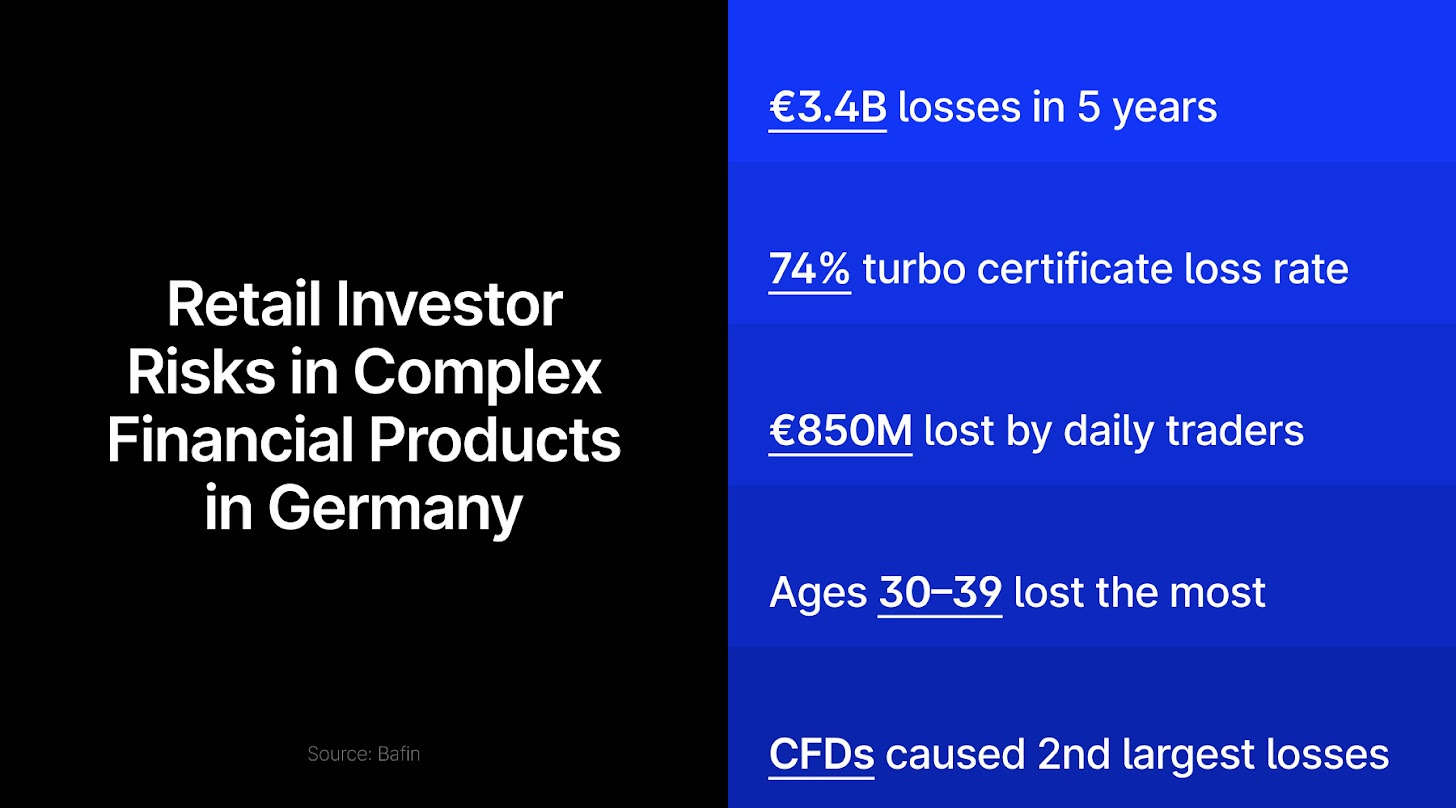
BaFin revealed that there were 543,000 retail investors trading turbos between January 2019 and December 2023, who executed approximately 113 million transactions. However, 74.2 per cent of these investors lost money, with average losses of €6,358 per losing investor. Total losses exceeded €3.4 billion during these five years.

“Turbo certificates can cause significant losses – making it all the more important to create transparency and raise investors’ risk awareness,” added Pötzsch.

However, Germany will not be the first country to impose restrictions on turbos. The regulator in the Netherlands already imposed leverage limitations, mandatory risk warnings and a prohibition on bonuses for these instruments, which came into effect in October 2021.

The European Securities and Markets Authority (ESMA) termed turbos as ‘high-risk’ and encouraged other local regulators to monitor turbos on their respective markets and assess the risks of these instruments to retail traders.

Germany’s financial regulator, BaFin, has decided to impose restrictions on the sale and distribution of turbo certificates in the country, according to a regulatory announcement today (Wednesday).

Join IG, CMC, and Robinhood in London’s leading trading industry event!

New CFD-Like Restrictions for Turbos

Under the new regulation, platforms offering turbo certificates to retail German traders must display a standard risk warning on their websites. Even third-party websites, likely affiliates, advertising the trading of turbo certificates also have to display these warnings.

“The risk warning must be clearly displayed to the retail investor immediately before each purchase of a turbo certificate,” BaFin noted in its long advisory (translated from German).

Furthermore, turbo providers cannot offer monetary or non-monetary benefits to retail traders, which can be in the form of new customer bonuses or rebates in order fees.

The third and final requirement will be mandatory surveys that intermediaries offering turbos to Germans must conduct to assess the knowledge of retail traders about turbo certificates. These platforms must repeat these surveys at least every six months.

germany turbos

According to the German publication Welt, the new requirements from BaFin around turbos will become effective in June 2026.

Thorsten Pötzsch, Executive Director of Securities Supervision and Asset Management at BaFin

“With this measure, we ensure that retail investors are aware of the specific risks of turbo certificates before they invest,” Thorsten Pötzsch, Executive Director of Securities Supervision and Asset Management at BaFin, told the local publication.

Losses Exceeded €3.4 Billion

Turbo certificates are leveraged investment products, similar to contracts for difference (CFDs). However, turbos have a built-in stop loss, and positions are automatically closed once a predetermined price level is reached.

The restrictions to be imposed by BaFin also closely resemble the requirements around CFD offerings to retail traders in the European bloc under the Markets in Financial Instruments Directive II (MiFID II).

Although turbo certificates are not very popular internationally, they have a significant market share among other derivative products in the Dutch, German, Belgian, and Austrian markets.

BaFin revealed that there were 543,000 retail investors trading turbos between January 2019 and December 2023, who executed approximately 113 million transactions. However, 74.2 per cent of these investors lost money, with average losses of €6,358 per losing investor. Total losses exceeded €3.4 billion during these five years.

“Turbo certificates can cause significant losses – making it all the more important to create transparency and raise investors’ risk awareness,” added Pötzsch.

However, Germany will not be the first country to impose restrictions on turbos. The regulator in the Netherlands already imposed leverage limitations, mandatory risk warnings and a prohibition on bonuses for these instruments, which came into effect in October 2021.

The European Securities and Markets Authority (ESMA) termed turbos as ‘high-risk’ and encouraged other local regulators to monitor turbos on their respective markets and assess the risks of these instruments to retail traders.

About the Author: Arnab Shome
Arnab Shome
  • 7211 Articles
  • 130 Followers
About the Author: Arnab Shome
Arnab is an electronics engineer-turned-financial editor. He entered the industry covering the cryptocurrency market for Finance Magnates and later expanded his reach to forex as well. He is passionate about the changing regulatory landscape on financial markets and keenly follows the disruptions in the industry with new-age technologies.
  • 7211 Articles
  • 130 Followers

More from the Author

Retail FX

!"#$%&'()*+,-./0123456789:;<=>?@ABCDEFGHIJKLMNOPQRSTUVWXYZ[\]^_`abcdefghijklmnopqrstuvwxyz{|} !"#$%&'()*+,-./0123456789:;<=>?@ABCDEFGHIJKLMNOPQRSTUVWXYZ[\]^_`abcdefghijklmnopqrstuvwxyz{|}