XTB introduces a new product aimed at simplifying long-term passive investing in ETFs.
Clients may build portfolios with a minimum investment of EUR 15, featuring zero commission.
Riding the
wave of its successful foray into fractional shares, the Polish-based brokerage XTB
is setting its sights on a new frontier: passive investments based on global
exchange-traded funds (ETFs). Initially tested in Romania with promising
results, the service will debut in Portugal and Slovakia today (Monday). Omar
Arnaout, the CEO of the publicly-listed fintech, has revealed plans to roll out
the offering to additional European markets later in the year.
XTB Introduces 'Investment
Plans', Recurring Payments in Line
After
implementing fractional shares in European markets this spring, which were
warmly received by retail investors, XTB has presented another product
innovation called 'Investment Plans'. Finance Magnates reported a few
months ago that XTB is preparing to launch savings products in 2023, reaching a
wider audience than contracts for difference (CFD), with which the broker was originally
associated.
From the
information we exclusively received, it appears that the new offer is launching
this month. Just a few hours after the publication of this article, it will
officially be presented in Slovakia and Portugal. The choice of these countries
is not accidental.
As Arnaout digs
deeper into his company's internal data, in Romania, three out of five XTB
clients invested their funds in ETFs during 2022. In Slovakia, the popularity
of these funds is also growing, and a year ago, every third retail investor
used them. As for Portugal, only 19% of clients were interested in ETFs in 2021,
now it is almost 50%.
"The
rationale behind choosing the initial countries is simple – we selected those
markets where XTB clients invest in ETFs most frequently. Overall, we plan to
offer Investment Plans on all our European markets and our technology team is
working hard to make it happen this year," Arnaout commented exclusively for
Finance Magnates.
"We selected those markets where XTB clients invest in ETFs most frequently," said Arnaout.
As the CEO
admitted, the new product is an opportunity to reach a new group of potential
clients. Moreover, XTB wants to develop its functionality and add the option of
recurring payments later this year.
To maintain
high momentum in acquiring new clients and retaining existing ones, XTB is
constantly looking for new solutions. In the first half of 2023, the company
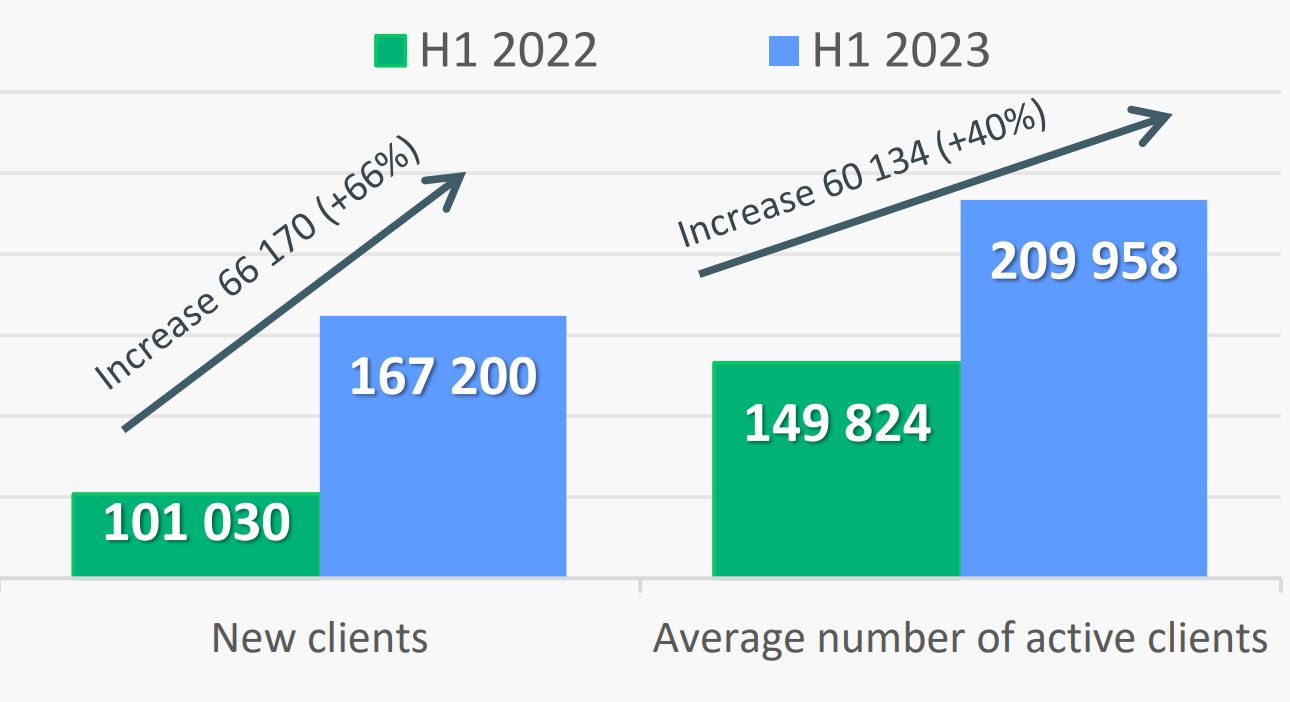
managed to acquire a record number of clients (167,000), which is 65.5% more than the
previous year. The total base of active clients has grown to almost 210,000.
XTB's New clients and Average number of active clients. Source: XTB
What's Inside XTB's ETF
Initiative?
Starting
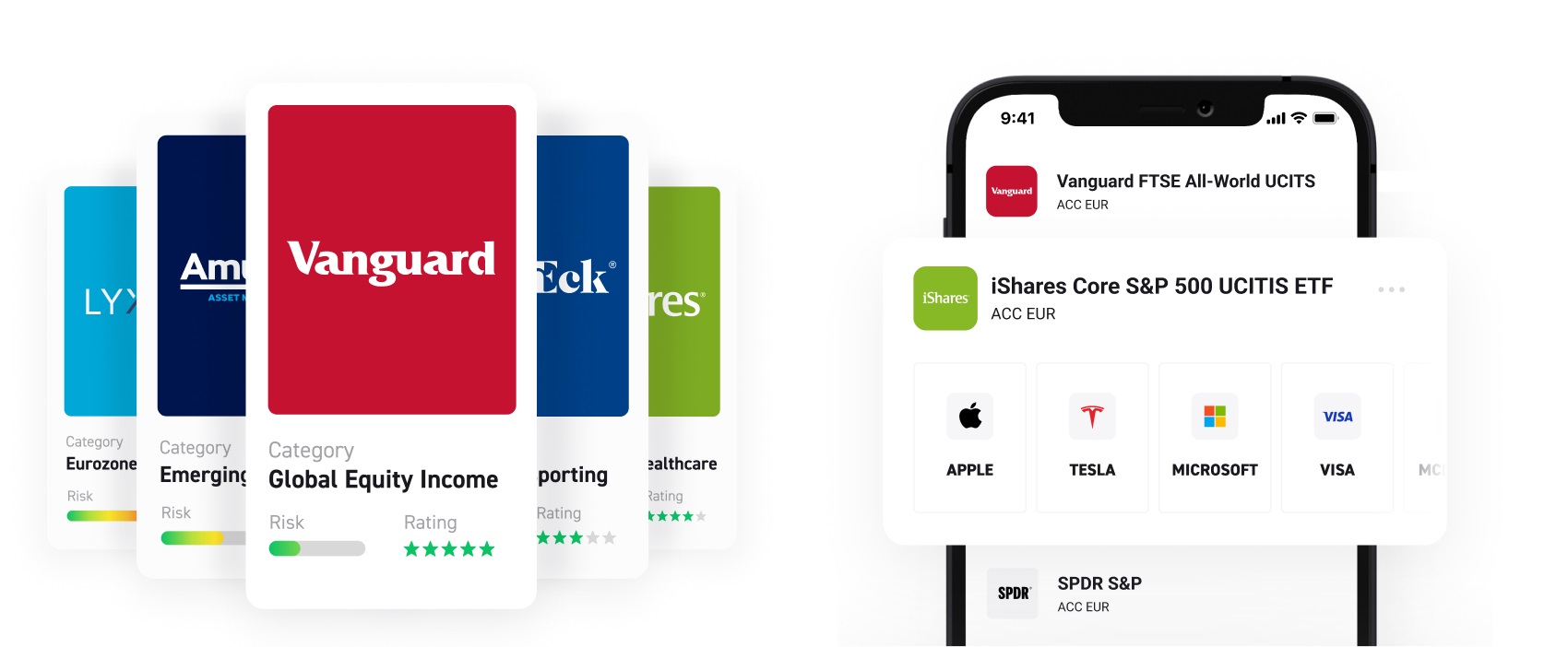
with as little as EUR 15, XTB clients can create up to 10 distinct portfolios,
each containing a maximum of nine exchange-traded funds. The platform currently
offers a selection of over 300 ETFs.
Investment Plans simplify the
decision-making process by offering tailored suggestions. These suggestions are
based on various factors such as the type of ETF, its asset composition,
geographical focus, Morningstar ratings, and the plan's performance history
over the past five years. The full list of available instruments can be found on the broker's Romanian website.
Within the
XTB app, investors have the freedom to specify the exact amount they wish to
invest. The system then automatically allocates these funds based on the
investor's individual risk tolerance and chosen investment timeframe.
Additionally, these Investment Plans are designed to be flexible; they can be
opened or closed at any given moment, allowing investors to actively manage and
re-allocate their funds as their financial goals evolve.
"Investment
Plans are suited to cater to the needs of investors looking for ways to invest
their funds but they don't want to spend too much time doing so. As this
passive product streamlines the process of building an investment
portfolio," Arnaout explained.
This seemed
like a natural move in the case of passive investing based on ETFs. Internal
XTB data shows that out of all of the clients in Europe, ETFs are most popular in Romania.
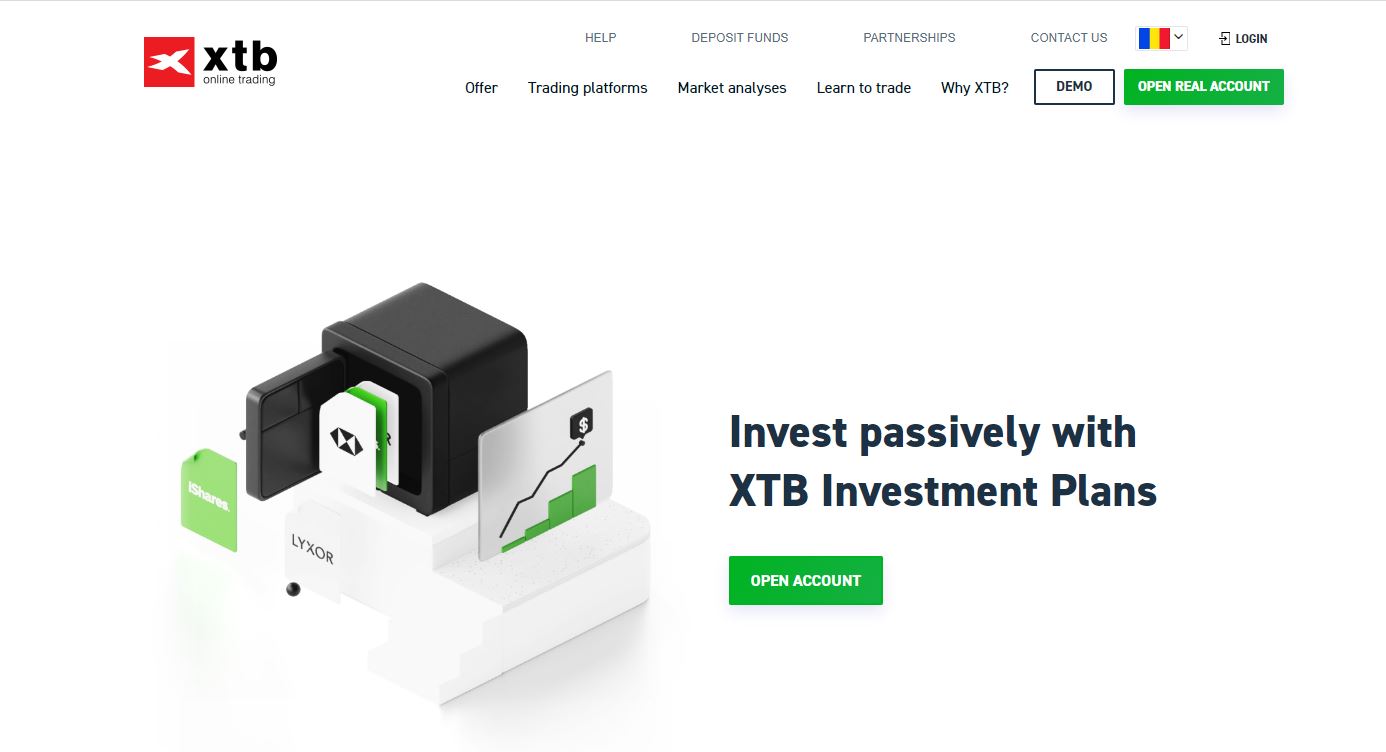
"XTB's Romanian-language site promoting its Investment Plans offering." Automatically translated into English by Google Translate. Source: XTB
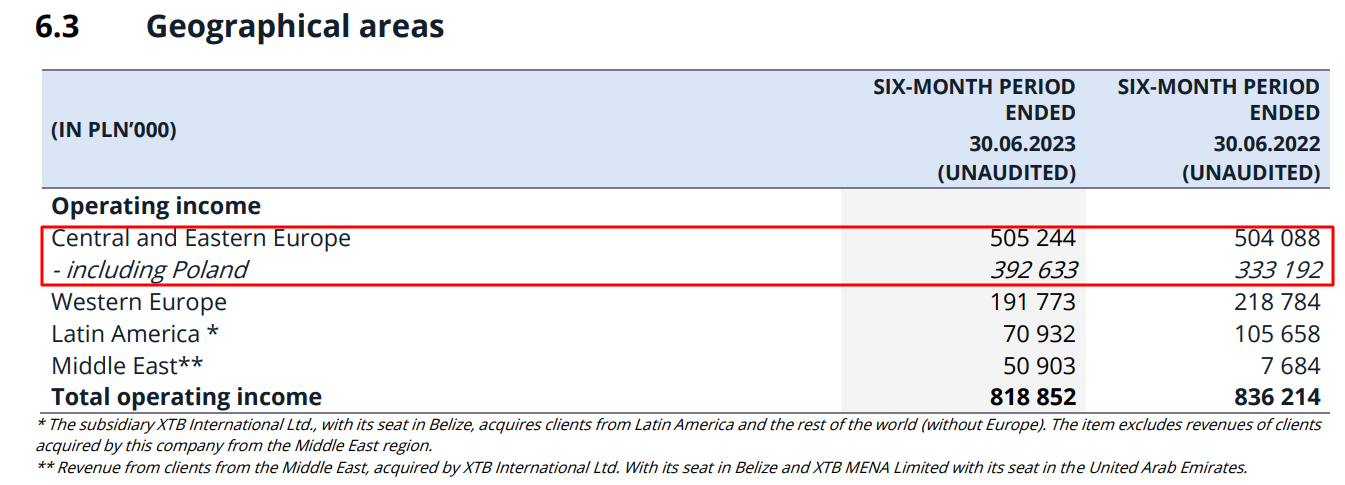
Unfortunately,
the broker does not disclose what percentage of its revenue comes from
individual countries in Central and Eastern Europe (CEE), it only provided
aggregate results that focused on Poland. According to the latest report,
operational revenue in the CEE region (including Romania) exceeded PLN 505
million. Excluding Poland, the revenue in the CEE was PLN 173 million, which is
almost the same as in the entirety of Western Europe (PLN 191 million).
Source: XTB
Finally, we
asked Arnaout if he is not afraid that ETFs in Europe are still a fledgling
product, especially compared to the United States. He believes they may
dominate the market within a few years and repeat the history of fractional
shares. The ETFs initially gained popularity in the United States and then
spread to the rest of the world.
"The
rise in popularity of ETFs in Europe is only a matter of time. Of course, the
US market sets the trends for financial markets worldwide. This was the case,
for instance, with fractional shares, which first appeared there and then
conquered the whole world," Arnaout concluded.
Riding the
wave of its successful foray into fractional shares, the Polish-based brokerage XTB
is setting its sights on a new frontier: passive investments based on global
exchange-traded funds (ETFs). Initially tested in Romania with promising
results, the service will debut in Portugal and Slovakia today (Monday). Omar
Arnaout, the CEO of the publicly-listed fintech, has revealed plans to roll out
the offering to additional European markets later in the year.
XTB Introduces 'Investment
Plans', Recurring Payments in Line
After
implementing fractional shares in European markets this spring, which were
warmly received by retail investors, XTB has presented another product
innovation called 'Investment Plans'. Finance Magnates reported a few
months ago that XTB is preparing to launch savings products in 2023, reaching a
wider audience than contracts for difference (CFD), with which the broker was originally
associated.
From the
information we exclusively received, it appears that the new offer is launching
this month. Just a few hours after the publication of this article, it will
officially be presented in Slovakia and Portugal. The choice of these countries
is not accidental.
As Arnaout digs
deeper into his company's internal data, in Romania, three out of five XTB
clients invested their funds in ETFs during 2022. In Slovakia, the popularity
of these funds is also growing, and a year ago, every third retail investor
used them. As for Portugal, only 19% of clients were interested in ETFs in 2021,
now it is almost 50%.
"The
rationale behind choosing the initial countries is simple – we selected those
markets where XTB clients invest in ETFs most frequently. Overall, we plan to
offer Investment Plans on all our European markets and our technology team is
working hard to make it happen this year," Arnaout commented exclusively for
Finance Magnates.
"We selected those markets where XTB clients invest in ETFs most frequently," said Arnaout.
As the CEO
admitted, the new product is an opportunity to reach a new group of potential
clients. Moreover, XTB wants to develop its functionality and add the option of
recurring payments later this year.
To maintain
high momentum in acquiring new clients and retaining existing ones, XTB is
constantly looking for new solutions. In the first half of 2023, the company
managed to acquire a record number of clients (167,000), which is 65.5% more than the
previous year. The total base of active clients has grown to almost 210,000.
XTB's New clients and Average number of active clients. Source: XTB
What's Inside XTB's ETF
Initiative?
Starting
with as little as EUR 15, XTB clients can create up to 10 distinct portfolios,
each containing a maximum of nine exchange-traded funds. The platform currently
offers a selection of over 300 ETFs.
Investment Plans simplify the
decision-making process by offering tailored suggestions. These suggestions are
based on various factors such as the type of ETF, its asset composition,
geographical focus, Morningstar ratings, and the plan's performance history
over the past five years. The full list of available instruments can be found on the broker's Romanian website.
Within the
XTB app, investors have the freedom to specify the exact amount they wish to
invest. The system then automatically allocates these funds based on the
investor's individual risk tolerance and chosen investment timeframe.
Additionally, these Investment Plans are designed to be flexible; they can be
opened or closed at any given moment, allowing investors to actively manage and
re-allocate their funds as their financial goals evolve.
"Investment
Plans are suited to cater to the needs of investors looking for ways to invest
their funds but they don't want to spend too much time doing so. As this
passive product streamlines the process of building an investment
portfolio," Arnaout explained.
This seemed
like a natural move in the case of passive investing based on ETFs. Internal
XTB data shows that out of all of the clients in Europe, ETFs are most popular in Romania.
"XTB's Romanian-language site promoting its Investment Plans offering." Automatically translated into English by Google Translate. Source: XTB
Unfortunately,
the broker does not disclose what percentage of its revenue comes from
individual countries in Central and Eastern Europe (CEE), it only provided
aggregate results that focused on Poland. According to the latest report,
operational revenue in the CEE region (including Romania) exceeded PLN 505
million. Excluding Poland, the revenue in the CEE was PLN 173 million, which is
almost the same as in the entirety of Western Europe (PLN 191 million).
Source: XTB
Finally, we
asked Arnaout if he is not afraid that ETFs in Europe are still a fledgling
product, especially compared to the United States. He believes they may
dominate the market within a few years and repeat the history of fractional
shares. The ETFs initially gained popularity in the United States and then
spread to the rest of the world.
"The
rise in popularity of ETFs in Europe is only a matter of time. Of course, the
US market sets the trends for financial markets worldwide. This was the case,
for instance, with fractional shares, which first appeared there and then
conquered the whole world," Arnaout concluded.
Damian Chmiel is a Senior Analyst & Editor at Finance Magnates with more than 15 years of experience in the CFD and online trading industry. Active as both a trader and journalist since 2010, he focuses on broker coverage, fintech innovation, and regulatory developments across Europe, the Middle East, and Asia.
His work includes interviews with C-level leaders at major brokerages and fintech platforms, as well as co-authoring Finance Magnates’ quarterly industry benchmarking reports. Damian’s reporting is data-driven, market-aware, and grounded in direct industry engagement. His analysis and commentary have also been cited by external media outlets, including Investing.com, Binance, The Asset, Stockhead, and Dispatch.
Education:
MA in Finance and Accounting, Cracow University of Economics
Today’s financial news recap covers AvaTrade agrees to acquire most of FXCM, NAGA secures eight million dollars in new financing, and Wise seeks a tax settlement in the UK.
Finance Magnates Daily Recap brings you the latest news from forex and CFD brokers, fintech, payments, cryptocurrency, digital assets, trading platforms, financial regulation and global markets.
Get the key company news, executive moves, deals, regulatory updates and market developments of the day, in just a few minutes. New episodes published every weekday.
Read more: https://www.financemagnates.com
#FinanceMagnates #ForexNews #FintechNews
Today’s financial news recap covers AvaTrade agrees to acquire most of FXCM, NAGA secures eight million dollars in new financing, and Wise seeks a tax settlement in the UK.
Finance Magnates Daily Recap brings you the latest news from forex and CFD brokers, fintech, payments, cryptocurrency, digital assets, trading platforms, financial regulation and global markets.
Get the key company news, executive moves, deals, regulatory updates and market developments of the day, in just a few minutes. New episodes published every weekday.
Read more: https://www.financemagnates.com
#FinanceMagnates #ForexNews #FintechNews
Today’s financial news recap covers AvaTrade agrees to acquire most of FXCM, NAGA secures eight million dollars in new financing, and Wise seeks a tax settlement in the UK.
Finance Magnates Daily Recap brings you the latest news from forex and CFD brokers, fintech, payments, cryptocurrency, digital assets, trading platforms, financial regulation and global markets.
Get the key company news, executive moves, deals, regulatory updates and market developments of the day, in just a few minutes. New episodes published every weekday.
Read more: https://www.financemagnates.com
#FinanceMagnates #ForexNews #FintechNews
Today’s financial news recap covers AvaTrade agrees to acquire most of FXCM, NAGA secures eight million dollars in new financing, and Wise seeks a tax settlement in the UK.
Finance Magnates Daily Recap brings you the latest news from forex and CFD brokers, fintech, payments, cryptocurrency, digital assets, trading platforms, financial regulation and global markets.
Get the key company news, executive moves, deals, regulatory updates and market developments of the day, in just a few minutes. New episodes published every weekday.
Read more: https://www.financemagnates.com
#FinanceMagnates #ForexNews #FintechNews
XTB Adds Overnight US Stock Trading; Nasdaq Ventures Invests in One Trading
XTB Adds Overnight US Stock Trading; Nasdaq Ventures Invests in One Trading
XTB Adds Overnight US Stock Trading; Nasdaq Ventures Invests in One Trading
XTB Adds Overnight US Stock Trading; Nasdaq Ventures Invests in One Trading
XTB Adds Overnight US Stock Trading; Nasdaq Ventures Invests in One Trading
XTB Adds Overnight US Stock Trading; Nasdaq Ventures Invests in One Trading
Today’s financial news recap covers XTB expands overnight US stock trading, Fortrade reports higher revenue, Nasdaq backs One Trading, and Vest Labs raises 13 million dollars.
Finance Magnates Daily Recap brings you the latest news from forex and CFD brokers, fintech, payments, cryptocurrency, digital assets, trading platforms, financial regulation and global markets.
Get the key company news, executive moves, deals, regulatory updates and market developments of the day, in just a few minutes. New episodes published every weekday.
Read more: https://www.financemagnates.com
#FinanceMagnates #ForexNews #FintechNews
Today’s financial news recap covers XTB expands overnight US stock trading, Fortrade reports higher revenue, Nasdaq backs One Trading, and Vest Labs raises 13 million dollars.
Finance Magnates Daily Recap brings you the latest news from forex and CFD brokers, fintech, payments, cryptocurrency, digital assets, trading platforms, financial regulation and global markets.
Get the key company news, executive moves, deals, regulatory updates and market developments of the day, in just a few minutes. New episodes published every weekday.
Read more: https://www.financemagnates.com
#FinanceMagnates #ForexNews #FintechNews
Today’s financial news recap covers XTB expands overnight US stock trading, Fortrade reports higher revenue, Nasdaq backs One Trading, and Vest Labs raises 13 million dollars.
Finance Magnates Daily Recap brings you the latest news from forex and CFD brokers, fintech, payments, cryptocurrency, digital assets, trading platforms, financial regulation and global markets.
Get the key company news, executive moves, deals, regulatory updates and market developments of the day, in just a few minutes. New episodes published every weekday.
Read more: https://www.financemagnates.com
#FinanceMagnates #ForexNews #FintechNews
Today’s financial news recap covers XTB expands overnight US stock trading, Fortrade reports higher revenue, Nasdaq backs One Trading, and Vest Labs raises 13 million dollars.
Finance Magnates Daily Recap brings you the latest news from forex and CFD brokers, fintech, payments, cryptocurrency, digital assets, trading platforms, financial regulation and global markets.
Get the key company news, executive moves, deals, regulatory updates and market developments of the day, in just a few minutes. New episodes published every weekday.
Read more: https://www.financemagnates.com
#FinanceMagnates #ForexNews #FintechNews
Today’s financial news recap covers XTB expands overnight US stock trading, Fortrade reports higher revenue, Nasdaq backs One Trading, and Vest Labs raises 13 million dollars.
Finance Magnates Daily Recap brings you the latest news from forex and CFD brokers, fintech, payments, cryptocurrency, digital assets, trading platforms, financial regulation and global markets.
Get the key company news, executive moves, deals, regulatory updates and market developments of the day, in just a few minutes. New episodes published every weekday.
Read more: https://www.financemagnates.com
#FinanceMagnates #ForexNews #FintechNews
Today’s financial news recap covers XTB expands overnight US stock trading, Fortrade reports higher revenue, Nasdaq backs One Trading, and Vest Labs raises 13 million dollars.
Finance Magnates Daily Recap brings you the latest news from forex and CFD brokers, fintech, payments, cryptocurrency, digital assets, trading platforms, financial regulation and global markets.
Get the key company news, executive moves, deals, regulatory updates and market developments of the day, in just a few minutes. New episodes published every weekday.
Read more: https://www.financemagnates.com
#FinanceMagnates #ForexNews #FintechNews
CMC Founder Downplays Volatility Hit; Devexperts Names CEO
CMC Founder Downplays Volatility Hit; Devexperts Names CEO
CMC Founder Downplays Volatility Hit; Devexperts Names CEO
CMC Founder Downplays Volatility Hit; Devexperts Names CEO
CMC Founder Downplays Volatility Hit; Devexperts Names CEO
CMC Founder Downplays Volatility Hit; Devexperts Names CEO
Today’s financial news recap covers low volatility pressures brokers, Devexperts names a new CEO, Saxo cuts onboarding time, and OKX reaches a 25 billion dollar valuation.
Finance Magnates Daily Recap brings you the latest news from forex and CFD brokers, fintech, payments, cryptocurrency, digital assets, trading platforms, financial regulation and global markets.
Get the key company news, executive moves, deals, regulatory updates and market developments of the day, in just a few minutes. New episodes published every weekday.
Read more: https://www.financemagnates.com
#FinanceMagnates #ForexNews #FintechNews
Today’s financial news recap covers low volatility pressures brokers, Devexperts names a new CEO, Saxo cuts onboarding time, and OKX reaches a 25 billion dollar valuation.
Finance Magnates Daily Recap brings you the latest news from forex and CFD brokers, fintech, payments, cryptocurrency, digital assets, trading platforms, financial regulation and global markets.
Get the key company news, executive moves, deals, regulatory updates and market developments of the day, in just a few minutes. New episodes published every weekday.
Read more: https://www.financemagnates.com
#FinanceMagnates #ForexNews #FintechNews
Today’s financial news recap covers low volatility pressures brokers, Devexperts names a new CEO, Saxo cuts onboarding time, and OKX reaches a 25 billion dollar valuation.
Finance Magnates Daily Recap brings you the latest news from forex and CFD brokers, fintech, payments, cryptocurrency, digital assets, trading platforms, financial regulation and global markets.
Get the key company news, executive moves, deals, regulatory updates and market developments of the day, in just a few minutes. New episodes published every weekday.
Read more: https://www.financemagnates.com
#FinanceMagnates #ForexNews #FintechNews
Today’s financial news recap covers low volatility pressures brokers, Devexperts names a new CEO, Saxo cuts onboarding time, and OKX reaches a 25 billion dollar valuation.
Finance Magnates Daily Recap brings you the latest news from forex and CFD brokers, fintech, payments, cryptocurrency, digital assets, trading platforms, financial regulation and global markets.
Get the key company news, executive moves, deals, regulatory updates and market developments of the day, in just a few minutes. New episodes published every weekday.
Read more: https://www.financemagnates.com
#FinanceMagnates #ForexNews #FintechNews
Today’s financial news recap covers low volatility pressures brokers, Devexperts names a new CEO, Saxo cuts onboarding time, and OKX reaches a 25 billion dollar valuation.
Finance Magnates Daily Recap brings you the latest news from forex and CFD brokers, fintech, payments, cryptocurrency, digital assets, trading platforms, financial regulation and global markets.
Get the key company news, executive moves, deals, regulatory updates and market developments of the day, in just a few minutes. New episodes published every weekday.
Read more: https://www.financemagnates.com
#FinanceMagnates #ForexNews #FintechNews
Today’s financial news recap covers low volatility pressures brokers, Devexperts names a new CEO, Saxo cuts onboarding time, and OKX reaches a 25 billion dollar valuation.
Finance Magnates Daily Recap brings you the latest news from forex and CFD brokers, fintech, payments, cryptocurrency, digital assets, trading platforms, financial regulation and global markets.
Get the key company news, executive moves, deals, regulatory updates and market developments of the day, in just a few minutes. New episodes published every weekday.
Read more: https://www.financemagnates.com
#FinanceMagnates #ForexNews #FintechNews
Today’s financial news recap covers Trade Nation buys FXCM's UK client book, Trading 212 reports higher revenue, the CFTC's move to allow perpetual index futures.
Finance Magnates Daily Recap brings you the latest news from forex and CFD brokers, fintech, payments, cryptocurrency, digital assets, trading platforms, financial regulation and global markets.
Get the key company news, executive moves, deals, regulatory updates and market developments of the day, in just a few minutes. New episodes published every weekday.
Read more: https://www.financemagnates.com
#FinanceMagnates #ForexNews #FintechNews
Today’s financial news recap covers Trade Nation buys FXCM's UK client book, Trading 212 reports higher revenue, the CFTC's move to allow perpetual index futures.
Finance Magnates Daily Recap brings you the latest news from forex and CFD brokers, fintech, payments, cryptocurrency, digital assets, trading platforms, financial regulation and global markets.
Get the key company news, executive moves, deals, regulatory updates and market developments of the day, in just a few minutes. New episodes published every weekday.
Read more: https://www.financemagnates.com
#FinanceMagnates #ForexNews #FintechNews
Today’s financial news recap covers Trade Nation buys FXCM's UK client book, Trading 212 reports higher revenue, the CFTC's move to allow perpetual index futures.
Finance Magnates Daily Recap brings you the latest news from forex and CFD brokers, fintech, payments, cryptocurrency, digital assets, trading platforms, financial regulation and global markets.
Get the key company news, executive moves, deals, regulatory updates and market developments of the day, in just a few minutes. New episodes published every weekday.
Read more: https://www.financemagnates.com
#FinanceMagnates #ForexNews #FintechNews
Today’s financial news recap covers Trade Nation buys FXCM's UK client book, Trading 212 reports higher revenue, the CFTC's move to allow perpetual index futures.
Finance Magnates Daily Recap brings you the latest news from forex and CFD brokers, fintech, payments, cryptocurrency, digital assets, trading platforms, financial regulation and global markets.
Get the key company news, executive moves, deals, regulatory updates and market developments of the day, in just a few minutes. New episodes published every weekday.
Read more: https://www.financemagnates.com
#FinanceMagnates #ForexNews #FintechNews
Today’s financial news recap covers Trade Nation buys FXCM's UK client book, Trading 212 reports higher revenue, the CFTC's move to allow perpetual index futures.
Finance Magnates Daily Recap brings you the latest news from forex and CFD brokers, fintech, payments, cryptocurrency, digital assets, trading platforms, financial regulation and global markets.
Get the key company news, executive moves, deals, regulatory updates and market developments of the day, in just a few minutes. New episodes published every weekday.
Read more: https://www.financemagnates.com
#FinanceMagnates #ForexNews #FintechNews
Today’s financial news recap covers Trade Nation buys FXCM's UK client book, Trading 212 reports higher revenue, the CFTC's move to allow perpetual index futures.
Finance Magnates Daily Recap brings you the latest news from forex and CFD brokers, fintech, payments, cryptocurrency, digital assets, trading platforms, financial regulation and global markets.
Get the key company news, executive moves, deals, regulatory updates and market developments of the day, in just a few minutes. New episodes published every weekday.
Read more: https://www.financemagnates.com
#FinanceMagnates #ForexNews #FintechNews
Your career isn’t a linear path.
Your career isn’t a linear path.
Your career isn’t a linear path.
Your career isn’t a linear path.
Your career isn’t a linear path.
Your career isn’t a linear path.
Roles change. Career goals change. Sometimes you want a completely new challenge.
But the skills and knowledge you build along the way can stay with you and give you something to build on.
For Jeff Patterson, that continued growth is key to long-term career development.
You bring the skills. FM Academy helps you build the knowledge.
#FMAcademy #FinanceMagnates #FinanceCareers #ProfessionalDevelopment #Fintech
Roles change. Career goals change. Sometimes you want a completely new challenge.
But the skills and knowledge you build along the way can stay with you and give you something to build on.
For Jeff Patterson, that continued growth is key to long-term career development.
You bring the skills. FM Academy helps you build the knowledge.
#FMAcademy #FinanceMagnates #FinanceCareers #ProfessionalDevelopment #Fintech
Roles change. Career goals change. Sometimes you want a completely new challenge.
But the skills and knowledge you build along the way can stay with you and give you something to build on.
For Jeff Patterson, that continued growth is key to long-term career development.
You bring the skills. FM Academy helps you build the knowledge.
#FMAcademy #FinanceMagnates #FinanceCareers #ProfessionalDevelopment #Fintech
Roles change. Career goals change. Sometimes you want a completely new challenge.
But the skills and knowledge you build along the way can stay with you and give you something to build on.
For Jeff Patterson, that continued growth is key to long-term career development.
You bring the skills. FM Academy helps you build the knowledge.
#FMAcademy #FinanceMagnates #FinanceCareers #ProfessionalDevelopment #Fintech
Roles change. Career goals change. Sometimes you want a completely new challenge.
But the skills and knowledge you build along the way can stay with you and give you something to build on.
For Jeff Patterson, that continued growth is key to long-term career development.
You bring the skills. FM Academy helps you build the knowledge.
#FMAcademy #FinanceMagnates #FinanceCareers #ProfessionalDevelopment #Fintech
Roles change. Career goals change. Sometimes you want a completely new challenge.
But the skills and knowledge you build along the way can stay with you and give you something to build on.
For Jeff Patterson, that continued growth is key to long-term career development.
You bring the skills. FM Academy helps you build the knowledge.
#FMAcademy #FinanceMagnates #FinanceCareers #ProfessionalDevelopment #Fintech