Amid Finance Magnates' exclusive report on ESMA's discussion on prop trading regulation, the Czech National Bank has become the first EU regulator to comment on the industry.
Most industry experts think that regulators must bring transparency and disclosure to prop trading.
The Czech National Bank building in Prague
"The business models used by firms engaged in prop trading (technically funded trader services) can take various forms, some of which may be subject to the MiFID regulatory framework,” the Czech National Bank told Finance Magnates exclusively. In this context, It's worth mentioning that one of the top prop trading companies, FTMO, is domiciled in the Czech Republic.
“In those scenarios", added the regulator, "we believe that the relevant MiFID services could be: reception and transmission of orders in relation to one or more financial instruments; execution of orders on behalf of clients; or dealing on own account.”
The regulator added that, “however, in other cases, the exemptions from MiFID apply, and in such cases, the prop trading entity is not subject to the supervision of the Czech National Bank and does not need to be supervised. Also, should there be a suspicion of fraud, we stress that such conduct would be subject to criminal law.”
The Czech National Bank has confirmed to Finance Magnates that it has “taken notice of the prop trading industry,” adding that it is “well aware of the existence and occurrence of the prop trading phenomenon” and the "the potential need for new regulation in this area should be assessed on the EU level."
The response from the Czech National Bank came amid Finance Magnates revealed that the European Securities and Markets Authority (ESMA) ran an initial check on such prop trading firms and discussed potential regulations. Also, according to Muinmos’ founder and CEO, Remonda Kirketerp-Møller, “regulators have been conducting studies, gathering data, and engaging in consultations with industry participants to better understand the nature and implications of prop trading.”
However, none of the top regulators have confirmed their move towards bringing prop trading regulations, making the Czech National Bank the first one in the EU to come up with a comment on prop trading regulations.
Finance Magnates also talked to several industry experts and stakeholders in prop trading. Interestingly, their views varied drastically.
No Regulations to Same Rules as FX/CFDs
Matus Tutko, FTMO’s General Counsel
"Prop firms should be subject to the same rules and scrutiny that FX/CFD brokers are subject to," Greg Rubin, Head of Axi Select, told Finance Magnates. Meanwhile, FTMO’s General Counsel, Matus Tutko, does not think regulations are “necessary [as] the current regulatory environment is robust enough.” Both brands offer prop trading services.
Notably, by “current regulatory environment,” Tutko is pointing at generic business rules like “laws such as consumer protection rules, data protection rules, rules on international sanctions.”
“I truly believe that there is a good argument why the modern prop trading industry should not be regulated by any specific regulation,” Tutko said, adding that “clients are only trading on demo accounts and are never depositing any money for actual trading and therefore they are not facing any risk of losing them.” However, he is in favour of “self-regulation [that] would help steer compliance practices and hence increase the trust of clients.”
Greg Rubin, Head of Axi Select
Axi’s Rubin, who is on the other extreme, detailed that “prop firms are ultimately servicing retail traders who are placing trades with the ambition of profiting. I don’t see how this is any different from the standard FX/CFD industry, which, of course, we know is heavily regulated.”
“It seems the main reason the industry has managed to avoid regulations so far is due to the technicalities of using demo accounts instead of live trading accounts, meaning it is virtual without any ‘real trading’ or financial transaction taking place,” Ruben added. “When you peel through the veil of the technicalities, you will discover how similar the actions of trading CFDs at a broker are to participating in a prop challenge.”
Ran Strauss, CEO at Leverate
Leverate’s CEO, Ran Strauss, also believes that “prop companies will eventually be held to the same standards of regulation and transparency that we currently see in the CFD sector.”
While others mostly agree that it is high time for it, TRAction’s co-CEO, Quinn Perrott, thinks that “there are more important regulatory requirements for major regulators.” However, according to Perrott, “it is a concern if brokers are using prop-like account structures to circumvent local bans on retail clients trading CFDs or specific requirements that have been applied to CFDs.”
New Rules or Existing Ones
Although the regulators have yet to announce their plans for prop trading officially, the question remains: Will there be a new set of regulations, or will the provisions of prop trading be added to the existing rules for brokers?
Evdokia Pitsillidou, the Partner, Risk, and Compliance Director at SALVUS Funds
“A combination of both approaches could be considered to effectively regulate proprietary trading,” believes Evdokia Pitsillidou, Risk & Compliance Director at SALVUS Funds. “The existing regulatory framework for financial services firms, such as OTC retail brokers, can be strengthened to accommodate prop trading activities. This enhancement would involve updating regulations to address the unique needs of prop firms and their clients.”
“In parallel, new regulations tailored specifically for proprietary trading firms could be introduced. These regulations would be designed based on the distinctive characteristics of prop trading, including the types of services offered, the nature of clientele served, and the complexity of trading strategies employed.”
Most of the experts Finance Magnates talked to agreed on the mixed approach rather than an entirely new set of regulations.
Eden Lang (left) and Ariel Yosefi (right), Partners at Herzog Law
“While prop trading possesses distinct characteristics, these differences are not so substantial as to warrant entirely new legislation or any different regulatory supervision,” said Eden Lang and Ariel Yosefi, Partners at Herzog Law. “This approach leverages the established regulatory infrastructure while tailoring it to address the unique risks and opportunities presented by prop trading, such as softening licensing and minimum capital requirements.”
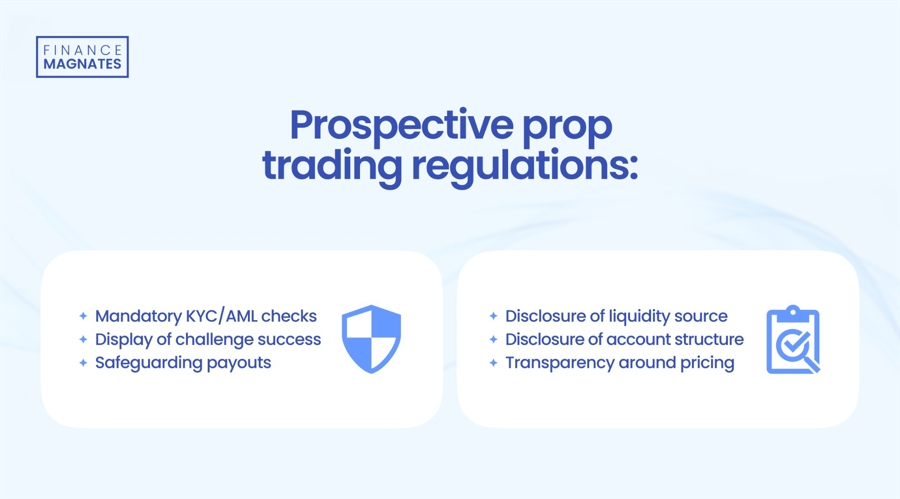
The Prospective Prop Trading Regulations
Prop trading firms allow retail traders to trade with the companies’ funds and share a portion of the profits with them. However, traders need to prove their skills by taking on trading challenges, and most activities, even trading in funded accounts, happen in a simulated environment.
Being only incorporated businesses, the prop trading firms are not obliged to publish any business data which brokers are mandated to reveal.
Evgeny Sorokin, CEO of Devexperts
“The biggest issue is the rules that deem a challenge passed or failed; this area has a lot of room for manipulation. It’s in the firm’s financial interest for their trader not to pass,” said Devexperts’ CEO, Evgeny Sorokin, adding that many trading rules “are not clearly defined and are based on the discretion of the prop firm.”
Transparency around the challenge's success rate is indeed one area where regulators can focus. This would be very similar to retail FX and CFD regulations, as many top regulators require brokers to display their percentage of losing clients.
“We would expect the same level of oversight and transparency that exists in CFD companies,” said the CEO of Leverate, Ran Strauss. “For example, presenting the percentage of successful challenges, payouts versus revenues, from where they are taking liquidity, and so forth.”
If traders successfully complete the trading challenge, they often face challenges with payouts. Prop trading brands like The Funded Trader, Skilled Funded Traders, and many others have abruptly stopped payouts, resulting in waves of customer complaints on social media forums. Although The Funded Trader promised to fulfil its payout dues, Skilled Funded Trader, still not operational, has yet to make a public announcement.
“Determining an industry structure and safeguarding payouts if the prop firms face financial difficulties is another significant area,” Sorokin continued. “This could be achieved by requiring prop firms to have payouts segregated from the rest of their business. There are also a host of other rules around payouts, and firms would need to adhere to these, making sure payouts are made within the promised period of time.”
Quinn Perrott, Co-CEO at TRAction, Source: LinkedIn
TRAction’s Perrott believes that “appropriateness testing would be a good start” in the prop trading regulations scene. “Full disclosure of the structure of the accounts and whether they are trading on real funds or a synthetic account (Demo)” is another area where regulators must focus.
“There should also be transparency around the pricing being offered to clients upon which their performance is being measured,” Perrott added.
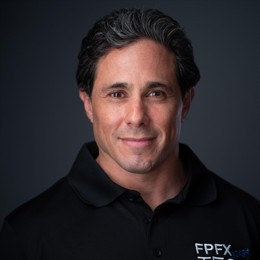
Justin Hertzberg, CEO of FPFX Tech
Justin Hertzberg, the CEO of FPFX Tech, thinks the regulations for the industry must include "background, competency and financial reviews of the principals of Prop Firms; AML/KYC checks on all traders before they receive funded accounts; the establishment of consistent, dynamic Net Capital Requirements that increase as the number of and amounts in 'funded account' increase; disclosures and transparency around simulated/virtual or live trading environments, liquidity sources, counterparties for trade execution, conflicts of interests, assets on deposit, pass/failure rates, payout number and amount; promotional material reviews for clarity, accuracy and truthfulness; and annual financial and compliance audits."
The Future of Prop Trading
Despite the controversies around prop trading, the popularity of these types of services is only rising. Several retail brokers, including OANDA, Axi, IC Markets and Hantec Markets, have launched their prop trading services, and more are expected to join in the near future.
“We will see more and more traditional retail brokers get into this space,” the CEO of Devexperts added. “This will be a good thing for the industry and the traders. These firms are already regulated and operating, so they can be trusted to follow the rules properly, and they have more to lose if they don't.”
FPFX's Hertzberg added: "Brokers make the best prop firms, as they are generally well-capitalized, led by executives with substantial financial services experience, already operate regulated businesses in multiple jurisdictions and have much of the infrastructure needed to run one of these businesses at scale."
Interestingly, FTMO, which started offering prop trading services in 2015, is now gearing up to launch brokerage services. However, given the number of companies in the newly-brewed industry, it can be said that prop trading will dominate as a standalone industry, not as a supplementary service of brokerages.
“Prop trading is a great concept, combining the firm's capital with a profit-sharing arrangement while limiting risk to the trader. This approach isn't a niche product, yet it's not universally suitable for every trader,” said Leverate’s Strauss. “Looking ahead, prop trading is poised to expand its market share. However, for it to truly flourish, it must be brought under appropriate regulation.”
"The business models used by firms engaged in prop trading (technically funded trader services) can take various forms, some of which may be subject to the MiFID regulatory framework,” the Czech National Bank told Finance Magnates exclusively. In this context, It's worth mentioning that one of the top prop trading companies, FTMO, is domiciled in the Czech Republic.
“In those scenarios", added the regulator, "we believe that the relevant MiFID services could be: reception and transmission of orders in relation to one or more financial instruments; execution of orders on behalf of clients; or dealing on own account.”
The regulator added that, “however, in other cases, the exemptions from MiFID apply, and in such cases, the prop trading entity is not subject to the supervision of the Czech National Bank and does not need to be supervised. Also, should there be a suspicion of fraud, we stress that such conduct would be subject to criminal law.”
The Czech National Bank has confirmed to Finance Magnates that it has “taken notice of the prop trading industry,” adding that it is “well aware of the existence and occurrence of the prop trading phenomenon” and the "the potential need for new regulation in this area should be assessed on the EU level."
The response from the Czech National Bank came amid Finance Magnates revealed that the European Securities and Markets Authority (ESMA) ran an initial check on such prop trading firms and discussed potential regulations. Also, according to Muinmos’ founder and CEO, Remonda Kirketerp-Møller, “regulators have been conducting studies, gathering data, and engaging in consultations with industry participants to better understand the nature and implications of prop trading.”
However, none of the top regulators have confirmed their move towards bringing prop trading regulations, making the Czech National Bank the first one in the EU to come up with a comment on prop trading regulations.
Finance Magnates also talked to several industry experts and stakeholders in prop trading. Interestingly, their views varied drastically.
No Regulations to Same Rules as FX/CFDs
Matus Tutko, FTMO’s General Counsel
"Prop firms should be subject to the same rules and scrutiny that FX/CFD brokers are subject to," Greg Rubin, Head of Axi Select, told Finance Magnates. Meanwhile, FTMO’s General Counsel, Matus Tutko, does not think regulations are “necessary [as] the current regulatory environment is robust enough.” Both brands offer prop trading services.
Notably, by “current regulatory environment,” Tutko is pointing at generic business rules like “laws such as consumer protection rules, data protection rules, rules on international sanctions.”
“I truly believe that there is a good argument why the modern prop trading industry should not be regulated by any specific regulation,” Tutko said, adding that “clients are only trading on demo accounts and are never depositing any money for actual trading and therefore they are not facing any risk of losing them.” However, he is in favour of “self-regulation [that] would help steer compliance practices and hence increase the trust of clients.”
Greg Rubin, Head of Axi Select
Axi’s Rubin, who is on the other extreme, detailed that “prop firms are ultimately servicing retail traders who are placing trades with the ambition of profiting. I don’t see how this is any different from the standard FX/CFD industry, which, of course, we know is heavily regulated.”
“It seems the main reason the industry has managed to avoid regulations so far is due to the technicalities of using demo accounts instead of live trading accounts, meaning it is virtual without any ‘real trading’ or financial transaction taking place,” Ruben added. “When you peel through the veil of the technicalities, you will discover how similar the actions of trading CFDs at a broker are to participating in a prop challenge.”
Ran Strauss, CEO at Leverate
Leverate’s CEO, Ran Strauss, also believes that “prop companies will eventually be held to the same standards of regulation and transparency that we currently see in the CFD sector.”
While others mostly agree that it is high time for it, TRAction’s co-CEO, Quinn Perrott, thinks that “there are more important regulatory requirements for major regulators.” However, according to Perrott, “it is a concern if brokers are using prop-like account structures to circumvent local bans on retail clients trading CFDs or specific requirements that have been applied to CFDs.”
New Rules or Existing Ones
Although the regulators have yet to announce their plans for prop trading officially, the question remains: Will there be a new set of regulations, or will the provisions of prop trading be added to the existing rules for brokers?
Evdokia Pitsillidou, the Partner, Risk, and Compliance Director at SALVUS Funds
“A combination of both approaches could be considered to effectively regulate proprietary trading,” believes Evdokia Pitsillidou, Risk & Compliance Director at SALVUS Funds. “The existing regulatory framework for financial services firms, such as OTC retail brokers, can be strengthened to accommodate prop trading activities. This enhancement would involve updating regulations to address the unique needs of prop firms and their clients.”
“In parallel, new regulations tailored specifically for proprietary trading firms could be introduced. These regulations would be designed based on the distinctive characteristics of prop trading, including the types of services offered, the nature of clientele served, and the complexity of trading strategies employed.”
Most of the experts Finance Magnates talked to agreed on the mixed approach rather than an entirely new set of regulations.
Eden Lang (left) and Ariel Yosefi (right), Partners at Herzog Law
“While prop trading possesses distinct characteristics, these differences are not so substantial as to warrant entirely new legislation or any different regulatory supervision,” said Eden Lang and Ariel Yosefi, Partners at Herzog Law. “This approach leverages the established regulatory infrastructure while tailoring it to address the unique risks and opportunities presented by prop trading, such as softening licensing and minimum capital requirements.”
The Prospective Prop Trading Regulations
Prop trading firms allow retail traders to trade with the companies’ funds and share a portion of the profits with them. However, traders need to prove their skills by taking on trading challenges, and most activities, even trading in funded accounts, happen in a simulated environment.
Being only incorporated businesses, the prop trading firms are not obliged to publish any business data which brokers are mandated to reveal.
Evgeny Sorokin, CEO of Devexperts
“The biggest issue is the rules that deem a challenge passed or failed; this area has a lot of room for manipulation. It’s in the firm’s financial interest for their trader not to pass,” said Devexperts’ CEO, Evgeny Sorokin, adding that many trading rules “are not clearly defined and are based on the discretion of the prop firm.”
Transparency around the challenge's success rate is indeed one area where regulators can focus. This would be very similar to retail FX and CFD regulations, as many top regulators require brokers to display their percentage of losing clients.
“We would expect the same level of oversight and transparency that exists in CFD companies,” said the CEO of Leverate, Ran Strauss. “For example, presenting the percentage of successful challenges, payouts versus revenues, from where they are taking liquidity, and so forth.”
If traders successfully complete the trading challenge, they often face challenges with payouts. Prop trading brands like The Funded Trader, Skilled Funded Traders, and many others have abruptly stopped payouts, resulting in waves of customer complaints on social media forums. Although The Funded Trader promised to fulfil its payout dues, Skilled Funded Trader, still not operational, has yet to make a public announcement.
“Determining an industry structure and safeguarding payouts if the prop firms face financial difficulties is another significant area,” Sorokin continued. “This could be achieved by requiring prop firms to have payouts segregated from the rest of their business. There are also a host of other rules around payouts, and firms would need to adhere to these, making sure payouts are made within the promised period of time.”
Quinn Perrott, Co-CEO at TRAction, Source: LinkedIn
TRAction’s Perrott believes that “appropriateness testing would be a good start” in the prop trading regulations scene. “Full disclosure of the structure of the accounts and whether they are trading on real funds or a synthetic account (Demo)” is another area where regulators must focus.
“There should also be transparency around the pricing being offered to clients upon which their performance is being measured,” Perrott added.
Justin Hertzberg, CEO of FPFX Tech
Justin Hertzberg, the CEO of FPFX Tech, thinks the regulations for the industry must include "background, competency and financial reviews of the principals of Prop Firms; AML/KYC checks on all traders before they receive funded accounts; the establishment of consistent, dynamic Net Capital Requirements that increase as the number of and amounts in 'funded account' increase; disclosures and transparency around simulated/virtual or live trading environments, liquidity sources, counterparties for trade execution, conflicts of interests, assets on deposit, pass/failure rates, payout number and amount; promotional material reviews for clarity, accuracy and truthfulness; and annual financial and compliance audits."
The Future of Prop Trading
Despite the controversies around prop trading, the popularity of these types of services is only rising. Several retail brokers, including OANDA, Axi, IC Markets and Hantec Markets, have launched their prop trading services, and more are expected to join in the near future.
“We will see more and more traditional retail brokers get into this space,” the CEO of Devexperts added. “This will be a good thing for the industry and the traders. These firms are already regulated and operating, so they can be trusted to follow the rules properly, and they have more to lose if they don't.”
FPFX's Hertzberg added: "Brokers make the best prop firms, as they are generally well-capitalized, led by executives with substantial financial services experience, already operate regulated businesses in multiple jurisdictions and have much of the infrastructure needed to run one of these businesses at scale."
Interestingly, FTMO, which started offering prop trading services in 2015, is now gearing up to launch brokerage services. However, given the number of companies in the newly-brewed industry, it can be said that prop trading will dominate as a standalone industry, not as a supplementary service of brokerages.
“Prop trading is a great concept, combining the firm's capital with a profit-sharing arrangement while limiting risk to the trader. This approach isn't a niche product, yet it's not universally suitable for every trader,” said Leverate’s Strauss. “Looking ahead, prop trading is poised to expand its market share. However, for it to truly flourish, it must be brought under appropriate regulation.”
Arnab Shome is an electronics engineer-turned-financial editor. He holds a Bachelor of Technology from the National Institute of Technology, Agartala. He entered the retail trading industry about a decade ago, covering the cryptocurrency market for Finance Magnates, and later expanded his coverage to include forex and CFDs as well.
His work at Finance Magnates includes C-level interviews, data-driven analysis, opinion pieces, and scoops of industry exclusives. He also contributes to Finance Magnates’ quarterly industry report.
Area of coverage:
1. CFD broker-related news
2. Industry-related Regulatory updates and developments
3. New retail trading trends
4. Prop trading industry updates
5. Executive interviews
Education:
Bachelor of Technology - National Institute of Technology, Agartala (India)
Webull Spent Big to Hit Record Revenue, and the Bill Is in the Fine Print
Featured Videos
FP Markets Winner Spotlight 🏆 | Global Broker of the Year 2025 #Trading #Broker #Innovation #Shorts
FP Markets Winner Spotlight 🏆 | Global Broker of the Year 2025 #Trading #Broker #Innovation #Shorts
FP Markets Winner Spotlight 🏆 | Global Broker of the Year 2025 #Trading #Broker #Innovation #Shorts
FP Markets Winner Spotlight 🏆 | Global Broker of the Year 2025 #Trading #Broker #Innovation #Shorts
FP Markets takes the spotlight as Global Broker of the Year 2025 at the Finance Magnates Awards.
Martin Stoilov, Head of Client Experience, shares that trust, innovation, and people played a key role in the company’s success, supported by a strong foundation of integrity and client-centricity.
Following this milestone, FP Markets continues to focus on growth, technology investment, and its core values of transparency and excellence.
👉 Be part of FM Awards 2026: https://awards.financemagnates.com/#nominate
FP Markets takes the spotlight as Global Broker of the Year 2025 at the Finance Magnates Awards.
Martin Stoilov, Head of Client Experience, shares that trust, innovation, and people played a key role in the company’s success, supported by a strong foundation of integrity and client-centricity.
Following this milestone, FP Markets continues to focus on growth, technology investment, and its core values of transparency and excellence.
👉 Be part of FM Awards 2026: https://awards.financemagnates.com/#nominate
FP Markets takes the spotlight as Global Broker of the Year 2025 at the Finance Magnates Awards.
Martin Stoilov, Head of Client Experience, shares that trust, innovation, and people played a key role in the company’s success, supported by a strong foundation of integrity and client-centricity.
Following this milestone, FP Markets continues to focus on growth, technology investment, and its core values of transparency and excellence.
👉 Be part of FM Awards 2026: https://awards.financemagnates.com/#nominate
FP Markets takes the spotlight as Global Broker of the Year 2025 at the Finance Magnates Awards.
Martin Stoilov, Head of Client Experience, shares that trust, innovation, and people played a key role in the company’s success, supported by a strong foundation of integrity and client-centricity.
Following this milestone, FP Markets continues to focus on growth, technology investment, and its core values of transparency and excellence.
👉 Be part of FM Awards 2026: https://awards.financemagnates.com/#nominate
In this video, we review @HolaPrimeMarketsOfficial, a multi-asset forex and CFDs broker offering different account types, trading platforms, and flexible trading conditions.
We cover the broker’s overall offering, including account options, trading environment, platforms like MT4 and MT5, and additional services such as managed accounts and fast withdrawals.
Watch the full video to see if Hola Prime Markets fits your trading needs.
📣 Stay up to date with the latest in finance and trading. Follow Finance Magnates for industry news, insights, and global event coverage.
Connect with us:
🔗 LinkedIn: /financemagnates
👍 Facebook: /financemagnates
📸 Instagram: https://www.instagram.com/financemagnates
🐦 X: https://x.com/financemagnates
🎥 TikTok: https://www.tiktok.com/tag/financemagnates
▶️ YouTube: /@financemagnates_official
#HolaPrime #ForexBroker #CFDTrading #FinanceMagnates #Trading #Forex #BrokerReview
In this video, we review @HolaPrimeMarketsOfficial, a multi-asset forex and CFDs broker offering different account types, trading platforms, and flexible trading conditions.
We cover the broker’s overall offering, including account options, trading environment, platforms like MT4 and MT5, and additional services such as managed accounts and fast withdrawals.
Watch the full video to see if Hola Prime Markets fits your trading needs.
📣 Stay up to date with the latest in finance and trading. Follow Finance Magnates for industry news, insights, and global event coverage.
Connect with us:
🔗 LinkedIn: /financemagnates
👍 Facebook: /financemagnates
📸 Instagram: https://www.instagram.com/financemagnates
🐦 X: https://x.com/financemagnates
🎥 TikTok: https://www.tiktok.com/tag/financemagnates
▶️ YouTube: /@financemagnates_official
#HolaPrime #ForexBroker #CFDTrading #FinanceMagnates #Trading #Forex #BrokerReview
In this video, we review @HolaPrimeMarketsOfficial, a multi-asset forex and CFDs broker offering different account types, trading platforms, and flexible trading conditions.
We cover the broker’s overall offering, including account options, trading environment, platforms like MT4 and MT5, and additional services such as managed accounts and fast withdrawals.
Watch the full video to see if Hola Prime Markets fits your trading needs.
📣 Stay up to date with the latest in finance and trading. Follow Finance Magnates for industry news, insights, and global event coverage.
Connect with us:
🔗 LinkedIn: /financemagnates
👍 Facebook: /financemagnates
📸 Instagram: https://www.instagram.com/financemagnates
🐦 X: https://x.com/financemagnates
🎥 TikTok: https://www.tiktok.com/tag/financemagnates
▶️ YouTube: /@financemagnates_official
#HolaPrime #ForexBroker #CFDTrading #FinanceMagnates #Trading #Forex #BrokerReview
In this video, we review @HolaPrimeMarketsOfficial, a multi-asset forex and CFDs broker offering different account types, trading platforms, and flexible trading conditions.
We cover the broker’s overall offering, including account options, trading environment, platforms like MT4 and MT5, and additional services such as managed accounts and fast withdrawals.
Watch the full video to see if Hola Prime Markets fits your trading needs.
📣 Stay up to date with the latest in finance and trading. Follow Finance Magnates for industry news, insights, and global event coverage.
Connect with us:
🔗 LinkedIn: /financemagnates
👍 Facebook: /financemagnates
📸 Instagram: https://www.instagram.com/financemagnates
🐦 X: https://x.com/financemagnates
🎥 TikTok: https://www.tiktok.com/tag/financemagnates
▶️ YouTube: /@financemagnates_official
#HolaPrime #ForexBroker #CFDTrading #FinanceMagnates #Trading #Forex #BrokerReview
In this video, we review @HolaPrimeMarketsOfficial, a multi-asset forex and CFDs broker offering different account types, trading platforms, and flexible trading conditions.
We cover the broker’s overall offering, including account options, trading environment, platforms like MT4 and MT5, and additional services such as managed accounts and fast withdrawals.
Watch the full video to see if Hola Prime Markets fits your trading needs.
📣 Stay up to date with the latest in finance and trading. Follow Finance Magnates for industry news, insights, and global event coverage.
Connect with us:
🔗 LinkedIn: /financemagnates
👍 Facebook: /financemagnates
📸 Instagram: https://www.instagram.com/financemagnates
🐦 X: https://x.com/financemagnates
🎥 TikTok: https://www.tiktok.com/tag/financemagnates
▶️ YouTube: /@financemagnates_official
#HolaPrime #ForexBroker #CFDTrading #FinanceMagnates #Trading #Forex #BrokerReview
In this video, we review @HolaPrimeMarketsOfficial, a multi-asset forex and CFDs broker offering different account types, trading platforms, and flexible trading conditions.
We cover the broker’s overall offering, including account options, trading environment, platforms like MT4 and MT5, and additional services such as managed accounts and fast withdrawals.
Watch the full video to see if Hola Prime Markets fits your trading needs.
📣 Stay up to date with the latest in finance and trading. Follow Finance Magnates for industry news, insights, and global event coverage.
Connect with us:
🔗 LinkedIn: /financemagnates
👍 Facebook: /financemagnates
📸 Instagram: https://www.instagram.com/financemagnates
🐦 X: https://x.com/financemagnates
🎥 TikTok: https://www.tiktok.com/tag/financemagnates
▶️ YouTube: /@financemagnates_official
#HolaPrime #ForexBroker #CFDTrading #FinanceMagnates #Trading #Forex #BrokerReview
Hola Prime Review: What You Need to Know | Full Breakdown by Finance Magnates
Hola Prime Review: What You Need to Know | Full Breakdown by Finance Magnates
Hola Prime Review: What You Need to Know | Full Breakdown by Finance Magnates
Hola Prime Review: What You Need to Know | Full Breakdown by Finance Magnates
Hola Prime Review: What You Need to Know | Full Breakdown by Finance Magnates
Hola Prime Review: What You Need to Know | Full Breakdown by Finance Magnates
In this video, we review @HolaPrime_Global, a proprietary trading firm offering evaluation programs and performance-based payouts in simulated market environments.
We cover how the challenge model works, including account types, profit splits (up to 95%), trading rules, and what it takes to reach a funded account. You’ll also learn about available platforms like MT4, MT5, cTrader, and more, along with insights into payouts, support, and trading conditions.
Watch the full video to see if Hola Prime fits your trading style.
📣 Stay up to date with the latest in finance and trading. Follow Finance Magnates for industry news, insights, and global event coverage.
Connect with us:
🔗 LinkedIn: /financemagnates
👍 Facebook: /financemagnates
📸 Instagram: https://www.instagram.com/financemagnates
🐦 X: https://x.com/financemagnates
🎥 TikTok: https://www.tiktok.com/tag/financemagnates
▶️ YouTube: /@financemagnates_official
#HolaPrime #PropFirm #Trading #FinanceMagnates #Forex #FuturesTrading #TradingReview #PropFirmReview
In this video, we review @HolaPrime_Global, a proprietary trading firm offering evaluation programs and performance-based payouts in simulated market environments.
We cover how the challenge model works, including account types, profit splits (up to 95%), trading rules, and what it takes to reach a funded account. You’ll also learn about available platforms like MT4, MT5, cTrader, and more, along with insights into payouts, support, and trading conditions.
Watch the full video to see if Hola Prime fits your trading style.
📣 Stay up to date with the latest in finance and trading. Follow Finance Magnates for industry news, insights, and global event coverage.
Connect with us:
🔗 LinkedIn: /financemagnates
👍 Facebook: /financemagnates
📸 Instagram: https://www.instagram.com/financemagnates
🐦 X: https://x.com/financemagnates
🎥 TikTok: https://www.tiktok.com/tag/financemagnates
▶️ YouTube: /@financemagnates_official
#HolaPrime #PropFirm #Trading #FinanceMagnates #Forex #FuturesTrading #TradingReview #PropFirmReview
In this video, we review @HolaPrime_Global, a proprietary trading firm offering evaluation programs and performance-based payouts in simulated market environments.
We cover how the challenge model works, including account types, profit splits (up to 95%), trading rules, and what it takes to reach a funded account. You’ll also learn about available platforms like MT4, MT5, cTrader, and more, along with insights into payouts, support, and trading conditions.
Watch the full video to see if Hola Prime fits your trading style.
📣 Stay up to date with the latest in finance and trading. Follow Finance Magnates for industry news, insights, and global event coverage.
Connect with us:
🔗 LinkedIn: /financemagnates
👍 Facebook: /financemagnates
📸 Instagram: https://www.instagram.com/financemagnates
🐦 X: https://x.com/financemagnates
🎥 TikTok: https://www.tiktok.com/tag/financemagnates
▶️ YouTube: /@financemagnates_official
#HolaPrime #PropFirm #Trading #FinanceMagnates #Forex #FuturesTrading #TradingReview #PropFirmReview
In this video, we review @HolaPrime_Global, a proprietary trading firm offering evaluation programs and performance-based payouts in simulated market environments.
We cover how the challenge model works, including account types, profit splits (up to 95%), trading rules, and what it takes to reach a funded account. You’ll also learn about available platforms like MT4, MT5, cTrader, and more, along with insights into payouts, support, and trading conditions.
Watch the full video to see if Hola Prime fits your trading style.
📣 Stay up to date with the latest in finance and trading. Follow Finance Magnates for industry news, insights, and global event coverage.
Connect with us:
🔗 LinkedIn: /financemagnates
👍 Facebook: /financemagnates
📸 Instagram: https://www.instagram.com/financemagnates
🐦 X: https://x.com/financemagnates
🎥 TikTok: https://www.tiktok.com/tag/financemagnates
▶️ YouTube: /@financemagnates_official
#HolaPrime #PropFirm #Trading #FinanceMagnates #Forex #FuturesTrading #TradingReview #PropFirmReview
In this video, we review @HolaPrime_Global, a proprietary trading firm offering evaluation programs and performance-based payouts in simulated market environments.
We cover how the challenge model works, including account types, profit splits (up to 95%), trading rules, and what it takes to reach a funded account. You’ll also learn about available platforms like MT4, MT5, cTrader, and more, along with insights into payouts, support, and trading conditions.
Watch the full video to see if Hola Prime fits your trading style.
📣 Stay up to date with the latest in finance and trading. Follow Finance Magnates for industry news, insights, and global event coverage.
Connect with us:
🔗 LinkedIn: /financemagnates
👍 Facebook: /financemagnates
📸 Instagram: https://www.instagram.com/financemagnates
🐦 X: https://x.com/financemagnates
🎥 TikTok: https://www.tiktok.com/tag/financemagnates
▶️ YouTube: /@financemagnates_official
#HolaPrime #PropFirm #Trading #FinanceMagnates #Forex #FuturesTrading #TradingReview #PropFirmReview
In this video, we review @HolaPrime_Global, a proprietary trading firm offering evaluation programs and performance-based payouts in simulated market environments.
We cover how the challenge model works, including account types, profit splits (up to 95%), trading rules, and what it takes to reach a funded account. You’ll also learn about available platforms like MT4, MT5, cTrader, and more, along with insights into payouts, support, and trading conditions.
Watch the full video to see if Hola Prime fits your trading style.
📣 Stay up to date with the latest in finance and trading. Follow Finance Magnates for industry news, insights, and global event coverage.
Connect with us:
🔗 LinkedIn: /financemagnates
👍 Facebook: /financemagnates
📸 Instagram: https://www.instagram.com/financemagnates
🐦 X: https://x.com/financemagnates
🎥 TikTok: https://www.tiktok.com/tag/financemagnates
▶️ YouTube: /@financemagnates_official
#HolaPrime #PropFirm #Trading #FinanceMagnates #Forex #FuturesTrading #TradingReview #PropFirmReview
Axi Winner Spotlight 🏆 | Global Most Innovative Broker 2025 #Innovation #Trading #Fintech #Broker
Axi Winner Spotlight 🏆 | Global Most Innovative Broker 2025 #Innovation #Trading #Fintech #Broker
Axi Winner Spotlight 🏆 | Global Most Innovative Broker 2025 #Innovation #Trading #Fintech #Broker
Axi Winner Spotlight 🏆 | Global Most Innovative Broker 2025 #Innovation #Trading #Fintech #Broker
Axi Winner Spotlight 🏆 | Global Most Innovative Broker 2025 #Innovation #Trading #Fintech #Broker
Axi Winner Spotlight 🏆 | Global Most Innovative Broker 2025 #Innovation #Trading #Fintech #Broker
Axi takes the spotlight at the Finance Magnates Awards, winning Global Most Innovative Broker 2025.
Olivia Xenofontos and Ivanna Openko share how the team will feel: proud, motivated, and ready to keep delivering.
They also describe the night as well-organized, focused, and enjoyable for all.
👉 Be part of FM Awards 2026.
Axi takes the spotlight at the Finance Magnates Awards, winning Global Most Innovative Broker 2025.
Olivia Xenofontos and Ivanna Openko share how the team will feel: proud, motivated, and ready to keep delivering.
They also describe the night as well-organized, focused, and enjoyable for all.
👉 Be part of FM Awards 2026.
Axi takes the spotlight at the Finance Magnates Awards, winning Global Most Innovative Broker 2025.
Olivia Xenofontos and Ivanna Openko share how the team will feel: proud, motivated, and ready to keep delivering.
They also describe the night as well-organized, focused, and enjoyable for all.
👉 Be part of FM Awards 2026.
Axi takes the spotlight at the Finance Magnates Awards, winning Global Most Innovative Broker 2025.
Olivia Xenofontos and Ivanna Openko share how the team will feel: proud, motivated, and ready to keep delivering.
They also describe the night as well-organized, focused, and enjoyable for all.
👉 Be part of FM Awards 2026.
Axi takes the spotlight at the Finance Magnates Awards, winning Global Most Innovative Broker 2025.
Olivia Xenofontos and Ivanna Openko share how the team will feel: proud, motivated, and ready to keep delivering.
They also describe the night as well-organized, focused, and enjoyable for all.
👉 Be part of FM Awards 2026.
Axi takes the spotlight at the Finance Magnates Awards, winning Global Most Innovative Broker 2025.
Olivia Xenofontos and Ivanna Openko share how the team will feel: proud, motivated, and ready to keep delivering.
They also describe the night as well-organized, focused, and enjoyable for all.
👉 Be part of FM Awards 2026.
Recognition that matters.
Built on transparency.
Driven by the industry.
The Finance Magnates Awards 2026.
Nominations are now open.
🔗 https://awards.financemagnates.com/?utm_source=SM&utm_medium=social&utm_campaign=recognition-matters
Recognition that matters.
Built on transparency.
Driven by the industry.
The Finance Magnates Awards 2026.
Nominations are now open.
🔗 https://awards.financemagnates.com/?utm_source=SM&utm_medium=social&utm_campaign=recognition-matters
Recognition that matters.
Built on transparency.
Driven by the industry.
The Finance Magnates Awards 2026.
Nominations are now open.
🔗 https://awards.financemagnates.com/?utm_source=SM&utm_medium=social&utm_campaign=recognition-matters
Recognition that matters.
Built on transparency.
Driven by the industry.
The Finance Magnates Awards 2026.
Nominations are now open.
🔗 https://awards.financemagnates.com/?utm_source=SM&utm_medium=social&utm_campaign=recognition-matters
Recognition that matters.
Built on transparency.
Driven by the industry.
The Finance Magnates Awards 2026.
Nominations are now open.
🔗 https://awards.financemagnates.com/?utm_source=SM&utm_medium=social&utm_campaign=recognition-matters
Recognition that matters.
Built on transparency.
Driven by the industry.
The Finance Magnates Awards 2026.
Nominations are now open.
🔗 https://awards.financemagnates.com/?utm_source=SM&utm_medium=social&utm_campaign=recognition-matters