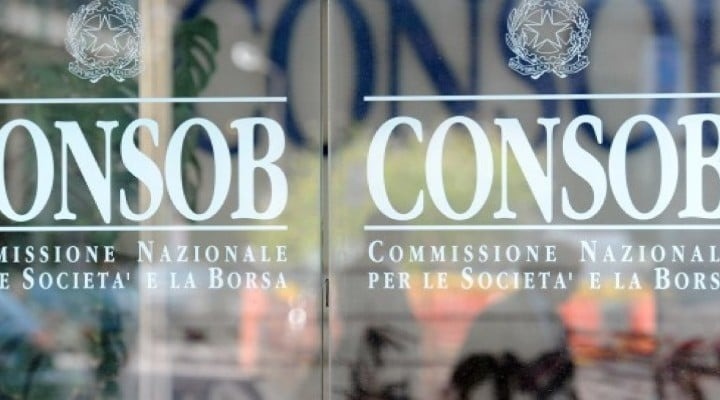
The regulator revoked or suspended seven Cyprus investment firms' licenses due to compliance failures.
Despite increased scrutiny, Cyprus's financial sector grew in 2024, with 80 new entities authorized.
A wave of regulatory changes is set to reshape Cyprus'
financial sector in 2025 as the Cyprus Securities and Exchange Commission
(CySEC) intensifies its supervision of investment firms, funds, and crypto
service providers.
In 2024, the regulator reportedly carried out over 850 audits,
issued €2.76 million in fines and revoked multiple operating licenses. As new
EU regulations take effect, CySEC is now doubling down on compliance efforts to
strengthen investor protection and financial stability.
CySEC Chairman Dr. George Theocharides outlined the
organization's priorities during a recent press conference, emphasizing that
"protecting investors and the further development of a healthy
market" remain central to its mission.
"In 2025 and beyond, a series of significant
regulatory changes will be implemented through European directives and
regulations, which are expected to strengthen the supervisory framework
governing investment services," Theocharides said.
New Regulatory Landscape in 2025
Several key EU regulations, including the AML Package, European Single Access Point (ESAP), EU Sustainability Framework, AIFMD II, Financial Data Access Regulation (FiDA), MiFIR Review, and EMIR Refit, are expected to reshape the financial sector in the coming year.
Additionally, the EU's Retail Investment Strategy is
set to bring new requirements for transparency and investor rights. The
regulator also highlighted the EU's Savings and Investments Union Plan as a
major driver of market transformation.
These inspections targeted a wide range of financial
firms, including Cyprus Investment Firms (CIFs), Administrative Service
Providers (ASPs), fund managers, and crypto-asset service providers (CASPs).
Dr George Theocharides, Source: LinkedIn
Additionally, CySEC reviewed 510 annual compliance
reports and monitored derivatives transactions for 33 investment funds. The
regulator also reportedly investigated misleading promotional materials and
identified fake websites impersonating CySEC representatives.
As a result, it issued numerous public warnings and
worked with European authorities to address fraudulent activities.
Administrative fines in 2024 totaled €2.76 million, with Cyprus investment
firms accounting for €2.12 million of that sum.
Supervisory Actions and Compliance Crackdown
Over the past three years, CySEC has reportedly
imposed fines exceeding €7.82 million, reflecting its increasingly strict
stance on compliance failures. Seven Cyprus investment firms had their licenses
revoked or suspended, and two Reserved Alternative Investment Funds lost their
authorization.
Crypto-assets remain a priority for CySEC as the
Markets in Crypto-Assets Regulation (MiCA) takes full effect. The regulator has
already received interest from multiple firms seeking licensing under the new
framework.
Despite the heightened scrutiny, Cyprus's financial
sector continued to expand in 2024. CySEC authorized 80 new entities, bringing
the total number of supervised firms to 834. However, the regulator also
rejected five licensing applications and saw 13 firms voluntarily withdraw
their applications.
In 2024, CySEC also enforced the Digital OperationalResilience Act (DORA), which mandates stringent cybersecurity requirements for
financial entities.
A wave of regulatory changes is set to reshape Cyprus'
financial sector in 2025 as the Cyprus Securities and Exchange Commission
(CySEC) intensifies its supervision of investment firms, funds, and crypto
service providers.
In 2024, the regulator reportedly carried out over 850 audits,
issued €2.76 million in fines and revoked multiple operating licenses. As new
EU regulations take effect, CySEC is now doubling down on compliance efforts to
strengthen investor protection and financial stability.
CySEC Chairman Dr. George Theocharides outlined the
organization's priorities during a recent press conference, emphasizing that
"protecting investors and the further development of a healthy
market" remain central to its mission.
"In 2025 and beyond, a series of significant
regulatory changes will be implemented through European directives and
regulations, which are expected to strengthen the supervisory framework
governing investment services," Theocharides said.
New Regulatory Landscape in 2025
Several key EU regulations, including the AML Package, European Single Access Point (ESAP), EU Sustainability Framework, AIFMD II, Financial Data Access Regulation (FiDA), MiFIR Review, and EMIR Refit, are expected to reshape the financial sector in the coming year.
Additionally, the EU's Retail Investment Strategy is
set to bring new requirements for transparency and investor rights. The
regulator also highlighted the EU's Savings and Investments Union Plan as a
major driver of market transformation.
These inspections targeted a wide range of financial
firms, including Cyprus Investment Firms (CIFs), Administrative Service
Providers (ASPs), fund managers, and crypto-asset service providers (CASPs).
Dr George Theocharides, Source: LinkedIn
Additionally, CySEC reviewed 510 annual compliance
reports and monitored derivatives transactions for 33 investment funds. The
regulator also reportedly investigated misleading promotional materials and
identified fake websites impersonating CySEC representatives.
As a result, it issued numerous public warnings and
worked with European authorities to address fraudulent activities.
Administrative fines in 2024 totaled €2.76 million, with Cyprus investment
firms accounting for €2.12 million of that sum.
Supervisory Actions and Compliance Crackdown
Over the past three years, CySEC has reportedly
imposed fines exceeding €7.82 million, reflecting its increasingly strict
stance on compliance failures. Seven Cyprus investment firms had their licenses
revoked or suspended, and two Reserved Alternative Investment Funds lost their
authorization.
Crypto-assets remain a priority for CySEC as the
Markets in Crypto-Assets Regulation (MiCA) takes full effect. The regulator has
already received interest from multiple firms seeking licensing under the new
framework.
Despite the heightened scrutiny, Cyprus's financial
sector continued to expand in 2024. CySEC authorized 80 new entities, bringing
the total number of supervised firms to 834. However, the regulator also
rejected five licensing applications and saw 13 firms voluntarily withdraw
their applications.
In 2024, CySEC also enforced the Digital OperationalResilience Act (DORA), which mandates stringent cybersecurity requirements for
financial entities.
Jared Kirui is an Editor at Finance Magnates with more than five years of experience in financial journalism. He covers online trading, fintech, payments, and crypto industries with a focus on companies, regulation and compliance, executive moves, trading technology, and market analysis.
His work has been featured in other media outlets, including Benzinga, ZyCrypto, The Distributed, and The Daily Hodl.
Education:
Bachelor of Commerce degree (Finance option), University of Nairobi
Retail Traders Can Now Access Prediction Markets Through Binance Wallet
FP Markets Winner Spotlight 🏆 | Global Broker of the Year 2025 #Trading #Broker #Innovation #Shorts
FP Markets Winner Spotlight 🏆 | Global Broker of the Year 2025 #Trading #Broker #Innovation #Shorts
FP Markets takes the spotlight as Global Broker of the Year 2025 at the Finance Magnates Awards.
Martin Stoilov, Head of Client Experience, shares that trust, innovation, and people played a key role in the company’s success, supported by a strong foundation of integrity and client-centricity.
Following this milestone, FP Markets continues to focus on growth, technology investment, and its core values of transparency and excellence.
👉 Be part of FM Awards 2026: https://awards.financemagnates.com/#nominate
FP Markets takes the spotlight as Global Broker of the Year 2025 at the Finance Magnates Awards.
Martin Stoilov, Head of Client Experience, shares that trust, innovation, and people played a key role in the company’s success, supported by a strong foundation of integrity and client-centricity.
Following this milestone, FP Markets continues to focus on growth, technology investment, and its core values of transparency and excellence.
👉 Be part of FM Awards 2026: https://awards.financemagnates.com/#nominate
In this video, we review @HolaPrimeMarketsOfficial, a multi-asset forex and CFDs broker offering different account types, trading platforms, and flexible trading conditions.
We cover the broker’s overall offering, including account options, trading environment, platforms like MT4 and MT5, and additional services such as managed accounts and fast withdrawals.
Watch the full video to see if Hola Prime Markets fits your trading needs.
📣 Stay up to date with the latest in finance and trading. Follow Finance Magnates for industry news, insights, and global event coverage.
Connect with us:
🔗 LinkedIn: /financemagnates
👍 Facebook: /financemagnates
📸 Instagram: https://www.instagram.com/financemagnates
🐦 X: https://x.com/financemagnates
🎥 TikTok: https://www.tiktok.com/tag/financemagnates
▶️ YouTube: /@financemagnates_official
#HolaPrime #ForexBroker #CFDTrading #FinanceMagnates #Trading #Forex #BrokerReview
In this video, we review @HolaPrimeMarketsOfficial, a multi-asset forex and CFDs broker offering different account types, trading platforms, and flexible trading conditions.
We cover the broker’s overall offering, including account options, trading environment, platforms like MT4 and MT5, and additional services such as managed accounts and fast withdrawals.
Watch the full video to see if Hola Prime Markets fits your trading needs.
📣 Stay up to date with the latest in finance and trading. Follow Finance Magnates for industry news, insights, and global event coverage.
Connect with us:
🔗 LinkedIn: /financemagnates
👍 Facebook: /financemagnates
📸 Instagram: https://www.instagram.com/financemagnates
🐦 X: https://x.com/financemagnates
🎥 TikTok: https://www.tiktok.com/tag/financemagnates
▶️ YouTube: /@financemagnates_official
#HolaPrime #ForexBroker #CFDTrading #FinanceMagnates #Trading #Forex #BrokerReview
Hola Prime Review: What You Need to Know | Full Breakdown by Finance Magnates
Hola Prime Review: What You Need to Know | Full Breakdown by Finance Magnates
In this video, we review @HolaPrime_Global, a proprietary trading firm offering evaluation programs and performance-based payouts in simulated market environments.
We cover how the challenge model works, including account types, profit splits (up to 95%), trading rules, and what it takes to reach a funded account. You’ll also learn about available platforms like MT4, MT5, cTrader, and more, along with insights into payouts, support, and trading conditions.
Watch the full video to see if Hola Prime fits your trading style.
📣 Stay up to date with the latest in finance and trading. Follow Finance Magnates for industry news, insights, and global event coverage.
Connect with us:
🔗 LinkedIn: /financemagnates
👍 Facebook: /financemagnates
📸 Instagram: https://www.instagram.com/financemagnates
🐦 X: https://x.com/financemagnates
🎥 TikTok: https://www.tiktok.com/tag/financemagnates
▶️ YouTube: /@financemagnates_official
#HolaPrime #PropFirm #Trading #FinanceMagnates #Forex #FuturesTrading #TradingReview #PropFirmReview
In this video, we review @HolaPrime_Global, a proprietary trading firm offering evaluation programs and performance-based payouts in simulated market environments.
We cover how the challenge model works, including account types, profit splits (up to 95%), trading rules, and what it takes to reach a funded account. You’ll also learn about available platforms like MT4, MT5, cTrader, and more, along with insights into payouts, support, and trading conditions.
Watch the full video to see if Hola Prime fits your trading style.
📣 Stay up to date with the latest in finance and trading. Follow Finance Magnates for industry news, insights, and global event coverage.
Connect with us:
🔗 LinkedIn: /financemagnates
👍 Facebook: /financemagnates
📸 Instagram: https://www.instagram.com/financemagnates
🐦 X: https://x.com/financemagnates
🎥 TikTok: https://www.tiktok.com/tag/financemagnates
▶️ YouTube: /@financemagnates_official
#HolaPrime #PropFirm #Trading #FinanceMagnates #Forex #FuturesTrading #TradingReview #PropFirmReview
Axi Winner Spotlight 🏆 | Global Most Innovative Broker 2025 #Innovation #Trading #Fintech #Broker
Axi Winner Spotlight 🏆 | Global Most Innovative Broker 2025 #Innovation #Trading #Fintech #Broker
Axi takes the spotlight at the Finance Magnates Awards, winning Global Most Innovative Broker 2025.
Olivia Xenofontos and Ivanna Openko share how the team will feel: proud, motivated, and ready to keep delivering.
They also describe the night as well-organized, focused, and enjoyable for all.
👉 Be part of FM Awards 2026.
Axi takes the spotlight at the Finance Magnates Awards, winning Global Most Innovative Broker 2025.
Olivia Xenofontos and Ivanna Openko share how the team will feel: proud, motivated, and ready to keep delivering.
They also describe the night as well-organized, focused, and enjoyable for all.
👉 Be part of FM Awards 2026.
Recognition that matters.
Built on transparency.
Driven by the industry.
The Finance Magnates Awards 2026.
Nominations are now open.
🔗 https://awards.financemagnates.com/?utm_source=SM&utm_medium=social&utm_campaign=recognition-matters
Recognition that matters.
Built on transparency.
Driven by the industry.
The Finance Magnates Awards 2026.
Nominations are now open.
🔗 https://awards.financemagnates.com/?utm_source=SM&utm_medium=social&utm_campaign=recognition-matters