
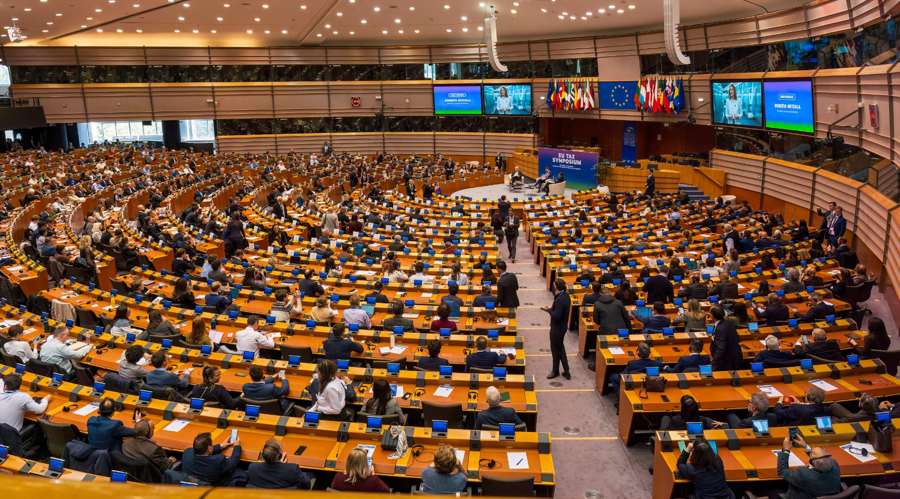
Fourteen votes were the distance between three years of Brussels negotiations and the bin of a bill. On 12 November, the European Parliament voted down the Retail Investment Strategy Omnibus Directive by 300 to 286, with 23 abstentions. The same morning, it approved the separate PRIIPs amending regulation, 311 to 261.
So Europe kept the label and threw away the product.
London's trading industry is coming home!

The asset management lobby is celebrating the decision. But if you run a CFD brokerage, an IB network or an affiliate programme in the EU, this vote is not the win it looks like. And five days later, Warsaw made that very clear.
What Actually Happened
The Commission presented the RIS in May 2023. Parliament and Council struck a political deal on 18 December 2025. Member States signed off in COREPER on 5 June 2026. ECON approved it on 23 June, 33 to 23. Plenary was supposed to be a formality. However, it wasn't.
Read more: The EU Rule That Will Reshape Every Broker’s Business Model. Are They Ready?
According to RankiaPro, 34 EPP members broke ranks, most of them from the Polish delegation. Eight of them voting the other way would have carried the text.
The opposition came from two directions at once. One camp saw a bureaucratic monster. Germany's insurance association GDV used almost exactly that word. The other camp thought the compromise was too weak to bother with. Better Finance, the investor lobby, says it understands that second group and still thinks they got it wrong. Its line is sharp: Europe cannot ask citizens to invest more while refusing to deliver better outcomes for them.
Then there was the letter. On 4 November, EFAMA Director General Tanguy van de Werve wrote to MEPs urging rejection. His case: duplicated requirements, no benefit for end investors, and a market fragmented by overlapping national and European assessments. Eight days later, he got his wish.
Plenary rejections like this are rare but have happened before. In 2016, rejection of the PRIIPs KID Level 2 measures was the last notable one in financial services.
What Died?
The directive amended MiFID II, IDD, UCITS, AIFMD and Solvency II. Inside it:
- Value for money: Manufacturers and distributors would have had to quantify every cost and justify it against a peer group of comparable products.
- Inducements: Any payment would need a tangible client benefit, disclosed separately. Parliament had already stripped out the partial inducement ban back in 2024. This was the diluted version. It still died.
- Marketing: Firms would carry full responsibility for their marketing communications, including content pushed out through finfluencers.
- Client categorisation: More retail clients would have been able to opt up to professional status by meeting two of three criteria.
Fund managers read that list and see the value for money test gone. I, however, read it and see the last two lines.
Why CFD Brokers Should Read the Fine Print
Brokers must start with client categorisation. For our industry, elective professional status is the door out of ESMA's retail product intervention measures, leverage caps included. The RIS would have widened that door, under defined criteria. Today it is exactly as narrow as it was on 11 November.
Then they must focus on finfluencers. I've written in these pages about who takes the heat when an affiliate crosses the line. The RIS was about to answer that at EU level: the firm does. That answer has been paused, not cancelled.
Now the part that passed is PRIIPs, and CFDs fall in this category. They carry a KID. The approved regulation puts a standardised "Product at a Glance" dashboard at the top of every KID: product type, summary risk indicator, total costs, recommended holding period. Electronic delivery becomes the default, and KIDs must be machine-readable within the European Single Access Point framework.
CFD KIDs already disclose most of this. However, the difference is placement and format. Costs and risk move to the first thing a client sees, in data anyone can extract and compare across every broker in the Union. That's a value-for-money test in all but name.
Warsaw Didn't Wait
On 17 November, KNF deputy chairman Dariusz Adamski told the Parkiet ExChange conference that the regulator will soon carry out a product intervention on CFDs. The decisions, he said, have already been taken and will be published in the coming months.
His numbers are brutal. By KNF's count, 267,000 people lost money on CFDs in 2025, close to PLN 2 billion in total. That is almost seven times the 2019 figure. His verdict on the 2019 intervention, which focused on leverage limits: it didn't deliver.
The market didn't wait either. XTB closed Tuesday down 17.52% at PLN 115.24 and fell another 5.3% on Wednesday to its lowest since July. KNF has not announced a ban, and nobody yet knows how far it will go.
I'm not claiming a link between the Polish MEPs in Strasbourg and the supervisor in Warsaw. I'm pointing at the pattern that when Brussels stalls, national regulators fill the gap, and they fill it their own way. I'd take one rulebook over a patchwork every time. With a patchwork you build for the strictest regulator anyway, and you lose the scale the passport was supposed to give you.
- Russia and Poland Account for 82% of Eastern Europe’s Crypto Media Traffic in Q2
- Europe Grapples with FX Risks and Euro Volatility: Netherlands Takes Biggest Hit at 94%
- Europe's Economic Crossroads: Recession Fears and S&P Global's Contrasting Outlook
What Happens Next in Brussels
Parliament's first reading stays open. FinReg360, a Spanish regulatory advice provider, sees reopening talks with the Council as the most likely path. Commission withdrawal looks unlikely given the margin. Publication in the Official Journal, expected by January 2027, now slips by months.
On 4 November, Maria Luís Albuquerque, the European Commissioner for Financial Stability, Financial Services and the Capital Markets Union, urged ESMA and EIOPA to keep the RIS Level 2 rules simple, citing a Eurobarometer finding that 45% of Europeans weren't confident their investment advice was in their best interest. In August, the Commission had already asked ESMA for implementation advice, due October 2027.
The RIS will come back, I believe. It might be slimmer, maybe split, maybe under a new name. And I'd bet the marketing and finfluencer pieces survive any rewrite. Defending unregulated influencers is not a vote anyone wants on their record.
So CFD brokers should use the time to audit affiliate content against the rule that's coming, not the one in force. They must build KID dashboard before the ESAs' technical standards tell them how. And if they have Polish clients, they must stop modelling 2027 on 2026's rules.
Althogh the asset managers bought themselves a delay, fourteen votes bought the CFD industry time. But the KNF then took some of it back. Is time the same thing as a win?


