Firms must verify clients within 15 days or terminate the business relationship.
The regulator warns firms to avoid overusing delayed verification; funds only freeze if suspicious activity reported.
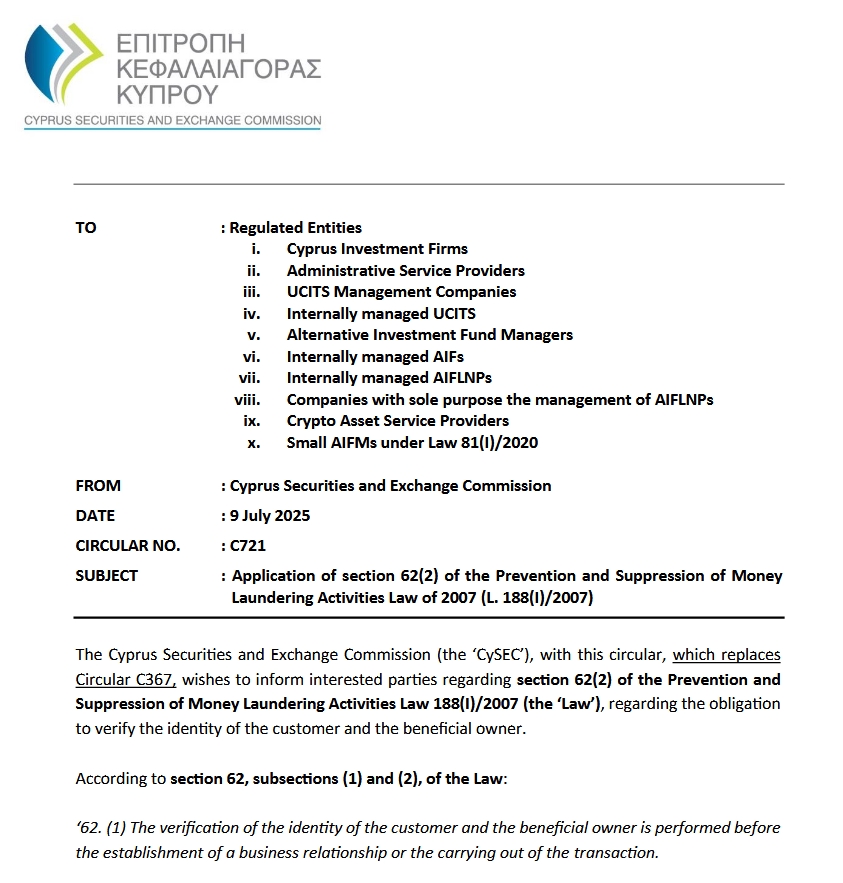
The Cyprus Securities and Exchange Commission issued
a circular today (Wednesday), updating the requirements for verifying customer
identities under the country’s anti-money laundering law. The circular applies
to all entities regulated by CySEC, including investment firms that offer
Contracts for Difference.
Funds Returned If Verification Not Completed
Under the new rules, total deposits from a customer cannot
exceed €2,000 before full verification is complete. Funds must come from a bank
account in the customer’s own name. Firms must complete verification within 15
days of first contact or the initial deposit. If they do not, they must end the
relationship and return all funds and any profits, after deducting losses.
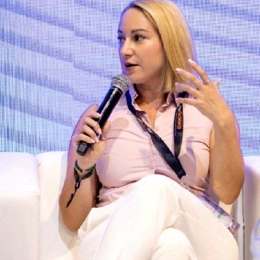
“CIF entities can onboard clients who are considered low
risk as per the AML assessment, while they can complete client DD and
verification within 15 days of establishment of business or if deposit exceeds
2,000 EUR.” Evdokia Pitsillidou, Global Chief Risk & Compliance Officer, SALVUS,
commented.
Funds cannot be frozen unless the firm files a report with
the Money Laundering Reporting Authority. Customers must be informed in
advance if the firm intends to apply this exception, and their consent must be
obtained.
Firms are required to update their anti-money laundering
procedures to reflect the new rules. Importantly, no funds can be accepted
without at least initial identification and an economic profile of the client.
“The allowance seemed very good at start yet has some
implications as CIF entities may not collect the DD requirements and must close
client accounts on 15 days. CIF entities may remain exposed to CRS obligations
for inadequate collection of data, and their systems shall flag the clients
that must closed. On the other hand, this allowance permit entities to onboard
low risk clients easier,” Pitsillidou added.
The updated rules affect how firms onboard new clients,
especially when accepting early deposits. Firms are generally required to verify the identity of
clients and beneficial owners before starting a business relationship or
allowing any transactions. This includes collecting proof of ownership for
corporate clients.
However, the law allows firms to begin a relationship before
completing full verification if certain conditions are met. CySEC has now set
out stricter requirements for using this exception.
Source: CySEC
ASPs Excluded from Verification Exception
Administrative Service Providers are excluded from
using the exception due to their higher risk profile. They must verify
identities before beginning any business relationship, unless they provide
written justification explaining why early verification would disrupt
operations and why the risk remains low.
CySEC has urged firms to prioritize full verification before
starting any business activity. It also warned against frequent or unnecessary
use of the exception.
While the circular applies broadly, the updated measures are
likely to influence how CFD providers handle small deposits and monitor
early-stage risks when onboarding clients.
The Cyprus Securities and Exchange Commission issued
a circular today (Wednesday), updating the requirements for verifying customer
identities under the country’s anti-money laundering law. The circular applies
to all entities regulated by CySEC, including investment firms that offer
Contracts for Difference.
Funds Returned If Verification Not Completed
Under the new rules, total deposits from a customer cannot
exceed €2,000 before full verification is complete. Funds must come from a bank
account in the customer’s own name. Firms must complete verification within 15
days of first contact or the initial deposit. If they do not, they must end the
relationship and return all funds and any profits, after deducting losses.
“CIF entities can onboard clients who are considered low
risk as per the AML assessment, while they can complete client DD and
verification within 15 days of establishment of business or if deposit exceeds
2,000 EUR.” Evdokia Pitsillidou, Global Chief Risk & Compliance Officer, SALVUS,
commented.
Funds cannot be frozen unless the firm files a report with
the Money Laundering Reporting Authority. Customers must be informed in
advance if the firm intends to apply this exception, and their consent must be
obtained.
Firms are required to update their anti-money laundering
procedures to reflect the new rules. Importantly, no funds can be accepted
without at least initial identification and an economic profile of the client.
“The allowance seemed very good at start yet has some
implications as CIF entities may not collect the DD requirements and must close
client accounts on 15 days. CIF entities may remain exposed to CRS obligations
for inadequate collection of data, and their systems shall flag the clients
that must closed. On the other hand, this allowance permit entities to onboard
low risk clients easier,” Pitsillidou added.
The updated rules affect how firms onboard new clients,
especially when accepting early deposits. Firms are generally required to verify the identity of
clients and beneficial owners before starting a business relationship or
allowing any transactions. This includes collecting proof of ownership for
corporate clients.
However, the law allows firms to begin a relationship before
completing full verification if certain conditions are met. CySEC has now set
out stricter requirements for using this exception.
Source: CySEC
ASPs Excluded from Verification Exception
Administrative Service Providers are excluded from
using the exception due to their higher risk profile. They must verify
identities before beginning any business relationship, unless they provide
written justification explaining why early verification would disrupt
operations and why the risk remains low.
CySEC has urged firms to prioritize full verification before
starting any business activity. It also warned against frequent or unnecessary
use of the exception.
While the circular applies broadly, the updated measures are
likely to influence how CFD providers handle small deposits and monitor
early-stage risks when onboarding clients.
Tareq is a financial writer with 15 years of experience covering global markets. His work spans technical analysis, forex broker reviews, and market sentiment, with a focus on topics relevant to retail traders. He joined Finance Magnates in 2023.
At Finance Magnates, he serves as News Editor, covering retail forex and CFD brokers, cryptocurrency exchanges, fintech firms, and regulatory developments shaping the trading industry. He holds an Honours degree in Information Technology from Anfell College, London.
Education:
Honours degree Information Technology, Anfell College, London
In this video, we review @HolaPrimeMarketsOfficial, a multi-asset forex and CFDs broker offering different account types, trading platforms, and flexible trading conditions.
We cover the broker’s overall offering, including account options, trading environment, platforms like MT4 and MT5, and additional services such as managed accounts and fast withdrawals.
Watch the full video to see if Hola Prime Markets fits your trading needs.
📣 Stay up to date with the latest in finance and trading. Follow Finance Magnates for industry news, insights, and global event coverage.
Connect with us:
🔗 LinkedIn: /financemagnates
👍 Facebook: /financemagnates
📸 Instagram: https://www.instagram.com/financemagnates
🐦 X: https://x.com/financemagnates
🎥 TikTok: https://www.tiktok.com/tag/financemagnates
▶️ YouTube: /@financemagnates_official
#HolaPrime #ForexBroker #CFDTrading #FinanceMagnates #Trading #Forex #BrokerReview
In this video, we review @HolaPrimeMarketsOfficial, a multi-asset forex and CFDs broker offering different account types, trading platforms, and flexible trading conditions.
We cover the broker’s overall offering, including account options, trading environment, platforms like MT4 and MT5, and additional services such as managed accounts and fast withdrawals.
Watch the full video to see if Hola Prime Markets fits your trading needs.
📣 Stay up to date with the latest in finance and trading. Follow Finance Magnates for industry news, insights, and global event coverage.
Connect with us:
🔗 LinkedIn: /financemagnates
👍 Facebook: /financemagnates
📸 Instagram: https://www.instagram.com/financemagnates
🐦 X: https://x.com/financemagnates
🎥 TikTok: https://www.tiktok.com/tag/financemagnates
▶️ YouTube: /@financemagnates_official
#HolaPrime #ForexBroker #CFDTrading #FinanceMagnates #Trading #Forex #BrokerReview
Hola Prime Review: What You Need to Know | Full Breakdown by Finance Magnates
Hola Prime Review: What You Need to Know | Full Breakdown by Finance Magnates
In this video, we review @HolaPrime_Global, a proprietary trading firm offering evaluation programs and performance-based payouts in simulated market environments.
We cover how the challenge model works, including account types, profit splits (up to 95%), trading rules, and what it takes to reach a funded account. You’ll also learn about available platforms like MT4, MT5, cTrader, and more, along with insights into payouts, support, and trading conditions.
Watch the full video to see if Hola Prime fits your trading style.
📣 Stay up to date with the latest in finance and trading. Follow Finance Magnates for industry news, insights, and global event coverage.
Connect with us:
🔗 LinkedIn: /financemagnates
👍 Facebook: /financemagnates
📸 Instagram: https://www.instagram.com/financemagnates
🐦 X: https://x.com/financemagnates
🎥 TikTok: https://www.tiktok.com/tag/financemagnates
▶️ YouTube: /@financemagnates_official
#HolaPrime #PropFirm #Trading #FinanceMagnates #Forex #FuturesTrading #TradingReview #PropFirmReview
In this video, we review @HolaPrime_Global, a proprietary trading firm offering evaluation programs and performance-based payouts in simulated market environments.
We cover how the challenge model works, including account types, profit splits (up to 95%), trading rules, and what it takes to reach a funded account. You’ll also learn about available platforms like MT4, MT5, cTrader, and more, along with insights into payouts, support, and trading conditions.
Watch the full video to see if Hola Prime fits your trading style.
📣 Stay up to date with the latest in finance and trading. Follow Finance Magnates for industry news, insights, and global event coverage.
Connect with us:
🔗 LinkedIn: /financemagnates
👍 Facebook: /financemagnates
📸 Instagram: https://www.instagram.com/financemagnates
🐦 X: https://x.com/financemagnates
🎥 TikTok: https://www.tiktok.com/tag/financemagnates
▶️ YouTube: /@financemagnates_official
#HolaPrime #PropFirm #Trading #FinanceMagnates #Forex #FuturesTrading #TradingReview #PropFirmReview
Axi Winner Spotlight 🏆 | Global Most Innovative Broker 2025 #Innovation #Trading #Fintech #Broker
Axi Winner Spotlight 🏆 | Global Most Innovative Broker 2025 #Innovation #Trading #Fintech #Broker
Axi takes the spotlight at the Finance Magnates Awards, winning Global Most Innovative Broker 2025.
Olivia Xenofontos and Ivanna Openko share how the team will feel: proud, motivated, and ready to keep delivering.
They also describe the night as well-organized, focused, and enjoyable for all.
👉 Be part of FM Awards 2026.
Axi takes the spotlight at the Finance Magnates Awards, winning Global Most Innovative Broker 2025.
Olivia Xenofontos and Ivanna Openko share how the team will feel: proud, motivated, and ready to keep delivering.
They also describe the night as well-organized, focused, and enjoyable for all.
👉 Be part of FM Awards 2026.
Recognition that matters.
Built on transparency.
Driven by the industry.
The Finance Magnates Awards 2026.
Nominations are now open.
🔗 https://awards.financemagnates.com/?utm_source=SM&utm_medium=social&utm_campaign=recognition-matters
Recognition that matters.
Built on transparency.
Driven by the industry.
The Finance Magnates Awards 2026.
Nominations are now open.
🔗 https://awards.financemagnates.com/?utm_source=SM&utm_medium=social&utm_campaign=recognition-matters
Tickmill Winner Spotlight | Broker of the Year 2025 (LATAM) 🏆 | Finance Magnates Awards #Trading
Tickmill Winner Spotlight | Broker of the Year 2025 (LATAM) 🏆 | Finance Magnates Awards #Trading
What helped Tickmill stand out this year?
In this Winner Spotlight, Johnny Khalil, Executive Director at Tickmill Europe, shares how listening closely to clients and delivering strong trading conditions made the difference.
A big thank you to the community whose support continues to drive progress every day.
👉 Think your brand has what it takes? Nominate for the 2026 Finance Magnates Awards: https://awards.financemagnates.com/#nominate
What helped Tickmill stand out this year?
In this Winner Spotlight, Johnny Khalil, Executive Director at Tickmill Europe, shares how listening closely to clients and delivering strong trading conditions made the difference.
A big thank you to the community whose support continues to drive progress every day.
👉 Think your brand has what it takes? Nominate for the 2026 Finance Magnates Awards: https://awards.financemagnates.com/#nominate