The British watchdog takes action where it finds "credible evidence" of a breach of its rules.
CySec have not taken "direct action against Telegram", but have "other ways to protect investors".
Scammers are rampant on social media, cloning the identity of almost all known financial services brands. In the first part of this series, Finance Magnates identified dozens of such scammers operating on Telegram. These scammers approach traders with trading signals and then try to sell “premium services” to them. Some even sell managed trading services using bots with insane returns. These scammers are seeking payments in cryptocurrencies.
As mentioned in the first part published last week, tackling such scammers is very difficult. Even if some companies successfully report and take down one clone, multiple other clones will reappear. Also, Telegram, a major social media application brewing these clones, does not appear to have any specific policy against clones and scams. Now, companies are mass reporting about such clones using the usual report technique of the social media app.
The Role of Regulators
Regulators are the ultimate authority to prevent investment fraud. Many financial market regulators are actively flagging and blacklisting illegal brokers, including clones and fraudsters. However, these have turned out to be ineffective in tackling the clones on social media.
Nikhil Rathi, FCA's CEO
The FCA takes action where it finds 'credible evidence' of a breach of its rules. It issues alerts where it has concerns to raise awareness amongst consumers and asks for content removal in the majority of cases. However, the UK authority has no power to force this specific organisation to remove the contents.
The British regulatory body is endeavouring to ascertain whether an individual qualifies as an advisor, a determination contingent upon factors such as the type of service rendered, the recipient of the service, and the subject matter of the advice dispensed. In other words, this determination hinges on the specifics of each individual case.
The powers vary from regulator to regulator. While most of the regulators can only issue a public warning, only Italy's Consob can block the domains of illegal and fraudulent platforms at an internet service provider level. However, Consob too does not publicly take any action against scammers on social media.
The Cyprus Securities and Exchange Commission (CySEC), which regulates dozens of FX/CFDs brokers, has confirmed that it is not directly taking any action against financial services scammers on Telegram and other social media.
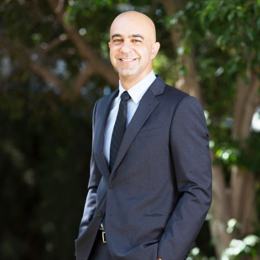
Dr. George Theocharides, Chair at CySEC
"CySEC takes its responsibility to protect investors extremely seriously. Although we have not yet taken direct action against Telegram, we recognize that fake or scam brokerage platforms and clones of regulated entities put investors at risk and we are taking action in other ways to protect investors," a CySEC representative told Finance Magnates.
"We do this by using sophisticated social media monitoring tools that identify aggressive marketing tactics in real-time, and capture suspicious activity. When our investigations lead us to blacklist a fake website, we report the case to the police electronic crime unit," said the watchdog representative
The Cypriot regulator itself is struggling with scammers cloning its website and even representatives. The regulator has issued multiple warnings against imposters who are strategically targeting stressed investors.
The CySEC representative added: "We have also observed cases where people are fraudulently presenting themselves as CySEC officers in an effort to defraud investors. For this reason, CySEC has issued several announcements, informing the public that it never sends unsolicited correspondence to investors or members of the public, nor does it ever request any personal data, financial or otherwise."
Further, unlike brokers, signal providers do not need a regulatory license unless they are advising on investments. And, the situation gets trickier with the involvement of crypto payments that has just started to fall within the regulations.
However, financial market regulators have issued multiple warnings against the 'get-rich-quick' investment schemes.
Loses to Victims
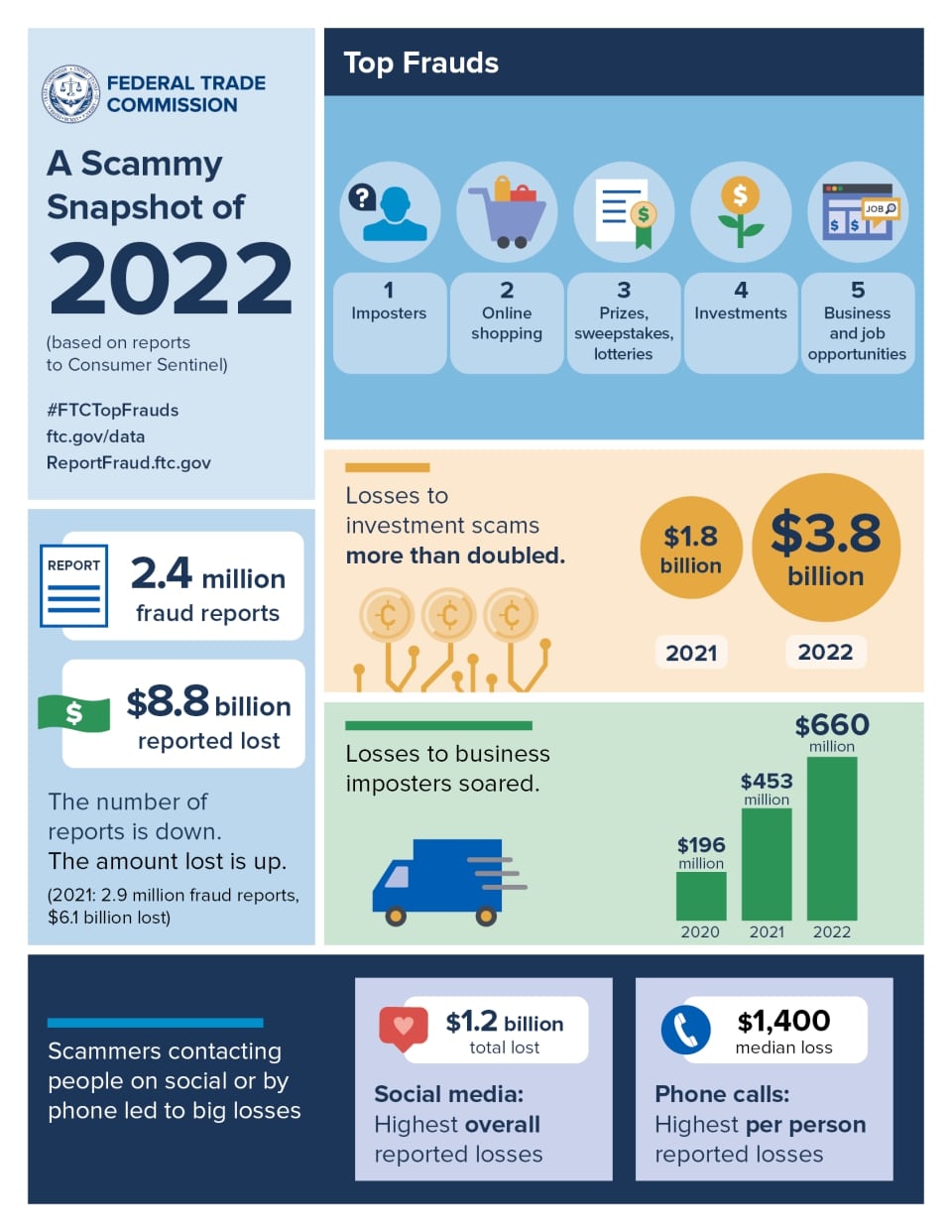
According to the US' Federal Trade Commission (FTC), Americans lost more than $3.8 billion to investment scams in 2022, almost doubling in one year. Out of the total, $2.6 billion were siphoned through imposter scams. The FTC received fraud reports from 2.4 million consumers last year, the most common reports being imposter scams.
In the UK, too, investment frauds cost victims more than £890 million in 2021. However, it is unknown how much was duped through the Telegram clones.
Awareness Is the Key
With hardly any regulatory oversight and Telegram being opaque in its actions, the only way to fight these scammers is through awareness. While companies in the financial services industry should actively report these scammers on social media, they should also run campaigns to tackle them.
"I think the industry should react and act," said FXStreet's Co-CEO, Pere Monguió. "Be suspicious about people who open a conversation to you instead of you to them. Do not pay companies via crypto money. Only pay via their websites, not through social channels. And also, I think that if we put pressure on key platforms such as Telegram and we see more productivity from them, it will help a lot."
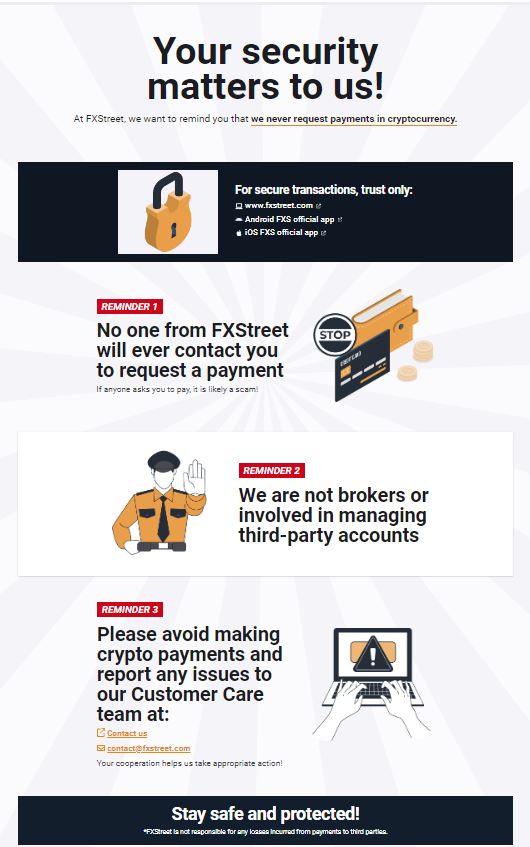
Awareness campaign of FXStreet against scams
Sift's Trust and Safety Architect, Rebecca Alter, added: "It's not as simple as one platform fighting fraud, since fraudulent activity is industry-agnostic and fraudulent actors use multiple platforms to commit different types of fraud. In the case of investment fraud, they use social media to gain an audience, messaging apps to engage with victims and use a marketplace to collect payouts of stolen funds. So one idea would be to develop a data consortium of known fraudulent information across industries that could be maintained by the government or another third party."
Marios Chailis, the CMO of Libertex Group, said: "Our primary concern is the safety of the individuals who fall victim to ill-intentioned channels such as these (or even other scamming websites) and end up at risk from these scammers. Obviously, we are deeply concerned about the illegitimate use of our brand but all of our existing clients are very well informed about which are the legitimate and officially-sanctioned channels they can use when it comes to dealing with Libertex."
He further added that luckily Libertex did not receive complaints from existing clients in relation to these imposter channels on Telegram.
Finance Magnates tried to reach out to Telegram to learn about its actions and policies against such fraudulent activity, but these efforts went unnoticed.
Scammers are rampant on social media, cloning the identity of almost all known financial services brands. In the first part of this series, Finance Magnates identified dozens of such scammers operating on Telegram. These scammers approach traders with trading signals and then try to sell “premium services” to them. Some even sell managed trading services using bots with insane returns. These scammers are seeking payments in cryptocurrencies.
As mentioned in the first part published last week, tackling such scammers is very difficult. Even if some companies successfully report and take down one clone, multiple other clones will reappear. Also, Telegram, a major social media application brewing these clones, does not appear to have any specific policy against clones and scams. Now, companies are mass reporting about such clones using the usual report technique of the social media app.
The Role of Regulators
Regulators are the ultimate authority to prevent investment fraud. Many financial market regulators are actively flagging and blacklisting illegal brokers, including clones and fraudsters. However, these have turned out to be ineffective in tackling the clones on social media.
Nikhil Rathi, FCA's CEO
The FCA takes action where it finds 'credible evidence' of a breach of its rules. It issues alerts where it has concerns to raise awareness amongst consumers and asks for content removal in the majority of cases. However, the UK authority has no power to force this specific organisation to remove the contents.
The British regulatory body is endeavouring to ascertain whether an individual qualifies as an advisor, a determination contingent upon factors such as the type of service rendered, the recipient of the service, and the subject matter of the advice dispensed. In other words, this determination hinges on the specifics of each individual case.
The powers vary from regulator to regulator. While most of the regulators can only issue a public warning, only Italy's Consob can block the domains of illegal and fraudulent platforms at an internet service provider level. However, Consob too does not publicly take any action against scammers on social media.
The Cyprus Securities and Exchange Commission (CySEC), which regulates dozens of FX/CFDs brokers, has confirmed that it is not directly taking any action against financial services scammers on Telegram and other social media.
Dr. George Theocharides, Chair at CySEC
"CySEC takes its responsibility to protect investors extremely seriously. Although we have not yet taken direct action against Telegram, we recognize that fake or scam brokerage platforms and clones of regulated entities put investors at risk and we are taking action in other ways to protect investors," a CySEC representative told Finance Magnates.
"We do this by using sophisticated social media monitoring tools that identify aggressive marketing tactics in real-time, and capture suspicious activity. When our investigations lead us to blacklist a fake website, we report the case to the police electronic crime unit," said the watchdog representative
The Cypriot regulator itself is struggling with scammers cloning its website and even representatives. The regulator has issued multiple warnings against imposters who are strategically targeting stressed investors.
The CySEC representative added: "We have also observed cases where people are fraudulently presenting themselves as CySEC officers in an effort to defraud investors. For this reason, CySEC has issued several announcements, informing the public that it never sends unsolicited correspondence to investors or members of the public, nor does it ever request any personal data, financial or otherwise."
Further, unlike brokers, signal providers do not need a regulatory license unless they are advising on investments. And, the situation gets trickier with the involvement of crypto payments that has just started to fall within the regulations.
However, financial market regulators have issued multiple warnings against the 'get-rich-quick' investment schemes.
Loses to Victims
According to the US' Federal Trade Commission (FTC), Americans lost more than $3.8 billion to investment scams in 2022, almost doubling in one year. Out of the total, $2.6 billion were siphoned through imposter scams. The FTC received fraud reports from 2.4 million consumers last year, the most common reports being imposter scams.
In the UK, too, investment frauds cost victims more than £890 million in 2021. However, it is unknown how much was duped through the Telegram clones.
Awareness Is the Key
With hardly any regulatory oversight and Telegram being opaque in its actions, the only way to fight these scammers is through awareness. While companies in the financial services industry should actively report these scammers on social media, they should also run campaigns to tackle them.
"I think the industry should react and act," said FXStreet's Co-CEO, Pere Monguió. "Be suspicious about people who open a conversation to you instead of you to them. Do not pay companies via crypto money. Only pay via their websites, not through social channels. And also, I think that if we put pressure on key platforms such as Telegram and we see more productivity from them, it will help a lot."
Awareness campaign of FXStreet against scams
Sift's Trust and Safety Architect, Rebecca Alter, added: "It's not as simple as one platform fighting fraud, since fraudulent activity is industry-agnostic and fraudulent actors use multiple platforms to commit different types of fraud. In the case of investment fraud, they use social media to gain an audience, messaging apps to engage with victims and use a marketplace to collect payouts of stolen funds. So one idea would be to develop a data consortium of known fraudulent information across industries that could be maintained by the government or another third party."
Marios Chailis, the CMO of Libertex Group, said: "Our primary concern is the safety of the individuals who fall victim to ill-intentioned channels such as these (or even other scamming websites) and end up at risk from these scammers. Obviously, we are deeply concerned about the illegitimate use of our brand but all of our existing clients are very well informed about which are the legitimate and officially-sanctioned channels they can use when it comes to dealing with Libertex."
He further added that luckily Libertex did not receive complaints from existing clients in relation to these imposter channels on Telegram.
Finance Magnates tried to reach out to Telegram to learn about its actions and policies against such fraudulent activity, but these efforts went unnoticed.
Arnab Shome is an electronics engineer-turned-financial editor. He holds a Bachelor of Technology from the National Institute of Technology, Agartala. He entered the retail trading industry about a decade ago, covering the cryptocurrency market for Finance Magnates, and later expanded his coverage to include forex and CFDs as well.
His work at Finance Magnates includes C-level interviews, data-driven analysis, opinion pieces, and scoops of industry exclusives. He also contributes to Finance Magnates’ quarterly industry report.
Area of coverage:
1. CFD broker-related news
2. Industry-related Regulatory updates and developments
3. New retail trading trends
4. Prop trading industry updates
5. Executive interviews
Education:
Bachelor of Technology - National Institute of Technology, Agartala (India)
Webull Spent Big to Hit Record Revenue, and the Bill Is in the Fine Print
Featured Videos
FP Markets Winner Spotlight 🏆 | Global Broker of the Year 2025 #Trading #Broker #Innovation #Shorts
FP Markets Winner Spotlight 🏆 | Global Broker of the Year 2025 #Trading #Broker #Innovation #Shorts
FP Markets Winner Spotlight 🏆 | Global Broker of the Year 2025 #Trading #Broker #Innovation #Shorts
FP Markets Winner Spotlight 🏆 | Global Broker of the Year 2025 #Trading #Broker #Innovation #Shorts
FP Markets takes the spotlight as Global Broker of the Year 2025 at the Finance Magnates Awards.
Martin Stoilov, Head of Client Experience, shares that trust, innovation, and people played a key role in the company’s success, supported by a strong foundation of integrity and client-centricity.
Following this milestone, FP Markets continues to focus on growth, technology investment, and its core values of transparency and excellence.
👉 Be part of FM Awards 2026: https://awards.financemagnates.com/#nominate
FP Markets takes the spotlight as Global Broker of the Year 2025 at the Finance Magnates Awards.
Martin Stoilov, Head of Client Experience, shares that trust, innovation, and people played a key role in the company’s success, supported by a strong foundation of integrity and client-centricity.
Following this milestone, FP Markets continues to focus on growth, technology investment, and its core values of transparency and excellence.
👉 Be part of FM Awards 2026: https://awards.financemagnates.com/#nominate
FP Markets takes the spotlight as Global Broker of the Year 2025 at the Finance Magnates Awards.
Martin Stoilov, Head of Client Experience, shares that trust, innovation, and people played a key role in the company’s success, supported by a strong foundation of integrity and client-centricity.
Following this milestone, FP Markets continues to focus on growth, technology investment, and its core values of transparency and excellence.
👉 Be part of FM Awards 2026: https://awards.financemagnates.com/#nominate
FP Markets takes the spotlight as Global Broker of the Year 2025 at the Finance Magnates Awards.
Martin Stoilov, Head of Client Experience, shares that trust, innovation, and people played a key role in the company’s success, supported by a strong foundation of integrity and client-centricity.
Following this milestone, FP Markets continues to focus on growth, technology investment, and its core values of transparency and excellence.
👉 Be part of FM Awards 2026: https://awards.financemagnates.com/#nominate
In this video, we review @HolaPrimeMarketsOfficial, a multi-asset forex and CFDs broker offering different account types, trading platforms, and flexible trading conditions.
We cover the broker’s overall offering, including account options, trading environment, platforms like MT4 and MT5, and additional services such as managed accounts and fast withdrawals.
Watch the full video to see if Hola Prime Markets fits your trading needs.
📣 Stay up to date with the latest in finance and trading. Follow Finance Magnates for industry news, insights, and global event coverage.
Connect with us:
🔗 LinkedIn: /financemagnates
👍 Facebook: /financemagnates
📸 Instagram: https://www.instagram.com/financemagnates
🐦 X: https://x.com/financemagnates
🎥 TikTok: https://www.tiktok.com/tag/financemagnates
▶️ YouTube: /@financemagnates_official
#HolaPrime #ForexBroker #CFDTrading #FinanceMagnates #Trading #Forex #BrokerReview
In this video, we review @HolaPrimeMarketsOfficial, a multi-asset forex and CFDs broker offering different account types, trading platforms, and flexible trading conditions.
We cover the broker’s overall offering, including account options, trading environment, platforms like MT4 and MT5, and additional services such as managed accounts and fast withdrawals.
Watch the full video to see if Hola Prime Markets fits your trading needs.
📣 Stay up to date with the latest in finance and trading. Follow Finance Magnates for industry news, insights, and global event coverage.
Connect with us:
🔗 LinkedIn: /financemagnates
👍 Facebook: /financemagnates
📸 Instagram: https://www.instagram.com/financemagnates
🐦 X: https://x.com/financemagnates
🎥 TikTok: https://www.tiktok.com/tag/financemagnates
▶️ YouTube: /@financemagnates_official
#HolaPrime #ForexBroker #CFDTrading #FinanceMagnates #Trading #Forex #BrokerReview
In this video, we review @HolaPrimeMarketsOfficial, a multi-asset forex and CFDs broker offering different account types, trading platforms, and flexible trading conditions.
We cover the broker’s overall offering, including account options, trading environment, platforms like MT4 and MT5, and additional services such as managed accounts and fast withdrawals.
Watch the full video to see if Hola Prime Markets fits your trading needs.
📣 Stay up to date with the latest in finance and trading. Follow Finance Magnates for industry news, insights, and global event coverage.
Connect with us:
🔗 LinkedIn: /financemagnates
👍 Facebook: /financemagnates
📸 Instagram: https://www.instagram.com/financemagnates
🐦 X: https://x.com/financemagnates
🎥 TikTok: https://www.tiktok.com/tag/financemagnates
▶️ YouTube: /@financemagnates_official
#HolaPrime #ForexBroker #CFDTrading #FinanceMagnates #Trading #Forex #BrokerReview
In this video, we review @HolaPrimeMarketsOfficial, a multi-asset forex and CFDs broker offering different account types, trading platforms, and flexible trading conditions.
We cover the broker’s overall offering, including account options, trading environment, platforms like MT4 and MT5, and additional services such as managed accounts and fast withdrawals.
Watch the full video to see if Hola Prime Markets fits your trading needs.
📣 Stay up to date with the latest in finance and trading. Follow Finance Magnates for industry news, insights, and global event coverage.
Connect with us:
🔗 LinkedIn: /financemagnates
👍 Facebook: /financemagnates
📸 Instagram: https://www.instagram.com/financemagnates
🐦 X: https://x.com/financemagnates
🎥 TikTok: https://www.tiktok.com/tag/financemagnates
▶️ YouTube: /@financemagnates_official
#HolaPrime #ForexBroker #CFDTrading #FinanceMagnates #Trading #Forex #BrokerReview
In this video, we review @HolaPrimeMarketsOfficial, a multi-asset forex and CFDs broker offering different account types, trading platforms, and flexible trading conditions.
We cover the broker’s overall offering, including account options, trading environment, platforms like MT4 and MT5, and additional services such as managed accounts and fast withdrawals.
Watch the full video to see if Hola Prime Markets fits your trading needs.
📣 Stay up to date with the latest in finance and trading. Follow Finance Magnates for industry news, insights, and global event coverage.
Connect with us:
🔗 LinkedIn: /financemagnates
👍 Facebook: /financemagnates
📸 Instagram: https://www.instagram.com/financemagnates
🐦 X: https://x.com/financemagnates
🎥 TikTok: https://www.tiktok.com/tag/financemagnates
▶️ YouTube: /@financemagnates_official
#HolaPrime #ForexBroker #CFDTrading #FinanceMagnates #Trading #Forex #BrokerReview
In this video, we review @HolaPrimeMarketsOfficial, a multi-asset forex and CFDs broker offering different account types, trading platforms, and flexible trading conditions.
We cover the broker’s overall offering, including account options, trading environment, platforms like MT4 and MT5, and additional services such as managed accounts and fast withdrawals.
Watch the full video to see if Hola Prime Markets fits your trading needs.
📣 Stay up to date with the latest in finance and trading. Follow Finance Magnates for industry news, insights, and global event coverage.
Connect with us:
🔗 LinkedIn: /financemagnates
👍 Facebook: /financemagnates
📸 Instagram: https://www.instagram.com/financemagnates
🐦 X: https://x.com/financemagnates
🎥 TikTok: https://www.tiktok.com/tag/financemagnates
▶️ YouTube: /@financemagnates_official
#HolaPrime #ForexBroker #CFDTrading #FinanceMagnates #Trading #Forex #BrokerReview
Hola Prime Review: What You Need to Know | Full Breakdown by Finance Magnates
Hola Prime Review: What You Need to Know | Full Breakdown by Finance Magnates
Hola Prime Review: What You Need to Know | Full Breakdown by Finance Magnates
Hola Prime Review: What You Need to Know | Full Breakdown by Finance Magnates
Hola Prime Review: What You Need to Know | Full Breakdown by Finance Magnates
Hola Prime Review: What You Need to Know | Full Breakdown by Finance Magnates
In this video, we review @HolaPrime_Global, a proprietary trading firm offering evaluation programs and performance-based payouts in simulated market environments.
We cover how the challenge model works, including account types, profit splits (up to 95%), trading rules, and what it takes to reach a funded account. You’ll also learn about available platforms like MT4, MT5, cTrader, and more, along with insights into payouts, support, and trading conditions.
Watch the full video to see if Hola Prime fits your trading style.
📣 Stay up to date with the latest in finance and trading. Follow Finance Magnates for industry news, insights, and global event coverage.
Connect with us:
🔗 LinkedIn: /financemagnates
👍 Facebook: /financemagnates
📸 Instagram: https://www.instagram.com/financemagnates
🐦 X: https://x.com/financemagnates
🎥 TikTok: https://www.tiktok.com/tag/financemagnates
▶️ YouTube: /@financemagnates_official
#HolaPrime #PropFirm #Trading #FinanceMagnates #Forex #FuturesTrading #TradingReview #PropFirmReview
In this video, we review @HolaPrime_Global, a proprietary trading firm offering evaluation programs and performance-based payouts in simulated market environments.
We cover how the challenge model works, including account types, profit splits (up to 95%), trading rules, and what it takes to reach a funded account. You’ll also learn about available platforms like MT4, MT5, cTrader, and more, along with insights into payouts, support, and trading conditions.
Watch the full video to see if Hola Prime fits your trading style.
📣 Stay up to date with the latest in finance and trading. Follow Finance Magnates for industry news, insights, and global event coverage.
Connect with us:
🔗 LinkedIn: /financemagnates
👍 Facebook: /financemagnates
📸 Instagram: https://www.instagram.com/financemagnates
🐦 X: https://x.com/financemagnates
🎥 TikTok: https://www.tiktok.com/tag/financemagnates
▶️ YouTube: /@financemagnates_official
#HolaPrime #PropFirm #Trading #FinanceMagnates #Forex #FuturesTrading #TradingReview #PropFirmReview
In this video, we review @HolaPrime_Global, a proprietary trading firm offering evaluation programs and performance-based payouts in simulated market environments.
We cover how the challenge model works, including account types, profit splits (up to 95%), trading rules, and what it takes to reach a funded account. You’ll also learn about available platforms like MT4, MT5, cTrader, and more, along with insights into payouts, support, and trading conditions.
Watch the full video to see if Hola Prime fits your trading style.
📣 Stay up to date with the latest in finance and trading. Follow Finance Magnates for industry news, insights, and global event coverage.
Connect with us:
🔗 LinkedIn: /financemagnates
👍 Facebook: /financemagnates
📸 Instagram: https://www.instagram.com/financemagnates
🐦 X: https://x.com/financemagnates
🎥 TikTok: https://www.tiktok.com/tag/financemagnates
▶️ YouTube: /@financemagnates_official
#HolaPrime #PropFirm #Trading #FinanceMagnates #Forex #FuturesTrading #TradingReview #PropFirmReview
In this video, we review @HolaPrime_Global, a proprietary trading firm offering evaluation programs and performance-based payouts in simulated market environments.
We cover how the challenge model works, including account types, profit splits (up to 95%), trading rules, and what it takes to reach a funded account. You’ll also learn about available platforms like MT4, MT5, cTrader, and more, along with insights into payouts, support, and trading conditions.
Watch the full video to see if Hola Prime fits your trading style.
📣 Stay up to date with the latest in finance and trading. Follow Finance Magnates for industry news, insights, and global event coverage.
Connect with us:
🔗 LinkedIn: /financemagnates
👍 Facebook: /financemagnates
📸 Instagram: https://www.instagram.com/financemagnates
🐦 X: https://x.com/financemagnates
🎥 TikTok: https://www.tiktok.com/tag/financemagnates
▶️ YouTube: /@financemagnates_official
#HolaPrime #PropFirm #Trading #FinanceMagnates #Forex #FuturesTrading #TradingReview #PropFirmReview
In this video, we review @HolaPrime_Global, a proprietary trading firm offering evaluation programs and performance-based payouts in simulated market environments.
We cover how the challenge model works, including account types, profit splits (up to 95%), trading rules, and what it takes to reach a funded account. You’ll also learn about available platforms like MT4, MT5, cTrader, and more, along with insights into payouts, support, and trading conditions.
Watch the full video to see if Hola Prime fits your trading style.
📣 Stay up to date with the latest in finance and trading. Follow Finance Magnates for industry news, insights, and global event coverage.
Connect with us:
🔗 LinkedIn: /financemagnates
👍 Facebook: /financemagnates
📸 Instagram: https://www.instagram.com/financemagnates
🐦 X: https://x.com/financemagnates
🎥 TikTok: https://www.tiktok.com/tag/financemagnates
▶️ YouTube: /@financemagnates_official
#HolaPrime #PropFirm #Trading #FinanceMagnates #Forex #FuturesTrading #TradingReview #PropFirmReview
In this video, we review @HolaPrime_Global, a proprietary trading firm offering evaluation programs and performance-based payouts in simulated market environments.
We cover how the challenge model works, including account types, profit splits (up to 95%), trading rules, and what it takes to reach a funded account. You’ll also learn about available platforms like MT4, MT5, cTrader, and more, along with insights into payouts, support, and trading conditions.
Watch the full video to see if Hola Prime fits your trading style.
📣 Stay up to date with the latest in finance and trading. Follow Finance Magnates for industry news, insights, and global event coverage.
Connect with us:
🔗 LinkedIn: /financemagnates
👍 Facebook: /financemagnates
📸 Instagram: https://www.instagram.com/financemagnates
🐦 X: https://x.com/financemagnates
🎥 TikTok: https://www.tiktok.com/tag/financemagnates
▶️ YouTube: /@financemagnates_official
#HolaPrime #PropFirm #Trading #FinanceMagnates #Forex #FuturesTrading #TradingReview #PropFirmReview
Axi Winner Spotlight 🏆 | Global Most Innovative Broker 2025 #Innovation #Trading #Fintech #Broker
Axi Winner Spotlight 🏆 | Global Most Innovative Broker 2025 #Innovation #Trading #Fintech #Broker
Axi Winner Spotlight 🏆 | Global Most Innovative Broker 2025 #Innovation #Trading #Fintech #Broker
Axi Winner Spotlight 🏆 | Global Most Innovative Broker 2025 #Innovation #Trading #Fintech #Broker
Axi Winner Spotlight 🏆 | Global Most Innovative Broker 2025 #Innovation #Trading #Fintech #Broker
Axi Winner Spotlight 🏆 | Global Most Innovative Broker 2025 #Innovation #Trading #Fintech #Broker
Axi takes the spotlight at the Finance Magnates Awards, winning Global Most Innovative Broker 2025.
Olivia Xenofontos and Ivanna Openko share how the team will feel: proud, motivated, and ready to keep delivering.
They also describe the night as well-organized, focused, and enjoyable for all.
👉 Be part of FM Awards 2026.
Axi takes the spotlight at the Finance Magnates Awards, winning Global Most Innovative Broker 2025.
Olivia Xenofontos and Ivanna Openko share how the team will feel: proud, motivated, and ready to keep delivering.
They also describe the night as well-organized, focused, and enjoyable for all.
👉 Be part of FM Awards 2026.
Axi takes the spotlight at the Finance Magnates Awards, winning Global Most Innovative Broker 2025.
Olivia Xenofontos and Ivanna Openko share how the team will feel: proud, motivated, and ready to keep delivering.
They also describe the night as well-organized, focused, and enjoyable for all.
👉 Be part of FM Awards 2026.
Axi takes the spotlight at the Finance Magnates Awards, winning Global Most Innovative Broker 2025.
Olivia Xenofontos and Ivanna Openko share how the team will feel: proud, motivated, and ready to keep delivering.
They also describe the night as well-organized, focused, and enjoyable for all.
👉 Be part of FM Awards 2026.
Axi takes the spotlight at the Finance Magnates Awards, winning Global Most Innovative Broker 2025.
Olivia Xenofontos and Ivanna Openko share how the team will feel: proud, motivated, and ready to keep delivering.
They also describe the night as well-organized, focused, and enjoyable for all.
👉 Be part of FM Awards 2026.
Axi takes the spotlight at the Finance Magnates Awards, winning Global Most Innovative Broker 2025.
Olivia Xenofontos and Ivanna Openko share how the team will feel: proud, motivated, and ready to keep delivering.
They also describe the night as well-organized, focused, and enjoyable for all.
👉 Be part of FM Awards 2026.
Recognition that matters.
Built on transparency.
Driven by the industry.
The Finance Magnates Awards 2026.
Nominations are now open.
🔗 https://awards.financemagnates.com/?utm_source=SM&utm_medium=social&utm_campaign=recognition-matters
Recognition that matters.
Built on transparency.
Driven by the industry.
The Finance Magnates Awards 2026.
Nominations are now open.
🔗 https://awards.financemagnates.com/?utm_source=SM&utm_medium=social&utm_campaign=recognition-matters
Recognition that matters.
Built on transparency.
Driven by the industry.
The Finance Magnates Awards 2026.
Nominations are now open.
🔗 https://awards.financemagnates.com/?utm_source=SM&utm_medium=social&utm_campaign=recognition-matters
Recognition that matters.
Built on transparency.
Driven by the industry.
The Finance Magnates Awards 2026.
Nominations are now open.
🔗 https://awards.financemagnates.com/?utm_source=SM&utm_medium=social&utm_campaign=recognition-matters
Recognition that matters.
Built on transparency.
Driven by the industry.
The Finance Magnates Awards 2026.
Nominations are now open.
🔗 https://awards.financemagnates.com/?utm_source=SM&utm_medium=social&utm_campaign=recognition-matters
Recognition that matters.
Built on transparency.
Driven by the industry.
The Finance Magnates Awards 2026.
Nominations are now open.
🔗 https://awards.financemagnates.com/?utm_source=SM&utm_medium=social&utm_campaign=recognition-matters