

Financial markets have experienced a period of relatively smaller activity in recent weeks, with several major instruments trading within narrow ranges. Gold, which has emerged as one of the main drivers of retail CFD trading volumes in recent years, has also experienced a period of consolidation.
For brokers, such conditions can translate into lower trading activity, fewer transactions and reduced revenue opportunities. The question is whether the current stagnation reflects a temporary pause before another period of increased market volatility. One potential catalyst is approaching. On 3 November 2026, the United States will hold its midterm elections, determining the composition of Congress for the remaining two years of President Donald Trump's term.
London's trading industry is coming home!
arket Volatility and Its Implications for Retail Trading Activity
Volatility is an important reason for trading activity in financial markets. Larger and more frequent price movements can create additional opportunities for speculative trading, encouraging existing investors to increase transaction frequency and attracting previously inactive traders back to the market. For retail brokers, whose revenues depend partly on trading activity, changes in market volatility can therefore have a real effect on business performance.
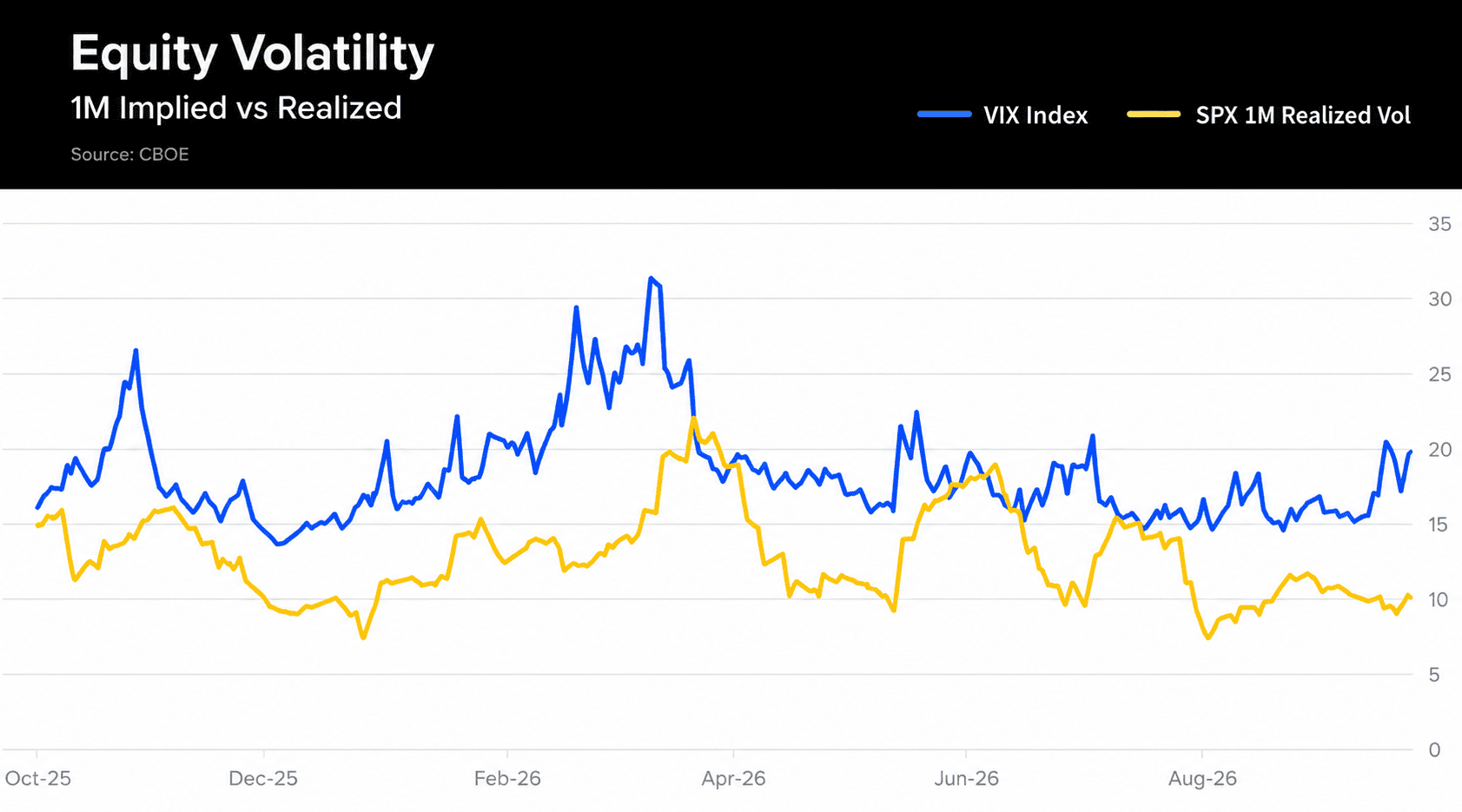
The relationship between expected and actual market volatility provides additional context. Finance Magnates Intelligence's comparison of VIX with one-month realised S&P 500 volatility shows that the two measures frequently move in the same direction, although the magnitude and timing of their movements differ. During February and March 2026, VIX rose above 30, while realised volatility increased subsequently, reaching approximately 20–22%. A similar relationship is visible in oil markets, where the Cboe Crude Oil ETF Volatility Index (OVX) climbed above 120 in February, preceding a substantial increase in realised oil volatility towards 80–90% during March.
These observations illustrate how elevated implied volatility can precede periods of stronger actual price fluctuations. They do not, by themselves, establish a corresponding increase in retail trading volumes, but they help explain why forward-looking volatility indicators may be relevant to brokers anticipating changes in market activity.
- “Volatility Has Changed the Investor”: Brokers on Markets, Crypto and the Trump Effect at FMLS:25
- Trump's Tariffs Spark Turmoil – and a Boom in Derivatives
- Traders Want to Catch the Volatility Wave in Trading, Study Finds
Correlation Between VIX and Retail CFD Trading Volumes
Is there any relationship between market volatility and retail CFD volumes? As our next chart shows, although retail volumes have followed a steady upward trend since January 2022, periods of increased VIX readings often coincide with higher retail CFD volumes. This suggests that market uncertainty attracts greater attention from retail investors, particularly when volatility rises sharply.
You can read full analysis on FM Intelligence portal


