Rewrite of MiFID Rulings Bears Down On Dark Pools As Europe's Anti-HFT Stance Strengthens
Wednesday,15/01/2014|11:19GMTby
Andrew Saks McLeod
Europe's regulatory rule-makers have conducted an extensive rewrite of the MiFID rulings, under the designation of MiFID, with emphasis on trade reporting, and stepping up sentiment against algorithmic trading.
The ever-changing parameters by which a real, genuine free-market economy can be gauged are most certainly different in today's world of globally-accessible electronic trading compared to those not just a decade ago, but since the knee-jerk reaction to the global financial crisis which many worldwide governments took, and are continuing to exercise.
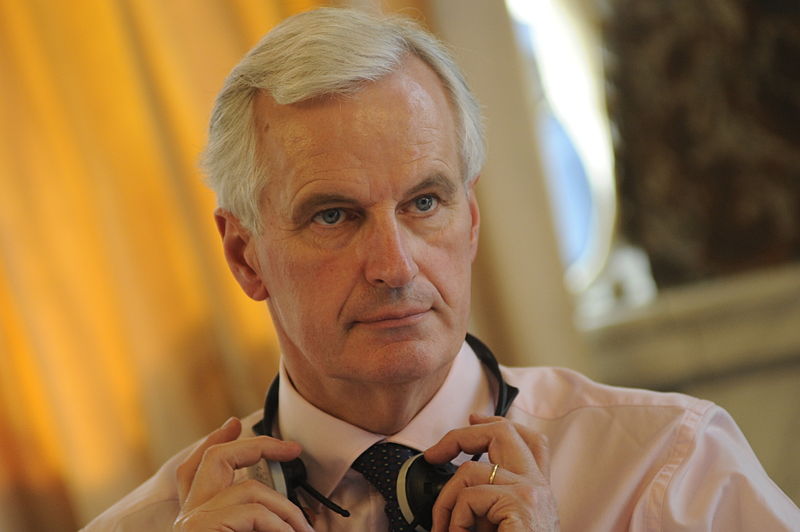
Michel Barnier Takes Strong Stance On Algo Trading
It is perhaps arguable that Europe, under its relatively recent unification, is taking a systematic approach to ensuring that certain trading activity is made unattractive within its widespread jurisdiction, as today's announcement by the European Parliament and its associated Council of Ministers, that the drafting of MiFID II has now been finalized, representing a comprehensive rewrite of the rulings by which trading in financial markets should be adhered.
Emulation of Dodd-Frank Act - With A Twist
An important facet of the MiFID regulatory remit is that its ideology somewhat echoes that of the United States' Dodd-Frank Act in order to go some way toward providing a standardized cross-border regulatory regime with common criteria in terms of how firms can operate, and how greater transparency within OTC markets can be achieved by way of trade reporting and ensuring that calculations with regard to pricing can be explained.
The finalized rulings, as issued by the European Commission, dictate that MiFID II introduces a market structure framework which closes loopholes and ensures that trading, wherever appropriate, takes place on regulated platforms. In addition to this, Trevor Clein, an experienced regulatory professional with highly detailed knowledge of the European regulatory scope, detailed the rulings on Spot FX on the Forex Magnates Meet The Experts panel today.
To this end, it subjects shares to a trading obligation, and further ensures that investment firms operating an internal matching system which executes client orders in shares, depository receipts, exchange-traded funds, certificates and other similar financial instruments on a multilateral basis have to be authorized as a Multilateral trading facility (MTF). It has also introduced a new multilateral trading venue, the Organized Trading Facility (OTF), for non-equity instruments to trade on organized multilateral trading platforms.
Undeterred, connectivity of venues to large dark pools such as the UBS MTF has continued to be implemented by infrastructure providers during the course of last year.
Financial markets' commissioner, Michel Barnier, today made a public statement that, "Strict transparency rules will ensure that dark trading of shares and other equity instruments which undermine efficient and fair price formation will no longer be allowed. Although I regret that the Commission's proposed ambitious transparency regime for non-equity instruments, such as bonds and derivatives, has not been fully achieved, MiFID II represents an important step in the right direction towards greater transparency in this area."
Whether the limitation of use of dark liquidity within institutional FX firms is likely to be on the cards as a result of the way having been paved by this particular statement from Commissioner Barnier is as yet unclear, however, there has been a constant barrage of disdain toward the practice within not only Europe's senior governmental figures, but heads of financial industry also, as exemplified by Bank of France Governor, Christian Noyer's opinion on certain components of HFT, including dark pools, the proliferation of which the Bank of France considered “a tragic error” just a few months ago, and the British authorities' recent consideration of imposing the Tobin Tax on HFT transactions.
According to the dossier on MiFID II, the rulings are designed to broaden the pre and post-trade transparency regime to include non-equity instruments, although pre-trade transparency waivers are available for large orders, request for quote and voice trading. Post-trade transparency is provided for all financial instruments with the possibility of deferred publication or volume masking as appropriate.
With Germany's BaFIN already having spearheaded the campaign against HFT, the unveiling of rulings to put a stop to it are now spreading Europe-wide, as the new MiFID rulings contain a series of restrictions relating to how algorithmic execution can be used by firms, with regulators being required to conduct stringent tests on algorithmic programs which will also involve the use of circuit-breakers which will halt trading if price Volatility exceeds what is seen fit by each authority.
Exodus To The New World?
This bureaucratic and somewhat draconian approach toward institutional trading desks could either impede their progress in Europe, or perhaps send them searching for alternative jurisdictions in which to do business. Indeed, whilst the United States Commodity Futures Trading Commission is also viewing algorithmic trading through a magnifying glass, its proliferation of established proprietary trading firms and advanced technological infrastructure, along with the country's progressive attitude toward free market enterprise may serve to keep its algorithmic trading and HFT firms not only in business, but also on an even keel.
Australia's regulatory authority ASIC, took a different stance when contemplating the regulation of dark liquidity and HFT, by fully accepting it as part of the financial structure and affording companies free will to implement such practices. This was an interesting move, as although HFT and institutional trading desks are relatively scant within Australia itself, the jurisdiction is well regulated and is situated in close proximity to the Asia-Pacific region, and Singapore's numerous institutional trading venues.
Mr. Barnier concluded by stating publicly that, "The dramatic increase in the speed and volumes of order flows can pose systemic risks.
The new rules ensure safe and orderly markets and financial stability through the introduction of trading controls, an appropriate liquidity provision obligation for high-frequency traders pursuing market-making strategies and by regulating the provision of direct electronic market access."
The ever-changing parameters by which a real, genuine free-market economy can be gauged are most certainly different in today's world of globally-accessible electronic trading compared to those not just a decade ago, but since the knee-jerk reaction to the global financial crisis which many worldwide governments took, and are continuing to exercise.
Michel Barnier Takes Strong Stance On Algo Trading
It is perhaps arguable that Europe, under its relatively recent unification, is taking a systematic approach to ensuring that certain trading activity is made unattractive within its widespread jurisdiction, as today's announcement by the European Parliament and its associated Council of Ministers, that the drafting of MiFID II has now been finalized, representing a comprehensive rewrite of the rulings by which trading in financial markets should be adhered.
Emulation of Dodd-Frank Act - With A Twist
An important facet of the MiFID regulatory remit is that its ideology somewhat echoes that of the United States' Dodd-Frank Act in order to go some way toward providing a standardized cross-border regulatory regime with common criteria in terms of how firms can operate, and how greater transparency within OTC markets can be achieved by way of trade reporting and ensuring that calculations with regard to pricing can be explained.
The finalized rulings, as issued by the European Commission, dictate that MiFID II introduces a market structure framework which closes loopholes and ensures that trading, wherever appropriate, takes place on regulated platforms. In addition to this, Trevor Clein, an experienced regulatory professional with highly detailed knowledge of the European regulatory scope, detailed the rulings on Spot FX on the Forex Magnates Meet The Experts panel today.
To this end, it subjects shares to a trading obligation, and further ensures that investment firms operating an internal matching system which executes client orders in shares, depository receipts, exchange-traded funds, certificates and other similar financial instruments on a multilateral basis have to be authorized as a Multilateral trading facility (MTF). It has also introduced a new multilateral trading venue, the Organized Trading Facility (OTF), for non-equity instruments to trade on organized multilateral trading platforms.
Undeterred, connectivity of venues to large dark pools such as the UBS MTF has continued to be implemented by infrastructure providers during the course of last year.
Financial markets' commissioner, Michel Barnier, today made a public statement that, "Strict transparency rules will ensure that dark trading of shares and other equity instruments which undermine efficient and fair price formation will no longer be allowed. Although I regret that the Commission's proposed ambitious transparency regime for non-equity instruments, such as bonds and derivatives, has not been fully achieved, MiFID II represents an important step in the right direction towards greater transparency in this area."
Whether the limitation of use of dark liquidity within institutional FX firms is likely to be on the cards as a result of the way having been paved by this particular statement from Commissioner Barnier is as yet unclear, however, there has been a constant barrage of disdain toward the practice within not only Europe's senior governmental figures, but heads of financial industry also, as exemplified by Bank of France Governor, Christian Noyer's opinion on certain components of HFT, including dark pools, the proliferation of which the Bank of France considered “a tragic error” just a few months ago, and the British authorities' recent consideration of imposing the Tobin Tax on HFT transactions.
According to the dossier on MiFID II, the rulings are designed to broaden the pre and post-trade transparency regime to include non-equity instruments, although pre-trade transparency waivers are available for large orders, request for quote and voice trading. Post-trade transparency is provided for all financial instruments with the possibility of deferred publication or volume masking as appropriate.
With Germany's BaFIN already having spearheaded the campaign against HFT, the unveiling of rulings to put a stop to it are now spreading Europe-wide, as the new MiFID rulings contain a series of restrictions relating to how algorithmic execution can be used by firms, with regulators being required to conduct stringent tests on algorithmic programs which will also involve the use of circuit-breakers which will halt trading if price Volatility exceeds what is seen fit by each authority.
Exodus To The New World?
This bureaucratic and somewhat draconian approach toward institutional trading desks could either impede their progress in Europe, or perhaps send them searching for alternative jurisdictions in which to do business. Indeed, whilst the United States Commodity Futures Trading Commission is also viewing algorithmic trading through a magnifying glass, its proliferation of established proprietary trading firms and advanced technological infrastructure, along with the country's progressive attitude toward free market enterprise may serve to keep its algorithmic trading and HFT firms not only in business, but also on an even keel.
Australia's regulatory authority ASIC, took a different stance when contemplating the regulation of dark liquidity and HFT, by fully accepting it as part of the financial structure and affording companies free will to implement such practices. This was an interesting move, as although HFT and institutional trading desks are relatively scant within Australia itself, the jurisdiction is well regulated and is situated in close proximity to the Asia-Pacific region, and Singapore's numerous institutional trading venues.
Mr. Barnier concluded by stating publicly that, "The dramatic increase in the speed and volumes of order flows can pose systemic risks.
The new rules ensure safe and orderly markets and financial stability through the introduction of trading controls, an appropriate liquidity provision obligation for high-frequency traders pursuing market-making strategies and by regulating the provision of direct electronic market access."
Italy’s Consob Tightens Net on AI-Fueled Scams With Fresh Website Bans
FP Markets Winner Spotlight 🏆 | Global Broker of the Year 2025 #Trading #Broker #Innovation #Shorts
FP Markets Winner Spotlight 🏆 | Global Broker of the Year 2025 #Trading #Broker #Innovation #Shorts
FP Markets takes the spotlight as Global Broker of the Year 2025 at the Finance Magnates Awards.
Martin Stoilov, Head of Client Experience, shares that trust, innovation, and people played a key role in the company’s success, supported by a strong foundation of integrity and client-centricity.
Following this milestone, FP Markets continues to focus on growth, technology investment, and its core values of transparency and excellence.
👉 Be part of FM Awards 2026: https://awards.financemagnates.com/#nominate
FP Markets takes the spotlight as Global Broker of the Year 2025 at the Finance Magnates Awards.
Martin Stoilov, Head of Client Experience, shares that trust, innovation, and people played a key role in the company’s success, supported by a strong foundation of integrity and client-centricity.
Following this milestone, FP Markets continues to focus on growth, technology investment, and its core values of transparency and excellence.
👉 Be part of FM Awards 2026: https://awards.financemagnates.com/#nominate
In this video, we review @HolaPrimeMarketsOfficial, a multi-asset forex and CFDs broker offering different account types, trading platforms, and flexible trading conditions.
We cover the broker’s overall offering, including account options, trading environment, platforms like MT4 and MT5, and additional services such as managed accounts and fast withdrawals.
Watch the full video to see if Hola Prime Markets fits your trading needs.
📣 Stay up to date with the latest in finance and trading. Follow Finance Magnates for industry news, insights, and global event coverage.
Connect with us:
🔗 LinkedIn: /financemagnates
👍 Facebook: /financemagnates
📸 Instagram: https://www.instagram.com/financemagnates
🐦 X: https://x.com/financemagnates
🎥 TikTok: https://www.tiktok.com/tag/financemagnates
▶️ YouTube: /@financemagnates_official
#HolaPrime #ForexBroker #CFDTrading #FinanceMagnates #Trading #Forex #BrokerReview
In this video, we review @HolaPrimeMarketsOfficial, a multi-asset forex and CFDs broker offering different account types, trading platforms, and flexible trading conditions.
We cover the broker’s overall offering, including account options, trading environment, platforms like MT4 and MT5, and additional services such as managed accounts and fast withdrawals.
Watch the full video to see if Hola Prime Markets fits your trading needs.
📣 Stay up to date with the latest in finance and trading. Follow Finance Magnates for industry news, insights, and global event coverage.
Connect with us:
🔗 LinkedIn: /financemagnates
👍 Facebook: /financemagnates
📸 Instagram: https://www.instagram.com/financemagnates
🐦 X: https://x.com/financemagnates
🎥 TikTok: https://www.tiktok.com/tag/financemagnates
▶️ YouTube: /@financemagnates_official
#HolaPrime #ForexBroker #CFDTrading #FinanceMagnates #Trading #Forex #BrokerReview
Hola Prime Review: What You Need to Know | Full Breakdown by Finance Magnates
Hola Prime Review: What You Need to Know | Full Breakdown by Finance Magnates
In this video, we review @HolaPrime_Global, a proprietary trading firm offering evaluation programs and performance-based payouts in simulated market environments.
We cover how the challenge model works, including account types, profit splits (up to 95%), trading rules, and what it takes to reach a funded account. You’ll also learn about available platforms like MT4, MT5, cTrader, and more, along with insights into payouts, support, and trading conditions.
Watch the full video to see if Hola Prime fits your trading style.
📣 Stay up to date with the latest in finance and trading. Follow Finance Magnates for industry news, insights, and global event coverage.
Connect with us:
🔗 LinkedIn: /financemagnates
👍 Facebook: /financemagnates
📸 Instagram: https://www.instagram.com/financemagnates
🐦 X: https://x.com/financemagnates
🎥 TikTok: https://www.tiktok.com/tag/financemagnates
▶️ YouTube: /@financemagnates_official
#HolaPrime #PropFirm #Trading #FinanceMagnates #Forex #FuturesTrading #TradingReview #PropFirmReview
In this video, we review @HolaPrime_Global, a proprietary trading firm offering evaluation programs and performance-based payouts in simulated market environments.
We cover how the challenge model works, including account types, profit splits (up to 95%), trading rules, and what it takes to reach a funded account. You’ll also learn about available platforms like MT4, MT5, cTrader, and more, along with insights into payouts, support, and trading conditions.
Watch the full video to see if Hola Prime fits your trading style.
📣 Stay up to date with the latest in finance and trading. Follow Finance Magnates for industry news, insights, and global event coverage.
Connect with us:
🔗 LinkedIn: /financemagnates
👍 Facebook: /financemagnates
📸 Instagram: https://www.instagram.com/financemagnates
🐦 X: https://x.com/financemagnates
🎥 TikTok: https://www.tiktok.com/tag/financemagnates
▶️ YouTube: /@financemagnates_official
#HolaPrime #PropFirm #Trading #FinanceMagnates #Forex #FuturesTrading #TradingReview #PropFirmReview
Axi Winner Spotlight 🏆 | Global Most Innovative Broker 2025 #Innovation #Trading #Fintech #Broker
Axi Winner Spotlight 🏆 | Global Most Innovative Broker 2025 #Innovation #Trading #Fintech #Broker
Axi takes the spotlight at the Finance Magnates Awards, winning Global Most Innovative Broker 2025.
Olivia Xenofontos and Ivanna Openko share how the team will feel: proud, motivated, and ready to keep delivering.
They also describe the night as well-organized, focused, and enjoyable for all.
👉 Be part of FM Awards 2026.
Axi takes the spotlight at the Finance Magnates Awards, winning Global Most Innovative Broker 2025.
Olivia Xenofontos and Ivanna Openko share how the team will feel: proud, motivated, and ready to keep delivering.
They also describe the night as well-organized, focused, and enjoyable for all.
👉 Be part of FM Awards 2026.
Recognition that matters.
Built on transparency.
Driven by the industry.
The Finance Magnates Awards 2026.
Nominations are now open.
🔗 https://awards.financemagnates.com/?utm_source=SM&utm_medium=social&utm_campaign=recognition-matters
Recognition that matters.
Built on transparency.
Driven by the industry.
The Finance Magnates Awards 2026.
Nominations are now open.
🔗 https://awards.financemagnates.com/?utm_source=SM&utm_medium=social&utm_campaign=recognition-matters