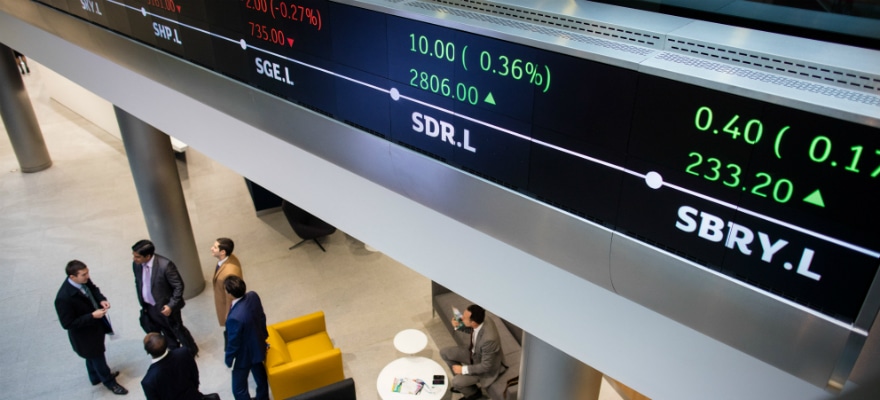
Tech problems, market data costs and small revenues mean adopting stock trading isn't easy
Bloomberg
In the run-up to August of last year, many in the retail trading industry proclaimed that “going multi-asset” would be necessary for any broker that wanted to survive the fallout from the European Securities and Markets Authority’s product intervention measures.
Of course, some brokers claim that they have a set of ‘multi-asset’ products when, in reality, they are just offering CFDs on a number of different asset classes. But, over the past twelve months, there has been much talk about brokers adding real stock trading to their set of products.
Some brokers have actually managed to do this. Along with a highly publicized marketing campaign, eToro launched a commission-free stock trading service in May. Other brokers, such as IG Group, Trading 212, ThinkMarkets, and RoboMarkets also offer traders access to equities markets.
For the most part, however, brokers haven’t managed to add stock trading to their platforms. There is a good reason for this - providing equities trading to clients is time-consuming, bureaucratic, and expensive.
Dealing with data
One of the biggest problems firms face is market data. Like many other financial institutions, retail brokers are finding that licensing data from exchanges is both expensive and, from a legal point of view, complex.
Market data consultant Rafah Hanna
“Exchanges are now very aware of the retail trading industry and have changed their approach by introducing targeted and specific new policies and license fees,” said Rafah Hanah, a former executive at the London Stock Exchange who now provides market data consulting services to brokers.
“Previously, a flat Derived Data Licence Fee was sufficient, and pre-audits were not undertaken. Now exchanges, including the LSE, are undertaking pre-audits to ensure, prior to licensing a broker, that their derived data is not able to be reverse engineered, and the onward distribution of data is appropriately licensed, especially for B2B API redistribution and white labels.”
That final point is particularly significant for brokers that want to add either single-stock CFDs or real equities to their offering.
Even if they only want to offer the CFD product, white label brokers will still have to contend with an exchange’s market data policy. They either have to license data directly from an exchange or through the broker that they are a white label of.
Brokers that want to offer real stock trading are almost guaranteed to have to reach some sort of white label agreement with another firm.
That’s because, with a very small number of exceptions, they are not exchange members - the only people that can access an exchange directly. As a result, they have to work with another broker to access the markets they want.
“MT5 is just not ideal for trading in the stock market,” said the liquidity provider executive. “Take something really basic like a search function. On MT5, you cannot look up a company name - the platform only lists a stock’s symbol. So, if I want to trade in a particular stock, I have to find its symbol online then go back to MT5 and look for it.”
Of course, many brokers are not even using MT5. As the Finance Magnates intelligence team has shown, MT4 is still ubiquitous amongst brokers, and they don’t seem likely to relinquish their hold on the platform any time soon.
Trading stocks with MT4 is possible via a bridge provider but, again, the platform was not designed to give users direct access to the equities markets.
From principal to agent
Aside from any problems they experience with their trading platform, brokers adding stocks to their offering would need to make a huge shift in their set of operations.
As much as they like to claim that they are 100 percent ECN, straight-through processing, direct market access, no dealing-desk brokers, most retail trading firms are actually zero percent ECN, have no through processing, do not provide direct market access and operate a dealing desk.
Conversely, providing your clients with shares means you have to provide them with ownership in a share. Thus, it becomes much harder to simply b-book your client base into oblivion.
"Most match-principal brokers have set up their trading systems, back-office software and reporting methods to fit with that particular trading model,” said Norbert Lukasiewicz, an eFX consultant to major financial institutions and a former executive at technology provider Integral.
“But offering DMA equities requires the end-client to be an owner of the purchased stock. That means that the typical matched-principal setup must be replaced by an agency model where the broker is transmitting orders on behalf of its clients.”
Struggling to keep up
Even if they were able to shift their operations to act as stockbrokers, there is also the question of speed. CFD brokers do provide reasonably fast execution times to their clients. FXCM, for example, generally executes its clients’ orders in under 20 milliseconds.
The problem is that many exchanges are dealing in microseconds, not milliseconds. Thus, even if CFD brokers are providing a good service to clients now, that may not translate well into stock trading on exchanges.
This latency issue is compounded by the fact that there is less liquidity on stock exchanges. Brokers can effectively generate CFD liquidity on demand through a b-book model. They cannot do the same for stocks.
“Exchanges are central limit order books and essentially have a limited supply of liquidity,” added Lukasiewicz. “Because of that, speed becomes extremely important as it increases your chances of getting your order executed at the desired price.
“But CFD brokers are used to milliseconds latency, whereas the exchange world is operating in microseconds. To put it simply, the tech used for CFD trading may not be quick enough for trading equities. If that's the case, it will result in slow market data and ultimately a very high ratio of slippage on execution.”
Lack of knowledge
Technological and operational structures may hinder brokers’ efforts to add equities trading to their service offering, but there’s also a human component. Most retail trading executives are not stockbrokers, and only a small number have experience in that particular field.
Salam Alaswad, CEO, Citypoint
“I think any CFD firm adding stock trading facilities may need to recruit a new team across different departments to deal with the new asset class they are looking to offer,” said Salam Alaswad, the CEO of London-based retail broker Citypoint. “At a minimum, they would have to provide enhanced and thorough training for their existing employees.”
Whether training existing employees or bringing in staff would be enough is also up for debate. That’s because CFD brokers wouldn’t just be competing against one another for market share in the stockbroking business - there are already a huge number of banks and investment firms offering the service.
Almost every bank in the UK, for example, offers its retail customers access to a share dealing platform. That includes comparatively smaller firms like the Yorkshire Building Society, as well as digital newcomers like Revolut.
Aside from those offerings, there are also existing investment platforms that have decades of experience behind them. Charles Stanley and Hargreaves Landsdown, two large UK firms, both allow retail clients to invest in the stock market.
“For the average person, I think an investment platform offered by a bank is going to be much more convenient,” said the liquidity provider executive.
“There are a very small number of firms active in the CFD space - I can count them on one hand - that provide an appealing investment service. Aside from them, I can’t see why anyone would want to move their investments to a CFD broker.”
One euro trades
Even if a retail trading firm was able to overcome all of these different problems and start offering its clients access to the stock market, there would be another very simple hurdle to it being successful - stockbroking doesn’t make you that much money.
In a three month period, many brokers can expect to make an average of around $1,000 from their clients. That figure can be exponentially higher for some traders.
The same is not true for stock trading. Equities investors trade far less frequently and, as you cannot b-book them, it is much harder to squeeze money out of them.
When you then take into account data fees and compliance costs, making money becomes much harder unless you have a gigantic customer base. One broker executive that Finance Magnates spoke to said that equities trading could be worth as little as 1 euro ($1.11) per trade, with many clients only making one or two trades per quarter.
“Generally speaking, CFDs are very lucrative products for those firms offering them,” noted Alaswad. “Adding much less lucrative products, dealing with the hassle of changing and amending all of your systems and controls may not be seen as a sensible option for many firms. In reality, I think that many traditional equity brokers are the ones looking to offer CFDs.”
Taking this all into account, it’s easy to see why, one year after ESMA introduced its restrictive regulations, many brokers haven’t even considered adding equities trading to their offering.
Costly, competitive, expensive, and full of legal hoops to jump through, for many firms, there would likely only be some cross-selling value to be gained by adding stocks to their set of products.
That being the case, we may see a few more brokers add stock trading to their list of services in the near future but don’t expect the whole industry to go 'multi-asset' any time soon.
In the run-up to August of last year, many in the retail trading industry proclaimed that “going multi-asset” would be necessary for any broker that wanted to survive the fallout from the European Securities and Markets Authority’s product intervention measures.
Of course, some brokers claim that they have a set of ‘multi-asset’ products when, in reality, they are just offering CFDs on a number of different asset classes. But, over the past twelve months, there has been much talk about brokers adding real stock trading to their set of products.
Some brokers have actually managed to do this. Along with a highly publicized marketing campaign, eToro launched a commission-free stock trading service in May. Other brokers, such as IG Group, Trading 212, ThinkMarkets, and RoboMarkets also offer traders access to equities markets.
For the most part, however, brokers haven’t managed to add stock trading to their platforms. There is a good reason for this - providing equities trading to clients is time-consuming, bureaucratic, and expensive.
Dealing with data
One of the biggest problems firms face is market data. Like many other financial institutions, retail brokers are finding that licensing data from exchanges is both expensive and, from a legal point of view, complex.
Market data consultant Rafah Hanna
“Exchanges are now very aware of the retail trading industry and have changed their approach by introducing targeted and specific new policies and license fees,” said Rafah Hanah, a former executive at the London Stock Exchange who now provides market data consulting services to brokers.
“Previously, a flat Derived Data Licence Fee was sufficient, and pre-audits were not undertaken. Now exchanges, including the LSE, are undertaking pre-audits to ensure, prior to licensing a broker, that their derived data is not able to be reverse engineered, and the onward distribution of data is appropriately licensed, especially for B2B API redistribution and white labels.”
That final point is particularly significant for brokers that want to add either single-stock CFDs or real equities to their offering.
Even if they only want to offer the CFD product, white label brokers will still have to contend with an exchange’s market data policy. They either have to license data directly from an exchange or through the broker that they are a white label of.
Brokers that want to offer real stock trading are almost guaranteed to have to reach some sort of white label agreement with another firm.
That’s because, with a very small number of exceptions, they are not exchange members - the only people that can access an exchange directly. As a result, they have to work with another broker to access the markets they want.
“MT5 is just not ideal for trading in the stock market,” said the liquidity provider executive. “Take something really basic like a search function. On MT5, you cannot look up a company name - the platform only lists a stock’s symbol. So, if I want to trade in a particular stock, I have to find its symbol online then go back to MT5 and look for it.”
Of course, many brokers are not even using MT5. As the Finance Magnates intelligence team has shown, MT4 is still ubiquitous amongst brokers, and they don’t seem likely to relinquish their hold on the platform any time soon.
Trading stocks with MT4 is possible via a bridge provider but, again, the platform was not designed to give users direct access to the equities markets.
From principal to agent
Aside from any problems they experience with their trading platform, brokers adding stocks to their offering would need to make a huge shift in their set of operations.
As much as they like to claim that they are 100 percent ECN, straight-through processing, direct market access, no dealing-desk brokers, most retail trading firms are actually zero percent ECN, have no through processing, do not provide direct market access and operate a dealing desk.
Conversely, providing your clients with shares means you have to provide them with ownership in a share. Thus, it becomes much harder to simply b-book your client base into oblivion.
"Most match-principal brokers have set up their trading systems, back-office software and reporting methods to fit with that particular trading model,” said Norbert Lukasiewicz, an eFX consultant to major financial institutions and a former executive at technology provider Integral.
“But offering DMA equities requires the end-client to be an owner of the purchased stock. That means that the typical matched-principal setup must be replaced by an agency model where the broker is transmitting orders on behalf of its clients.”
Struggling to keep up
Even if they were able to shift their operations to act as stockbrokers, there is also the question of speed. CFD brokers do provide reasonably fast execution times to their clients. FXCM, for example, generally executes its clients’ orders in under 20 milliseconds.
The problem is that many exchanges are dealing in microseconds, not milliseconds. Thus, even if CFD brokers are providing a good service to clients now, that may not translate well into stock trading on exchanges.
This latency issue is compounded by the fact that there is less liquidity on stock exchanges. Brokers can effectively generate CFD liquidity on demand through a b-book model. They cannot do the same for stocks.
“Exchanges are central limit order books and essentially have a limited supply of liquidity,” added Lukasiewicz. “Because of that, speed becomes extremely important as it increases your chances of getting your order executed at the desired price.
“But CFD brokers are used to milliseconds latency, whereas the exchange world is operating in microseconds. To put it simply, the tech used for CFD trading may not be quick enough for trading equities. If that's the case, it will result in slow market data and ultimately a very high ratio of slippage on execution.”
Lack of knowledge
Technological and operational structures may hinder brokers’ efforts to add equities trading to their service offering, but there’s also a human component. Most retail trading executives are not stockbrokers, and only a small number have experience in that particular field.
Salam Alaswad, CEO, Citypoint
“I think any CFD firm adding stock trading facilities may need to recruit a new team across different departments to deal with the new asset class they are looking to offer,” said Salam Alaswad, the CEO of London-based retail broker Citypoint. “At a minimum, they would have to provide enhanced and thorough training for their existing employees.”
Whether training existing employees or bringing in staff would be enough is also up for debate. That’s because CFD brokers wouldn’t just be competing against one another for market share in the stockbroking business - there are already a huge number of banks and investment firms offering the service.
Almost every bank in the UK, for example, offers its retail customers access to a share dealing platform. That includes comparatively smaller firms like the Yorkshire Building Society, as well as digital newcomers like Revolut.
Aside from those offerings, there are also existing investment platforms that have decades of experience behind them. Charles Stanley and Hargreaves Landsdown, two large UK firms, both allow retail clients to invest in the stock market.
“For the average person, I think an investment platform offered by a bank is going to be much more convenient,” said the liquidity provider executive.
“There are a very small number of firms active in the CFD space - I can count them on one hand - that provide an appealing investment service. Aside from them, I can’t see why anyone would want to move their investments to a CFD broker.”
One euro trades
Even if a retail trading firm was able to overcome all of these different problems and start offering its clients access to the stock market, there would be another very simple hurdle to it being successful - stockbroking doesn’t make you that much money.
In a three month period, many brokers can expect to make an average of around $1,000 from their clients. That figure can be exponentially higher for some traders.
The same is not true for stock trading. Equities investors trade far less frequently and, as you cannot b-book them, it is much harder to squeeze money out of them.
When you then take into account data fees and compliance costs, making money becomes much harder unless you have a gigantic customer base. One broker executive that Finance Magnates spoke to said that equities trading could be worth as little as 1 euro ($1.11) per trade, with many clients only making one or two trades per quarter.
“Generally speaking, CFDs are very lucrative products for those firms offering them,” noted Alaswad. “Adding much less lucrative products, dealing with the hassle of changing and amending all of your systems and controls may not be seen as a sensible option for many firms. In reality, I think that many traditional equity brokers are the ones looking to offer CFDs.”
Taking this all into account, it’s easy to see why, one year after ESMA introduced its restrictive regulations, many brokers haven’t even considered adding equities trading to their offering.
Costly, competitive, expensive, and full of legal hoops to jump through, for many firms, there would likely only be some cross-selling value to be gained by adding stocks to their set of products.
That being the case, we may see a few more brokers add stock trading to their list of services in the near future but don’t expect the whole industry to go 'multi-asset' any time soon.
42% of Swiss Financial Firms Have No Digital Fraud Policy, FINMA Finds
Featured Videos
FP Markets Winner Spotlight 🏆 | Global Broker of the Year 2025 #Trading #Broker #Innovation #Shorts
FP Markets Winner Spotlight 🏆 | Global Broker of the Year 2025 #Trading #Broker #Innovation #Shorts
FP Markets Winner Spotlight 🏆 | Global Broker of the Year 2025 #Trading #Broker #Innovation #Shorts
FP Markets Winner Spotlight 🏆 | Global Broker of the Year 2025 #Trading #Broker #Innovation #Shorts
FP Markets takes the spotlight as Global Broker of the Year 2025 at the Finance Magnates Awards.
Martin Stoilov, Head of Client Experience, shares that trust, innovation, and people played a key role in the company’s success, supported by a strong foundation of integrity and client-centricity.
Following this milestone, FP Markets continues to focus on growth, technology investment, and its core values of transparency and excellence.
👉 Be part of FM Awards 2026: https://awards.financemagnates.com/#nominate
FP Markets takes the spotlight as Global Broker of the Year 2025 at the Finance Magnates Awards.
Martin Stoilov, Head of Client Experience, shares that trust, innovation, and people played a key role in the company’s success, supported by a strong foundation of integrity and client-centricity.
Following this milestone, FP Markets continues to focus on growth, technology investment, and its core values of transparency and excellence.
👉 Be part of FM Awards 2026: https://awards.financemagnates.com/#nominate
FP Markets takes the spotlight as Global Broker of the Year 2025 at the Finance Magnates Awards.
Martin Stoilov, Head of Client Experience, shares that trust, innovation, and people played a key role in the company’s success, supported by a strong foundation of integrity and client-centricity.
Following this milestone, FP Markets continues to focus on growth, technology investment, and its core values of transparency and excellence.
👉 Be part of FM Awards 2026: https://awards.financemagnates.com/#nominate
FP Markets takes the spotlight as Global Broker of the Year 2025 at the Finance Magnates Awards.
Martin Stoilov, Head of Client Experience, shares that trust, innovation, and people played a key role in the company’s success, supported by a strong foundation of integrity and client-centricity.
Following this milestone, FP Markets continues to focus on growth, technology investment, and its core values of transparency and excellence.
👉 Be part of FM Awards 2026: https://awards.financemagnates.com/#nominate
In this video, we review @HolaPrimeMarketsOfficial, a multi-asset forex and CFDs broker offering different account types, trading platforms, and flexible trading conditions.
We cover the broker’s overall offering, including account options, trading environment, platforms like MT4 and MT5, and additional services such as managed accounts and fast withdrawals.
Watch the full video to see if Hola Prime Markets fits your trading needs.
📣 Stay up to date with the latest in finance and trading. Follow Finance Magnates for industry news, insights, and global event coverage.
Connect with us:
🔗 LinkedIn: /financemagnates
👍 Facebook: /financemagnates
📸 Instagram: https://www.instagram.com/financemagnates
🐦 X: https://x.com/financemagnates
🎥 TikTok: https://www.tiktok.com/tag/financemagnates
▶️ YouTube: /@financemagnates_official
#HolaPrime #ForexBroker #CFDTrading #FinanceMagnates #Trading #Forex #BrokerReview
In this video, we review @HolaPrimeMarketsOfficial, a multi-asset forex and CFDs broker offering different account types, trading platforms, and flexible trading conditions.
We cover the broker’s overall offering, including account options, trading environment, platforms like MT4 and MT5, and additional services such as managed accounts and fast withdrawals.
Watch the full video to see if Hola Prime Markets fits your trading needs.
📣 Stay up to date with the latest in finance and trading. Follow Finance Magnates for industry news, insights, and global event coverage.
Connect with us:
🔗 LinkedIn: /financemagnates
👍 Facebook: /financemagnates
📸 Instagram: https://www.instagram.com/financemagnates
🐦 X: https://x.com/financemagnates
🎥 TikTok: https://www.tiktok.com/tag/financemagnates
▶️ YouTube: /@financemagnates_official
#HolaPrime #ForexBroker #CFDTrading #FinanceMagnates #Trading #Forex #BrokerReview
In this video, we review @HolaPrimeMarketsOfficial, a multi-asset forex and CFDs broker offering different account types, trading platforms, and flexible trading conditions.
We cover the broker’s overall offering, including account options, trading environment, platforms like MT4 and MT5, and additional services such as managed accounts and fast withdrawals.
Watch the full video to see if Hola Prime Markets fits your trading needs.
📣 Stay up to date with the latest in finance and trading. Follow Finance Magnates for industry news, insights, and global event coverage.
Connect with us:
🔗 LinkedIn: /financemagnates
👍 Facebook: /financemagnates
📸 Instagram: https://www.instagram.com/financemagnates
🐦 X: https://x.com/financemagnates
🎥 TikTok: https://www.tiktok.com/tag/financemagnates
▶️ YouTube: /@financemagnates_official
#HolaPrime #ForexBroker #CFDTrading #FinanceMagnates #Trading #Forex #BrokerReview
In this video, we review @HolaPrimeMarketsOfficial, a multi-asset forex and CFDs broker offering different account types, trading platforms, and flexible trading conditions.
We cover the broker’s overall offering, including account options, trading environment, platforms like MT4 and MT5, and additional services such as managed accounts and fast withdrawals.
Watch the full video to see if Hola Prime Markets fits your trading needs.
📣 Stay up to date with the latest in finance and trading. Follow Finance Magnates for industry news, insights, and global event coverage.
Connect with us:
🔗 LinkedIn: /financemagnates
👍 Facebook: /financemagnates
📸 Instagram: https://www.instagram.com/financemagnates
🐦 X: https://x.com/financemagnates
🎥 TikTok: https://www.tiktok.com/tag/financemagnates
▶️ YouTube: /@financemagnates_official
#HolaPrime #ForexBroker #CFDTrading #FinanceMagnates #Trading #Forex #BrokerReview
In this video, we review @HolaPrimeMarketsOfficial, a multi-asset forex and CFDs broker offering different account types, trading platforms, and flexible trading conditions.
We cover the broker’s overall offering, including account options, trading environment, platforms like MT4 and MT5, and additional services such as managed accounts and fast withdrawals.
Watch the full video to see if Hola Prime Markets fits your trading needs.
📣 Stay up to date with the latest in finance and trading. Follow Finance Magnates for industry news, insights, and global event coverage.
Connect with us:
🔗 LinkedIn: /financemagnates
👍 Facebook: /financemagnates
📸 Instagram: https://www.instagram.com/financemagnates
🐦 X: https://x.com/financemagnates
🎥 TikTok: https://www.tiktok.com/tag/financemagnates
▶️ YouTube: /@financemagnates_official
#HolaPrime #ForexBroker #CFDTrading #FinanceMagnates #Trading #Forex #BrokerReview
In this video, we review @HolaPrimeMarketsOfficial, a multi-asset forex and CFDs broker offering different account types, trading platforms, and flexible trading conditions.
We cover the broker’s overall offering, including account options, trading environment, platforms like MT4 and MT5, and additional services such as managed accounts and fast withdrawals.
Watch the full video to see if Hola Prime Markets fits your trading needs.
📣 Stay up to date with the latest in finance and trading. Follow Finance Magnates for industry news, insights, and global event coverage.
Connect with us:
🔗 LinkedIn: /financemagnates
👍 Facebook: /financemagnates
📸 Instagram: https://www.instagram.com/financemagnates
🐦 X: https://x.com/financemagnates
🎥 TikTok: https://www.tiktok.com/tag/financemagnates
▶️ YouTube: /@financemagnates_official
#HolaPrime #ForexBroker #CFDTrading #FinanceMagnates #Trading #Forex #BrokerReview
Hola Prime Review: What You Need to Know | Full Breakdown by Finance Magnates
Hola Prime Review: What You Need to Know | Full Breakdown by Finance Magnates
Hola Prime Review: What You Need to Know | Full Breakdown by Finance Magnates
Hola Prime Review: What You Need to Know | Full Breakdown by Finance Magnates
Hola Prime Review: What You Need to Know | Full Breakdown by Finance Magnates
Hola Prime Review: What You Need to Know | Full Breakdown by Finance Magnates
In this video, we review @HolaPrime_Global, a proprietary trading firm offering evaluation programs and performance-based payouts in simulated market environments.
We cover how the challenge model works, including account types, profit splits (up to 95%), trading rules, and what it takes to reach a funded account. You’ll also learn about available platforms like MT4, MT5, cTrader, and more, along with insights into payouts, support, and trading conditions.
Watch the full video to see if Hola Prime fits your trading style.
📣 Stay up to date with the latest in finance and trading. Follow Finance Magnates for industry news, insights, and global event coverage.
Connect with us:
🔗 LinkedIn: /financemagnates
👍 Facebook: /financemagnates
📸 Instagram: https://www.instagram.com/financemagnates
🐦 X: https://x.com/financemagnates
🎥 TikTok: https://www.tiktok.com/tag/financemagnates
▶️ YouTube: /@financemagnates_official
#HolaPrime #PropFirm #Trading #FinanceMagnates #Forex #FuturesTrading #TradingReview #PropFirmReview
In this video, we review @HolaPrime_Global, a proprietary trading firm offering evaluation programs and performance-based payouts in simulated market environments.
We cover how the challenge model works, including account types, profit splits (up to 95%), trading rules, and what it takes to reach a funded account. You’ll also learn about available platforms like MT4, MT5, cTrader, and more, along with insights into payouts, support, and trading conditions.
Watch the full video to see if Hola Prime fits your trading style.
📣 Stay up to date with the latest in finance and trading. Follow Finance Magnates for industry news, insights, and global event coverage.
Connect with us:
🔗 LinkedIn: /financemagnates
👍 Facebook: /financemagnates
📸 Instagram: https://www.instagram.com/financemagnates
🐦 X: https://x.com/financemagnates
🎥 TikTok: https://www.tiktok.com/tag/financemagnates
▶️ YouTube: /@financemagnates_official
#HolaPrime #PropFirm #Trading #FinanceMagnates #Forex #FuturesTrading #TradingReview #PropFirmReview
In this video, we review @HolaPrime_Global, a proprietary trading firm offering evaluation programs and performance-based payouts in simulated market environments.
We cover how the challenge model works, including account types, profit splits (up to 95%), trading rules, and what it takes to reach a funded account. You’ll also learn about available platforms like MT4, MT5, cTrader, and more, along with insights into payouts, support, and trading conditions.
Watch the full video to see if Hola Prime fits your trading style.
📣 Stay up to date with the latest in finance and trading. Follow Finance Magnates for industry news, insights, and global event coverage.
Connect with us:
🔗 LinkedIn: /financemagnates
👍 Facebook: /financemagnates
📸 Instagram: https://www.instagram.com/financemagnates
🐦 X: https://x.com/financemagnates
🎥 TikTok: https://www.tiktok.com/tag/financemagnates
▶️ YouTube: /@financemagnates_official
#HolaPrime #PropFirm #Trading #FinanceMagnates #Forex #FuturesTrading #TradingReview #PropFirmReview
In this video, we review @HolaPrime_Global, a proprietary trading firm offering evaluation programs and performance-based payouts in simulated market environments.
We cover how the challenge model works, including account types, profit splits (up to 95%), trading rules, and what it takes to reach a funded account. You’ll also learn about available platforms like MT4, MT5, cTrader, and more, along with insights into payouts, support, and trading conditions.
Watch the full video to see if Hola Prime fits your trading style.
📣 Stay up to date with the latest in finance and trading. Follow Finance Magnates for industry news, insights, and global event coverage.
Connect with us:
🔗 LinkedIn: /financemagnates
👍 Facebook: /financemagnates
📸 Instagram: https://www.instagram.com/financemagnates
🐦 X: https://x.com/financemagnates
🎥 TikTok: https://www.tiktok.com/tag/financemagnates
▶️ YouTube: /@financemagnates_official
#HolaPrime #PropFirm #Trading #FinanceMagnates #Forex #FuturesTrading #TradingReview #PropFirmReview
In this video, we review @HolaPrime_Global, a proprietary trading firm offering evaluation programs and performance-based payouts in simulated market environments.
We cover how the challenge model works, including account types, profit splits (up to 95%), trading rules, and what it takes to reach a funded account. You’ll also learn about available platforms like MT4, MT5, cTrader, and more, along with insights into payouts, support, and trading conditions.
Watch the full video to see if Hola Prime fits your trading style.
📣 Stay up to date with the latest in finance and trading. Follow Finance Magnates for industry news, insights, and global event coverage.
Connect with us:
🔗 LinkedIn: /financemagnates
👍 Facebook: /financemagnates
📸 Instagram: https://www.instagram.com/financemagnates
🐦 X: https://x.com/financemagnates
🎥 TikTok: https://www.tiktok.com/tag/financemagnates
▶️ YouTube: /@financemagnates_official
#HolaPrime #PropFirm #Trading #FinanceMagnates #Forex #FuturesTrading #TradingReview #PropFirmReview
In this video, we review @HolaPrime_Global, a proprietary trading firm offering evaluation programs and performance-based payouts in simulated market environments.
We cover how the challenge model works, including account types, profit splits (up to 95%), trading rules, and what it takes to reach a funded account. You’ll also learn about available platforms like MT4, MT5, cTrader, and more, along with insights into payouts, support, and trading conditions.
Watch the full video to see if Hola Prime fits your trading style.
📣 Stay up to date with the latest in finance and trading. Follow Finance Magnates for industry news, insights, and global event coverage.
Connect with us:
🔗 LinkedIn: /financemagnates
👍 Facebook: /financemagnates
📸 Instagram: https://www.instagram.com/financemagnates
🐦 X: https://x.com/financemagnates
🎥 TikTok: https://www.tiktok.com/tag/financemagnates
▶️ YouTube: /@financemagnates_official
#HolaPrime #PropFirm #Trading #FinanceMagnates #Forex #FuturesTrading #TradingReview #PropFirmReview
Axi Winner Spotlight 🏆 | Global Most Innovative Broker 2025 #Innovation #Trading #Fintech #Broker
Axi Winner Spotlight 🏆 | Global Most Innovative Broker 2025 #Innovation #Trading #Fintech #Broker
Axi Winner Spotlight 🏆 | Global Most Innovative Broker 2025 #Innovation #Trading #Fintech #Broker
Axi Winner Spotlight 🏆 | Global Most Innovative Broker 2025 #Innovation #Trading #Fintech #Broker
Axi Winner Spotlight 🏆 | Global Most Innovative Broker 2025 #Innovation #Trading #Fintech #Broker
Axi Winner Spotlight 🏆 | Global Most Innovative Broker 2025 #Innovation #Trading #Fintech #Broker
Axi takes the spotlight at the Finance Magnates Awards, winning Global Most Innovative Broker 2025.
Olivia Xenofontos and Ivanna Openko share how the team will feel: proud, motivated, and ready to keep delivering.
They also describe the night as well-organized, focused, and enjoyable for all.
👉 Be part of FM Awards 2026.
Axi takes the spotlight at the Finance Magnates Awards, winning Global Most Innovative Broker 2025.
Olivia Xenofontos and Ivanna Openko share how the team will feel: proud, motivated, and ready to keep delivering.
They also describe the night as well-organized, focused, and enjoyable for all.
👉 Be part of FM Awards 2026.
Axi takes the spotlight at the Finance Magnates Awards, winning Global Most Innovative Broker 2025.
Olivia Xenofontos and Ivanna Openko share how the team will feel: proud, motivated, and ready to keep delivering.
They also describe the night as well-organized, focused, and enjoyable for all.
👉 Be part of FM Awards 2026.
Axi takes the spotlight at the Finance Magnates Awards, winning Global Most Innovative Broker 2025.
Olivia Xenofontos and Ivanna Openko share how the team will feel: proud, motivated, and ready to keep delivering.
They also describe the night as well-organized, focused, and enjoyable for all.
👉 Be part of FM Awards 2026.
Axi takes the spotlight at the Finance Magnates Awards, winning Global Most Innovative Broker 2025.
Olivia Xenofontos and Ivanna Openko share how the team will feel: proud, motivated, and ready to keep delivering.
They also describe the night as well-organized, focused, and enjoyable for all.
👉 Be part of FM Awards 2026.
Axi takes the spotlight at the Finance Magnates Awards, winning Global Most Innovative Broker 2025.
Olivia Xenofontos and Ivanna Openko share how the team will feel: proud, motivated, and ready to keep delivering.
They also describe the night as well-organized, focused, and enjoyable for all.
👉 Be part of FM Awards 2026.
Recognition that matters.
Built on transparency.
Driven by the industry.
The Finance Magnates Awards 2026.
Nominations are now open.
🔗 https://awards.financemagnates.com/?utm_source=SM&utm_medium=social&utm_campaign=recognition-matters
Recognition that matters.
Built on transparency.
Driven by the industry.
The Finance Magnates Awards 2026.
Nominations are now open.
🔗 https://awards.financemagnates.com/?utm_source=SM&utm_medium=social&utm_campaign=recognition-matters
Recognition that matters.
Built on transparency.
Driven by the industry.
The Finance Magnates Awards 2026.
Nominations are now open.
🔗 https://awards.financemagnates.com/?utm_source=SM&utm_medium=social&utm_campaign=recognition-matters
Recognition that matters.
Built on transparency.
Driven by the industry.
The Finance Magnates Awards 2026.
Nominations are now open.
🔗 https://awards.financemagnates.com/?utm_source=SM&utm_medium=social&utm_campaign=recognition-matters
Recognition that matters.
Built on transparency.
Driven by the industry.
The Finance Magnates Awards 2026.
Nominations are now open.
🔗 https://awards.financemagnates.com/?utm_source=SM&utm_medium=social&utm_campaign=recognition-matters
Recognition that matters.
Built on transparency.
Driven by the industry.
The Finance Magnates Awards 2026.
Nominations are now open.
🔗 https://awards.financemagnates.com/?utm_source=SM&utm_medium=social&utm_campaign=recognition-matters