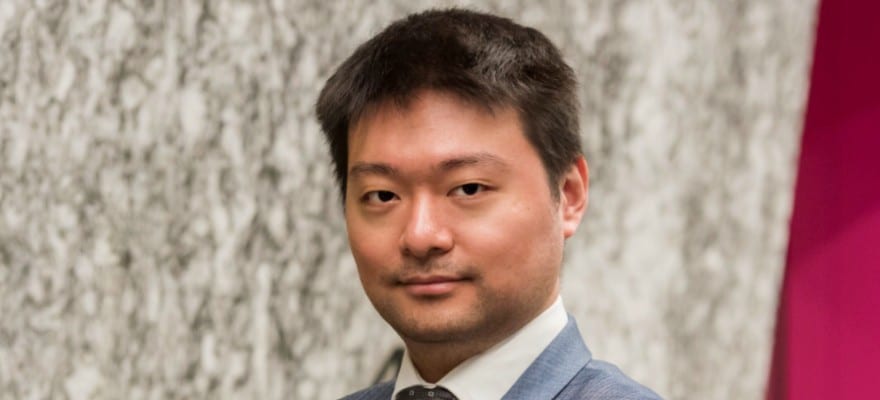
In the wake of his firm's recent acquisition, we spoke to Vatsa Narasimha about what the future holds for OANDA
Finance Magnates
In May of this year, OANDA, a US multi-asset broker, was acquired by CVC Capital Partners Asia Fund (CVC). The deal saw OANDA, one of the industry’s largest brokers come under new ownership with CVC taking a 98.5 percent stake in the firm.
Last month, a source close to the deal provided Finance Magnates with some of the details of the acquisition. CVC paid $160 million for their stake in the firm with the company valued at a total of $175 million. The private equity company also beat a number of competitors to take control of OANDA through a limited auction.
Despite the change in ownership, OANDA isn’t expecting any drastic changes. One man who is set to remain in his position is company CEO Vatsa Narasimha.
Since joining the firm as Chief Strategy Officer in 2013, Narasimha has been quick to move up the ranks at OANDA. Just over three years after joining he was promoted to lead the firm as CEO.
In the wake of OANDA’s acquisition by CVC, Finance Magnates spoke to Narasimha about what the firm’s new owners have in store, what role he played in the acquisition and what plans the broker has for the future.
A press release announcing the acquisition of OANDA described you as playing a “pivotal” role in the investment by CVC. Can you elaborate on what that role was?
OANDA was founded in 1996 and over the course of our 22-year history, the company has matured from a start-up to a leading global multi-asset brokerage. Over that time, we’ve been backed by several long-standing investors and venture capitalists. However, given the size and scale of our business today, it made sense for us to be owned by a private-equity firm that can help us implement a strategic growth plan. As such, I was asked to lead the process by the board of the OANDA Corporation for and on behalf of our current shareholders.
What led OANDA to go with CVC as opposed to other potential investors?
CVC Capital made perfect sense to our executive committee not only because they already have a deep-seated knowledge of the industry, but they also bought into our strategy for growth. As such, we felt they are were a great fit for OANDA.
What changes do the new owners plan on bringing to the table, if any?
There will be no immediate change to the organizational structure of OANDA, and we will continue to implement the same strategy as planned. The key difference lies in the fact that the acquisition will open up a wide range of opportunities in terms of enabling us to execute our vision for both organic and inorganic growth in the coming years. This is a very exciting stage in our history.
What thoughts do you have on the valuation process, how it was undertaken and how well it reflects OANDA’s performance over the past few years?
Given this is a private transaction, the terms of the deal are confidential, however, what I can tell you is the management team and employees are very excited about CVC Capital coming onboard as new owners of OANDA. They bring with them a wealth of experience in our industry sector and a proven track record in developing online businesses within their portfolio.
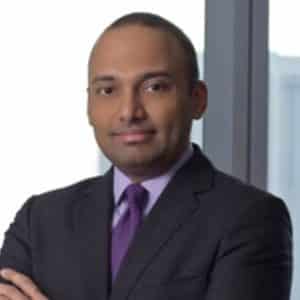
Vatsa Narasimha, CEO, OANDA
OANDA had already developed a new 5-year business strategy prior to CVC taking over, can you give any insights into what that strategy will entail?
Over the years, OANDA’s core strategy has largely focused on organic growth, and we’ve invested heavily in our institutional-grade scalable technology, charting tools, educational materials, and up-to-the-minute market commentary in order to achieve results. This has helped us differentiate ourselves from the competition and attract and retain clients, so we’ll continue to prioritize this, expanding our range of asset classes and introducing new pricing models in order to help our clients be more successful.
However, CVC’s recent acquisition of OANDA also opens up a host of new strategic opportunities, which will help us grow top-line revenue quickly. CVC currently manages $70 billion in assets, which will enable us to turn our attention to driving inorganic growth around the world. As such, we are open to acquiring other companies in order to help us build our business.
You launched OANDA Pro earlier this year, was the launch of that service driven by institutional client demands, a gap you saw in the market or a combination of both?
To elaborate, OANDA has never offered binary options, has always been conservative when it comes to margin requirements, introducing responsible leverage that lies at the lower end of the market, and we already offer a 50% margin close out. As such, we believe the changes discussed by ESMA are a positive move that will help ensure the long-term sustainability of the retail trading industry.
In May of this year, OANDA, a US multi-asset broker, was acquired by CVC Capital Partners Asia Fund (CVC). The deal saw OANDA, one of the industry’s largest brokers come under new ownership with CVC taking a 98.5 percent stake in the firm.
Last month, a source close to the deal provided Finance Magnates with some of the details of the acquisition. CVC paid $160 million for their stake in the firm with the company valued at a total of $175 million. The private equity company also beat a number of competitors to take control of OANDA through a limited auction.
Despite the change in ownership, OANDA isn’t expecting any drastic changes. One man who is set to remain in his position is company CEO Vatsa Narasimha.
Since joining the firm as Chief Strategy Officer in 2013, Narasimha has been quick to move up the ranks at OANDA. Just over three years after joining he was promoted to lead the firm as CEO.
In the wake of OANDA’s acquisition by CVC, Finance Magnates spoke to Narasimha about what the firm’s new owners have in store, what role he played in the acquisition and what plans the broker has for the future.
A press release announcing the acquisition of OANDA described you as playing a “pivotal” role in the investment by CVC. Can you elaborate on what that role was?
OANDA was founded in 1996 and over the course of our 22-year history, the company has matured from a start-up to a leading global multi-asset brokerage. Over that time, we’ve been backed by several long-standing investors and venture capitalists. However, given the size and scale of our business today, it made sense for us to be owned by a private-equity firm that can help us implement a strategic growth plan. As such, I was asked to lead the process by the board of the OANDA Corporation for and on behalf of our current shareholders.
What led OANDA to go with CVC as opposed to other potential investors?
CVC Capital made perfect sense to our executive committee not only because they already have a deep-seated knowledge of the industry, but they also bought into our strategy for growth. As such, we felt they are were a great fit for OANDA.
What changes do the new owners plan on bringing to the table, if any?
There will be no immediate change to the organizational structure of OANDA, and we will continue to implement the same strategy as planned. The key difference lies in the fact that the acquisition will open up a wide range of opportunities in terms of enabling us to execute our vision for both organic and inorganic growth in the coming years. This is a very exciting stage in our history.
What thoughts do you have on the valuation process, how it was undertaken and how well it reflects OANDA’s performance over the past few years?
Given this is a private transaction, the terms of the deal are confidential, however, what I can tell you is the management team and employees are very excited about CVC Capital coming onboard as new owners of OANDA. They bring with them a wealth of experience in our industry sector and a proven track record in developing online businesses within their portfolio.
Vatsa Narasimha, CEO, OANDA
OANDA had already developed a new 5-year business strategy prior to CVC taking over, can you give any insights into what that strategy will entail?
Over the years, OANDA’s core strategy has largely focused on organic growth, and we’ve invested heavily in our institutional-grade scalable technology, charting tools, educational materials, and up-to-the-minute market commentary in order to achieve results. This has helped us differentiate ourselves from the competition and attract and retain clients, so we’ll continue to prioritize this, expanding our range of asset classes and introducing new pricing models in order to help our clients be more successful.
However, CVC’s recent acquisition of OANDA also opens up a host of new strategic opportunities, which will help us grow top-line revenue quickly. CVC currently manages $70 billion in assets, which will enable us to turn our attention to driving inorganic growth around the world. As such, we are open to acquiring other companies in order to help us build our business.
You launched OANDA Pro earlier this year, was the launch of that service driven by institutional client demands, a gap you saw in the market or a combination of both?
To elaborate, OANDA has never offered binary options, has always been conservative when it comes to margin requirements, introducing responsible leverage that lies at the lower end of the market, and we already offer a 50% margin close out. As such, we believe the changes discussed by ESMA are a positive move that will help ensure the long-term sustainability of the retail trading industry.
iFOREX Adds Saudi and South Korean Equity CFDs as IPO Is Delayed
Featured Videos
Executive Interview | Charlotte Bullock | Chief Product Officer, Bank of London | FMLS:25
In this interview, we sat down with Charlotte Bullock, Head of Product at The Bank of London, previously at SAP and now shaping product at one of the sector’s most ambitious new banking players.
Charlotte reflects on the Summit so far and talks about the culture inside fintech banks today. We look at the pressures that come with scaling, and how firms can hold onto the nimble approach that made them stand out early on.
We also cover the state of payments ahead of her appearance on the payments roundtable: the blockages financial firms face, the areas that still need fixing, and what a realistic solution looks like in 2026.
In this interview, we sat down with Charlotte Bullock, Head of Product at The Bank of London, previously at SAP and now shaping product at one of the sector’s most ambitious new banking players.
Charlotte reflects on the Summit so far and talks about the culture inside fintech banks today. We look at the pressures that come with scaling, and how firms can hold onto the nimble approach that made them stand out early on.
We also cover the state of payments ahead of her appearance on the payments roundtable: the blockages financial firms face, the areas that still need fixing, and what a realistic solution looks like in 2026.
In this interview, we sat down with Charlotte Bullock, Head of Product at The Bank of London, previously at SAP and now shaping product at one of the sector’s most ambitious new banking players.
Charlotte reflects on the Summit so far and talks about the culture inside fintech banks today. We look at the pressures that come with scaling, and how firms can hold onto the nimble approach that made them stand out early on.
We also cover the state of payments ahead of her appearance on the payments roundtable: the blockages financial firms face, the areas that still need fixing, and what a realistic solution looks like in 2026.
In this interview, we sat down with Charlotte Bullock, Head of Product at The Bank of London, previously at SAP and now shaping product at one of the sector’s most ambitious new banking players.
Charlotte reflects on the Summit so far and talks about the culture inside fintech banks today. We look at the pressures that come with scaling, and how firms can hold onto the nimble approach that made them stand out early on.
We also cover the state of payments ahead of her appearance on the payments roundtable: the blockages financial firms face, the areas that still need fixing, and what a realistic solution looks like in 2026.
In this conversation, we sit down with Drew Niv, CSO at ATFX Connect and one of the most influential figures in modern FX.
We speak about market structure, the institutional view on liquidity, and the sharp rise of prop trading, a sector Drew has been commenting on in recent months. Drew explains why he once dismissed prop trading, why his view changed, and what he now thinks the model means for brokers, clients and risk managers.
We explore subscription-fee dependency, the high reneging rate, and the long-term challenge: how brokers can build a more stable and honest version of the model. Drew also talks about the traffic advantage standalone prop firms have built and why brokers may still win in the long run if they take the right approach.
In this conversation, we sit down with Drew Niv, CSO at ATFX Connect and one of the most influential figures in modern FX.
We speak about market structure, the institutional view on liquidity, and the sharp rise of prop trading, a sector Drew has been commenting on in recent months. Drew explains why he once dismissed prop trading, why his view changed, and what he now thinks the model means for brokers, clients and risk managers.
We explore subscription-fee dependency, the high reneging rate, and the long-term challenge: how brokers can build a more stable and honest version of the model. Drew also talks about the traffic advantage standalone prop firms have built and why brokers may still win in the long run if they take the right approach.
In this conversation, we sit down with Drew Niv, CSO at ATFX Connect and one of the most influential figures in modern FX.
We speak about market structure, the institutional view on liquidity, and the sharp rise of prop trading, a sector Drew has been commenting on in recent months. Drew explains why he once dismissed prop trading, why his view changed, and what he now thinks the model means for brokers, clients and risk managers.
We explore subscription-fee dependency, the high reneging rate, and the long-term challenge: how brokers can build a more stable and honest version of the model. Drew also talks about the traffic advantage standalone prop firms have built and why brokers may still win in the long run if they take the right approach.
In this conversation, we sit down with Drew Niv, CSO at ATFX Connect and one of the most influential figures in modern FX.
We speak about market structure, the institutional view on liquidity, and the sharp rise of prop trading, a sector Drew has been commenting on in recent months. Drew explains why he once dismissed prop trading, why his view changed, and what he now thinks the model means for brokers, clients and risk managers.
We explore subscription-fee dependency, the high reneging rate, and the long-term challenge: how brokers can build a more stable and honest version of the model. Drew also talks about the traffic advantage standalone prop firms have built and why brokers may still win in the long run if they take the right approach.
In this conversation, we sit down with Drew Niv, CSO at ATFX Connect and one of the most influential figures in modern FX.
We speak about market structure, the institutional view on liquidity, and the sharp rise of prop trading, a sector Drew has been commenting on in recent months. Drew explains why he once dismissed prop trading, why his view changed, and what he now thinks the model means for brokers, clients and risk managers.
We explore subscription-fee dependency, the high reneging rate, and the long-term challenge: how brokers can build a more stable and honest version of the model. Drew also talks about the traffic advantage standalone prop firms have built and why brokers may still win in the long run if they take the right approach.
In this conversation, we sit down with Drew Niv, CSO at ATFX Connect and one of the most influential figures in modern FX.
We speak about market structure, the institutional view on liquidity, and the sharp rise of prop trading, a sector Drew has been commenting on in recent months. Drew explains why he once dismissed prop trading, why his view changed, and what he now thinks the model means for brokers, clients and risk managers.
We explore subscription-fee dependency, the high reneging rate, and the long-term challenge: how brokers can build a more stable and honest version of the model. Drew also talks about the traffic advantage standalone prop firms have built and why brokers may still win in the long run if they take the right approach.
Executive Interview | Remonda Z. Kirketerp Møller| CEO & Founder Muinmos | FMLS:25
In this interview, Remonda Z. Kirketerp Møller, founder of Muinmos, breaks down the state of AI in regtech and what responsible adoption really looks like for brokers. We talk about rising fragmentation, the pressures around compliance accuracy, and why most firms are still in the early stages of AI maturity.
Ramanda also shares insights on regulator sandboxes, shifting expectations around accountability, and the current reality of MiCA licensing and passporting in Europe.
A concise look at where compliance, onboarding, and AI-driven processes are heading next.
In this interview, Remonda Z. Kirketerp Møller, founder of Muinmos, breaks down the state of AI in regtech and what responsible adoption really looks like for brokers. We talk about rising fragmentation, the pressures around compliance accuracy, and why most firms are still in the early stages of AI maturity.
Ramanda also shares insights on regulator sandboxes, shifting expectations around accountability, and the current reality of MiCA licensing and passporting in Europe.
A concise look at where compliance, onboarding, and AI-driven processes are heading next.
In this interview, Remonda Z. Kirketerp Møller, founder of Muinmos, breaks down the state of AI in regtech and what responsible adoption really looks like for brokers. We talk about rising fragmentation, the pressures around compliance accuracy, and why most firms are still in the early stages of AI maturity.
Ramanda also shares insights on regulator sandboxes, shifting expectations around accountability, and the current reality of MiCA licensing and passporting in Europe.
A concise look at where compliance, onboarding, and AI-driven processes are heading next.
In this interview, Remonda Z. Kirketerp Møller, founder of Muinmos, breaks down the state of AI in regtech and what responsible adoption really looks like for brokers. We talk about rising fragmentation, the pressures around compliance accuracy, and why most firms are still in the early stages of AI maturity.
Ramanda also shares insights on regulator sandboxes, shifting expectations around accountability, and the current reality of MiCA licensing and passporting in Europe.
A concise look at where compliance, onboarding, and AI-driven processes are heading next.
In this interview, Remonda Z. Kirketerp Møller, founder of Muinmos, breaks down the state of AI in regtech and what responsible adoption really looks like for brokers. We talk about rising fragmentation, the pressures around compliance accuracy, and why most firms are still in the early stages of AI maturity.
Ramanda also shares insights on regulator sandboxes, shifting expectations around accountability, and the current reality of MiCA licensing and passporting in Europe.
A concise look at where compliance, onboarding, and AI-driven processes are heading next.
In this interview, Remonda Z. Kirketerp Møller, founder of Muinmos, breaks down the state of AI in regtech and what responsible adoption really looks like for brokers. We talk about rising fragmentation, the pressures around compliance accuracy, and why most firms are still in the early stages of AI maturity.
Ramanda also shares insights on regulator sandboxes, shifting expectations around accountability, and the current reality of MiCA licensing and passporting in Europe.
A concise look at where compliance, onboarding, and AI-driven processes are heading next.
In this conversation, we speak with Aydin Bonabi, CEO and co-founder of Surveill, a firm focused on fraud detection and AI-driven compliance tools for financial institutions.
We start with Aydin’s view of the Summit and the challenges brokers face as fraud tactics grow more complex. He explains how firms can stay ahead through real-time signals, data patterns, and early-stage detection.
We also talk about AI training and why compliance teams often struggle to keep models accurate, fair, and aligned with regulatory expectations. Aydin breaks down what “good” AI training looks like inside a financial environment, including the importance of clean data, domain expertise, and human oversight.
He closes with a clear message: fraud is scaling, and so must the tools that stop it.
In this conversation, we speak with Aydin Bonabi, CEO and co-founder of Surveill, a firm focused on fraud detection and AI-driven compliance tools for financial institutions.
We start with Aydin’s view of the Summit and the challenges brokers face as fraud tactics grow more complex. He explains how firms can stay ahead through real-time signals, data patterns, and early-stage detection.
We also talk about AI training and why compliance teams often struggle to keep models accurate, fair, and aligned with regulatory expectations. Aydin breaks down what “good” AI training looks like inside a financial environment, including the importance of clean data, domain expertise, and human oversight.
He closes with a clear message: fraud is scaling, and so must the tools that stop it.
In this conversation, we speak with Aydin Bonabi, CEO and co-founder of Surveill, a firm focused on fraud detection and AI-driven compliance tools for financial institutions.
We start with Aydin’s view of the Summit and the challenges brokers face as fraud tactics grow more complex. He explains how firms can stay ahead through real-time signals, data patterns, and early-stage detection.
We also talk about AI training and why compliance teams often struggle to keep models accurate, fair, and aligned with regulatory expectations. Aydin breaks down what “good” AI training looks like inside a financial environment, including the importance of clean data, domain expertise, and human oversight.
He closes with a clear message: fraud is scaling, and so must the tools that stop it.
In this conversation, we speak with Aydin Bonabi, CEO and co-founder of Surveill, a firm focused on fraud detection and AI-driven compliance tools for financial institutions.
We start with Aydin’s view of the Summit and the challenges brokers face as fraud tactics grow more complex. He explains how firms can stay ahead through real-time signals, data patterns, and early-stage detection.
We also talk about AI training and why compliance teams often struggle to keep models accurate, fair, and aligned with regulatory expectations. Aydin breaks down what “good” AI training looks like inside a financial environment, including the importance of clean data, domain expertise, and human oversight.
He closes with a clear message: fraud is scaling, and so must the tools that stop it.
In this conversation, we speak with Aydin Bonabi, CEO and co-founder of Surveill, a firm focused on fraud detection and AI-driven compliance tools for financial institutions.
We start with Aydin’s view of the Summit and the challenges brokers face as fraud tactics grow more complex. He explains how firms can stay ahead through real-time signals, data patterns, and early-stage detection.
We also talk about AI training and why compliance teams often struggle to keep models accurate, fair, and aligned with regulatory expectations. Aydin breaks down what “good” AI training looks like inside a financial environment, including the importance of clean data, domain expertise, and human oversight.
He closes with a clear message: fraud is scaling, and so must the tools that stop it.
In this conversation, we speak with Aydin Bonabi, CEO and co-founder of Surveill, a firm focused on fraud detection and AI-driven compliance tools for financial institutions.
We start with Aydin’s view of the Summit and the challenges brokers face as fraud tactics grow more complex. He explains how firms can stay ahead through real-time signals, data patterns, and early-stage detection.
We also talk about AI training and why compliance teams often struggle to keep models accurate, fair, and aligned with regulatory expectations. Aydin breaks down what “good” AI training looks like inside a financial environment, including the importance of clean data, domain expertise, and human oversight.
He closes with a clear message: fraud is scaling, and so must the tools that stop it.
Exness expands its presence in Africa: Inside our interview with Paul Margarites in Cape Town
Finance Magnates met with Paul Margarites, Exness regional commercial director for Sub-Saharan Africa, during a visit to the firm’s office opening in Cape Town. In this talk, led by Andrea Badiola Mateos, Co-CEO at Finance Magnates, Paul shares views on the South African trading space, local user behavior, mobile trends, regulation, team growth, and how Exness plans to grow in more markets across the region. @Exness
Read the article at: https://www.financemagnates.com/thought-leadership/exness-expands-its-presence-in-africa-inside-our-interview-with-paul-margarites/
#exness #financemagnates #exnesstrading #CFDtrading #tradeonline #africanews #capetown
Finance Magnates met with Paul Margarites, Exness regional commercial director for Sub-Saharan Africa, during a visit to the firm’s office opening in Cape Town. In this talk, led by Andrea Badiola Mateos, Co-CEO at Finance Magnates, Paul shares views on the South African trading space, local user behavior, mobile trends, regulation, team growth, and how Exness plans to grow in more markets across the region. @Exness
Read the article at: https://www.financemagnates.com/thought-leadership/exness-expands-its-presence-in-africa-inside-our-interview-with-paul-margarites/
#exness #financemagnates #exnesstrading #CFDtrading #tradeonline #africanews #capetown
Finance Magnates met with Paul Margarites, Exness regional commercial director for Sub-Saharan Africa, during a visit to the firm’s office opening in Cape Town. In this talk, led by Andrea Badiola Mateos, Co-CEO at Finance Magnates, Paul shares views on the South African trading space, local user behavior, mobile trends, regulation, team growth, and how Exness plans to grow in more markets across the region. @Exness
Read the article at: https://www.financemagnates.com/thought-leadership/exness-expands-its-presence-in-africa-inside-our-interview-with-paul-margarites/
#exness #financemagnates #exnesstrading #CFDtrading #tradeonline #africanews #capetown
Finance Magnates met with Paul Margarites, Exness regional commercial director for Sub-Saharan Africa, during a visit to the firm’s office opening in Cape Town. In this talk, led by Andrea Badiola Mateos, Co-CEO at Finance Magnates, Paul shares views on the South African trading space, local user behavior, mobile trends, regulation, team growth, and how Exness plans to grow in more markets across the region. @Exness
Read the article at: https://www.financemagnates.com/thought-leadership/exness-expands-its-presence-in-africa-inside-our-interview-with-paul-margarites/
#exness #financemagnates #exnesstrading #CFDtrading #tradeonline #africanews #capetown
Finance Magnates met with Paul Margarites, Exness regional commercial director for Sub-Saharan Africa, during a visit to the firm’s office opening in Cape Town. In this talk, led by Andrea Badiola Mateos, Co-CEO at Finance Magnates, Paul shares views on the South African trading space, local user behavior, mobile trends, regulation, team growth, and how Exness plans to grow in more markets across the region. @Exness
Read the article at: https://www.financemagnates.com/thought-leadership/exness-expands-its-presence-in-africa-inside-our-interview-with-paul-margarites/
#exness #financemagnates #exnesstrading #CFDtrading #tradeonline #africanews #capetown
Finance Magnates met with Paul Margarites, Exness regional commercial director for Sub-Saharan Africa, during a visit to the firm’s office opening in Cape Town. In this talk, led by Andrea Badiola Mateos, Co-CEO at Finance Magnates, Paul shares views on the South African trading space, local user behavior, mobile trends, regulation, team growth, and how Exness plans to grow in more markets across the region. @Exness
Read the article at: https://www.financemagnates.com/thought-leadership/exness-expands-its-presence-in-africa-inside-our-interview-with-paul-margarites/
#exness #financemagnates #exnesstrading #CFDtrading #tradeonline #africanews #capetown