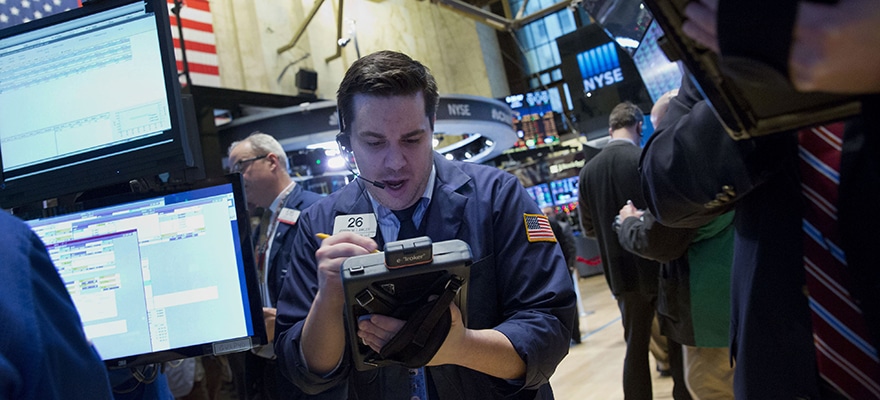
Matthew Clark of Global Forex Pros explains how traders can use the weekly COT report from the CFTC to help them analyze the markets.
The Commitment of Traders (COT) report is available every Friday from the Commodity Futures Trading Commission and provides us on a weekly basis a snapshot of the positions held by large institutional traders and speculators. But how can we use it as a sentiment indicator and gain advantage in the market?
First we need to understand who the players in this market are and how they position themselves within it. The data is broken down into three basic types of traders:
1. Commercial Hedgers: these include some of the largest and most influential players in the markets, including farming companies, mining companies and large industrials hedging FX risk. The main purpose of a commercial trader is to minimize the risk of raw material price fluctuations or to lock in FX exposure. Commercial traders are not speculators, they take positions depending on each individual companies risk exposure and hedging strategy to protect company interests against potentially damaging currency fluctuations.
2. Non-Commercial: these players are also very influential in the futures market and are mainly involved in speculation. These include hedge funds or CTA trading pools. These non-commercial players make their money and living from trading and their positions are of most interest to us in gaining information, not only on the strength of a trend but also giving us a good indication of possible reversals.
3. Small Speculators: these include all trades with positions below the reportable levels set by the Exchange .
Source: Bloomberg Charts.
Above is an example from the Bloomberg terminal of open positions of non-commercial and commercial speculators in the euro. Note that this information is downloadable for free every Friday from the CFTC website at www.cftc.gov. As you can see the speculators have the opposite position to the commercial and bearing in mind that the euro is currently trading near 12-year lows you might assume that that the commercial traders are wrong. This is not the case, as they actively buy when the market goes down and sell as the market goes up as part of the underlying hedging policy for their business.
The commercial positioning is therefore less relevant to us, the non-commercial data on the other hand is very useful as it captures the position of traders and their sentiment in each market.
There are three ways to use the data:
1. Changes in market positioning (or flipping of positions from long to short or vice versa).
2. Extreme positioning in one direction has historically been good at identifying important market reversals.
3. Increases in open interest can be used to show increased strength in a trend.
It is important to remember that all of the currencies listed in the Commitment of Traders' report are traded against the US dollar, so when it shows a net position, for example of 21,500 short contracts in the in the USD/JPY it refers to the JPY. The USD is always the base currency in the futures market, so instead of USD/JPY in the futures market it is actually quoted as JPY/USD. Therefore, a net open short position in the futures market in yen shows a bullish sentiment in the market for USD/JPY.
Source: Bloomberg Charts
In the chart above of the British pound futures of net non-commercial interest positons, we can see that when net futures positions flip from net short to net long above the 0 zero line (the blue graph) the price action of the GBP/USD (the yellow line) tends to see a rise over the coming months and vice versa. Although we can’t use this to simply enter and exit trades when it flips, we can use it in conjunction with other strategies and techniques to capture a large part of the move.
As mentioned above, historically, extreme positioning in the futures market by non-commercial traders has coincided with important market reversals. This interesting fact is especially important when we look at the chart below of the current euro futures as we are at record short positions.
Source: Bloomberg Charts
We can see that when the blue graph of British futures reached extreme levels the price action also reversed direction. Taking into account that we have never had such an extreme reading in this euro, we at Global Forex Pros are expecting some retracement at least in the near future.
Why does this happen? The reason why these extreme net open positions work as a good indicator of a turning point is that there are so many speculators weighted in one direction that there is no one left to buy or sell, as a result, this exhaustion ensures that prices begin to reverse.
Changes in open interest is also a useful trading tool in understanding the price behaviour of a particular market and how to capitalise on longer term trends, as they can be used the gauge the overall strength or weakness of the trend.
If, for example, a market has been in a long-lasting uptrend or downtrend with increasing levels of open interest, a levelling off or decrease should raise awareness that the trend may be nearing an end. The strength of the trend obviously increases as the open interest increases and new money enters the market. When the open interest declines it shows that people are closing positions and money is leaving the market. A divergence where the price action trend continues but is accompanied by a declining open interest usually heralds that a trend is nearing an end. A perfect example can be seen in the euro chart above, looking at the lows set by the net open positions in June 2012, we can see they reduced whilst the price action continued down to new lows before reversing.
It is impossible for the average trader to see the actual size and direction of flows in the spot market (even as a bank trader you only see a small slice) with billions traded through the FX spot market every day. By using the COT report and the three methods we have shown you, it can be used as a useful tool to predict trend continuation and reversals and we make use of every advantage we can.
The Commitment of Traders (COT) report is available every Friday from the Commodity Futures Trading Commission and provides us on a weekly basis a snapshot of the positions held by large institutional traders and speculators. But how can we use it as a sentiment indicator and gain advantage in the market?
First we need to understand who the players in this market are and how they position themselves within it. The data is broken down into three basic types of traders:
1. Commercial Hedgers: these include some of the largest and most influential players in the markets, including farming companies, mining companies and large industrials hedging FX risk. The main purpose of a commercial trader is to minimize the risk of raw material price fluctuations or to lock in FX exposure. Commercial traders are not speculators, they take positions depending on each individual companies risk exposure and hedging strategy to protect company interests against potentially damaging currency fluctuations.
2. Non-Commercial: these players are also very influential in the futures market and are mainly involved in speculation. These include hedge funds or CTA trading pools. These non-commercial players make their money and living from trading and their positions are of most interest to us in gaining information, not only on the strength of a trend but also giving us a good indication of possible reversals.
3. Small Speculators: these include all trades with positions below the reportable levels set by the Exchange .
Source: Bloomberg Charts.
Above is an example from the Bloomberg terminal of open positions of non-commercial and commercial speculators in the euro. Note that this information is downloadable for free every Friday from the CFTC website at www.cftc.gov. As you can see the speculators have the opposite position to the commercial and bearing in mind that the euro is currently trading near 12-year lows you might assume that that the commercial traders are wrong. This is not the case, as they actively buy when the market goes down and sell as the market goes up as part of the underlying hedging policy for their business.
The commercial positioning is therefore less relevant to us, the non-commercial data on the other hand is very useful as it captures the position of traders and their sentiment in each market.
There are three ways to use the data:
1. Changes in market positioning (or flipping of positions from long to short or vice versa).
2. Extreme positioning in one direction has historically been good at identifying important market reversals.
3. Increases in open interest can be used to show increased strength in a trend.
It is important to remember that all of the currencies listed in the Commitment of Traders' report are traded against the US dollar, so when it shows a net position, for example of 21,500 short contracts in the in the USD/JPY it refers to the JPY. The USD is always the base currency in the futures market, so instead of USD/JPY in the futures market it is actually quoted as JPY/USD. Therefore, a net open short position in the futures market in yen shows a bullish sentiment in the market for USD/JPY.
Source: Bloomberg Charts
In the chart above of the British pound futures of net non-commercial interest positons, we can see that when net futures positions flip from net short to net long above the 0 zero line (the blue graph) the price action of the GBP/USD (the yellow line) tends to see a rise over the coming months and vice versa. Although we can’t use this to simply enter and exit trades when it flips, we can use it in conjunction with other strategies and techniques to capture a large part of the move.
As mentioned above, historically, extreme positioning in the futures market by non-commercial traders has coincided with important market reversals. This interesting fact is especially important when we look at the chart below of the current euro futures as we are at record short positions.
Source: Bloomberg Charts
We can see that when the blue graph of British futures reached extreme levels the price action also reversed direction. Taking into account that we have never had such an extreme reading in this euro, we at Global Forex Pros are expecting some retracement at least in the near future.
Why does this happen? The reason why these extreme net open positions work as a good indicator of a turning point is that there are so many speculators weighted in one direction that there is no one left to buy or sell, as a result, this exhaustion ensures that prices begin to reverse.
Changes in open interest is also a useful trading tool in understanding the price behaviour of a particular market and how to capitalise on longer term trends, as they can be used the gauge the overall strength or weakness of the trend.
If, for example, a market has been in a long-lasting uptrend or downtrend with increasing levels of open interest, a levelling off or decrease should raise awareness that the trend may be nearing an end. The strength of the trend obviously increases as the open interest increases and new money enters the market. When the open interest declines it shows that people are closing positions and money is leaving the market. A divergence where the price action trend continues but is accompanied by a declining open interest usually heralds that a trend is nearing an end. A perfect example can be seen in the euro chart above, looking at the lows set by the net open positions in June 2012, we can see they reduced whilst the price action continued down to new lows before reversing.
It is impossible for the average trader to see the actual size and direction of flows in the spot market (even as a bank trader you only see a small slice) with billions traded through the FX spot market every day. By using the COT report and the three methods we have shown you, it can be used as a useful tool to predict trend continuation and reversals and we make use of every advantage we can.
This article is written by Matthew Clark who is the owner of
Global Forex Pros.
ABOUT THE AUTHOR: Matthew has been a trader for more than 20 years running FX desks at major banks and retail brokers. He recently started Global Forex Pros as a service for brokers to offer their clients, teaching them to trade in real time as professional traders learn at banks and institutions, giving the retail trader the confidence to trade and increasing volumes for the broker. Matthew has been a trader for more than 20 years running FX desks at major banks and retail brokers. He recently started Global Forex Pros as a service for brokers to offer their clients, teaching them to trade in real-time as professional traders learn at banks and institutions, giving the retail trader the confidence to trade and increasing volumes for the broker.
Italy’s Consob Tightens Net on AI-Fueled Scams With Fresh Website Bans
FP Markets Winner Spotlight 🏆 | Global Broker of the Year 2025 #Trading #Broker #Innovation #Shorts
FP Markets Winner Spotlight 🏆 | Global Broker of the Year 2025 #Trading #Broker #Innovation #Shorts
FP Markets takes the spotlight as Global Broker of the Year 2025 at the Finance Magnates Awards.
Martin Stoilov, Head of Client Experience, shares that trust, innovation, and people played a key role in the company’s success, supported by a strong foundation of integrity and client-centricity.
Following this milestone, FP Markets continues to focus on growth, technology investment, and its core values of transparency and excellence.
👉 Be part of FM Awards 2026: https://awards.financemagnates.com/#nominate
FP Markets takes the spotlight as Global Broker of the Year 2025 at the Finance Magnates Awards.
Martin Stoilov, Head of Client Experience, shares that trust, innovation, and people played a key role in the company’s success, supported by a strong foundation of integrity and client-centricity.
Following this milestone, FP Markets continues to focus on growth, technology investment, and its core values of transparency and excellence.
👉 Be part of FM Awards 2026: https://awards.financemagnates.com/#nominate
In this video, we review @HolaPrimeMarketsOfficial, a multi-asset forex and CFDs broker offering different account types, trading platforms, and flexible trading conditions.
We cover the broker’s overall offering, including account options, trading environment, platforms like MT4 and MT5, and additional services such as managed accounts and fast withdrawals.
Watch the full video to see if Hola Prime Markets fits your trading needs.
📣 Stay up to date with the latest in finance and trading. Follow Finance Magnates for industry news, insights, and global event coverage.
Connect with us:
🔗 LinkedIn: /financemagnates
👍 Facebook: /financemagnates
📸 Instagram: https://www.instagram.com/financemagnates
🐦 X: https://x.com/financemagnates
🎥 TikTok: https://www.tiktok.com/tag/financemagnates
▶️ YouTube: /@financemagnates_official
#HolaPrime #ForexBroker #CFDTrading #FinanceMagnates #Trading #Forex #BrokerReview
In this video, we review @HolaPrimeMarketsOfficial, a multi-asset forex and CFDs broker offering different account types, trading platforms, and flexible trading conditions.
We cover the broker’s overall offering, including account options, trading environment, platforms like MT4 and MT5, and additional services such as managed accounts and fast withdrawals.
Watch the full video to see if Hola Prime Markets fits your trading needs.
📣 Stay up to date with the latest in finance and trading. Follow Finance Magnates for industry news, insights, and global event coverage.
Connect with us:
🔗 LinkedIn: /financemagnates
👍 Facebook: /financemagnates
📸 Instagram: https://www.instagram.com/financemagnates
🐦 X: https://x.com/financemagnates
🎥 TikTok: https://www.tiktok.com/tag/financemagnates
▶️ YouTube: /@financemagnates_official
#HolaPrime #ForexBroker #CFDTrading #FinanceMagnates #Trading #Forex #BrokerReview
Hola Prime Review: What You Need to Know | Full Breakdown by Finance Magnates
Hola Prime Review: What You Need to Know | Full Breakdown by Finance Magnates
In this video, we review @HolaPrime_Global, a proprietary trading firm offering evaluation programs and performance-based payouts in simulated market environments.
We cover how the challenge model works, including account types, profit splits (up to 95%), trading rules, and what it takes to reach a funded account. You’ll also learn about available platforms like MT4, MT5, cTrader, and more, along with insights into payouts, support, and trading conditions.
Watch the full video to see if Hola Prime fits your trading style.
📣 Stay up to date with the latest in finance and trading. Follow Finance Magnates for industry news, insights, and global event coverage.
Connect with us:
🔗 LinkedIn: /financemagnates
👍 Facebook: /financemagnates
📸 Instagram: https://www.instagram.com/financemagnates
🐦 X: https://x.com/financemagnates
🎥 TikTok: https://www.tiktok.com/tag/financemagnates
▶️ YouTube: /@financemagnates_official
#HolaPrime #PropFirm #Trading #FinanceMagnates #Forex #FuturesTrading #TradingReview #PropFirmReview
In this video, we review @HolaPrime_Global, a proprietary trading firm offering evaluation programs and performance-based payouts in simulated market environments.
We cover how the challenge model works, including account types, profit splits (up to 95%), trading rules, and what it takes to reach a funded account. You’ll also learn about available platforms like MT4, MT5, cTrader, and more, along with insights into payouts, support, and trading conditions.
Watch the full video to see if Hola Prime fits your trading style.
📣 Stay up to date with the latest in finance and trading. Follow Finance Magnates for industry news, insights, and global event coverage.
Connect with us:
🔗 LinkedIn: /financemagnates
👍 Facebook: /financemagnates
📸 Instagram: https://www.instagram.com/financemagnates
🐦 X: https://x.com/financemagnates
🎥 TikTok: https://www.tiktok.com/tag/financemagnates
▶️ YouTube: /@financemagnates_official
#HolaPrime #PropFirm #Trading #FinanceMagnates #Forex #FuturesTrading #TradingReview #PropFirmReview
Axi Winner Spotlight 🏆 | Global Most Innovative Broker 2025 #Innovation #Trading #Fintech #Broker
Axi Winner Spotlight 🏆 | Global Most Innovative Broker 2025 #Innovation #Trading #Fintech #Broker
Axi takes the spotlight at the Finance Magnates Awards, winning Global Most Innovative Broker 2025.
Olivia Xenofontos and Ivanna Openko share how the team will feel: proud, motivated, and ready to keep delivering.
They also describe the night as well-organized, focused, and enjoyable for all.
👉 Be part of FM Awards 2026.
Axi takes the spotlight at the Finance Magnates Awards, winning Global Most Innovative Broker 2025.
Olivia Xenofontos and Ivanna Openko share how the team will feel: proud, motivated, and ready to keep delivering.
They also describe the night as well-organized, focused, and enjoyable for all.
👉 Be part of FM Awards 2026.
Recognition that matters.
Built on transparency.
Driven by the industry.
The Finance Magnates Awards 2026.
Nominations are now open.
🔗 https://awards.financemagnates.com/?utm_source=SM&utm_medium=social&utm_campaign=recognition-matters
Recognition that matters.
Built on transparency.
Driven by the industry.
The Finance Magnates Awards 2026.
Nominations are now open.
🔗 https://awards.financemagnates.com/?utm_source=SM&utm_medium=social&utm_campaign=recognition-matters