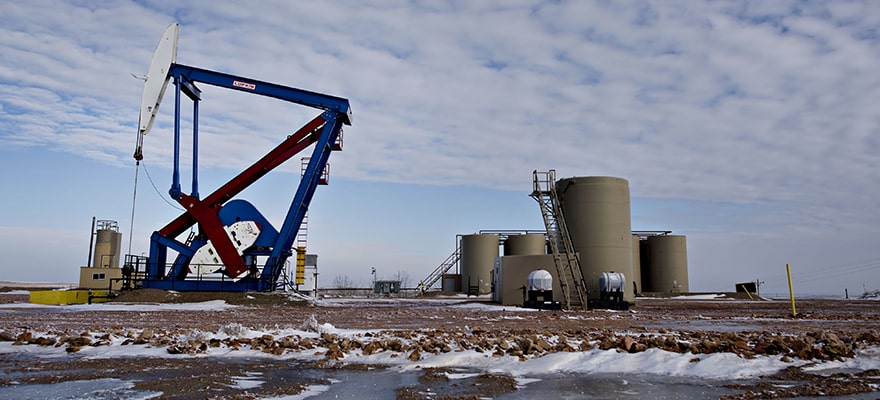
Hope remains that oil will still be able to rebound as lockdown measures ease.
Photographer: Daniel Acker/Bloomberg
With the WTI June futures contract settlement date just around the corner, market participants are watching oil prices closely. However, hope remains that oil prices won’t go negative again this month, and moreover, that oil will still be able to rebound as lockdown measures ease.
Earlier this week the Chief Executive of BP, one of the biggest oil companies in the world, said that even after lockdown measures ease, it is likely that the commodity will be less in demand, as COVID-19 might bring about a lasting change in people’s lifestyle. So, have we already reached peak oil demand?
Zero chance of oil reaching pre-COVID levels
Before the COVID-19 pandemic, oil demand was at 100-mb/d, however, whilst the consensus is that demand will recover from pandemic lows, the likelihood that we will reach 100-mb/d oil demand after lockdown measures ease this year is a completely different matter.
Jeffrey Halley, Senior Market Analyst, Asia Pacific, OANDA
“This, I fear will be the new normal for the world. However, there is zero chance of demand rebounding to pre-COVID-19 levels. Anyone who is suggesting this, or a V-shaped recovery, should not be offering advice in the financial industry.”
Charalambos Pissouros, Senior Market Analyst at JFD Group
Charalambos Pissouros, the Senior Market Analyst at JFD Group, also believes that we are unlikely to see a V-shaped recovery in oil demand, despite governments around the world easing their restrictive measures.
“Even Fed Chair Powell warned yesterday over an “extended period” of weak growth and stagnant income which means that the recovery in energy demand may be a slow one,” he explained. “What adds more credence to my view is that, in its monthly report yesterday, OPEC cut further its forecasts for global oil demand during 2020. Specifically, the cartel expects the total world demand for the year to be 90.59 bpd, down 9.10% from 2019.”
Renewable energy might be the new light bulb
Stephen Innes, Chief Global Market Strategist at AxiCorp told Finance Magnates that the drop in smog around the world might prompt a more rapid shift to green energy, therefore, reducing demand for oil in the long-term.
Stephen Innes, Chief Global Market Strategist at AxiCorp Source: LinkedIn
“In the not too distant future, I suspect electric cars will do the oil industry what Edison's lightbulb did to the candle factory,” Innes said.
He also pointed out that oil demand depends on how quick planes start flying again, and more importantly, how confident people are to fly again. Nonetheless, there may be some hope for oil - as consumers might choose to drive their own vehicles instead of taking public transport, in order to keep socially distanced for longer.
“Apple Maps driving behaviour shows US driving is nearly back to pre-Covid-19 levels and shows a positive divergence over public transport use globally. Together with the surge in China's first-time car buyer sales, this indicates a definitive trend emerging as consumers prefer the segregated mobility of an automobile to maintain social distance,” Innes added.
Demand should start to increase in a month
Although demand might not reach the same levels before the coronavirus pandemic, nonetheless, it will increase at least from the low levels reached during the height of lockdown measures.
“We should see the initial signs of rising demand coming through this month as the US and Europe attempt to return to a semblance of normal life, with Asian countries such as China and South Korea already further down that path,” Halley outlined.
“There is however a huge amount stock of oil already above ground that needs to be run down, and we will still be a long way from balancing the global supply/demand equation. There is also a question. in my opinion, of how much of the potential recovery is already built into oil prices. I believe there is quite a lot!”
Will OPEC keep production cuts in place?
One thing that is likely to influence oil prices, besides COVID-19, is OPEC and whether it keeps production cuts in place even after the lockdown measures ease and demand for oil starts to rise. So can we count on the organisation to keep production of oil low for longer?
“OPEC+ has been dealt a cold hard dose of reality after persuing a strategy based on hope, rather than reason this year. The hike in VAT from 5% to 15% by Saudi Arabia yesterday [Wednesday] highlights the pressures on oil producers finances at the moment. Saudi Arabia, the UAE and Kuwait, have unilaterally reduced production even further above their mandated quotas this week,” Halley pointed out.
Innes of AxiCorp believes that once US oil returns to a state of normalcy, we can expect production to be ramped up again, as he thinks the US might be a factor in the unexpected deepening of production cuts in Saudi, Kuwait, and UAE.
Oil prices are vulnerable
As Finance Magnates reported, oil prices are likely to be in for a bumpy ride over the next week, with the settlement of WTI June contracts set for the 19th of May, 2020. When oil prices went negative in April, it was the day before and on the May futures contract settlement day.
“I believe that oil prices are vulnerable now, more so than the past two weeks, to negative headlines, and thus, expect oil to correct lower. Those corrections could possibly be in the 10 to 20% range. As far as the June WTI expiry is concerned, I am expecting little in the way of fireworks,” Halley stated.
“The US OIL ETF has been told to finally manage its risk properly and has rolled its positioning to multiple expiries along the futures curve. Other market participants, having been traumatised last month, will not want to run the same risk of heart palpitations again. I fully expect that almost all speculative positioning has now been rolled out of the June contract leaving only natural producer/consumer interest left for the expiry.”
Pissouros of JFD Group also said that oil prices largely depend on whether the spreading of the coronavirus continues to slow, which will allow governments to ease their restrictions. If this occurs, increasing demand combined with the potential extension in OPEC+ cuts may allow oil prices to continue their latest recovery.
“The risk to that view is lifting the restrictions too quickly and too soon,” he continued. “This will put the economic recovery at risk, as the chances of another wave of exponential spreading of the virus will increase dramatically. Such a scenario could take us back to square one, meaning back to total lockdowns and thereby, lower oil demand and consequently, prices.”
With the WTI June futures contract settlement date just around the corner, market participants are watching oil prices closely. However, hope remains that oil prices won’t go negative again this month, and moreover, that oil will still be able to rebound as lockdown measures ease.
Earlier this week the Chief Executive of BP, one of the biggest oil companies in the world, said that even after lockdown measures ease, it is likely that the commodity will be less in demand, as COVID-19 might bring about a lasting change in people’s lifestyle. So, have we already reached peak oil demand?
Zero chance of oil reaching pre-COVID levels
Before the COVID-19 pandemic, oil demand was at 100-mb/d, however, whilst the consensus is that demand will recover from pandemic lows, the likelihood that we will reach 100-mb/d oil demand after lockdown measures ease this year is a completely different matter.
Jeffrey Halley, Senior Market Analyst, Asia Pacific, OANDA
“This, I fear will be the new normal for the world. However, there is zero chance of demand rebounding to pre-COVID-19 levels. Anyone who is suggesting this, or a V-shaped recovery, should not be offering advice in the financial industry.”
Charalambos Pissouros, Senior Market Analyst at JFD Group
Charalambos Pissouros, the Senior Market Analyst at JFD Group, also believes that we are unlikely to see a V-shaped recovery in oil demand, despite governments around the world easing their restrictive measures.
“Even Fed Chair Powell warned yesterday over an “extended period” of weak growth and stagnant income which means that the recovery in energy demand may be a slow one,” he explained. “What adds more credence to my view is that, in its monthly report yesterday, OPEC cut further its forecasts for global oil demand during 2020. Specifically, the cartel expects the total world demand for the year to be 90.59 bpd, down 9.10% from 2019.”
Renewable energy might be the new light bulb
Stephen Innes, Chief Global Market Strategist at AxiCorp told Finance Magnates that the drop in smog around the world might prompt a more rapid shift to green energy, therefore, reducing demand for oil in the long-term.
Stephen Innes, Chief Global Market Strategist at AxiCorp Source: LinkedIn
“In the not too distant future, I suspect electric cars will do the oil industry what Edison's lightbulb did to the candle factory,” Innes said.
He also pointed out that oil demand depends on how quick planes start flying again, and more importantly, how confident people are to fly again. Nonetheless, there may be some hope for oil - as consumers might choose to drive their own vehicles instead of taking public transport, in order to keep socially distanced for longer.
“Apple Maps driving behaviour shows US driving is nearly back to pre-Covid-19 levels and shows a positive divergence over public transport use globally. Together with the surge in China's first-time car buyer sales, this indicates a definitive trend emerging as consumers prefer the segregated mobility of an automobile to maintain social distance,” Innes added.
Demand should start to increase in a month
Although demand might not reach the same levels before the coronavirus pandemic, nonetheless, it will increase at least from the low levels reached during the height of lockdown measures.
“We should see the initial signs of rising demand coming through this month as the US and Europe attempt to return to a semblance of normal life, with Asian countries such as China and South Korea already further down that path,” Halley outlined.
“There is however a huge amount stock of oil already above ground that needs to be run down, and we will still be a long way from balancing the global supply/demand equation. There is also a question. in my opinion, of how much of the potential recovery is already built into oil prices. I believe there is quite a lot!”
Will OPEC keep production cuts in place?
One thing that is likely to influence oil prices, besides COVID-19, is OPEC and whether it keeps production cuts in place even after the lockdown measures ease and demand for oil starts to rise. So can we count on the organisation to keep production of oil low for longer?
“OPEC+ has been dealt a cold hard dose of reality after persuing a strategy based on hope, rather than reason this year. The hike in VAT from 5% to 15% by Saudi Arabia yesterday [Wednesday] highlights the pressures on oil producers finances at the moment. Saudi Arabia, the UAE and Kuwait, have unilaterally reduced production even further above their mandated quotas this week,” Halley pointed out.
Innes of AxiCorp believes that once US oil returns to a state of normalcy, we can expect production to be ramped up again, as he thinks the US might be a factor in the unexpected deepening of production cuts in Saudi, Kuwait, and UAE.
Oil prices are vulnerable
As Finance Magnates reported, oil prices are likely to be in for a bumpy ride over the next week, with the settlement of WTI June contracts set for the 19th of May, 2020. When oil prices went negative in April, it was the day before and on the May futures contract settlement day.
“I believe that oil prices are vulnerable now, more so than the past two weeks, to negative headlines, and thus, expect oil to correct lower. Those corrections could possibly be in the 10 to 20% range. As far as the June WTI expiry is concerned, I am expecting little in the way of fireworks,” Halley stated.
“The US OIL ETF has been told to finally manage its risk properly and has rolled its positioning to multiple expiries along the futures curve. Other market participants, having been traumatised last month, will not want to run the same risk of heart palpitations again. I fully expect that almost all speculative positioning has now been rolled out of the June contract leaving only natural producer/consumer interest left for the expiry.”
Pissouros of JFD Group also said that oil prices largely depend on whether the spreading of the coronavirus continues to slow, which will allow governments to ease their restrictions. If this occurs, increasing demand combined with the potential extension in OPEC+ cuts may allow oil prices to continue their latest recovery.
“The risk to that view is lifting the restrictions too quickly and too soon,” he continued. “This will put the economic recovery at risk, as the chances of another wave of exponential spreading of the virus will increase dramatically. Such a scenario could take us back to square one, meaning back to total lockdowns and thereby, lower oil demand and consequently, prices.”
Italy’s Consob Tightens Net on AI-Fueled Scams With Fresh Website Bans
Featured Videos
FP Markets Winner Spotlight 🏆 | Global Broker of the Year 2025 #Trading #Broker #Innovation #Shorts
FP Markets Winner Spotlight 🏆 | Global Broker of the Year 2025 #Trading #Broker #Innovation #Shorts
FP Markets Winner Spotlight 🏆 | Global Broker of the Year 2025 #Trading #Broker #Innovation #Shorts
FP Markets Winner Spotlight 🏆 | Global Broker of the Year 2025 #Trading #Broker #Innovation #Shorts
FP Markets takes the spotlight as Global Broker of the Year 2025 at the Finance Magnates Awards.
Martin Stoilov, Head of Client Experience, shares that trust, innovation, and people played a key role in the company’s success, supported by a strong foundation of integrity and client-centricity.
Following this milestone, FP Markets continues to focus on growth, technology investment, and its core values of transparency and excellence.
👉 Be part of FM Awards 2026: https://awards.financemagnates.com/#nominate
FP Markets takes the spotlight as Global Broker of the Year 2025 at the Finance Magnates Awards.
Martin Stoilov, Head of Client Experience, shares that trust, innovation, and people played a key role in the company’s success, supported by a strong foundation of integrity and client-centricity.
Following this milestone, FP Markets continues to focus on growth, technology investment, and its core values of transparency and excellence.
👉 Be part of FM Awards 2026: https://awards.financemagnates.com/#nominate
FP Markets takes the spotlight as Global Broker of the Year 2025 at the Finance Magnates Awards.
Martin Stoilov, Head of Client Experience, shares that trust, innovation, and people played a key role in the company’s success, supported by a strong foundation of integrity and client-centricity.
Following this milestone, FP Markets continues to focus on growth, technology investment, and its core values of transparency and excellence.
👉 Be part of FM Awards 2026: https://awards.financemagnates.com/#nominate
FP Markets takes the spotlight as Global Broker of the Year 2025 at the Finance Magnates Awards.
Martin Stoilov, Head of Client Experience, shares that trust, innovation, and people played a key role in the company’s success, supported by a strong foundation of integrity and client-centricity.
Following this milestone, FP Markets continues to focus on growth, technology investment, and its core values of transparency and excellence.
👉 Be part of FM Awards 2026: https://awards.financemagnates.com/#nominate
In this video, we review @HolaPrimeMarketsOfficial, a multi-asset forex and CFDs broker offering different account types, trading platforms, and flexible trading conditions.
We cover the broker’s overall offering, including account options, trading environment, platforms like MT4 and MT5, and additional services such as managed accounts and fast withdrawals.
Watch the full video to see if Hola Prime Markets fits your trading needs.
📣 Stay up to date with the latest in finance and trading. Follow Finance Magnates for industry news, insights, and global event coverage.
Connect with us:
🔗 LinkedIn: /financemagnates
👍 Facebook: /financemagnates
📸 Instagram: https://www.instagram.com/financemagnates
🐦 X: https://x.com/financemagnates
🎥 TikTok: https://www.tiktok.com/tag/financemagnates
▶️ YouTube: /@financemagnates_official
#HolaPrime #ForexBroker #CFDTrading #FinanceMagnates #Trading #Forex #BrokerReview
In this video, we review @HolaPrimeMarketsOfficial, a multi-asset forex and CFDs broker offering different account types, trading platforms, and flexible trading conditions.
We cover the broker’s overall offering, including account options, trading environment, platforms like MT4 and MT5, and additional services such as managed accounts and fast withdrawals.
Watch the full video to see if Hola Prime Markets fits your trading needs.
📣 Stay up to date with the latest in finance and trading. Follow Finance Magnates for industry news, insights, and global event coverage.
Connect with us:
🔗 LinkedIn: /financemagnates
👍 Facebook: /financemagnates
📸 Instagram: https://www.instagram.com/financemagnates
🐦 X: https://x.com/financemagnates
🎥 TikTok: https://www.tiktok.com/tag/financemagnates
▶️ YouTube: /@financemagnates_official
#HolaPrime #ForexBroker #CFDTrading #FinanceMagnates #Trading #Forex #BrokerReview
In this video, we review @HolaPrimeMarketsOfficial, a multi-asset forex and CFDs broker offering different account types, trading platforms, and flexible trading conditions.
We cover the broker’s overall offering, including account options, trading environment, platforms like MT4 and MT5, and additional services such as managed accounts and fast withdrawals.
Watch the full video to see if Hola Prime Markets fits your trading needs.
📣 Stay up to date with the latest in finance and trading. Follow Finance Magnates for industry news, insights, and global event coverage.
Connect with us:
🔗 LinkedIn: /financemagnates
👍 Facebook: /financemagnates
📸 Instagram: https://www.instagram.com/financemagnates
🐦 X: https://x.com/financemagnates
🎥 TikTok: https://www.tiktok.com/tag/financemagnates
▶️ YouTube: /@financemagnates_official
#HolaPrime #ForexBroker #CFDTrading #FinanceMagnates #Trading #Forex #BrokerReview
In this video, we review @HolaPrimeMarketsOfficial, a multi-asset forex and CFDs broker offering different account types, trading platforms, and flexible trading conditions.
We cover the broker’s overall offering, including account options, trading environment, platforms like MT4 and MT5, and additional services such as managed accounts and fast withdrawals.
Watch the full video to see if Hola Prime Markets fits your trading needs.
📣 Stay up to date with the latest in finance and trading. Follow Finance Magnates for industry news, insights, and global event coverage.
Connect with us:
🔗 LinkedIn: /financemagnates
👍 Facebook: /financemagnates
📸 Instagram: https://www.instagram.com/financemagnates
🐦 X: https://x.com/financemagnates
🎥 TikTok: https://www.tiktok.com/tag/financemagnates
▶️ YouTube: /@financemagnates_official
#HolaPrime #ForexBroker #CFDTrading #FinanceMagnates #Trading #Forex #BrokerReview
In this video, we review @HolaPrimeMarketsOfficial, a multi-asset forex and CFDs broker offering different account types, trading platforms, and flexible trading conditions.
We cover the broker’s overall offering, including account options, trading environment, platforms like MT4 and MT5, and additional services such as managed accounts and fast withdrawals.
Watch the full video to see if Hola Prime Markets fits your trading needs.
📣 Stay up to date with the latest in finance and trading. Follow Finance Magnates for industry news, insights, and global event coverage.
Connect with us:
🔗 LinkedIn: /financemagnates
👍 Facebook: /financemagnates
📸 Instagram: https://www.instagram.com/financemagnates
🐦 X: https://x.com/financemagnates
🎥 TikTok: https://www.tiktok.com/tag/financemagnates
▶️ YouTube: /@financemagnates_official
#HolaPrime #ForexBroker #CFDTrading #FinanceMagnates #Trading #Forex #BrokerReview
In this video, we review @HolaPrimeMarketsOfficial, a multi-asset forex and CFDs broker offering different account types, trading platforms, and flexible trading conditions.
We cover the broker’s overall offering, including account options, trading environment, platforms like MT4 and MT5, and additional services such as managed accounts and fast withdrawals.
Watch the full video to see if Hola Prime Markets fits your trading needs.
📣 Stay up to date with the latest in finance and trading. Follow Finance Magnates for industry news, insights, and global event coverage.
Connect with us:
🔗 LinkedIn: /financemagnates
👍 Facebook: /financemagnates
📸 Instagram: https://www.instagram.com/financemagnates
🐦 X: https://x.com/financemagnates
🎥 TikTok: https://www.tiktok.com/tag/financemagnates
▶️ YouTube: /@financemagnates_official
#HolaPrime #ForexBroker #CFDTrading #FinanceMagnates #Trading #Forex #BrokerReview
Hola Prime Review: What You Need to Know | Full Breakdown by Finance Magnates
Hola Prime Review: What You Need to Know | Full Breakdown by Finance Magnates
Hola Prime Review: What You Need to Know | Full Breakdown by Finance Magnates
Hola Prime Review: What You Need to Know | Full Breakdown by Finance Magnates
Hola Prime Review: What You Need to Know | Full Breakdown by Finance Magnates
Hola Prime Review: What You Need to Know | Full Breakdown by Finance Magnates
In this video, we review @HolaPrime_Global, a proprietary trading firm offering evaluation programs and performance-based payouts in simulated market environments.
We cover how the challenge model works, including account types, profit splits (up to 95%), trading rules, and what it takes to reach a funded account. You’ll also learn about available platforms like MT4, MT5, cTrader, and more, along with insights into payouts, support, and trading conditions.
Watch the full video to see if Hola Prime fits your trading style.
📣 Stay up to date with the latest in finance and trading. Follow Finance Magnates for industry news, insights, and global event coverage.
Connect with us:
🔗 LinkedIn: /financemagnates
👍 Facebook: /financemagnates
📸 Instagram: https://www.instagram.com/financemagnates
🐦 X: https://x.com/financemagnates
🎥 TikTok: https://www.tiktok.com/tag/financemagnates
▶️ YouTube: /@financemagnates_official
#HolaPrime #PropFirm #Trading #FinanceMagnates #Forex #FuturesTrading #TradingReview #PropFirmReview
In this video, we review @HolaPrime_Global, a proprietary trading firm offering evaluation programs and performance-based payouts in simulated market environments.
We cover how the challenge model works, including account types, profit splits (up to 95%), trading rules, and what it takes to reach a funded account. You’ll also learn about available platforms like MT4, MT5, cTrader, and more, along with insights into payouts, support, and trading conditions.
Watch the full video to see if Hola Prime fits your trading style.
📣 Stay up to date with the latest in finance and trading. Follow Finance Magnates for industry news, insights, and global event coverage.
Connect with us:
🔗 LinkedIn: /financemagnates
👍 Facebook: /financemagnates
📸 Instagram: https://www.instagram.com/financemagnates
🐦 X: https://x.com/financemagnates
🎥 TikTok: https://www.tiktok.com/tag/financemagnates
▶️ YouTube: /@financemagnates_official
#HolaPrime #PropFirm #Trading #FinanceMagnates #Forex #FuturesTrading #TradingReview #PropFirmReview
In this video, we review @HolaPrime_Global, a proprietary trading firm offering evaluation programs and performance-based payouts in simulated market environments.
We cover how the challenge model works, including account types, profit splits (up to 95%), trading rules, and what it takes to reach a funded account. You’ll also learn about available platforms like MT4, MT5, cTrader, and more, along with insights into payouts, support, and trading conditions.
Watch the full video to see if Hola Prime fits your trading style.
📣 Stay up to date with the latest in finance and trading. Follow Finance Magnates for industry news, insights, and global event coverage.
Connect with us:
🔗 LinkedIn: /financemagnates
👍 Facebook: /financemagnates
📸 Instagram: https://www.instagram.com/financemagnates
🐦 X: https://x.com/financemagnates
🎥 TikTok: https://www.tiktok.com/tag/financemagnates
▶️ YouTube: /@financemagnates_official
#HolaPrime #PropFirm #Trading #FinanceMagnates #Forex #FuturesTrading #TradingReview #PropFirmReview
In this video, we review @HolaPrime_Global, a proprietary trading firm offering evaluation programs and performance-based payouts in simulated market environments.
We cover how the challenge model works, including account types, profit splits (up to 95%), trading rules, and what it takes to reach a funded account. You’ll also learn about available platforms like MT4, MT5, cTrader, and more, along with insights into payouts, support, and trading conditions.
Watch the full video to see if Hola Prime fits your trading style.
📣 Stay up to date with the latest in finance and trading. Follow Finance Magnates for industry news, insights, and global event coverage.
Connect with us:
🔗 LinkedIn: /financemagnates
👍 Facebook: /financemagnates
📸 Instagram: https://www.instagram.com/financemagnates
🐦 X: https://x.com/financemagnates
🎥 TikTok: https://www.tiktok.com/tag/financemagnates
▶️ YouTube: /@financemagnates_official
#HolaPrime #PropFirm #Trading #FinanceMagnates #Forex #FuturesTrading #TradingReview #PropFirmReview
In this video, we review @HolaPrime_Global, a proprietary trading firm offering evaluation programs and performance-based payouts in simulated market environments.
We cover how the challenge model works, including account types, profit splits (up to 95%), trading rules, and what it takes to reach a funded account. You’ll also learn about available platforms like MT4, MT5, cTrader, and more, along with insights into payouts, support, and trading conditions.
Watch the full video to see if Hola Prime fits your trading style.
📣 Stay up to date with the latest in finance and trading. Follow Finance Magnates for industry news, insights, and global event coverage.
Connect with us:
🔗 LinkedIn: /financemagnates
👍 Facebook: /financemagnates
📸 Instagram: https://www.instagram.com/financemagnates
🐦 X: https://x.com/financemagnates
🎥 TikTok: https://www.tiktok.com/tag/financemagnates
▶️ YouTube: /@financemagnates_official
#HolaPrime #PropFirm #Trading #FinanceMagnates #Forex #FuturesTrading #TradingReview #PropFirmReview
In this video, we review @HolaPrime_Global, a proprietary trading firm offering evaluation programs and performance-based payouts in simulated market environments.
We cover how the challenge model works, including account types, profit splits (up to 95%), trading rules, and what it takes to reach a funded account. You’ll also learn about available platforms like MT4, MT5, cTrader, and more, along with insights into payouts, support, and trading conditions.
Watch the full video to see if Hola Prime fits your trading style.
📣 Stay up to date with the latest in finance and trading. Follow Finance Magnates for industry news, insights, and global event coverage.
Connect with us:
🔗 LinkedIn: /financemagnates
👍 Facebook: /financemagnates
📸 Instagram: https://www.instagram.com/financemagnates
🐦 X: https://x.com/financemagnates
🎥 TikTok: https://www.tiktok.com/tag/financemagnates
▶️ YouTube: /@financemagnates_official
#HolaPrime #PropFirm #Trading #FinanceMagnates #Forex #FuturesTrading #TradingReview #PropFirmReview
Axi Winner Spotlight 🏆 | Global Most Innovative Broker 2025 #Innovation #Trading #Fintech #Broker
Axi Winner Spotlight 🏆 | Global Most Innovative Broker 2025 #Innovation #Trading #Fintech #Broker
Axi Winner Spotlight 🏆 | Global Most Innovative Broker 2025 #Innovation #Trading #Fintech #Broker
Axi Winner Spotlight 🏆 | Global Most Innovative Broker 2025 #Innovation #Trading #Fintech #Broker
Axi Winner Spotlight 🏆 | Global Most Innovative Broker 2025 #Innovation #Trading #Fintech #Broker
Axi Winner Spotlight 🏆 | Global Most Innovative Broker 2025 #Innovation #Trading #Fintech #Broker
Axi takes the spotlight at the Finance Magnates Awards, winning Global Most Innovative Broker 2025.
Olivia Xenofontos and Ivanna Openko share how the team will feel: proud, motivated, and ready to keep delivering.
They also describe the night as well-organized, focused, and enjoyable for all.
👉 Be part of FM Awards 2026.
Axi takes the spotlight at the Finance Magnates Awards, winning Global Most Innovative Broker 2025.
Olivia Xenofontos and Ivanna Openko share how the team will feel: proud, motivated, and ready to keep delivering.
They also describe the night as well-organized, focused, and enjoyable for all.
👉 Be part of FM Awards 2026.
Axi takes the spotlight at the Finance Magnates Awards, winning Global Most Innovative Broker 2025.
Olivia Xenofontos and Ivanna Openko share how the team will feel: proud, motivated, and ready to keep delivering.
They also describe the night as well-organized, focused, and enjoyable for all.
👉 Be part of FM Awards 2026.
Axi takes the spotlight at the Finance Magnates Awards, winning Global Most Innovative Broker 2025.
Olivia Xenofontos and Ivanna Openko share how the team will feel: proud, motivated, and ready to keep delivering.
They also describe the night as well-organized, focused, and enjoyable for all.
👉 Be part of FM Awards 2026.
Axi takes the spotlight at the Finance Magnates Awards, winning Global Most Innovative Broker 2025.
Olivia Xenofontos and Ivanna Openko share how the team will feel: proud, motivated, and ready to keep delivering.
They also describe the night as well-organized, focused, and enjoyable for all.
👉 Be part of FM Awards 2026.
Axi takes the spotlight at the Finance Magnates Awards, winning Global Most Innovative Broker 2025.
Olivia Xenofontos and Ivanna Openko share how the team will feel: proud, motivated, and ready to keep delivering.
They also describe the night as well-organized, focused, and enjoyable for all.
👉 Be part of FM Awards 2026.
Recognition that matters.
Built on transparency.
Driven by the industry.
The Finance Magnates Awards 2026.
Nominations are now open.
🔗 https://awards.financemagnates.com/?utm_source=SM&utm_medium=social&utm_campaign=recognition-matters
Recognition that matters.
Built on transparency.
Driven by the industry.
The Finance Magnates Awards 2026.
Nominations are now open.
🔗 https://awards.financemagnates.com/?utm_source=SM&utm_medium=social&utm_campaign=recognition-matters
Recognition that matters.
Built on transparency.
Driven by the industry.
The Finance Magnates Awards 2026.
Nominations are now open.
🔗 https://awards.financemagnates.com/?utm_source=SM&utm_medium=social&utm_campaign=recognition-matters
Recognition that matters.
Built on transparency.
Driven by the industry.
The Finance Magnates Awards 2026.
Nominations are now open.
🔗 https://awards.financemagnates.com/?utm_source=SM&utm_medium=social&utm_campaign=recognition-matters
Recognition that matters.
Built on transparency.
Driven by the industry.
The Finance Magnates Awards 2026.
Nominations are now open.
🔗 https://awards.financemagnates.com/?utm_source=SM&utm_medium=social&utm_campaign=recognition-matters
Recognition that matters.
Built on transparency.
Driven by the industry.
The Finance Magnates Awards 2026.
Nominations are now open.
🔗 https://awards.financemagnates.com/?utm_source=SM&utm_medium=social&utm_campaign=recognition-matters