Financial fraud targeting retail trading platforms reached unprecedented levels in 2025. Impersonation scams grew more than 1,400% year-over-year as criminals deploy artificial intelligence and phishing-as-a-service tools to dupe investors. Professional money laundering networks now process billions in stolen funds annually, according to a new report from blockchain analytics firm Chainalysis.
The dramatic spike reflects how scammers have industrialized their operations, purchasing AI-powered deepfake software and bulk SMS systems that allow even technically unsophisticated criminals to execute sophisticated attacks at scale.
The tools have proven brutally effective: AI-enabled scams extracted 4.5 times more money per operation than traditional fraud methods in 2025.
CFD Brokers Battle Daily Takedown Demands
The explosion in impersonation attempts has forced retail brokers to dedicate full-time teams to combating fake websites and social media accounts. Pepperstone Group CEO Tamas Szabo said in December the firm takes down scam sites impersonating the broker “on an almost daily basis,” despite purchasing more than 100 domain variants to prevent misuse.

“We've purchased over a hundred variants of our domain, but haven't been able to capture them all. It has become a full-time job for our fraud team to take these sites down,” he added.
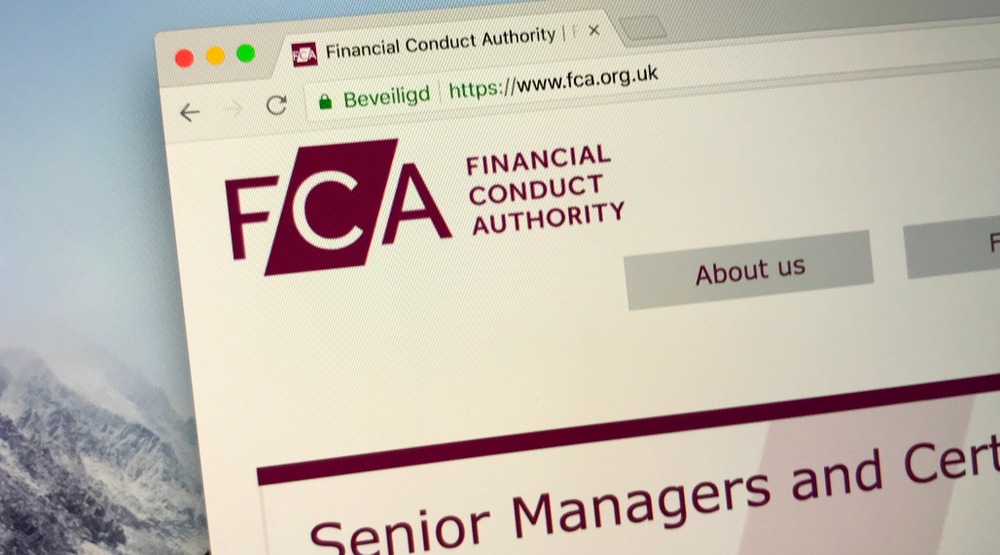
The problem extends beyond domain cybersquatting. Fraudsters increasingly impersonate not just trading platforms but regulators themselves. The UK's Financial Conduct Authority received 4,465 reports of impersonation scams in the first half of 2025 alone, with 480 victims actually transferring money to criminals posing as FCA officials.
Malta's financial regulator warned that scammers were using forged documents bearing the CEO's fake signature, while Cyprus flagged multiple cases of staff being impersonated.
Phishing-as-a-Service Lowers Entry Barriers
The Chainalysis report reveals how criminal enterprises have built modular, service-based business models that dramatically lower barriers to entry. Chinese-language vendors on Telegram sell complete phishing kits for as little as $20 to $50, offering fake website templates, domain setup tools, and spam distribution services designed to evade detection.
- WhatsApp Deletes 6.8M Accounts; Pig Butchering Scams Spread via ChatGPT, Telegram
- Next-Gen AI Scam Clones Broker Exante, Opens JPMorgan Account to Dupe U.S. Victim
One prominent vendor, Lighthouse, received over 7,000 deposits and amassed more than $1.5 million before Google filed suit in November 2025. The operation allegedly reached 330,000 texts in a single day and duped over 1 million people across 121 countries, according to court documents.
Scams leveraging these industrial-grade phishing kits proved 688 times more effective in dollar terms than regular scams, while operations that purchased bulk social media accounts were 238 times more effective, the data shows.
Deepfakes Supercharge Fraud Effectiveness
Artificial intelligence has emerged as a force multiplier for scammers targeting retail investors. New Zealand authorities warned in August about deepfake videos featuring local financial experts promoting fraudulent trading schemes on Facebook and WhatsApp. The AI-generated content proved alarmingly convincing to victims unfamiliar with the technology.
Financial institutions globally have detected a 2,137% increase in deepfake fraud attempts over the past three years, according to identity verification firm Signicat. Deepfakes now account for 42.5% of all fraud attempts in the financial sector, making them the most common type of digital identity fraud facing companies today.
Law Enforcement Scores Record Seizures
Authorities responded with unprecedented enforcement actions in 2025. The UK's Metropolitan Police recovered over 61,000 Bitcoin , currently valued around $5 billion, in connection with an investment fraud that victimized more than 128,000 people.
The U.S. Department of Justice unsealed charges against individuals allegedly running forced-labor scam compounds in Cambodia, pairing the indictments with seizures exceeding $15 billion.
European regulators took down more than 1,400 fraudulent trading platforms during a coordinated crackdown in 2025, following an earlier operation that shut down 800 illicit domains. Germany's BaFin identified at least 20 nearly identical websites advertising AI-based trading services with no verifiable operators or regulatory oversight.
The average scam payment climbed from $782 in 2024 to $2,764 in 2025, a 253% year-over-year increase, indicating scammers are successfully targeting more sophisticated investors with larger account balances.