We sat down with Rafah Hanna to discuss common licensing mistakes brokers make and improving relations with exchanges
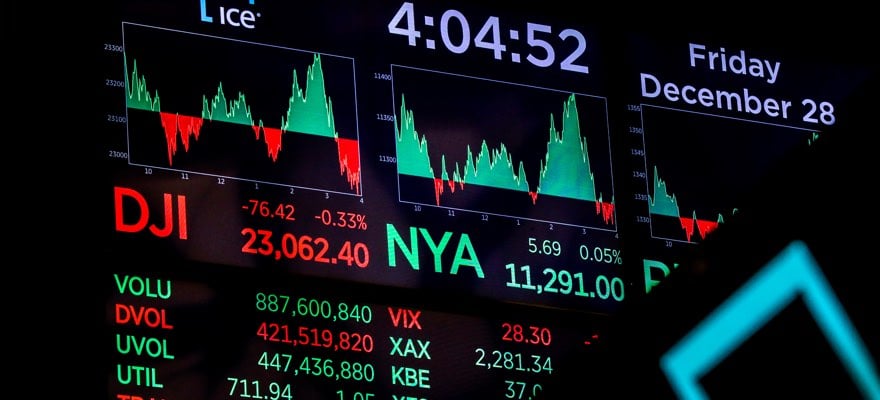
A screen displays the Dow Jones Industrial Average after the close of trading on the floor of the New York Stock Exchange (NYSE) in New York City, U.S., December 28, 2018. REUTERS/Jeenah Moon - RC1C5DB46B80
Given the retail trading industry's reliance on market data to carry out business, you would assume that broker executives have a solid understanding of how to source it, use it, and distribute it.
But that's not always the case, with many firms much more focused on marketing than compliance or back-end operations.
Still, the importance of market data can't be understated. Without it, brokers wouldn't be able to function.
That being the case, Finance Magnates decided to have a chat with market data guru and consultant Rafah Hanna.
Based in London, Hanna has been in the market data licensing game for over two decades and has worked for several large financial institutions, including JP Morgan and NYSE Euronext.
In our wide-ranging interview, we discussed common problems brokers make when it comes to data licensing and why Hanna is trying to build a representative body for the retail trading industry.
Can you talk a little bit about why having market data licensing knowledge is important for CFD/FX brokers?
Market data is the lifeblood of the CFD/FX business - it is the single raw ingredient that is derived, processed, distributed and stored that has value at every single point in the client, business and product chain.
You work with a lot of brokers in the retail trading world. What are the most common problems or mistakes you see firms encountering or making when it comes to market data?
There are a number of frequently made mistakes and assumptions that firms make:
“We own the data, right?”
Wrong.
The data is licensed for permitted usage scenarios according to each license, for example, Derived Data - including the creation of CFDs. Even within such licenses, there are rules. For example, with a Derived Data license, the resultant derived price must be irreversible - it cannot just be a margin added, but an entirely new price.
“We can redistribute it to all our clients on the retail and API/B2B side, of course?”
Not necessarily. Each exchange treats retail and API/B2B clients differently via their permitted usage policies.
I'll give you two examples of differing CFD license approaches: CME and Deutsche Borse.
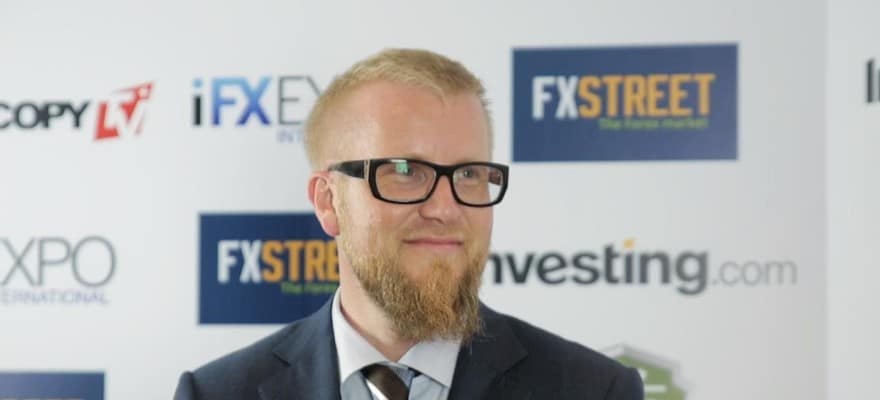
Market data consultant Rafah Hanna
CME has a fixed annual Licence Fee that's payable for each CME product that will be derived (thereby in effect this is a Licence Fee for the “creation” of Derived Data), and a second variable Licence Fee on a per API and per Derived Data product distributed to API/B2B clients (a Licence Fee for redistribution).
While CME charges for redistribution clients on an annualized basis, the invoices are issued quarterly in case some API/B2B clients no longer receive Derived Data from their LP. This provides the flexibility for changing market and client circumstances. No end-user fees apply nor reporting required - this is in contrast with the below example from Deutsche Borse...
Deutsche Borse has a basic Licence Fee which applies to the distribution of CFD derived data for to up to 1,000 active users. DB’s policy does not differentiate between retail non-professionals and professionals, a major differentiator in terms of policy and costs.
As soon as a firm has a single API/B2B user, DB’s Licence Fee structure moves the firm to a Tier 1 user count of 10,000+ active users as an API/B2B is classified as “uncontrolled usage”, and therefore the number of Active Users cannot be technically confirmed as the firm does not control entitlement/permissioning. A firm’s API/B2B clients are not permitted to redistribute the derived market data to its own API/B2B clients downstream (without a direct Licence Agreement with DB), only to active users.
“The Exchange won't really know if the data is truly derived or not…”
Exchanges are conducting pre-audits prior to licensing, and their licensing audit teams are growing exponentially to deal with the ever-growing number of non-licensed distribution being undertaken. It is only through leading derivation engines and proprietary algorithmics that exchanges can be assured that the data is non-reversible (a core tenet of any derived data license agreement) and therefore a raw data license will not apply.
In the past 10-15 years, the retail trading market has grown exponentially. Have you seen a parallel change in the way exchanges treat brokers?
There has been a seismic shift in new policies from exchanges treat brokers in the CFD industry.
Only five years ago most exchanges’ policies were of flat annual fees for almost all products, without truly understanding the nature, workflow and industry that serves CFD brokers and their clients, both institutional and retail.
Today that is substantially different in that exchanges have specific policies drafted exclusively with CFD brokers in mind, especially in terms of redistribution to other brokers, and further redistribution to a those broker's clients.
The downside commercially is this has resulted in market data license fees becoming almost impossible for a startup broker to afford, and therefore an argument could be made that innovation and competition is being hindered by exchange policies as they set both policy and commercial license fees.
It is often the case that a broker will have to spend at least $250,000 per year on market data licence fees. But you'll probably have to spend double or triple that to become a major market participant.
You have said that you plan on launching a representative body to establish stronger relationships between exchanges and CFD trading firms. Can you describe what you are trying to build and explain why you believe it’s necessary?
The CFD broker arena is full of innovation in terms of how data is moved, albeit through uber-vendors such as QuantHouse, how risk models utilize data, the levels of hedging, trading, and analysis available. If we look at front office vendor terminals, CFD broker offerings are not far away from what a Bloomberg or Eikon terminal is today, though with much less breadth of data.
The industry is not under-represented but not represented at all when it comes to market data. That's crazy when you consider that market data is usually the 2nd or 3rd largest cost item on a broker's balance sheet.
My idea is to seek to change that holistically by forming an organization that firms may join that will have the following core objectives:
A. To represent member firms, and the industry as a whole in understanding market data licensing, policies, and commercial.
B. To educate and advise member firms on the causes and effects of non-licensed and breach activities. Being compliant is expensive; non-compliance is far more expensive, financially and reputationally.
C. To lobby and represent member firms in seeking to better shape market data policies and fees on an exchange level.
D. To ensure that member firms understand ALL the value they can attain from both their direct AND indirect market data supply chain and usage flows.
It seems like there is minimal communication between exchanges and retail trading firms. You have a lot of experience working with both. Based on that experience, what do you think the two groups want to see from one another?
Firstly and foremostly, clarity as to what permitted usage policies are, essentially what can I do with the data and what is not permitted.
Second, there is a divergence between those firms that take the time and effort - along with coughing up vast sums of money - on licensing properly, and those that play a cat and mouse game of “catch me if you can” with exchanges. It needs to be clearly understood that once caught; it affects the entire supply chain.
Third, uniformity in policies and definitions of what a “user” is and homogeneity of license agreement documents. Brokers without our expert help enter a minefield of terms, conditions, rules, and requirements that they have virtually no experience of, and therefore there is an immediate risk of being non-compliant.
Finally, I think a forum to meet and discuss is crucial. We live in an age of instant communication, but the exchanges have a lot of capacity to utilize their communications in a better way to understand, be influenced, influence, and be understood.
There are some rumors that brokers are receiving and distributing exchange data without necessarily knowing where it came from or what legal strictures are attached to its usage. Have you seen anything like this? Regardless as to whether you have or not, what would your advice be to a firm that is in that position?
This is becoming less common but happens in up to 20% of cases in my experience within this industry.
There is no point in fitting a burglar alarm after being robbed! Firms need to recognize that taking someone’s IP and deliberately not paying for it is theft.
Exchanges must play their part by looking to help to grow the industry, and not be held accountable to market data revenues alone.
The cold hard reality is that this is a money game; there need to be better long-term relationships between exchanges and brokers. Today’s relationship is rather a simple one akin to a driver pulling up to a petrol station, filling up, paying, and leaving.
My very strong advice to any firm receiving or redistributing market data without proper licensing is to think of the reputational damage it would suffer should their data supply be switched off - would you trust a firm with your money who did not pay their dues, even if they had gone so far as to become licensed with regulators.
There is always help available from us, from conducting internal market data audits, ensuring supply lines are not cut off, negotiations with exchanges, where appropriate, bringing in vendors, looking at correct licensing, cross-connects with other brokers who can shelter a firm under their licenses and so on.
Normally it would be, but I can guarantee that your agreement with your white label provider would have a number of provisions stating they can, as well as the exchanges, undertake an audit from time to time, with or without reason, and that you had a responsibility that you use and continue to use the data in the way it was meant to be under license.
Given the retail trading industry's reliance on market data to carry out business, you would assume that broker executives have a solid understanding of how to source it, use it, and distribute it.
But that's not always the case, with many firms much more focused on marketing than compliance or back-end operations.
Still, the importance of market data can't be understated. Without it, brokers wouldn't be able to function.
That being the case, Finance Magnates decided to have a chat with market data guru and consultant Rafah Hanna.
Based in London, Hanna has been in the market data licensing game for over two decades and has worked for several large financial institutions, including JP Morgan and NYSE Euronext.
In our wide-ranging interview, we discussed common problems brokers make when it comes to data licensing and why Hanna is trying to build a representative body for the retail trading industry.
Can you talk a little bit about why having market data licensing knowledge is important for CFD/FX brokers?
Market data is the lifeblood of the CFD/FX business - it is the single raw ingredient that is derived, processed, distributed and stored that has value at every single point in the client, business and product chain.
You work with a lot of brokers in the retail trading world. What are the most common problems or mistakes you see firms encountering or making when it comes to market data?
There are a number of frequently made mistakes and assumptions that firms make:
“We own the data, right?”
Wrong.
The data is licensed for permitted usage scenarios according to each license, for example, Derived Data - including the creation of CFDs. Even within such licenses, there are rules. For example, with a Derived Data license, the resultant derived price must be irreversible - it cannot just be a margin added, but an entirely new price.
“We can redistribute it to all our clients on the retail and API/B2B side, of course?”
Not necessarily. Each exchange treats retail and API/B2B clients differently via their permitted usage policies.
I'll give you two examples of differing CFD license approaches: CME and Deutsche Borse.
Market data consultant Rafah Hanna
CME has a fixed annual Licence Fee that's payable for each CME product that will be derived (thereby in effect this is a Licence Fee for the “creation” of Derived Data), and a second variable Licence Fee on a per API and per Derived Data product distributed to API/B2B clients (a Licence Fee for redistribution).
While CME charges for redistribution clients on an annualized basis, the invoices are issued quarterly in case some API/B2B clients no longer receive Derived Data from their LP. This provides the flexibility for changing market and client circumstances. No end-user fees apply nor reporting required - this is in contrast with the below example from Deutsche Borse...
Deutsche Borse has a basic Licence Fee which applies to the distribution of CFD derived data for to up to 1,000 active users. DB’s policy does not differentiate between retail non-professionals and professionals, a major differentiator in terms of policy and costs.
As soon as a firm has a single API/B2B user, DB’s Licence Fee structure moves the firm to a Tier 1 user count of 10,000+ active users as an API/B2B is classified as “uncontrolled usage”, and therefore the number of Active Users cannot be technically confirmed as the firm does not control entitlement/permissioning. A firm’s API/B2B clients are not permitted to redistribute the derived market data to its own API/B2B clients downstream (without a direct Licence Agreement with DB), only to active users.
“The Exchange won't really know if the data is truly derived or not…”
Exchanges are conducting pre-audits prior to licensing, and their licensing audit teams are growing exponentially to deal with the ever-growing number of non-licensed distribution being undertaken. It is only through leading derivation engines and proprietary algorithmics that exchanges can be assured that the data is non-reversible (a core tenet of any derived data license agreement) and therefore a raw data license will not apply.
In the past 10-15 years, the retail trading market has grown exponentially. Have you seen a parallel change in the way exchanges treat brokers?
There has been a seismic shift in new policies from exchanges treat brokers in the CFD industry.
Only five years ago most exchanges’ policies were of flat annual fees for almost all products, without truly understanding the nature, workflow and industry that serves CFD brokers and their clients, both institutional and retail.
Today that is substantially different in that exchanges have specific policies drafted exclusively with CFD brokers in mind, especially in terms of redistribution to other brokers, and further redistribution to a those broker's clients.
The downside commercially is this has resulted in market data license fees becoming almost impossible for a startup broker to afford, and therefore an argument could be made that innovation and competition is being hindered by exchange policies as they set both policy and commercial license fees.
It is often the case that a broker will have to spend at least $250,000 per year on market data licence fees. But you'll probably have to spend double or triple that to become a major market participant.
You have said that you plan on launching a representative body to establish stronger relationships between exchanges and CFD trading firms. Can you describe what you are trying to build and explain why you believe it’s necessary?
The CFD broker arena is full of innovation in terms of how data is moved, albeit through uber-vendors such as QuantHouse, how risk models utilize data, the levels of hedging, trading, and analysis available. If we look at front office vendor terminals, CFD broker offerings are not far away from what a Bloomberg or Eikon terminal is today, though with much less breadth of data.
The industry is not under-represented but not represented at all when it comes to market data. That's crazy when you consider that market data is usually the 2nd or 3rd largest cost item on a broker's balance sheet.
My idea is to seek to change that holistically by forming an organization that firms may join that will have the following core objectives:
A. To represent member firms, and the industry as a whole in understanding market data licensing, policies, and commercial.
B. To educate and advise member firms on the causes and effects of non-licensed and breach activities. Being compliant is expensive; non-compliance is far more expensive, financially and reputationally.
C. To lobby and represent member firms in seeking to better shape market data policies and fees on an exchange level.
D. To ensure that member firms understand ALL the value they can attain from both their direct AND indirect market data supply chain and usage flows.
It seems like there is minimal communication between exchanges and retail trading firms. You have a lot of experience working with both. Based on that experience, what do you think the two groups want to see from one another?
Firstly and foremostly, clarity as to what permitted usage policies are, essentially what can I do with the data and what is not permitted.
Second, there is a divergence between those firms that take the time and effort - along with coughing up vast sums of money - on licensing properly, and those that play a cat and mouse game of “catch me if you can” with exchanges. It needs to be clearly understood that once caught; it affects the entire supply chain.
Third, uniformity in policies and definitions of what a “user” is and homogeneity of license agreement documents. Brokers without our expert help enter a minefield of terms, conditions, rules, and requirements that they have virtually no experience of, and therefore there is an immediate risk of being non-compliant.
Finally, I think a forum to meet and discuss is crucial. We live in an age of instant communication, but the exchanges have a lot of capacity to utilize their communications in a better way to understand, be influenced, influence, and be understood.
There are some rumors that brokers are receiving and distributing exchange data without necessarily knowing where it came from or what legal strictures are attached to its usage. Have you seen anything like this? Regardless as to whether you have or not, what would your advice be to a firm that is in that position?
This is becoming less common but happens in up to 20% of cases in my experience within this industry.
There is no point in fitting a burglar alarm after being robbed! Firms need to recognize that taking someone’s IP and deliberately not paying for it is theft.
Exchanges must play their part by looking to help to grow the industry, and not be held accountable to market data revenues alone.
The cold hard reality is that this is a money game; there need to be better long-term relationships between exchanges and brokers. Today’s relationship is rather a simple one akin to a driver pulling up to a petrol station, filling up, paying, and leaving.
My very strong advice to any firm receiving or redistributing market data without proper licensing is to think of the reputational damage it would suffer should their data supply be switched off - would you trust a firm with your money who did not pay their dues, even if they had gone so far as to become licensed with regulators.
There is always help available from us, from conducting internal market data audits, ensuring supply lines are not cut off, negotiations with exchanges, where appropriate, bringing in vendors, looking at correct licensing, cross-connects with other brokers who can shelter a firm under their licenses and so on.
Normally it would be, but I can guarantee that your agreement with your white label provider would have a number of provisions stating they can, as well as the exchanges, undertake an audit from time to time, with or without reason, and that you had a responsibility that you use and continue to use the data in the way it was meant to be under license.
XTB Sells FSCA Unit Five Years After No Operations
Featured Videos
CMC Markets’ Artur Delijergijevs on Metals Demand, Volatility, & Stable Execution
CMC Markets’ Artur Delijergijevs on Metals Demand, Volatility, & Stable Execution
CMC Markets’ Artur Delijergijevs on Metals Demand, Volatility, & Stable Execution
CMC Markets’ Artur Delijergijevs on Metals Demand, Volatility, & Stable Execution
In this exclusive Executive Interview, Finance Magnates speaks with Artur Delijergijevs, Head of Systematic Market Making at CMC Markets, about the current state of metals demand and market volatility.
Delijergijevs offers a desk-level view on:
- Metals Demand: Why metals are seeing the strongest demand from both retail and institutional clients right now.
- The Safe-Haven Debate: Questioning whether gold still fits the classic safe-haven definition given large daily price movements.
- Volatile Market Prep: How a market-making desk prepares its systems and pricing for stressed market conditions and high-impact economic events.
- Hybrid Execution: Why the best execution model combines electronic speed with human relationship support, especially during volatility.
- AI in Workflow: Where CMC Markets is integrating machine learning for risk management and pricing, and the limitations of AI during stressed markets.
- Dubai's Role: The strategic importance of Dubai’s location for covering global trading sessions across Asia, Europe, and the US.
Watch to understand how CMC Markets maintains stable pricing and reliable execution quality in high-volatility environments.
#CMCmarkets #forex #metals #gold #trading #volatility #MarketMaking #iFXDubai #FinanceMagnates #Finance #Fintech #Execution #AlgorithmicTrading #RiskManagement
In this exclusive Executive Interview, Finance Magnates speaks with Artur Delijergijevs, Head of Systematic Market Making at CMC Markets, about the current state of metals demand and market volatility.
Delijergijevs offers a desk-level view on:
- Metals Demand: Why metals are seeing the strongest demand from both retail and institutional clients right now.
- The Safe-Haven Debate: Questioning whether gold still fits the classic safe-haven definition given large daily price movements.
- Volatile Market Prep: How a market-making desk prepares its systems and pricing for stressed market conditions and high-impact economic events.
- Hybrid Execution: Why the best execution model combines electronic speed with human relationship support, especially during volatility.
- AI in Workflow: Where CMC Markets is integrating machine learning for risk management and pricing, and the limitations of AI during stressed markets.
- Dubai's Role: The strategic importance of Dubai’s location for covering global trading sessions across Asia, Europe, and the US.
Watch to understand how CMC Markets maintains stable pricing and reliable execution quality in high-volatility environments.
#CMCmarkets #forex #metals #gold #trading #volatility #MarketMaking #iFXDubai #FinanceMagnates #Finance #Fintech #Execution #AlgorithmicTrading #RiskManagement
In this exclusive Executive Interview, Finance Magnates speaks with Artur Delijergijevs, Head of Systematic Market Making at CMC Markets, about the current state of metals demand and market volatility.
Delijergijevs offers a desk-level view on:
- Metals Demand: Why metals are seeing the strongest demand from both retail and institutional clients right now.
- The Safe-Haven Debate: Questioning whether gold still fits the classic safe-haven definition given large daily price movements.
- Volatile Market Prep: How a market-making desk prepares its systems and pricing for stressed market conditions and high-impact economic events.
- Hybrid Execution: Why the best execution model combines electronic speed with human relationship support, especially during volatility.
- AI in Workflow: Where CMC Markets is integrating machine learning for risk management and pricing, and the limitations of AI during stressed markets.
- Dubai's Role: The strategic importance of Dubai’s location for covering global trading sessions across Asia, Europe, and the US.
Watch to understand how CMC Markets maintains stable pricing and reliable execution quality in high-volatility environments.
#CMCmarkets #forex #metals #gold #trading #volatility #MarketMaking #iFXDubai #FinanceMagnates #Finance #Fintech #Execution #AlgorithmicTrading #RiskManagement
In this exclusive Executive Interview, Finance Magnates speaks with Artur Delijergijevs, Head of Systematic Market Making at CMC Markets, about the current state of metals demand and market volatility.
Delijergijevs offers a desk-level view on:
- Metals Demand: Why metals are seeing the strongest demand from both retail and institutional clients right now.
- The Safe-Haven Debate: Questioning whether gold still fits the classic safe-haven definition given large daily price movements.
- Volatile Market Prep: How a market-making desk prepares its systems and pricing for stressed market conditions and high-impact economic events.
- Hybrid Execution: Why the best execution model combines electronic speed with human relationship support, especially during volatility.
- AI in Workflow: Where CMC Markets is integrating machine learning for risk management and pricing, and the limitations of AI during stressed markets.
- Dubai's Role: The strategic importance of Dubai’s location for covering global trading sessions across Asia, Europe, and the US.
Watch to understand how CMC Markets maintains stable pricing and reliable execution quality in high-volatility environments.
#CMCmarkets #forex #metals #gold #trading #volatility #MarketMaking #iFXDubai #FinanceMagnates #Finance #Fintech #Execution #AlgorithmicTrading #RiskManagement
Finance Magnates Awards 2026 – Nominations Now Open
Finance Magnates Awards 2026 – Nominations Now Open
Finance Magnates Awards 2026 – Nominations Now Open
Finance Magnates Awards 2026 – Nominations Now Open
Finance Magnates Awards 2026 – Nominations Now Open
Finance Magnates Awards 2026 – Nominations Now Open
The Finance Magnates Awards 2026 nominations are now open. 🏆
From fintech innovators to leading brokers, this is where the finance industry celebrates its biggest achievements.
Winners will be announced at the Cyprus Gala Dinner on November 6, 2026.
Nominate your brand now.
https://awards.financemagnates.com/?utm_source=linkedin&utm_medium=video&utm_campaign=nominations-open
#FMAwards #FinanceMagnates #FintechAwards #Fintech #FinanceIndustry
The Finance Magnates Awards 2026 nominations are now open. 🏆
From fintech innovators to leading brokers, this is where the finance industry celebrates its biggest achievements.
Winners will be announced at the Cyprus Gala Dinner on November 6, 2026.
Nominate your brand now.
https://awards.financemagnates.com/?utm_source=linkedin&utm_medium=video&utm_campaign=nominations-open
#FMAwards #FinanceMagnates #FintechAwards #Fintech #FinanceIndustry
The Finance Magnates Awards 2026 nominations are now open. 🏆
From fintech innovators to leading brokers, this is where the finance industry celebrates its biggest achievements.
Winners will be announced at the Cyprus Gala Dinner on November 6, 2026.
Nominate your brand now.
https://awards.financemagnates.com/?utm_source=linkedin&utm_medium=video&utm_campaign=nominations-open
#FMAwards #FinanceMagnates #FintechAwards #Fintech #FinanceIndustry
The Finance Magnates Awards 2026 nominations are now open. 🏆
From fintech innovators to leading brokers, this is where the finance industry celebrates its biggest achievements.
Winners will be announced at the Cyprus Gala Dinner on November 6, 2026.
Nominate your brand now.
https://awards.financemagnates.com/?utm_source=linkedin&utm_medium=video&utm_campaign=nominations-open
#FMAwards #FinanceMagnates #FintechAwards #Fintech #FinanceIndustry
The Finance Magnates Awards 2026 nominations are now open. 🏆
From fintech innovators to leading brokers, this is where the finance industry celebrates its biggest achievements.
Winners will be announced at the Cyprus Gala Dinner on November 6, 2026.
Nominate your brand now.
https://awards.financemagnates.com/?utm_source=linkedin&utm_medium=video&utm_campaign=nominations-open
#FMAwards #FinanceMagnates #FintechAwards #Fintech #FinanceIndustry
The Finance Magnates Awards 2026 nominations are now open. 🏆
From fintech innovators to leading brokers, this is where the finance industry celebrates its biggest achievements.
Winners will be announced at the Cyprus Gala Dinner on November 6, 2026.
Nominate your brand now.
https://awards.financemagnates.com/?utm_source=linkedin&utm_medium=video&utm_campaign=nominations-open
#FMAwards #FinanceMagnates #FintechAwards #Fintech #FinanceIndustry
Finance Magnates Awards 2026 | Nominations Now Open 🏆#Fintech #FMAwards #TradingIndustry
Finance Magnates Awards 2026 | Nominations Now Open 🏆#Fintech #FMAwards #TradingIndustry
Finance Magnates Awards 2026 | Nominations Now Open 🏆#Fintech #FMAwards #TradingIndustry
Finance Magnates Awards 2026 | Nominations Now Open 🏆#Fintech #FMAwards #TradingIndustry
Finance Magnates Awards 2026 | Nominations Now Open 🏆#Fintech #FMAwards #TradingIndustry
Finance Magnates Awards 2026 | Nominations Now Open 🏆#Fintech #FMAwards #TradingIndustry
Lights on. Cameras ready. 🎬
Finance Magnates Awards 2026 nominations are now open. 🏆
#FMAwards #FinanceMagnates #FintechAwards #Fintech
Lights on. Cameras ready. 🎬
Finance Magnates Awards 2026 nominations are now open. 🏆
#FMAwards #FinanceMagnates #FintechAwards #Fintech
Lights on. Cameras ready. 🎬
Finance Magnates Awards 2026 nominations are now open. 🏆
#FMAwards #FinanceMagnates #FintechAwards #Fintech
Lights on. Cameras ready. 🎬
Finance Magnates Awards 2026 nominations are now open. 🏆
#FMAwards #FinanceMagnates #FintechAwards #Fintech
Lights on. Cameras ready. 🎬
Finance Magnates Awards 2026 nominations are now open. 🏆
#FMAwards #FinanceMagnates #FintechAwards #Fintech
Lights on. Cameras ready. 🎬
Finance Magnates Awards 2026 nominations are now open. 🏆
#FMAwards #FinanceMagnates #FintechAwards #Fintech
Exness sees trust as the key theme for growth in MENA Trading Growth for 2026
Exness sees trust as the key theme for growth in MENA Trading Growth for 2026
Exness sees trust as the key theme for growth in MENA Trading Growth for 2026
Exness sees trust as the key theme for growth in MENA Trading Growth for 2026
Exness sees trust as the key theme for growth in MENA Trading Growth for 2026
Exness sees trust as the key theme for growth in MENA Trading Growth for 2026
Mohammad Amer, Regional Commercial Director at Exness, sits down to discuss the booming MENA financial trading market. Find out why Dubai is key to the company's growth strategy, how a mobile-first generation is changing expectations, and why trust will be the defining theme for traders in 2026.
In this interview, you'll learn:
* Why Dubai and the MENA region are critical growth markets for fintech and online trading.
* How Exness is addressing the demands of mobile-first, younger traders through engineering, platform stability, and transparent conditions.
* The essential role local talent plays in providing a culturally relevant and compliant user experience.
* Mohammad Amer's outlook on the future of the online trading industry and why stronger controls and systems are necessary.
* Why "trust" isn't just a brand value, but has commercial value—and why he predicts 2026 will be the "Year of Trust."
Key Takeaways:
➡️ The MENA region is rapidly shaping global financial markets.
➡️ New traders expect stability, precise execution, and transparency.
➡️ Local expertise is key to regulatory compliance and user experience.
➡️ Future success belongs to firms capable of meeting rising standards across regulation and platform consistency.
Read the full article at: https://www.financemagnates.com/thought-leadership/exness-sees-trust-as-the-key-theme-for-growth-in-mena-trading-growth-for-2026/
#Exness #MENA #Trading #FinTech #Dubai #OnlineTrading #FinanceMagnates #MohammadAmer #Trust #MobileTrading
Mohammad Amer, Regional Commercial Director at Exness, sits down to discuss the booming MENA financial trading market. Find out why Dubai is key to the company's growth strategy, how a mobile-first generation is changing expectations, and why trust will be the defining theme for traders in 2026.
In this interview, you'll learn:
* Why Dubai and the MENA region are critical growth markets for fintech and online trading.
* How Exness is addressing the demands of mobile-first, younger traders through engineering, platform stability, and transparent conditions.
* The essential role local talent plays in providing a culturally relevant and compliant user experience.
* Mohammad Amer's outlook on the future of the online trading industry and why stronger controls and systems are necessary.
* Why "trust" isn't just a brand value, but has commercial value—and why he predicts 2026 will be the "Year of Trust."
Key Takeaways:
➡️ The MENA region is rapidly shaping global financial markets.
➡️ New traders expect stability, precise execution, and transparency.
➡️ Local expertise is key to regulatory compliance and user experience.
➡️ Future success belongs to firms capable of meeting rising standards across regulation and platform consistency.
Read the full article at: https://www.financemagnates.com/thought-leadership/exness-sees-trust-as-the-key-theme-for-growth-in-mena-trading-growth-for-2026/
#Exness #MENA #Trading #FinTech #Dubai #OnlineTrading #FinanceMagnates #MohammadAmer #Trust #MobileTrading
Mohammad Amer, Regional Commercial Director at Exness, sits down to discuss the booming MENA financial trading market. Find out why Dubai is key to the company's growth strategy, how a mobile-first generation is changing expectations, and why trust will be the defining theme for traders in 2026.
In this interview, you'll learn:
* Why Dubai and the MENA region are critical growth markets for fintech and online trading.
* How Exness is addressing the demands of mobile-first, younger traders through engineering, platform stability, and transparent conditions.
* The essential role local talent plays in providing a culturally relevant and compliant user experience.
* Mohammad Amer's outlook on the future of the online trading industry and why stronger controls and systems are necessary.
* Why "trust" isn't just a brand value, but has commercial value—and why he predicts 2026 will be the "Year of Trust."
Key Takeaways:
➡️ The MENA region is rapidly shaping global financial markets.
➡️ New traders expect stability, precise execution, and transparency.
➡️ Local expertise is key to regulatory compliance and user experience.
➡️ Future success belongs to firms capable of meeting rising standards across regulation and platform consistency.
Read the full article at: https://www.financemagnates.com/thought-leadership/exness-sees-trust-as-the-key-theme-for-growth-in-mena-trading-growth-for-2026/
#Exness #MENA #Trading #FinTech #Dubai #OnlineTrading #FinanceMagnates #MohammadAmer #Trust #MobileTrading
Mohammad Amer, Regional Commercial Director at Exness, sits down to discuss the booming MENA financial trading market. Find out why Dubai is key to the company's growth strategy, how a mobile-first generation is changing expectations, and why trust will be the defining theme for traders in 2026.
In this interview, you'll learn:
* Why Dubai and the MENA region are critical growth markets for fintech and online trading.
* How Exness is addressing the demands of mobile-first, younger traders through engineering, platform stability, and transparent conditions.
* The essential role local talent plays in providing a culturally relevant and compliant user experience.
* Mohammad Amer's outlook on the future of the online trading industry and why stronger controls and systems are necessary.
* Why "trust" isn't just a brand value, but has commercial value—and why he predicts 2026 will be the "Year of Trust."
Key Takeaways:
➡️ The MENA region is rapidly shaping global financial markets.
➡️ New traders expect stability, precise execution, and transparency.
➡️ Local expertise is key to regulatory compliance and user experience.
➡️ Future success belongs to firms capable of meeting rising standards across regulation and platform consistency.
Read the full article at: https://www.financemagnates.com/thought-leadership/exness-sees-trust-as-the-key-theme-for-growth-in-mena-trading-growth-for-2026/
#Exness #MENA #Trading #FinTech #Dubai #OnlineTrading #FinanceMagnates #MohammadAmer #Trust #MobileTrading
Mohammad Amer, Regional Commercial Director at Exness, sits down to discuss the booming MENA financial trading market. Find out why Dubai is key to the company's growth strategy, how a mobile-first generation is changing expectations, and why trust will be the defining theme for traders in 2026.
In this interview, you'll learn:
* Why Dubai and the MENA region are critical growth markets for fintech and online trading.
* How Exness is addressing the demands of mobile-first, younger traders through engineering, platform stability, and transparent conditions.
* The essential role local talent plays in providing a culturally relevant and compliant user experience.
* Mohammad Amer's outlook on the future of the online trading industry and why stronger controls and systems are necessary.
* Why "trust" isn't just a brand value, but has commercial value—and why he predicts 2026 will be the "Year of Trust."
Key Takeaways:
➡️ The MENA region is rapidly shaping global financial markets.
➡️ New traders expect stability, precise execution, and transparency.
➡️ Local expertise is key to regulatory compliance and user experience.
➡️ Future success belongs to firms capable of meeting rising standards across regulation and platform consistency.
Read the full article at: https://www.financemagnates.com/thought-leadership/exness-sees-trust-as-the-key-theme-for-growth-in-mena-trading-growth-for-2026/
#Exness #MENA #Trading #FinTech #Dubai #OnlineTrading #FinanceMagnates #MohammadAmer #Trust #MobileTrading
Mohammad Amer, Regional Commercial Director at Exness, sits down to discuss the booming MENA financial trading market. Find out why Dubai is key to the company's growth strategy, how a mobile-first generation is changing expectations, and why trust will be the defining theme for traders in 2026.
In this interview, you'll learn:
* Why Dubai and the MENA region are critical growth markets for fintech and online trading.
* How Exness is addressing the demands of mobile-first, younger traders through engineering, platform stability, and transparent conditions.
* The essential role local talent plays in providing a culturally relevant and compliant user experience.
* Mohammad Amer's outlook on the future of the online trading industry and why stronger controls and systems are necessary.
* Why "trust" isn't just a brand value, but has commercial value—and why he predicts 2026 will be the "Year of Trust."
Key Takeaways:
➡️ The MENA region is rapidly shaping global financial markets.
➡️ New traders expect stability, precise execution, and transparency.
➡️ Local expertise is key to regulatory compliance and user experience.
➡️ Future success belongs to firms capable of meeting rising standards across regulation and platform consistency.
Read the full article at: https://www.financemagnates.com/thought-leadership/exness-sees-trust-as-the-key-theme-for-growth-in-mena-trading-growth-for-2026/
#Exness #MENA #Trading #FinTech #Dubai #OnlineTrading #FinanceMagnates #MohammadAmer #Trust #MobileTrading
Paytiko CEO Razi Salih on Why Payment Orchestration is a MUST-HAVE for Brokers in 2026
Paytiko CEO Razi Salih on Why Payment Orchestration is a MUST-HAVE for Brokers in 2026
Paytiko CEO Razi Salih on Why Payment Orchestration is a MUST-HAVE for Brokers in 2026
Paytiko CEO Razi Salih on Why Payment Orchestration is a MUST-HAVE for Brokers in 2026
Paytiko CEO Razi Salih on Why Payment Orchestration is a MUST-HAVE for Brokers in 2026
Paytiko CEO Razi Salih on Why Payment Orchestration is a MUST-HAVE for Brokers in 2026
At iFX Expo Dubai, Finance Magnates spoke with Razi Salih, CEO at Paytiko, about the evolution of the payments ecosystem and why payment orchestration has shifted from an option to a necessity for brokers, prop firms, and exchanges.
Mr. Salih explains how global expansion, the need for deep localisation, and the sheer number of new payment methods, from instant banking to stablecoins, are driving this critical infrastructure shift.
#PaymentOrchestration #Fintech #Brokerage #TradingPayments #RaziSalih #Paytiko #iFXExpoDubai #Stablecoins #AIinFintech
At iFX Expo Dubai, Finance Magnates spoke with Razi Salih, CEO at Paytiko, about the evolution of the payments ecosystem and why payment orchestration has shifted from an option to a necessity for brokers, prop firms, and exchanges.
Mr. Salih explains how global expansion, the need for deep localisation, and the sheer number of new payment methods, from instant banking to stablecoins, are driving this critical infrastructure shift.
#PaymentOrchestration #Fintech #Brokerage #TradingPayments #RaziSalih #Paytiko #iFXExpoDubai #Stablecoins #AIinFintech
At iFX Expo Dubai, Finance Magnates spoke with Razi Salih, CEO at Paytiko, about the evolution of the payments ecosystem and why payment orchestration has shifted from an option to a necessity for brokers, prop firms, and exchanges.
Mr. Salih explains how global expansion, the need for deep localisation, and the sheer number of new payment methods, from instant banking to stablecoins, are driving this critical infrastructure shift.
#PaymentOrchestration #Fintech #Brokerage #TradingPayments #RaziSalih #Paytiko #iFXExpoDubai #Stablecoins #AIinFintech
At iFX Expo Dubai, Finance Magnates spoke with Razi Salih, CEO at Paytiko, about the evolution of the payments ecosystem and why payment orchestration has shifted from an option to a necessity for brokers, prop firms, and exchanges.
Mr. Salih explains how global expansion, the need for deep localisation, and the sheer number of new payment methods, from instant banking to stablecoins, are driving this critical infrastructure shift.
#PaymentOrchestration #Fintech #Brokerage #TradingPayments #RaziSalih #Paytiko #iFXExpoDubai #Stablecoins #AIinFintech
At iFX Expo Dubai, Finance Magnates spoke with Razi Salih, CEO at Paytiko, about the evolution of the payments ecosystem and why payment orchestration has shifted from an option to a necessity for brokers, prop firms, and exchanges.
Mr. Salih explains how global expansion, the need for deep localisation, and the sheer number of new payment methods, from instant banking to stablecoins, are driving this critical infrastructure shift.
#PaymentOrchestration #Fintech #Brokerage #TradingPayments #RaziSalih #Paytiko #iFXExpoDubai #Stablecoins #AIinFintech
At iFX Expo Dubai, Finance Magnates spoke with Razi Salih, CEO at Paytiko, about the evolution of the payments ecosystem and why payment orchestration has shifted from an option to a necessity for brokers, prop firms, and exchanges.
Mr. Salih explains how global expansion, the need for deep localisation, and the sheer number of new payment methods, from instant banking to stablecoins, are driving this critical infrastructure shift.
#PaymentOrchestration #Fintech #Brokerage #TradingPayments #RaziSalih #Paytiko #iFXExpoDubai #Stablecoins #AIinFintech