China is gradually changing and opening its doors to the world in an effort to stabilize the financial sector and effectively fight the ongoing economic stagnation. Already in October 2016, the Chinese currency RMB will complete the basket of SDR (Special Drawing Right) currencies of the International Monetary Fund (MFW).
[gptAdvertisement]
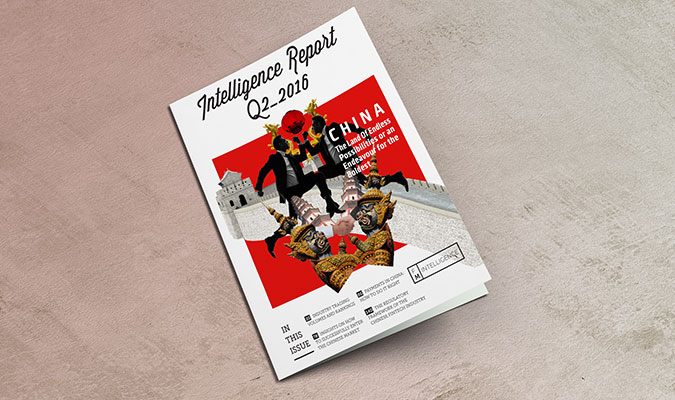
Finance Magnates in the latest issue of the Quarterly Industry Report seeks to answer the question how it could affect the trading industry.
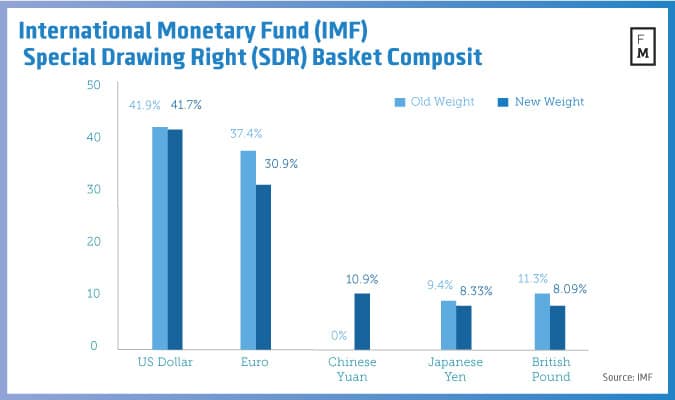
The decision to include the Chinese yuan (renminbi) in the Special Drawing Right (SDR) took place in November 2015. According to the MFW’s report, RMB meets all the criteria that are necessary to be a part of the basket, which until now consisted of the US dollar, the euro, the Japanese yen and the British pound.
The Managing Director of the IMF, Christine Lagarde, stated at the time of the announcement: “The Executive Board’s decision to include the RMB in the SDR basket is an important milestone in the integration of the Chinese economy into the global financial system. It is also a recognition of the progress that the Chinese authorities have made in the past years in reforming China’s monetary and financial systems. The continuation and deepening of these efforts will bring about a more robust international monetary and financial system, which in turn will support the growth and stability of China and the global economy.”
Forced to permit free transactions
FX and contracts for difference (CFDs) brokerages are already rubbing their hands, hoping that the widening of the IMF’s currency basket may force the Chinese government to allow their citizens to perform open and free financial transaction with foreign institutions and entities. Until now, the citizens of the Middle Kingdom have grappled with numerous investing problems, such as the limitation on exchanging and sending abroad more than $50,000 a year per person.
However, those who suggest that current changes might mean the dethroning of the greenback are probably too optimistic and wrong. The addition of the RMB will affect mainly the European currency, and not the US one. The presence of the USD in the basket will be reduced by only 0.17%, and the euro by over 7%. Renminbi will take the third position with 10.92%.
Possible implications for online brokers?
Market experts, including Itai Damti, CEO Asia Pacific at brokerage solution provider Leverate, warn however not to fall into excessive enthusiasm. It might be some time before the full liberalization of trade on RMB crosses takes place.
What is more, in the case of the range of instruments used by Chinese traders – who make up a huge potential market for brokerages – we should not expect too many changes. Currently USD/CNH provides a very small part of trading volumes in the Middle Kingdom. Gold, commodities and majors are definitely more popular assets.
In summary, the changes are certainly a move in the right direction, but it is hard to expect that free cash flow (excluding capital controls) will be implemented in the near future (if ever). It does not change the fact that since October 2016, brokers should receive a number of new opportunities to reach Asian customers and retail traders.
Want know more about the market in China? Get the brand new FM Intelligence Report.
China is gradually changing and opening its doors to the world in an effort to stabilize the financial sector and effectively fight the ongoing economic stagnation. Already in October 2016, the Chinese currency RMB will complete the basket of SDR (Special Drawing Right) currencies of the International Monetary Fund (MFW).
[gptAdvertisement]
Finance Magnates in the latest issue of the Quarterly Industry Report seeks to answer the question how it could affect the trading industry.
The decision to include the Chinese yuan (renminbi) in the Special Drawing Right (SDR) took place in November 2015. According to the MFW’s report, RMB meets all the criteria that are necessary to be a part of the basket, which until now consisted of the US dollar, the euro, the Japanese yen and the British pound.
The Managing Director of the IMF, Christine Lagarde, stated at the time of the announcement: “The Executive Board’s decision to include the RMB in the SDR basket is an important milestone in the integration of the Chinese economy into the global financial system. It is also a recognition of the progress that the Chinese authorities have made in the past years in reforming China’s monetary and financial systems. The continuation and deepening of these efforts will bring about a more robust international monetary and financial system, which in turn will support the growth and stability of China and the global economy.”
Forced to permit free transactions
FX and contracts for difference (CFDs) brokerages are already rubbing their hands, hoping that the widening of the IMF’s currency basket may force the Chinese government to allow their citizens to perform open and free financial transaction with foreign institutions and entities. Until now, the citizens of the Middle Kingdom have grappled with numerous investing problems, such as the limitation on exchanging and sending abroad more than $50,000 a year per person.
However, those who suggest that current changes might mean the dethroning of the greenback are probably too optimistic and wrong. The addition of the RMB will affect mainly the European currency, and not the US one. The presence of the USD in the basket will be reduced by only 0.17%, and the euro by over 7%. Renminbi will take the third position with 10.92%.
Possible implications for online brokers?
Market experts, including Itai Damti, CEO Asia Pacific at brokerage solution provider Leverate, warn however not to fall into excessive enthusiasm. It might be some time before the full liberalization of trade on RMB crosses takes place.
What is more, in the case of the range of instruments used by Chinese traders – who make up a huge potential market for brokerages – we should not expect too many changes. Currently USD/CNH provides a very small part of trading volumes in the Middle Kingdom. Gold, commodities and majors are definitely more popular assets.
In summary, the changes are certainly a move in the right direction, but it is hard to expect that free cash flow (excluding capital controls) will be implemented in the near future (if ever). It does not change the fact that since October 2016, brokers should receive a number of new opportunities to reach Asian customers and retail traders.
Want know more about the market in China? Get the brand new FM Intelligence Report.
Italy’s Consob Tightens Net on AI-Fueled Scams With Fresh Website Bans
FP Markets Winner Spotlight 🏆 | Global Broker of the Year 2025 #Trading #Broker #Innovation #Shorts
FP Markets Winner Spotlight 🏆 | Global Broker of the Year 2025 #Trading #Broker #Innovation #Shorts
FP Markets takes the spotlight as Global Broker of the Year 2025 at the Finance Magnates Awards.
Martin Stoilov, Head of Client Experience, shares that trust, innovation, and people played a key role in the company’s success, supported by a strong foundation of integrity and client-centricity.
Following this milestone, FP Markets continues to focus on growth, technology investment, and its core values of transparency and excellence.
👉 Be part of FM Awards 2026: https://awards.financemagnates.com/#nominate
FP Markets takes the spotlight as Global Broker of the Year 2025 at the Finance Magnates Awards.
Martin Stoilov, Head of Client Experience, shares that trust, innovation, and people played a key role in the company’s success, supported by a strong foundation of integrity and client-centricity.
Following this milestone, FP Markets continues to focus on growth, technology investment, and its core values of transparency and excellence.
👉 Be part of FM Awards 2026: https://awards.financemagnates.com/#nominate
In this video, we review @HolaPrimeMarketsOfficial, a multi-asset forex and CFDs broker offering different account types, trading platforms, and flexible trading conditions.
We cover the broker’s overall offering, including account options, trading environment, platforms like MT4 and MT5, and additional services such as managed accounts and fast withdrawals.
Watch the full video to see if Hola Prime Markets fits your trading needs.
📣 Stay up to date with the latest in finance and trading. Follow Finance Magnates for industry news, insights, and global event coverage.
Connect with us:
🔗 LinkedIn: /financemagnates
👍 Facebook: /financemagnates
📸 Instagram: https://www.instagram.com/financemagnates
🐦 X: https://x.com/financemagnates
🎥 TikTok: https://www.tiktok.com/tag/financemagnates
▶️ YouTube: /@financemagnates_official
#HolaPrime #ForexBroker #CFDTrading #FinanceMagnates #Trading #Forex #BrokerReview
In this video, we review @HolaPrimeMarketsOfficial, a multi-asset forex and CFDs broker offering different account types, trading platforms, and flexible trading conditions.
We cover the broker’s overall offering, including account options, trading environment, platforms like MT4 and MT5, and additional services such as managed accounts and fast withdrawals.
Watch the full video to see if Hola Prime Markets fits your trading needs.
📣 Stay up to date with the latest in finance and trading. Follow Finance Magnates for industry news, insights, and global event coverage.
Connect with us:
🔗 LinkedIn: /financemagnates
👍 Facebook: /financemagnates
📸 Instagram: https://www.instagram.com/financemagnates
🐦 X: https://x.com/financemagnates
🎥 TikTok: https://www.tiktok.com/tag/financemagnates
▶️ YouTube: /@financemagnates_official
#HolaPrime #ForexBroker #CFDTrading #FinanceMagnates #Trading #Forex #BrokerReview
Hola Prime Review: What You Need to Know | Full Breakdown by Finance Magnates
Hola Prime Review: What You Need to Know | Full Breakdown by Finance Magnates
In this video, we review @HolaPrime_Global, a proprietary trading firm offering evaluation programs and performance-based payouts in simulated market environments.
We cover how the challenge model works, including account types, profit splits (up to 95%), trading rules, and what it takes to reach a funded account. You’ll also learn about available platforms like MT4, MT5, cTrader, and more, along with insights into payouts, support, and trading conditions.
Watch the full video to see if Hola Prime fits your trading style.
📣 Stay up to date with the latest in finance and trading. Follow Finance Magnates for industry news, insights, and global event coverage.
Connect with us:
🔗 LinkedIn: /financemagnates
👍 Facebook: /financemagnates
📸 Instagram: https://www.instagram.com/financemagnates
🐦 X: https://x.com/financemagnates
🎥 TikTok: https://www.tiktok.com/tag/financemagnates
▶️ YouTube: /@financemagnates_official
#HolaPrime #PropFirm #Trading #FinanceMagnates #Forex #FuturesTrading #TradingReview #PropFirmReview
In this video, we review @HolaPrime_Global, a proprietary trading firm offering evaluation programs and performance-based payouts in simulated market environments.
We cover how the challenge model works, including account types, profit splits (up to 95%), trading rules, and what it takes to reach a funded account. You’ll also learn about available platforms like MT4, MT5, cTrader, and more, along with insights into payouts, support, and trading conditions.
Watch the full video to see if Hola Prime fits your trading style.
📣 Stay up to date with the latest in finance and trading. Follow Finance Magnates for industry news, insights, and global event coverage.
Connect with us:
🔗 LinkedIn: /financemagnates
👍 Facebook: /financemagnates
📸 Instagram: https://www.instagram.com/financemagnates
🐦 X: https://x.com/financemagnates
🎥 TikTok: https://www.tiktok.com/tag/financemagnates
▶️ YouTube: /@financemagnates_official
#HolaPrime #PropFirm #Trading #FinanceMagnates #Forex #FuturesTrading #TradingReview #PropFirmReview
Axi Winner Spotlight 🏆 | Global Most Innovative Broker 2025 #Innovation #Trading #Fintech #Broker
Axi Winner Spotlight 🏆 | Global Most Innovative Broker 2025 #Innovation #Trading #Fintech #Broker
Axi takes the spotlight at the Finance Magnates Awards, winning Global Most Innovative Broker 2025.
Olivia Xenofontos and Ivanna Openko share how the team will feel: proud, motivated, and ready to keep delivering.
They also describe the night as well-organized, focused, and enjoyable for all.
👉 Be part of FM Awards 2026.
Axi takes the spotlight at the Finance Magnates Awards, winning Global Most Innovative Broker 2025.
Olivia Xenofontos and Ivanna Openko share how the team will feel: proud, motivated, and ready to keep delivering.
They also describe the night as well-organized, focused, and enjoyable for all.
👉 Be part of FM Awards 2026.
Recognition that matters.
Built on transparency.
Driven by the industry.
The Finance Magnates Awards 2026.
Nominations are now open.
🔗 https://awards.financemagnates.com/?utm_source=SM&utm_medium=social&utm_campaign=recognition-matters
Recognition that matters.
Built on transparency.
Driven by the industry.
The Finance Magnates Awards 2026.
Nominations are now open.
🔗 https://awards.financemagnates.com/?utm_source=SM&utm_medium=social&utm_campaign=recognition-matters