A significant rise in client complaints regarding withdrawals, extensive management changes as well as other factors put the future survival of MMCIS in doubt. Forex Magnates tries to piece the story together and provide a complete picture.
In recent years, and more pressingly over the past month, the amount of client complaints and negative publicity in the media have risen sharply regarding Ukrainian broker MMCIS. The broker also offers its services in mainland Russia. As Forex Magnates Russia reveals, according to widespread reports the broker is experiencing financial difficulties and could potentially close in the foreseeable future.
In any industry, companies come and go due to changing trends and customer preferences. In the financial markets this is even more visible given their fast-paced nature and dynamism. The recent developments regarding MMCIS have raised questions and scrutiny from across the foreign exchange industry. The broker has become infamous for its aggressive marketing and sales techniques, as well as sensationalised partnerships with celebrities and lucrative prize draws. MMCIS has turned the provision of trading services into a game show – a Field of Miracles indeed. The regulators have not been impressed.
MMCIS has not yet officially admitted that the company is experiencing financial difficulties and cannot guarantee that all client funds are available for withdrawal. The broker cites a recent cyber-attack which it claims was “ordered by competitors." Regardless of the cause, rumours based on reported information that the broker is facing some type of difficulty has spurred a mass exodus of clients; some are struggling to obtain their funds.
MMCIS Site & Forum Threads
The first noticeable change on the MMCIS website is the sudden slowdown in company news or announcements over the past 3 weeks. Prior to this, the company would publish news, offers and promotional material on a daily basis. However, the MMCIS forum is where all the activity is. One of the most popular and most discussed threads is “Funds Withdrawal and Top 20”. The forum participants in general report successful withdrawal attempts, although with some delays and not all have been in full. Commenters also report that both the ‘company chat’ feature and customer service call centres are operational.
KROUFR Forum: Mass reports of “I’m not getting my money back.”
The forum hosted by KROUFR, a Russian Self-Regulatory Organization (SRO), contains multiple reports alleging funds are being withheld although KROUFR cannot officially investigate due to MMCIS not being a member.
Posts include: “The company is not meeting its obligations, violating the terms of the client agreement, delaying access to client funds and withholding funds altogether held on company accounts,” while another commenter writes, “I completed all the company prescribed steps to withdraw including the submittal of a withdrawal form. I provided all the necessary details to change payment systems after verifying with the company first. The status now is that they [MMCIS] do not want to process my withdrawal and send me verification letters even though I have already verified everything."
“Withdrawal forms are not being processed,” says one client who received a verification letter on August 20th – more than 1 month ago. It is worth noting that as a rule of thumb, withdrawals should take no longer than 2-3 business days. On the KROUFR forum, similar posts claiming “I can’t get my money back” are growing.
KROUFR representatives write the following: “As everyone can see, the amount of client complaints regarding MMCIS has sharply risen recently." The amount of MMCIS related posts is large and has been given a dedicated category by KROUFR.
Konstantin Kondakov regarding MMCIS: “Reports of MMCIS having problems are fabricated rumours.”
One of the alleged Founders of MMCIS, Konstantin Kondakov, who represents the company as a leading analyst and head trader commented on reports relating to MMCIS via an online conference on VKontakte, a popular Russian social media site.
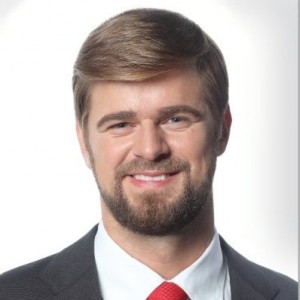
Konstantin Kondakov - Trader, Analyst and Alleged Founder of MMCIS
The spread of such rumours is designed to spread panic and through so many requests coming at the same time, overloads our finance department which leads to technical problems in completing withdrawals. The organisers of this cyber-attack expect the second wave of panic among clients to add further workload on the company, effectively blocking our operations.”
The combative Mr. Kondakov continued: “The perpetrators of these attacks have chosen an opportune moment to initiate their plans - the implementation of a payments verification system. The timing helps to validate the rumours. Payment verification is something we had to implement sooner or later. MMCIS has become sufficiently large to attract regulatory calls to abide by particular standards which are being implemented in the financial markets."
CRFIN on MMCIS: “The company is offering investors a high stable return and has therefore been blacklisted.”
In May of this year, the Centre for Regulating Off-exchange Financial Instruments and Technologies (CRFIN) blacklisted MMCIS. The move was made following multiple client complaints and regulatory checks related to the broker. The main reason relates to MMCIS offering clients a stable high return without risks (10% returns per month on average which equates to more than 200% annually) via discretionary managed accounts.
Mr. Kondakov insists that CRFIN’s actions can be explained by the fact that CRFIN belongs to Alpari and goes further to accuse Alpari of copying MMCIS's technology. He says: “MMCIS is taking CRFIN to court and as has been the case previously, we expect to win. CRFIN belongs to Alpari which has total control of the organisation. MMCIS and Alpari are competitors, therefore the difficulties between MMCIS and CRFIN is simply a case of unsightly competition." Mr. Kondakov adds, “Alpari has added MMCIS to the blacklist because of the programme ‘Index Top 20’ but then went on to develop their own version."
Forex Trend on MMCIS: “They work on a system whereby without new deposits they cannot operate. When deposits fell the company defaulted. Everything that happens to them [MMCIS] in the near future will happen by itself without our involvement."
MMCIS is blaming everything on its competitiors while its competitors are responding in kind. Forex Trend, a Ukraininan broker directly in competition with MMCIS alleges that MMCIS is conducting "black PR" against the company. In a web-conference Forex Trend Director, Alexander Topchii said, “Regarding allegations against our company, clients were complaining about withdrawals and defamatory articles were published. It was established that the instigator of all these activities was MMCIS.
It was them who had problems with withdrawals in August which they attribute to verification. They have a dubious license and it hasn't been confirmed whether it’s even linked to them. We understand how verification works and this issue isn’t applicable. When withdrawal problems occurred they launched an informational attack on all brokers around them. With the same allegations they intensively posted false client complaints about Forex Trend on different forums over the course of 2 days and organised a meeting."
"They work on a system whereby without new deposits they are cannot operate. When deposits fell the company defaulted. Everything that happens to them [MMCIS] in the near future will happen by itself without our involvement” claims Mr. Topchii.
Kondakov on MMCIS: “I am not me and the horse isn’t mine.”
On the MMCIS forum, an interesting announcement from Konstantin Kondakov has appeared recently. In the post, he effectively distances himself from the company’s operations. It’s not out of the question that such a step, in addition to Mr. Kondakov’s admitted fascinations with running for the Rada political party are exacerbating the negative hysteria and is being used as a self-defence tactic. Mr. Kondakov has now set his sights on Oleg Lyashko’s seat in the Ukrainian parliament as head of the “Radical Party'.
Mr. Kondarov writes: “I have never been nor am I currently involved in the operations of the company[MMCIS]. Those that claim that I have founded MMCIS and am responsible for running it are not being truthful. I am merely a trader and an analyst who analyses situations and gives his forecasts or places orders into the Metatrader system."
He continues: "I have never signed a document on behalf of the company and have never held a significant operational position. I would like to call on media agencies to report trustworthy information based on facts and documents, not anonymous scribbling on a fence."
"After reading a headline such as ‘MMCIS founder Konstantin Kondarov alleges cyber-attack,” people often come to me as the founder, writing to me with personal questions and requests. Questions I theoretically cannot answer because I am not the founder of MMCIS." claims Mr. Kondarov.
"I know of general company operations, its strategy and goals. As an analyst I focus on what is happening inside and outside the company although this doesn’t mean I am the general manager of MMCIS. I am officially stating that I was the face of the MMCIS brand while the company's entity ‘MMCIS Investments’ was being listed on the stock exchange and I was paid for that, but I never managed the firm,” says Mr. Kondarov.
An interesting response from a commenter soon followed: "It would have been logical not to allow Konstantin Kondarov to address the cyber-attack issue, instead allowing the company to report it via the news seeing as he is not involved in founding MMCIS." Indeed.
UCRFIN on MMCIS: "We are aware of media reports relating to various problems with the company although there is no confirmation."
It’s fairly obvious that MMCIS is operating practically without any license in multiple regions. The main problem is caused in countries where there is an absence of regulation of the Forex market – countries such as Israel and Ukraine. In Ukraine, MMCIS’s home territory, forex companies are not authorised to provide financial services and the forex industry is limited to providing consulting services only. An agreement to offer financial services is signed by the trader and a foreign legal entity. For example, MMCIS has a rather uncertain legal relationship with its parent company based offshore.
In response to the Forex Magnates investigation into developments concerning MMCIS, Aleksei Atroshenko, Head of UCRFIN, responded by saying: "We are aware of media reports relating to various problems with the company [MMCIS] although there is no confirmation. We would also like to underline that in the Ukraine there can be instances of financial pyramid schemes which often lack appropriate regulation."
Senior MMCIS Managment on MMCIS: "The new company president has promised to lead the company out of the crisis."
Another indication of instability at MMCIS is the swift change of management personnel. Less than two weeks ago, Roman Komica was appointed as new president, having previously held the position of vice-president. It is the view of senior management that the incumbent president should first deal with the cyber-attack issue and return the company to a normal functioning. The new president has promised to do all he can to preserve the dynamic development of the company and lead it out of the crisis. So the company is in a state of crisis after all.
Forex Magnates understands that among senior management at MMCIS, Mr. Komica is considered to have the best crisis management skills and is tasked with leading the firm away from difficulties and threats that have recently hit the company.
After the Fact: The Patient Is Likely More Dead Than Alive
With MMCIS making its name due to the firm’s marketing activity and promotional ideas, the company’s marketing spend seems to be declining rapidly – and not necessarily by its own volition. Several webmasters from prominent websites have said they will not allow MMCIS to market their company through their sites. One commenter was quoted as saying: “Once upon a time, I was seduced by MMCIS's business and friendly calls from their managers. Now the forum is full of complaints and managers don’t call. Multiple law suits would prevent the company from advertising."
Attempts by Forex Magnates to contact MMCIS Management figures at its Ukrainian office via phone and email have proven unsuccessful despite several days of trying.
In conclusion, one could cautiously infer that MMCIS is facing a crisis. In many ways, even if the reported allegations prove false, painful and long-lasting damage to the MMCIS brand is inescapable, despite the optimism of some clients.
Moreover, MMCIS is a classic case which highlights the pressing problem of regulation lacking in regions where client funds are at stake.
In recent years, and more pressingly over the past month, the amount of client complaints and negative publicity in the media have risen sharply regarding Ukrainian broker MMCIS. The broker also offers its services in mainland Russia. As Forex Magnates Russia reveals, according to widespread reports the broker is experiencing financial difficulties and could potentially close in the foreseeable future.
In any industry, companies come and go due to changing trends and customer preferences. In the financial markets this is even more visible given their fast-paced nature and dynamism. The recent developments regarding MMCIS have raised questions and scrutiny from across the foreign exchange industry. The broker has become infamous for its aggressive marketing and sales techniques, as well as sensationalised partnerships with celebrities and lucrative prize draws. MMCIS has turned the provision of trading services into a game show – a Field of Miracles indeed. The regulators have not been impressed.
MMCIS has not yet officially admitted that the company is experiencing financial difficulties and cannot guarantee that all client funds are available for withdrawal. The broker cites a recent cyber-attack which it claims was “ordered by competitors." Regardless of the cause, rumours based on reported information that the broker is facing some type of difficulty has spurred a mass exodus of clients; some are struggling to obtain their funds.
MMCIS Site & Forum Threads
The first noticeable change on the MMCIS website is the sudden slowdown in company news or announcements over the past 3 weeks. Prior to this, the company would publish news, offers and promotional material on a daily basis. However, the MMCIS forum is where all the activity is. One of the most popular and most discussed threads is “Funds Withdrawal and Top 20”. The forum participants in general report successful withdrawal attempts, although with some delays and not all have been in full. Commenters also report that both the ‘company chat’ feature and customer service call centres are operational.
KROUFR Forum: Mass reports of “I’m not getting my money back.”
The forum hosted by KROUFR, a Russian Self-Regulatory Organization (SRO), contains multiple reports alleging funds are being withheld although KROUFR cannot officially investigate due to MMCIS not being a member.
Posts include: “The company is not meeting its obligations, violating the terms of the client agreement, delaying access to client funds and withholding funds altogether held on company accounts,” while another commenter writes, “I completed all the company prescribed steps to withdraw including the submittal of a withdrawal form. I provided all the necessary details to change payment systems after verifying with the company first. The status now is that they [MMCIS] do not want to process my withdrawal and send me verification letters even though I have already verified everything."
“Withdrawal forms are not being processed,” says one client who received a verification letter on August 20th – more than 1 month ago. It is worth noting that as a rule of thumb, withdrawals should take no longer than 2-3 business days. On the KROUFR forum, similar posts claiming “I can’t get my money back” are growing.
KROUFR representatives write the following: “As everyone can see, the amount of client complaints regarding MMCIS has sharply risen recently." The amount of MMCIS related posts is large and has been given a dedicated category by KROUFR.
Konstantin Kondakov regarding MMCIS: “Reports of MMCIS having problems are fabricated rumours.”
One of the alleged Founders of MMCIS, Konstantin Kondakov, who represents the company as a leading analyst and head trader commented on reports relating to MMCIS via an online conference on VKontakte, a popular Russian social media site.
Konstantin Kondakov - Trader, Analyst and Alleged Founder of MMCIS
The spread of such rumours is designed to spread panic and through so many requests coming at the same time, overloads our finance department which leads to technical problems in completing withdrawals. The organisers of this cyber-attack expect the second wave of panic among clients to add further workload on the company, effectively blocking our operations.”
The combative Mr. Kondakov continued: “The perpetrators of these attacks have chosen an opportune moment to initiate their plans - the implementation of a payments verification system. The timing helps to validate the rumours. Payment verification is something we had to implement sooner or later. MMCIS has become sufficiently large to attract regulatory calls to abide by particular standards which are being implemented in the financial markets."
CRFIN on MMCIS: “The company is offering investors a high stable return and has therefore been blacklisted.”
In May of this year, the Centre for Regulating Off-exchange Financial Instruments and Technologies (CRFIN) blacklisted MMCIS. The move was made following multiple client complaints and regulatory checks related to the broker. The main reason relates to MMCIS offering clients a stable high return without risks (10% returns per month on average which equates to more than 200% annually) via discretionary managed accounts.
Mr. Kondakov insists that CRFIN’s actions can be explained by the fact that CRFIN belongs to Alpari and goes further to accuse Alpari of copying MMCIS's technology. He says: “MMCIS is taking CRFIN to court and as has been the case previously, we expect to win. CRFIN belongs to Alpari which has total control of the organisation. MMCIS and Alpari are competitors, therefore the difficulties between MMCIS and CRFIN is simply a case of unsightly competition." Mr. Kondakov adds, “Alpari has added MMCIS to the blacklist because of the programme ‘Index Top 20’ but then went on to develop their own version."
Forex Trend on MMCIS: “They work on a system whereby without new deposits they cannot operate. When deposits fell the company defaulted. Everything that happens to them [MMCIS] in the near future will happen by itself without our involvement."
MMCIS is blaming everything on its competitiors while its competitors are responding in kind. Forex Trend, a Ukraininan broker directly in competition with MMCIS alleges that MMCIS is conducting "black PR" against the company. In a web-conference Forex Trend Director, Alexander Topchii said, “Regarding allegations against our company, clients were complaining about withdrawals and defamatory articles were published. It was established that the instigator of all these activities was MMCIS.
It was them who had problems with withdrawals in August which they attribute to verification. They have a dubious license and it hasn't been confirmed whether it’s even linked to them. We understand how verification works and this issue isn’t applicable. When withdrawal problems occurred they launched an informational attack on all brokers around them. With the same allegations they intensively posted false client complaints about Forex Trend on different forums over the course of 2 days and organised a meeting."
"They work on a system whereby without new deposits they are cannot operate. When deposits fell the company defaulted. Everything that happens to them [MMCIS] in the near future will happen by itself without our involvement” claims Mr. Topchii.
Kondakov on MMCIS: “I am not me and the horse isn’t mine.”
On the MMCIS forum, an interesting announcement from Konstantin Kondakov has appeared recently. In the post, he effectively distances himself from the company’s operations. It’s not out of the question that such a step, in addition to Mr. Kondakov’s admitted fascinations with running for the Rada political party are exacerbating the negative hysteria and is being used as a self-defence tactic. Mr. Kondakov has now set his sights on Oleg Lyashko’s seat in the Ukrainian parliament as head of the “Radical Party'.
Mr. Kondarov writes: “I have never been nor am I currently involved in the operations of the company[MMCIS]. Those that claim that I have founded MMCIS and am responsible for running it are not being truthful. I am merely a trader and an analyst who analyses situations and gives his forecasts or places orders into the Metatrader system."
He continues: "I have never signed a document on behalf of the company and have never held a significant operational position. I would like to call on media agencies to report trustworthy information based on facts and documents, not anonymous scribbling on a fence."
"After reading a headline such as ‘MMCIS founder Konstantin Kondarov alleges cyber-attack,” people often come to me as the founder, writing to me with personal questions and requests. Questions I theoretically cannot answer because I am not the founder of MMCIS." claims Mr. Kondarov.
"I know of general company operations, its strategy and goals. As an analyst I focus on what is happening inside and outside the company although this doesn’t mean I am the general manager of MMCIS. I am officially stating that I was the face of the MMCIS brand while the company's entity ‘MMCIS Investments’ was being listed on the stock exchange and I was paid for that, but I never managed the firm,” says Mr. Kondarov.
An interesting response from a commenter soon followed: "It would have been logical not to allow Konstantin Kondarov to address the cyber-attack issue, instead allowing the company to report it via the news seeing as he is not involved in founding MMCIS." Indeed.
UCRFIN on MMCIS: "We are aware of media reports relating to various problems with the company although there is no confirmation."
It’s fairly obvious that MMCIS is operating practically without any license in multiple regions. The main problem is caused in countries where there is an absence of regulation of the Forex market – countries such as Israel and Ukraine. In Ukraine, MMCIS’s home territory, forex companies are not authorised to provide financial services and the forex industry is limited to providing consulting services only. An agreement to offer financial services is signed by the trader and a foreign legal entity. For example, MMCIS has a rather uncertain legal relationship with its parent company based offshore.
In response to the Forex Magnates investigation into developments concerning MMCIS, Aleksei Atroshenko, Head of UCRFIN, responded by saying: "We are aware of media reports relating to various problems with the company [MMCIS] although there is no confirmation. We would also like to underline that in the Ukraine there can be instances of financial pyramid schemes which often lack appropriate regulation."
Senior MMCIS Managment on MMCIS: "The new company president has promised to lead the company out of the crisis."
Another indication of instability at MMCIS is the swift change of management personnel. Less than two weeks ago, Roman Komica was appointed as new president, having previously held the position of vice-president. It is the view of senior management that the incumbent president should first deal with the cyber-attack issue and return the company to a normal functioning. The new president has promised to do all he can to preserve the dynamic development of the company and lead it out of the crisis. So the company is in a state of crisis after all.
Forex Magnates understands that among senior management at MMCIS, Mr. Komica is considered to have the best crisis management skills and is tasked with leading the firm away from difficulties and threats that have recently hit the company.
After the Fact: The Patient Is Likely More Dead Than Alive
With MMCIS making its name due to the firm’s marketing activity and promotional ideas, the company’s marketing spend seems to be declining rapidly – and not necessarily by its own volition. Several webmasters from prominent websites have said they will not allow MMCIS to market their company through their sites. One commenter was quoted as saying: “Once upon a time, I was seduced by MMCIS's business and friendly calls from their managers. Now the forum is full of complaints and managers don’t call. Multiple law suits would prevent the company from advertising."
Attempts by Forex Magnates to contact MMCIS Management figures at its Ukrainian office via phone and email have proven unsuccessful despite several days of trying.
In conclusion, one could cautiously infer that MMCIS is facing a crisis. In many ways, even if the reported allegations prove false, painful and long-lasting damage to the MMCIS brand is inescapable, despite the optimism of some clients.
Moreover, MMCIS is a classic case which highlights the pressing problem of regulation lacking in regions where client funds are at stake.
Italy’s Consob Tightens Net on AI-Fueled Scams With Fresh Website Bans
Featured Videos
FP Markets Winner Spotlight 🏆 | Global Broker of the Year 2025 #Trading #Broker #Innovation #Shorts
FP Markets Winner Spotlight 🏆 | Global Broker of the Year 2025 #Trading #Broker #Innovation #Shorts
FP Markets Winner Spotlight 🏆 | Global Broker of the Year 2025 #Trading #Broker #Innovation #Shorts
FP Markets Winner Spotlight 🏆 | Global Broker of the Year 2025 #Trading #Broker #Innovation #Shorts
FP Markets takes the spotlight as Global Broker of the Year 2025 at the Finance Magnates Awards.
Martin Stoilov, Head of Client Experience, shares that trust, innovation, and people played a key role in the company’s success, supported by a strong foundation of integrity and client-centricity.
Following this milestone, FP Markets continues to focus on growth, technology investment, and its core values of transparency and excellence.
👉 Be part of FM Awards 2026: https://awards.financemagnates.com/#nominate
FP Markets takes the spotlight as Global Broker of the Year 2025 at the Finance Magnates Awards.
Martin Stoilov, Head of Client Experience, shares that trust, innovation, and people played a key role in the company’s success, supported by a strong foundation of integrity and client-centricity.
Following this milestone, FP Markets continues to focus on growth, technology investment, and its core values of transparency and excellence.
👉 Be part of FM Awards 2026: https://awards.financemagnates.com/#nominate
FP Markets takes the spotlight as Global Broker of the Year 2025 at the Finance Magnates Awards.
Martin Stoilov, Head of Client Experience, shares that trust, innovation, and people played a key role in the company’s success, supported by a strong foundation of integrity and client-centricity.
Following this milestone, FP Markets continues to focus on growth, technology investment, and its core values of transparency and excellence.
👉 Be part of FM Awards 2026: https://awards.financemagnates.com/#nominate
FP Markets takes the spotlight as Global Broker of the Year 2025 at the Finance Magnates Awards.
Martin Stoilov, Head of Client Experience, shares that trust, innovation, and people played a key role in the company’s success, supported by a strong foundation of integrity and client-centricity.
Following this milestone, FP Markets continues to focus on growth, technology investment, and its core values of transparency and excellence.
👉 Be part of FM Awards 2026: https://awards.financemagnates.com/#nominate
In this video, we review @HolaPrimeMarketsOfficial, a multi-asset forex and CFDs broker offering different account types, trading platforms, and flexible trading conditions.
We cover the broker’s overall offering, including account options, trading environment, platforms like MT4 and MT5, and additional services such as managed accounts and fast withdrawals.
Watch the full video to see if Hola Prime Markets fits your trading needs.
📣 Stay up to date with the latest in finance and trading. Follow Finance Magnates for industry news, insights, and global event coverage.
Connect with us:
🔗 LinkedIn: /financemagnates
👍 Facebook: /financemagnates
📸 Instagram: https://www.instagram.com/financemagnates
🐦 X: https://x.com/financemagnates
🎥 TikTok: https://www.tiktok.com/tag/financemagnates
▶️ YouTube: /@financemagnates_official
#HolaPrime #ForexBroker #CFDTrading #FinanceMagnates #Trading #Forex #BrokerReview
In this video, we review @HolaPrimeMarketsOfficial, a multi-asset forex and CFDs broker offering different account types, trading platforms, and flexible trading conditions.
We cover the broker’s overall offering, including account options, trading environment, platforms like MT4 and MT5, and additional services such as managed accounts and fast withdrawals.
Watch the full video to see if Hola Prime Markets fits your trading needs.
📣 Stay up to date with the latest in finance and trading. Follow Finance Magnates for industry news, insights, and global event coverage.
Connect with us:
🔗 LinkedIn: /financemagnates
👍 Facebook: /financemagnates
📸 Instagram: https://www.instagram.com/financemagnates
🐦 X: https://x.com/financemagnates
🎥 TikTok: https://www.tiktok.com/tag/financemagnates
▶️ YouTube: /@financemagnates_official
#HolaPrime #ForexBroker #CFDTrading #FinanceMagnates #Trading #Forex #BrokerReview
In this video, we review @HolaPrimeMarketsOfficial, a multi-asset forex and CFDs broker offering different account types, trading platforms, and flexible trading conditions.
We cover the broker’s overall offering, including account options, trading environment, platforms like MT4 and MT5, and additional services such as managed accounts and fast withdrawals.
Watch the full video to see if Hola Prime Markets fits your trading needs.
📣 Stay up to date with the latest in finance and trading. Follow Finance Magnates for industry news, insights, and global event coverage.
Connect with us:
🔗 LinkedIn: /financemagnates
👍 Facebook: /financemagnates
📸 Instagram: https://www.instagram.com/financemagnates
🐦 X: https://x.com/financemagnates
🎥 TikTok: https://www.tiktok.com/tag/financemagnates
▶️ YouTube: /@financemagnates_official
#HolaPrime #ForexBroker #CFDTrading #FinanceMagnates #Trading #Forex #BrokerReview
In this video, we review @HolaPrimeMarketsOfficial, a multi-asset forex and CFDs broker offering different account types, trading platforms, and flexible trading conditions.
We cover the broker’s overall offering, including account options, trading environment, platforms like MT4 and MT5, and additional services such as managed accounts and fast withdrawals.
Watch the full video to see if Hola Prime Markets fits your trading needs.
📣 Stay up to date with the latest in finance and trading. Follow Finance Magnates for industry news, insights, and global event coverage.
Connect with us:
🔗 LinkedIn: /financemagnates
👍 Facebook: /financemagnates
📸 Instagram: https://www.instagram.com/financemagnates
🐦 X: https://x.com/financemagnates
🎥 TikTok: https://www.tiktok.com/tag/financemagnates
▶️ YouTube: /@financemagnates_official
#HolaPrime #ForexBroker #CFDTrading #FinanceMagnates #Trading #Forex #BrokerReview
In this video, we review @HolaPrimeMarketsOfficial, a multi-asset forex and CFDs broker offering different account types, trading platforms, and flexible trading conditions.
We cover the broker’s overall offering, including account options, trading environment, platforms like MT4 and MT5, and additional services such as managed accounts and fast withdrawals.
Watch the full video to see if Hola Prime Markets fits your trading needs.
📣 Stay up to date with the latest in finance and trading. Follow Finance Magnates for industry news, insights, and global event coverage.
Connect with us:
🔗 LinkedIn: /financemagnates
👍 Facebook: /financemagnates
📸 Instagram: https://www.instagram.com/financemagnates
🐦 X: https://x.com/financemagnates
🎥 TikTok: https://www.tiktok.com/tag/financemagnates
▶️ YouTube: /@financemagnates_official
#HolaPrime #ForexBroker #CFDTrading #FinanceMagnates #Trading #Forex #BrokerReview
In this video, we review @HolaPrimeMarketsOfficial, a multi-asset forex and CFDs broker offering different account types, trading platforms, and flexible trading conditions.
We cover the broker’s overall offering, including account options, trading environment, platforms like MT4 and MT5, and additional services such as managed accounts and fast withdrawals.
Watch the full video to see if Hola Prime Markets fits your trading needs.
📣 Stay up to date with the latest in finance and trading. Follow Finance Magnates for industry news, insights, and global event coverage.
Connect with us:
🔗 LinkedIn: /financemagnates
👍 Facebook: /financemagnates
📸 Instagram: https://www.instagram.com/financemagnates
🐦 X: https://x.com/financemagnates
🎥 TikTok: https://www.tiktok.com/tag/financemagnates
▶️ YouTube: /@financemagnates_official
#HolaPrime #ForexBroker #CFDTrading #FinanceMagnates #Trading #Forex #BrokerReview
Hola Prime Review: What You Need to Know | Full Breakdown by Finance Magnates
Hola Prime Review: What You Need to Know | Full Breakdown by Finance Magnates
Hola Prime Review: What You Need to Know | Full Breakdown by Finance Magnates
Hola Prime Review: What You Need to Know | Full Breakdown by Finance Magnates
Hola Prime Review: What You Need to Know | Full Breakdown by Finance Magnates
Hola Prime Review: What You Need to Know | Full Breakdown by Finance Magnates
In this video, we review @HolaPrime_Global, a proprietary trading firm offering evaluation programs and performance-based payouts in simulated market environments.
We cover how the challenge model works, including account types, profit splits (up to 95%), trading rules, and what it takes to reach a funded account. You’ll also learn about available platforms like MT4, MT5, cTrader, and more, along with insights into payouts, support, and trading conditions.
Watch the full video to see if Hola Prime fits your trading style.
📣 Stay up to date with the latest in finance and trading. Follow Finance Magnates for industry news, insights, and global event coverage.
Connect with us:
🔗 LinkedIn: /financemagnates
👍 Facebook: /financemagnates
📸 Instagram: https://www.instagram.com/financemagnates
🐦 X: https://x.com/financemagnates
🎥 TikTok: https://www.tiktok.com/tag/financemagnates
▶️ YouTube: /@financemagnates_official
#HolaPrime #PropFirm #Trading #FinanceMagnates #Forex #FuturesTrading #TradingReview #PropFirmReview
In this video, we review @HolaPrime_Global, a proprietary trading firm offering evaluation programs and performance-based payouts in simulated market environments.
We cover how the challenge model works, including account types, profit splits (up to 95%), trading rules, and what it takes to reach a funded account. You’ll also learn about available platforms like MT4, MT5, cTrader, and more, along with insights into payouts, support, and trading conditions.
Watch the full video to see if Hola Prime fits your trading style.
📣 Stay up to date with the latest in finance and trading. Follow Finance Magnates for industry news, insights, and global event coverage.
Connect with us:
🔗 LinkedIn: /financemagnates
👍 Facebook: /financemagnates
📸 Instagram: https://www.instagram.com/financemagnates
🐦 X: https://x.com/financemagnates
🎥 TikTok: https://www.tiktok.com/tag/financemagnates
▶️ YouTube: /@financemagnates_official
#HolaPrime #PropFirm #Trading #FinanceMagnates #Forex #FuturesTrading #TradingReview #PropFirmReview
In this video, we review @HolaPrime_Global, a proprietary trading firm offering evaluation programs and performance-based payouts in simulated market environments.
We cover how the challenge model works, including account types, profit splits (up to 95%), trading rules, and what it takes to reach a funded account. You’ll also learn about available platforms like MT4, MT5, cTrader, and more, along with insights into payouts, support, and trading conditions.
Watch the full video to see if Hola Prime fits your trading style.
📣 Stay up to date with the latest in finance and trading. Follow Finance Magnates for industry news, insights, and global event coverage.
Connect with us:
🔗 LinkedIn: /financemagnates
👍 Facebook: /financemagnates
📸 Instagram: https://www.instagram.com/financemagnates
🐦 X: https://x.com/financemagnates
🎥 TikTok: https://www.tiktok.com/tag/financemagnates
▶️ YouTube: /@financemagnates_official
#HolaPrime #PropFirm #Trading #FinanceMagnates #Forex #FuturesTrading #TradingReview #PropFirmReview
In this video, we review @HolaPrime_Global, a proprietary trading firm offering evaluation programs and performance-based payouts in simulated market environments.
We cover how the challenge model works, including account types, profit splits (up to 95%), trading rules, and what it takes to reach a funded account. You’ll also learn about available platforms like MT4, MT5, cTrader, and more, along with insights into payouts, support, and trading conditions.
Watch the full video to see if Hola Prime fits your trading style.
📣 Stay up to date with the latest in finance and trading. Follow Finance Magnates for industry news, insights, and global event coverage.
Connect with us:
🔗 LinkedIn: /financemagnates
👍 Facebook: /financemagnates
📸 Instagram: https://www.instagram.com/financemagnates
🐦 X: https://x.com/financemagnates
🎥 TikTok: https://www.tiktok.com/tag/financemagnates
▶️ YouTube: /@financemagnates_official
#HolaPrime #PropFirm #Trading #FinanceMagnates #Forex #FuturesTrading #TradingReview #PropFirmReview
In this video, we review @HolaPrime_Global, a proprietary trading firm offering evaluation programs and performance-based payouts in simulated market environments.
We cover how the challenge model works, including account types, profit splits (up to 95%), trading rules, and what it takes to reach a funded account. You’ll also learn about available platforms like MT4, MT5, cTrader, and more, along with insights into payouts, support, and trading conditions.
Watch the full video to see if Hola Prime fits your trading style.
📣 Stay up to date with the latest in finance and trading. Follow Finance Magnates for industry news, insights, and global event coverage.
Connect with us:
🔗 LinkedIn: /financemagnates
👍 Facebook: /financemagnates
📸 Instagram: https://www.instagram.com/financemagnates
🐦 X: https://x.com/financemagnates
🎥 TikTok: https://www.tiktok.com/tag/financemagnates
▶️ YouTube: /@financemagnates_official
#HolaPrime #PropFirm #Trading #FinanceMagnates #Forex #FuturesTrading #TradingReview #PropFirmReview
In this video, we review @HolaPrime_Global, a proprietary trading firm offering evaluation programs and performance-based payouts in simulated market environments.
We cover how the challenge model works, including account types, profit splits (up to 95%), trading rules, and what it takes to reach a funded account. You’ll also learn about available platforms like MT4, MT5, cTrader, and more, along with insights into payouts, support, and trading conditions.
Watch the full video to see if Hola Prime fits your trading style.
📣 Stay up to date with the latest in finance and trading. Follow Finance Magnates for industry news, insights, and global event coverage.
Connect with us:
🔗 LinkedIn: /financemagnates
👍 Facebook: /financemagnates
📸 Instagram: https://www.instagram.com/financemagnates
🐦 X: https://x.com/financemagnates
🎥 TikTok: https://www.tiktok.com/tag/financemagnates
▶️ YouTube: /@financemagnates_official
#HolaPrime #PropFirm #Trading #FinanceMagnates #Forex #FuturesTrading #TradingReview #PropFirmReview
Axi Winner Spotlight 🏆 | Global Most Innovative Broker 2025 #Innovation #Trading #Fintech #Broker
Axi Winner Spotlight 🏆 | Global Most Innovative Broker 2025 #Innovation #Trading #Fintech #Broker
Axi Winner Spotlight 🏆 | Global Most Innovative Broker 2025 #Innovation #Trading #Fintech #Broker
Axi Winner Spotlight 🏆 | Global Most Innovative Broker 2025 #Innovation #Trading #Fintech #Broker
Axi Winner Spotlight 🏆 | Global Most Innovative Broker 2025 #Innovation #Trading #Fintech #Broker
Axi Winner Spotlight 🏆 | Global Most Innovative Broker 2025 #Innovation #Trading #Fintech #Broker
Axi takes the spotlight at the Finance Magnates Awards, winning Global Most Innovative Broker 2025.
Olivia Xenofontos and Ivanna Openko share how the team will feel: proud, motivated, and ready to keep delivering.
They also describe the night as well-organized, focused, and enjoyable for all.
👉 Be part of FM Awards 2026.
Axi takes the spotlight at the Finance Magnates Awards, winning Global Most Innovative Broker 2025.
Olivia Xenofontos and Ivanna Openko share how the team will feel: proud, motivated, and ready to keep delivering.
They also describe the night as well-organized, focused, and enjoyable for all.
👉 Be part of FM Awards 2026.
Axi takes the spotlight at the Finance Magnates Awards, winning Global Most Innovative Broker 2025.
Olivia Xenofontos and Ivanna Openko share how the team will feel: proud, motivated, and ready to keep delivering.
They also describe the night as well-organized, focused, and enjoyable for all.
👉 Be part of FM Awards 2026.
Axi takes the spotlight at the Finance Magnates Awards, winning Global Most Innovative Broker 2025.
Olivia Xenofontos and Ivanna Openko share how the team will feel: proud, motivated, and ready to keep delivering.
They also describe the night as well-organized, focused, and enjoyable for all.
👉 Be part of FM Awards 2026.
Axi takes the spotlight at the Finance Magnates Awards, winning Global Most Innovative Broker 2025.
Olivia Xenofontos and Ivanna Openko share how the team will feel: proud, motivated, and ready to keep delivering.
They also describe the night as well-organized, focused, and enjoyable for all.
👉 Be part of FM Awards 2026.
Axi takes the spotlight at the Finance Magnates Awards, winning Global Most Innovative Broker 2025.
Olivia Xenofontos and Ivanna Openko share how the team will feel: proud, motivated, and ready to keep delivering.
They also describe the night as well-organized, focused, and enjoyable for all.
👉 Be part of FM Awards 2026.
Recognition that matters.
Built on transparency.
Driven by the industry.
The Finance Magnates Awards 2026.
Nominations are now open.
🔗 https://awards.financemagnates.com/?utm_source=SM&utm_medium=social&utm_campaign=recognition-matters
Recognition that matters.
Built on transparency.
Driven by the industry.
The Finance Magnates Awards 2026.
Nominations are now open.
🔗 https://awards.financemagnates.com/?utm_source=SM&utm_medium=social&utm_campaign=recognition-matters
Recognition that matters.
Built on transparency.
Driven by the industry.
The Finance Magnates Awards 2026.
Nominations are now open.
🔗 https://awards.financemagnates.com/?utm_source=SM&utm_medium=social&utm_campaign=recognition-matters
Recognition that matters.
Built on transparency.
Driven by the industry.
The Finance Magnates Awards 2026.
Nominations are now open.
🔗 https://awards.financemagnates.com/?utm_source=SM&utm_medium=social&utm_campaign=recognition-matters
Recognition that matters.
Built on transparency.
Driven by the industry.
The Finance Magnates Awards 2026.
Nominations are now open.
🔗 https://awards.financemagnates.com/?utm_source=SM&utm_medium=social&utm_campaign=recognition-matters
Recognition that matters.
Built on transparency.
Driven by the industry.
The Finance Magnates Awards 2026.
Nominations are now open.
🔗 https://awards.financemagnates.com/?utm_source=SM&utm_medium=social&utm_campaign=recognition-matters