>
iFX EXPO Asia 2014 Day 1 Review - Leveraging Up Among Vibrant Discussion
iFX EXPO Asia 2014 Day 1 Review - Leveraging Up Among Vibrant Discussion
Wednesday,22/01/2014|14:48GMTby
Andrew Saks McLeod
The first day of this year's iFX EXPO has drawn to a close in Macau, as 1,500 senior industry figures reflect on a day of panel discussions relating to cutting-edge industry developments, and look forward to a vibrant second day ahead.
The welcome party set the tone for what was expected to be an extravaganza, which the event itself more than lived up to, particularly considering the first day's activities, not only in terms of size, attendees and content, but also the hot topics which were covered.
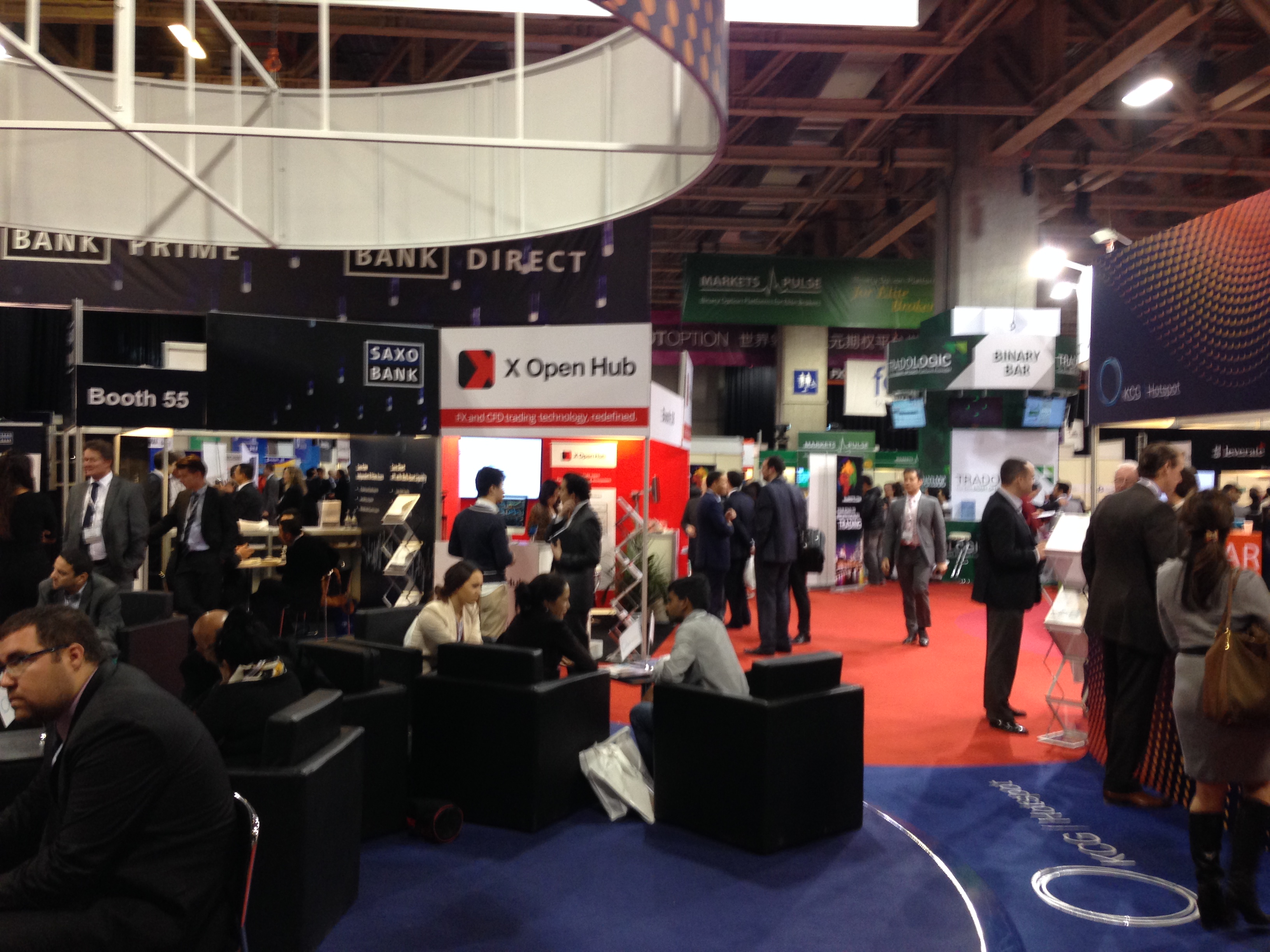
Hive of Activity: iFX EXPO Asia 2014
An impression of optimism was evident, one clear example was the fact that people were eager to directly and confidently engage with each other to discuss business and exchange business cards, all with a smile.
The annual iFX EXPO Asia event, which is the largest FX focused financial services exhibition cum conference in Asia has continued to attract a combination of the world's most significant brokers and service providers, as well as a number of bankers, all of whom made their way toward the bright lights of the Las Vegas of the East, Macau.
During the course of the day, 1,500 senior industry figures attended, including CEOs, management teams, brokers, technology firms, innovators, bankers, fund managers and consultants.
Doors Open at 10.00 Sharp!
The event is most certainly a leading fixture in the FX calendar with regard to what is hot in the FX, CFD and binary options industry. Day 1's attendance consisted of a broad cross section of financial professionals, keen to commence the day's musings in the exhibition hall as soon as the clock struck 10!
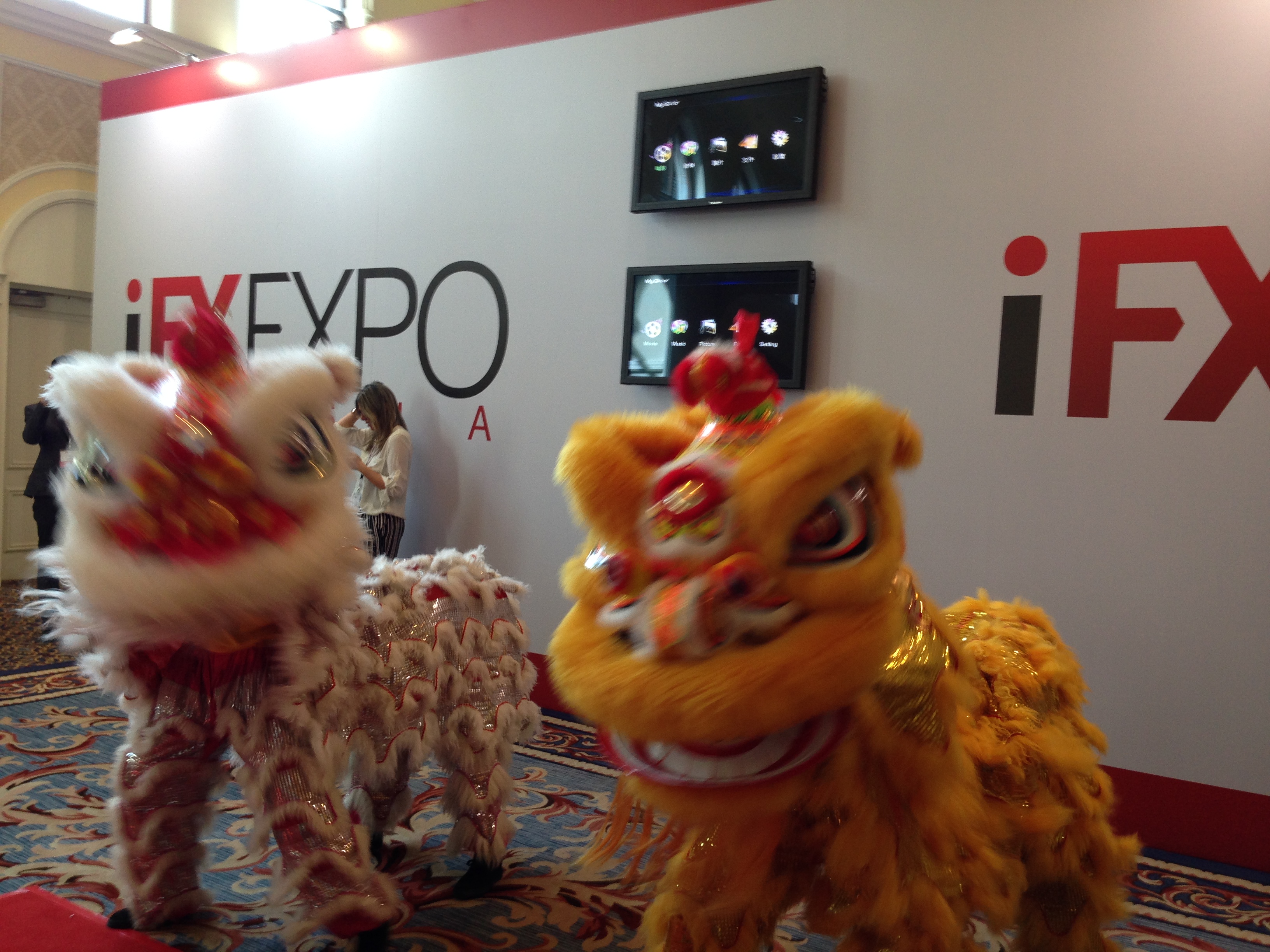
Last year the organizers added a touch of Oriental tradition with the opening ceremony known as the ‘Lion Dance’, a dance performance that is carried out on special occasions dating back to the historic dynasty days of Chinese civilization. This year, the crowd was once again mesmerized by the performance which officially kicked off the iFX EXPO Asia 2014.
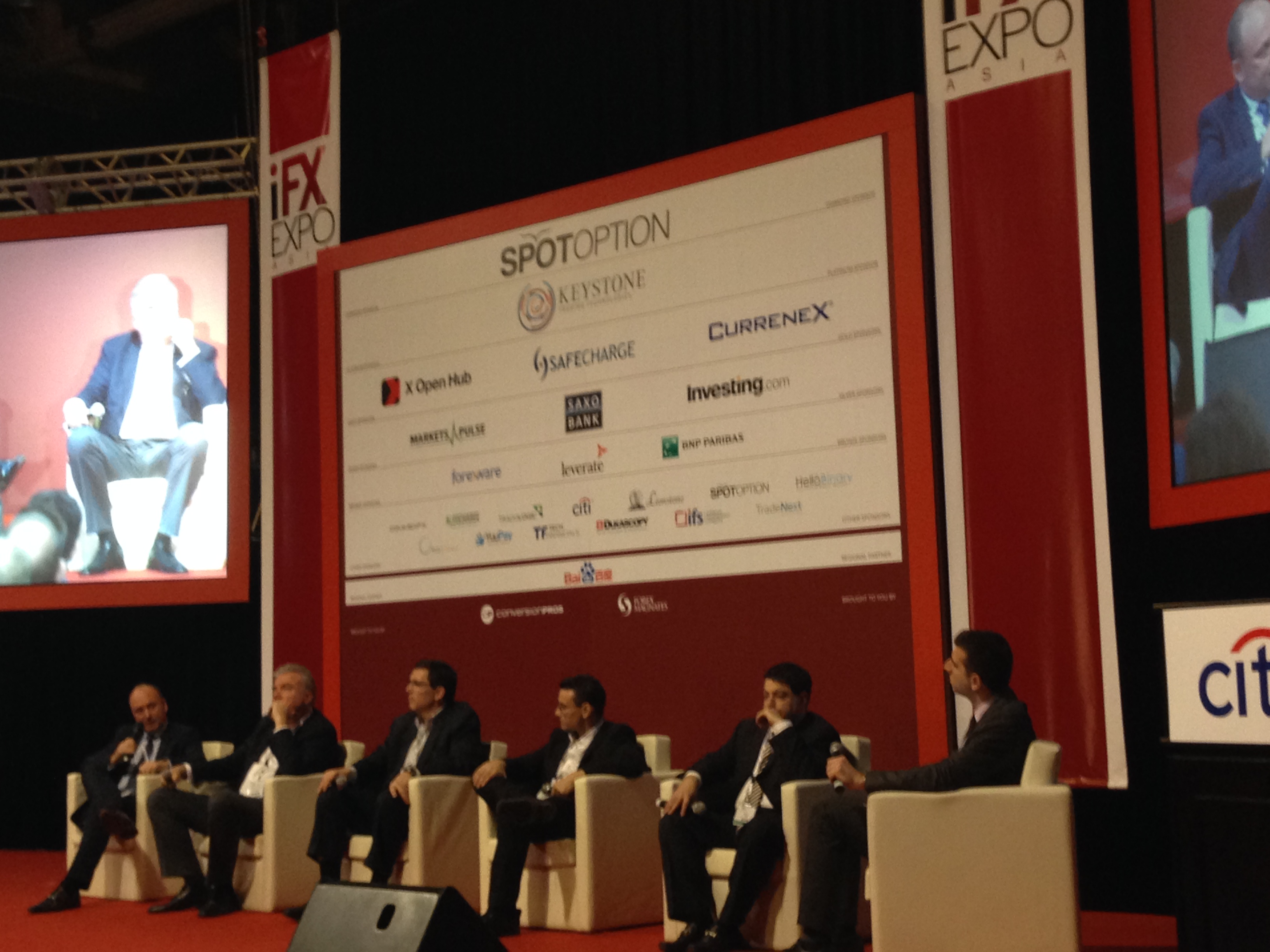
A Poignant Focus of Today's Event Was a Panel Outlining the Five "How-To's", Hosted by Erez Romas
Size Matters...
In this case ‘huge’ is the new big, with Roy Hen, the event's Chief Organizer having explained to Forex Magnates that: “We want attendees to realize that they are attending the world’s largest event, we didn't choose the world’s sixth largest building ( the Venetian resort, in floor space) as a coincidence, each year we are growing and this is us now.”
The magnanimous venue has ‘leveraged-up’ a great deal from last year, at least for Conversion Pros gearing-up won't put them on the wrong side of the regulators! The current exhibition hall has increased by over 100% in size with the total floor space for booths and the speaking area nearing the formidable 4,000 sq ft mark. The size of the venue wasn't the only talking point, this year there were over 74 booths, another increase from the previous year.
Lights, Camera, Panels...
The real action started with the first panel discussion, during which participants Rachely Esman, CEO of MarketsPulse, Tamas Szabo, an expert in CFDs, Steven Reiter, CEO of Sentry Derivatives, Avtar Sandu from Phillip Futures within the commodities sector and Shawn Dilkes, an expert on FX in emerging markets debated the next hot trend in FX in Asia.
The panel was moderated by Mitch Eaglstein who commenced the panel by posing the question; “What will be the next big product in Asia?"
Ms. Esman initiated the discussion with her view, which unsurprisingly was binary options. She explained: “The market has evolved to accommodate specific factors that are current challenges in the FX markets, namely the STP concept and last look, furthermore the binary industry has benefited from increased regulation and education, and hence we see the Asian trader welcome the features and benefits of the product.”
Traditional Ceremony Adds Oriental Flair
Once the discussion turned toward the subject of binary options, and specifically the remuneration method for brokers and their affiliates, Ms. Esman responded that MarketsPulse has noticed a sharp rise in volumes and believes that ‘volume rebates’ will be a new trend in the binary industry, adding that additionally the income per client is substantial. She added: “According to our research the average revenue per user in 2013 was $2,000, in Malaysia this figure was $3,500.”
Mr. Reiter, an industry professional with substantial experience in the FX Options segment, raised his concerns about the way binary options are priced: “They’re not vanilla options with buyers and sellers,” he said. In addition, Mr. Reiter discussed the uses of traditional options with relation to the scope, client type and motive of trade. “Vanilla options are used for hedging, a strategy that cannot be traded with binary options,” he added.
The discussion drifted to Bitcoin, a crowd-pleaser as China’s main Bitcoin exchange has reported some of the highest trading volumes. Again the discussion was mixed, with Tamas Szabo of IG Group raising his opinions on the lackluster nature of a currency that is not government-backed.
During this lively debate, a comparison was made between itself and the gold market, however, Mr. Sandhu stated the fundamental difference: “Gold is physically backed, and in Asia it is used as an investment product, you buy it, keep it and store it.”
Far East is Land of Opportunity
Dialog relating to the Far Eastern region extended beyond the confines of the iFX EXPO today, with Forex Magnates Meet The Experts' contributing author, Bart Burggraaf having shared his view on using regional differences to further the cause of marketing to a Far Eastern audience.
Mr. Burgraaf stated within his publication today on the Meet The Experts forum that, "Advertising cost is lower in Asia than in the West, and performance KPIs are higher, there is a large target audience and they are relatively price insensitive, regulation cost is low, and staff costing is low." He went on to demonstrate how this can be put to task effectively.
Resuming with full gusto after lunch, the conference hosted the innovative product session organized by FMOH Ventures, which is an initiative created by Forex Magnates and X Open Hub to support and promote new start-ups which have interesting ideas in the FX industry. The company states on its website that, “Our aim is to help build long-lasting, game-changing, profitable companies within the industry.”
During the session, six exciting new products that potentially can add value to the industry went head to head, in an eight minute pitch, these included: Keystone, Robotero, Traders Education, TradeSmarter, Trade Escort and Mingler.
This moved the event forward to the the focal point of the entire day which was the Five "How-To" Stories panel. Moderated by Forex Magnates’ Editor in Chief Erez Romas, the panel included industry heavyweights such as Drew Niv, Glenn Stevens and Lars Sebier Christensen, CEOs of three of the largest global brokers, accompanied by Alex Knight and Andrew Budzinski who shared their experience of operating in Asia.
FXCM’s Drew Niv explained that Asia has been close to FXCM since its inception, one of the first clients in 1999 were of Asian origin as soon as the e-trading revolution started. “Over 50% of our revenues come from the Asia region.”
FXCM is regulated in Hong Kong with an established presence in the region since the pre-millenium years. Mr. Niv explained how FXCM captured a large market share; “The key isn’t just about hiring a multilingual sales person who can communicate with clients in the region, you have to go three or four steps deeper and build a whole local infrastructure, we have developed an entire local workforce that, from the top-down, has the right talent and qualifications to foster the business.”
All participants on the panel spoke about their particular expertise, China and Japan were regularly mentioned. However, looking at Asia from one angle isn't fair, explained GAIN’s Glenn Stevens: “It's one region that can be divided into sub-sets, you have some advanced financially literate markets that view investments from one perspective. On the other hand, we have ‘new’ markets that have only recently entered the FX arena jumping the traditional investment products and hence their view and motive differs.”
GAIN Capital first entered the Asian markets in 2000 and has seen its user base change dramatically during the period, explained Mr. Stevens to the audience.
The conference room had three back to back sessions with the day's finale being the much awaited Baidu keynote speech. The online search provider headquartered in Beijing is the ‘Google’ of the world’s most populated nation and like Google, Baidu receives a fair amount of FX marketing dollars.
The keynote speech was an opportunity for brokers to understand the numerous ways they can benefit from Baidu’s solutions to enhance their online presence in the region. Baidu’s representatives shared their experience and key facts, in 2013 the firm received RMB 130 million from firms operating in the; FX, Bullion and banking sector.
Stay tuned for how Day 2 unfolds; tomorrow is expected to be more informative for attendees with three panel discussions covering key topics, such as social and mobile trading in Asia with panelists Lior Nabat, Leon Yohai, Rajesh Yohannan, Yosef Kaplan,Hu Liang and Ryan Moroney.
This will be followed by a marketing brainstorming session after lunch with panelists including Shay Hamama, John Lewis, Ken Chung, Mohsin Jameel and Luis Sanchez.
The grand finale, which poses the question of where to get established will commence as brokers explore jurisdiction that supports their business model, costs and objectives, we provide useful information on how to get started, panelists include; Paul Derham, Shoham Cohen, Marc Aspinall, Lior Shmuely and Graeme Watkins.
As the second day's events draw to a close, a closing party will take place in which the diverse subjects covered can be reflected on by attendees.
If markets are thought to be under the doom and gloom on the back of the ongoing tapering issue then the iFX EXPO thinks otherwise. Here you can certainly smell the fragrance of confidence whisking around the exhibition hall, and a definite indication of growth and prosperity in the world of margin trading.
The welcome party set the tone for what was expected to be an extravaganza, which the event itself more than lived up to, particularly considering the first day's activities, not only in terms of size, attendees and content, but also the hot topics which were covered.
Hive of Activity: iFX EXPO Asia 2014
An impression of optimism was evident, one clear example was the fact that people were eager to directly and confidently engage with each other to discuss business and exchange business cards, all with a smile.
The annual iFX EXPO Asia event, which is the largest FX focused financial services exhibition cum conference in Asia has continued to attract a combination of the world's most significant brokers and service providers, as well as a number of bankers, all of whom made their way toward the bright lights of the Las Vegas of the East, Macau.
During the course of the day, 1,500 senior industry figures attended, including CEOs, management teams, brokers, technology firms, innovators, bankers, fund managers and consultants.
Doors Open at 10.00 Sharp!
The event is most certainly a leading fixture in the FX calendar with regard to what is hot in the FX, CFD and binary options industry. Day 1's attendance consisted of a broad cross section of financial professionals, keen to commence the day's musings in the exhibition hall as soon as the clock struck 10!
Last year the organizers added a touch of Oriental tradition with the opening ceremony known as the ‘Lion Dance’, a dance performance that is carried out on special occasions dating back to the historic dynasty days of Chinese civilization. This year, the crowd was once again mesmerized by the performance which officially kicked off the iFX EXPO Asia 2014.
A Poignant Focus of Today's Event Was a Panel Outlining the Five "How-To's", Hosted by Erez Romas
Size Matters...
In this case ‘huge’ is the new big, with Roy Hen, the event's Chief Organizer having explained to Forex Magnates that: “We want attendees to realize that they are attending the world’s largest event, we didn't choose the world’s sixth largest building ( the Venetian resort, in floor space) as a coincidence, each year we are growing and this is us now.”
The magnanimous venue has ‘leveraged-up’ a great deal from last year, at least for Conversion Pros gearing-up won't put them on the wrong side of the regulators! The current exhibition hall has increased by over 100% in size with the total floor space for booths and the speaking area nearing the formidable 4,000 sq ft mark. The size of the venue wasn't the only talking point, this year there were over 74 booths, another increase from the previous year.
Lights, Camera, Panels...
The real action started with the first panel discussion, during which participants Rachely Esman, CEO of MarketsPulse, Tamas Szabo, an expert in CFDs, Steven Reiter, CEO of Sentry Derivatives, Avtar Sandu from Phillip Futures within the commodities sector and Shawn Dilkes, an expert on FX in emerging markets debated the next hot trend in FX in Asia.
The panel was moderated by Mitch Eaglstein who commenced the panel by posing the question; “What will be the next big product in Asia?"
Ms. Esman initiated the discussion with her view, which unsurprisingly was binary options. She explained: “The market has evolved to accommodate specific factors that are current challenges in the FX markets, namely the STP concept and last look, furthermore the binary industry has benefited from increased regulation and education, and hence we see the Asian trader welcome the features and benefits of the product.”
Traditional Ceremony Adds Oriental Flair
Once the discussion turned toward the subject of binary options, and specifically the remuneration method for brokers and their affiliates, Ms. Esman responded that MarketsPulse has noticed a sharp rise in volumes and believes that ‘volume rebates’ will be a new trend in the binary industry, adding that additionally the income per client is substantial. She added: “According to our research the average revenue per user in 2013 was $2,000, in Malaysia this figure was $3,500.”
Mr. Reiter, an industry professional with substantial experience in the FX Options segment, raised his concerns about the way binary options are priced: “They’re not vanilla options with buyers and sellers,” he said. In addition, Mr. Reiter discussed the uses of traditional options with relation to the scope, client type and motive of trade. “Vanilla options are used for hedging, a strategy that cannot be traded with binary options,” he added.
The discussion drifted to Bitcoin, a crowd-pleaser as China’s main Bitcoin exchange has reported some of the highest trading volumes. Again the discussion was mixed, with Tamas Szabo of IG Group raising his opinions on the lackluster nature of a currency that is not government-backed.
During this lively debate, a comparison was made between itself and the gold market, however, Mr. Sandhu stated the fundamental difference: “Gold is physically backed, and in Asia it is used as an investment product, you buy it, keep it and store it.”
Far East is Land of Opportunity
Dialog relating to the Far Eastern region extended beyond the confines of the iFX EXPO today, with Forex Magnates Meet The Experts' contributing author, Bart Burggraaf having shared his view on using regional differences to further the cause of marketing to a Far Eastern audience.
Mr. Burgraaf stated within his publication today on the Meet The Experts forum that, "Advertising cost is lower in Asia than in the West, and performance KPIs are higher, there is a large target audience and they are relatively price insensitive, regulation cost is low, and staff costing is low." He went on to demonstrate how this can be put to task effectively.
Resuming with full gusto after lunch, the conference hosted the innovative product session organized by FMOH Ventures, which is an initiative created by Forex Magnates and X Open Hub to support and promote new start-ups which have interesting ideas in the FX industry. The company states on its website that, “Our aim is to help build long-lasting, game-changing, profitable companies within the industry.”
During the session, six exciting new products that potentially can add value to the industry went head to head, in an eight minute pitch, these included: Keystone, Robotero, Traders Education, TradeSmarter, Trade Escort and Mingler.
This moved the event forward to the the focal point of the entire day which was the Five "How-To" Stories panel. Moderated by Forex Magnates’ Editor in Chief Erez Romas, the panel included industry heavyweights such as Drew Niv, Glenn Stevens and Lars Sebier Christensen, CEOs of three of the largest global brokers, accompanied by Alex Knight and Andrew Budzinski who shared their experience of operating in Asia.
FXCM’s Drew Niv explained that Asia has been close to FXCM since its inception, one of the first clients in 1999 were of Asian origin as soon as the e-trading revolution started. “Over 50% of our revenues come from the Asia region.”
FXCM is regulated in Hong Kong with an established presence in the region since the pre-millenium years. Mr. Niv explained how FXCM captured a large market share; “The key isn’t just about hiring a multilingual sales person who can communicate with clients in the region, you have to go three or four steps deeper and build a whole local infrastructure, we have developed an entire local workforce that, from the top-down, has the right talent and qualifications to foster the business.”
All participants on the panel spoke about their particular expertise, China and Japan were regularly mentioned. However, looking at Asia from one angle isn't fair, explained GAIN’s Glenn Stevens: “It's one region that can be divided into sub-sets, you have some advanced financially literate markets that view investments from one perspective. On the other hand, we have ‘new’ markets that have only recently entered the FX arena jumping the traditional investment products and hence their view and motive differs.”
GAIN Capital first entered the Asian markets in 2000 and has seen its user base change dramatically during the period, explained Mr. Stevens to the audience.
The conference room had three back to back sessions with the day's finale being the much awaited Baidu keynote speech. The online search provider headquartered in Beijing is the ‘Google’ of the world’s most populated nation and like Google, Baidu receives a fair amount of FX marketing dollars.
The keynote speech was an opportunity for brokers to understand the numerous ways they can benefit from Baidu’s solutions to enhance their online presence in the region. Baidu’s representatives shared their experience and key facts, in 2013 the firm received RMB 130 million from firms operating in the; FX, Bullion and banking sector.
Stay tuned for how Day 2 unfolds; tomorrow is expected to be more informative for attendees with three panel discussions covering key topics, such as social and mobile trading in Asia with panelists Lior Nabat, Leon Yohai, Rajesh Yohannan, Yosef Kaplan,Hu Liang and Ryan Moroney.
This will be followed by a marketing brainstorming session after lunch with panelists including Shay Hamama, John Lewis, Ken Chung, Mohsin Jameel and Luis Sanchez.
The grand finale, which poses the question of where to get established will commence as brokers explore jurisdiction that supports their business model, costs and objectives, we provide useful information on how to get started, panelists include; Paul Derham, Shoham Cohen, Marc Aspinall, Lior Shmuely and Graeme Watkins.
As the second day's events draw to a close, a closing party will take place in which the diverse subjects covered can be reflected on by attendees.
If markets are thought to be under the doom and gloom on the back of the ongoing tapering issue then the iFX EXPO thinks otherwise. Here you can certainly smell the fragrance of confidence whisking around the exhibition hall, and a definite indication of growth and prosperity in the world of margin trading.
FTMO Says Monthly Rewards Near $15 Million in September
Featured Videos
AvaTrade to Acquire Most of FXCM; NAGA Raises $8M
AvaTrade to Acquire Most of FXCM; NAGA Raises $8M
AvaTrade to Acquire Most of FXCM; NAGA Raises $8M
AvaTrade to Acquire Most of FXCM; NAGA Raises $8M
Today’s financial news recap covers AvaTrade agrees to acquire most of FXCM, NAGA secures eight million dollars in new financing, and Wise seeks a tax settlement in the UK.
Finance Magnates Daily Recap brings you the latest news from forex and CFD brokers, fintech, payments, cryptocurrency, digital assets, trading platforms, financial regulation and global markets.
Get the key company news, executive moves, deals, regulatory updates and market developments of the day, in just a few minutes. New episodes published every weekday.
Read more: https://www.financemagnates.com
#FinanceMagnates #ForexNews #FintechNews
Today’s financial news recap covers AvaTrade agrees to acquire most of FXCM, NAGA secures eight million dollars in new financing, and Wise seeks a tax settlement in the UK.
Finance Magnates Daily Recap brings you the latest news from forex and CFD brokers, fintech, payments, cryptocurrency, digital assets, trading platforms, financial regulation and global markets.
Get the key company news, executive moves, deals, regulatory updates and market developments of the day, in just a few minutes. New episodes published every weekday.
Read more: https://www.financemagnates.com
#FinanceMagnates #ForexNews #FintechNews
Today’s financial news recap covers AvaTrade agrees to acquire most of FXCM, NAGA secures eight million dollars in new financing, and Wise seeks a tax settlement in the UK.
Finance Magnates Daily Recap brings you the latest news from forex and CFD brokers, fintech, payments, cryptocurrency, digital assets, trading platforms, financial regulation and global markets.
Get the key company news, executive moves, deals, regulatory updates and market developments of the day, in just a few minutes. New episodes published every weekday.
Read more: https://www.financemagnates.com
#FinanceMagnates #ForexNews #FintechNews
Today’s financial news recap covers AvaTrade agrees to acquire most of FXCM, NAGA secures eight million dollars in new financing, and Wise seeks a tax settlement in the UK.
Finance Magnates Daily Recap brings you the latest news from forex and CFD brokers, fintech, payments, cryptocurrency, digital assets, trading platforms, financial regulation and global markets.
Get the key company news, executive moves, deals, regulatory updates and market developments of the day, in just a few minutes. New episodes published every weekday.
Read more: https://www.financemagnates.com
#FinanceMagnates #ForexNews #FintechNews
XTB Adds Overnight US Stock Trading; Nasdaq Ventures Invests in One Trading
XTB Adds Overnight US Stock Trading; Nasdaq Ventures Invests in One Trading
XTB Adds Overnight US Stock Trading; Nasdaq Ventures Invests in One Trading
XTB Adds Overnight US Stock Trading; Nasdaq Ventures Invests in One Trading
XTB Adds Overnight US Stock Trading; Nasdaq Ventures Invests in One Trading
XTB Adds Overnight US Stock Trading; Nasdaq Ventures Invests in One Trading
Today’s financial news recap covers XTB expands overnight US stock trading, Fortrade reports higher revenue, Nasdaq backs One Trading, and Vest Labs raises 13 million dollars.
Finance Magnates Daily Recap brings you the latest news from forex and CFD brokers, fintech, payments, cryptocurrency, digital assets, trading platforms, financial regulation and global markets.
Get the key company news, executive moves, deals, regulatory updates and market developments of the day, in just a few minutes. New episodes published every weekday.
Read more: https://www.financemagnates.com
#FinanceMagnates #ForexNews #FintechNews
Today’s financial news recap covers XTB expands overnight US stock trading, Fortrade reports higher revenue, Nasdaq backs One Trading, and Vest Labs raises 13 million dollars.
Finance Magnates Daily Recap brings you the latest news from forex and CFD brokers, fintech, payments, cryptocurrency, digital assets, trading platforms, financial regulation and global markets.
Get the key company news, executive moves, deals, regulatory updates and market developments of the day, in just a few minutes. New episodes published every weekday.
Read more: https://www.financemagnates.com
#FinanceMagnates #ForexNews #FintechNews
Today’s financial news recap covers XTB expands overnight US stock trading, Fortrade reports higher revenue, Nasdaq backs One Trading, and Vest Labs raises 13 million dollars.
Finance Magnates Daily Recap brings you the latest news from forex and CFD brokers, fintech, payments, cryptocurrency, digital assets, trading platforms, financial regulation and global markets.
Get the key company news, executive moves, deals, regulatory updates and market developments of the day, in just a few minutes. New episodes published every weekday.
Read more: https://www.financemagnates.com
#FinanceMagnates #ForexNews #FintechNews
Today’s financial news recap covers XTB expands overnight US stock trading, Fortrade reports higher revenue, Nasdaq backs One Trading, and Vest Labs raises 13 million dollars.
Finance Magnates Daily Recap brings you the latest news from forex and CFD brokers, fintech, payments, cryptocurrency, digital assets, trading platforms, financial regulation and global markets.
Get the key company news, executive moves, deals, regulatory updates and market developments of the day, in just a few minutes. New episodes published every weekday.
Read more: https://www.financemagnates.com
#FinanceMagnates #ForexNews #FintechNews
Today’s financial news recap covers XTB expands overnight US stock trading, Fortrade reports higher revenue, Nasdaq backs One Trading, and Vest Labs raises 13 million dollars.
Finance Magnates Daily Recap brings you the latest news from forex and CFD brokers, fintech, payments, cryptocurrency, digital assets, trading platforms, financial regulation and global markets.
Get the key company news, executive moves, deals, regulatory updates and market developments of the day, in just a few minutes. New episodes published every weekday.
Read more: https://www.financemagnates.com
#FinanceMagnates #ForexNews #FintechNews
Today’s financial news recap covers XTB expands overnight US stock trading, Fortrade reports higher revenue, Nasdaq backs One Trading, and Vest Labs raises 13 million dollars.
Finance Magnates Daily Recap brings you the latest news from forex and CFD brokers, fintech, payments, cryptocurrency, digital assets, trading platforms, financial regulation and global markets.
Get the key company news, executive moves, deals, regulatory updates and market developments of the day, in just a few minutes. New episodes published every weekday.
Read more: https://www.financemagnates.com
#FinanceMagnates #ForexNews #FintechNews
CMC Founder Downplays Volatility Hit; Devexperts Names CEO
CMC Founder Downplays Volatility Hit; Devexperts Names CEO
CMC Founder Downplays Volatility Hit; Devexperts Names CEO
CMC Founder Downplays Volatility Hit; Devexperts Names CEO
CMC Founder Downplays Volatility Hit; Devexperts Names CEO
CMC Founder Downplays Volatility Hit; Devexperts Names CEO
Today’s financial news recap covers low volatility pressures brokers, Devexperts names a new CEO, Saxo cuts onboarding time, and OKX reaches a 25 billion dollar valuation.
Finance Magnates Daily Recap brings you the latest news from forex and CFD brokers, fintech, payments, cryptocurrency, digital assets, trading platforms, financial regulation and global markets.
Get the key company news, executive moves, deals, regulatory updates and market developments of the day, in just a few minutes. New episodes published every weekday.
Read more: https://www.financemagnates.com
#FinanceMagnates #ForexNews #FintechNews
Today’s financial news recap covers low volatility pressures brokers, Devexperts names a new CEO, Saxo cuts onboarding time, and OKX reaches a 25 billion dollar valuation.
Finance Magnates Daily Recap brings you the latest news from forex and CFD brokers, fintech, payments, cryptocurrency, digital assets, trading platforms, financial regulation and global markets.
Get the key company news, executive moves, deals, regulatory updates and market developments of the day, in just a few minutes. New episodes published every weekday.
Read more: https://www.financemagnates.com
#FinanceMagnates #ForexNews #FintechNews
Today’s financial news recap covers low volatility pressures brokers, Devexperts names a new CEO, Saxo cuts onboarding time, and OKX reaches a 25 billion dollar valuation.
Finance Magnates Daily Recap brings you the latest news from forex and CFD brokers, fintech, payments, cryptocurrency, digital assets, trading platforms, financial regulation and global markets.
Get the key company news, executive moves, deals, regulatory updates and market developments of the day, in just a few minutes. New episodes published every weekday.
Read more: https://www.financemagnates.com
#FinanceMagnates #ForexNews #FintechNews
Today’s financial news recap covers low volatility pressures brokers, Devexperts names a new CEO, Saxo cuts onboarding time, and OKX reaches a 25 billion dollar valuation.
Finance Magnates Daily Recap brings you the latest news from forex and CFD brokers, fintech, payments, cryptocurrency, digital assets, trading platforms, financial regulation and global markets.
Get the key company news, executive moves, deals, regulatory updates and market developments of the day, in just a few minutes. New episodes published every weekday.
Read more: https://www.financemagnates.com
#FinanceMagnates #ForexNews #FintechNews
Today’s financial news recap covers low volatility pressures brokers, Devexperts names a new CEO, Saxo cuts onboarding time, and OKX reaches a 25 billion dollar valuation.
Finance Magnates Daily Recap brings you the latest news from forex and CFD brokers, fintech, payments, cryptocurrency, digital assets, trading platforms, financial regulation and global markets.
Get the key company news, executive moves, deals, regulatory updates and market developments of the day, in just a few minutes. New episodes published every weekday.
Read more: https://www.financemagnates.com
#FinanceMagnates #ForexNews #FintechNews
Today’s financial news recap covers low volatility pressures brokers, Devexperts names a new CEO, Saxo cuts onboarding time, and OKX reaches a 25 billion dollar valuation.
Finance Magnates Daily Recap brings you the latest news from forex and CFD brokers, fintech, payments, cryptocurrency, digital assets, trading platforms, financial regulation and global markets.
Get the key company news, executive moves, deals, regulatory updates and market developments of the day, in just a few minutes. New episodes published every weekday.
Read more: https://www.financemagnates.com
#FinanceMagnates #ForexNews #FintechNews
Today’s financial news recap covers Trade Nation buys FXCM's UK client book, Trading 212 reports higher revenue, the CFTC's move to allow perpetual index futures.
Finance Magnates Daily Recap brings you the latest news from forex and CFD brokers, fintech, payments, cryptocurrency, digital assets, trading platforms, financial regulation and global markets.
Get the key company news, executive moves, deals, regulatory updates and market developments of the day, in just a few minutes. New episodes published every weekday.
Read more: https://www.financemagnates.com
#FinanceMagnates #ForexNews #FintechNews
Today’s financial news recap covers Trade Nation buys FXCM's UK client book, Trading 212 reports higher revenue, the CFTC's move to allow perpetual index futures.
Finance Magnates Daily Recap brings you the latest news from forex and CFD brokers, fintech, payments, cryptocurrency, digital assets, trading platforms, financial regulation and global markets.
Get the key company news, executive moves, deals, regulatory updates and market developments of the day, in just a few minutes. New episodes published every weekday.
Read more: https://www.financemagnates.com
#FinanceMagnates #ForexNews #FintechNews
Today’s financial news recap covers Trade Nation buys FXCM's UK client book, Trading 212 reports higher revenue, the CFTC's move to allow perpetual index futures.
Finance Magnates Daily Recap brings you the latest news from forex and CFD brokers, fintech, payments, cryptocurrency, digital assets, trading platforms, financial regulation and global markets.
Get the key company news, executive moves, deals, regulatory updates and market developments of the day, in just a few minutes. New episodes published every weekday.
Read more: https://www.financemagnates.com
#FinanceMagnates #ForexNews #FintechNews
Today’s financial news recap covers Trade Nation buys FXCM's UK client book, Trading 212 reports higher revenue, the CFTC's move to allow perpetual index futures.
Finance Magnates Daily Recap brings you the latest news from forex and CFD brokers, fintech, payments, cryptocurrency, digital assets, trading platforms, financial regulation and global markets.
Get the key company news, executive moves, deals, regulatory updates and market developments of the day, in just a few minutes. New episodes published every weekday.
Read more: https://www.financemagnates.com
#FinanceMagnates #ForexNews #FintechNews
Today’s financial news recap covers Trade Nation buys FXCM's UK client book, Trading 212 reports higher revenue, the CFTC's move to allow perpetual index futures.
Finance Magnates Daily Recap brings you the latest news from forex and CFD brokers, fintech, payments, cryptocurrency, digital assets, trading platforms, financial regulation and global markets.
Get the key company news, executive moves, deals, regulatory updates and market developments of the day, in just a few minutes. New episodes published every weekday.
Read more: https://www.financemagnates.com
#FinanceMagnates #ForexNews #FintechNews
Today’s financial news recap covers Trade Nation buys FXCM's UK client book, Trading 212 reports higher revenue, the CFTC's move to allow perpetual index futures.
Finance Magnates Daily Recap brings you the latest news from forex and CFD brokers, fintech, payments, cryptocurrency, digital assets, trading platforms, financial regulation and global markets.
Get the key company news, executive moves, deals, regulatory updates and market developments of the day, in just a few minutes. New episodes published every weekday.
Read more: https://www.financemagnates.com
#FinanceMagnates #ForexNews #FintechNews
Your career isn’t a linear path.
Your career isn’t a linear path.
Your career isn’t a linear path.
Your career isn’t a linear path.
Your career isn’t a linear path.
Your career isn’t a linear path.
Roles change. Career goals change. Sometimes you want a completely new challenge.
But the skills and knowledge you build along the way can stay with you and give you something to build on.
For Jeff Patterson, that continued growth is key to long-term career development.
You bring the skills. FM Academy helps you build the knowledge.
#FMAcademy #FinanceMagnates #FinanceCareers #ProfessionalDevelopment #Fintech
Roles change. Career goals change. Sometimes you want a completely new challenge.
But the skills and knowledge you build along the way can stay with you and give you something to build on.
For Jeff Patterson, that continued growth is key to long-term career development.
You bring the skills. FM Academy helps you build the knowledge.
#FMAcademy #FinanceMagnates #FinanceCareers #ProfessionalDevelopment #Fintech
Roles change. Career goals change. Sometimes you want a completely new challenge.
But the skills and knowledge you build along the way can stay with you and give you something to build on.
For Jeff Patterson, that continued growth is key to long-term career development.
You bring the skills. FM Academy helps you build the knowledge.
#FMAcademy #FinanceMagnates #FinanceCareers #ProfessionalDevelopment #Fintech
Roles change. Career goals change. Sometimes you want a completely new challenge.
But the skills and knowledge you build along the way can stay with you and give you something to build on.
For Jeff Patterson, that continued growth is key to long-term career development.
You bring the skills. FM Academy helps you build the knowledge.
#FMAcademy #FinanceMagnates #FinanceCareers #ProfessionalDevelopment #Fintech
Roles change. Career goals change. Sometimes you want a completely new challenge.
But the skills and knowledge you build along the way can stay with you and give you something to build on.
For Jeff Patterson, that continued growth is key to long-term career development.
You bring the skills. FM Academy helps you build the knowledge.
#FMAcademy #FinanceMagnates #FinanceCareers #ProfessionalDevelopment #Fintech
Roles change. Career goals change. Sometimes you want a completely new challenge.
But the skills and knowledge you build along the way can stay with you and give you something to build on.
For Jeff Patterson, that continued growth is key to long-term career development.
You bring the skills. FM Academy helps you build the knowledge.
#FMAcademy #FinanceMagnates #FinanceCareers #ProfessionalDevelopment #Fintech