While the data has been in the hands of tax officials around the world since May 2010, only now, after a flurry of press attention, are regulators being moved to act.
Europe’s largest bank is bracing itself for yet another wave of international regulatory probes, this time over tax evasion. A massive leak in 2010 uncovered the Swiss subsidiary’s illegal activity from 2005 to 2007, but the damaging revelations are only now causing a storm after a recent flurry of press attention.
The leak exposed the subsidiary colluding with hundreds of clients to conceal undeclared accounts. The bank even provided services to criminals and corrupt businessmen, handing out bricks of cash in various currencies.
But the kicker is that this information has been in the hands of tax officials around the world since May 2010. In this five-year period, the UK has only one measly prosecution to show for itself. Whether any action at all has been taken elsewhere is uncertain at best.
International Outcry
In the US, as with most countries, it is unclear if regulators took any action after receiving the huge cache of data, but now the US Department of Justice is considering criminal charges. Democratic senator Elizabeth Warren is calling on prosecutors to “come down hard.”
Another democratic senator and leading member of the Senate banking committee, Ohio senator Sherrod Brown, is demanding that the government explains itself. “I will be very interested to hear the government’s full explanation of actions, or lack thereof, upon learning of these allegations in 2010.”
In Belgium, where HSBC’s Swiss subsidiary is already under investigation for tax fraud, a judge is considering further action such as issuing international arrest warrants for HSBC Switzerland’s directors. Prosecution spokeswoman Ine Van Wymeersch stated that “the judge believes that it is now time for the bank to cooperate, otherwise he will be forced to issue international arrest warrants...”
In Switzerland, senior politicians are calling for regulatory investigations. Swiss socialist politician Roger Nordmann called for the opening of an inquiry. Micheline Calmy-Rey, Switzerland’s foreign minister from 2003 to 2011, said she was angry. Speaking to Swiss radio, she also asserted that opening an investigation would be “the least that could be done.”
In the UK the leak has ignited fierce political rhetoric. The Labour party put Treasury minister David Guake through a gauntlet of questions as he was forced to appear before the Commons to defend his ministry’s efforts against tax evasion.
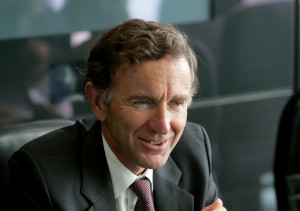
British Trade Minister Stephen Green
But it is HSBC’s former chief executive and chairman Stephen Green, now Britain's trade minister, who has been receiving the brunt of the UK’s political backlash. Green was the executive chairman of HSBC from 2006 to 2010. He has so far declined to comment on the leak, but David Cameron, who made Green trade minister, has come to his defense.
The government of Denmark, meanwhile, will be seeking names of citizens who may have avoided Danish taxes via the bank. French Prime Minister Manual Valls reiterated his country’s determination in fighting tax evasion. France, for its part, has already launched an investigation.
2010 Leak
The unbelievable cache of data was leaked by Hervé Falciani, an HSBC bank IT worker. He handed over CDs to French tax investigators containing data on an estimated 130,000 clients. Straight out of an Alain Delon spy thriller, he slid them across a table of an airport cafe to the French investigators during Christmas of 2008.
He is currently under police protection in France, but in November of 2014 the Swiss federal government indicted Falciani for industrial espionage and for violating the country's bank secrecy law, punishable by a maximum of three years in prison.
Under that deal, HSBC controversially managed to avoid criminal charges and to keep its banking charter that allows it to operate in the US. It might not be so lucky this time.
Europe’s largest bank is bracing itself for yet another wave of international regulatory probes, this time over tax evasion. A massive leak in 2010 uncovered the Swiss subsidiary’s illegal activity from 2005 to 2007, but the damaging revelations are only now causing a storm after a recent flurry of press attention.
The leak exposed the subsidiary colluding with hundreds of clients to conceal undeclared accounts. The bank even provided services to criminals and corrupt businessmen, handing out bricks of cash in various currencies.
But the kicker is that this information has been in the hands of tax officials around the world since May 2010. In this five-year period, the UK has only one measly prosecution to show for itself. Whether any action at all has been taken elsewhere is uncertain at best.
International Outcry
In the US, as with most countries, it is unclear if regulators took any action after receiving the huge cache of data, but now the US Department of Justice is considering criminal charges. Democratic senator Elizabeth Warren is calling on prosecutors to “come down hard.”
Another democratic senator and leading member of the Senate banking committee, Ohio senator Sherrod Brown, is demanding that the government explains itself. “I will be very interested to hear the government’s full explanation of actions, or lack thereof, upon learning of these allegations in 2010.”
In Belgium, where HSBC’s Swiss subsidiary is already under investigation for tax fraud, a judge is considering further action such as issuing international arrest warrants for HSBC Switzerland’s directors. Prosecution spokeswoman Ine Van Wymeersch stated that “the judge believes that it is now time for the bank to cooperate, otherwise he will be forced to issue international arrest warrants...”
In Switzerland, senior politicians are calling for regulatory investigations. Swiss socialist politician Roger Nordmann called for the opening of an inquiry. Micheline Calmy-Rey, Switzerland’s foreign minister from 2003 to 2011, said she was angry. Speaking to Swiss radio, she also asserted that opening an investigation would be “the least that could be done.”
In the UK the leak has ignited fierce political rhetoric. The Labour party put Treasury minister David Guake through a gauntlet of questions as he was forced to appear before the Commons to defend his ministry’s efforts against tax evasion.
British Trade Minister Stephen Green
But it is HSBC’s former chief executive and chairman Stephen Green, now Britain's trade minister, who has been receiving the brunt of the UK’s political backlash. Green was the executive chairman of HSBC from 2006 to 2010. He has so far declined to comment on the leak, but David Cameron, who made Green trade minister, has come to his defense.
The government of Denmark, meanwhile, will be seeking names of citizens who may have avoided Danish taxes via the bank. French Prime Minister Manual Valls reiterated his country’s determination in fighting tax evasion. France, for its part, has already launched an investigation.
2010 Leak
The unbelievable cache of data was leaked by Hervé Falciani, an HSBC bank IT worker. He handed over CDs to French tax investigators containing data on an estimated 130,000 clients. Straight out of an Alain Delon spy thriller, he slid them across a table of an airport cafe to the French investigators during Christmas of 2008.
He is currently under police protection in France, but in November of 2014 the Swiss federal government indicted Falciani for industrial espionage and for violating the country's bank secrecy law, punishable by a maximum of three years in prison.
Under that deal, HSBC controversially managed to avoid criminal charges and to keep its banking charter that allows it to operate in the US. It might not be so lucky this time.
Italy’s Consob Tightens Net on AI-Fueled Scams With Fresh Website Bans
FP Markets Winner Spotlight 🏆 | Global Broker of the Year 2025 #Trading #Broker #Innovation #Shorts
FP Markets Winner Spotlight 🏆 | Global Broker of the Year 2025 #Trading #Broker #Innovation #Shorts
FP Markets takes the spotlight as Global Broker of the Year 2025 at the Finance Magnates Awards.
Martin Stoilov, Head of Client Experience, shares that trust, innovation, and people played a key role in the company’s success, supported by a strong foundation of integrity and client-centricity.
Following this milestone, FP Markets continues to focus on growth, technology investment, and its core values of transparency and excellence.
👉 Be part of FM Awards 2026: https://awards.financemagnates.com/#nominate
FP Markets takes the spotlight as Global Broker of the Year 2025 at the Finance Magnates Awards.
Martin Stoilov, Head of Client Experience, shares that trust, innovation, and people played a key role in the company’s success, supported by a strong foundation of integrity and client-centricity.
Following this milestone, FP Markets continues to focus on growth, technology investment, and its core values of transparency and excellence.
👉 Be part of FM Awards 2026: https://awards.financemagnates.com/#nominate
In this video, we review @HolaPrimeMarketsOfficial, a multi-asset forex and CFDs broker offering different account types, trading platforms, and flexible trading conditions.
We cover the broker’s overall offering, including account options, trading environment, platforms like MT4 and MT5, and additional services such as managed accounts and fast withdrawals.
Watch the full video to see if Hola Prime Markets fits your trading needs.
📣 Stay up to date with the latest in finance and trading. Follow Finance Magnates for industry news, insights, and global event coverage.
Connect with us:
🔗 LinkedIn: /financemagnates
👍 Facebook: /financemagnates
📸 Instagram: https://www.instagram.com/financemagnates
🐦 X: https://x.com/financemagnates
🎥 TikTok: https://www.tiktok.com/tag/financemagnates
▶️ YouTube: /@financemagnates_official
#HolaPrime #ForexBroker #CFDTrading #FinanceMagnates #Trading #Forex #BrokerReview
In this video, we review @HolaPrimeMarketsOfficial, a multi-asset forex and CFDs broker offering different account types, trading platforms, and flexible trading conditions.
We cover the broker’s overall offering, including account options, trading environment, platforms like MT4 and MT5, and additional services such as managed accounts and fast withdrawals.
Watch the full video to see if Hola Prime Markets fits your trading needs.
📣 Stay up to date with the latest in finance and trading. Follow Finance Magnates for industry news, insights, and global event coverage.
Connect with us:
🔗 LinkedIn: /financemagnates
👍 Facebook: /financemagnates
📸 Instagram: https://www.instagram.com/financemagnates
🐦 X: https://x.com/financemagnates
🎥 TikTok: https://www.tiktok.com/tag/financemagnates
▶️ YouTube: /@financemagnates_official
#HolaPrime #ForexBroker #CFDTrading #FinanceMagnates #Trading #Forex #BrokerReview
Hola Prime Review: What You Need to Know | Full Breakdown by Finance Magnates
Hola Prime Review: What You Need to Know | Full Breakdown by Finance Magnates
In this video, we review @HolaPrime_Global, a proprietary trading firm offering evaluation programs and performance-based payouts in simulated market environments.
We cover how the challenge model works, including account types, profit splits (up to 95%), trading rules, and what it takes to reach a funded account. You’ll also learn about available platforms like MT4, MT5, cTrader, and more, along with insights into payouts, support, and trading conditions.
Watch the full video to see if Hola Prime fits your trading style.
📣 Stay up to date with the latest in finance and trading. Follow Finance Magnates for industry news, insights, and global event coverage.
Connect with us:
🔗 LinkedIn: /financemagnates
👍 Facebook: /financemagnates
📸 Instagram: https://www.instagram.com/financemagnates
🐦 X: https://x.com/financemagnates
🎥 TikTok: https://www.tiktok.com/tag/financemagnates
▶️ YouTube: /@financemagnates_official
#HolaPrime #PropFirm #Trading #FinanceMagnates #Forex #FuturesTrading #TradingReview #PropFirmReview
In this video, we review @HolaPrime_Global, a proprietary trading firm offering evaluation programs and performance-based payouts in simulated market environments.
We cover how the challenge model works, including account types, profit splits (up to 95%), trading rules, and what it takes to reach a funded account. You’ll also learn about available platforms like MT4, MT5, cTrader, and more, along with insights into payouts, support, and trading conditions.
Watch the full video to see if Hola Prime fits your trading style.
📣 Stay up to date with the latest in finance and trading. Follow Finance Magnates for industry news, insights, and global event coverage.
Connect with us:
🔗 LinkedIn: /financemagnates
👍 Facebook: /financemagnates
📸 Instagram: https://www.instagram.com/financemagnates
🐦 X: https://x.com/financemagnates
🎥 TikTok: https://www.tiktok.com/tag/financemagnates
▶️ YouTube: /@financemagnates_official
#HolaPrime #PropFirm #Trading #FinanceMagnates #Forex #FuturesTrading #TradingReview #PropFirmReview
Axi Winner Spotlight 🏆 | Global Most Innovative Broker 2025 #Innovation #Trading #Fintech #Broker
Axi Winner Spotlight 🏆 | Global Most Innovative Broker 2025 #Innovation #Trading #Fintech #Broker
Axi takes the spotlight at the Finance Magnates Awards, winning Global Most Innovative Broker 2025.
Olivia Xenofontos and Ivanna Openko share how the team will feel: proud, motivated, and ready to keep delivering.
They also describe the night as well-organized, focused, and enjoyable for all.
👉 Be part of FM Awards 2026.
Axi takes the spotlight at the Finance Magnates Awards, winning Global Most Innovative Broker 2025.
Olivia Xenofontos and Ivanna Openko share how the team will feel: proud, motivated, and ready to keep delivering.
They also describe the night as well-organized, focused, and enjoyable for all.
👉 Be part of FM Awards 2026.
Recognition that matters.
Built on transparency.
Driven by the industry.
The Finance Magnates Awards 2026.
Nominations are now open.
🔗 https://awards.financemagnates.com/?utm_source=SM&utm_medium=social&utm_campaign=recognition-matters
Recognition that matters.
Built on transparency.
Driven by the industry.
The Finance Magnates Awards 2026.
Nominations are now open.
🔗 https://awards.financemagnates.com/?utm_source=SM&utm_medium=social&utm_campaign=recognition-matters