The health emergency has spooked investors across the globe, but has it influenced trading volumes for brokers?
FM
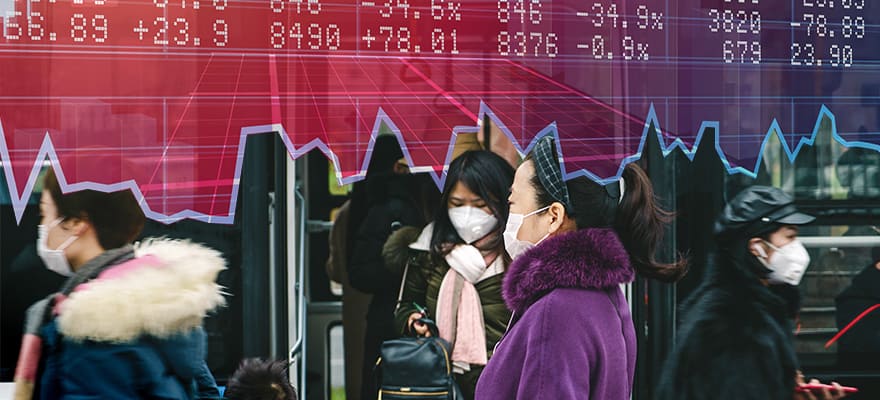
Although Coronavirus is a health emergency, the impact has been well and truly felt in the financial market. Chinese stocks have fallen, along with the Chinese currency, and trading markets are showing heightened signs of caution.
However, it's not just China that is suffering, with London's FTSE 100, European Stoxx 600, and Germany's Dax all dropping over the past few weeks due to panic regarding the health emergency.
Why is a health emergency impacting the financial markets?
But why is a health emergency influencing the way people trade and invest? Speaking to Finance Magnates, Dr. Dan Pallesen, a licensed clinical psychologist and the Chief of Investor Behavior for Keystone Wealth Partners, said that during high-stress, emergency situations such as Coronavirus, people tend to feel afraid, as fear is one of our most powerful tools to ensure our survival.
Dr. Dan Pallesen, Clinical Psychologist & Chief of Investor Behaviour for Keystone Wealth Partners
"Our brain, though incredibly complex, has one primary task. And that task is to keep us alive," Pallesen explained. "Our brain does this by making sure we avoid threats. We all exhibit what has been called a 'negativity bias.'"
"We are wired to feel the pain of loss to a greater extent than we feel the pleasure of gain. In other words, losses hurt worse and for longer than gains feel good. We avoid losses to greater extents than we pursue gains. Even the thought of a potential loss activates the pain centers in our brains."
It is because of this, Pallesen explains, that during times of emergency situations, people do not always invest rationally, and instead opt to invest in things that feel familiar or safe. Using this logic, it explains investors moving away from Chinese and Asian assets - where the threat emerged and away from higher-risk investments.
How is Coronavirus impacting client acquisition?
With health emergencies such as Coronavirus spooking investors away from certain assets and overall, contributing to people investing less, what type of effect does this have on user acquisition?
The answer may surprise you. For numerous brokerages, it appears that Coronavirus has not been as detrimental as one would assume; in fact, for international broker RoboForex, it might have even been a bonus.
Denis Golomedov, the CMO at RoboForex
Denis Golomedov, the CMO at RoboForex, explained to Finance Magnates: "Any emergency situations, including major problems in health care, surely affect different aspects of human life and financial markets are no exception. Nowadays, we clearly see how the new Chinese Coronavirus influences the quotes of public companies, which are in one way or another involved in international business."
"The commodity sector is experiencing a huge pressure right now. It's a very powerful factor that greatly impacts the global economy and any changes offer a lot of different opportunities for investing and trading."
"As for changes relating to client engagement, we don't see any declines here. On the contrary, what we see is the growth in active clients and the number of new registrations. Our clients are very actively trading and the portfolio of traded instruments has significantly increased over the past year. The same is observed in the volume of traded instruments."
Skilling, another forex broker, has not seen any noticeable impact on client acquisition. In fact, the broker has seen an uptick in clients joining over the past two weeks. However, as highlighted by Pavel Spirin, Chief Marketing and Business Development Officer of Skilling, this growth is the result of ongoing brand and marketing campaigns, rather than being virus-related.
The total impact of Coronavirus is not yet clear
Jeffrey Siu, Chief Operating Officer of ATFX Group
ATFX, a forex broker, also said that it has not seen any material changes to its operations since the threat of Coronavirus. Speaking on behalf of the firm, Jeffrey Siu, Chief Operating Officer of ATFX Group outlined to Finance Magnates: "We have not seen any material changes in the number of new clients signing up for our services across the world. As a globally established company with 13 offices worldwide, our business spans numerous markets, which provides us with a global balance of clients both in the retail or institutional spheres, limiting our overall exposure to any single region..."
"Currently, we do not have the complete picture of how the Coronavirus will affect our business, given that we are still in the traditionally low season. We're closely monitoring the situation and will have the actual figures by Q2. Also, we would like to remind our clients to pay close attention to their investments during this uncertain period."
Marie Tatibouet, Chief Marketing Officer at Gate.io.
It appears that Coronavirus also hasn't managed to have too much of an impact for trading on cryptocurrency exchanges, which is surprising considering that crypto assets are largely thought of as high-risk due to their volatility.
"However, due to the cancellation of some of the blockchain conferences and events in Asia, there is a slowdown in the overall community interaction. This would definitely affect companies that had their marketing efforts planned ahead of time."
Although Coronavirus is a health emergency, the impact has been well and truly felt in the financial market. Chinese stocks have fallen, along with the Chinese currency, and trading markets are showing heightened signs of caution.
However, it's not just China that is suffering, with London's FTSE 100, European Stoxx 600, and Germany's Dax all dropping over the past few weeks due to panic regarding the health emergency.
Why is a health emergency impacting the financial markets?
But why is a health emergency influencing the way people trade and invest? Speaking to Finance Magnates, Dr. Dan Pallesen, a licensed clinical psychologist and the Chief of Investor Behavior for Keystone Wealth Partners, said that during high-stress, emergency situations such as Coronavirus, people tend to feel afraid, as fear is one of our most powerful tools to ensure our survival.
Dr. Dan Pallesen, Clinical Psychologist & Chief of Investor Behaviour for Keystone Wealth Partners
"Our brain, though incredibly complex, has one primary task. And that task is to keep us alive," Pallesen explained. "Our brain does this by making sure we avoid threats. We all exhibit what has been called a 'negativity bias.'"
"We are wired to feel the pain of loss to a greater extent than we feel the pleasure of gain. In other words, losses hurt worse and for longer than gains feel good. We avoid losses to greater extents than we pursue gains. Even the thought of a potential loss activates the pain centers in our brains."
It is because of this, Pallesen explains, that during times of emergency situations, people do not always invest rationally, and instead opt to invest in things that feel familiar or safe. Using this logic, it explains investors moving away from Chinese and Asian assets - where the threat emerged and away from higher-risk investments.
How is Coronavirus impacting client acquisition?
With health emergencies such as Coronavirus spooking investors away from certain assets and overall, contributing to people investing less, what type of effect does this have on user acquisition?
The answer may surprise you. For numerous brokerages, it appears that Coronavirus has not been as detrimental as one would assume; in fact, for international broker RoboForex, it might have even been a bonus.
Denis Golomedov, the CMO at RoboForex
Denis Golomedov, the CMO at RoboForex, explained to Finance Magnates: "Any emergency situations, including major problems in health care, surely affect different aspects of human life and financial markets are no exception. Nowadays, we clearly see how the new Chinese Coronavirus influences the quotes of public companies, which are in one way or another involved in international business."
"The commodity sector is experiencing a huge pressure right now. It's a very powerful factor that greatly impacts the global economy and any changes offer a lot of different opportunities for investing and trading."
"As for changes relating to client engagement, we don't see any declines here. On the contrary, what we see is the growth in active clients and the number of new registrations. Our clients are very actively trading and the portfolio of traded instruments has significantly increased over the past year. The same is observed in the volume of traded instruments."
Skilling, another forex broker, has not seen any noticeable impact on client acquisition. In fact, the broker has seen an uptick in clients joining over the past two weeks. However, as highlighted by Pavel Spirin, Chief Marketing and Business Development Officer of Skilling, this growth is the result of ongoing brand and marketing campaigns, rather than being virus-related.
The total impact of Coronavirus is not yet clear
Jeffrey Siu, Chief Operating Officer of ATFX Group
ATFX, a forex broker, also said that it has not seen any material changes to its operations since the threat of Coronavirus. Speaking on behalf of the firm, Jeffrey Siu, Chief Operating Officer of ATFX Group outlined to Finance Magnates: "We have not seen any material changes in the number of new clients signing up for our services across the world. As a globally established company with 13 offices worldwide, our business spans numerous markets, which provides us with a global balance of clients both in the retail or institutional spheres, limiting our overall exposure to any single region..."
"Currently, we do not have the complete picture of how the Coronavirus will affect our business, given that we are still in the traditionally low season. We're closely monitoring the situation and will have the actual figures by Q2. Also, we would like to remind our clients to pay close attention to their investments during this uncertain period."
Marie Tatibouet, Chief Marketing Officer at Gate.io.
It appears that Coronavirus also hasn't managed to have too much of an impact for trading on cryptocurrency exchanges, which is surprising considering that crypto assets are largely thought of as high-risk due to their volatility.
"However, due to the cancellation of some of the blockchain conferences and events in Asia, there is a slowdown in the overall community interaction. This would definitely affect companies that had their marketing efforts planned ahead of time."
42% of Swiss Financial Firms Have No Digital Fraud Policy, FINMA Finds
Featured Videos
FP Markets Winner Spotlight 🏆 | Global Broker of the Year 2025 #Trading #Broker #Innovation #Shorts
FP Markets Winner Spotlight 🏆 | Global Broker of the Year 2025 #Trading #Broker #Innovation #Shorts
FP Markets Winner Spotlight 🏆 | Global Broker of the Year 2025 #Trading #Broker #Innovation #Shorts
FP Markets Winner Spotlight 🏆 | Global Broker of the Year 2025 #Trading #Broker #Innovation #Shorts
FP Markets takes the spotlight as Global Broker of the Year 2025 at the Finance Magnates Awards.
Martin Stoilov, Head of Client Experience, shares that trust, innovation, and people played a key role in the company’s success, supported by a strong foundation of integrity and client-centricity.
Following this milestone, FP Markets continues to focus on growth, technology investment, and its core values of transparency and excellence.
👉 Be part of FM Awards 2026: https://awards.financemagnates.com/#nominate
FP Markets takes the spotlight as Global Broker of the Year 2025 at the Finance Magnates Awards.
Martin Stoilov, Head of Client Experience, shares that trust, innovation, and people played a key role in the company’s success, supported by a strong foundation of integrity and client-centricity.
Following this milestone, FP Markets continues to focus on growth, technology investment, and its core values of transparency and excellence.
👉 Be part of FM Awards 2026: https://awards.financemagnates.com/#nominate
FP Markets takes the spotlight as Global Broker of the Year 2025 at the Finance Magnates Awards.
Martin Stoilov, Head of Client Experience, shares that trust, innovation, and people played a key role in the company’s success, supported by a strong foundation of integrity and client-centricity.
Following this milestone, FP Markets continues to focus on growth, technology investment, and its core values of transparency and excellence.
👉 Be part of FM Awards 2026: https://awards.financemagnates.com/#nominate
FP Markets takes the spotlight as Global Broker of the Year 2025 at the Finance Magnates Awards.
Martin Stoilov, Head of Client Experience, shares that trust, innovation, and people played a key role in the company’s success, supported by a strong foundation of integrity and client-centricity.
Following this milestone, FP Markets continues to focus on growth, technology investment, and its core values of transparency and excellence.
👉 Be part of FM Awards 2026: https://awards.financemagnates.com/#nominate
In this video, we review @HolaPrimeMarketsOfficial, a multi-asset forex and CFDs broker offering different account types, trading platforms, and flexible trading conditions.
We cover the broker’s overall offering, including account options, trading environment, platforms like MT4 and MT5, and additional services such as managed accounts and fast withdrawals.
Watch the full video to see if Hola Prime Markets fits your trading needs.
📣 Stay up to date with the latest in finance and trading. Follow Finance Magnates for industry news, insights, and global event coverage.
Connect with us:
🔗 LinkedIn: /financemagnates
👍 Facebook: /financemagnates
📸 Instagram: https://www.instagram.com/financemagnates
🐦 X: https://x.com/financemagnates
🎥 TikTok: https://www.tiktok.com/tag/financemagnates
▶️ YouTube: /@financemagnates_official
#HolaPrime #ForexBroker #CFDTrading #FinanceMagnates #Trading #Forex #BrokerReview
In this video, we review @HolaPrimeMarketsOfficial, a multi-asset forex and CFDs broker offering different account types, trading platforms, and flexible trading conditions.
We cover the broker’s overall offering, including account options, trading environment, platforms like MT4 and MT5, and additional services such as managed accounts and fast withdrawals.
Watch the full video to see if Hola Prime Markets fits your trading needs.
📣 Stay up to date with the latest in finance and trading. Follow Finance Magnates for industry news, insights, and global event coverage.
Connect with us:
🔗 LinkedIn: /financemagnates
👍 Facebook: /financemagnates
📸 Instagram: https://www.instagram.com/financemagnates
🐦 X: https://x.com/financemagnates
🎥 TikTok: https://www.tiktok.com/tag/financemagnates
▶️ YouTube: /@financemagnates_official
#HolaPrime #ForexBroker #CFDTrading #FinanceMagnates #Trading #Forex #BrokerReview
In this video, we review @HolaPrimeMarketsOfficial, a multi-asset forex and CFDs broker offering different account types, trading platforms, and flexible trading conditions.
We cover the broker’s overall offering, including account options, trading environment, platforms like MT4 and MT5, and additional services such as managed accounts and fast withdrawals.
Watch the full video to see if Hola Prime Markets fits your trading needs.
📣 Stay up to date with the latest in finance and trading. Follow Finance Magnates for industry news, insights, and global event coverage.
Connect with us:
🔗 LinkedIn: /financemagnates
👍 Facebook: /financemagnates
📸 Instagram: https://www.instagram.com/financemagnates
🐦 X: https://x.com/financemagnates
🎥 TikTok: https://www.tiktok.com/tag/financemagnates
▶️ YouTube: /@financemagnates_official
#HolaPrime #ForexBroker #CFDTrading #FinanceMagnates #Trading #Forex #BrokerReview
In this video, we review @HolaPrimeMarketsOfficial, a multi-asset forex and CFDs broker offering different account types, trading platforms, and flexible trading conditions.
We cover the broker’s overall offering, including account options, trading environment, platforms like MT4 and MT5, and additional services such as managed accounts and fast withdrawals.
Watch the full video to see if Hola Prime Markets fits your trading needs.
📣 Stay up to date with the latest in finance and trading. Follow Finance Magnates for industry news, insights, and global event coverage.
Connect with us:
🔗 LinkedIn: /financemagnates
👍 Facebook: /financemagnates
📸 Instagram: https://www.instagram.com/financemagnates
🐦 X: https://x.com/financemagnates
🎥 TikTok: https://www.tiktok.com/tag/financemagnates
▶️ YouTube: /@financemagnates_official
#HolaPrime #ForexBroker #CFDTrading #FinanceMagnates #Trading #Forex #BrokerReview
In this video, we review @HolaPrimeMarketsOfficial, a multi-asset forex and CFDs broker offering different account types, trading platforms, and flexible trading conditions.
We cover the broker’s overall offering, including account options, trading environment, platforms like MT4 and MT5, and additional services such as managed accounts and fast withdrawals.
Watch the full video to see if Hola Prime Markets fits your trading needs.
📣 Stay up to date with the latest in finance and trading. Follow Finance Magnates for industry news, insights, and global event coverage.
Connect with us:
🔗 LinkedIn: /financemagnates
👍 Facebook: /financemagnates
📸 Instagram: https://www.instagram.com/financemagnates
🐦 X: https://x.com/financemagnates
🎥 TikTok: https://www.tiktok.com/tag/financemagnates
▶️ YouTube: /@financemagnates_official
#HolaPrime #ForexBroker #CFDTrading #FinanceMagnates #Trading #Forex #BrokerReview
In this video, we review @HolaPrimeMarketsOfficial, a multi-asset forex and CFDs broker offering different account types, trading platforms, and flexible trading conditions.
We cover the broker’s overall offering, including account options, trading environment, platforms like MT4 and MT5, and additional services such as managed accounts and fast withdrawals.
Watch the full video to see if Hola Prime Markets fits your trading needs.
📣 Stay up to date with the latest in finance and trading. Follow Finance Magnates for industry news, insights, and global event coverage.
Connect with us:
🔗 LinkedIn: /financemagnates
👍 Facebook: /financemagnates
📸 Instagram: https://www.instagram.com/financemagnates
🐦 X: https://x.com/financemagnates
🎥 TikTok: https://www.tiktok.com/tag/financemagnates
▶️ YouTube: /@financemagnates_official
#HolaPrime #ForexBroker #CFDTrading #FinanceMagnates #Trading #Forex #BrokerReview
Hola Prime Review: What You Need to Know | Full Breakdown by Finance Magnates
Hola Prime Review: What You Need to Know | Full Breakdown by Finance Magnates
Hola Prime Review: What You Need to Know | Full Breakdown by Finance Magnates
Hola Prime Review: What You Need to Know | Full Breakdown by Finance Magnates
Hola Prime Review: What You Need to Know | Full Breakdown by Finance Magnates
Hola Prime Review: What You Need to Know | Full Breakdown by Finance Magnates
In this video, we review @HolaPrime_Global, a proprietary trading firm offering evaluation programs and performance-based payouts in simulated market environments.
We cover how the challenge model works, including account types, profit splits (up to 95%), trading rules, and what it takes to reach a funded account. You’ll also learn about available platforms like MT4, MT5, cTrader, and more, along with insights into payouts, support, and trading conditions.
Watch the full video to see if Hola Prime fits your trading style.
📣 Stay up to date with the latest in finance and trading. Follow Finance Magnates for industry news, insights, and global event coverage.
Connect with us:
🔗 LinkedIn: /financemagnates
👍 Facebook: /financemagnates
📸 Instagram: https://www.instagram.com/financemagnates
🐦 X: https://x.com/financemagnates
🎥 TikTok: https://www.tiktok.com/tag/financemagnates
▶️ YouTube: /@financemagnates_official
#HolaPrime #PropFirm #Trading #FinanceMagnates #Forex #FuturesTrading #TradingReview #PropFirmReview
In this video, we review @HolaPrime_Global, a proprietary trading firm offering evaluation programs and performance-based payouts in simulated market environments.
We cover how the challenge model works, including account types, profit splits (up to 95%), trading rules, and what it takes to reach a funded account. You’ll also learn about available platforms like MT4, MT5, cTrader, and more, along with insights into payouts, support, and trading conditions.
Watch the full video to see if Hola Prime fits your trading style.
📣 Stay up to date with the latest in finance and trading. Follow Finance Magnates for industry news, insights, and global event coverage.
Connect with us:
🔗 LinkedIn: /financemagnates
👍 Facebook: /financemagnates
📸 Instagram: https://www.instagram.com/financemagnates
🐦 X: https://x.com/financemagnates
🎥 TikTok: https://www.tiktok.com/tag/financemagnates
▶️ YouTube: /@financemagnates_official
#HolaPrime #PropFirm #Trading #FinanceMagnates #Forex #FuturesTrading #TradingReview #PropFirmReview
In this video, we review @HolaPrime_Global, a proprietary trading firm offering evaluation programs and performance-based payouts in simulated market environments.
We cover how the challenge model works, including account types, profit splits (up to 95%), trading rules, and what it takes to reach a funded account. You’ll also learn about available platforms like MT4, MT5, cTrader, and more, along with insights into payouts, support, and trading conditions.
Watch the full video to see if Hola Prime fits your trading style.
📣 Stay up to date with the latest in finance and trading. Follow Finance Magnates for industry news, insights, and global event coverage.
Connect with us:
🔗 LinkedIn: /financemagnates
👍 Facebook: /financemagnates
📸 Instagram: https://www.instagram.com/financemagnates
🐦 X: https://x.com/financemagnates
🎥 TikTok: https://www.tiktok.com/tag/financemagnates
▶️ YouTube: /@financemagnates_official
#HolaPrime #PropFirm #Trading #FinanceMagnates #Forex #FuturesTrading #TradingReview #PropFirmReview
In this video, we review @HolaPrime_Global, a proprietary trading firm offering evaluation programs and performance-based payouts in simulated market environments.
We cover how the challenge model works, including account types, profit splits (up to 95%), trading rules, and what it takes to reach a funded account. You’ll also learn about available platforms like MT4, MT5, cTrader, and more, along with insights into payouts, support, and trading conditions.
Watch the full video to see if Hola Prime fits your trading style.
📣 Stay up to date with the latest in finance and trading. Follow Finance Magnates for industry news, insights, and global event coverage.
Connect with us:
🔗 LinkedIn: /financemagnates
👍 Facebook: /financemagnates
📸 Instagram: https://www.instagram.com/financemagnates
🐦 X: https://x.com/financemagnates
🎥 TikTok: https://www.tiktok.com/tag/financemagnates
▶️ YouTube: /@financemagnates_official
#HolaPrime #PropFirm #Trading #FinanceMagnates #Forex #FuturesTrading #TradingReview #PropFirmReview
In this video, we review @HolaPrime_Global, a proprietary trading firm offering evaluation programs and performance-based payouts in simulated market environments.
We cover how the challenge model works, including account types, profit splits (up to 95%), trading rules, and what it takes to reach a funded account. You’ll also learn about available platforms like MT4, MT5, cTrader, and more, along with insights into payouts, support, and trading conditions.
Watch the full video to see if Hola Prime fits your trading style.
📣 Stay up to date with the latest in finance and trading. Follow Finance Magnates for industry news, insights, and global event coverage.
Connect with us:
🔗 LinkedIn: /financemagnates
👍 Facebook: /financemagnates
📸 Instagram: https://www.instagram.com/financemagnates
🐦 X: https://x.com/financemagnates
🎥 TikTok: https://www.tiktok.com/tag/financemagnates
▶️ YouTube: /@financemagnates_official
#HolaPrime #PropFirm #Trading #FinanceMagnates #Forex #FuturesTrading #TradingReview #PropFirmReview
In this video, we review @HolaPrime_Global, a proprietary trading firm offering evaluation programs and performance-based payouts in simulated market environments.
We cover how the challenge model works, including account types, profit splits (up to 95%), trading rules, and what it takes to reach a funded account. You’ll also learn about available platforms like MT4, MT5, cTrader, and more, along with insights into payouts, support, and trading conditions.
Watch the full video to see if Hola Prime fits your trading style.
📣 Stay up to date with the latest in finance and trading. Follow Finance Magnates for industry news, insights, and global event coverage.
Connect with us:
🔗 LinkedIn: /financemagnates
👍 Facebook: /financemagnates
📸 Instagram: https://www.instagram.com/financemagnates
🐦 X: https://x.com/financemagnates
🎥 TikTok: https://www.tiktok.com/tag/financemagnates
▶️ YouTube: /@financemagnates_official
#HolaPrime #PropFirm #Trading #FinanceMagnates #Forex #FuturesTrading #TradingReview #PropFirmReview
Axi Winner Spotlight 🏆 | Global Most Innovative Broker 2025 #Innovation #Trading #Fintech #Broker
Axi Winner Spotlight 🏆 | Global Most Innovative Broker 2025 #Innovation #Trading #Fintech #Broker
Axi Winner Spotlight 🏆 | Global Most Innovative Broker 2025 #Innovation #Trading #Fintech #Broker
Axi Winner Spotlight 🏆 | Global Most Innovative Broker 2025 #Innovation #Trading #Fintech #Broker
Axi Winner Spotlight 🏆 | Global Most Innovative Broker 2025 #Innovation #Trading #Fintech #Broker
Axi Winner Spotlight 🏆 | Global Most Innovative Broker 2025 #Innovation #Trading #Fintech #Broker
Axi takes the spotlight at the Finance Magnates Awards, winning Global Most Innovative Broker 2025.
Olivia Xenofontos and Ivanna Openko share how the team will feel: proud, motivated, and ready to keep delivering.
They also describe the night as well-organized, focused, and enjoyable for all.
👉 Be part of FM Awards 2026.
Axi takes the spotlight at the Finance Magnates Awards, winning Global Most Innovative Broker 2025.
Olivia Xenofontos and Ivanna Openko share how the team will feel: proud, motivated, and ready to keep delivering.
They also describe the night as well-organized, focused, and enjoyable for all.
👉 Be part of FM Awards 2026.
Axi takes the spotlight at the Finance Magnates Awards, winning Global Most Innovative Broker 2025.
Olivia Xenofontos and Ivanna Openko share how the team will feel: proud, motivated, and ready to keep delivering.
They also describe the night as well-organized, focused, and enjoyable for all.
👉 Be part of FM Awards 2026.
Axi takes the spotlight at the Finance Magnates Awards, winning Global Most Innovative Broker 2025.
Olivia Xenofontos and Ivanna Openko share how the team will feel: proud, motivated, and ready to keep delivering.
They also describe the night as well-organized, focused, and enjoyable for all.
👉 Be part of FM Awards 2026.
Axi takes the spotlight at the Finance Magnates Awards, winning Global Most Innovative Broker 2025.
Olivia Xenofontos and Ivanna Openko share how the team will feel: proud, motivated, and ready to keep delivering.
They also describe the night as well-organized, focused, and enjoyable for all.
👉 Be part of FM Awards 2026.
Axi takes the spotlight at the Finance Magnates Awards, winning Global Most Innovative Broker 2025.
Olivia Xenofontos and Ivanna Openko share how the team will feel: proud, motivated, and ready to keep delivering.
They also describe the night as well-organized, focused, and enjoyable for all.
👉 Be part of FM Awards 2026.
Recognition that matters.
Built on transparency.
Driven by the industry.
The Finance Magnates Awards 2026.
Nominations are now open.
🔗 https://awards.financemagnates.com/?utm_source=SM&utm_medium=social&utm_campaign=recognition-matters
Recognition that matters.
Built on transparency.
Driven by the industry.
The Finance Magnates Awards 2026.
Nominations are now open.
🔗 https://awards.financemagnates.com/?utm_source=SM&utm_medium=social&utm_campaign=recognition-matters
Recognition that matters.
Built on transparency.
Driven by the industry.
The Finance Magnates Awards 2026.
Nominations are now open.
🔗 https://awards.financemagnates.com/?utm_source=SM&utm_medium=social&utm_campaign=recognition-matters
Recognition that matters.
Built on transparency.
Driven by the industry.
The Finance Magnates Awards 2026.
Nominations are now open.
🔗 https://awards.financemagnates.com/?utm_source=SM&utm_medium=social&utm_campaign=recognition-matters
Recognition that matters.
Built on transparency.
Driven by the industry.
The Finance Magnates Awards 2026.
Nominations are now open.
🔗 https://awards.financemagnates.com/?utm_source=SM&utm_medium=social&utm_campaign=recognition-matters
Recognition that matters.
Built on transparency.
Driven by the industry.
The Finance Magnates Awards 2026.
Nominations are now open.
🔗 https://awards.financemagnates.com/?utm_source=SM&utm_medium=social&utm_campaign=recognition-matters