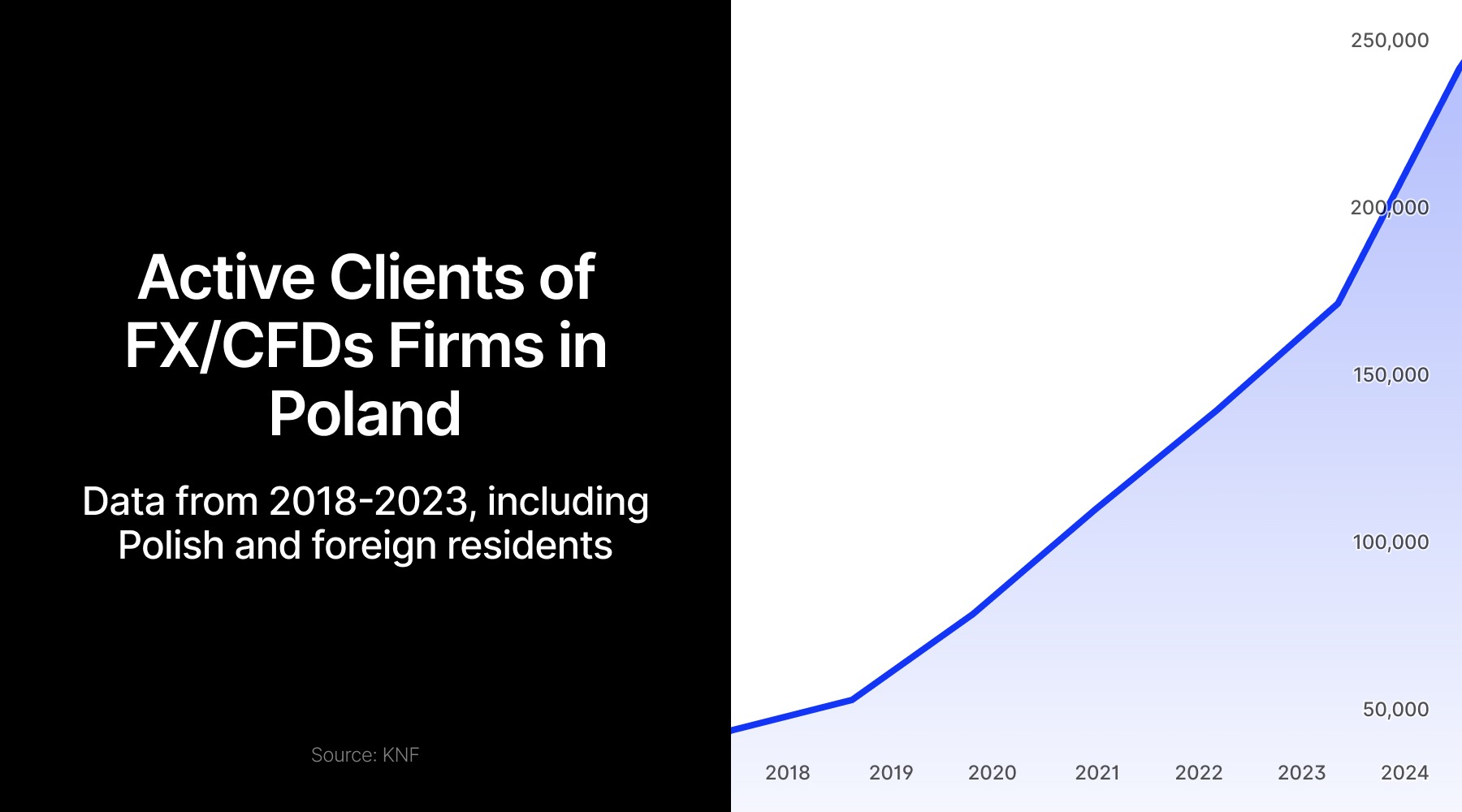
Over five years, the market has nearly tripled in size, becoming one of the biggest in Europe, catching up with the UK.
The ratio of losing to profitable traders stood at 4 to 1, highlighting that CFDs are a high-stakes, high-risk game.
The number
of active Forex traders in Poland surged by 40% in 2024, reaching nearly
117,000 participants, while total losses simultaneously rose by 18% to a
staggering 1.29 billion zlotys ($325 million), according to new data from
Poland's Financial Supervision Authority (KNF).
Poland's CFD Trader Count
Hits 117,000 Amid 18% Loss Expansion
The
regulator's annual report on the retail Forex (FX) and contracts for difference
(CFDs) market reveals a complex picture of rapidly expanding participation amid
persistent profitability challenges. The number of active Polish traders jumped
from approximately 83,000 in 2023 to 116,903 in 2024, reflecting growing
interest in trading despite the well-documented risks.
When we
take into account not only Polish residents but also foreign ones, this number
increases from 175,000 to nearly 247,000.
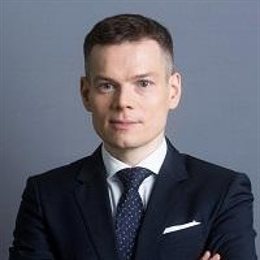
Jacek Jastrzębski, the KNF Chairman
“We're
witnessing an unprecedented expansion in market participation, but the
financial outcomes remain concerning,” the KNF commented in the report
seen by FinanceMagnates.com. “While the percentage of profitable traders
improved slightly, the absolute value of losses continues to climb as more
individuals enter the market.”
The
detailed figures show that Polish residents' losses on CFD transactions
increased from 1.05 billion zlotys in 2023 to 1.29 billion zlotys in 2024,
representing an 18% year-over-year increase. During the same period, total
profits among successful Polish traders grew more modestly, rising from 249.8
million zlotys to 305.7 million zlotys.
Again, when
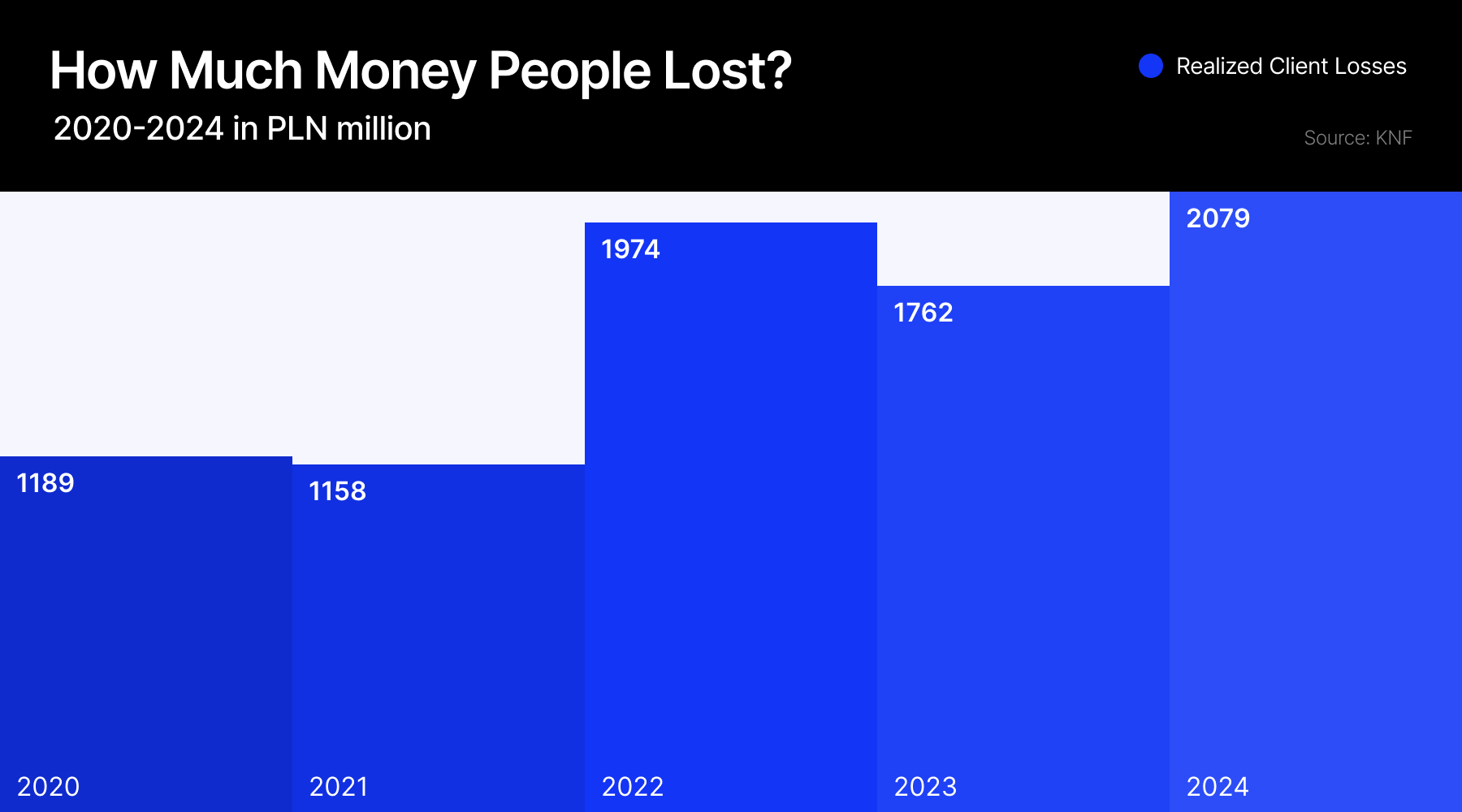
including all clients of Polish FX and CFD brokers, also foreign ones, the loss
reached 2.08 billion zlotys.
As the regulator explains, the analysis includes “not only CFD contracts but also other OTC derivatives offered by KNF-supervised brokerage houses and firms through trading platforms.”
What The KNF Report Shows
The KNF
data reveals several noteworthy trends in this rapidly expanding market:
The number
of profitable Polish traders increased by 53% year-over-year, from 22,812 to
34,827
The number
of unprofitable Polish traders grew by 36%, from 60,271 to 82,076
Despite
more traders finding success proportionally, the average profit per successful
trader fell by 20%, dropping from 10,950 zlotys to 8,778 zlotys
Average
losses per unsuccessful trader improved slightly, decreasing from 17,456 zlotys
to 15,749 zlotys
Arkadiusz Jóźwiak
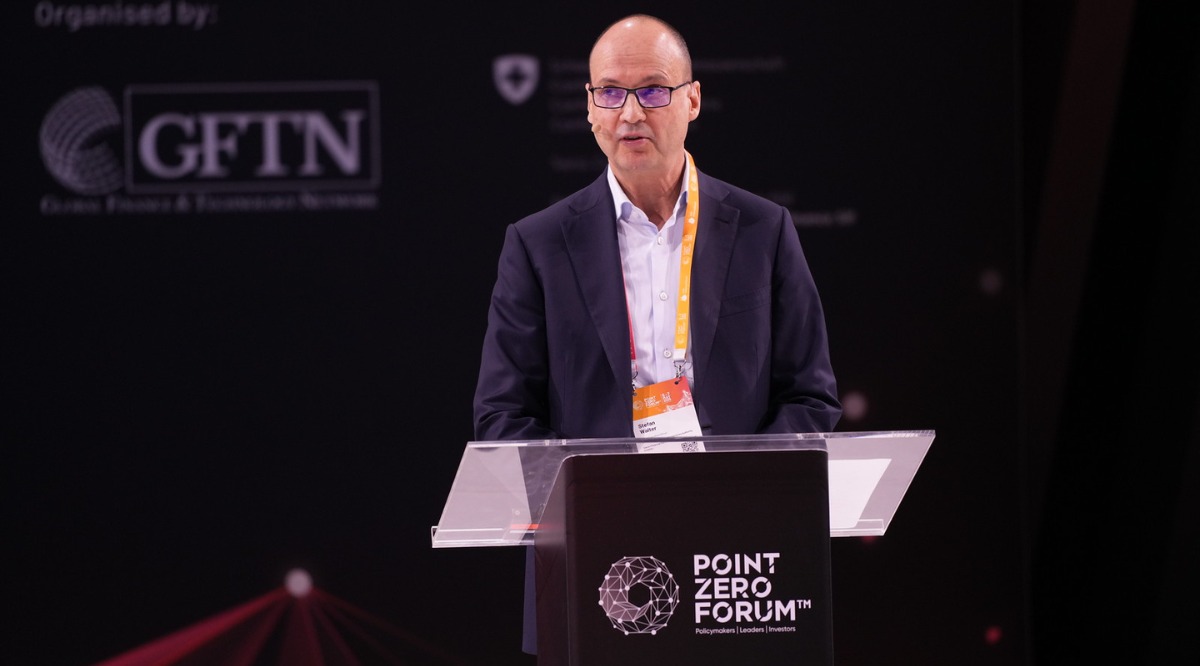
“A record number of active FX and CFD clients from Poland is certainly encouraging; it shows that, as a nation, we want to invest actively,” Arkadiusz Jóźwiak, the Editor-in-Chief of the retail investor media outlet Comparic.pl, commented for FinanceMagnates.com. “The XTB effect likely plays a significant role here—the broker has become a leader in the local market, attracting more and more clients through passive investments, who then also become interested in CFDs.”
The
advantage over other major European markets is clearly visible. According to
the latest Investment Trends report, in Germany—despite its much larger
population than Poland’s—the
FX and CFD market attracted only 63,000 active traders.
Polish FX and CFD Market
Growth Outpaces Profitability
The
five-year data signals that while the percentage of profitable Polish traders
has improved from 22.6% in 2020 to 29.8% in 2024, the total financial impact on
the market has grown substantially. The absolute number of Polish residents
losing money on CFD transactions has nearly tripled since 2020, growing
from 30,365 to 82,076.
Total
losses increased from 661 million zlotys in 2020 to 1.29 billion zlotys in 2024
(96% increase). At least Polish traders are getting smarter about how they lose
money. The average winner's take home shrank dramatically—from 18,383 zlotys to 8,778 zlotys (down 52%).
Moreover,
the total number of active Polish traders nearly tripled from 39,226 in 2020 to
116,903 in 2024. This represents a compound annual growth rate of approximately
31%.
The number
of active Forex traders in Poland surged by 40% in 2024, reaching nearly
117,000 participants, while total losses simultaneously rose by 18% to a
staggering 1.29 billion zlotys ($325 million), according to new data from
Poland's Financial Supervision Authority (KNF).
Poland's CFD Trader Count
Hits 117,000 Amid 18% Loss Expansion
The
regulator's annual report on the retail Forex (FX) and contracts for difference
(CFDs) market reveals a complex picture of rapidly expanding participation amid
persistent profitability challenges. The number of active Polish traders jumped
from approximately 83,000 in 2023 to 116,903 in 2024, reflecting growing
interest in trading despite the well-documented risks.
When we
take into account not only Polish residents but also foreign ones, this number
increases from 175,000 to nearly 247,000.
Jacek Jastrzębski, the KNF Chairman
“We're
witnessing an unprecedented expansion in market participation, but the
financial outcomes remain concerning,” the KNF commented in the report
seen by FinanceMagnates.com. “While the percentage of profitable traders
improved slightly, the absolute value of losses continues to climb as more
individuals enter the market.”
The
detailed figures show that Polish residents' losses on CFD transactions
increased from 1.05 billion zlotys in 2023 to 1.29 billion zlotys in 2024,
representing an 18% year-over-year increase. During the same period, total
profits among successful Polish traders grew more modestly, rising from 249.8
million zlotys to 305.7 million zlotys.
Again, when
including all clients of Polish FX and CFD brokers, also foreign ones, the loss
reached 2.08 billion zlotys.
As the regulator explains, the analysis includes “not only CFD contracts but also other OTC derivatives offered by KNF-supervised brokerage houses and firms through trading platforms.”
What The KNF Report Shows
The KNF
data reveals several noteworthy trends in this rapidly expanding market:
The number
of profitable Polish traders increased by 53% year-over-year, from 22,812 to
34,827
The number
of unprofitable Polish traders grew by 36%, from 60,271 to 82,076
Despite
more traders finding success proportionally, the average profit per successful
trader fell by 20%, dropping from 10,950 zlotys to 8,778 zlotys
Average
losses per unsuccessful trader improved slightly, decreasing from 17,456 zlotys
to 15,749 zlotys
Arkadiusz Jóźwiak
“A record number of active FX and CFD clients from Poland is certainly encouraging; it shows that, as a nation, we want to invest actively,” Arkadiusz Jóźwiak, the Editor-in-Chief of the retail investor media outlet Comparic.pl, commented for FinanceMagnates.com. “The XTB effect likely plays a significant role here—the broker has become a leader in the local market, attracting more and more clients through passive investments, who then also become interested in CFDs.”
The
advantage over other major European markets is clearly visible. According to
the latest Investment Trends report, in Germany—despite its much larger
population than Poland’s—the
FX and CFD market attracted only 63,000 active traders.
Polish FX and CFD Market
Growth Outpaces Profitability
The
five-year data signals that while the percentage of profitable Polish traders
has improved from 22.6% in 2020 to 29.8% in 2024, the total financial impact on
the market has grown substantially. The absolute number of Polish residents
losing money on CFD transactions has nearly tripled since 2020, growing
from 30,365 to 82,076.
Total
losses increased from 661 million zlotys in 2020 to 1.29 billion zlotys in 2024
(96% increase). At least Polish traders are getting smarter about how they lose
money. The average winner's take home shrank dramatically—from 18,383 zlotys to 8,778 zlotys (down 52%).
Moreover,
the total number of active Polish traders nearly tripled from 39,226 in 2020 to
116,903 in 2024. This represents a compound annual growth rate of approximately
31%.
Damian Chmiel is a Senior Analyst & Editor at Finance Magnates with more than 15 years of experience in the CFD and online trading industry. Active as both a trader and journalist since 2010, he focuses on broker coverage, fintech innovation, and regulatory developments across Europe, the Middle East, and Asia.
His work includes interviews with C-level leaders at major brokerages and fintech platforms, as well as co-authoring Finance Magnates’ quarterly industry benchmarking reports. Damian’s reporting is data-driven, market-aware, and grounded in direct industry engagement. His analysis and commentary have also been cited by external media outlets, including Investing.com, Binance, The Asset, Stockhead, and Dispatch.
Education:
MA in Finance and Accounting, Cracow University of Economics
Italy’s Consob Tightens Net on AI-Fueled Scams With Fresh Website Bans
FP Markets Winner Spotlight 🏆 | Global Broker of the Year 2025 #Trading #Broker #Innovation #Shorts
FP Markets Winner Spotlight 🏆 | Global Broker of the Year 2025 #Trading #Broker #Innovation #Shorts
FP Markets takes the spotlight as Global Broker of the Year 2025 at the Finance Magnates Awards.
Martin Stoilov, Head of Client Experience, shares that trust, innovation, and people played a key role in the company’s success, supported by a strong foundation of integrity and client-centricity.
Following this milestone, FP Markets continues to focus on growth, technology investment, and its core values of transparency and excellence.
👉 Be part of FM Awards 2026: https://awards.financemagnates.com/#nominate
FP Markets takes the spotlight as Global Broker of the Year 2025 at the Finance Magnates Awards.
Martin Stoilov, Head of Client Experience, shares that trust, innovation, and people played a key role in the company’s success, supported by a strong foundation of integrity and client-centricity.
Following this milestone, FP Markets continues to focus on growth, technology investment, and its core values of transparency and excellence.
👉 Be part of FM Awards 2026: https://awards.financemagnates.com/#nominate
In this video, we review @HolaPrimeMarketsOfficial, a multi-asset forex and CFDs broker offering different account types, trading platforms, and flexible trading conditions.
We cover the broker’s overall offering, including account options, trading environment, platforms like MT4 and MT5, and additional services such as managed accounts and fast withdrawals.
Watch the full video to see if Hola Prime Markets fits your trading needs.
📣 Stay up to date with the latest in finance and trading. Follow Finance Magnates for industry news, insights, and global event coverage.
Connect with us:
🔗 LinkedIn: /financemagnates
👍 Facebook: /financemagnates
📸 Instagram: https://www.instagram.com/financemagnates
🐦 X: https://x.com/financemagnates
🎥 TikTok: https://www.tiktok.com/tag/financemagnates
▶️ YouTube: /@financemagnates_official
#HolaPrime #ForexBroker #CFDTrading #FinanceMagnates #Trading #Forex #BrokerReview
In this video, we review @HolaPrimeMarketsOfficial, a multi-asset forex and CFDs broker offering different account types, trading platforms, and flexible trading conditions.
We cover the broker’s overall offering, including account options, trading environment, platforms like MT4 and MT5, and additional services such as managed accounts and fast withdrawals.
Watch the full video to see if Hola Prime Markets fits your trading needs.
📣 Stay up to date with the latest in finance and trading. Follow Finance Magnates for industry news, insights, and global event coverage.
Connect with us:
🔗 LinkedIn: /financemagnates
👍 Facebook: /financemagnates
📸 Instagram: https://www.instagram.com/financemagnates
🐦 X: https://x.com/financemagnates
🎥 TikTok: https://www.tiktok.com/tag/financemagnates
▶️ YouTube: /@financemagnates_official
#HolaPrime #ForexBroker #CFDTrading #FinanceMagnates #Trading #Forex #BrokerReview
Hola Prime Review: What You Need to Know | Full Breakdown by Finance Magnates
Hola Prime Review: What You Need to Know | Full Breakdown by Finance Magnates
In this video, we review @HolaPrime_Global, a proprietary trading firm offering evaluation programs and performance-based payouts in simulated market environments.
We cover how the challenge model works, including account types, profit splits (up to 95%), trading rules, and what it takes to reach a funded account. You’ll also learn about available platforms like MT4, MT5, cTrader, and more, along with insights into payouts, support, and trading conditions.
Watch the full video to see if Hola Prime fits your trading style.
📣 Stay up to date with the latest in finance and trading. Follow Finance Magnates for industry news, insights, and global event coverage.
Connect with us:
🔗 LinkedIn: /financemagnates
👍 Facebook: /financemagnates
📸 Instagram: https://www.instagram.com/financemagnates
🐦 X: https://x.com/financemagnates
🎥 TikTok: https://www.tiktok.com/tag/financemagnates
▶️ YouTube: /@financemagnates_official
#HolaPrime #PropFirm #Trading #FinanceMagnates #Forex #FuturesTrading #TradingReview #PropFirmReview
In this video, we review @HolaPrime_Global, a proprietary trading firm offering evaluation programs and performance-based payouts in simulated market environments.
We cover how the challenge model works, including account types, profit splits (up to 95%), trading rules, and what it takes to reach a funded account. You’ll also learn about available platforms like MT4, MT5, cTrader, and more, along with insights into payouts, support, and trading conditions.
Watch the full video to see if Hola Prime fits your trading style.
📣 Stay up to date with the latest in finance and trading. Follow Finance Magnates for industry news, insights, and global event coverage.
Connect with us:
🔗 LinkedIn: /financemagnates
👍 Facebook: /financemagnates
📸 Instagram: https://www.instagram.com/financemagnates
🐦 X: https://x.com/financemagnates
🎥 TikTok: https://www.tiktok.com/tag/financemagnates
▶️ YouTube: /@financemagnates_official
#HolaPrime #PropFirm #Trading #FinanceMagnates #Forex #FuturesTrading #TradingReview #PropFirmReview
Axi Winner Spotlight 🏆 | Global Most Innovative Broker 2025 #Innovation #Trading #Fintech #Broker
Axi Winner Spotlight 🏆 | Global Most Innovative Broker 2025 #Innovation #Trading #Fintech #Broker
Axi takes the spotlight at the Finance Magnates Awards, winning Global Most Innovative Broker 2025.
Olivia Xenofontos and Ivanna Openko share how the team will feel: proud, motivated, and ready to keep delivering.
They also describe the night as well-organized, focused, and enjoyable for all.
👉 Be part of FM Awards 2026.
Axi takes the spotlight at the Finance Magnates Awards, winning Global Most Innovative Broker 2025.
Olivia Xenofontos and Ivanna Openko share how the team will feel: proud, motivated, and ready to keep delivering.
They also describe the night as well-organized, focused, and enjoyable for all.
👉 Be part of FM Awards 2026.
Recognition that matters.
Built on transparency.
Driven by the industry.
The Finance Magnates Awards 2026.
Nominations are now open.
🔗 https://awards.financemagnates.com/?utm_source=SM&utm_medium=social&utm_campaign=recognition-matters
Recognition that matters.
Built on transparency.
Driven by the industry.
The Finance Magnates Awards 2026.
Nominations are now open.
🔗 https://awards.financemagnates.com/?utm_source=SM&utm_medium=social&utm_campaign=recognition-matters