A selection of our editors’ favourite stories and reading recommendations of the week.
Finance Magnates
As another weekend approaches, our editors take a brief detour away from the busy newsdesk with a selection of their favourite stories and reading recommendations.
Jonathan Fine kicks off with his contribution relating to an article which examines the efficiency of the financial industry in the US.
This week I stumbled upon a short piece on the LRB titled Must Do Better, presenting the relatively unnoticed research by NYU economist Thomas Philippon on the efficiency of the financial industry in the US. The article is under a paywall, and in case you weren’t fortunate enough to get a gift subscription this year like I did, here’s the gist.
Jonathan Fine Head Of Content Projects
According to Philippon, over more than a century the efficiency of the financial services in the US has remained virtually the same as it was in the 1880s, despite the technological leaps we’ve made since.
His methodology hinges on the role that banks have as financial intermediaries. If I pay the bank 2 dollars for a loan of a $100, and you are charged the same for depositing a $100 bill, the service fee is $4, and the intermediary unit’s cost is 2%. (The full paper is available here).
Philippon’s research shows that the chunk of the intermediary today is the same as it was in 1880. This fee is understood as a tax on the economy, with the only difference being that tax collected by the state is reducing inequality, but the intermediaries are starkly deepening it.
Now none of this comes as a great surprise, as banks have a clear incentive to keep things as they are.
Much has been written about our economic system as a whole relying on “phools”, as George A. Akerlof & Robert J. Shiller call it in their book, being tricked into suboptimal transactions. but it is good and even refreshing to have the intuitive notion that “the deal is rotten” put into coherent, measurable language.
Furthermore, the financial industry’s story has a special spin, as it is currently changing. We write a lot about fintech, and how it’s set to “disrupt” traditional finance. Philippon’s work shows just how fertile the soil is for such a change, and what is it that startups in payments, lending and trading aim to disrupt.
We stay on the subject of Fintech and more specifically, Blockchain.
Blockchain: the Internet of Finance?
I was drawn to this article as it helped fill in a few gaps in my knowledge in this area. Entitled “Will Blockchain Become The Internet Of Finance?”, the article examines the potential for blockchain. For anyone who’s been following innovation in the
Rosemary Barnes Editor
financial technology space, the term 'blockchain' has become the latest buzzword in the last 12 months and it is now estimated that $1 billion has been invested in blockchain start-ups since the technology was introduced.
The article discusses Blockchain’s potential application across a number of different industries, in particular, the financial services space which has been the fastest to adopt the technology, due to its potential to streamline cumbersome and costly processes like trade processing, clearing and settlement.
This potential has led the Bank of England to suggest that Blockchain could be the 'internet of finance'...a dream come true for the entire financial system, addressing everything from too-big-to-fail to anti-money laundering and corporate transparency issues in a single, elegantly designed package.
Finally, we turn our thoughts to money, power and reputation...
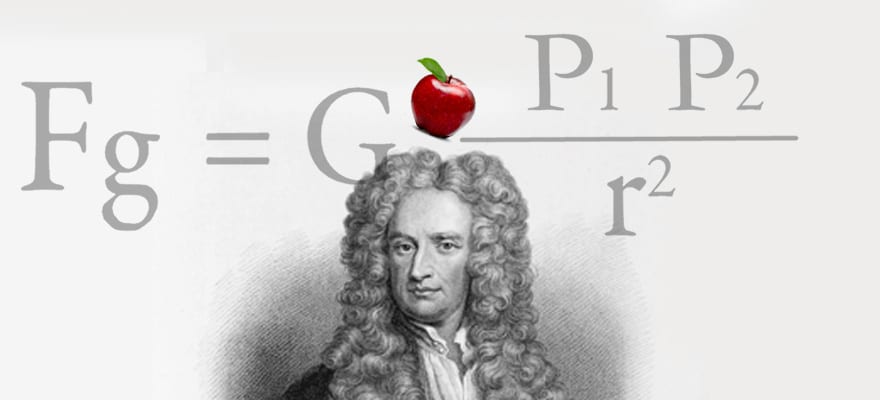
Newton’s Apple Tree
They say an apple doesn't fall far from the tree. But what does an apple that has ripened today have to do with a tree that turned to snags almost 600 years ago? Apparently, in some cases, and in some places, it does. Indeed, the odds of you resembling to your ancestors from some 18 generations ago are close to none. However, while appearance and character are virtually impossible to be maintained over so many years, it seems that money, power and reputation can go a very long way.
Michael Pearl Head Of Research
In Florence, Italy, this long way goes back almost 600 years. The same names that topped the list of the city’s wealthiest families in the 15th century, kept their spots at the top of the chart of modern day Florence.
This amazing fact was discovered by two Italian economists Barone and Mocetti, who analyzed Florentine tax records dating back to 1427.
Wealthy dynasties are nothing new. We all know the Rothschilds, with their vast financial activities around the world. There are also examples like the von Thorn family, whose business also goes back to the end of the 15th century. However, the case of Florence's affluent society is quite unique because it tells the story of a confined geographic area that went through numerous wars, plagues and different types of regimes, and introduced virtually no changes in its elite and zero social mobility. Read the full story here.
Once again, on behalf of the contributing editors at Finance Magnates, we hope you found our reading suggestions interesting and thought-provoking.
We’d love to hear from you so feel free to share your views in the comment section and any recommendations of your own.
As another weekend approaches, our editors take a brief detour away from the busy newsdesk with a selection of their favourite stories and reading recommendations.
Jonathan Fine kicks off with his contribution relating to an article which examines the efficiency of the financial industry in the US.
This week I stumbled upon a short piece on the LRB titled Must Do Better, presenting the relatively unnoticed research by NYU economist Thomas Philippon on the efficiency of the financial industry in the US. The article is under a paywall, and in case you weren’t fortunate enough to get a gift subscription this year like I did, here’s the gist.
Jonathan Fine Head Of Content Projects
According to Philippon, over more than a century the efficiency of the financial services in the US has remained virtually the same as it was in the 1880s, despite the technological leaps we’ve made since.
His methodology hinges on the role that banks have as financial intermediaries. If I pay the bank 2 dollars for a loan of a $100, and you are charged the same for depositing a $100 bill, the service fee is $4, and the intermediary unit’s cost is 2%. (The full paper is available here).
Philippon’s research shows that the chunk of the intermediary today is the same as it was in 1880. This fee is understood as a tax on the economy, with the only difference being that tax collected by the state is reducing inequality, but the intermediaries are starkly deepening it.
Now none of this comes as a great surprise, as banks have a clear incentive to keep things as they are.
Much has been written about our economic system as a whole relying on “phools”, as George A. Akerlof & Robert J. Shiller call it in their book, being tricked into suboptimal transactions. but it is good and even refreshing to have the intuitive notion that “the deal is rotten” put into coherent, measurable language.
Furthermore, the financial industry’s story has a special spin, as it is currently changing. We write a lot about fintech, and how it’s set to “disrupt” traditional finance. Philippon’s work shows just how fertile the soil is for such a change, and what is it that startups in payments, lending and trading aim to disrupt.
We stay on the subject of Fintech and more specifically, Blockchain.
Blockchain: the Internet of Finance?
I was drawn to this article as it helped fill in a few gaps in my knowledge in this area. Entitled “Will Blockchain Become The Internet Of Finance?”, the article examines the potential for blockchain. For anyone who’s been following innovation in the
Rosemary Barnes Editor
financial technology space, the term 'blockchain' has become the latest buzzword in the last 12 months and it is now estimated that $1 billion has been invested in blockchain start-ups since the technology was introduced.
The article discusses Blockchain’s potential application across a number of different industries, in particular, the financial services space which has been the fastest to adopt the technology, due to its potential to streamline cumbersome and costly processes like trade processing, clearing and settlement.
This potential has led the Bank of England to suggest that Blockchain could be the 'internet of finance'...a dream come true for the entire financial system, addressing everything from too-big-to-fail to anti-money laundering and corporate transparency issues in a single, elegantly designed package.
Finally, we turn our thoughts to money, power and reputation...
Newton’s Apple Tree
They say an apple doesn't fall far from the tree. But what does an apple that has ripened today have to do with a tree that turned to snags almost 600 years ago? Apparently, in some cases, and in some places, it does. Indeed, the odds of you resembling to your ancestors from some 18 generations ago are close to none. However, while appearance and character are virtually impossible to be maintained over so many years, it seems that money, power and reputation can go a very long way.
Michael Pearl Head Of Research
In Florence, Italy, this long way goes back almost 600 years. The same names that topped the list of the city’s wealthiest families in the 15th century, kept their spots at the top of the chart of modern day Florence.
This amazing fact was discovered by two Italian economists Barone and Mocetti, who analyzed Florentine tax records dating back to 1427.
Wealthy dynasties are nothing new. We all know the Rothschilds, with their vast financial activities around the world. There are also examples like the von Thorn family, whose business also goes back to the end of the 15th century. However, the case of Florence's affluent society is quite unique because it tells the story of a confined geographic area that went through numerous wars, plagues and different types of regimes, and introduced virtually no changes in its elite and zero social mobility. Read the full story here.
Once again, on behalf of the contributing editors at Finance Magnates, we hope you found our reading suggestions interesting and thought-provoking.
We’d love to hear from you so feel free to share your views in the comment section and any recommendations of your own.
42% of Swiss Financial Firms Have No Digital Fraud Policy, FINMA Finds
FP Markets Winner Spotlight 🏆 | Global Broker of the Year 2025 #Trading #Broker #Innovation #Shorts
FP Markets Winner Spotlight 🏆 | Global Broker of the Year 2025 #Trading #Broker #Innovation #Shorts
FP Markets takes the spotlight as Global Broker of the Year 2025 at the Finance Magnates Awards.
Martin Stoilov, Head of Client Experience, shares that trust, innovation, and people played a key role in the company’s success, supported by a strong foundation of integrity and client-centricity.
Following this milestone, FP Markets continues to focus on growth, technology investment, and its core values of transparency and excellence.
👉 Be part of FM Awards 2026: https://awards.financemagnates.com/#nominate
FP Markets takes the spotlight as Global Broker of the Year 2025 at the Finance Magnates Awards.
Martin Stoilov, Head of Client Experience, shares that trust, innovation, and people played a key role in the company’s success, supported by a strong foundation of integrity and client-centricity.
Following this milestone, FP Markets continues to focus on growth, technology investment, and its core values of transparency and excellence.
👉 Be part of FM Awards 2026: https://awards.financemagnates.com/#nominate
In this video, we review @HolaPrimeMarketsOfficial, a multi-asset forex and CFDs broker offering different account types, trading platforms, and flexible trading conditions.
We cover the broker’s overall offering, including account options, trading environment, platforms like MT4 and MT5, and additional services such as managed accounts and fast withdrawals.
Watch the full video to see if Hola Prime Markets fits your trading needs.
📣 Stay up to date with the latest in finance and trading. Follow Finance Magnates for industry news, insights, and global event coverage.
Connect with us:
🔗 LinkedIn: /financemagnates
👍 Facebook: /financemagnates
📸 Instagram: https://www.instagram.com/financemagnates
🐦 X: https://x.com/financemagnates
🎥 TikTok: https://www.tiktok.com/tag/financemagnates
▶️ YouTube: /@financemagnates_official
#HolaPrime #ForexBroker #CFDTrading #FinanceMagnates #Trading #Forex #BrokerReview
In this video, we review @HolaPrimeMarketsOfficial, a multi-asset forex and CFDs broker offering different account types, trading platforms, and flexible trading conditions.
We cover the broker’s overall offering, including account options, trading environment, platforms like MT4 and MT5, and additional services such as managed accounts and fast withdrawals.
Watch the full video to see if Hola Prime Markets fits your trading needs.
📣 Stay up to date with the latest in finance and trading. Follow Finance Magnates for industry news, insights, and global event coverage.
Connect with us:
🔗 LinkedIn: /financemagnates
👍 Facebook: /financemagnates
📸 Instagram: https://www.instagram.com/financemagnates
🐦 X: https://x.com/financemagnates
🎥 TikTok: https://www.tiktok.com/tag/financemagnates
▶️ YouTube: /@financemagnates_official
#HolaPrime #ForexBroker #CFDTrading #FinanceMagnates #Trading #Forex #BrokerReview
Hola Prime Review: What You Need to Know | Full Breakdown by Finance Magnates
Hola Prime Review: What You Need to Know | Full Breakdown by Finance Magnates
In this video, we review @HolaPrime_Global, a proprietary trading firm offering evaluation programs and performance-based payouts in simulated market environments.
We cover how the challenge model works, including account types, profit splits (up to 95%), trading rules, and what it takes to reach a funded account. You’ll also learn about available platforms like MT4, MT5, cTrader, and more, along with insights into payouts, support, and trading conditions.
Watch the full video to see if Hola Prime fits your trading style.
📣 Stay up to date with the latest in finance and trading. Follow Finance Magnates for industry news, insights, and global event coverage.
Connect with us:
🔗 LinkedIn: /financemagnates
👍 Facebook: /financemagnates
📸 Instagram: https://www.instagram.com/financemagnates
🐦 X: https://x.com/financemagnates
🎥 TikTok: https://www.tiktok.com/tag/financemagnates
▶️ YouTube: /@financemagnates_official
#HolaPrime #PropFirm #Trading #FinanceMagnates #Forex #FuturesTrading #TradingReview #PropFirmReview
In this video, we review @HolaPrime_Global, a proprietary trading firm offering evaluation programs and performance-based payouts in simulated market environments.
We cover how the challenge model works, including account types, profit splits (up to 95%), trading rules, and what it takes to reach a funded account. You’ll also learn about available platforms like MT4, MT5, cTrader, and more, along with insights into payouts, support, and trading conditions.
Watch the full video to see if Hola Prime fits your trading style.
📣 Stay up to date with the latest in finance and trading. Follow Finance Magnates for industry news, insights, and global event coverage.
Connect with us:
🔗 LinkedIn: /financemagnates
👍 Facebook: /financemagnates
📸 Instagram: https://www.instagram.com/financemagnates
🐦 X: https://x.com/financemagnates
🎥 TikTok: https://www.tiktok.com/tag/financemagnates
▶️ YouTube: /@financemagnates_official
#HolaPrime #PropFirm #Trading #FinanceMagnates #Forex #FuturesTrading #TradingReview #PropFirmReview
Axi Winner Spotlight 🏆 | Global Most Innovative Broker 2025 #Innovation #Trading #Fintech #Broker
Axi Winner Spotlight 🏆 | Global Most Innovative Broker 2025 #Innovation #Trading #Fintech #Broker
Axi takes the spotlight at the Finance Magnates Awards, winning Global Most Innovative Broker 2025.
Olivia Xenofontos and Ivanna Openko share how the team will feel: proud, motivated, and ready to keep delivering.
They also describe the night as well-organized, focused, and enjoyable for all.
👉 Be part of FM Awards 2026.
Axi takes the spotlight at the Finance Magnates Awards, winning Global Most Innovative Broker 2025.
Olivia Xenofontos and Ivanna Openko share how the team will feel: proud, motivated, and ready to keep delivering.
They also describe the night as well-organized, focused, and enjoyable for all.
👉 Be part of FM Awards 2026.
Recognition that matters.
Built on transparency.
Driven by the industry.
The Finance Magnates Awards 2026.
Nominations are now open.
🔗 https://awards.financemagnates.com/?utm_source=SM&utm_medium=social&utm_campaign=recognition-matters
Recognition that matters.
Built on transparency.
Driven by the industry.
The Finance Magnates Awards 2026.
Nominations are now open.
🔗 https://awards.financemagnates.com/?utm_source=SM&utm_medium=social&utm_campaign=recognition-matters