

>
EU Commission Presents 'Team Juncker' in Chase for Jobs and Growth
Wednesday,10/09/2014|14:27GMTby
George Tchetvertakov
The EU Commission is restructured and reshuffled although a federalist flavor remains. With 'TeamJuncker' holding the reins, Europe could be on a fast-track to becoming the United States of Europe.
The prime issues are of course economic and directly relate to the unsustainable level of public debt in the Euro-zone parallel to shortfalls in fiscal discipline across most European countries – especially the larger, more influential ones like France, Germany, UK and Italy. For this reason, the key posts in the EU Commission are arguably the Economic Affairs and Financial Services posts which have gone to Mr. Frans Timmermans and Mr. Jonathan Hill.
Luxembourg: The Cradle of Neutrality
Jean-Claude Juncker is a European political veteran. Having served as the Prime Minister of Luxembourg from 1995 to 2013 makes him the longest-serving head of government of any EU country. Mr. Juncker also served as Luxembourg’s Finance Minister from 1998 to 2009 and President of the Eurogroup from 2005 to 2013. His tenure has spanned the entirety of the EU sovereign debt crisis.
The new President-elect was selected by a majority of MEP’s in a secret ballot, supported by 26 of Europe’s 28 sovereign states. However, controversy and Mr. Juncker have become synonymous due to his macroeconomic and political views, as well as his decisions on austerity and bailout conditions over the past 5 years. His comments at various events during his political career suggest Mr. Juncker supports a ‘federalist’ European system which includes a banking union. As one of the architects of the European single currency, Mr. Juncker is naturally a leading advocate for deeper EU integration, causing significant friction between several European countries including the UK.
The proposed 'Juncker Commission' includes 5 former Prime Ministers, 4 Deputy Prime Ministers, 19 former Ministers, 7 returning Commissioners and 8 former Members of the European Parliament.
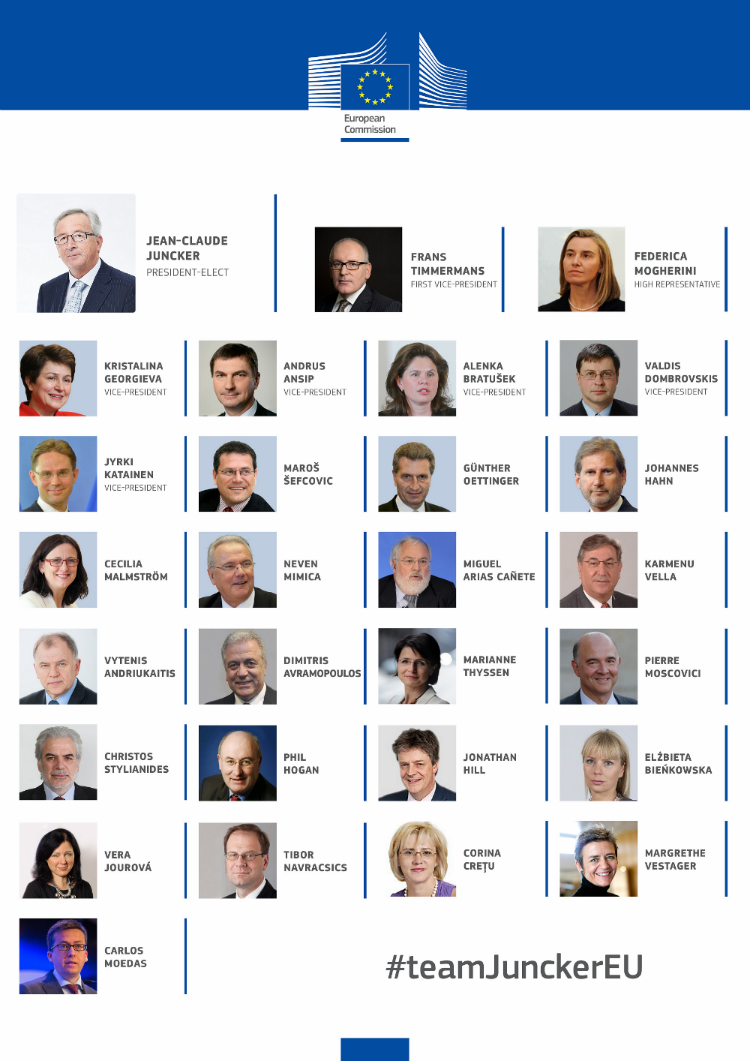
Mr. Juncker was quoted as saying: “After years of economic hardship and often painful reforms, Europeans expect a performing economy, sustainable jobs, more social protection, safer borders, energy security and digital opportunities. Today I am presenting the team that will put Europe back on the path to jobs and growth."
The restructuring announced today, combined with a significant reshuffle of positions, raises various interesting possibilities regarding the future course of European economic and political affairs.
The Novelties
The EU Commission’s structure will now be comprised of 7 Vice-Presidents who will each lead a ‘Project Team’. They will be steering and coordinating the work of a number of Commissioners "in compositions that may change according to need and as new projects develop over time." The EU Commission says it wants to “break down silos and move away from static structures." The various project teams have been specifically selected to tackle each of Mr. Juncker’s political guidelines published in July 2014, serving as the basis for his selection as President-elect.
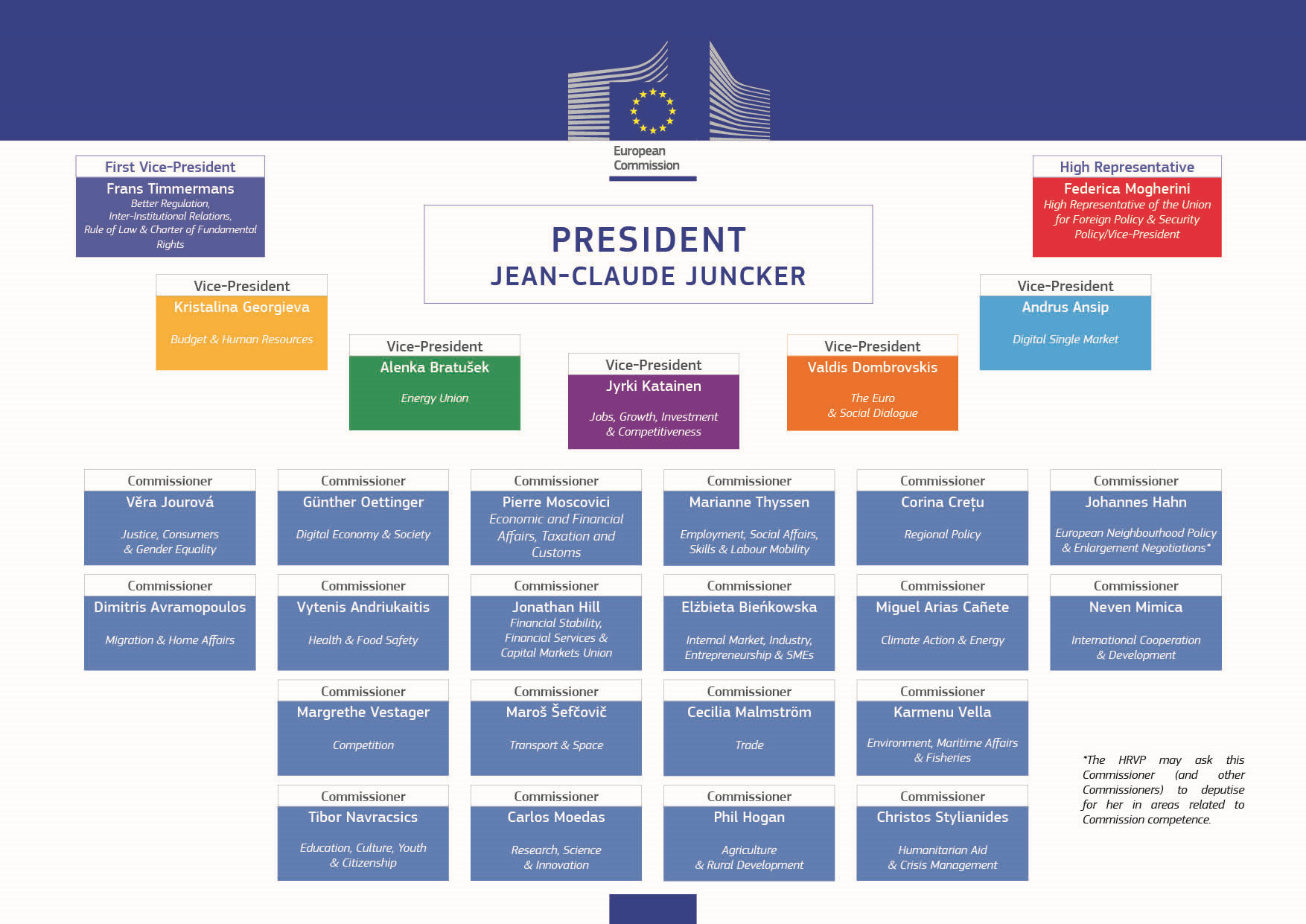
For the first time, the EU Commission will have a dedicated Commissioner “dedicated to a better regulation agenda." First Vice-President, Frans Timmermans, has been named in this new post and is expected to handle all regulatory matters including financial. This new post and Mr. Timmermans' decisions will be key as the financial services industry hurtles towards major changes over the next few years in areas of regulation, jurisdiction and competition.
The new “Financial Stability, Financial Services and Capital Markets Union” project team will be headed by Jonanthan Hill, a member of the House of Lords in the UK. His appointment has been greeted favourably by British Prime Minister, David Cameron, given its influence and importance in future policy developments. Future changes on how financial markets operate and responses to future financial crises will be the responsibility of Mr. Hill. In an official statement, the EU Commission stated: “The new portfolio under Mr. Hill will ensure the Commission remains active and vigilant in implementing the new supervisory and resolution rules for banks."
According to EU Commission rules, commissioners are supposed to act in the interests of Europe rather than in their national interest. The College of Commissioners acts as a cabinet and effectively operates the EU's departments originating policy and adjudicating disputes.
One aspect of the new-look EU Commission that has riled some European policymakers is the appointment of Frenchman, Pierre Moscovici as Head of EU Economic Affairs, despite France not being able to present a single budget that conforms to EU deficit rules since 2008.
The European Parliament is expected to approve the provisional EU commission later this year with Mr. Juncker’s team taking the reins on November 1st, 2014.
The prime issues are of course economic and directly relate to the unsustainable level of public debt in the Euro-zone parallel to shortfalls in fiscal discipline across most European countries – especially the larger, more influential ones like France, Germany, UK and Italy. For this reason, the key posts in the EU Commission are arguably the Economic Affairs and Financial Services posts which have gone to Mr. Frans Timmermans and Mr. Jonathan Hill.
Luxembourg: The Cradle of Neutrality
Jean-Claude Juncker is a European political veteran. Having served as the Prime Minister of Luxembourg from 1995 to 2013 makes him the longest-serving head of government of any EU country. Mr. Juncker also served as Luxembourg’s Finance Minister from 1998 to 2009 and President of the Eurogroup from 2005 to 2013. His tenure has spanned the entirety of the EU sovereign debt crisis.
The new President-elect was selected by a majority of MEP’s in a secret ballot, supported by 26 of Europe’s 28 sovereign states. However, controversy and Mr. Juncker have become synonymous due to his macroeconomic and political views, as well as his decisions on austerity and bailout conditions over the past 5 years. His comments at various events during his political career suggest Mr. Juncker supports a ‘federalist’ European system which includes a banking union. As one of the architects of the European single currency, Mr. Juncker is naturally a leading advocate for deeper EU integration, causing significant friction between several European countries including the UK.
The proposed 'Juncker Commission' includes 5 former Prime Ministers, 4 Deputy Prime Ministers, 19 former Ministers, 7 returning Commissioners and 8 former Members of the European Parliament.
Mr. Juncker was quoted as saying: “After years of economic hardship and often painful reforms, Europeans expect a performing economy, sustainable jobs, more social protection, safer borders, energy security and digital opportunities. Today I am presenting the team that will put Europe back on the path to jobs and growth."
The restructuring announced today, combined with a significant reshuffle of positions, raises various interesting possibilities regarding the future course of European economic and political affairs.
The Novelties
The EU Commission’s structure will now be comprised of 7 Vice-Presidents who will each lead a ‘Project Team’. They will be steering and coordinating the work of a number of Commissioners "in compositions that may change according to need and as new projects develop over time." The EU Commission says it wants to “break down silos and move away from static structures." The various project teams have been specifically selected to tackle each of Mr. Juncker’s political guidelines published in July 2014, serving as the basis for his selection as President-elect.
For the first time, the EU Commission will have a dedicated Commissioner “dedicated to a better regulation agenda." First Vice-President, Frans Timmermans, has been named in this new post and is expected to handle all regulatory matters including financial. This new post and Mr. Timmermans' decisions will be key as the financial services industry hurtles towards major changes over the next few years in areas of regulation, jurisdiction and competition.
The new “Financial Stability, Financial Services and Capital Markets Union” project team will be headed by Jonanthan Hill, a member of the House of Lords in the UK. His appointment has been greeted favourably by British Prime Minister, David Cameron, given its influence and importance in future policy developments. Future changes on how financial markets operate and responses to future financial crises will be the responsibility of Mr. Hill. In an official statement, the EU Commission stated: “The new portfolio under Mr. Hill will ensure the Commission remains active and vigilant in implementing the new supervisory and resolution rules for banks."
According to EU Commission rules, commissioners are supposed to act in the interests of Europe rather than in their national interest. The College of Commissioners acts as a cabinet and effectively operates the EU's departments originating policy and adjudicating disputes.
One aspect of the new-look EU Commission that has riled some European policymakers is the appointment of Frenchman, Pierre Moscovici as Head of EU Economic Affairs, despite France not being able to present a single budget that conforms to EU deficit rules since 2008.
The European Parliament is expected to approve the provisional EU commission later this year with Mr. Juncker’s team taking the reins on November 1st, 2014.
Retail Trading & Prop Firms in 2025: Five Defining Trends - And One Prediction for 2026
Featured Videos
Executive Interview | Charlotte Bullock | Chief Product Officer, Bank of London | FMLS:25
In this interview, we sat down with Charlotte Bullock, Head of Product at The Bank of London, previously at SAP and now shaping product at one of the sector’s most ambitious new banking players.
Charlotte reflects on the Summit so far and talks about the culture inside fintech banks today. We look at the pressures that come with scaling, and how firms can hold onto the nimble approach that made them stand out early on.
We also cover the state of payments ahead of her appearance on the payments roundtable: the blockages financial firms face, the areas that still need fixing, and what a realistic solution looks like in 2026.
In this interview, we sat down with Charlotte Bullock, Head of Product at The Bank of London, previously at SAP and now shaping product at one of the sector’s most ambitious new banking players.
Charlotte reflects on the Summit so far and talks about the culture inside fintech banks today. We look at the pressures that come with scaling, and how firms can hold onto the nimble approach that made them stand out early on.
We also cover the state of payments ahead of her appearance on the payments roundtable: the blockages financial firms face, the areas that still need fixing, and what a realistic solution looks like in 2026.
In this interview, we sat down with Charlotte Bullock, Head of Product at The Bank of London, previously at SAP and now shaping product at one of the sector’s most ambitious new banking players.
Charlotte reflects on the Summit so far and talks about the culture inside fintech banks today. We look at the pressures that come with scaling, and how firms can hold onto the nimble approach that made them stand out early on.
We also cover the state of payments ahead of her appearance on the payments roundtable: the blockages financial firms face, the areas that still need fixing, and what a realistic solution looks like in 2026.
In this interview, we sat down with Charlotte Bullock, Head of Product at The Bank of London, previously at SAP and now shaping product at one of the sector’s most ambitious new banking players.
Charlotte reflects on the Summit so far and talks about the culture inside fintech banks today. We look at the pressures that come with scaling, and how firms can hold onto the nimble approach that made them stand out early on.
We also cover the state of payments ahead of her appearance on the payments roundtable: the blockages financial firms face, the areas that still need fixing, and what a realistic solution looks like in 2026.
In this conversation, we sit down with Drew Niv, CSO at ATFX Connect and one of the most influential figures in modern FX.
We speak about market structure, the institutional view on liquidity, and the sharp rise of prop trading, a sector Drew has been commenting on in recent months. Drew explains why he once dismissed prop trading, why his view changed, and what he now thinks the model means for brokers, clients and risk managers.
We explore subscription-fee dependency, the high reneging rate, and the long-term challenge: how brokers can build a more stable and honest version of the model. Drew also talks about the traffic advantage standalone prop firms have built and why brokers may still win in the long run if they take the right approach.
In this conversation, we sit down with Drew Niv, CSO at ATFX Connect and one of the most influential figures in modern FX.
We speak about market structure, the institutional view on liquidity, and the sharp rise of prop trading, a sector Drew has been commenting on in recent months. Drew explains why he once dismissed prop trading, why his view changed, and what he now thinks the model means for brokers, clients and risk managers.
We explore subscription-fee dependency, the high reneging rate, and the long-term challenge: how brokers can build a more stable and honest version of the model. Drew also talks about the traffic advantage standalone prop firms have built and why brokers may still win in the long run if they take the right approach.
In this conversation, we sit down with Drew Niv, CSO at ATFX Connect and one of the most influential figures in modern FX.
We speak about market structure, the institutional view on liquidity, and the sharp rise of prop trading, a sector Drew has been commenting on in recent months. Drew explains why he once dismissed prop trading, why his view changed, and what he now thinks the model means for brokers, clients and risk managers.
We explore subscription-fee dependency, the high reneging rate, and the long-term challenge: how brokers can build a more stable and honest version of the model. Drew also talks about the traffic advantage standalone prop firms have built and why brokers may still win in the long run if they take the right approach.
In this conversation, we sit down with Drew Niv, CSO at ATFX Connect and one of the most influential figures in modern FX.
We speak about market structure, the institutional view on liquidity, and the sharp rise of prop trading, a sector Drew has been commenting on in recent months. Drew explains why he once dismissed prop trading, why his view changed, and what he now thinks the model means for brokers, clients and risk managers.
We explore subscription-fee dependency, the high reneging rate, and the long-term challenge: how brokers can build a more stable and honest version of the model. Drew also talks about the traffic advantage standalone prop firms have built and why brokers may still win in the long run if they take the right approach.
In this conversation, we sit down with Drew Niv, CSO at ATFX Connect and one of the most influential figures in modern FX.
We speak about market structure, the institutional view on liquidity, and the sharp rise of prop trading, a sector Drew has been commenting on in recent months. Drew explains why he once dismissed prop trading, why his view changed, and what he now thinks the model means for brokers, clients and risk managers.
We explore subscription-fee dependency, the high reneging rate, and the long-term challenge: how brokers can build a more stable and honest version of the model. Drew also talks about the traffic advantage standalone prop firms have built and why brokers may still win in the long run if they take the right approach.
In this conversation, we sit down with Drew Niv, CSO at ATFX Connect and one of the most influential figures in modern FX.
We speak about market structure, the institutional view on liquidity, and the sharp rise of prop trading, a sector Drew has been commenting on in recent months. Drew explains why he once dismissed prop trading, why his view changed, and what he now thinks the model means for brokers, clients and risk managers.
We explore subscription-fee dependency, the high reneging rate, and the long-term challenge: how brokers can build a more stable and honest version of the model. Drew also talks about the traffic advantage standalone prop firms have built and why brokers may still win in the long run if they take the right approach.
Executive Interview | Remonda Z. Kirketerp Møller| CEO & Founder Muinmos | FMLS:25
In this interview, Remonda Z. Kirketerp Møller, founder of Muinmos, breaks down the state of AI in regtech and what responsible adoption really looks like for brokers. We talk about rising fragmentation, the pressures around compliance accuracy, and why most firms are still in the early stages of AI maturity.
Ramanda also shares insights on regulator sandboxes, shifting expectations around accountability, and the current reality of MiCA licensing and passporting in Europe.
A concise look at where compliance, onboarding, and AI-driven processes are heading next.
In this interview, Remonda Z. Kirketerp Møller, founder of Muinmos, breaks down the state of AI in regtech and what responsible adoption really looks like for brokers. We talk about rising fragmentation, the pressures around compliance accuracy, and why most firms are still in the early stages of AI maturity.
Ramanda also shares insights on regulator sandboxes, shifting expectations around accountability, and the current reality of MiCA licensing and passporting in Europe.
A concise look at where compliance, onboarding, and AI-driven processes are heading next.
In this interview, Remonda Z. Kirketerp Møller, founder of Muinmos, breaks down the state of AI in regtech and what responsible adoption really looks like for brokers. We talk about rising fragmentation, the pressures around compliance accuracy, and why most firms are still in the early stages of AI maturity.
Ramanda also shares insights on regulator sandboxes, shifting expectations around accountability, and the current reality of MiCA licensing and passporting in Europe.
A concise look at where compliance, onboarding, and AI-driven processes are heading next.
In this interview, Remonda Z. Kirketerp Møller, founder of Muinmos, breaks down the state of AI in regtech and what responsible adoption really looks like for brokers. We talk about rising fragmentation, the pressures around compliance accuracy, and why most firms are still in the early stages of AI maturity.
Ramanda also shares insights on regulator sandboxes, shifting expectations around accountability, and the current reality of MiCA licensing and passporting in Europe.
A concise look at where compliance, onboarding, and AI-driven processes are heading next.
In this interview, Remonda Z. Kirketerp Møller, founder of Muinmos, breaks down the state of AI in regtech and what responsible adoption really looks like for brokers. We talk about rising fragmentation, the pressures around compliance accuracy, and why most firms are still in the early stages of AI maturity.
Ramanda also shares insights on regulator sandboxes, shifting expectations around accountability, and the current reality of MiCA licensing and passporting in Europe.
A concise look at where compliance, onboarding, and AI-driven processes are heading next.
In this interview, Remonda Z. Kirketerp Møller, founder of Muinmos, breaks down the state of AI in regtech and what responsible adoption really looks like for brokers. We talk about rising fragmentation, the pressures around compliance accuracy, and why most firms are still in the early stages of AI maturity.
Ramanda also shares insights on regulator sandboxes, shifting expectations around accountability, and the current reality of MiCA licensing and passporting in Europe.
A concise look at where compliance, onboarding, and AI-driven processes are heading next.
In this conversation, we speak with Aydin Bonabi, CEO and co-founder of Surveill, a firm focused on fraud detection and AI-driven compliance tools for financial institutions.
We start with Aydin’s view of the Summit and the challenges brokers face as fraud tactics grow more complex. He explains how firms can stay ahead through real-time signals, data patterns, and early-stage detection.
We also talk about AI training and why compliance teams often struggle to keep models accurate, fair, and aligned with regulatory expectations. Aydin breaks down what “good” AI training looks like inside a financial environment, including the importance of clean data, domain expertise, and human oversight.
He closes with a clear message: fraud is scaling, and so must the tools that stop it.
In this conversation, we speak with Aydin Bonabi, CEO and co-founder of Surveill, a firm focused on fraud detection and AI-driven compliance tools for financial institutions.
We start with Aydin’s view of the Summit and the challenges brokers face as fraud tactics grow more complex. He explains how firms can stay ahead through real-time signals, data patterns, and early-stage detection.
We also talk about AI training and why compliance teams often struggle to keep models accurate, fair, and aligned with regulatory expectations. Aydin breaks down what “good” AI training looks like inside a financial environment, including the importance of clean data, domain expertise, and human oversight.
He closes with a clear message: fraud is scaling, and so must the tools that stop it.
In this conversation, we speak with Aydin Bonabi, CEO and co-founder of Surveill, a firm focused on fraud detection and AI-driven compliance tools for financial institutions.
We start with Aydin’s view of the Summit and the challenges brokers face as fraud tactics grow more complex. He explains how firms can stay ahead through real-time signals, data patterns, and early-stage detection.
We also talk about AI training and why compliance teams often struggle to keep models accurate, fair, and aligned with regulatory expectations. Aydin breaks down what “good” AI training looks like inside a financial environment, including the importance of clean data, domain expertise, and human oversight.
He closes with a clear message: fraud is scaling, and so must the tools that stop it.
In this conversation, we speak with Aydin Bonabi, CEO and co-founder of Surveill, a firm focused on fraud detection and AI-driven compliance tools for financial institutions.
We start with Aydin’s view of the Summit and the challenges brokers face as fraud tactics grow more complex. He explains how firms can stay ahead through real-time signals, data patterns, and early-stage detection.
We also talk about AI training and why compliance teams often struggle to keep models accurate, fair, and aligned with regulatory expectations. Aydin breaks down what “good” AI training looks like inside a financial environment, including the importance of clean data, domain expertise, and human oversight.
He closes with a clear message: fraud is scaling, and so must the tools that stop it.
In this conversation, we speak with Aydin Bonabi, CEO and co-founder of Surveill, a firm focused on fraud detection and AI-driven compliance tools for financial institutions.
We start with Aydin’s view of the Summit and the challenges brokers face as fraud tactics grow more complex. He explains how firms can stay ahead through real-time signals, data patterns, and early-stage detection.
We also talk about AI training and why compliance teams often struggle to keep models accurate, fair, and aligned with regulatory expectations. Aydin breaks down what “good” AI training looks like inside a financial environment, including the importance of clean data, domain expertise, and human oversight.
He closes with a clear message: fraud is scaling, and so must the tools that stop it.
In this conversation, we speak with Aydin Bonabi, CEO and co-founder of Surveill, a firm focused on fraud detection and AI-driven compliance tools for financial institutions.
We start with Aydin’s view of the Summit and the challenges brokers face as fraud tactics grow more complex. He explains how firms can stay ahead through real-time signals, data patterns, and early-stage detection.
We also talk about AI training and why compliance teams often struggle to keep models accurate, fair, and aligned with regulatory expectations. Aydin breaks down what “good” AI training looks like inside a financial environment, including the importance of clean data, domain expertise, and human oversight.
He closes with a clear message: fraud is scaling, and so must the tools that stop it.
Exness expands its presence in Africa: Inside our interview with Paul Margarites in Cape Town
Finance Magnates met with Paul Margarites, Exness regional commercial director for Sub-Saharan Africa, during a visit to the firm’s office opening in Cape Town. In this talk, led by Andrea Badiola Mateos, Co-CEO at Finance Magnates, Paul shares views on the South African trading space, local user behavior, mobile trends, regulation, team growth, and how Exness plans to grow in more markets across the region. @Exness
Read the article at: https://www.financemagnates.com/thought-leadership/exness-expands-its-presence-in-africa-inside-our-interview-with-paul-margarites/
#exness #financemagnates #exnesstrading #CFDtrading #tradeonline #africanews #capetown
Finance Magnates met with Paul Margarites, Exness regional commercial director for Sub-Saharan Africa, during a visit to the firm’s office opening in Cape Town. In this talk, led by Andrea Badiola Mateos, Co-CEO at Finance Magnates, Paul shares views on the South African trading space, local user behavior, mobile trends, regulation, team growth, and how Exness plans to grow in more markets across the region. @Exness
Read the article at: https://www.financemagnates.com/thought-leadership/exness-expands-its-presence-in-africa-inside-our-interview-with-paul-margarites/
#exness #financemagnates #exnesstrading #CFDtrading #tradeonline #africanews #capetown
Finance Magnates met with Paul Margarites, Exness regional commercial director for Sub-Saharan Africa, during a visit to the firm’s office opening in Cape Town. In this talk, led by Andrea Badiola Mateos, Co-CEO at Finance Magnates, Paul shares views on the South African trading space, local user behavior, mobile trends, regulation, team growth, and how Exness plans to grow in more markets across the region. @Exness
Read the article at: https://www.financemagnates.com/thought-leadership/exness-expands-its-presence-in-africa-inside-our-interview-with-paul-margarites/
#exness #financemagnates #exnesstrading #CFDtrading #tradeonline #africanews #capetown
Finance Magnates met with Paul Margarites, Exness regional commercial director for Sub-Saharan Africa, during a visit to the firm’s office opening in Cape Town. In this talk, led by Andrea Badiola Mateos, Co-CEO at Finance Magnates, Paul shares views on the South African trading space, local user behavior, mobile trends, regulation, team growth, and how Exness plans to grow in more markets across the region. @Exness
Read the article at: https://www.financemagnates.com/thought-leadership/exness-expands-its-presence-in-africa-inside-our-interview-with-paul-margarites/
#exness #financemagnates #exnesstrading #CFDtrading #tradeonline #africanews #capetown
Finance Magnates met with Paul Margarites, Exness regional commercial director for Sub-Saharan Africa, during a visit to the firm’s office opening in Cape Town. In this talk, led by Andrea Badiola Mateos, Co-CEO at Finance Magnates, Paul shares views on the South African trading space, local user behavior, mobile trends, regulation, team growth, and how Exness plans to grow in more markets across the region. @Exness
Read the article at: https://www.financemagnates.com/thought-leadership/exness-expands-its-presence-in-africa-inside-our-interview-with-paul-margarites/
#exness #financemagnates #exnesstrading #CFDtrading #tradeonline #africanews #capetown
Finance Magnates met with Paul Margarites, Exness regional commercial director for Sub-Saharan Africa, during a visit to the firm’s office opening in Cape Town. In this talk, led by Andrea Badiola Mateos, Co-CEO at Finance Magnates, Paul shares views on the South African trading space, local user behavior, mobile trends, regulation, team growth, and how Exness plans to grow in more markets across the region. @Exness
Read the article at: https://www.financemagnates.com/thought-leadership/exness-expands-its-presence-in-africa-inside-our-interview-with-paul-margarites/
#exness #financemagnates #exnesstrading #CFDtrading #tradeonline #africanews #capetown
