CFD Brokers in Dubai: Did anything Change After February 28?

Wednesday, 04/03/2026 | 11:55 GMT by Damian Chmiel
  • For months, brokers fled Cyprus's regulatory grip for Dubai's tax-free and faster licensing promise - that still holds.
  • A new analysis from Finance Magnates Intelligence quantifies the possible risk amid the current crisis.
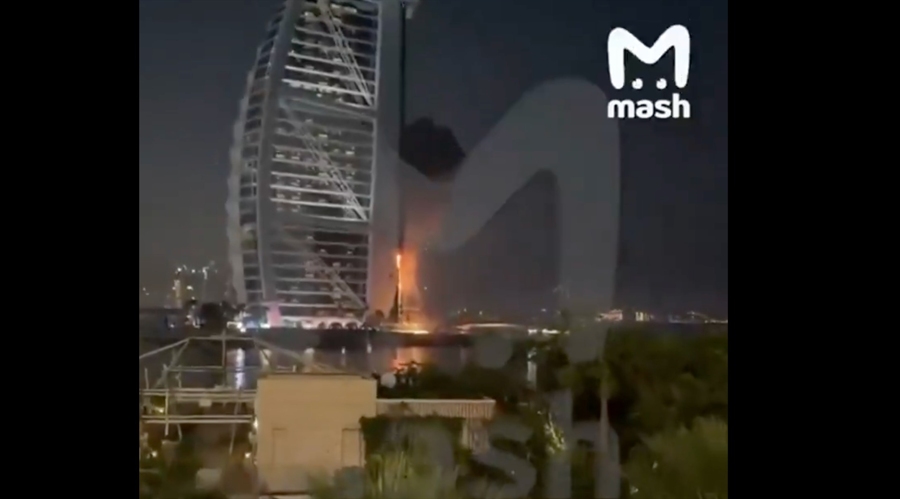
Flames at Dubai's landmark Burj Al Arab hotel after Iranian strike
Flames at Dubai's landmark Burj Al Arab hotel after Iranian strike (Photo: Mash)

For 18 months, the CFD industry's migration story had a clear direction: out of Limassol and into Dubai. Lower taxes, faster licensing, higher executive salaries, and a regulator willing to engage with the industry rather than constrict it. The numbers backed it up. DIFC registered 1,081 new companies in the first half of 2025 alone, and Capital.com alone recorded $804 billion in trading volume from MENA in the same period, 3.5 times the European figure.

Following February 28's Iran's missile and drone barrage over the Gulf, Finance Magnates Intelligence has now published a full quantitative analysis of what happens next.

UAE Markets Go Dark, CFD Desks Keep Running

The immediate fallout was swift. The UAE Capital Markets Authority shut down both the Abu Dhabi Securities Exchange and the Dubai Financial Market effective March 2 with Wednesday reopening date. The DFSA suspended Nasdaq Dubai for at least two trading days. JPMorgan and Citigroup activated contingency plans. DIFC firms, including IG Group, CMC Markets, Pepperstone, and Saxo Bank, told staff to work from home.

Ironically, the crisis that disrupted broker operations simultaneously produced some of the most volatile trading conditions in years. Brent crude surged 13% from $73 to above $82 per barrel at peak. Gold hit $5,390 per ounce, a 5.2% spike. EU natural gas exploded 38% in a single session. The VIX spiked 27% intraday. Goldman Sachs revised its year-end gold target to $6,000 per ounce, a level that technical analysts now consider increasingly plausible even after Tuesday's sharp pullback in precious metals.

For CFD brokers, extreme gapping in oil markets at the Sunday open raised the prospect of negative balance events for firms that had not adequately hedged their energy exposure.

The Firms With the Most to Lose

Not every broker is equally exposed. The FMIntel analysis identifies firms that surrendered their CySEC licenses entirely to anchor in the UAE as carrying the heaviest risk. Exinity, which operates the FXTM brand, gave up its CySEC license in July 2025 after securing an SCA Category 5 license.

MultiBank Group moved its entire headquarters to the UAE. Both now lack the EU regulatory fallback that firms like IG Group, Pepperstone, and CMC Markets retained through their FCA registrations.

The wave of 2025 license acquisitions in Dubai, XM, RoboMarkets, Deriv, Forex.com, VT Markets, Eightcap, and others, now faces a different risk calculus than when those applications were filed. As FinanceMagnates.com reported last week, broker offices in Dubai are concentrated in the downtown business centre, the same areas where explosions were heard and interception activity was reported over the weekend.

Three Scenarios, One Number to Watch

The core of the FMIntel analysis lays out three forward scenarios for Dubai's role as a CFD hub over the next 18 months. The probability weighting is where the report gets specific, and worth reading in full.

The baseline case, assigned a 45% probability, is a prolonged conflict running four to eight weeks, with sporadic strikes, persistent alert conditions, and oil reaching $90-110 per barrel. Under this scenario, the analysis forecasts a measurable uptick of 10-20% in CySEC enquiries from firms hedging Dubai exposure, some executive family relocations to Europe, and a stall in new SCA and DFSA license applications. Gold CFD volumes would reach multi-year highs. Dubai property prices would fall 10-20% from peak.

The timing, however, is awkward for CySEC, whose consultation paper proposing fee increases of 60-80% across licensing categories was published just six weeks before the Gulf attack. A broker offering four investment services under the new model would face 32,000 euro in application fees alone, before annual costs and capital requirements. That proposal helped accelerate the very migration the crisis is now complicating.

The full analysis, including the scenario probability matrix, market data tables, and the complete assessment of broker exposure by license type, is available at the new FMIntel portal.

For 18 months, the CFD industry's migration story had a clear direction: out of Limassol and into Dubai. Lower taxes, faster licensing, higher executive salaries, and a regulator willing to engage with the industry rather than constrict it. The numbers backed it up. DIFC registered 1,081 new companies in the first half of 2025 alone, and Capital.com alone recorded $804 billion in trading volume from MENA in the same period, 3.5 times the European figure.

Following February 28's Iran's missile and drone barrage over the Gulf, Finance Magnates Intelligence has now published a full quantitative analysis of what happens next.

UAE Markets Go Dark, CFD Desks Keep Running

The immediate fallout was swift. The UAE Capital Markets Authority shut down both the Abu Dhabi Securities Exchange and the Dubai Financial Market effective March 2 with Wednesday reopening date. The DFSA suspended Nasdaq Dubai for at least two trading days. JPMorgan and Citigroup activated contingency plans. DIFC firms, including IG Group, CMC Markets, Pepperstone, and Saxo Bank, told staff to work from home.

Ironically, the crisis that disrupted broker operations simultaneously produced some of the most volatile trading conditions in years. Brent crude surged 13% from $73 to above $82 per barrel at peak. Gold hit $5,390 per ounce, a 5.2% spike. EU natural gas exploded 38% in a single session. The VIX spiked 27% intraday. Goldman Sachs revised its year-end gold target to $6,000 per ounce, a level that technical analysts now consider increasingly plausible even after Tuesday's sharp pullback in precious metals.

For CFD brokers, extreme gapping in oil markets at the Sunday open raised the prospect of negative balance events for firms that had not adequately hedged their energy exposure.

The Firms With the Most to Lose

Not every broker is equally exposed. The FMIntel analysis identifies firms that surrendered their CySEC licenses entirely to anchor in the UAE as carrying the heaviest risk. Exinity, which operates the FXTM brand, gave up its CySEC license in July 2025 after securing an SCA Category 5 license.

MultiBank Group moved its entire headquarters to the UAE. Both now lack the EU regulatory fallback that firms like IG Group, Pepperstone, and CMC Markets retained through their FCA registrations.

The wave of 2025 license acquisitions in Dubai, XM, RoboMarkets, Deriv, Forex.com, VT Markets, Eightcap, and others, now faces a different risk calculus than when those applications were filed. As FinanceMagnates.com reported last week, broker offices in Dubai are concentrated in the downtown business centre, the same areas where explosions were heard and interception activity was reported over the weekend.

Three Scenarios, One Number to Watch

The core of the FMIntel analysis lays out three forward scenarios for Dubai's role as a CFD hub over the next 18 months. The probability weighting is where the report gets specific, and worth reading in full.

The baseline case, assigned a 45% probability, is a prolonged conflict running four to eight weeks, with sporadic strikes, persistent alert conditions, and oil reaching $90-110 per barrel. Under this scenario, the analysis forecasts a measurable uptick of 10-20% in CySEC enquiries from firms hedging Dubai exposure, some executive family relocations to Europe, and a stall in new SCA and DFSA license applications. Gold CFD volumes would reach multi-year highs. Dubai property prices would fall 10-20% from peak.

The timing, however, is awkward for CySEC, whose consultation paper proposing fee increases of 60-80% across licensing categories was published just six weeks before the Gulf attack. A broker offering four investment services under the new model would face 32,000 euro in application fees alone, before annual costs and capital requirements. That proposal helped accelerate the very migration the crisis is now complicating.

The full analysis, including the scenario probability matrix, market data tables, and the complete assessment of broker exposure by license type, is available at the new FMIntel portal.

About the Author: Damian Chmiel
Damian Chmiel
  • 3296 Articles
  • 103 Followers
About the Author: Damian Chmiel
Damian's adventure with financial markets began at the Cracow University of Economics, where he obtained his MA in finance and accounting. Starting from the retail trader perspective, he collaborated with brokerage houses and financial portals in Poland as an independent editor and content manager. His adventure with Finance Magnates began in 2016, where he is working as a business intelligence analyst.
  • 3296 Articles
  • 103 Followers

More from the Author

Retail FX

!"#$%&'()*+,-./0123456789:;<=>?@ABCDEFGHIJKLMNOPQRSTUVWXYZ[\]^_`abcdefghijklmnopqrstuvwxyz{|} !"#$%&'()*+,-./0123456789:;<=>?@ABCDEFGHIJKLMNOPQRSTUVWXYZ[\]^_`abcdefghijklmnopqrstuvwxyz{|}