US Vs Them: BRICS Countries to Establish Competing Financial Institutions
Wednesday,16/07/2014|19:40GMTby
Adil Siddiqui
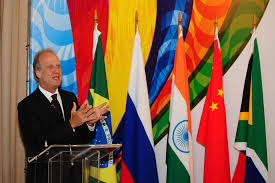
The Sixth BRICS Summit in Brazil has revealed several initiatives, such as a new development bank and reserve currency fund. New institutions highlight the group's increasing role in international trade & commerce.
Emerging market countries that make up the BRICS nations have fast become a model for global economic growth after the great recession of 2008. With the group of five countries making up nearly half of the world’s population, and contributing to one fifth of global GDP, their relevance is increasing significantly. Leaders of Brazil, Russia, India, China and South Africa have unanimously agreed on a number of initiatives at the Summit that aim to strengthen economic and political ties between the group members.
The BRICS nations have revealed a new development bank and reserve currency fund, the new development bank will be based in Shanghai and is expected to be operational in two years. The new initiative comes after BRICS nations look for much needed reforms in institutions such as the World Bank and IMF.
The new institute could create a new ‘us’ and ‘them’ as developed economies in the EU and US will lose their influence. In 2010, G20 nations put forward a number of reforms in the governance of the IMF that would allow developing countries to play a more significant role. The US has 17% of voting rights in the global organisation.
Members of the BRICS have expressed their disappointment at the lack of progress in changes at the IMF, according to Chinese media: “We remain disappointed and seriously concerned with the current non-implementation of the IMF reforms.”
BRICS FX Markets Continue to Grow
The great recession of 2008 highlighted the troubles developed economies face in an interoperable global world, with the concerns of low growth rates and unemployment shaping negative sentiment. However, picking up the pieces are the BRICS nations, a collection of five future superpowers who are expected to dictate to the modern world on economic and political matters.
The influence of the five countries is evident in their role in the global FX markets, the Chinese yuan formally entered the top ten most active currencies, according to the last BIS FX Survey (2013). The sixth Summit comes during a period of uncertainty triggered by events in Russia & Ukraine and the Middle East.
The BRICS currencies have been gradually stepping up the global ranks, the latest Bank of International Settlements Survey, which compiles data from central banks & international investment banks, showed that the Chinese yuan was the ninth most actively traded currency pair with 2.2% market share, a vast increase from its 2001 position where the CNY was in 35th place. The Russian ruble was the next best performing BRICS currency pair, at 12th position contributing to 1.6% in global trade. The South African rand, Brazilian real and Indian rupee were at 18th, 19th and 20th position respectively.
The sixth BRICS Summit, unlike previous events, comes at a time when reforms and developments are taking place in the major contributing nations. India is the talking point of the pact, under the guidance of newly elected Narendar Modi, the country is expected to stabilise the currency, reduce inflation and increase economic growth. The two-day Summit ends on the 17th of July, discussions on day two are expected to further strengthen the role of the BRICS.
"These initiatives show that, despite our diversity, our countries are committed to a solid and productive association," Brazilian President Dilma Rousseff is reported to have stated to the media at the Summit.
Emerging market countries that make up the BRICS nations have fast become a model for global economic growth after the great recession of 2008. With the group of five countries making up nearly half of the world’s population, and contributing to one fifth of global GDP, their relevance is increasing significantly. Leaders of Brazil, Russia, India, China and South Africa have unanimously agreed on a number of initiatives at the Summit that aim to strengthen economic and political ties between the group members.
The BRICS nations have revealed a new development bank and reserve currency fund, the new development bank will be based in Shanghai and is expected to be operational in two years. The new initiative comes after BRICS nations look for much needed reforms in institutions such as the World Bank and IMF.
The new institute could create a new ‘us’ and ‘them’ as developed economies in the EU and US will lose their influence. In 2010, G20 nations put forward a number of reforms in the governance of the IMF that would allow developing countries to play a more significant role. The US has 17% of voting rights in the global organisation.
Members of the BRICS have expressed their disappointment at the lack of progress in changes at the IMF, according to Chinese media: “We remain disappointed and seriously concerned with the current non-implementation of the IMF reforms.”
BRICS FX Markets Continue to Grow
The great recession of 2008 highlighted the troubles developed economies face in an interoperable global world, with the concerns of low growth rates and unemployment shaping negative sentiment. However, picking up the pieces are the BRICS nations, a collection of five future superpowers who are expected to dictate to the modern world on economic and political matters.
The influence of the five countries is evident in their role in the global FX markets, the Chinese yuan formally entered the top ten most active currencies, according to the last BIS FX Survey (2013). The sixth Summit comes during a period of uncertainty triggered by events in Russia & Ukraine and the Middle East.
The BRICS currencies have been gradually stepping up the global ranks, the latest Bank of International Settlements Survey, which compiles data from central banks & international investment banks, showed that the Chinese yuan was the ninth most actively traded currency pair with 2.2% market share, a vast increase from its 2001 position where the CNY was in 35th place. The Russian ruble was the next best performing BRICS currency pair, at 12th position contributing to 1.6% in global trade. The South African rand, Brazilian real and Indian rupee were at 18th, 19th and 20th position respectively.
The sixth BRICS Summit, unlike previous events, comes at a time when reforms and developments are taking place in the major contributing nations. India is the talking point of the pact, under the guidance of newly elected Narendar Modi, the country is expected to stabilise the currency, reduce inflation and increase economic growth. The two-day Summit ends on the 17th of July, discussions on day two are expected to further strengthen the role of the BRICS.
"These initiatives show that, despite our diversity, our countries are committed to a solid and productive association," Brazilian President Dilma Rousseff is reported to have stated to the media at the Summit.
Italy’s Consob Tightens Net on AI-Fueled Scams With Fresh Website Bans
FP Markets Winner Spotlight 🏆 | Global Broker of the Year 2025 #Trading #Broker #Innovation #Shorts
FP Markets Winner Spotlight 🏆 | Global Broker of the Year 2025 #Trading #Broker #Innovation #Shorts
FP Markets takes the spotlight as Global Broker of the Year 2025 at the Finance Magnates Awards.
Martin Stoilov, Head of Client Experience, shares that trust, innovation, and people played a key role in the company’s success, supported by a strong foundation of integrity and client-centricity.
Following this milestone, FP Markets continues to focus on growth, technology investment, and its core values of transparency and excellence.
👉 Be part of FM Awards 2026: https://awards.financemagnates.com/#nominate
FP Markets takes the spotlight as Global Broker of the Year 2025 at the Finance Magnates Awards.
Martin Stoilov, Head of Client Experience, shares that trust, innovation, and people played a key role in the company’s success, supported by a strong foundation of integrity and client-centricity.
Following this milestone, FP Markets continues to focus on growth, technology investment, and its core values of transparency and excellence.
👉 Be part of FM Awards 2026: https://awards.financemagnates.com/#nominate
In this video, we review @HolaPrimeMarketsOfficial, a multi-asset forex and CFDs broker offering different account types, trading platforms, and flexible trading conditions.
We cover the broker’s overall offering, including account options, trading environment, platforms like MT4 and MT5, and additional services such as managed accounts and fast withdrawals.
Watch the full video to see if Hola Prime Markets fits your trading needs.
📣 Stay up to date with the latest in finance and trading. Follow Finance Magnates for industry news, insights, and global event coverage.
Connect with us:
🔗 LinkedIn: /financemagnates
👍 Facebook: /financemagnates
📸 Instagram: https://www.instagram.com/financemagnates
🐦 X: https://x.com/financemagnates
🎥 TikTok: https://www.tiktok.com/tag/financemagnates
▶️ YouTube: /@financemagnates_official
#HolaPrime #ForexBroker #CFDTrading #FinanceMagnates #Trading #Forex #BrokerReview
In this video, we review @HolaPrimeMarketsOfficial, a multi-asset forex and CFDs broker offering different account types, trading platforms, and flexible trading conditions.
We cover the broker’s overall offering, including account options, trading environment, platforms like MT4 and MT5, and additional services such as managed accounts and fast withdrawals.
Watch the full video to see if Hola Prime Markets fits your trading needs.
📣 Stay up to date with the latest in finance and trading. Follow Finance Magnates for industry news, insights, and global event coverage.
Connect with us:
🔗 LinkedIn: /financemagnates
👍 Facebook: /financemagnates
📸 Instagram: https://www.instagram.com/financemagnates
🐦 X: https://x.com/financemagnates
🎥 TikTok: https://www.tiktok.com/tag/financemagnates
▶️ YouTube: /@financemagnates_official
#HolaPrime #ForexBroker #CFDTrading #FinanceMagnates #Trading #Forex #BrokerReview
Hola Prime Review: What You Need to Know | Full Breakdown by Finance Magnates
Hola Prime Review: What You Need to Know | Full Breakdown by Finance Magnates
In this video, we review @HolaPrime_Global, a proprietary trading firm offering evaluation programs and performance-based payouts in simulated market environments.
We cover how the challenge model works, including account types, profit splits (up to 95%), trading rules, and what it takes to reach a funded account. You’ll also learn about available platforms like MT4, MT5, cTrader, and more, along with insights into payouts, support, and trading conditions.
Watch the full video to see if Hola Prime fits your trading style.
📣 Stay up to date with the latest in finance and trading. Follow Finance Magnates for industry news, insights, and global event coverage.
Connect with us:
🔗 LinkedIn: /financemagnates
👍 Facebook: /financemagnates
📸 Instagram: https://www.instagram.com/financemagnates
🐦 X: https://x.com/financemagnates
🎥 TikTok: https://www.tiktok.com/tag/financemagnates
▶️ YouTube: /@financemagnates_official
#HolaPrime #PropFirm #Trading #FinanceMagnates #Forex #FuturesTrading #TradingReview #PropFirmReview
In this video, we review @HolaPrime_Global, a proprietary trading firm offering evaluation programs and performance-based payouts in simulated market environments.
We cover how the challenge model works, including account types, profit splits (up to 95%), trading rules, and what it takes to reach a funded account. You’ll also learn about available platforms like MT4, MT5, cTrader, and more, along with insights into payouts, support, and trading conditions.
Watch the full video to see if Hola Prime fits your trading style.
📣 Stay up to date with the latest in finance and trading. Follow Finance Magnates for industry news, insights, and global event coverage.
Connect with us:
🔗 LinkedIn: /financemagnates
👍 Facebook: /financemagnates
📸 Instagram: https://www.instagram.com/financemagnates
🐦 X: https://x.com/financemagnates
🎥 TikTok: https://www.tiktok.com/tag/financemagnates
▶️ YouTube: /@financemagnates_official
#HolaPrime #PropFirm #Trading #FinanceMagnates #Forex #FuturesTrading #TradingReview #PropFirmReview
Axi Winner Spotlight 🏆 | Global Most Innovative Broker 2025 #Innovation #Trading #Fintech #Broker
Axi Winner Spotlight 🏆 | Global Most Innovative Broker 2025 #Innovation #Trading #Fintech #Broker
Axi takes the spotlight at the Finance Magnates Awards, winning Global Most Innovative Broker 2025.
Olivia Xenofontos and Ivanna Openko share how the team will feel: proud, motivated, and ready to keep delivering.
They also describe the night as well-organized, focused, and enjoyable for all.
👉 Be part of FM Awards 2026.
Axi takes the spotlight at the Finance Magnates Awards, winning Global Most Innovative Broker 2025.
Olivia Xenofontos and Ivanna Openko share how the team will feel: proud, motivated, and ready to keep delivering.
They also describe the night as well-organized, focused, and enjoyable for all.
👉 Be part of FM Awards 2026.
Recognition that matters.
Built on transparency.
Driven by the industry.
The Finance Magnates Awards 2026.
Nominations are now open.
🔗 https://awards.financemagnates.com/?utm_source=SM&utm_medium=social&utm_campaign=recognition-matters
Recognition that matters.
Built on transparency.
Driven by the industry.
The Finance Magnates Awards 2026.
Nominations are now open.
🔗 https://awards.financemagnates.com/?utm_source=SM&utm_medium=social&utm_campaign=recognition-matters